From Surf Wiki (app.surf) — the open knowledge base
FC Seoul
Association football club in South Korea

Association football club in South Korea
| Field | Value |
|---|---|
| clubname | FC Seoul |
| fullname | Football Club Seoul |
| nickname | 검붉은 전사 (Dark Red Warriors) |
| image | FC Seoul logo.svg |
| image_size | 180px |
| founded | (as Lucky-Goldstar FC) |
| ground | Seoul World Cup Stadium |
| capacity | 66,704 |
| owner | GS Group |
| chairman | Huh Tae-soo |
| manager | Kim Gi-dong |
| league | K League 1 |
| season | 2025 |
| position | K League 1, 6th of 12 |
| website | |
| pattern_la1 | _redborder |
| pattern_b1 | _seoul25h |
| pattern_ra1 | _redborder |
| leftarm1 | 1B1212 |
| body1 | 1B1212 |
| rightarm1 | 1B1212 |
| shorts1 | 1B1212 |
| socks1 | AF0919 |
| pattern_b2 | _blackstripes |
| leftarm2 | FFFFFF |
| body2 | FFFFFF |
| rightarm2 | FFFFFF |
| shorts2 | FFFFFF |
| socks2 | FFFFFF |
| current | 2026 FC Seoul season |
FC Seoul () is a South Korean professional football club based in Seoul that competes in the K League 1, the top flight of South Korean football. The club is owned by GS Sports, a subsidiary of GS Group. Since 2004, FC Seoul have played its home games at the Seoul World Cup Stadium in Seoul's Mapo District.
The club was founded as Lucky-Goldstar Football Club in 1983, by the Lucky-Goldstar Group, and was later renamed as LG Cheetahs in 1990. Due to the K League decentralization policy in 1996, the club was relocated to the Seoul's satellite city of Anyang for eight years, before returning to Seoul in 2004. FC Seoul have won six K League titles, two FA Cups, two League Cups and one Super Cup. Internationally, the club reached the AFC Champions League final on two occasions, in 2001–02 and 2013.
FC Seoul is one of the most successful and popular clubs in the K League 1, with financial backing from the GS Group. In 2012, the club was evaluated as the most valuable football brand in the K League. Their main rivals are Suwon Samsung Bluewings, with whom they contest the Super Match.
History
Main article: History of FC Seoul
Founding and early years (1983–1989)
FC Seoul held an official founding ceremony on December 22, 1983, following the official announcement of its founding in August of that year. The club was initially named Lucky-Goldstar Hwangso Football Club. Owned and financially supported by the Lucky-Goldstar Group, it became the fifth professional football team in South Korea. The founding hometown was assigned to Chungcheong Province, and its mascot became a bull.
To establish a professional football club, the Lucky-Goldstar Group had a preparatory period since 1982 and requested that the franchise be located in Seoul. In the 1984 season, the club finished seventh out of eight clubs. The club fared better in the 1985 season, winning the league title with the help of Thai international Piyapong Pue-on, who was the league's top scorer as well as the top assist provider.
Moving to Seoul and then to Anyang (1990–2003)
From the beginning of 1988, Lucky-Goldstar Hwangso pushed forward a relocation to Seoul At the end of the 1989 season, the Korea Professional Football League (renamed as the K League in 1998), worried about the financial stability of the clubs, invited a number of clubs to play in Seoul. Thus, the Lucky-Goldstar Hwangso, which had always wanted to be based in the capital, moved to Seoul Stadium (Currently Dongdaemun Stadium) in Seoul at the end of 1989. The club finished first season in Seoul as champions. The club changed its name to LG Cheetahs in 1991 to mirror the LG Twins, a professional baseball team also owned by LG Group. After several seasons in Seoul, the club was forced to move in 1996, as part of the K League's decentralization policy. This policy was carried out to stimulate the growth of football in the provinces. In addition, in 1995, Korea was bidding to host the 2002 FIFA World Cup. This warranted the construction of a soccer-specific stadium in Seoul. The three clubs based in Seoul – LG Cheetahs, Ilhwa Chunma, and Yukong Elephants did not want to recognize the decentralization policy. Ultimately, it proved necessary for the Korean government to issue an eviction order to the disaffected clubs. However, the government did guarantee if the clubs built a soccer-specific stadium in Seoul, the clubs could have a Seoul franchise and return to Seoul.
As a result, 3 clubs were evicted from Seoul to other cities. This entailed the move of the LG Cheetahs to the Anyang Sports Complex in the city of Anyang, a satellite city of Seoul, 21 km away. The club was now known as the Anyang LG Cheetahs. In the upcoming years, a solid base of supporters was formed, and it established a strong league rivalry with the Suwon Samsung Bluewings. This rivalry was partly fueled by the fact that LG Group and Samsung Group, which owned the Suwon club, were also considered rivals in the business world, especially in electronics. The club continued to grow and in 2000, they won their third Championship, behind the firepower of striker Choi Yong-Soo.
Return to Seoul and renaming to FC Seoul (2004–2006)
For the 2002 FIFA World Cup in South Korea and Japan, ten brand new stadiums of World Cup standards were built in South Korea. After the World Cup, the Korean World Cup Organizing Committee and the KFA actively supported the move of regional K League clubs into the new stadia. This was designed to avoid or at least minimize any financial losses through having to maintain a stadium in playing condition without regular income. However, due to the previous decision by the K League to exclude any member club from being based in Seoul, Seoul World Cup Stadium remained vacant, except as a host of some international friendlies. Thus, the city government of Seoul and the KFA both actively sought for a K League club to play at the stadium to take on the cost of maintaining the stadium. Initially, it was intended to create a new club, but when it later transpired that any club playing in Seoul World Cup Stadium would have to pay partially for the construction fees of the stadium, this would have placed an unreasonable burden on a fledgling club. Thus, the KFA tried to lure one of the current clubs to Seoul. The Anyang LG Cheetahs, with the financial backing of the LG Group, who not only viewed the move back to Seoul as a way to increase its advertising presence, but had the right to come back to Seoul because it had its franchise moved by force in 1996, as part of the K League's decentralization policy. Anyang LG announced in February 2004 that it would pay the share of the construction fees (which turned out to be 15 billion won, or at that time US$15 million). This proposed move provoked a significant amount of controversy from the Korean football fans as KFA and K League failed to launch a new football club based in Seoul due to a high Seoul franchise fee. Regardless, KFA and K League ultimately permitted relocation of Anyang LG Cheetahs.
Şenol Güneş years (2007–2009)

Şenol Güneş managed FC Seoul for a three-year period starting on December 8, 2006. The club started the 2007 season with three consecutive wins and a draw, including a 4–1 win over arch rivals Suwon Samsung Bluewings in the Super Match. However, FC Seoul failed to qualify for the play-off phase of the season, but the club succeeded in getting into the final of the 2007 Korean League Cup. Before the next season, Park Chu-young, the ace of FC Seoul at that time, was transferred to Ligue 1 club Monaco. FC Seoul finished in a second-place in the K League regular season, and progressed to the play-offs. FC Seoul defeated Ulsan Hyundai in the play-off semi-final but was defeated by Suwon Samsung Bluewings in the final. Despite the loss, the club still qualified for the 2009 AFC Champions League. During the season, Dejan Damjanović scored 15 goals.
FC Seoul's 2009 AFC Champions League campaign began with a 2–1 win over Indonesian side Sriwijaya FC. In the next three games, FC Seoul obtained only one point in the matches against Gamba Osaka and Shandong Luneng. However, Seoul then defeated the title holders Gamba Osaka and qualified to the round of 16 after Sriwijaya's unexpected victory over Shandong Luneng. On June 24, 2009, FC Seoul beat Kashima Antlers 5–4 after penalties after a 0–0 draw in the round of 16 clash and advanced to the quarter-finals, but were beaten 4–3 on aggregate by Qatari club Umm Salal. FC Seoul's appearance in the AFC Champions League was its first since the Asian Club Championship era.
The Şenol Güneş era ended on November 25, 2009, with the manager returning to Trabzonspor.
K League and League Cup "double" (2010)
FC Seoul appointed Nelo Vingada as manager on December 14, 2009. Vingada won the K League and League Cup with FC Seoul. FC Seoul had 20 wins, 2 draws, and 6 defeats in the domestic league under Vingada's management.
FC Seoul recorded an attendance of 60,747 against Seongnam Ilhwa on May 5, 2010, at Seoul World Cup Stadium, which is the highest single-game attendance record in South Korean professional sports history. FC Seoul also recorded the single season (League, K League Championship, and League Cup) highest total attendance record – 546,397, and the single regular & post season (League and K League Championship) highest average attendance record of 32,576.
On August 25, 2010, FC Seoul beat Jeonbuk Hyundai Motors 3–0 to become the 2010 League Cup winners. FC Seoul were also crowned K League champions by defeating Jeju United 4–3 on aggregate in the K League Championship final, thus achieving their first "double" in the club's history. The crowd of 56,769 in the second leg also set the record of the highest attendance in K League Championship history.
On December 13, 2010, FC Seoul wanted to extend Vingada's one-year contract but FC Seoul and Vingada could not come to an agreement over the salary conditions, resulting in Vingada returning to Portugal.
AFC Champions League final and the sixth K League title (2011–2016)
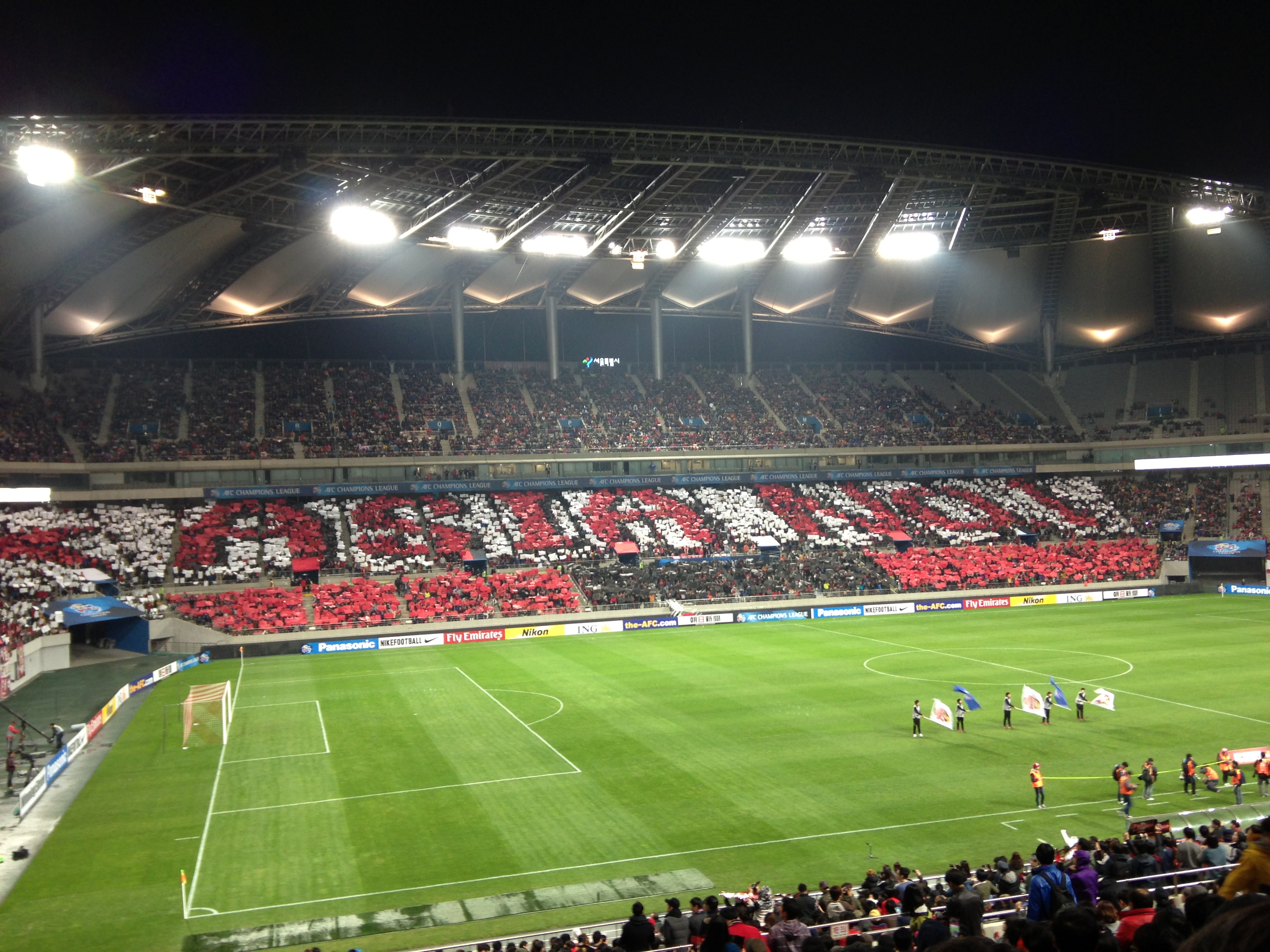
FC Seoul's former player Choi Yong-soo was hired to manage the club in 2012, after previously serving as the assistant manager and caretaker for the club in 2011. In 2013, FC Seoul lost the AFC Champions League final on away goals rule against Chinese side Guangzhou Evergrande. The AFC Champions League campaign has earned Choi Yong-soo the 2013 AFC Coach of the Year award, becoming the second South Korean in succession to win the individual accolade following the previous year's winner Kim Ho-kon. Choi left the club in June 2016.
On June 21, 2016, FC Seoul appointed Hwang Sun-hong as their eleventh manager in the club's history. On November 6, 2016, FC Seoul won their sixth K League title after defeating Jeonbuk Hyundai Motors 1–0 in the final round of the season.
A period of oscillation (2017–present)
.jpg)
Hwang Sun-hong resigned on April 30, 2018. In the 2018 season, FC Seoul finished in eleventh place and had to play the K League promotion-relegation playoffs for the first time in their history. In the playoffs, they defeated Busan IPark 4–2 on aggregate, thus staying in the top flight.
On October 11, 2018, Choi Yong-soo was appointed as the twelfth manager in the club's history, having previously managed the club between 2011 and 2016.
During the 2020 season, FC Seoul lost five consecutive games for the first time in 22 years. Following a new departure by Choi Yong-soo, three different caretakers took turns managing the team, with Park Hyuk-soon replacing Kim Ho-young after just a month and guiding the team to the end of the K League season, which they finished in ninth place, before being substituted by Lee Won-jun; under his management, the team made a promising start in the group stage of the 2020 AFC Champions League, even obtaining a 5–0 victory against Thai outfit Chiangrai United, but then proceeded to lose all of their last three matches, thus being eliminated from the tournament. A difficult season was made even more devastating by the death of defender Kim Nam-chun on October 30, 2020, just a day before their last K League 1 fixture against Incheon United.
In the 2024 K League 1 season, the club broke average attendance records due to a recovery of the league itself and the signing of Jesse Lingard, as the club finished in the top half of K League 1 for the first time since 2019 and qualified for the 2025–26 AFC Champions League Elite. Lingard was appointed captain ahead of the 2025 season, but left the club after a disappointing sixth-place league finish, scoring against A-League side Melbourne City in the Champions League in his last game for Seoul.
Club culture

Supporters
FC Seoul has a diverse fanbase, including former Lucky-Goldstar fans, LG Cheetahs fans, and Anyang LG Cheetahs fans. The club's number 12 shirt is reserved for supporters of the club. The main supporters group of FC Seoul is called Suhoshin (meaning "guardian deity"), formed in April 2004.
Rivalries
The club's main rivalry is with Suwon Samsung Bluewings in a derby known as the Super Match, as two of the most successful teams in the Seoul Capital Area. The rivalry began during the Anyang LG Cheetahs era and has continued as the club was relocated to Seoul.
Other major rivalries include Jeonbuk Hyundai Motors (Jeonseol Match) and Incheon United (Gyeongin Derby). In an away match versus Incheon in May 2024, the home fans at the Incheon Football Stadium threw water bottles at Seoul players.
Fans of FC Anyang, a phoenix club that was founded in Anyang since the departure of Anyang LG Cheetahs, feel great animosity towards FC Seoul and a willingness to get their revenge on the pitch, with Anyang's fans lighting flares in a show of defiance in a 2017 Korean FA Cup match versus FC Seoul. Anyang's first-ever appearance in the 2025 K League 1 season allowed them to play against FC Seoul in a league match for the first time in the "Relocation Derby."
V-Girls and V-Man
V-Girls & V-Man are FC Seoul's cheerleaders. The V stands for victory. They cheerlead at the East Stand.
Stadiums

Main article: Seoul World Cup Stadium, GS Champions Park
Since 2004, FC Seoul's home is the Seoul World Cup Stadium, which is the largest football-specific stadium in South Korea. FC Seoul's players train at the GS Champions Park training center, a purpose-built facility completed in 1989 located east of Seoul in the city of Guri, where the club's academy is also based.
In the past, FC Seoul played at Daejeon Stadium, Cheongju Civic Stadium, Cheonan Oryong Stadium (1987–1989), Dongdaemun Stadium (1990–1995), and Anyang Stadium (1996–2003).
Crests and mascots
FC Seoul has had different names, and consequently different crests for different periods of the club: Lucky-Goldstar FC (1983–1990), LG Cheetahs (1991–1995), Anyang LG Cheetahs (1996–2003).
There has also been different club mascots representing different periods. Former mascots were a bull and a cheetah. The club's current mascot, introduced in 2004, is named "SSID".
The "SSID" stands for Seoul & Sun In Dream. In the 2018 season, FC Seoul added another mascot, "Seoul-i".
A special crest for the club's 20th anniversary was used in 2003. The current crest has been used since 2004.
Kits
FC Seoul's home kits have red and black stripes, as in their crest.
FC Seoul wore both red kits and yellow kits in home matches from 1984 to 1985.
From 1988 to 1994, the club's home shirt's main colour was yellow, same as the Lucky-Goldstar Group's company colour at the time.
In 1995, Lucky-Goldstar Group pushed ahead with corporate identity unification and the company colour was changed to red. As a result, FC Seoul's jersey colour was changed from yellow to red as part of the unification project.
From 1999 to 2001, FC Seoul wore red and blue stripes but returned to all red in the 2002 season and In 2005, FC Seoul changed to red and black stripes and this colour has been in use since.
In June 2016, FC Seoul released the 1984–1985 retro jersey to commemorate foundation of the club and the first K League title.
First kit summary
| {{Football kit box | alt = Football kit | pattern_la = _thinblackstripes | pattern_b = _85LGA | pattern_ra = _thinblackstripes | pattern_sh =_red_stripes_lower | pattern_so =_hoops_black | leftarm = FF0000 | body = FF0000 | rightarm = FF0000 | shorts = 000000 | socks = FF0000 | First kit in 1984, red version}} | {{Football kit box | alt = Football kit | pattern_la = _thinblackstripes | pattern_b = _84LGH | pattern_ra = _thinblackstripes | pattern_so = _hoops_yellow | pattern_sh = _yellow_stripes | leftarm = FFFF00 | body = FFFF00 | rightarm = FFFF00 | shorts = 000000 | socks = 000000 | First kit in 1984, yellow version}} | {{Football kit box | pattern_la = | pattern_b = _87LGH | pattern_ra = | pattern_sh = | pattern_so = | leftarm = ffffff | body = ffffff | rightarm = ffffff | shorts = 000000 | socks =ffffff | The kit in 1987 was white}} | {{Football kit box | alt = Football kit | pattern_la= | pattern_b= _88LGH | pattern_ra= | leftarm = FFFF00 | body = FFFF00 | rightarm = FFFF00 | shorts = 000000 | socks = FFFF00 | Between 1988 and 1994, the kits were yellow}} | {{Football kit box | pattern_la = _seoul1995h | pattern_b = _1995Seoulh | pattern_ra = _seoul1995h | pattern_sh = _seoul1995h | pattern_so = _seoul1995h | leftarm = | body = | rightarm = | shorts = | socks = a84933 | Red kit variation in 1995}} | {{Football kit box | pattern_la = _9901SeoulH | pattern_b = _9901SeoulH | pattern_ra = _9901SeoulH | pattern_sh = _red_stripes_lower | pattern_so = _3_stripes_black | leftarm = 2900C9 | body = 2900C9 | rightarm = 2900C9 | shorts = 2900C9 | socks = FF0000 | Red and blue striped shirts between 1999 and 2001}} | {{Football kit box | pattern_la = _FCSEOUL_05h | pattern_b = _FCSEOUL_05h | pattern_ra = _FCSEOUL_05h | pattern_sh = _FCSEOUL_05h | pattern_so = _3_stripes_black | leftarm = FFFFFF | body = FFFFFF | rightarm = FFFFFF | shorts = FFFFFF | socks = FF0000 | Red and black striped shirts, in use since 2005}} |
|---|
;Notes
Kit suppliers and shirt sponsors
| Period | Kit supplier | Shirt sponsor | Shirt front printing | Notes |
|---|---|---|---|---|
| Bando Fashion / Pro-Specs | Lucky-Goldstar | |||
| Bando Fashion | ||||
| 1987–1994 | GoldStar | |||
| Bando Fashion / LG Fashion | LG Electronics | |||
| LG Chem | LG하이비디오 / LG HIGH VIDEO, etc. | |||
| 죽염치약 / Jugyeom Toothpaste, etc. | ||||
| LG Fashion | ||||
| Reebok | LG Information & Communications | |||
| Adidas | LG Electronics | |||
| LG Telecom | ||||
| 2001–2002 | LG Electronics | |||
| 2005–2011 | GS E&C | |||
| Seoul Metropolitan Government | ||||
| 2012–2013 | Le Coq Sportif | GS E&C | ||
| 2014–2016 | GS Shop | |||
| 2017–2019 | GS Shop | GS Shop (first kit) | ||
| GS Caltex | KIXX (second kit) | |||
| 2020 | GS E&C | 자이 / Xi (first kit) | ||
| GS Caltex | KIXX (second kit) | |||
| 2021 | GS E&C | 자이 / Xi (first kit) | ||
| GS Caltex | GS Caltex (second kit) | |||
| 2022–2027 | Pro-Specs | GS E&C | 자이 / Xi (first kit) | |
| GS Caltex | GS Caltex (second kit) |
Kit deals
| Kit supplier | Period | Contract | ||
|---|---|---|---|---|
| announcement | Contract duration | Value | ||
| Adidas | 1998–2011 | 1998–? | $200,000 per year | |
| 2005–2007 (3 years) | Total $3 million | |||
| ($1 million per year) | ||||
| 2008–2011 (4 years) | Undisclosed | |||
| Le Coq Sportif | 2012–2021 | 2012–2015 (4 years) | Total $8 million | |
| ($2 million per year) | ||||
| 2016–2019 (4 years) | Undisclosed | |||
| 2020–2021 (2 years) | Undisclosed | |||
| Pro-Specs | 2022–2027 | 2022–2024 (3 years) | Undisclosed | |
| 2025–2027 (3 years) | Undisclosed |
Players
Current squad
Out on loan and military service
Former players
Player records
Retired number(s)
Main article: List of retired numbers in association football
12 – Supporters (the 12th player)
13 – Go Yo-han
Captains
| Season(s) | Captain | Vice-captain(s) | Notes |
|---|---|---|---|
| KOR Han Moon-bae | |||
| KOR Kim Kwang-hoon | |||
| KOR Park Hang-seo | until September 1986 | ||
| 1986–1988 | KOR Jung Hae-seong | since September 1986 | |
| 1989–1990 | KOR Choi Jin-han | ||
| 1991–1992 | KOR Lee Young-jin | ||
| KOR Gu Sang-bum | |||
| KOR Choi Young-jun | |||
| KOR Yoon Sang-chul | until 4 August 1995 | ||
| 1995–1996 | KOR Lee Young-ik | since 5 August 1995 | |
| KOR Cho Byung-young | |||
| KOR Kim Bong-soo | |||
| KOR Kang Chun-ho | until July 1999 | ||
| 1999–2000 | KOR Choi Yong-soo | July 1999–9 May 2000 | |
| KOR Kim Gwi-hwa | KOR Lee Young-pyo | since 10 May 2000 | |
| KOR Lee Sang-hun | until May 2001 | ||
| KOR Son Hyun-jun | since May 2001 | ||
| KOR Choi Yoon-yeol | |||
| 2003–2004 | KOR Kim Seong-jae | ||
| 2005–2006 | KOR Lee Min-sung | ||
| 2007–2008 | KOR Lee Eul-yong | KOR Kim Chi-gon | |
| KOR Kim Chi-gon | KOR Kim Jin-kyu | ||
| KOR Park Yong-ho | KOR Kim Jin-kyu | ||
| KOR Park Yong-ho | KOR Hyun Young-min | ||
| 2012–2013 | KOR Ha Dae-sung | KOR Kim Jin-kyu | |
| KOR Kim Jin-kyu | KOR Koh Myong-jin | ||
| 2015 | KOR Koh Myong-jin | ESP Osmar | until 30 April 2015 |
| KOR Cha Du-ri | since 1 May 2015 | ||
| ESP Osmar | KOR Yoo Hyun | first foreign captain | |
| KOR Kwak Tae-hwi | KOR Park Chu-young | ||
| 2018 | KOR Shin Kwang-hoon | KOR Go Yo-han | until 3 July 2018 |
| KOR Go Yo-han | KOR Lee Woong-hee | since 4 July 2018 | |
| KOR Go Yo-han | KOR Park Chu-young | ||
| KOR Go Yo-han | KOR Ju Se-jong | ||
| KOR Ki Sung-yueng | KOR Hwang Hyun-soo | ||
| 2022 | KOR Ki Sung-yueng | KOR Na Sang-ho | |
| KOR Yang Han-been | until 12 August 2022 | ||
| KOR Na Sang-ho | KOR Yoon Jong-gyu | ||
| KOR Cho Young-wook | |||
| KOR Kim Jin-ya | |||
| KOR Lee Sang-min | since 12 August 2022 | ||
| 2023 | GER Stanislav Iljutcenko | KOR Han Chan-hee | Iljutcenko: until 9 May 2023 |
| Han Chan-hee: until 21 June 2023 | |||
| ESP Osmar | KOR Lim Sang-hyub | ||
| KOR Kim Jin-ya | |||
| KOR Kim Ju-sung | Osmar: since 9 May 2023 | ||
| KOR Ki Sung-yueng | KOR Cho Young-wook | ||
| ENG Jesse Lingard | KOR Kim Jin-su | ||
| KOR Kim Jin-su | KOR Choi Jun | ||
| KOR Lee Han-do |
Honours

Domestic
- K League 1
- Korean FA Cup
- Korean League Cup
- Korean Super Cup
- Winners (1): 2001
- Runners-up (1): 1999
- Korean National Football Championship
- Winners (1): 1988
Continental
Records and statistics
Season-by-season records
| Season | K League | League Cup | Korean Cup | Super Cup | ACL | Manager | Division | Teams | Position | Pld | W | D | L | GF | GA | GD | Pts |
|---|---|---|---|---|---|---|---|---|---|---|---|---|---|---|---|---|---|
| 1984 | Div 1 | 8 | 7th | 28 | 8 | 6 | 14 | 38 | 45 | –7 | 33 | KOR Park Se-hak | |||||
| 1985 | Div 1 | 8 | Champions | 21 | 10 | 7 | 4 | 35 | 19 | +16 | 27 | KOR Park Se-hak | |||||
| 1986 | Div 1 | 6 | Runners-up | 20 | 10 | 7 | 3 | 28 | 17 | +11 | 27 | 5th (Pro) | Did not qualify | KOR Park Se-hak | |||
| 1987 | Div 1 | 5 | 5th | 32 | 7 | 7 | 18 | 26 | 55 | –29 | 21 | No competition | Withdrew | KOR Park Se-hak | |||
| 1988 | Div 1 | 5 | 4th | 24 | 6 | 11 | 7 | 22 | 29 | –7 | 23 | Winners (Nat'l) | Did not qualify | KOR Ko Jae-wook (C) | |||
| 1989 | Div 1 | 6 | Runners-up | 40 | 15 | 17 | 8 | 53 | 40 | +13 | 47 | Semi-finals (Nat'l) | KOR Ko Jae-wook | ||||
| 1990 | Div 1 | 6 | Champions | 30 | 14 | 11 | 5 | 40 | 25 | +15 | 39 | KOR Ko Jae-wook | |||||
| 1991 | Div 1 | 6 | 6th | 40 | 9 | 15 | 16 | 44 | 53 | –9 | 33 | KOR Ko Jae-wook | |||||
| 1992 | Div 1 | 6 | 4th | 30 | 8 | 13 | 9 | 30 | 35 | –5 | 29 | Runners-up (Ad.) | Did not enter | KOR Ko Jae-wook | |||
| 1993 | Div 1 | 6 | Runners-up | 30 | 18 | ||||||||||||
| (10) | 0 | ||||||||||||||||
| (11) | 12 | ||||||||||||||||
| (9) | 28 | 29 | –1 | 59 | 4th (Ad.) | Did not qualify | KOR Ko Jae-wook | ||||||||||
| 1994 | Div 1 | 7 | 5th | 30 | 12 | 7 | 11 | 53 | 50 | +3 | 43 | Runners-up (Ad.) | KOR Cho Young-jeung | ||||
| 1995 | Div 1 | 8 | 8th | 28 | 5 | 10 | 13 | 29 | 43 | –14 | 25 | 6th (Ad.) | KOR Cho Young-jeung | ||||
| 1996 | Div 1 | 9 | 9th | 32 | 8 | 8 | 16 | 44 | 56 | –12 | 32 | 8th (Ad.) | Round of 16 | KOR Cho Young-jeung | |||
| KOR Park Hang-seo (C) | |||||||||||||||||
| 1997 | Div 1 | 10 | 9th | 18 | 1 | 8 | 9 | 15 | 27 | –12 | 11 | 10th (Ad.) | |||||
| 3rd in Group A (P) | Semi-finals | KOR Park Byung-joo | |||||||||||||||
| 1998 | Div 1 | 10 | 8th | 18 | 9 | ||||||||||||
| (8) | 0 | ||||||||||||||||
| (2) | 9 | ||||||||||||||||
| (8) | 28 | 28 | 0 | 23 | Semi-finals (Ad.) | ||||||||||||
| 3rd (PM) | Winners | KOR Park Byung-joo | |||||||||||||||
| 1999 | Div 1 | 10 | 9th | 27 | 10 | ||||||||||||
| (8) | 0 | ||||||||||||||||
| (4) | 17 | ||||||||||||||||
| (15) | 38 | 52 | –14 | 24 | Runners-up (Ad.) | ||||||||||||
| 4th in Group B (D) | Semi-finals | Runners-up | KOR Cho Kwang-rae | ||||||||||||||
| 2000 | Div 1 | 10 | Champions | 27 | 19 | ||||||||||||
| (17) | 0 | ||||||||||||||||
| (5) | 8 | ||||||||||||||||
| (5) | 46 | 25 | +21 | 53 | Semi-finals (Ad.) | ||||||||||||
| 5th in Group A (D) | Quarter-finals | Did not qualify | Quarter-finals | KOR Cho Kwang-rae | |||||||||||||
| 2001 | Div 1 | 10 | Runners-up | 27 | 11 | 10 | 6 | 30 | 23 | +7 | 43 | 4th in Group A (Ad.) | Quarter-finals | Winners | Did not qualify | KOR Cho Kwang-rae | |
| 2002 | Div 1 | 10 | 4th | 27 | 11 | 7 | 9 | 37 | 30 | +7 | 40 | Semi-finals (Ad.) | Round of 32 | Did not qualify | Runners-up | KOR Cho Kwang-rae | |
| 2003 | Div 1 | 12 | 8th | 44 | 14 | 14 | 16 | 69 | 68 | +1 | 56 | No competition | Round of 32 | No competition | Did not qualify | KOR Cho Kwang-rae | |
| 2004 | Div 1 | 13 | 5th | 24 | 7 | 12 | 5 | 20 | 17 | +3 | 33 | 12th (Sam.) | Round of 16 | Did not qualify | KOR Cho Kwang-rae | ||
| 2005 | Div 1 | 13 | 7th | 24 | 8 | 8 | 8 | 37 | 32 | +5 | 32 | 5th (Sam.) | Round of 16 | KOR Lee Jang-soo | |||
| 2006 | Div 1 | 14 | 4th | 26 | 9 | 12 | 5 | 31 | 22 | +9 | 39 | Winners (Sam.) | Quarter-finals | KOR Lee Jang-soo | |||
| 2007 | Div 1 | 14 | 7th | 26 | 8 | 13 | 5 | 23 | 16 | +7 | 37 | Runners-up (Sam.) | Quarter-finals | *Competition | |||
| ceased* | TUR Şenol Güneş | ||||||||||||||||
| 2008 | Div 1 | 14 | Runners-up | 26 | 15 | 9 | 2 | 44 | 25 | +19 | 54 | 3rd in Group A (Sam.) | Round of 32 | TUR Şenol Güneş | |||
| 2009 | Div 1 | 15 | 5th | 28 | 16 | 5 | 7 | 47 | 27 | +20 | 53 | Semi-finals (PC) | Round of 16 | Quarter-finals | TUR Şenol Güneş | ||
| 2010 | Div 1 | 15 | Champions | 28 | 20 | 2 | 6 | 58 | 26 | +32 | 62 | Winners (PO) | Round of 16 | Did not qualify | POR Nelo Vingada | ||
| 2011 | Div 1 | 16 | 5th | 30 | 16 | 7 | 7 | 56 | 38 | +18 | 55 | Quarter-finals (RC) | Quarter-finals | Quarter-finals | KOR Hwangbo Kwan | ||
| KOR Choi Yong-soo (C) | |||||||||||||||||
| 2012 | Div 1 | 16 | Champions | 44 | 29 | 9 | 6 | 76 | 42 | +34 | 96 | *Competition | |||||
| ceased* | Round of 16 | Did not qualify | KOR Choi Yong-soo | ||||||||||||||
| 2013 | Div 1 | 14 | 4th | 38 | 17 | 11 | 10 | 59 | 46 | +13 | 62 | Quarter-finals | Runners-up | KOR Choi Yong-soo | |||
| 2014 | Div 1 | 12 | 3rd | 38 | 15 | 13 | 10 | 42 | 28 | +14 | 58 | Runners-up | Semi-finals | KOR Choi Yong-soo | |||
| 2015 | Div 1 | 12 | 4th | 38 | 17 | 11 | 10 | 52 | 44 | +8 | 62 | Winners | Round of 16 | KOR Choi Yong-soo | |||
| 2016 | Div 1 | 12 | Champions | 38 | 21 | 7 | 10 | 67 | 46 | +21 | 70 | Runners-up | Semi-finals | KOR Choi Yong-soo | |||
| KOR Hwang Sun-hong | |||||||||||||||||
| 2017 | Div 1 | 12 | 5th | 38 | 16 | 13 | 9 | 56 | 42 | +14 | 61 | Round of 16 | Group stage | KOR Hwang Sun-hong | |||
| 2018 | Div 1 | 12 | 11th | 38 | 9 | 13 | 16 | 40 | 48 | –8 | 40 | Round of 16 | Did not qualify | KOR Hwang Sun-hong | |||
| KOR Lee Eul-yong (C) | |||||||||||||||||
| KOR Choi Yong-soo | |||||||||||||||||
| 2019 | Div 1 | 12 | 3rd | 38 | 15 | 11 | 12 | 53 | 49 | +4 | 56 | Round of 32 | KOR Choi Yong-soo | ||||
| 2020 | Div 1 | 12 | 9th | 27 | 8 | 5 | 14 | 23 | 44 | –21 | 29 | Quarter-finals | Group stage | KOR Choi Yong-soo | |||
| KOR Kim Ho-young (C) | |||||||||||||||||
| KOR Park Hyuk-soon (C) | |||||||||||||||||
| KOR Lee Won-jun (C) | |||||||||||||||||
| 2021 | Div 1 | 12 | 7th | 38 | 12 | 11 | 15 | 46 | 46 | 0 | 47 | Third round | Did not qualify | KOR Park Jin-sub | |||
| KOR An Ik-soo | |||||||||||||||||
| 2022 | Div 1 | 12 | 9th | 38 | 11 | 13 | 14 | 43 | 47 | –4 | 46 | Runners-up | KOR An Ik-soo | ||||
| 2023 | Div 1 | 12 | 7th | 38 | 14 | 13 | 11 | 63 | 49 | +14 | 55 | Third round | KOR An Ik-soo | ||||
| KOR Kim Jin-kyu (C) | |||||||||||||||||
| 2024 | Div 1 | 12 | 4th | 38 | 16 | 10 | 12 | 55 | 42 | +13 | 58 | Quarter-final | KOR Kim Gi-dong | ||||
| 2025 | Div 1 | 12 | 6th | 38 | 12 | 13 | 13 | 50 | 52 | –2 | 49 | Quarter-final | KOR Kim Gi-dong |
K League Championship records
| Season | Teams | Position | Pld | W | D | L | GF | GA | GD | PSO | Manager |
|---|---|---|---|---|---|---|---|---|---|---|---|
| 1986 | 2 | Runners-up | 2 | 0 | 1 | 1 | 1 | 2 | –1 | N/A | KOR Park Se-hak |
| 2000 | 4 | Winners | 2 | 1 | 1 | 0 | 5 | 2 | +3 | 4–2 W | KOR Cho Kwang-rae |
| 2006 | 4 | 4th (semi-finals) | 1 | 0 | 0 | 1 | 0 | 1 | –1 | N/A | KOR Lee Jang-soo |
| 2008 | 6 | Runners-up | 3 | 1 | 1 | 1 | 6 | 5 | +1 | N/A | TUR Şenol Güneş |
| 2009 | 6 | 5th (round of 6) | 1 | 0 | 1 | 0 | 1 | 1 | 0 | 2–3 L | TUR Şenol Güneş |
| 2010 | 6 | Champions | 2 | 1 | 1 | 0 | 4 | 3 | +1 | N/A | POR Nelo Vingada |
| 2011 | 6 | 5th (round of 6) | 1 | 0 | 0 | 1 | 1 | 3 | –2 | N/A | KOR Choi Yong-soo (C) |
K League promotion-relegation playoffs
| Season | Teams | Outcome | Pld | W | D | L | GF | GA | GD | PSO | Manager |
|---|---|---|---|---|---|---|---|---|---|---|---|
| 2018 | 2 | Remained | 2 | 1 | 1 | 0 | 4 | 2 | +2 | N/A | KOR Choi Yong-soo |
Managerial history
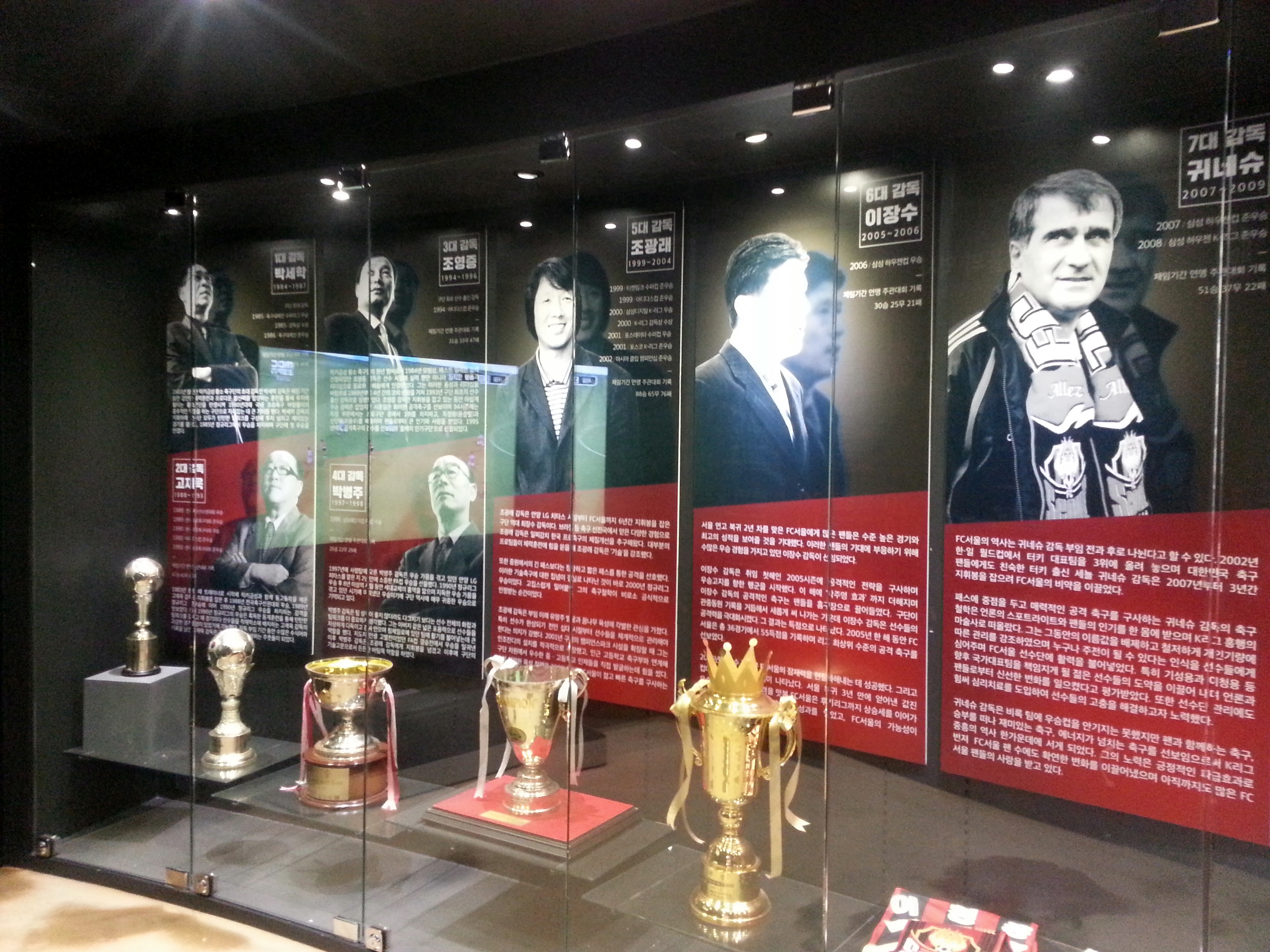
- For details on all-time manager statistics, see List of FC Seoul managers.
| No. | Name | Appointed | From | To | Season(s) | Notes |
|---|---|---|---|---|---|---|
| KOR Park Se-hak | 1983-08-12 | 1983-12-22 | 1987-11-19 | 1984–1987 | ||
| C | KOR Ko Jae-wook | 1987-12-01 | 1987-12-01 | 1988-12-26 | 1988 | |
| 2 | 1988-12-27 | 1988-12-27 | 1993-12-31 | 1989–1993 | ||
| 3 | KOR Cho Young-jeung | 1993-11-23 | 1994-01-01 | 1996-11-05 | 1994–1996 | |
| C | South Korea Park Hang-seo | 1996-11-05 | 1996-11-05 | 1996-12-01 | 1996 | |
| 4 | KOR Park Byung-joo | 1996-12-10 | 1996-12-20 | 1998-11-25 | 1997–1998 | |
| 5 | KOR Cho Kwang-rae | 1998-10-22 | 1998-12-01 | 2004-12-15 | 1999–2004 | |
| 6 | KOR Lee Jang-soo | 2004-12-30 | 2005-01-10 | 2006-12-02 | 2005–2006 | |
| 7 | Turkey Şenol Güneş | 2006-12-08 | 2007-01-08 | 2009-11-25 | 2007–2009 | |
| 8 | Portugal Nelo Vingada | 2009-12-14 | 2010-01-03 | 2010-12-13 | 2010 | |
| 9 | South Korea Hwangbo Kwan | 2010-12-28 | 2011-01-05 | 2011-04-26 | 2011 | |
| C | South Korea Choi Yong-soo | 2011-04-26 | 2011-04-26 | 2011-12-08 | 2011 | |
| 10 | 2011-12-09 | 2011-12-09 | 2016-06-22 | 2012–2016 | ||
| C | South Korea Kim Seong-jae | 2016-06-23 | 2016-06-23 | 2016-06-26 | 2016 | |
| 11 | South Korea Hwang Sun-hong | 2016-06-21 | 2016-06-27 | 2018-04-30 | 2016–2018 | |
| C | South Korea Lee Eul-yong | 2018-04-30 | 2018-04-30 | 2018-10-11 | 2018 | |
| 12 | South Korea Choi Yong-soo | 2018-10-11 | 2018-10-11 | 2020-07-30 | 2018–2020 | |
| C | South Korea Kim Ho-young | 2020-08-04 | 2020-08-04 | 2020-09-24 | 2020 | |
| C | South Korea Park Hyuk-soon | 2020-09-25 | 2020-09-25 | 2020-11-12 | 2020 | |
| C | South Korea Lee Won-jun | 2020-11-13 | 2020-11-13 | 2020-12-03 | 2020 | |
| 13 | South Korea Park Jin-sub | 2020-12-08 | 2020-12-08 | 2021-09-06 | 2021 | |
| 14 | South Korea An Ik-soo | 2021-09-06 | 2021-09-06 | 2023-08-22 | 2021–2023 | |
| C | South Korea Kim Jin-kyu | 2023-08-22 | 2023-08-22 | 2023-12-02 | 2023 | |
| 15 | South Korea Kim Gi-dong | 2023-12-14 | 2023-12-14 | 2024– |
Management
Board of directors
| Position | Name |
|---|---|
| Chairman | KOR Huh Tae-soo |
| Chief executive officer | KOR Yeo Eun-joo |
| Director | KOR Yoo Seong-han |
Chairman history
| No. | Name | From | To | Seasons |
|---|---|---|---|---|
| KOR Koo Cha-kyung | 1984–1990 | |||
| KOR Koo Bon-moo | 1991–1997 | |||
| KOR Huh Chang-soo | 1998–2019 | |||
| KOR Huh Tae-soo | 2020–present |
Ownership
| Years | Owner |
|---|---|
| November 1983–February 1991 | KOR Lucky-Goldstar Sports of Lucky-Goldstar Group |
| February 1991–May 2004 | KOR LG Sports of LG Group |
| June 2004–December 2004 | KOR GS Sports of LG Group |
| January 2005–present | KOR GS Sports of GS Group |
Popular culture
FC Seoul and FC Seoul supporters have been portrayed in a number of Korean dramas and movies:
- Dramas: Which Star Are You From, Heading to the Ground (as a fictional team called "FC Soul"), A Thousand Kisses
- Movies: Secret Romance, Dancing Queen, Running Man, Big Match, Salut d'Amour
References
References
- (October 18, 2017). "[서울]'슈퍼그레잇!' FC서울을 위한 2017 마지막 슈퍼매치!".
- (January 5, 2025). "서울, 투쟁심 넘치는 ‘한도초과’ 수비수 이한도 영입".
- [http://www.sisul.or.kr/global/main/en/sub/stadium.jsp "Stadium Profile at Seoul Metropolitan Facilities Management Corporation"] {{Webarchive. link. (2019-08-03 ''SMFMC''. Retrieved March 14, 2016)
- "Official Club Profile at K League Website".
- (March 8, 2012). "FC서울과 다시 손을잡은 신한카드 "1등으로 윈윈하자"". [[Sports Chosun]].
- (June 1, 2012). "FC서울 전세계 클럽 브랜드 평가 62위, K리그 최고". [[Sports Chosun]].
- (May 25, 2012). "Brand Finance Football Brands 2012". Brand Finance.
- (August 18, 1983). "11월말까지 선수단 구성 럭키 프로축구팀 창단 공식 발표".
- (December 22, 1983). "프로축구 금성 오늘 창단식 심벌마크는 황소".
- (August 19, 1983). "Interview of Lucky-Goldstar Football Club first chairman". [[Maeil Business Newspaper]].
- (August 19, 1983). "Lucky-Goldstar Group wants Seoul franchise.". [[Kyunghyang Sinmun.
- link. [[Kyunghyang Shinmun]]. (April 14, 1988)
- (February 2, 2004). "안양LG, '서울LG' 선언". [[Kyunghyang Sinmun.
- (December 8, 2006). "FC서울 새사령탑 명장 귀네슈 영입". [[Kyunghyang Sinmun.
- (December 7, 2008). "Korea: Suwon Bluewings Crowned Champions".
- (June 24, 2009). "Kashima Antlers 2–2 FC Seoul. AET (4–5 pens)". [[Asian Football Confederation.
- (September 30, 2009). "FC Seoul (KOR) 1–1 Umm Salal (QAT). Agg 3–4". [[Asian Football Confederation.
- (November 25, 2009). "Gunes returns to Trabzonspor". [[FIFA]].
- (May 6, 2010). "Record crowd sees FC Seoul go top". [[Asian Football Confederation.
- (May 5, 2010). "6만 747명 상암벌, 서울 K리그 역사를 쓰다". Sportsdonga.
- (November 7, 2010). "No.1 FC Seoul stands at the top of the league". FC Seoul.
- (November 7, 2010). "FC서울, 성적+팬심 둘 다 잡고 진정한 NO.1 됐다". Sports World.
- link. Sportal Korea. (December 5, 2010)
- (August 26, 2010). "FC Seoul becomes Cup Winners". FC Seoul.
- (December 5, 2010). "Seoul take title". [[FIFA]].
- (December 7, 2010). "FC Seoul lifts the championship trophy". FC Seoul.
- (December 5, 2010). "'아디 역전골' 서울, 제주 누르고 10년 만에 K리그 제패". Sportal Korea.
- link. [[Sports Chosun]]. (December 14, 2010)
- (November 9, 2013). "Evergrande win final, reach Club World Cup". [[FIFA]].
- (June 22, 2016). "Football: FC Seoul's Choi the latest Korean coach to make China switch".
- (November 6, 2016). "FC Seoul pull off dramatic finish in S. Korean football league". [[Yonhap News Agency]].
- (November 6, 2016). "Seoul snatch K League title from Jeonbuk". [[The Korea Times]].
- (April 30, 2018). "FC Seoul head coach resigns after poor season start in S. Korean football league". [[Yonhap News Agency]].
- (December 4, 2018). "Seoul face Busan in pro football promotion-relegation playoff". [[Yonhap News Agency]].
- (December 9, 2018). "FC Seoul survive relegation playoff to stay in 1st division". [[Yonhap News Agency]].
- "FC서울, 제12대 최용수 감독 선임". FC Seoul.
- "FC Seoul has lost 5 consecutive games in 22 years... 'Forgotten 2018.'".
- "South Korea 2020".
- "AFC Champions League 2020 – Group E".
- Yoo, Jee-ho. (October 30, 2020). "K League football player found dead; police suspect suicide".
- (2024-05-11). "Jesse Lingard's FC Seoul land at No. 60 on global average attendance ranking".
- Neat, Paul. (29 December 2024). "2024 Season Review: FC Seoul secure long-awaited Final A finish".
- (15 January 2025). "Captain Jesse! Ex-Man Utd star Lingard named FC Seoul's new skipper for 2025 K League 1 season".
- (December 20, 2025). "'From Manchester United prodigy to K League leader': Jesse Lingard wraps up his Korea chapter".
- (2024-05-23). "Incheon gives bottle-throwing fans choice between community service or lifetime ban".
- (2017-04-19). "FC서울, '연고이전 더비'에서 안양 꺾고 FA컵 16강행(종합)". [[Yonhap News Agency]].
- (2024-12-30). ""낭만 축구로 연고지 이전 더비 잡아야죠"".
- "About V–Girls". FC Seoul.
- "About Mascot". FC Seoul.
- "FC Seoul Match Day Magazin: FC Seoul vs Dague FC (2018-04-21)".
- link. [[Yonhap. Yonhap News Agency]]. (2003-02-26)
- (2004-03-19). "LG축구단'FC서울'로 새출발". [[Kyunghyang Shinmun]].
- (June 18, 2016). "FC서울 영광의 첫 우승 유니폼이 부활한다". FC Seoul.
- (1998-02-10). "'아디다스' 프로축구 용품지원". (출판사) 동아일보.
- (2005-01-26). "FC 서울-아디다스,3년간 30억 원에 사상 최고스폰서십". (출판사) 조이뉴스24.
- (2007-01-05). "FC서울, 2007년 New 유니폼 입고 뛴다!". FC Seoul.
- (2008-02-20). "FC서울, 아디다스 코리아와 K리그 최대 규모 후원 계약". (출판사) 뉴시스.
- (2011-12-21). "FC서울 대박 계약으로 본 K리그 스폰서 세계". (출판사) 스포츠조선.
- "선수단 소개". FC Seoul.
- (3 August 2011). "FC서울의 스크린 이력서".
This article was imported from Wikipedia and is available under the Creative Commons Attribution-ShareAlike 4.0 License. Content has been adapted to SurfDoc format. Original contributors can be found on the article history page.
Ask Mako anything about FC Seoul — get instant answers, deeper analysis, and related topics.
Research with MakoFree with your Surf account
Create a free account to save articles, ask Mako questions, and organize your research.
Sign up freeThis content may have been generated or modified by AI. CloudSurf Software LLC is not responsible for the accuracy, completeness, or reliability of AI-generated content. Always verify important information from primary sources.
Report