From Surf Wiki (app.surf) — the open knowledge base
Fauna of Turkey
none
none
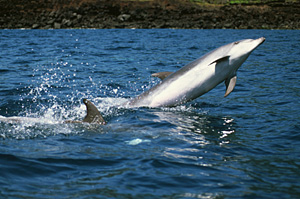
The fauna of Turkey is abundant and varied. The wildlife of Turkey includes a great diversity of plants and animals, each suited to its own particular habitat, as it is a large country with many geographic and climatic regions. About 1,500 species of vertebrates have been recorded in the country and around 19,000 species of invertebrates. The country is a biological crossroads with links to Europe, Asia, and the Near East. Many birds use the country as a staging post during migration.
thumb|Human-made nests for [[northern bald ibis]]es in [[Birecik]] thumb|Loggerhead sea turtle nesting places by the Mediterranean Sea
Overview
Turkey has a large range of habitat types and a great faunal diversity. Nearly 1,500 vertebrate species were recorded, of which over 100 species, mostly fish, are endemic. The country is on two major bird migration routes. This increases the number of birds in the country in spring and autumn. The invertebrate fauna is also very diverse, with about 19,000 species being recorded including 4,000 which are endemic.
Invertebrates
Molluscs
Main article: List of non-marine molluscs of Turkey
Insects
There are over 380 species of ants in Turkey, 38 of which are endemic.
Butterflies
Main article: List of butterflies of Turkey
Moths
Main article: List of moths of Turkey
Arachnids
Vertebrates
Amphibians
Twenty-three species are endemic to Turkey.
Reptiles
Main article: List of reptiles of Turkey
Twenty-three species are endemic to Turkey.
Birds
Main article: List of birds of Turkey
Mammals
Main article: List of mammals of Turkey
Eight species are endemic to Turkey. Many species have declined in numbers, for example chamois, gazelle and mouflon, with shortage of staff to protect them claimed to be a factor. DNA of 15 endangered large mammals will be stored.
Fish
One hundred sixty-one species of freshwater fish are endemic to Turkey.
Conservation
Conservation action plans for 100 species are due to be completed by the end of 2019.
Endangered species
- Mediterranean monk seal (critically endangered) – less than 500 individuals all around the world
- Northern bald ibis (critically endangered) – main groups live in Morocco and Turkey
- Asia Minor spiny mouse (critically endangered)
- Rana holtzi, toros frog (critically endangered) – endemic to Turkey
- Pseudophoxinus maeandricus, Sandıklı spring minnow, (critically endangered) – known from a single stream
- Anatolian leopard (endangered)
- White-headed duck (endangered)
- Red-breasted goose (endangered)
- Loggerhead sea turtle (endangered)
- Great bustard (vulnerable)
- Dalmatian pelican (vulnerable)
- Lesser kestrel (vulnerable)
- Egyptian vulture (vulnerable)
- Wild goat (vulnerable)
- Greater spotted eagle (vulnerable)
- Steppe eagle (endangered)
- Eastern imperial eagle (vulnerable)
- Saker falcon (vulnerable)
Extinct and locally extinct fauna
The following species and populations have become extinct in Turkey in historical times.
- African darter, due to the drying up of Lake Amik
- Asiatic lion
- Caspian tiger, the last known individual was shot in 1974 in Hakkari Province
- Hydruntine, extinct species of wild ass, last seen in the 1st millennium BC
- Alburnus akili, extinct species of fish formerly native to Lake Beyşehir, last seen in 1998, likely became extinct due to the introduction of invasive fish species
- Pseudophoxinus handlirschi, extinct fish found in Lake Eğirdir, last seen in the 1980s, likely due to the introduction of invasive zander
The Küre and Kaçkar Mountains national parks have been suggested for rewilding.
References
References
- (7 May 2012). "Biodiversity in Turkey". [[IUCN]].
- (November 2013). "First annotated checklist of the ant fauna of Turkey (Hymenoptera: Formicidae)". Zootaxa.
- "Türkiye".
- "Animals and Plants Unique to Turkey".
- "Shortage of staff to protect wildlife in Turkey: Official".
- (28 August 2018). "Endangered wild animals to be protected at gene bank in Turkey".
- "Thousands of wild animals back to life".
- Freyhof, J.. (2014). "''Pseudophoxinus maeandricus''".
- Stein, A.B.. (2020). "''Panthera pardus''".
- Üstay, A. H.. (1990). "Hunting in Turkey". BBA.
- Can, Ö. E.. (2004). "Status, Conservation and Management of Large Carnivores in Turkey". Convention on the Conservation of European Wildlife and Natural Habitats.
- (July 2024). "The first complete genome of the extinct European wild ass ( Equus hemionus hydruntinus )". Molecular Ecology.
- Erdönmez, Cihan. (2020). "Yeniden Yabanlaştırma: Ekosistem Yönetiminde Bir Yaklaşım".
This article was imported from Wikipedia and is available under the Creative Commons Attribution-ShareAlike 4.0 License. Content has been adapted to SurfDoc format. Original contributors can be found on the article history page.
Ask Mako anything about Fauna of Turkey — get instant answers, deeper analysis, and related topics.
Research with MakoFree with your Surf account
Create a free account to save articles, ask Mako questions, and organize your research.
Sign up freeThis content may have been generated or modified by AI. CloudSurf Software LLC is not responsible for the accuracy, completeness, or reliability of AI-generated content. Always verify important information from primary sources.
Report