From Surf Wiki (app.surf) — the open knowledge base
FasTrak
Electronic toll collection system in California

Electronic toll collection system in California
| Field | Value |
|---|---|
| name | FasTrak |
| logo | Fastrak.svg |
| logo_upright | 0.6 |
| industry | Electronic toll collection |
| foundation | 1993 |
| area_served | California |
Like other ETC systems, FasTrak is designed to eliminate the need for vehicles to stop at toll booths, thereby reducing traffic congestion commonly associated with toll collection. Its implementation aligns with the U.S. Department of Transportation's Intelligent Transportation Systems initiative.
California's toll facilities are decentralized and managed by various local public agencies and special-purpose districts, rather than being operated directly by the California Department of Transportation (Caltrans) or another centralized state agency. Concerned about the potential development of incompatible ETC systems, the California State Legislature passed Senate Bill 1523 in 1990. This legislation required Caltrans to develop a statewide ETC specification that all toll agencies were mandated to follow.
In 1993, the Transportation Corridor Agencies opened the Foothill Toll Road in Orange County, marking the first implementation of the standardized ETC system, which it branded as FasTrak. The state continues to delegate the responsibility for issuing and managing FasTrak accounts to individual toll agencies.
Operations and functionality
Technology

Caltrans was given the mandate to develop and maintain an open, statewide ETC specification known as "Title 21" after it was added to Title 21 of the California Code of Regulations. FasTrak transponders are compatible across California toll roads but not with out-of-state systems like E-ZPass. In 2018, the state began a transition to the national ISO/IEC 18000-63 (6C) standard to support future nationwide interoperability.
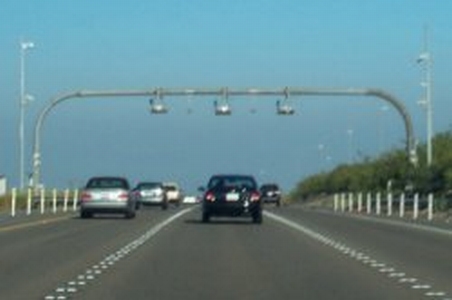
If a transponder is not detected, cameras photograph the vehicle’s license plate and attempt to match it to a FasTrak account. If no account is found, either an invoice with no penalty (in locations supporting "pay by plate") or a violation notice is issued and mailed to the registered owner of the vehicle.
Tag types

.png)
FasTrak supports multiple transponder types:
- Standard tag – A hard-case transponder used on all FasTrak toll roads.
- Sticker tag – A low-cost adhesive tag issued by some agencies.
- FasTrak Flex – A switchable tag (settings for 1, 2, or 3+ occupants) required for HOV toll discounts.
A FasTrak CAV tag was also made available to those with a Clean Air Vehicle (CAV) decal for applicable toll discounts. When the federal law authorizing the decal program expired on September 30, 2025, existing CAV tags automatically converted to function like Flex tags.
Some toll roads allow carpoolers to avoid tolls by placing their standard tag in a mylar bag to block the radio signals, others require a FasTrak Flex transponder.
Service center operations
All Bay Area toll facilities use a centralized billing and customer service system operated by the Bay Area Toll Authority (BATA).
Transportation Corridor Agencies, operator of the Orange County toll roads, also operates the billing and customer service system for the San Bernardino County high-occupancy toll lanes.
Although the 91 Express Lanes is operated by both the Orange County Transportation Authority and the Riverside County Transportation Commission, that facility uses a centralized billing and customer service system operated by the former.
All other Southern California agencies maintain separate billing and customer service systems.
Some agencies "sell" (charge the initial prepaid toll deposit) transponders in a retail setting, such as Costco stores. Customers must still register their transponders with the issuing agency.
Fees
FasTrak account fees and requirements vary by issuing agency:
| Agency | Area | Monthly fee | Initial prepaid toll deposit | Notes |
|---|---|---|---|---|
| BATA | San Francisco Bay Area | None | $25 | |
| TCA | Orange County and San Bernardino County | None | None | |
| SANDAG | San Diego County | $1 | $50 | $3.50 minimum monthly toll |
| LA Metro | Los Angeles County | $40 (automatic replenishment) | ||
| $75 (manual replenishment) | ||||
| OCTA | Orange County | None | $40 (automatic replenishment) | |
| $50 (manual replenishment) | $100 setup fee | |||
| $2 | ||||
| RCTC | Riverside County | $40 |
Security
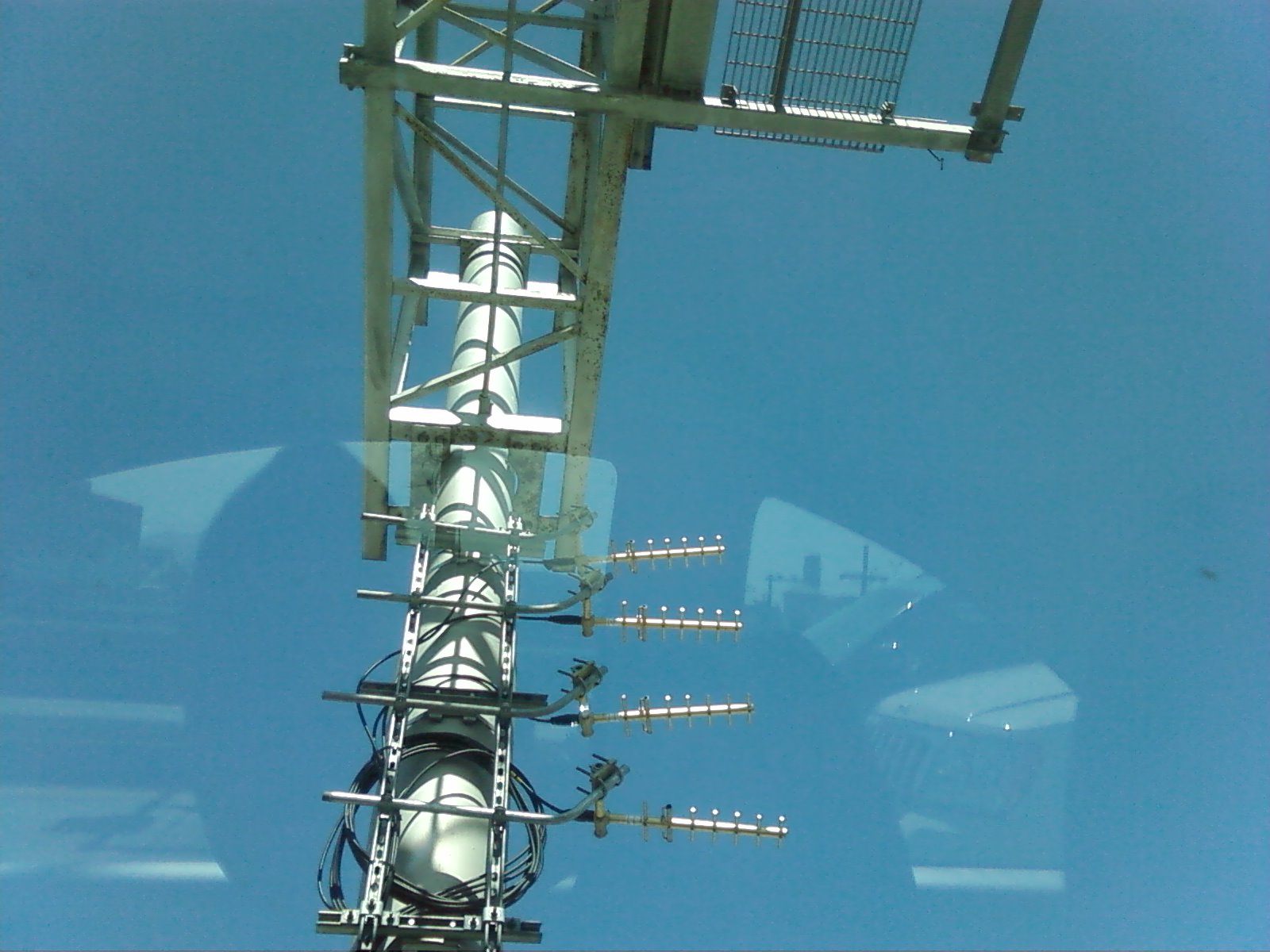
In 2008, researchers found that FasTrak transponders lacked encryption and could be queried or updated remotely. As the Title 21 specification is publicly available, this raised concerns about potential misuse. Transponders are also used to generate 5-1-1 traffic data, using sensors and antennae placed across various freeways. The Metropolitan Transportation Commission responded by reviewing the system’s security and exploring possible improvements with vendors.
History
After the first electronic toll collection (ETC) system in North America was implemented on the Dallas North Tollway in 1989, various toll agencies in California began expressing interest in similar systems. Given that toll roads and bridges in the state are managed by different government entities, there was concern about the potential emergence of multiple, incompatible ETC systems. To address this, the California State Legislature passed Senate Bill 1523 in 1990, directing the California Department of Transportation (Caltrans) to create a standardized statewide technical specification for ETC systems. California subsequently became the first U.S. state to require all toll facilities to use a uniform ETC system. This specification was later codified in Title 21, Division 2, Chapter 16 of the California Code of Regulations.
The Foothill Toll Road in Orange County, California became the first toll facility in California to implement ETC when it opened in 1993. The Transportation Corridor Agencies (TCA), which manages the toll road, branded the system as "FasTrak". TCA still holds the trademark for the "FasTrak" name and logo.
The original FasTrak transponder was a device about the size of a Walkman, into which a smart card was inserted. However, the device was costly to produce and the smart card offered little advantage to customers. By 1995, when the 91 Express Lanes opened, the transponders had been redesigned to be coaster-sized.
FasTrak was subsequently deployed on the San Joaquin Hills Toll Road (1996), the Eastern Toll Road (1998), and the high-occupancy toll (HOT) lanes on Interstate 15 in San Diego, California (1998).
_(2).jpg)
Adapting FasTrak for California’s toll bridges required additional modifications, especially to handle 18 different toll classifications for trucks. After a trial at the Carquinez Bridge in 1996 revealed accuracy issues, improvements were made, before the bridge adopted FasTrak in 1997. Despite these developments, other state-run Bay Area toll bridges did not adopt the system until October 2000, due to bureaucratic and technical delays. The independently managed Golden Gate Bridge introduced FasTrak a few months earlier in July 2000.
The San Diego-Coronado Bridge briefly used FasTrak before tolls were eliminated in 2002. In 2005, the Bay Area FasTrak Customer Center opened, consolidating services for regional bridges and the Golden Gate Bridge.
FasTrak has since expanded to cover all new toll facilities in California, which are required by law to adopt the system. In 2009, San Francisco International Airport began accepting FasTrak in its parking garages.
The introduction of the Metro ExpressLanes in Los Angeles in 2012 led to the introduction of FasTrak Flex transponders with occupancy switches (1, 2, or 3+ riders), allowing automated toll calculations for carpools and solo drivers. TCA began issuing switchable transponders in 2013, followed by the 91 Express Lanes and the Bay Area in 2015.
The TCA introduced a sticker transponder in 2019 to replace the earlier plastic model. The new sticker transponders cost the agency less than $1 each, compared to approximately $20 for the plastic version. The lower cost enabled TCA to eliminate monthly account maintenance fees and the requirement for a prepaid deposit.
California continues moving toward open road tolling, eliminating cash transactions in favor of transponders, license plate tolling, and online or phone payments. The Golden Gate Bridge became fully cashless in March 2013, followed by TCA-operated toll roads in May 2014. In 2019, California approved the phaseout of toll takers on all state-owned bridges. Due to the COVID-19 pandemic, electronic-only tolling was implemented in March 2020 and became permanent by 2021. The only remaining cash-accepting toll road is the South Bay Expressway, which has unstaffed cash machines.
In line with MAP-21 all ETC systems nationwide were required to achieve interoperability by October 1, 2016. In response, California passed Assembly Bill 493 in 2013, enabling collaboration between Caltrans and toll agencies to comply with the mandate. California regulators later approved a phase-in of transponder technology using the ISO/IEC 18000-63 (6C) standard. Rollout began in 2018 and was expected to be complete by 2024.
California state law prohibits tolling agencies from sharing information regarding tolls collected to other states. However in the interim, FasTrak member agencies may pursue one-way interoperability with their account holders. In June 2025, FasTrak users under the TCA system were permitted to use their FasTrak toll tags on toll roads and managed lanes operated by the North Texas Tollway Authority (NTTA) and North East Texas Regional Mobility Authority (NETRMA). TCA will later permit their users to use FasTrak on toll roads operated by Texas Department of Transportation (TxDOT) and the Harris County Toll Road Authority (HCTRA).
Toll facilities using FasTrak
Current
All eight toll bridges only collect tolls in one direction. All other toll facilities collect tolls in either direction, though some high-occupancy toll lane toll lanes exist in only one direction of their freeway in parts or the whole of their length.
^ indicates that carpools require the switchable "FasTrak Flex" transponder.
HOV 2+ indicates that carpools require two or more persons.
HOV 3+ indicates that carpools require three or more persons.
† indicates that two-person carpools are tolled differently than solo drivers or carpools with three or more, typically at a rate intermediate between the solo and 3+ rates
Toll bridges
| Name | Highway(s) | Location | South or west terminus | North or east terminus | Direction tolled | HOV | Account agency | Ref. |
|---|---|---|---|---|---|---|---|---|
| Antioch Bridge | San Joaquin River | Antioch | Sacramento County | Northbound | 3+ | BATA | ||
| Benicia–Martinez Bridge | Carquinez Strait | Martinez | Benicia | |||||
| Carquinez Bridge | Carquinez Strait | Crockett | Vallejo | Eastbound | ||||
| Dumbarton Bridge | San Francisco Bay | Menlo Park | Fremont | Westbound | 2+ | |||
| Golden Gate Bridge | Golden Gate | San Francisco | Marin County | Southbound | 3+ | |||
| Richmond–San Rafael Bridge | San Francisco Bay | San Rafael | Richmond | Westbound | ||||
| San Francisco–Oakland Bay Bridge | San Francisco | Oakland | ||||||
| San Mateo–Hayward Bridge | Foster City | Hayward | 2+ |
Toll roads
| Name | Highway | Location | South or west terminus | North or east terminus | HOV | Account agency | Ref. |
|---|---|---|---|---|---|---|---|
| Eastern Toll Road | Orange County | Irvine | SR 91 in Anaheim–Yorba Linda | None | TCA | ||
| Foothill Toll Road | Oso Parkway near Rancho Santa Margarita | SR 133 near Irvine | |||||
| San Joaquin Hills Toll Road | I-5 in Mission Viejo | Bison Ave in Irvine | |||||
| South Bay Expressway | San Diego County | SR 11 / SR 905 in Otay Mesa | SR 54 near Chula Vista | SANDAG |
High-occupancy toll lanes
| Name | Highway | Location | South or west terminus | North or east terminus | HOV | Account agency | Ref. | ||||
|---|---|---|---|---|---|---|---|---|---|---|---|
| I-10 Metro ExpressLanes | |||||||||||
| (El Monte Busway) | Los Angeles County | Alameda Street in Los Angeles | I-605 in Baldwin Park | ^† | LA Metro | url=https://www.metroexpresslanes.net/how-it-works/using-metro-expresslanes/ | title=Using Metro ExpressLanes | website=Metro ExpressLanes | publisher=Los Angeles County Metropolitan Transportation Authority | access-date=October 25, 2020}} | |
| I-10 San Bernardino Express Lanes | San Bernardino County | I-10 at the Los Angeles County line | Etiwanda Avenue in Ontario | ^3+ | TCA | title=Map & Pricing | url=https://www.sbexpresslanes.com/map-toll-rates/ | website=sbexpresslanes.com | publisher=San Bernardino County Transportation Authority | access-date=September 2, 2024}} | |
| I-15 Express Lanes | |||||||||||
| (San Diego County) | San Diego County | SR 163 in San Diego | SR 78 in Escondido | 2+ | SANDAG | ||||||
| I-15 Riverside Express Lanes | Riverside County | Cajalco Road in Corona | SR 60 in Jurupa Valley | ^3+ | RCTC | ||||||
| SR 85 Express Lanes | Santa Clara County | Central Expressway in Mountain View | US 101 in Mountain View | ^† | BATA | ||||||
| 91 Express Lanes | Orange and Riverside Counties | SR 55 in Anaheim | I-15 in Corona | 3+ | OCTA | ||||||
| I-80 Express Lanes | Solano County | Red Top Road in Fairfield | Leisure Town Road in Vacaville | ^† | BATA | ||||||
| US 101 Express Lanes | Santa Clara and San Mateo Counties | SR 237 near Mountain View | I-380 in San Bruno | BATA | title=101/SR-85 Santa Clara County Express Lanes | url=https://www.bayareafastrak.org/en/tolls/101-sr85-santa-clara-express-lanes.shtml | website=Bay Area FasTrak | access-date=February 12, 2022}} | |||
| I-110 Metro ExpressLanes | |||||||||||
| (Harbor Transitway) | Los Angeles | Harbor Gateway Transit Center | Adams Boulevard | ^2+ | LA Metro | ||||||
| SR 237 Express Lanes | Santa Clara County | Mathilda Avenue in Sunnyvale | I-880 in Milpitas | ^† | BATA | ||||||
| 405 Express Lanes | Orange County | SR 73 in Costa Mesa | I-605 in Seal Beach | OCTA | |||||||
| I-580 Express Lanes | Alameda County | Hacienda Drive in Dublin/PleasantonThe westbound I-580 Express Lanes extend further west to San Ramon Road/Foothill Road in Dublin/Pleasanton | North Greenville Road in Livermore | ^2+ | BATA | ||||||
| I-680 Sunol Express Lanes | Alameda and Santa Clara Counties | Auto Mall Parkway in FremontThe southbound I-680 Sunol Express Lanes extend further south to SR 237 in Milpitas | SR 84 near Sunol | ||||||||
| I-680 Contra Costa Express Lanes | Contra Costa County | Livorna Road in AlamoThe southbound I-680 Contra Costa County Express Lanes extend further north to Marina Vista Avenue in Martinez | Alcosta Boulevard in San Ramon | ||||||||
| I-880 Express Lanes | Alameda and Santa Clara Counties | Dixon Landing Road in Milpitas/Fremont line | Lewelling Boulevard in San LorenzoThe southbound I-880 Express Lanes extend further north to Hegenberger Road in Oakland and further south to SR 237 in Milpitas | ^† |
Planned or proposed facilities
The following is a partial list of toll facilities that are either in the planning or proposal stages (sorted by highway number):
| Name | Highway | Location | South or west terminus | North or east terminus | Scheduled to open | ||||||
|---|---|---|---|---|---|---|---|---|---|---|---|
| I-5 Express Lanes | San Diego County | La Jolla Village Drive in San Diego | Harbor Drive in Oceanside | By 2035 | |||||||
| I-10 Metro ExpressLanes Extension | Los Angeles County | I-605 in Baldwin Park | San Bernardino County line | TBD | |||||||
| I-10 San Bernardino Express Lanes Phase 2 | San Bernardino County | Etiwanda Avenue in Ontario | Pepper Avenue in Colton | TBD | |||||||
| I-10 San Bernardino Express Lanes Phase 3 | San Bernardino County | Pepper Avenue in Colton | Ford Street in Redlands | ||||||||
| SR 11 Toll Road | San Diego County | SR 125 / SR 905 | Otay Mesa East Port of Entry | TBD | |||||||
| SR 37 Sears Point Toll Road | Sonoma and Solano Counties | SR 121 at Sears Point | Mare Island in Vallejo | TBD | |||||||
| Yolo I-80 Express Lanes | Yolo County | Solano County line | West El Camino Avenue near the Sacramento County line | TBD | |||||||
| Silicon Valley Express Lanes Phase 4 | Santa Clara County | US 101 in Southern San Jose | SR 87 in San Jose | url= https://www.vta.org/projects/us-101-and-state-route-85-express-lanes-project-phase-4 | title= State Route 85 and US 101 Express Lanes Project (Phase 4) | access-date=March 1, 2023 | author= Santa Clara Valley Transportation Authority | date= June 18, 2017 | author-link= Santa Clara Valley Transportation Authority | publisher= Santa Clara Valley Transportation Authority}} | |
| Silicon Valley Express Lanes future extension | Santa Clara County | SR 87 in San Jose | Central ExpresswayNot including the already completed portion of the Express Lanes from the Central Expressway to US 101 north in Mountain View | TBD | |||||||
| Silicon Valley Express Lanes Phase 5 | Santa Clara County | I-880 in San Jose | SR 237 near Mountain View | url= https://www.vta.org/projects/us-101-express-lanes-project-phase-5 | title= US 101 Express Lanes Project (Phase 5) | access-date=March 1, 2023 | author= Santa Clara Valley Transportation Authority | date= June 28, 2020 | author-link= Santa Clara Valley Transportation Authority | publisher= Santa Clara Valley Transportation Authority}} | |
| Silicon Valley Express Lanes Phase 6 | Santa Clara County | SR 85 in southern San Jose | I-880 in San Jose | TBD | |||||||
| Silicon Valley Express Lanes future southern extension | Santa Clara County | Dunne Avenue in Morgan Hill | SR 85 in southern San Jose | ||||||||
| I-105 Express Lanes | Los Angeles County | SR 1 in Los Angeles | Studebaker Road in Norwalk | By 2029 | |||||||
| I-405 Sepulveda Pass Express Lanes | Los Angeles County | I-10 in Los Angeles | US 101 in Los Angeles | Late 2028 | |||||||
| I-680 Sunol Northbound Express Lane Southern Extension | Alameda and Santa Clara Counties. | SR 237 in Milpitas | Auto Mall Parkway in Fremont | TBD | |||||||
| I-680 Sunol Express Lanes Northern Extension | Alameda County | SR 84 in Sunol | Alcosta Boulevard in San Ramon | Fall 2025 (Southbound) | |||||||
| TBD (Northbound) |
Facilities not under FasTrak
While the California state highway system officially treats the following routes as discontinuous through the following national parks, respectively, signs within these parks and some commercially produced maps may show these highways as continuous. The park entrance fees are handled by the National Park Service, not FasTrak or Caltrans.
- in Yosemite National Park.
- in Lassen Volcanic National Park.
- in Pinnacles National Park.
- in Kings Canyon and Sequoia National Parks
The 17-Mile Drive, a scenic toll road in Pebble Beach is owned and operated by the Pebble Beach Company and does not utilize FasTrak for toll collection.
Notes
References
References
- "Senate Bill 1523".
- "Fiscal and Economic Analysis for Extending the Title 21 Protocol Sunset Date". California Department of Transportation.
- (December 6, 2017). "California approves 6C electronic toll collection protocol".
- "I have a FasTrak toll tag, but I still received a violation notice in the mail. Why did this happen?".
- "The FasTrak Transponder". [[Transportation Corridor Agencies]].
- "Information".
- "Toll Tags".
- "FasTrak Throughout California". [[Transportation Corridor Agencies]].
- "FasTrak Flex Mounting Instructions". [[Los Angeles County Metropolitan Transportation Authority]].
- "Offers & Discounts". San Bernardino County Transportation Authority.
- Lange, Ariane. (September 9, 2025). "CA electric vehicle drivers will lose special carpool lane privileges. Here's why". The Sacramento Bee.
- (September 22, 2025). "Clean Air Vehicle Discounts Being Discontinued".
- Richards, Gary. (February 18, 2015). "Roadshow: Who Needs the New FasTrak Device (and a Mylar Bag)". San Jose Mercury News.
- "Accessing the I-15 Express Lanes". [[San Diego Association of Governments]].
- "FAQs". [[San Diego Association of Governments]].
- "Bay Area Toll Authority (BATA)".
- (July 8, 2024). "San Bernardino Customer Service Walk-In Center Opens in Preparation for Future SB Express Lanes on Interstate 10". [[Transportation Corridor Agencies]].
- "Account Agreement".
- "Fastrak Discounts".
- "Retail Discounts". [[Los Angeles County Metropolitan Transportation Authority]].
- "Get FasTrak". [[San Diego Association of Governments]].
- "Is there a charge to open a FasTrak account?".
- "Do FasTrak accounts have account maintenance fees?". [[Transportation Corridor Agencies]].
- "FasTrak Fees". [[San Diego Association of Governments]].
- "Account Options". [[Los Angeles County Metropolitan Transportation Authority]].
- "Select a plan".
- "Open an Account".
- Lawson, Nate. (August 6, 2008). "Highway to Hell: Hacking Toll Systems". Root Labs.
- Lawson, Nate. (August 7, 2008). "FasTrak Talk Summary and Slides". Root Labs Rdist.
- (August 25, 2008). "Road Tolls Hacked". ABC News.
- Halloran, James V. III. (September 1992). "Standardizing Electronic Toll Collection". [[Reason Foundation]].
- Hallissy, Erin. (February 20, 1996). "Bay Area Bridges to Offer Electronic Tolls". [[San Francisco Chronicle]].
- California Department of Transportation Division of Traffic Operations. (2013). "Title 21 Support". California Department of Transportation.
- Downey, Cheryl. (October 4, 1993). "Tollway Officials Must Sell the Public on New Product". [[Orange County Register]].
- Transportation Corridor Agencies. (April 13, 2006). "Pilot Program Puts TCA FasTrak on Costco Shelves". Transportation Corridor Agencies.
- Downey, Cheryl. (August 13, 1993). "Toll Tech: 4 Ways to Pay: Transportation: Video Enforcement Will Capture License Plates When Drivers Don't Pay on Foothill Toll Road". Orange County Register.
- Downey, Cheryl. (July 29, 1994). "County Tollway Officials Are Having Second Thoughts About Expensive Toll-Paying 'Smart Cards'". Orange County Register.
- Pund, Ernest E.. (December 24, 1995). "Highway 91 About to Take Its First Toll". The Press-Enterprise.
- Nolte, Carl. (September 23, 1996). "Automatic Tollbooth Technology Not Yet Ready for Prime Time". San Francisco Chronicle.
- Cabanatuan, Michael. (October 5, 2000). "All Bay Toll Spans Finally Going FasTrak". San Francisco Chronicle.
- Golden Gate Bridge, Highway and Transportation District. (June 7, 2005). "June 7th Marks Grand Opening of New Regional FasTrak Customer Service Center in San Francisco". Golden Gate Bridge, Highway and Transportation District.
- McCarron, Michael C.. (May 15, 2009). "Easy Payment System Will Save Time and Help Reduce Emissions". [[San Francisco International Airport]].
- Los Angeles County Metropolitan Transportation Authority. "Metro ExpressLanes FAQ".
- Transportation Corridor Agencies. (September 23, 2013). "TCA Switchable Transponders Now Available". The Toll Roads Blog.
- Orange County Transportation Authority. (Spring 2015). "A Tale of Two Transponders: Standard and Switchable". 91 Express Lanes Newsletter.
- "Sticker". [[Transportation Corridor Agencies]].
- (June 28, 2019). "FasTrak Replaces Hard-Case Transponders With Free Stickers For OC Drivers, Eliminates Fee". [[CBS Los Angeles]].
- Park, Jeong. (June 7, 2019). "70¢ FasTrak stickers will replace $20 transponders, and TCA is mailing 15,000 of them daily". [[Orange County Register]].
- Golden Gate Bridge, Highway and Transportation District. "All Electronic Tolling at the Golden Gate Bridge".
- Transportation Corridor Agencies. "All Electronic Tolling (AET)".
- Smith, Darrell. (September 7, 2019). "Do you drive to the Bay Area? A big change is coming to toll booths at the bridges". The Sacramento Bee.
- (December 28, 2020). "New Year Brings New Toll Collection System to Bay Area Bridges".
- "Cash or Credit Payment". San Diego Association of Governments.
- California Legislature. (August 12, 2013). "An Act to Amend Section 27565 of the Streets and Highways Code, Relating to Transportation".
- "November 14, 2024 TCA Joint Board Agenda, Item #13.". Transportation Corridor Agencies.
- "The Toll Roads Customer Accounts Now Compatible with North Texas Tolling Facilities {{!}} The Toll Roads".
- "Take a road trip with The Toll Roads.". [[Transportation Corridor Agencies.
- "Antioch Bridge".
- "Benicia–Martinez Bridge".
- "Carquinez Bridge".
- "Dumbarton Bridge".
- "Golden Gate Bridge".
- "Richmond–San Rafael Bridge".
- "San Francisco–Oakland Bay Bridge".
- "San Mateo–Hayward Bridge Bridge".
- "Map and Rates". [[Transportation Corridor Agencies]].
- (July 2020). "South Bay Expressway Toll Schedule". [[San Diego Association of Governments]].
- "Using Metro ExpressLanes". [[Los Angeles County Metropolitan Transportation Authority]].
- "Map & Pricing". San Bernardino County Transportation Authority.
- "I-15 Express Lanes". [[San Diego Association of Governments]].
- "FAQ".
- "Toll Schedules".
- (December 15, 2025). "I-80 Solano County Express Lanes Open Tomorrow". Metropolitan Transportation Commission.
- (December 16, 2025). "Express Lanes go live in Fairfield-Vaca corridor". [[Daily Republic]].
- "101/SR-85 Santa Clara County Express Lanes".
- "101 San Mateo Express Lanes".
- "US 101 Express Lanes". [[Metropolitan Transportation Commission (San Francisco Bay Area).
- "SR 237 Express Lanes".
- "How to drive the Express Lanes". Orange County Transportation Authority.
- "I-580 Express Lanes".
- "I-680 Sunol Express Lanes".
- "I-680 Contra Costa Express Lanes".
- "I-880 Express Lanes".
- "I-5 Express Lanes Project". TransNet (San Diego Association of Governments).
- "I-10 ExpressLanes Extension Project". Los Angeles County Metropolitan Transportation Authority.
- "I-10 Express Lanes". San Bernardino County Transportation Authority.
- Mendoza, Alexandra. (June 29, 2021). "California, Mexico sign agreement to open new Otay Mesa border crossing by late 2024".
- Mendoza, Alexandra. (July 6, 2023). "Future Otay Mesa East border crossing may open later than expected".
- (May 18, 2023). "New Toll Approved for Part of Highway 37 in the North Bay". KNTV-TV.
- (July 1, 2021). "Project To Relieve Yolo Causeway Traffic With Toll Lanes Gets $85.9 Million Federal Grant".
- "Yolo 80 Managed Lanes Project". Caltrans District 3.
- Santa Clara Valley Transportation Authority. (June 18, 2017). "State Route 85 and US 101 Express Lanes Project (Phase 4)". Santa Clara Valley Transportation Authority.
- Santa Clara Valley Transportation Authority. (June 28, 2020). "US 101 Express Lanes Project (Phase 5)". Santa Clara Valley Transportation Authority.
- "I-105 ExpressLanes Project". Los Angeles County Metropolitan Transportation Authority.
- "I-405 Sepulveda Pass ExpressLanes". Los Angeles County Metropolitan Transportation Authority.
- "I-680 Sunol Express Lanes Project". Alameda County Transportation Commission.
- "I-680 Express Lanes From SR-84 to Alcosta Boulevard". Alameda County Transportation Commission.
- "Yosemite National Park Fees & Passes". National Park Service.
- "Lassen Volcanic National Park Fees & Passes". National Park Service.
- "Fees & Passes - Pinnacles National Park".
- "Sequoia and Kings Canyon National Park Fees & Passes". National Park Service.
- "17-Mile Drive".
- Santa Clara Valley Transportation Authority. "Silicon Valley Express Lanes Program". Santa Clara Valley Transportation Authority.
This article was imported from Wikipedia and is available under the Creative Commons Attribution-ShareAlike 4.0 License. Content has been adapted to SurfDoc format. Original contributors can be found on the article history page.
Ask Mako anything about FasTrak — get instant answers, deeper analysis, and related topics.
Research with MakoFree with your Surf account
Create a free account to save articles, ask Mako questions, and organize your research.
Sign up freeThis content may have been generated or modified by AI. CloudSurf Software LLC is not responsible for the accuracy, completeness, or reliability of AI-generated content. Always verify important information from primary sources.
Report