From Surf Wiki (app.surf) — the open knowledge base
Far-right politics in the United Kingdom
none

none
Far-right politics are a recurring phenomenon in the United Kingdom since the early 20th century, with the formation of Nazi, fascist, antisemitic, and Islamophobic movements. One of the earliest examples of fascism in the UK can be found as early as 1923 with the formation of British Fascisti by Rotha Lintorn-Orman. It went on to acquire more explicitly racial connotations, being dominated in the 1960s and 1970s by self-proclaimed white nationalist organisations that opposed non-white and Asian immigration. The idea stems from belief of white supremacy, the belief that white people are superior to all other races and should therefore dominate society. Examples of such groups in the UK are the National Front (NF), the British Movement (BM) and British National Party (BNP), or the British Union of Fascists (BUF). Since the 1980s, the term has mainly been used to describe those groups, such as the English Defence League, who express the wish to preserve what they perceive to be British culture, and those who campaign against the presence of non-indigenous ethnic minorities.
The NF and the BNP have been strongly opposed to non-white immigration. They have encouraged the repatriation of ethnic minorities: the NF favours compulsory repatriation, while the BNP favours voluntary repatriation. The BNP have had a number of local councillors in some inner-city areas of East London, and towns in Yorkshire and Lancashire, such as Burnley and Keighley. East London has been the bedrock of far-right support in the UK since the 1930s, whereas BNP success in the north of England was a newer phenomenon. The only other part of the country to provide any significant level of support for such views is the West Midlands.
However, in recent decades, the government have seen the far right to be a greater threat. The threat posed by the far-right has evolved and continues to grow. Prior to 2014, far-right activity was confined to a small, established group that promoted anti-immigration and white supremacist views. These groups tended to present a low risk to national security but in recent years multiple attacks have been carried out by people who hold such views. An official report, published in 2019, highlighted that the UK had the highest number of far-right terrorist attacks and plots in Europe. The threat by the extreme right has moved from being a political movement to being a greater threat to national security. On 31 March 2022, of the 233 prisoners in custody for terrorism-connected offences, 57 were categorised as extreme-right. This is much higher than it was a decade ago and is on an upward trend.
Key views of various far-right groups include white supremacy, cultural nationalism, opposition to immigration and the Identitarian movement. Far-right groups and individuals disproportionately target ethnic minority and religious groups, LGBT+ groups, politicians, and public figures.
History
1930s to 1960s
British Union of Fascists

The British far right rose out of the fascist movement. In 1932, Oswald Mosley founded the British Union of Fascists, which was banned during World War II. Following the ban, Mosley founded the Union Movement. It was following this that far-right groups became more prevalent. Mosley argued that fascism was the only possible way in which we were able to save Britain from socio-economic ruin and a communist takeover.
During the 1950s and 60s, the landscape of ERW groups continued to evolve with the emergence of organisations such as the League of Empire Loyalists (LEL) and the National Front (NF). The rise of ERW ideologies during this period can be attributed, in part, to the dismantling of the British Empire, due to a sense of national decline.
League of Empire Loyalists
Founded in 1954 by A. K. Chesterton, the League of Empire Loyalists became the main British far right group at the time. The League of Empire Loyalists believed that the British empire brought around a sense of "pride and joy" and so aimed to "force upon existing parties favourable to national and imperial survival," with the hope to see a return of the "British world... at home and abroad." The LEL was a pressure group rather than a political party, and did not contest elections. Most of its members were part of the Conservative Party, and they were known for politically embarrassing stunts at party conferences. Additionally, throughout its time, LEL was involved in many non-violent protests, which involved heckling speakers. Furthermore, this group held the belief that Jews were behind the dismantling of the British empire. Its more extreme elements wanted to make the group more political, which led to a number of splinter groups forming, including the White Defence League and the National Labour Party. These both stood in local elections in 1958, and merged in 1960 to form the British National Party (BNP).
With the decline of the British Empire becoming inevitable, British far-right parties turned their attention to internal matters. The 1950s had seen an increase in immigration to the UK from its former colonies, particularly India, Pakistan, the Caribbean and Uganda. Led by John Bean and Andrew Fountaine, the BNP opposed the admittance of these people to the UK. A number of its rallies, such as one in 1962 in Trafalgar Square, London, ended in race riots. After a few early successes, the party got into difficulties and was destroyed by internal arguments. In 1967 it joined forces with John Tyndall and the remnants of Chesterton's League of Empire Loyalists to form the National Front (NF).
1970s to 1990s
National Front

Britain's largest far right party post-war was the National Front. The NF popularity was boosted by the infamous Rivers of Blood speech given by Enoch Powell in 1968. The NF opposed the mass-migration of non-white migrants throughout the 70s and was able to boost its popularity through the opposition to the immigration rules introduced by Edward Heath, leader of the Conservative and Unionist Party and prime minister, which saw a boost to their membership, to an estimated 17,500 by 1972. Throughout the seventies, the NF saw a rise in popularity and influence, mainly at a local level; for example, in the 1973 West Bromwich by-election the NF won 16 per cent. They finished third in three by-elections, although these results were atypical of the country as a whole. The party supported extreme loyalism in Northern Ireland, and attracted Conservative Party members who had become disillusioned after Harold Macmillan had recognised the right to independence of the African colonies, and had criticised Apartheid in South Africa. During the 1970s, the NF's rallies became a regular feature of British politics. Election results remained strong in a few working class urban areas, with a number of local council seats won, but the party never came anywhere near winning representation in parliament. Throughout its active years, the NF were involved in several violent incidences, notably the 1974 Red Lion Square disorders, over the amnesty of illegal immigrants and the 1977 ‘Battle of Lewisham', which aimed to intimidate local minority residents. However, by the late 90s, its popularity began to decline following the emergence of the [British National Party] (BNP), receiving just 2,716 votes in the 1997 General Election.
The smaller far right groups maintained anti-immigration policies, but there was a move towards a more inclusionist vision of the UK, and a focus on opposing what became the European Union. The NF began to support non-white radicals such as Louis Farrakhan. This led to the splintering of the various groups, with radical political soldiers such as a young Nick Griffin forming the Third Way group, and traditionalists creating the Flag Group.
British National Party

John Tyndall formed the New National Front in 1980, and changed its name to the British National Party (BNP) in 1982. They, alongside the Conservative Monday Club, campaigned against the increasing integration of the UK into the European Union. However, with Thatcher in her prime and Tyndall's reputation of a 'brutal, street fighting background' and his admiration for Hitler and the Nazis prevented the party from gaining any respectability.
There was some success in 1993, BNP scored its first electoral success when Derek Beackon won a council vote seat on the Isle of Dogs with 34 per cent vote. They developed a policy of eschewing the traditional far right methods of extra-parliamentary movements, and concentrated instead on the ballot box. Nick Griffin replaced Tyndall as BNP leader in 1999 and introduced several policies to make the party more electable. Repatriation of ethnic minorities was made voluntary and several other policies were moderated.
2000s
The National Front continued to decline, whilst Nick Griffin and the BNP grew in popularity and was one of the most successful and fastest-growing far-right parties in the twenty-first century. It promoted ethnic nationalism and believed that "being British is more than merely a passport," as such, it is noted by some, such as Matthew Goodwin, that this is what separates the BNP from other parties in British politics. However, throughout the twentieth and twenty-first century the BNP were able to established itself as an alternative for working-class voters who were angry at the "political establishment" for its ignorance towards their concerns over immigration, which allowed the BNP to have representation at a local council level throughout the mid-2000s. A damaging BBC documentary led to Griffin being charged with incitement to racial hatred (although he was acquitted). The 2006 local elections brought the BNP the most successful results of any far right party in British history. They gained 33 council seats, the second highest gain of any party at the elections; in Barking and Dagenham, they gained 12 councillor seats. Further success led to the party gaining local councillors in the 2002, 2003, 2004, 2006, 2007 and 2008 Local Elections.
In the 2008 local elections, the party won a record 100 councillor seats, and a seat on the Greater London Assembly, which would prove the party's high water mark. At the June 2009 European Parliament Election, the BNP gained two Members of the European Parliament for Yorkshire and the Humber and North West England. In October 2009, BNP leader Nick Griffin was allowed on the BBC topical debate show Question Time. His appearance caused much controversy and the show was watched by over 8 million people.
2010s

The 2010s saw the rise of the English Defence League (EDL), National Action (NA) and Britain First (BF). At the beginning of this decade, it was determined that domestic terrorism, such as ERW terrorism, was not a threat to the UK. Throughout the 2010s, there was a continuing trend of the far-right being more intimidating towards minority groups.
At the 2010 general election, the BNP fielded 338 candidates across England, Scotland and Wales and won 563,743 votes (1.9% of total) but no seats. Nick Griffin subsequently said he would resign as BNP leader in 2013, and was eventually expelled from the party in 2014 as the BNP fell into obscurity. The National Front fielded 17 candidates at the 2010 Election and received 10,784 votes.
The NF has not put forward a single candidate in any election since the 2015 United Kingdom general election.
The BNP has been essentially inactive since 2019, and has not put forward a single candidate in any elections since 2019, with the only evidence of any activity being the occasional post on its website or Twitter account.
English Defence League

The anti-Islamist group, the English Defence League, oversaw early "rapid and unprecedented" growth, appealing to nationalist sentiments on a cultural rather than explicitly racial basis. Originally formed in Luton in 2009, it protests against what it considers the Islamification of Britain. Its ideology is driven by opposition to Islam, which it deems a "threat" as it poses to "our way of life, our customs, and our rule of law." This opposition led the EDL to organise demonstrations in towns and cities across England, the largest of which occurred in Luton in February 2011.
By 2023 and 2024, news publications and Hope not Hate considered the EDL defunct as an organisation.
UK Independence Party
Soon after, the UK Independence Party (UKIP) started to gain popularity. Although labelled as far-right by some political observers, UKIP was not universally considered so. UKIP and the EDL benefited over this period from a rightward shift in the electorate, while former far-right parties such as the BNP and National Front declined and became fringe groups.
The British National Party (BNP) blamed UKIP for its decline, accusing the latter of stealing BNP policies and slogans. UKIP leader Nigel Farage claimed that his party absorbed much of the BNP's former voters during their electoral peak in the early 2010s.
UKIP's vote and support peaked at the 2015 United Kingdom general election with 3,881,099 votes or 12.6% of the vote. UKIP has seen its support decrease at every election since, getting 593,852 or 1.8% in 2017, 22,817 or 0.1% in 2019, and 6,530 or 0.01% in 2024.
From 2018 to 2019, under the leadership of Gerard Batten, UKIP was widely described as moving into far-right territory, at which point many longstanding members – including former leaders Nigel Farage and Paul Nuttall – left. As the new permanent leader, Batten focused the party more on opposing Islam and sought closer relations with the far-right activist Stephen Yaxley-Lennon, otherwise Tommy Robinson, and his followers. Batten would leave the leadership of UKIP in 2019.
English Democrats
In 2010, Robin Tilbrook, the chairman of the English nationalist party the English Democrats, met with Sergey Yerzunov, a member of the executive committee of the Russian nationalist group Russky Obraz. Shortly afterwards, Obraz announced that they were in alliance with the English Democrats. Other members of this alliance include Serbian Obraz, 1389 Movement, Golden Dawn, Danes' Party, Slovenska Pospolitost, Workers' Party and Noua Dreaptă. Since 2010, a number of former members of the BNP have joined the English Democrats, with the party chairman quoted as saying, "They will help us become an electorally credible party." In an April 2013 interview, Tilbrook said that about 200–300 out of the party's membership of 3,000 were former BNP members. He said it was "perfectly fair" that such people would "change their minds" and join a "moderate, sensible English nationalist party".
Britain First
In 2011, the far-right, anti-Islam, and fascist party Britain First and shared views similar to that of the EDL. This movement was formed by former members of the BNP and campaigns primarily against immigration, multiculturalism and what it sees as the Islamisation of the United Kingdom, and aims to protect with the intention of "protecting British and Christian morality." The group is inspired by Ulster loyalism and has a vigilante wing called the "Britain First Defence Force". Throughout its time, BF was largely digital. In response to videos of young Muslims intimidating women, gay men and those drinking alcohol, BF became more confrontational in its resistance against Muslims and Islam. Additionally, It attracted attention by taking direct action such as protests outside homes of alleged Islamists, and what it describes as "Christian patrols" and "invasions" of British mosques, and has been noted for its online activism. Its leader Paul Golding stood as a candidate in the 2016 London mayoral election, receiving 31,372 or 1.2% of the vote, coming eighth of twelve candidates. Golding was jailed for eight weeks in December 2016 for breaking a court order banning him from entering mosques or encouraging others to do so. In 2018, Golding was convicted and imprisoned again, this time for harassment.
Nick Scanlon was the Britain First candidate in the 2024 London mayoral election. He received 20,519 or 0.8% of the vote, coming twelfth of thirteen candidates, and notably received less votes than the satire candidate Count Binface.
British Democratic Party
In February 2013, the British Democratic Party (BDP) was launched by former Member of the European Parliament (MEP) and National Front chairman Andrew Brons, who had resigned from the BNP in October 2012 after narrowly failing in his campaign to unseat Nick Griffin as BNP leader in 2011. Brons remains the BDP's inaugural president, and the chairman is James Lewthwaite. The BDP has attracted former members of the British National Party (BNP), Democratic Nationalists, Freedom Party, UK Independence Party (UKIP), For Britain Movement, and Civil Liberty, including long-standing far-right political leader John Bean. Nick Lowles of Hope not Hate believed the party would be a serious threat to the BNP, commenting "The BDP brings together all of the hardcore Holocaust deniers and racists that have walked away from the BNP over the last two to three years, plus those previously, who could not stomach the party's image changes". And in 2022 the BDP experienced a sharp increase in membership, with several nationalist local councillors and prominent far-right activists like Brian Parker and Derek Beackon joining the party. It is currently the only far-right British political party to have any elected representation, with 3 local councillors.
National Action
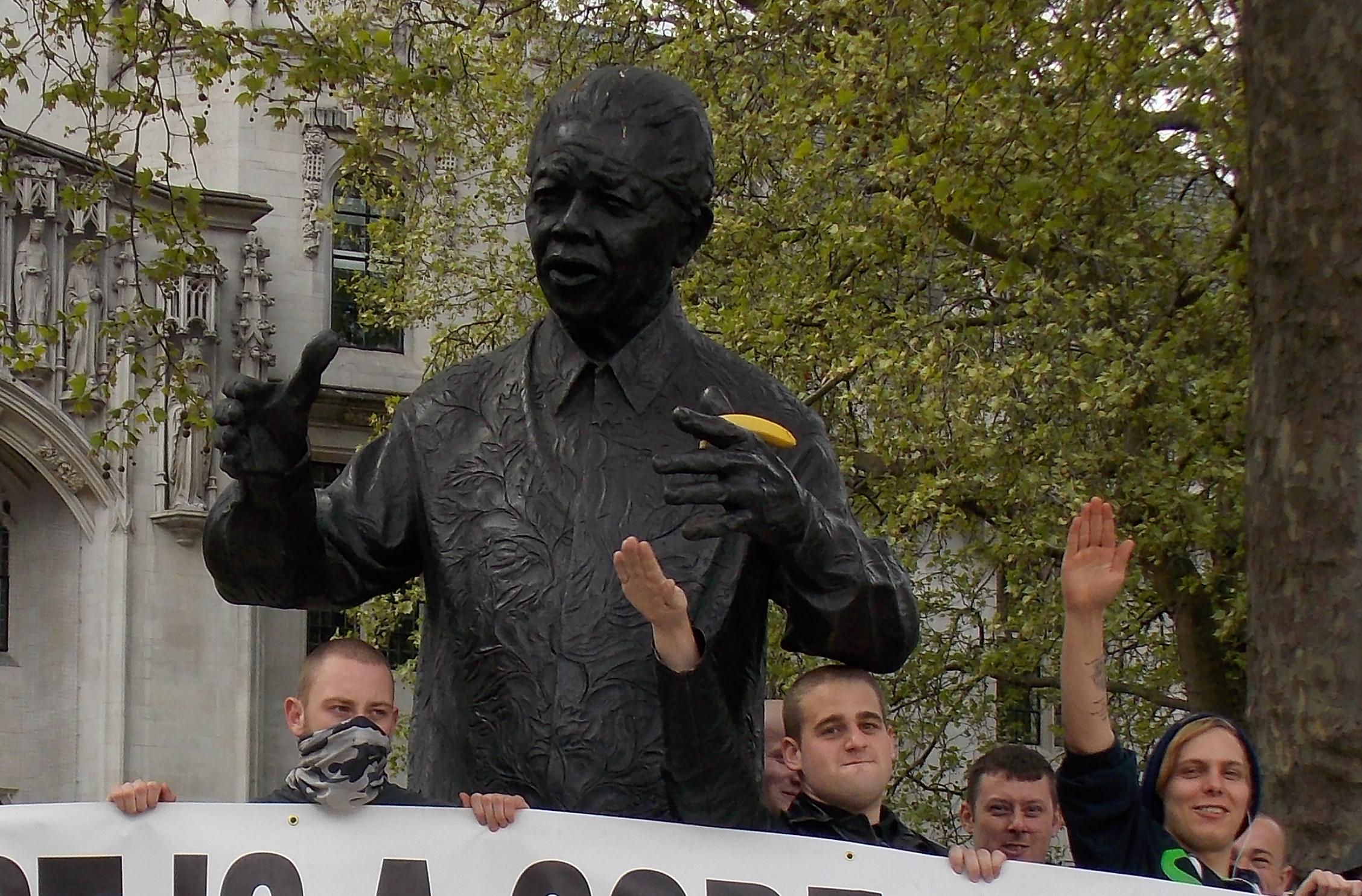
Founded in 2013 by Christopher Lythgoe, National Action is a terrorist organisation and the first extreme right-wing group to be banned by the UK government since World War II. National Action is described as a Neo-Nazi organisation that stirs up "hatred, glorifies violence and promotes vile ideology." It focused mainly on attracting young people through targeted propaganda. In 2016, 22 members were arrested and charged for being members. In the years following, many figures linked to the group were arrested on suspicion of plots to commit extremist acts, such as plotting to kill Rosie Cooper, in a bid to "replicate" the murder of Jo Cox, and the possession of terrorist manifestos.
Other incidents
In June 2016, Jo Cox was murdered by a far-right extremist after being stoked by the campaigns surrounding the Brexit referendum. Scholars have suggested that far-right attitudes contributed to and were normalised by the result of the Brexit referendum.
In June 2017, multiple terrorist attacks occurred. Darren Osbourne used a van to attack Muslim worshippers at Finsbury Park mosque, killing 1 and injuring 11. Ethan Stables planned an attack with a machete on a Gay Pride event in Cumbria, and was later sentenced to life in prison. Jack Renshaw, a neo-Nazi from Lancashire, was charged with the attempted murder of Labour MP Rosie Cooper, and also subsequently jailed for life.
In October 2017, former UKIP leadership candidate and anti-Islam activist Anne Marie Waters launched the For Britain Movement. Unlike most far-right parties that came before them, For Britain were zionist, opposed to antisemitism, and held more moderate views on social issues like LGBT rights. Former English Defence League leader Tommy Robinson and singer-songwriter Morrissey announced their support for the party, and fellow far-right and counter-jihad political party Liberty GB merged with For Britain. The party received support from several former members of far-right groups like the British National Party, Generation Identity, and the neo-Nazi terrorist organisation National Action. For Britain had some limited success in local council elections, but failed to make any significant breakthroughs in the parliamentary by-elections they contested. In July 2022, Waters announced on the party's website that the party was ceasing all operations with immediate effect, with their elected councillors subsequently joining the British Democrats. In April 2023, it was announced that she was rejoining UKIP as the "Justice spokes[person]".
In March 2018 Mark Rowley, the outgoing head of UK counter-terror policing, revealed that four far-right terror plots had been foiled since the Westminster attack in March 2017.
In November 2018 three people, Adam Thomas, Claudia Patatas and Daniel Bogunovic, were convicted of being members of the proscribed terrorist organisation, National Action, after a seven-week trial at the Crown Court in Birmingham. Thomas and Patatas have a child whom they named Adolf.
Patriotic Alternative
Since 2019 the former director of publicity of the BNP, neo-Nazi and antisemitic conspiracy theorist Mark Collett has led a new far-right group called Patriotic Alternative.
2020s–present
In late 2020, The British Hand was founded by a 15 year old teenager. Since then the group have been at the root of far-right online propaganda, especially on the social media app Telegram. This led Hope not Hate to start an undercover investigation into the group and write an article exposing them.
2024 riots
Main article: 2024 United Kingdom riots

In July and August 2024, right-wing to far-right riots occurred in England and Northern Ireland, after a mass stabbing in Southport on 29 July. The first riot started in Southport and later many protests and riots spread across the country. The riots involved racist attacks, arson and looting, and were the worst disorder in the United Kingdom since the 2011 England riots. The riots were fuelled by underlying Islamophobia, racist, anti-immigrant and anti-mass immigration sentiments, and disinformation about the identity of the Southport stabber. Far-right groups spread misinformation online, and the UK government under Keir Starmer accused Russia of spreading disinformation to stoke the unrest.
The riots had limited formal organisation; instead, rioters assembled around individual far-right social media personalities with the aid of far-right Telegram group chats affiliated with Active Club England, the terrorgram network, and football hooliganism firms. Groups involved in the riots included supporters of the EDL, including its former leader Tommy Robinson, members of Patriotic Alternative, and Britain First. The riots were also supported by the British Movement and National Front. Rioters clashed with local Muslims and counter-protesters, who were mobilised by Stand Up to Racism and other anti-fascist and anti-racist groups.
2025 anti-immigration disorder
Main article: 2025 British anti-immigration protests

Since March 2025, protests against immigration have taken place in parts of the United Kingdom. The protests have lead to officers being attacked and multiple arrests. Some have been focused around hotels being used by the government of the United Kingdom to provide accommodation for asylum seekers, while others are against immigration more broadly. Many were organised or attended by far-right groups including Britain First, UKIP, Homeland Party, and Patriotic Alternative, who have also been accused of spreading misinformation online.
The wave of far-right anti-immigration protests began in the aftermath of a series starting in Epping in July, later spreading to other cities. Protests occurred across the country, with disorder in cities including Bristol, Glasgow, Liverpool, Manchester and Newcastle; the largest protest came on 13 September when up to 150,000 people took part in a London march organised by far-right activist Tommy Robinson, where 26 police officers were injured.
UKIP organised some of the protests under their "Mass Deportations Tour", which has seen them march or rally in cities such as Glasgow, Nottingham, Liverpool, Newcastle, and London and be met with sometimes large counter-protests organised by groups such as Stand Up To Racism. On 8 August 2025, UKIP party leader Nick Tenconi published a video depicting himself in attendance of an anti-migrant demonstration in Portsmouth. In this video, he is seen performing a gesture that some, including Hope not Hate, have compared to a Nazi salute. Both Tenconi and Turning Point UK denied the accusations.
These protests have seen an increase in far-right efforts to use fears of violence against women to lend their views respectability. Multiple experts consulted by The Independent - including Andrea Simon, director of the End Violence Against Women Coalition; Lois Shearing, author of Pink Pilled; and a researcher for Hope not Hate - said that the far-right was are exploiting fears to make the far-right seem more "palatable", and that this is to appeal to a broader audience and gain more of a foothold in mainstream opinion. According to Simon, "these narratives are promoted by those who exploit genuine public concerns about sexual violence to intentionally fuel racism in our communities."
2025 flag raising
Main article: Operation Raise the Colours
"Operation Raise the Colours" is a 2025 political campaign in the United Kingdom that consists of displaying the Union Flag and the Saint George's Cross in public places, as well as the flags of the other constituent countries of the UK. The campaign began in August 2025, shortly after the beginning of the 2025 British anti-immigration protests, and has particularly aroused controversy around the Flag of England due to its history of use by anti-immigration nationalists. It has involved tying flags to lamp-posts and painting them onto mini-roundabouts.
Supporters of the campaign say that this is with the aim of promoting patriotism and it is non-partisan, although it has been supported by several figures and organisations associated with the far-right, including the fascist political party Britain First and the anti-Islam campaigner Tommy Robinson.
Election results
| Year | Candidates | Votes | % | Rank |
|---|---|---|---|---|
| 1959 | National Labour Party (UK, 1957) | 1,685 | 0.0 | 14th |
| Total | 1,685 | 0.0 | ||
| 1964 | British National Party (1960) | 3,410 | 0.0 | 11th |
| National Democratic Party (UK, 1966) | 349 | 0.0 | ||
| Patriotic Party (UK) | 1,108 | 0.0 | 15th | |
| Total | 4,867 | 0.0 | ||
| 1966 | British National Party (1960) | 5,182 | 0.0 | 11th |
| National Democratic Party (UK, 1966) | 769 | 0.0 | ||
| Patriotic Party (UK) | 126 | 0.0 | ||
| Total | 6,077 | 0.0 | ||
| 1970 | National Front (UK) | 11,449 | 0.0 | 13th |
| National Democratic Party (UK, 1966) | 14,276 | 0.0 | 12th | |
| Total | 25,725 | 0.0 | ||
| 1974 | National Front (UK) | 76,865 | 0.2 | 9th |
| National Democratic Party (UK, 1966) | 1,161 | 0.0 | 24 | |
| Total | 78,026 | 0.2 | ||
| 1974 | National Front (UK) | 113,843 | 0.4 | 8th |
| Total | 113,843 | 0.4 | ||
| 1979 | National Front (UK) | 191,719 | 0.6 | 6th |
| Total | 191,719 | 0.6 | ||
| 1983 | National Front (UK) | 27,065 | 0.1 | 12th |
| British National Party | 14,621 | 0.0 | 9th | |
| Total | 41,686 | 0.1 | ||
| 1987 | British National Party | 553 | 0.0 | 22 |
| Total | 553 | 0.0 | ||
| 1992 | British National Party | 7,631 | 0.1 | 16th |
| National Front (UK) | 4,816 | 0.1 | 19th | |
| Total | 12,447 | 0.2 | ||
| 1997 | British National Party | 35,832 | 0.1 | 16th |
| National Front (UK) | 2,716 | 0.0 | 28th | |
| Total | 38,548 | 0.1 | ||
| 2001 | British National Party | 47,129 | 0.2 | 15th |
| National Front (UK) | 2,484 | 0.0 | 29th | |
| Total | 49,613 | 0.2 | ||
| 2005 | British National Party | 192,745 | 0.7 | 8th |
| National Front (UK) | 8,079 | 0.0 | 23rd | |
| Total | 200,824 | 0.7 | ||
| 2010 | British National Party | 564,331 | 1.9 | 5th |
| National Front (UK) | 10,784 | 0.0 | 21st | |
| Total | 575,115 | 1.9 | ||
| 2015 | British National Party | 1,667 | 0.0 | 32nd |
| National Front (UK) | 1,114 | 0.0 | 37th | |
| British Democratic Party (2013) | 210 | 0.0 | 58th | |
| Total | 2,991 | 0.0 | ||
| 2017 | British National Party | 4,580 | 0.0 | 17th |
| Total | 4,580 | 0.0 | ||
| 2019 | British National Party | 510 | 0.0 | 47th |
| Total | 510 | 0.0 | ||
| 2024 | British Democratic Party (2013) | 1,860 | 0.0 | 46th |
| Total | 1,860 | 0.0 |
References
References
- (2015). "The Postwar British Extreme Right and Empire, 1945–1967". Religious Compass.
- (2020). "Thinking Imperially: The British Fascisti and the Politics of Empire, 1923–35". Twentieth Century British History.
- Cross, Kelly J.. (2020). "Racism is the manifestation of White supremacy and antiracism is the answer". Journal of Engineering Education.
- "National Action cases - statement and factsheet".
- (13 July 2022). "Extreme Right-Wing Terrorism".
- (19 July 2022). "Terrorism in Great Britain: the statistics".
- (January 1987). "The Development of the Ideas and Policy of the British Union of Fascists, 1932-40". Journal of Contemporary History.
- (January 2011). "Why Fascism? Sir Oswald Mosley and the Conception of the British Union of Fascists". History.
- (29 May 2019). "The National Front and the anti-fascist response in the 1970s".
- (19 July 2010). "Extremes of Faith and Nation: British Fascism and Christianity". Religious Compass.
- (6 November 2007). "Enoch Powell's 'Rivers of Blood' speech".
- (30 March 2022). "The National Front and the anti-fascist response in the 1970s".
- Roxburgh, Angus. (2002). "Preachers of Hate: The Rise of the Far Right". Gibson Square Books.
- (2000). "Harold Macmillan's "Winds of Change" Speech: A Case Study in the Rhetoric of Policy Change". Rhetoric & Public Affairs.
- (15 June 1974). "1974: Man dies in race rally clashes".
- (30 August 2017). "A look back at the Battle of Lewisham".
- (15 May 2009). "Electoral performance of the British National Party in the UK".
- (6 January 2010). "Angry White Men: Individual and Contextual Predictors of Support for the British National Party". Political Studies.
- Goodwin, Matthew J. (2011). "New British Fascism : Rise of the British National Party". Taylor & Francis Group.
- "BNP Policies".
- (10 November 2006). "BBC News: BNP leader cleared of race hate".
- "Written evidence submitted by Community Security Trust (CST) (OHC0032)". UK Parliament.
- "Election 2010 {{!}} Results".
- (11 September 2009). "Who are the English Defence League?". [[BBC News]].
- (7 September 2011). "Opposing Islamification or promoting Islamophobia? Understanding the English Defence League". Patterns of Prejudice.
- (5 February 2011). "Rival protesters rally in Luton". BBC News.
- "Europe 2014: the rise of the far right". Global: the international briefing.
- (2015). "Political ideology in Britain". Palgrave Macmillan.
- Tournier-Sol, Karine. (2015). "Reworking the Eurosceptic and Conservative Traditions into a Populist Narrative: UKIP's Winning Formula?". Journal of Common Market Studies.
- (2 April 2015). "UKIP absorbs Britain's far-right". EurActiv.
- Pitel, Laura. (28 February 2014). "Angry BNP accuse UKIP of stealing Love Britain slogan". The Times.
- (31 March 2014). "Nigel Farage: I am proud to have taken a third of the BNP's support". [[The Daily Telegraph.
- (4 December 2018). "Ukip being turned into 'anti-Islamic party' that could soon have Tommy Robinson as leader, defectors say". The Independent.
- "Robin Tilbrook meets Russian Nationalists".
- "Russian Obraz".
- "English Democrats". [[Hope not Hate]].
- (23 April 2013). "'Up to one in 10' English Democrat members were in BNP". BBC News.
- Palmer, Ewan. (20 May 2014). "Who are Britain First? The Far-Right Party 'Invading' Mosques". [[International Business Times]].
- Gadher, Dipesh. (25 May 2014). "Far right invades mosques to hand out Bibles". The Sunday Times.
- (9 October 2014). "The rise of Britain First online". BBC News.
- "Results". BBC News.
- (15 December 2016). "Ex-Britain First leader Paul Golding jailed over mosque ban". BBC News.
- (7 March 2018). "Britain First leaders jailed over anti-Muslim hate crimes". The Guardian.
- Ahmed, Jabed. (2024-05-04). "London Mayoral Election 2024: Results in full".
- Liddell, Colin. (14 February 2013). "The launch of the BDP". Radix.
- Electoral Commission: [http://search.electoralcommission.org.uk/English/Registrations/PP1765 Registration summary] {{Webarchive. link. (6 October 2016)
- "General Election: Andrew Moffat Candidate for Bognor Regis & Littlehampton". The Argus.
- Collins, Matthew. (8 February 2013). "Neo-Nazi former BNP members launch new far-right party".
- (8 July 2022). "Former London Mayoral candidate David Furness joins the British Democrats!".
- (11 August 2022). "Derek Beackon Joins the British Democrats!". British Democratic Party.
- (14 March 2022). "Councillor John Robinson joins the British Democrats". British Democratic Party.
- (2 August 2022). "Councillor Roger Robertson joins the British Democrats". British Democratic Party.
- (19 August 2022). "Lawrence Rustem elected to Detling Parish Council". British Democratic Party.
- (5 September 2017). "What is National Action and why is the neo-Nazi group banned?".
- (5 September 2017). "National Action".
- (20 September 2022). "Rosie Cooper: Labour MP victim of murder plot quits for NHS role".
- (22 April 2022). "National Action: Co-founder charged with terrorism offences".
- (23 November 2016). "The slow-burning hatred that led Thomas Mair to murder Jo Cox".
- (19 June 2017). "The political extreme as the new normal: the cases of Brexit, the French state of emergency and Dutch Islamophobia". Fennia.
- (2022-06-19). "Finsbury Park terror attack: Victim remembered on fifth anniversary". BBC News.
- (2018-02-05). "Ethan Stables convicted over gay pride attack plan". BBC News.
- (2019-05-17). "Jack Renshaw: MP death plot neo-Nazi jailed for life". BBC News.
- (12 October 2017). "Former UKIP leadership candidate to launch new far-right party".
- (10 October 2017). "UKIP reject Anne Marie-Waters founds own far-right party".
- (26 April 2018). "Meet For Britain Movement".
- (17 April 2018). "Morrissey tackles Brexit, Hitler and hard-to-find eggs in bizarre self-published interview". [[The Daily Telegraph.
- "An Important Announcement from Paul Weston concerning the future of Liberty GB".
- Corrigan, Phil. (20 June 2018). "For Britain's only councillor banned from Stoke council premises". HOPE not hate.
- "Important Announcement". For Britain.
- (18 April 2023). "Anne Marie Waters announces her return to politics & UKIP". UKIP.
- (26 February 2018). "Four far-right UK terrorist plots foiled since Westminster attack, police reveal". The Independent.
- Barnes, Tom. (12 November 2018). "National Action: Couple who named baby after Hitler found guilty of being part of neo-Nazi terror group". The Independent.
- (12 November 2018). "National Action trial: Three guilty of neo-Nazi group membership". BBC News.
- (11 August 2019). "YouTube cashes in on neo-Nazi's hate videos". The Sunday Times.
- (18 October 2009). "How the BNP's far-right journey ends up on primetime TV". The Guardian.
- link. (15 November 2020, ''ABC News'', 24 April 2019, "retweeting Mark Collett, a neo-Nazi...")
- "The British Hand: FAR RIGHT TERROR CELL EXPOSED". Hope not Hate.
- Watling, Tom. (31 July 2024). "Police clash with far-right mob outside Southport mosque after knife killings". [[Al Jazeera English.
- Dodd, Vikram. (2024-08-07). "UK police prepare for far-right rallies with biggest mobilisation since 2011 riots". The Guardian.
- Picheta, Rob. (5 August 2024). "Violent, far-right riots overran some UK cities this weekend. What happened, and what comes next?".
- (4 August 2024). "Explained: How UK's long-running Islamophobia problem led to far-right riots".
- (31 July 2024). "Agitators accused of Islamophobia for linking Southport attack to Muslims". [[Al Jazeera English.
- (2 August 2024). "Church leaders condemn 'anti-Islamic' protests". [[BBC News]].
- White, Nadine. (5 August 2024). "Beatings, stabbing and mosques sieged: Racist attacks carried out by far-right mobs". [[The Independent]].
- (4 August 2024). "Far-right rioters attack asylum seeker hotels in UK's Rotherham, Tamworth". [[Al Jazeera English.
- "Far-right riots flare in another UK city amid anti-immigrant protests". [[Al Jazeera English.
- (3 August 2024). "Southport riots: Police station set on fire in Sunderland – as it happened". [[The Times]].
- Martin, Amy-Clare. (2 August 2024). "Nation braces for weekend of far-right violence with 35 protests in wake of Southport". [[The Independent]].
- Casciani, Dominic. (2 August 2024). "Violent Southport protests reveal new tactics of the far-right". [[BBC News]].
- (7 August 2024). "Explainer: Why are there riots in the UK and who is behind them?".
- (3 August 2024). "Who Are the Far-Right Groups Behind the U.K. Riots?". The New York Times.
- (5 August 2024). "Foreign states amplifying disinformation fuelling riots, says Starmer". [[The Daily Telegraph]].
- (31 July 2024). "Former security minister raises concerns Putin behind Southport far-right disinformation". [[The Independent]].
- (6 August 2024). "UK far-right riots: everything we know". [[Politico]].
- Wallis, William. (5 August 2024). "Why are the far right rioting in England?". [[Financial Times]].
- (9 August 2024). "The extremists stoking hate, from hooligan firms to fascist fight club". The Times.
- (31 July 2024). "Who are the EDL? Far right group believed to be behind Southport riot". [[The Independent]].
- Kennedy, Dominic. (2 August 2024). "Who are the far-right groups organising the Southport stabbing protests?". [[The Times]].
- (5 August 2024). "Splitting far-right hardcore from sympathisers key to halting violence – expert". Evening Standard.
- Casciani, Dominic. (2 August 2024). "Violent Southport protests reveal new tactics of the far-right". [[BBC News]].
- (4 August 2024). "Far-Right and Muslims clash in fresh riots". The Telegraph.
- (6 August 2024). "Masked Muslims 'stand guard' at mosques". The Telegraph.
- (2 August 2024). "Anti-racists mobilise to counter 'unprecedented' UK far-right rallies". [[The Guardian]].
- (6 August 2024). "Police investigate attacks on cars and a pub after hundreds of people gather in Birmingham". [[The Independent]].
- (4 August 2024). "Clashes break out between rival groups after protest". [[BBC News]].
- Cheshire, Tom. (4 August 2024). "Bristol witnessed a 'running battle' as protesters clashed – with bottles and punches thrown".
- Williams, Joe. (16 March 2025). "Portsmouth Guildhall protests: Anti-immigration and anti-racism protestors make their voices heard - in pictures".
- (27 April 2025). "Bikers gather in Dover for illegal migrant protest".
- Esson, Daniel. (28 April 2025). "Large protest held in Kent town as Britain First leader says illegal immigration is 'out of control'".
- (27 July 2025). "Hundreds gather again at Essex asylum hotel in weekend of anti-immigrant protests". The Guardian.
- (27 July 2025). "Demonstrators clash at Epping hotel as protests spread nationwide".
- (23 July 2025). "Police attend protest outside London hotel which will house asylum seekers". [[Sky News]].
- Chaudhari, Shivani. (17 July 2025). "Officers attacked at hotel protest, say police". [[BBC News]].
- (14 September 2025). "Police hurt during Tommy Robinson's Unite the Kingdom rally in London".
- (6 October 2025). "Three Men Jailed In UK Over Violent Asylum Hotel Protests".
- (9 August 2025). "Groups clash as far right accused of 'spreading hate' in Newark protest". [[Nottinghamshire Live]].
- Vinter, Robyn. (9 August 2025). "Far-right protesters clash with police in Nuneaton after rally outside town hall". [[The Guardian]].
- (21 August 2025). "The Reform and Conservative Politicians Mingling With Neo-Nazis and Fascists at Asylum Hotel Protests".
- Chaudhari, Shivani. (17 July 2025). "Officers attacked at hotel protest, say police". [[BBC News]].
- (1 September 2025). "How hotels housing asylum seekers ignited a political firestorm in the U.K.". The Washington Post.
- (13 September 2025). "Tommy Robinson protesters attack police".
- "Police ban UKIP march through Whitechapel over fears of ‘serious disorder’ – Eastlondonlines".
- (26 July 2025). "Large group of anti-fascist protestors oppose 'mass deportation' rally".
- Paine, Toby. (11 August 2025). "'Nothing Nazi-esque': UKIP leader defends gesture at Portsmouth protest".
- Jackson, Lucy. (29 May 2025). "Ukip plans for 'mass deportation' rally in Scotland 'pathetic'".
- Jackson, Lucy. (27 September 2025). "Protests and counter-protests clash in Newcastle city centre amid heavy police presence".
- (29 August 2025). "Feminism is being co-opted by the far-right again, this time to target migrants".
- (2 January 2026). "How anti-migrant groups are hijacking women’s rights to promote their agenda".
- Addley, Esther. (20 August 2025). "'Don't call this racist': row grows over motives behind England flag campaign". The Guardian.
- Tait, Albert. (22 August 2025). "English flag protests 'intimidating' residents, council leader says". The Daily Telegraph.
- Hughes, Patrick. (22 August 2025). "St George's cross 'intimidating', council says". BBC News.
This article was imported from Wikipedia and is available under the Creative Commons Attribution-ShareAlike 4.0 License. Content has been adapted to SurfDoc format. Original contributors can be found on the article history page.
Ask Mako anything about Far-right politics in the United Kingdom — get instant answers, deeper analysis, and related topics.
Research with MakoFree with your Surf account
Create a free account to save articles, ask Mako questions, and organize your research.
Sign up freeThis content may have been generated or modified by AI. CloudSurf Software LLC is not responsible for the accuracy, completeness, or reliability of AI-generated content. Always verify important information from primary sources.
Report