From Surf Wiki (app.surf) — the open knowledge base
Famadihana
Funerary tradition of the Malagasy people in Madagascar
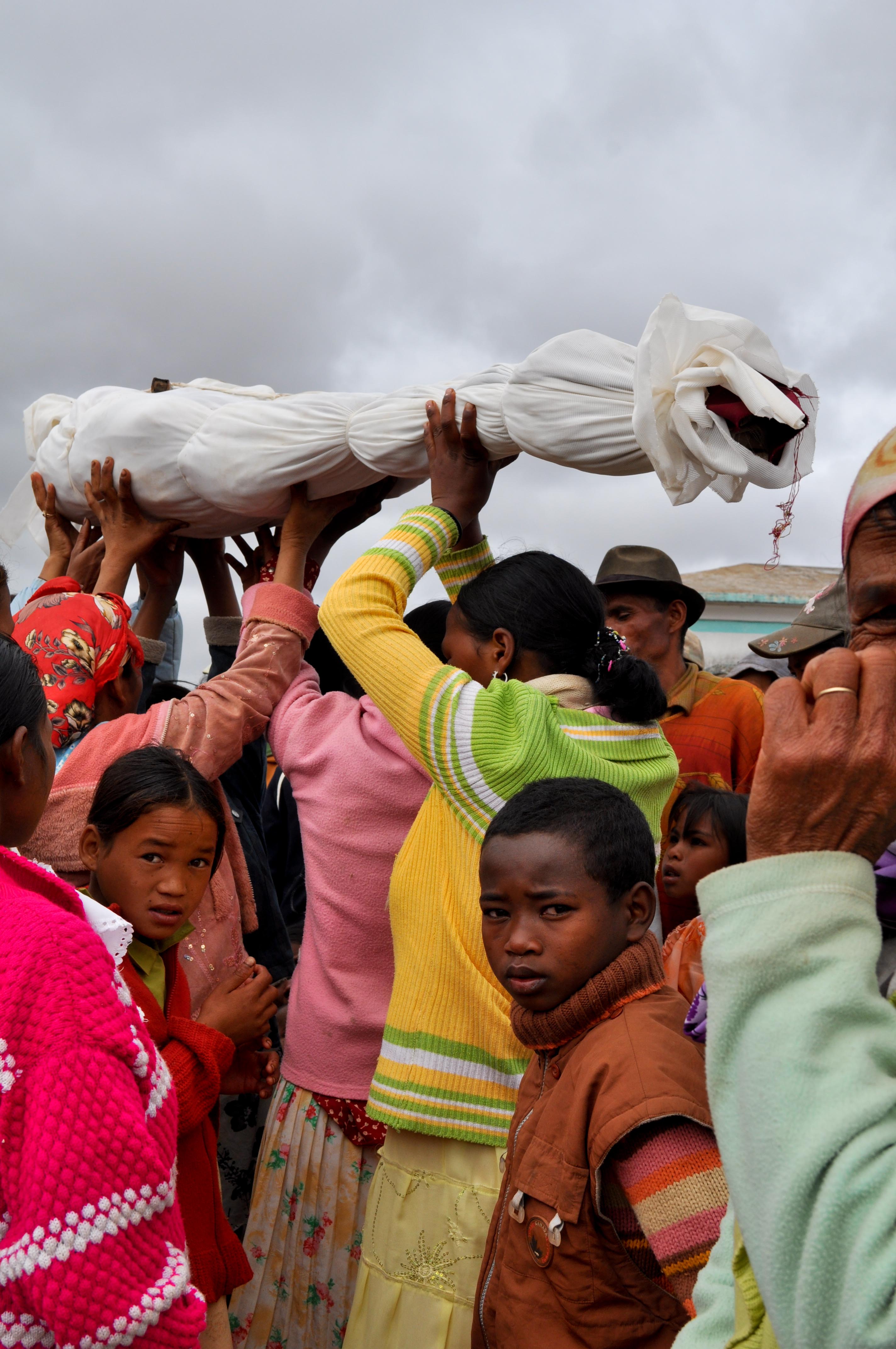
Funerary tradition of the Malagasy people in Madagascar
Famadihana appears to be a custom of somewhat recent origin, perhaps only since the 17th century in its present form, although it may be an adaptation of premodern double funeral customs from Southeast Asia and Oceania. The custom is based upon a belief that the spirits of the dead finally join the world of the ancestors after the body's complete decomposition and appropriate ceremonies, which may take many years. In Madagascar, this became a regular ritual usually once every five to seven years, and the custom brings together extended families in celebrations of kinship, sometimes even those with troubled relations.
The practice of Famadihana is on the decline due to the expense of silk shrouds and belief by some Malagasy that the practice is outdated. Early missionaries discouraged the practice, and Evangelical Christian Malagasy have abandoned the practice in increasing numbers. The Catholic Church, however, no longer objects to the practice, because it regards Famadihana as purely cultural rather than religious. As one Malagasy man explained to the BBC, "It's important because it's our way of respecting the dead. It is also a chance for the whole family, from across the country, to come together."
Additionally, the practice of Famadihana is thought to be connected to pneumonic plague transmission in the region. The Malagasy government has issued rulings forbidding the practice for individuals who died of plague, but there have been reports of people ignoring this decree.
References
References
- "Madagascar's dance with the dead" [[BBC]], 16 August 2008.[https://news.bbc.co.uk/2/hi/programmes/from_our_own_correspondent/7562898.stm] Accessed 17 August 2008.
- (8 March 2013). "Dancing with Corpses: Famadihana, or Turning of the Bones in Madagascar".
- (26 October 2017). "'Dancing with the Dead' Ritual Could Help Plague Spread".
This article was imported from Wikipedia and is available under the Creative Commons Attribution-ShareAlike 4.0 License. Content has been adapted to SurfDoc format. Original contributors can be found on the article history page.
Ask Mako anything about Famadihana — get instant answers, deeper analysis, and related topics.
Research with MakoFree with your Surf account
Create a free account to save articles, ask Mako questions, and organize your research.
Sign up freeThis content may have been generated or modified by AI. CloudSurf Software LLC is not responsible for the accuracy, completeness, or reliability of AI-generated content. Always verify important information from primary sources.
Report