From Surf Wiki (app.surf) — the open knowledge base
Fairfax County Public Schools
School division in Virginia, U.S.

School division in Virginia, U.S.
| Field | Value |
|---|---|
| name | Fairfax County Public Schools |
| logo | Fairfax_County_Public_Schools_Logo.png |
| address | 8115 Gatehouse Road |
| city | Falls Church postal address |
| state | Virginia |
| county | (Fairfax County) |
| zipcode | 22042 |
| country | United States |
| coordinates | |
| type | Public |
| motto | |
| grades | Pre-K through 12 |
| established | |
| superintendent | Michelle Reid |
| school_board | 13 members |
| governing_agency | Virginia Department of Education |
| schools | 223 |
| us_nces_district_id | 5101260 |
| budget | $3.5 billion (FY 2024) |
| students | 179,858 (2022–23) |
| teachers | 12,675.75 (FTE) (2022–23) |
| staff | 15,406.25 (FTE) (2022–23) |
| ratio | 14.19 (2022–23) |
| website |
The Fairfax County Public Schools system (FCPS) is a school division in the U.S. commonwealth of Virginia. It is a branch of the Fairfax County government, which administers public schools in Fairfax County and the City of Fairfax. FCPS's headquarters is located near Falls Church.
With 188,887 students enrolled as of 2019, FCPS is the largest public school system in Virginia and the 11th-largest school district in the nation. The school division has been led by Division Superintendent Michelle Reid since July 2022.
History
19th century


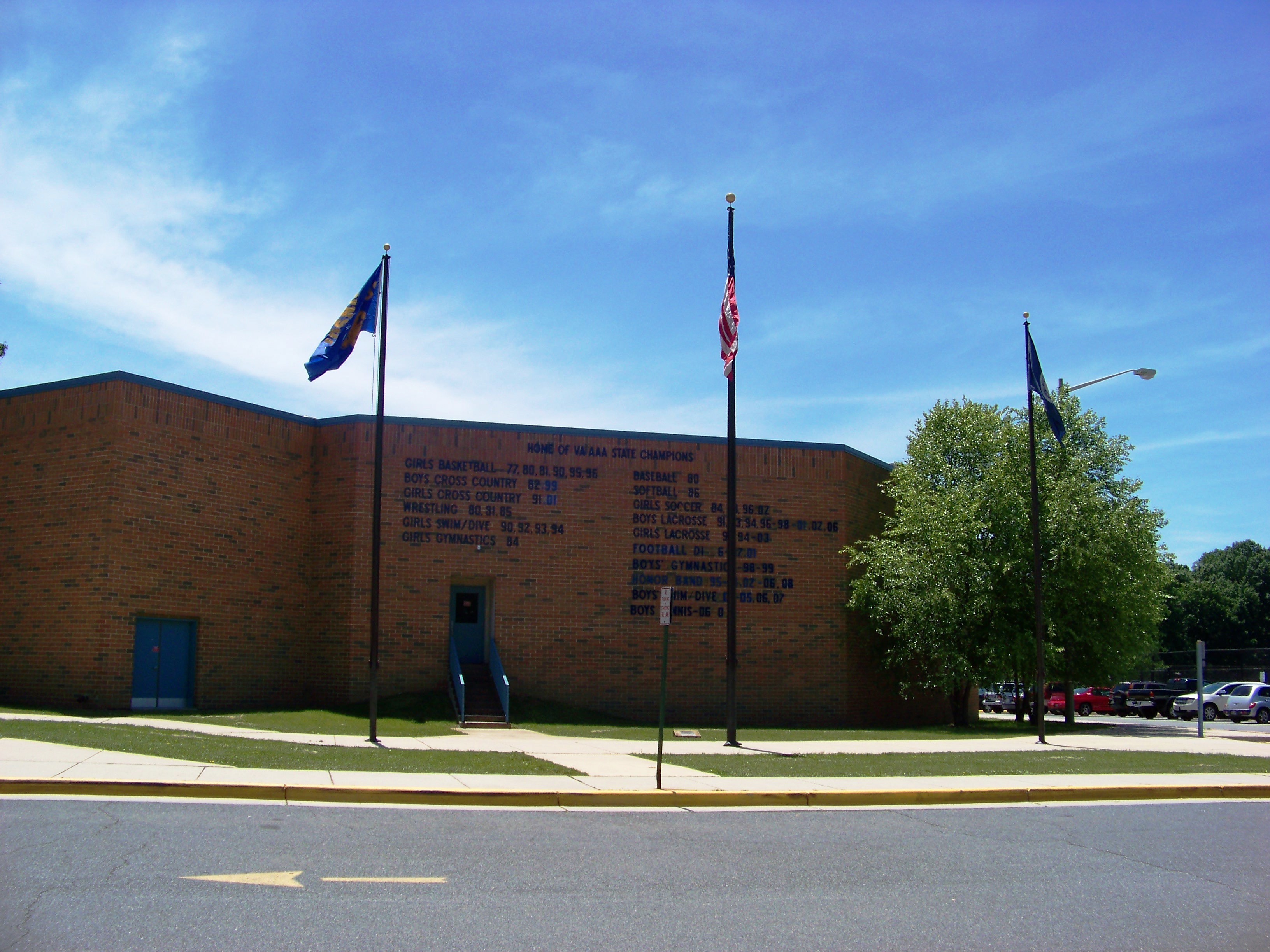

The public school system in Fairfax County, Virginia, was created following the end of the Civil War with the adoption by Virginia of the Reconstruction-era state constitution in 1870, which provided for the first time that free public education was a constitutional right. The first superintendent of schools for Fairfax County was Thomas M. Moore, who was sworn in on September 26, 1870. At the time of its creation, the Fairfax County Public Schools system consisted of 41 schools, 28 white, and 13 colored schools.
In 1886, Milton D. Hall was appointed superintendent, and he served for 44 years until his retirement in 1929.
20th century
Fairfax County Schools, like most school systems in the south, schools practiced de jure segregation. There were local elementary schools for black students but no high schools. Although Fairfax was a densely populated area, there were proportionately few black high school students. Fairfax, Prince William, Loudoun, Arlington, and Fauquier Counties shared the high school for black students. The school was centrally located between the counties in Manassas. Others attended high schools in Washington, D.C., where many had relatives. Those schools were Armstrong High School, Cardozo High School, Dunbar High School, and Phelps Vocational Center in Washington, D.C. In 1951, Fairfax County, at the request of residents for a black high school, began construction of the Luther Jackson School. The opening coincided with the Brown decision passed in 1954.
In 1954, FCPS had 42 elementary schools and six high schools.
In 1954, the Supreme Court ruling in Brown v. Board of Education ordered an end to racial segregation. In response, the Commonwealth of Virginia immediately enacted legislation to stop the desegregation process, took control of all the schools in Virginia, and resorted to closing school systems attempting to desegregate. When Arlington County announced an early attempt at a desegregation plan, its school board was fired by the State Board of Education.
In 1955, the Fairfax County School Board renamed a "Committee on Desegregation" as the "Committee on Segregation" after a petition and threat of litigation from a civic group called "Virginia Citizens' Committee for Better Schools".
After the Brown v. Board of Education decision, Daniel Duke, author of Education Empire, wrote: "Whether local school systems such as Fairfax County, left to their own, would have moved forward to implement desegregation in the late fifties will never be known. Richmond removed any possibility of local option..."
It was recognized in court cases that it was the state who was running the show, not the county. The ruling in a 1964 decision stated, "Prior to the Brown decision Fairfax County maintained a dual school system: one for Negro students; one for all other races. Shortly thereafter the placement of all children in the Fairfax County schools was taken from the local School Board and vested in the state Pupil Placement Board. The assignment of students remained with the state Board until the 1961–62 school year, at which time placement responsibilities were reinvested in the local School Board." Fairfax County began their desegregation efforts shortly thereafter.
As early as 1955, it was noted that in the Virginia General Assembly: Delegates from Northern Virginia openly opposed the Stanley Plans and called for even more radical legislation. Virginia's 10th district was the only congressional district to vote against the Gray Plan. Delegate Boatwright also introduced another bill aimed at correcting the unorthodox views of the northern Virginians. Boatwright's legislation would have prohibited certain federal employees from serving on school boards or holding other local offices. The point of this bill, called the "Boatwright Bill", was without a doubt aimed at Northern Virginia and the School Boards. Boatwright said his bill affected all Virginia communities but admitted Northern Virginia was most affected. The reason for the bill was that they felt that Federal Employees were in support of the Federal government's position on integration. The seven-member Fairfax County School Board included four Federal employees.
In Blackwell v. Fairfax County School Board in 1960, black plaintiffs charged that the Fairfax grade-a-year plan was discriminatory and dilatory. Fifteen black children had been refused admission to white schools because they did not fall within the prescribed grades of the School Board's assignment plan. The plaintiffs contended successfully that the speed of desegregation was too slow under the school board's plan. District Judge Albert V. Bryan did not categorically rule out such plans in accepting the plaintiff's argument. Instead, he emphasized that they must be judged according to the community's character. Since the black school population of Fairfax County was less than four percent, Bryan considered the fear of racial friction an unacceptable justification for such a cautious desegregation plan.
The Civil Rights Commission report of 1962 found that "Every sign indicates that the communities in northern Virginia will be the first in the State to reach compliance with the mandate in the School Segregation Cases." Ultimately, Fairfax County was one of the first school systems in the country to be awarded funds to aid with desegregation because of their efforts to implement a desegregated system.
The Fairfax County School Board voted to switch from a 7–5 to a 6–2–4 grade level configuration in 1958, necessitating the creation of what were then called intermediate schools for students in grades 7 and 8.
In the fall of 1960, the first black students were admitted to newly desegregated public schools. Jerald R. Betz and Raynard Wheeler were enrolled at the Belvedere Elementary School in Falls Church, and Gwendolyn Brooks was enrolled at Cedar Lane Elementary School in Vienna.
The changeover to the 6–2–4 plan was the last major initiative of Superintendent W. T. Woodson, who retired in 1961, having served 32 years, the second-longest tenure as head of the Fairfax County Public Schools system.
In April 1961, Wilmington, North Carolina Superintendent Earl C. Funderburk was appointed superintendent to replace Woodson.
In 1961, FCPS also began administering the schools in the City of Fairfax.
As early as 1965, Superintendent Funderburk was discussing plans to decentralize FCPS. By 1967, Funderburk had put together a plan for five area offices, each serving a portion of the county and had appointed Woodson High School Principal Robert E. Phipps and West Springfield High School Principal S. John Davis as his first two administrators that December.
Although the school board had endorsed Funderburk's plan, they also hired the consulting firm of Cresap, McCormick & Paget to conduct an audit of the system's management organization and operations. In 1968, based on their consultant's recommendations, the school board put a significantly modified version of the decentralization plan into effect, dividing FCPS into four areas which were, in effect, miniature school systems.
In January of the following year, Funderburk resigned, telling the school board he did not want a third term as superintendent. The school board selected Lawrence M. Watts from the Greece School District in Greece, New York to take the reins of the Fairfax County Public Schools system, which had grown during Funderburk's tenure from 65,000 to 122,000 students, in May 1969.
In May 1970, Watts appointed Taylor M. Williams as the first black high school principal since FCPS had desegregated, placing him in charge of James Madison High School in Vienna.
Watts' appointment of Williams would be one of his final official acts. After less than a year as superintendent, Watts died, aged 44, of a heart attack at his home in Oakton in June 1970. Assistant Superintendent S. Barry Morris was named interim superintendent while the school board sought a replacement to lead the 130,000 student school system.
The board did not have to look far for its new superintendent. In September 1970, Area Superintendent S. John Davis was chosen following a nationwide search to serve the remaining 33 months of Watts' four-year term.
During the mid-1970s, Davis had difficulties dealing with the start of a demographic crash and a population shift. The student population dropped from a high of 145,385 in the 1974–75 school year to an eventual low of 122,646 in 1982–83. Additionally, families migrated from established eastern and central parts of the county to newer developments in the west and south, leading to the unenviable task of Davis having to request the closings of some schools while needing to build entirely new ones elsewhere.
In a 6–5 vote, the school board voted in May 1976 to re-institute textbook rental fees, hoping to raise an additional $1.3 million to close a projected budget shortfall. The plan was scrapped two months later, in July, when the board was able to find a $1.4 million surplus.
In 1978, Fairfax County began countywide enforcement of its 15-year-old standardized six-point letter grading scale, with a ten-point spread at the bottom of the grading range. The grading scale, initially set in 1963, provided that a score of 100–94% was an A, 93–87% a B, 86–80% a C, and 70–79% a D, with any score below 70% an F.
The county school board adopted a $279 million budget in February 1979, which included a 5.15% cost of living raise for the system's teachers and other employees. However, this increase was only slightly more than half of the inflation rate, which was at an annual rate of 9.9% that month, and far short of the 9.4% increase FCPS employees had sought. In April 1979, the Fairfax Education Association, the professional association representing teachers in the county, adopted a work-to-the-rule action, which meant that teachers would not do any work outside of the 7.5 hours per day they were contracted for. Additionally, the FEA gave a vote of no confidence to Superintendent Davis.
The vote of no confidence was considered the main factor in Davis' decision to resign from Fairfax County Public Schools on May 18, 1979, and accept an appointment as Virginia Superintendent of Public Education from Governor John N. Dalton, despite having to take a $5,000 per year pay cut.
After Davis resigned, the Fairfax County School Board appointed Associate School Superintendent William J. Burkholder interim superintendent.
In November 1979, the school board named Orange County, Florida superintendent Lucius Linton Deck, Junior as superintendent following a four-month search. Deck had been a divisive figure during his years in Orange County, with some residents glad to see him go, while others praised him as a strong and professional leader.
Deck inherited the problem of needing to close underused schools that had first plagued Superintendent Davis. 29 elementary schools, mostly in the eastern part of the county, were studied for possible closure, but Deck's recommendation in April 1980 was for eight schools to be closed, five more than the review panel had suggested. The following month, the school board voted to close seven of the eight schools at its May 22, 1980 meeting, a move which was met with angry hisses and boos from parents in attendance.
Fairfax County teachers' work to the rule action, which had begun in April 1979, was finally ended in May 1980.
Superintendent Linton Deck accepted a new four-year contract as Superintendent of Fairfax County Public Schools in January 1981. Shortly before accepting his new contract, Deck proposed making up a $2.75 million portion of his proposed $395 million 1982 school budget by instituting textbook rental fees for students. Although permitted by Virginia law, the plan, which included charging textbook fees from $22 for elementary school students up to $30 per year for high school students, was scrapped in the face of strong criticism.
Controversy over Deck's handling of an investigation of recruiting violations by the Mount Vernon High School athletic department, his censure by the Fairfax Education Association for a mishandled school closing, unhappiness with his leadership style, which was characterized as "aggressive" and "abrasive", and pressure from the Fairfax County Board of Supervisors angry at Deck's proposed budget led to the school board forcing Deck to resign on June 24, 1982, only years into his four-year contract. The board appointed William J. Burkholder as acting superintendent.
At its April 25, 1991 meeting, the school board approved a plan where several intermediate schools in areas of the county with declining enrollments that had for the previous 31 years only served seventh and eighth grades would add sixth graders and become middle schools. Three intermediate schools, Glasgow, Holmes, and Poe, added sixth-grade classes.
In 1993, the four-year-old teacher merit pay was suspended due to budget cuts, and the school board voted to phase the program out completely over the next four years at its March 11 meeting.
Special education
FCPS took over the education of students with mental disabilities from a parent-organized cooperative in 1953. The parents had begun the program in 1950, using whatever space could be found to educate their children, but eventually asked FCPS to take control of the program.
Special education classes for mentally disabled students were expanded in 1955 to four classes for "educable" (those with a mental age above 7) children at Groveton, Lincolnia, Oakton, and Luther Jackson schools, and a class for "trainable" (those with a mental age of less than ) children at Groveton.
In recent years, lawsuits have been brought by parents of students with IEPs and 504 plan against FCPS over reports that the district repeatedly violated and failed to provide the necessary resources provided by the student's special education plan provided to students under federal anti discrimination laws ADA and IDEA act.
The number of lawsuits and complaints filed FCPS leading to multiple investigations by The United States Department of Education, the resulting reports from the investigations detailing how many times and how much FCPS has failed students who had IEPs and 504 plans.
21st century
From 1965 to 2006, the county school system was headquartered at 10700 Page Avenue in an unincorporated area of the county surrounded by the City of Fairfax. In 2006, FCPS moved all of its operations from the Burkholder Center and several other school-owned and leased offices to the office building on Gatehouse Road.
The school system has expanded to include over 196 schools and centers, including 22 high schools, three secondary schools, 23 middle schools, and 141 elementary schools. FCPS also operates a fleet of over 1520 school buses, which transport 110,000 students daily. The district operates on an operating budget of $2.5 billion through numerous funding sources.
FCPS is currently the largest school system in Virginia and the 11th largest in the United States. It also boasts an average on-time graduation rate of 91.5% and an average SAT score of 1213. The school district uses an electronic visitor management system to control visitors' access at its schools.
2025 Investigation by the Committee on Education and Workforce
On November 24th, Dr. Michelle Reid (superintendent of the FCPS) received a notice of investigation of violations of obligation under Title VI and proliferation of antisemitism by the House Education and Workforce Committee. The Committee expressed deep concern that FCPS is failing to uphold its obligations under Title VI FCPS experienced significant antisemitic incidents even prior to the October 7, 2023, terrorist attacks against Israel. Prior to the October 7th attacks, one high school’s Muslim Students’ Association (MSA) hosted a speaker who had made grotesque antisemitic statements.4 For example, he had tweeted, “I’m not racist I love everyone. Except the yahood [Jews],” and “Never met a Jew who didn’t have a huge nose.” FCPS school board member repeatedly posted antisemitic messages online—using accounts that identified her as a member of the school board—including statements such as “Israel doesn’t exist.” This environment prompted a Federal investigation into the school district.
Academic programs and courses
The following academic programs are offered at select schools:
- Advanced Placement (AP) Program: This program provides college-level coursework in various subject areas to prepare students for selective universities and colleges. As of the 2024–2025 school year, the district offers a total of 39 AP classes.
- International Baccalaureate (IB) Programs: The school offers the International Baccalaureate Middle Years Program (MYP) for grades 6-10 and the IB Diploma Program (DP) for 11th and 12th graders.
- FCPS Online Campus: Students can access courses identical to those offered in traditional classrooms through the FCPS Online Campus.
- Academy Elective Courses: Students enrolling in Academy elective courses will be provided with opportunities to participate in a variety of career experiences, including shadowing, mentoring, and/or internships with local businesses.
Controversies
Debate over grading policies
Prior to May 2009, FCPS used a six-point grading scale where 94–100% was an A, 90–93% was a B+, 84–89% was a B, and so on. In 2008, however, a group of parents raised concerns about whether the FCPS method of weighing and computing grades for advanced courses adversely affected applicants from FCPS when they applied for college admissions, honors program placements, and merit-based scholarship awards.
On January 2, 2009, Superintendent Jack D. Dale announced his decision on the issue, recommending changing the weights of advanced courses but maintaining the six-point grading scale. Dale stated there was no conclusive evidence that the six-point grading scale is disadvantageous for the students of FCPS.
FCPS worked with the parent group to conduct a joint investigation into the issue. On January 22, 2009, the FCPS School Board directed Superintendent Dale to report to it with a new version of the grading scale by March 2009. The board also approved changing the weighting for Honors to 0.5 effective with the 2009–2010 school year and for AP and IB courses to 1.0 retroactively.
After investigation, the Fairfax County School Board approved a modified ten-point scale with pluses and minuses. The new scale went into effect at the beginning of the 2009–10 school year. 93–100% is an A, 90–92% is an A−, 87–89% is a B+, and so on.
Controversy over disciplinary policies
In 2009, Fairfax County Public Schools' disciplinary policies for drug offenses came under community scrutiny after two students committed suicide after being subject to school disciplinary proceedings. Both 17-year-old Josh Anderson of South Lakes High School, who died in 2009, and 15-year-old Nick Stuban of Woodson High School, who died in 2011, had been suspended from their schools for marijuana-related offenses. The school district also suspended at least one student for possession of her prescription medication.
Although then-Superintendent Jack D. Dale maintained that the disciplinary policy did not constitute "zero tolerance", the suicides nevertheless prompted the school board and the state legislature to revisit school disciplinary policies. After a year-long study, the school board voted to relax punishments for marijuana possession and add parental notification requirements for students facing serious disciplinary sanctions.
Thomas Jefferson High School for Science and Technology
Main article: Coalition for TJ v. Fairfax County School Board
In late 2022 and early 2023, Thomas Jefferson High School for Science and Technology was investigated by the State Attorney General Jason Miyares for withholding notification from parents that their children were awarded the National Merit Award, which made national headlines. The high school was also sued for a change made to their admissions policy.
Organization
- Democratic (12) Minority
- Republican (0)
FCPS is led by a superintendent and is overseen by a school board. The current superintendent is Dr. Michelle C. Reid, who began her term on July 1, 2022.
For FCPS administrative and governance purposes, Fairfax County is organized into six geographically based regions (1 through 6). Each region is led by an assistant superintendent, who oversees operations at schools within the region.
FCPS's headquarters is located in the Gatehouse Administration Center in Merrifield, an unincorporated section of the county near the city of Falls Church; the headquarters has a Falls Church address but is not within the city limits.
School board
Virginia statutes and the Virginia Board of Education charge the Fairfax County School Board with setting general school policy and establishing guidelines that ensure proper administration and operation of FCPS.
The Fairfax County School Board comprises 12 elected members and one student representative. Nine elected members are chosen from each magisterial district (Braddock, Dranesville, Franconia, Hunter Mill, Mason, Mount Vernon, Providence, Springfield, and Sully). Three additional elected members are chosen "at-large". Members are elected for four-year terms. A student representative, selected for a one-year term by the Student Advisory Council, sits with the board at all public meetings and participates in discussions but does not vote. The board chair is elected to serve for a one-year term, and the current chair Karl Frisch (Providence), has been serving since January 1, 2024.
The current members of the school board are Robyn A. Lady (Dranesville), Marcia C. St. John-Cunning (Franconia), Melanie K. Meren (Hunter Mill), Ricardy J. Anderson (Mason), Mateo Dunne (Mount Vernon), Karl V. Frisch (Providence), Sandy B. Anderson (Springfield), Seema Dixit (Sully), along with a vacancy in the Braddock district. The other three members, R. Kyle McDaniel, Ryan L. McElveen, and Ilryong Moon, serve as "at-large" members. Megan Sawant from Thomas Jefferson High School for Science and Technology (TJHSST) serves as the non-voting student representative.
Schools
High schools
- Annandale High School (Atoms) – Annandale
- Centreville High School (Wildcats) – Clifton
- Chantilly High School (Chargers) – Chantilly
- Thomas Alva Edison High School (Eagles) – Alexandria
- Fairfax High School (Lions) (formerly the Rebels) – Fairfax
- Falls Church High School (Jaguars) – Falls Church
- Herndon High School (Hornets) – Herndon
- Justice High School (Wolves) – Falls Church (formerly J.E.B. Stuart High School)
- Langley High School (Saxons) – McLean
- John R. Lewis High School (Lancers) – Springfield (formerly Robert E. Lee High School)
- James Madison High School (Warhawks) – Vienna
- George C. Marshall High School (Statesmen) – Falls Church
- McLean High School (Highlanders) – McLean
- Mount Vernon High School (Majors) – Alexandria
- Oakton High School (Cougars) – Vienna
- South County High School (Stallions) – Lorton
- South Lakes High School (Seahawks) – Reston
- Thomas Jefferson High School for Science and Technology (Colonials) – Alexandria
- West Potomac High School (Wolverines) – Alexandria
- West Springfield High School (Spartans) – Springfield
- Westfield High School (Bulldogs) – Chantilly
- Carter G. Woodson High School (formerly W.T. Woodson High School) (Cavaliers) – Fairfax
Secondary schools
- Hayfield Secondary School (Hawks) – Alexandria
- Lake Braddock Secondary School (Bruins) – Burke
- Robinson Secondary School (Rams) – Fairfax
Alternative high schools
- Bryant Alternative High School – Alexandria
- Fairfax County Adult High School – Fairfax
- Mountain View Alternative High School – Centreville
Middle schools
Main article: List of Fairfax County Public Schools middle schools

- Carl Sandburg Middle School – Alexandria
- Edgar Allan Poe Middle School – Annandale
- Ellen Glasgow Middle School – Lincolnia
- Francis Scott Key Middle School – Springfield
- Franklin Middle School – Chantilly
- Henry Wadsworth Longfellow Middle School – Falls Church
- Herndon Middle School – Herndon
- James Fenimore Cooper Middle School – McLean
- Joyce Kilmer Middle School – Vienna
- Katherine Johnson Middle School (formerly Sidney Lanier Middle School) – Fairfax
- Langston Hughes Middle School – Reston
- Liberty Middle School – Clifton
- Luther Jackson Middle School – Falls Church
- Mark Twain Middle School – Alexandria
- Oliver Wendell Holmes Middle School – Alexandria
- Ormond Stone Middle School – Centreville
- Rachel Carson Middle School – Herndon
- Robert Frost Middle School – Fairfax
- Rocky Run Middle School – Chantilly
- South County Middle School – Lorton
- Thoreau Middle School – Vienna
- Walt Whitman Middle School – Alexandria
- Washington Irving Middle School – Springfield
Elementary schools
There are 141 elementary schools in Fairfax County:


- Buzz Aldrin Elementary School – Reston
- Annandale Terrace Elementary School - Annadale
- Louise Archer Elementary School – Vienna
- Armstrong Elementary School – Reston
- Bailey's Elementary School for the Arts and Sciences – Bailey's Crossroads
- Bailey's Upper Elementary School for the Arts and Sciences – Falls Church
- Beech Tree Elementary School – Falls Church
- Belle View Elementary School – Alexandria
- Belvedere Elementary School – Falls Church
- Bonnie Brae Elementary School – Fairfax
- Braddock Elementary School – Annandale
- Bren Mar Park Elementary School – Alexandria
- Brookfield Elementary School –Chantilly
- Bucknell Elementary School – Alexandria
- Bull Run Elementary School – Centreville
- Bush Hill Elementary School – Alexandria
- Camelot Elementary School – Annandale
- Cameron Elementary School – Alexandria
- Canterbury Woods Elementary School – Annandale
- Cardinal Forest Elementary School – West Springfield
- Centre Ridge Elementary School – Centreville
- Centreville Elementary School – Centreville
- Cherry Run Elementary School – Burke
- Chesterbrook Elementary School – McLean
- Churchill Road Elementary School – McLean
- Clearview Elementary School – Herndon
- Clermont Elementary School – Alexandria
- Coates Elementary School – Herndon
- Colin Powell Elementary School – Centreville
- Columbia Elementary School – Annandale
- Colvin Run Elementary School – Vienna
- Crestwood Elementary School – Springfield
- A. Scott Crossfield Elementary School – Herndon
- Cub Run Elementary School – Centreville
- Cunningham Park Elementary School – Vienna
- Daniels Run Elementary School – Fairfax
- Deer Park Elementary School – Centreville
- Dogwood Elementary School – Reston
- Dranesville Elementary School – Herndon
- Eagle View Elementary School – Fairfax
- Fairfax Villa Elementary School – Fairfax
- Fairhill Elementary School – Fairfax
- Fairview Elementary School – Fairfax Station
- Flint Hill Elementary School – Vienna
- Floris Elementary School – Herndon
- Forest Edge Elementary School – Reston
- Forestdale Elementary School – Springfield
- Forestville Elementary School – Great Falls
- Fort Belvoir Elementary School – Fort Belvoir
- Fort Hunt Elementary School – Alexandria
- Fox Mill Elementary School – Herndon
- Franconia Elementary School – Alexandria
- Franklin Sherman Elementary School – McLean
- Freedom Hill Elementary School – Vienna
- Garfield Elementary School – Springfield
- Glen Forest Elementary School – Falls Church
- Graham Road Elementary School – Falls Church
- Great Falls Elementary School – Great Falls
- Greenbriar East Elementary School – Chantilly
- Greenbriar West Elementary School – Chantilly
- Groveton Elementary School – Alexandria
- Gunston Elementary School – Lorton
- William Halley Elementary School – Fairfax Station
- Haycock Elementary School – Falls Church
- Hayfield Elementary School – Alexandria
- Herndon Elementary School – Herndon
- Hollin Meadows Elementary School – Alexandria
- Hunt Valley Elementary School – Springfield
- Hunters Woods Elementary School for the Arts and Sciences – Reston
- Hutchison Elementary School – Herndon
- Hybla Valley Elementary School – Alexandria
- Island Creek Elementary School – Alexandria
- Keene Mill Elementary School – West Springfield
- Kent Gardens Elementary School – McLean
- Kings Glen Elementary School – Springfield
- Kings Park Elementary School – Springfield
- Lake Anne Elementary School – Reston
- Anthony T. Lane Elementary School – Alexandria
- Laurel Hill Elementary School – Lorton
- Laurel Ridge Elementary School – Fairfax
- Lees Corner Elementary School – Fairfax
- Lemon Road Elementary School – Falls Church
- Little Run Elementary School – Fairfax
- London Towne Elementary School – Centreville
- Lorton Station Elementary School – Lorton
- Lynbrook Elementary School – Springfield
- Mantua Elementary School – Fairfax
- Marshall Road Elementary School – Vienna
- Mason Crest Elementary School – Annandale
- McNair Elementary School – Herndon
- Mosaic Elementary School – Fairfax (formerly Mosby Woods)
- Mount Eagle Elementary School – Alexandria
- Mount Vernon Woods Elementary School – Alexandria
- Navy Elementary School – Fairfax
- Newington Forest Elementary School – Springfield
- North Springfield Elementary School – North Springfield
- Oak Hill Elementary School – Herndon
- Oak View Elementary School – Fairfax
- Oakton Elementary School – Oakton
- Olde Creek Elementary School – Fairfax
- Orange Hunt Elementary School – Springfield
- Parklawn Elementary School – Alexandria
- Pine Spring Elementary School – Falls Church
- Poplar Tree Elementary School – Chantilly
- Providence Elementary School – Fairfax
- Ravensworth Elementary School – Springfield
- Riverside Elementary School – Alexandria
- Rolling Valley Elementary School – West Springfield
- Rose Hill Elementary School – Alexandria
- Sangster Elementary School – Springfield
- Saratoga Elementary School – Springfield
- Shrevewood Elementary School – Falls Church
- Silverbrook Elementary School – Fairfax Station
- Sleepy Hollow Elementary School – Falls Church
- Spring Hill Elementary School – McLean
- Springfield Estates Elementary School – Springfield
- Stenwood Elementary School – Vienna
- Stratford Landing Elementary School – Fort Hunt
- Sunrise Valley Elementary School – Reston
- Terra Centre Elementary School – Burke
- Terraset Elementary School – Reston
- Timber Lane Elementary School – Falls Church
- Union Mill Elementary School – Clifton
- Vienna Elementary School – Vienna
- Virginia Run Elementary School – Centreville
- Wakefield Forest Elementary School – Annandale
- Waples Mill Elementary School – Oakton
- Washington Mill Elementary School – Alexandria
- Waynewood Elementary School – Alexandria
- West Springfield Elementary School
- Westbriar Elementary School – Vienna
- Westgate Elementary School – Falls Church
- Westlawn Elementary School – Falls Church
- Weyanoke Elementary School – Alexandria
- White Oaks Elementary School – Burke
- Willow Springs Elementary School – Fairfax
- Wolftrap Elementary School – Vienna
- Woodburn Elementary School – Falls Church
- Woodlawn Elementary School – Alexandria
- Woodley Hills Elementary School – Alexandria
Special education centers
- Burke School
- Camelot Center
- Cedar Lane School
- Davis Career Center
- Key Center
- Kilmer Center
- Mount Vernon Center
- Pulley Career Center
- Quander Road School
Interagency alternative schools
- Adult Detention Center
- Boys Probation House
- Foundations (formerly Girls Probation House)
- GRANTS (GED Readiness and New Technology Skills)
- Gunston School at South County
- Hillwood School at East County
- Independent Study Program
- Merrifield Day
- Nontraditional Career Readiness Academy (NCRA): West Potomac, Edison, Spring Village, and Falls Church
- Sager School
- Shelter Care II (formerly Less Secure Shelter)
- Transition Support Resource Center (TSRC): Annandale, Bryant, Fairfax, Marshall HS, South County HS, South Lakes HS, Robinson SS, Westfield HS
Former schools

- Cedar Lane Elementary School
- Clifton High School
- Clifton Elementary School
- Crouch School House
- Dunn Loring Elementary School
- Edsall Park Elementary School (now the Plum Center for Lifelong Learning)
- Green Acres Elementary School (now owned by the City of Fairfax Parks & Recreation)
- James Lee Elementary School (now the James Lee Community Center)
- Lewinsville Elementary School
- Pimmit Hills Elementary School (now the Pimmit Hills Center for Adult Education)
- Pine Ridge Elementary School
- Walnut Hill Elementary School (now the Leis Center)
- Westmore Elementary School
Schools for black children:
- Laurel Grove Colored School
- Luther Jackson High School
- Cub Run Colored School
- Eleven Oaks Colored School (torn down, now the site of Eleven Oaks housing development)
- Fort Hunt High School
References
- Russell-Porte, Evelyn Darnell. "A HISTORY OF EDUCATION FOR BLACK STUDENTS IN FAIRFAX COUNTY PRIOR TO 1954" (Archive). PhD Dissertation. Virginia Tech. July 19, 2000.
Notes
References
- "Fairfax County Public Schools Quality Profile". [[Virginia Department of Education]].
- "Fairfax County Public School Board Members".
- "Search for Public School Districts – District Detail for Fairfax County Public Schools". [[Institute of Education Sciences]].
- "Fairfax County Public Schools FY 2024 Approved Budget".
- "2020 CENSUS - CENSUS BLOCK MAP: Merrifield CDP, VA". [[U.S. Census Bureau]].
- "Instructional Services Department".
- "About FCPS". Fairfax County Public Schools.
- (October 12, 2021). "Across America, students are back in school. It's working — but it's weird.". Washington Post.
- "Fairfax County Schools Names Its New Superintendent Despite Community Pushback". DCist.
- "Dr. Michelle Reid Sworn in as Fairfax County Public Schools Superintendent (Video Included)".
- (January 1976). "Legato School: A Centennial Souvenir".
- (1976). "Legato School: A Centennial Souvenir". Fairfax County History Commission.
- "Civil Rights U.S.A.: Public Schools of Southern States, 1962".
- "[http://theses.lib.vt.edu/theses/available/etd-10202005-102820/ A history of Luther P. Jackson high school : a report of a case study on the development of a black high school]" (abstract). [[Virginia Tech]]. Retrieved on June 4, 2016.
- Guinn, Muriel. (16 February 1958). "'Happy School' Is Aim of Principal At Only All-Negro High in Fairfax". The Washington Post.
- Schulte, Brigid. (1 September 2005). "Lessons From Past Echoing In Schools".
- (September 20, 1955). "FCPS school board minutes – Sept 20th 1955". Fairfax County Public School Board.
- Duke, Daniel L.. (12 January 2018). "Education Empire: The Evolution of an Excellent Suburban School System". State University of New York Press.
- (July 2005). "Education Empire: The Evolution of an Excellent Suburban School System". Suny Series, Educational Leadership.
- "BLAKENEY v. FAIRFAX COUNT - 226 F.Supp. 713 (1964) - supp7131796 - Leagle.com".
- Duke, Daniel Linden. (2005). "Education Empire". State University of New York Press.
- Mays, David John. (12 January 2018). "Race, Reason, and Massive Resistance: The Diary of David J. Mays, 1954–1959". University of Georgia Press.
- Washington Post archives Feb 19, 1956." Bill would ban US Aides from School Boards"
- Grundman, Adolph H.. (January 1, 1972). "Public School Desegregation in Virginia from 1954 to the Present.". [[Wayne State University]].
- Chapman, William. (2 September 1960). "1st Negroes Join Classes In Fairfax". The Washington Post.
- (5 April 1961). "Fairfax Names Head of Schools". The Washington Post.
- (2013-09-01). "School Services Agreement with FCPS". City of Fairfax Schools.
- (5 December 1967). "School Chiefs Are Chosen In Fairfax". The Washington Post.
- Jacoby, Susan. (19 September 1968). "Fairfax Schools Go Streamlined". The Washington Post.
- Klose, Kevin. (2 May 1969). "New York Educator Appointed To Head Fairfax School System". The Washington Post.
- Klose, Kevin. (10 January 1969). "Funderburk to Quit Fairfax School Post". The Washington Post.
- Curry, William N.. (29 May 1970). "Negro to Head Fairfax High School". The Washington Post.
- (16 June 1970). "Fairfax Schools Chief Lawrence Watts, 44, Dies". The Washington Post.
- Bredemeier, Kenneth. (20 June 1970). "Fairfax Names Morris Acting Chief of Schools". The Washington Post.
- (24 September 1970). "System Gets Local Man, Spear Davis". The Washington Post.
- Grubisich, Thomas. (12 May 1977). "Fairfax school bond: Uncertain fate". The Washington Post.
- Rosenfeld, Megan. (14 May 1976). "Fairfax Schools Vote Textbook Rental Fee". The Washington Post.
- Hansard, Sara E.. (23 July 1976). "Fairfax Kills Rental Fee on Textbooks". The Washington Post.
- Locke, Maggie. (19 October 1978). "Fairfax County Schools Enforce Standardized Grading Scale". The Washington Post.
- (9 February 1979). "Fairfax Schools Adopt $279 Million Budget". The Washington Post.
- Knight, Athelia. (25 April 1979). "Teachers in Fairfax Adopt Work-to-the-Rule Stance". The Washington Post.
- (27 April 1979). "Va. Teachers Slow After-School Activity". The Washington Post.
- Knight, Athelia. (1979-05-07). "A Superintendent Under Fire". The Washington Post.
- (19 May 1979). "Davis Gets High Va. Post: Fairfax Superintendent Named To Top State Education Job". The Washington Post.
- Selden, Ina Lee. (1979-05-25). "Fairfax Replaces Superintendent". The Washington Post.
- Dougherty, Kerry. (1979-11-20). "Florida Educator Named by Fairfax To Head Schools". The Washington Post.
- Dougherty, Kerry. (1980-01-17). "Fla. City Delighted As Fairfax Takes Its School Chief". The Washington Post.
- Dougherty, Kerry. (1980-04-10). "Grappling With School Closings". The Washington Post.
- Dougherty, Kerry. (1980-04-24). "Eight Fairfax Schools May Close". The Washington Post.
- Dougherty, Kerry. (23 May 1980). "Fairfax Board Votes to Close 7 Schools as Angry Crowd Boos". The Washington Post.
- Dougherty, Kerry. (29 May 1980). "School Closings Get Low Marks in Fairfax". The Washington Post.
- Dougherty, Kerry. (12 June 1980). "Fairfax: Something for Everyone In Fairfax School Year". The Washington Post.
- Dougherty, Kerry. (9 January 1981). "Fairfax School Superintendent Accepts 4-Year Contract". The Washington Post.
- Dougherty, Kerry. (6 January 1981). "Textbook Fee Proposed for Fairfax Schools". The Washington Post.
- Dougherty, Kerry. (27 January 1981). "Textbook Rental Plan Is Scrapped". The Washington Post.
- Moore, Molly. (25 June 1982). "Fairfax School Superintendent Quits After Fight With Board". The Washington Post.
- Moore, Molly. (26 June 1982). "Board Ousted Fairfax School Chief". The Washington Post.
- Baker, Peter. (26 April 1991). "Fairfax Approves Restructured Middle Schools". The Washington Post.
- Brown, DeNeen L.. (12 March 1993). "Fairfax County School Board Abandons Merit Pay System". The Washington Post.
- Smith, Marie. (19 August 1955). "Fairfax Will Increase Classes for Retarded". The Washington Post.
- Times, Collin Cope / Fairfax County. (2022-09-30). "Special needs students' parents file suit against FCPS and VDOE".
- (2023-01-25). "Class Action Lawsuit Filed Against Virginia Department of Education and Fairfax County School Board; Alleges Civil Rights Violation of Students Who Have Special Needs".
- Natanson, Hannah. (2022-12-01). "U.S. says Fairfax schools failed students with disabilities amid pandemic". Washington Post.
- "U.S. Department of Education's Office for Civil Rights Announces Resolution of Investigation into Fairfax County Public Schools in Virginia, Related to the Needs of Students with Disabilities During the COVID-19 Pandemic {{!}} U.S. Department of Education".
- [https://web.archive.org/web/20010224142554/http://www.fcps.edu/ Home page]. ''Fairfax County Public Schools''. February 24, 2001. Retrieved on April 3, 2009.
- link. (December 18, 2005 ." ''[[United States Census Bureau]]''. Retrieved on April 3, 2009.)
- Glod, Maria. (16 March 2006). "Schools Offices Under One Roof; Consolidation Aimed at Uniting Staff, Bringing Multimillion-Dollar Savings". The Washington Post.
- Kelley R. Taylor. (March 20, 2018). "Schools Have an Eye on Access". District Administration.
- Walberg, Tim. (November 24, 2025). "The Committee on Education and Workforce is investigating antisemitism in Fairfax County School District".
- WASHINGTON EXAMINER. (2024). "Stephanie Lundquist-Arora, Officials Ignore Biases Against Jewish Students in Fairfax County Public Schools".
- "Canary Mission".
- Morton A. Klein & Susan B. Tuchman. (2022). "OCR Complaint Against Fairfax County Public School".
- (2025-11-24). "Chair Walberg Launches Nationwide Investigation into Antisemitism in K-12 Schools".
- (2009-01-03). "Fairfax Schools Chief Wants to Keep Grading System". The Washington Post.
- Dale, Jack. (January 8, 2009). "Review of Grading Regulations". Fairfax County Public Schools School Board eGovernance System.
- Sabo, Linda. (January 23, 2009). "School Board Action 1–22–09". Fairfax County Public Schools School Board eGovernance System.
- "FCPS – Instructional Services Department". fcps.edu.
- St. George, Donna. (February 20, 2011). "Suicide turns attention to Fairfax discipline procedures". The Washington Post.
- (5 April 2009). "Unbending Rules on Drugs in Schools Drive One Teen to the Breaking Point". [[The Washington Post]].
- St. George, Donna. (February 11, 2011). "School Superintendent Jack D. Dale defended Fairfax County's discipline policies". The Washington Post.
- (9 April 2013). "Tempers Flare Over Fairfax County Public Schools Discipline Policy". NBC 4.
- "Fairfax School Board changes discipline process". [[The Washington Post]].
- (2023-01-04). "Miyares launches investigation into Fairfax Co. school over merit delay, admission process".
- "Dr. Michelle C. Reid".
- (July 13, 2024). "Karl Frisch Becomes Fairfax County School Board Chair; Melanie Meren Elected Vice Chair | Fairfax County Public Schools".
- "Megan Sawant".
- (June 2, 2023). "Megan Sawant to Serve as 2024-25 Student School Board Representative".
- "Court Programs and Services". fairfaxcounty.gov.
- Russell-Porte, p. xii.
This article was imported from Wikipedia and is available under the Creative Commons Attribution-ShareAlike 4.0 License. Content has been adapted to SurfDoc format. Original contributors can be found on the article history page.
Ask Mako anything about Fairfax County Public Schools — get instant answers, deeper analysis, and related topics.
Research with MakoFree with your Surf account
Create a free account to save articles, ask Mako questions, and organize your research.
Sign up freeThis content may have been generated or modified by AI. CloudSurf Software LLC is not responsible for the accuracy, completeness, or reliability of AI-generated content. Always verify important information from primary sources.
Report