From Surf Wiki (app.surf) — the open knowledge base
Fada'iyan-e Islam
Shia fundamentalist group/political party in Iran
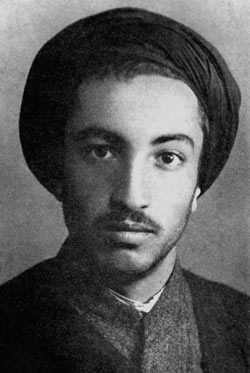
Shia fundamentalist group/political party in Iran
| Field | Value |
|---|---|
| name | Society of Fadayeen Islam |
| native_name | جمعیت فدائیان اسلام |
| native_name_lang | fa |
| colorcode | #009900 |
| general_secretary | Mohammad-Mehdi Abdekhodaei |
| founder | Navab Safavi |
| founded | 1946 |
| legalised | |
| headquarters | Qom and Tehran |
| newspaper | Manshoor-e-Baradari |
| ideology | Islamism |
| Islamic fundamentalism | |
| Islamic revivalism Guardianship of the Islamic Jurist | |
| membership | |
| membership_year | 1949 |
| religion | Shia Islam |
| slogan | |
| "Islam is above anything and nothing is above Islam" | |
| website | |
| country | Iran |
Islamic fundamentalism Islamic revivalism Guardianship of the Islamic Jurist "Islam is above anything and nothing is above Islam"
Fadayan-e Islam (; English; "Fedayeen of Islam" or "Redeemers of Islam") is a Shia fundamentalist group in Iran with a strong activist political and terrorist orientation. The group was founded in 1946, and registered as a political party in 1989. It was founded by a theology student, Navvab Safavi. Safavi sought to purify Islam in Iran by ridding it of 'corrupting individuals' by means of carefully planned assassinations of certain leading intellectual and political figures.
The group executed a series of assassinations (author Ahmad Kasravi, court minister (and former prime minister) Abdolhossein Hazhir, the Prime Minister Haj Ali Razmara, the former education minister Abdul Hamid Zangeneh) and attempted assassinations (the Shah of Iran, and foreign minister Hossein Fatemi) and succeeded in saving some of its assassins from punishment with the help of the group's powerful clerical supporters. Eventually the group was suppressed and Safavi was executed by the Iranian government in the mid-1950s. The group survived as supporters of the Ayatollah Khomeini and the Iranian Revolution.
Background
The group was part of a "growing nationalist mobilization against foreign domination" in the Middle East after World War II, and has been said to presage more famous Islamist terrorist groups. Its membership is said to have been made up of youth employed in "the lower echelons of the Tehran bazaar." Its program went beyond generalities about following the sharia to demand prohibitions of alcohol, tobacco, opium, films, gambling, wearing of foreign clothing, the enforcement of amputation of hands of thieves, and the veiling of women, and an elimination from school curriculum of all non-Muslim subjects such as music.
History
In a 1945 declaration, Navvad Safavi stated:
Rise
Its first assassination was of a nationalist, anti-clerical author named Ahmad Kasravi, who was stabbed and killed in 1946. Kasravi is said to have been the target of Ayatollah Khomeini's demand in his first book, Kashf al Asrar (Key to the Secrets), that "all those who criticized Islam" are mahdur ad-damm, (meaning that their blood must be shed by the faithful). Secularist Iranian author Amir Taheri argues that Khomeini was closely associated with Navvab Safavi and his ideas, and that Khomeini's assertion "amounted to a virtual death sentence on Kasravi."
Hussein Emami, the assassin and a founding member of the Fada'iyan, was promptly arrested and sentenced to death for the crime. The Iranian intelligentsia united in calling for an example to be made of him. Emami, however, was spared the gallows. According to Taheri, he roused religious defenders and used his prestige as a seyyed, or descendant of the Islamic prophet Muhammad, to demand he be tried by a religious court. Khomeini and many of the Shia clergy pressured the Shah to give Emami a pardon, taking advantage of the Shah's political difficulties at that time, such as the occupation of Azerbaijan province by Soviet troops. Khomeini himself asked the Shah for the pardon.
In November 1949 the group killed court minister (and former prime minister) Abdolhossein Hazhir. On 7 March 1951, the Prime Minister Haj Ali Razmara was assassinated, in retaliation for his advice against nationalizing the oil industry.{{cite web|title=Iran. Mossadeq and oil nationalization|access-date=21 April 2022
In addition to Emami, Khalil Tahmasebi, the assassin of Razmara, was also pardoned by the Iranian Parliament during the premiership of Mohammad Mossadegh. Ayatollah Abol-Ghasem Kashani, a powerful member of parliament and a supporter of the Fadayan, "arranged for a special Act to be passed quashing the death sentence on Tahamsebi and declaring him (Tahamsebi) to be a soldier of Islam," to the further consternation of Iranian secularists. However, following the fall of Mossaddegh Tahmasebi was arrested again and tried in 1952. He was sentenced to death and executed in 1955. In addition, Ayatollah Kashani ended his alliance with Mossadegh and become close to the Shah after the assassination.
Although the Fada'iyan strongly supported the nationalization of Iran's foreign-owned oil industry, they turned against the leader of the nationalization movement, Mohammad Mossadeq, when he became prime minister, because of his refusal to implement sharia law and appoint strict Islamists to high positions. The Fada'iyan attempted to assassinate Mossadeq and the danger from the Fada'iyan "was one of the primary factors accounting for Mosaddeq's decision to move the prime minister's office to his own residence." Another assassination attempt on 15 February 1952 badly wounded Hossein Fatemi, "Mosaddeq's dynamic and capable aide" and foreign minister. That left Fatemi "badly wounded and effectively disabled for almost eight months." The attempted assassination was planned by the group's second in command, Abolhossein Vahedi, and carried out by a teenage member of the group.
After the coup that removed Mosaddeq, Safavi congratulated the Shah: In the years to follow, he enjoyed a close association with the government. In 1954, he attended the Islamic Conference in Jordan and traveled to Egypt. There he learned about Hasan al-Banna, the founder of Muslim Brotherhood (), who was killed by Egyptian government in 1949, and met Sayyid Qutb.
Conflict with ulama
Safavi was not supported by the ulama and the Shia Marja, Ayatullah Hossein Borujerdi, rejected his ideas, questioning him about robberies that his organization committed on gun point. Safavi replied: Fada'ian-e Islam launched a campaign of character assassination against the Marja and reportedly called for excommunication of Borujerdi and the defrocking of religious scholars who opposed the campaign of the Fada'iyan. Navvab safavi didn't like Broujerdi's idea of Shia-Sunni rapprochement (), he advocated Shia-Sunni unification () under Islamist agenda.
Crackdown
In 1955, Navvab Safavi and "other members of the Fedayeen of Islam, including Emami," were finally executed. The group continued however, turning, according to author Baqer Moin, to Ayatollah Khomeini as a new spiritual leader, and reportedly being "reconstructed" by Khomeini disciple, and later controversial "hanging judge", Sadegh Khalkhali. It is thought to have carried out the assassination of Iranian Prime Minister Hassan Ali Mansour in 1965. Mansour is reported to have been "tried" by a secret Islamic court, made up of Khomeini followers Morteza Motahhari and Ayatollah Mohammad Beheshti, and sentenced to death "on a charge of 'warring on Allah' as symbolized by the decision" to send Khomeini into exile. The three men who carried out the "sentence" – Mohammad Bokara'i, Morteza Niknezhad and Reza Saffar-Harandi – "were arrested and charged as accomplices", but the story of both the trial and the sentence was not revealed until after the revolution.
Khomeini
The organization dispersed but after the death of Ayatullah Borujerdi, the Fada'ian-e Islam sympathizers found a new leader in Ayatullah Ruhollah Khomeini who appeared on political horizon through the June 1963 riots in Qom. In 1965, prime minister Hassan Ali Mansur was assassinated by the group.
Revolution and Islamic Republic
After the 1979 Iranian Revolution and establishment of the Islamic Republic of Iran, there were "three abortive attempts" made by "old members or sympathizers" of the Fada'ian to restore the organization.
- by Ṣādeq Ḵalḵālī with ʿAbd-Allāh Karbāsčīān;
- by Moḥammad-Mahdī ʿAbd-e Ḵodāʾī, Shaikh Moḥammad-ʿAlī Lavāsānī, and Jawād Wāḥedī;
- by Abu’l-Qāsem Rafīʿī, a former security chief of the Fada'ian.
According to Farhad Kazemi of Iranica, "the main carriers" of the Fedāʾīān’s legacy in the Islamic Republic, are the Coalition of Islamic Associations, which "grew from the former members and sympathizers" of the Fedāʾīān who have developed connections to "Ayatollah Khomeini and his lieutenants since 1963".
Members of the group
These persons are main member of the group:
- Navab Safavi, leader of the group Fadayan-e Islam
- Mozafar Zolghadr: He was from Karasf city, in the Khodabandeh County, Zanjan Province. Mozafar was born in a rural and religious family. Mozafar Zolghadr decided to murder Hossein Ala' but his gun did not fire. After that he arrested and executed.
- Seyyed Muhammad Vahedi
- Khalil Tahmasebi, the member of Fada'iyan-e Islam who assassinated Iranian Prime Minister Haj Ali Razmara in March 1951. He was described as a "religious fanatic" by The New York Times and was executed in 1955.
- Jafar Shojouni
- Seyyed Mehdi Tabatabaei
References
Works cited
References
- (July 30, 2000). "List of Legally Registered Parties in Iran". Pars Times.
- (2013). "The Coup: 1953, the CIA, and the roots of modern U.S.-Iranian relations". The New Press.
- (25 August 2016). "Ali Razmara – Prime Minister of Iran". [[Encyclopædia Britannica]].
- FEDĀʾĪĀN-E ESLĀM. (1999). In Encyclopædia Iranica. Retrieved from http://www.iranicaonline.org/articles/fedaian-e-esla ''The Fedāʾīān’s importance in Persian politics was due to several related factors. First, they were exceptionally successful as a rebel organization''
- Masoud Kazemzadeh. (4 January 2005). "Finding Mossadegh. (Reconstructing the story of a coup that changed history)". Web.mit.edu.
- [https://books.google.com/books?id=l_qful9qJ8AC&dq=nawab+safavi+and+fada+terrorist&pg=PR14 Iran: between tradition and modernity By Ramin Jahanbegloo]
- Ostovar, Afshon P.. (2009). "Guardians of the Islamic Revolution: Ideology, Politics, and the Development of Military Power in Iran (1979–2009)". [[The University of Michigan]].
- Denoeux, Guilain. (1993). "Urban Unrest in the Middle East: A Comparative Study of Informal Networks in Egypt, Iran, and Lebanon". [[SUNY Press]].
- Taheri, ''The Spirit of Allah,'' (1985), p. 98
- [http://www.meforum.org/article/304 Fundamentalist Islam at Large: The Drive for Power] {{Webarchive. link. (2008-07-19 by Martin Kramer, ''Middle East Quarterly,'' June 1996)
- Abrahamian, Ervand ''Iran between Two Revolutions'', Princeton University Press, 1982, p. 259
- Taheri, ''The Spirit of Allah'', (1985), p. 101
- Taheri, ''The Spirit of Allah'', (1985), pp. 107–108
- Farhad Kazemi. (1984). "From Nationalism to Revolutionary Islam". Palgrave Macmillan.
- Zabih, Sepehr, ''The Mossadegh Era : Roots of the Iranian Revolution'', Lake View Press, 1982, pp. 25–26
- "The Shah". Persepolis.
- Dreyfuss, Robert. (2006). "Devil's Game: How the United States Helped Unleash Fundamentalist Islam". Owl Books.
- Molavi, ''The Soul of Iran'', (2005), p. 323
- Zabih, Sepehr. (September 1982). "Aspects of Terrorism in Iran". Sage Publications.
- Taheri, ''The Spirit of Allah'', (1985), p. 109
- Abrahamian, Ervand, ''A History of Modern Iran'', Cambridge University Press, 2008, p. 116
- Abrahamian, ''Khomeinism'', 1993, p. 105
- ''Mohammad Mosaddeq and the 1953 Coup in Iran'', Mark j. Gasiorowski and Malcolm Byrne (Eds.), Syracuse University Press, 2004, p. 66
- Syed Viqar Salahuddin, ''Islam, peace, and conflict: based on six events in the year 1979, which were harbingers of the present day conflicts in the Muslim world'', Pentagon Press (2008), p. 5
- رسول جعفریان، ”جریان ها و سازمان های مذهبی سیاسی ایران“، ص٢٧١ ، ١٣٩٤ شمسی
- Taheri, ''The Spirit of Allah'', (1985), p. 115
- Moin, ''Khomeini'' (2000), p. 224
- Taheri, Amir, ''Spirit of Allah : Khomeini and the Islamic Revolution'', Adler and Adler 1985, p. 187
- Taheri, ''The Spirit of Allah'', (1985), p. 156
- (1999). "FEDĀʾĪĀN-E ESLĀM". Encyclopaedia Iranica.
- (1999). "FEDĀʾĪĀN-E ESLĀM". Encyclopaedia Iranica.
- "8 Steps to Solidarity".
- "یکی ازافتخارات خدابنده،شهید ذوالقدر است/تصویر". www.dana.ir.
- "روی کفن مظفر ذوالقدر چه حرفی برای نخست وزیر نوشته شده بود". Fars News Agency.
- (8 March 1951). "Premier of Iran Is Shot to Death In a Mosque by a Religious Fanatic; Premier of Iran Slain in Mosque, Cabinet in Emergency Session, Victim of Assassin". [[The New York Times]].
- Zabih, Sepehr. (1982). "Aspects of Terrorism in Iran". [[The Annals of the American Academy of Political and Social Science]].
- (1 December 1952). "Iran: Time of the Assassin". [[Time (magazine).
This article was imported from Wikipedia and is available under the Creative Commons Attribution-ShareAlike 4.0 License. Content has been adapted to SurfDoc format. Original contributors can be found on the article history page.
Ask Mako anything about Fada'iyan-e Islam — get instant answers, deeper analysis, and related topics.
Research with MakoFree with your Surf account
Create a free account to save articles, ask Mako questions, and organize your research.
Sign up freeThis content may have been generated or modified by AI. CloudSurf Software LLC is not responsible for the accuracy, completeness, or reliability of AI-generated content. Always verify important information from primary sources.
Report