From Surf Wiki (app.surf) — the open knowledge base
Explosive belt
Explosive device that an individual wears

Explosive device that an individual wears

An explosive belt (also called suicide belt, suicide vest or bomb vest) is an improvised explosive device, a belt or a vest packed with explosives and armed with a detonator, worn by suicide bombers. Explosive belts are usually packed with ball bearings, nails, screws, bolts, and other objects that serve as shrapnel to maximize the number of casualties in the explosion.
History
The Chinese used explosive vests during the Second Sino-Japanese War. A Chinese soldier detonated a grenade vest and killed 20 Japanese at Sihang Warehouse. Chinese troops strapped explosives like grenade packs or dynamite to their bodies and threw themselves over Japanese tanks to blow them up. This tactic was used during the Battle of Shanghai, where a Chinese suicide bomber stopped a Japanese tank column by exploding himself beneath the lead tank, and at the Battle of Taierzhuang, where Chinese troops rushed at Japanese tanks and blew themselves up with dynamite and grenades. During one incident at Taierzhuang, Chinese suicide bombers destroyed four Japanese tanks with grenade bundles.
The use of suicidal attacks to inflict damage upon an enemy predates the Second World War, in which Kamikaze units (suicidal air attacks) and Kaiten ("living torpedoes") were used to attack Allied forces. Japanese soldiers routinely detonated themselves by attacking Allied tanks while carrying antitank mines, magnetic demolition charges, hand grenades and other explosive devices.
Description
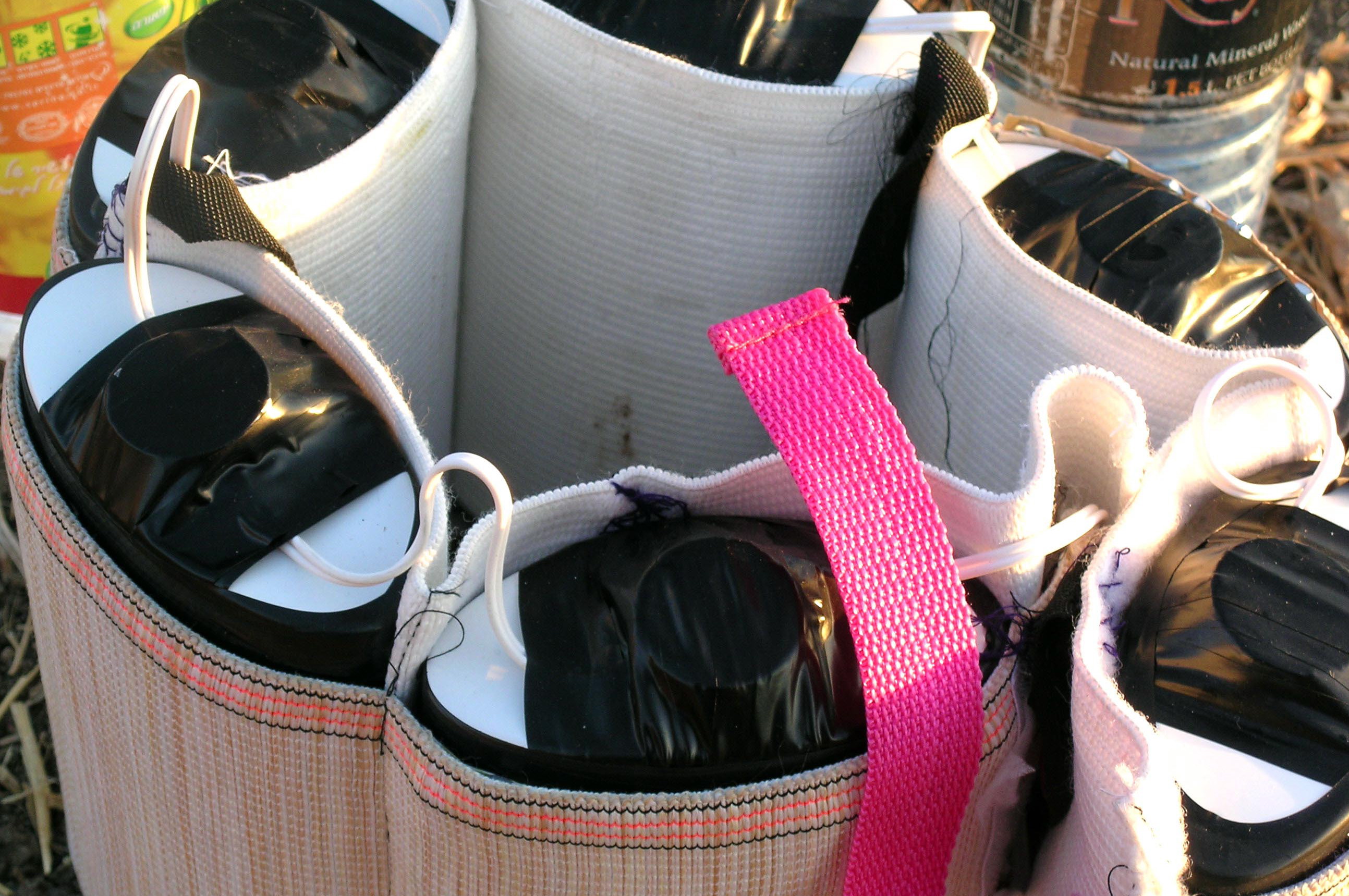
A "loaded" vest may weigh between 5 and and may be hidden under thick clothes, usually jackets or snow coats.
A suicide vest may cover the entire stomach and usually has shoulder straps.
A common security procedure against suspected suicide bombers is to move the suspect at least 15 m away from other people, then ask them to remove their upper clothing. While this procedure is relatively uncontroversial for use on males, it may cause an issue when dealing with females suspected of being suicide bombers. Male security personnel may be reluctant to inspect or strip-search females, and can be accused of sexual harassment after having done so. Alternatively, an infrared detector can be used. There are assertions that using a millimeter wave scanner would be viable for the task, but the concept has been disputed.
The discovery of remains as well as incidentally unexploded belts or vests can offer forensic clues to the investigation after the attack.
Forensic investigation
Suicide bombers who wear the vests are often obliterated by the explosion; the best evidence of their identity is the head, which often remains relatively intact because it is separated and thrown clear off the body by the explosion. Journalist Joby Warrick conjectured: "The vest's tight constraints and the positioning of the explosive pouches would channel the energy of the blast outward, toward whoever stood directly in front of him. Some of that energy wave would inevitably roll upward, ripping the bomber's body apart at its weakest point, between the neck bones and lower jaw. It accounts for the curious phenomenon in which suicide bombers' heads are severed clean at the moment of detonation and are later found in a state of perfect preservation several metres away from the torso's shredded remains."
References
References
- 网易. "台儿庄巷战:长官电令有敢退过河者 杀无赦_网易军事".
- Wong, Bun. "Taierzhuang street fighting : Executive power to make those who have dared to retreat across the river Unforgiven - Netease International News".
- Schaedler, Luc. (2007). "Angry Monk: Reflections on Tibet: Literary, Historical, and Oral Sources for a Documentary Film". University of Zurich, Faculty of Arts.
- Harmsen, Peter. (2013). "Shanghai 1937: Stalingrad on the Yangtze". Casemate.
- (Summer 2001). "Chinese Tank Forces and Battles before 1949". TANKS! E-Magazine.
- Xin Hui. (August 1, 2002). "Xinhui Presents: Chinese Tank Forces and Battles before 1949". Newsletter 1-8-2002 Articles.
- Ong, Siew Chey. (2005). "China Condensed: 5000 Years of History & Culture". Marshall Cavendish.
- (2012). "Numistamp". Clear Mind Publishing.
- Dr Ong Siew Chey. (2011). "China Condensed: 5,000 Years of History & Culture". Marshall Cavendish International Asia Pte Ltd.
- (1938). "International Press Correspondence, Volume 18". Richard Neumann.
- Epstein, Israel. (1939). "The people's war". V. Gollancz.
- "What is Shrapnel?".
- (Jan 22, 2014). "Sochi Suicide Bomber Threat: Why Terrorists Use Women". Discovery Communications.
- AFP/NEWSCORE [http://www.nypost.com/p/news/international/ugandan_police_find_suicide_vest_2mCnVBNdb1VKbskj0QEnTK "Ugandan police find suicide vest, hunts suspects"]. July 13, 2010, ''New York Post''. Retrieved ?
- Joby Warrick. (2012). "The Triple Agent: The Al-Qaeda Mole Who Infiltrated the CIA". Vintage Books.
This article was imported from Wikipedia and is available under the Creative Commons Attribution-ShareAlike 4.0 License. Content has been adapted to SurfDoc format. Original contributors can be found on the article history page.
Ask Mako anything about Explosive belt — get instant answers, deeper analysis, and related topics.
Research with MakoFree with your Surf account
Create a free account to save articles, ask Mako questions, and organize your research.
Sign up freeThis content may have been generated or modified by AI. CloudSurf Software LLC is not responsible for the accuracy, completeness, or reliability of AI-generated content. Always verify important information from primary sources.
Report