From Surf Wiki (app.surf) — the open knowledge base
Exhaled nitric oxide
Breath test for respiratory inflammation
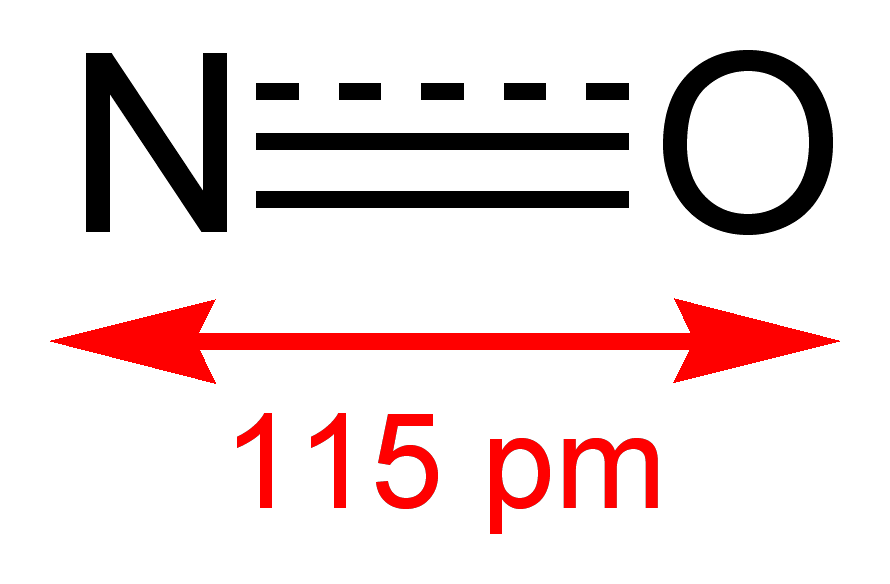
Breath test for respiratory inflammation
In medicine, exhaled nitric oxide (eNO - now commonly known as FeNO) can be measured in a breath test for asthma and other respiratory conditions characterized by airway inflammation. Nitric oxide (NO) is a gaseous molecule produced by certain cell types in an inflammatory response. The fraction of exhaled NO (FENO) is a promising biomarker for the diagnosis, follow-up and as a guide to therapy in adults and children with asthma. The breath test has recently become available in many well-equipped hospitals in developed countries, although its exact role remains unclear.
Biology
Main article: nitric oxide synthase

In humans, nitric oxide is produced from L-arginine by three enzymes called nitric oxide synthases (NOS): inducible (iNOS), endothelial (eNOS), and neuronal (nNOS). The latter two are constantly active in endothelial cells and neurons respectively, whereas iNOS' action can be induced in states like inflammation (for example, by cytokines). In inflammation, several cells use iNOS to produce NO, including eosinophils. As such, eNO (also known as FeNO "fractional exhaled nitric oxide") has been dubbed an inflammometer.
Although iNOS is thought to be the main contributor to exhaled NO in asthmatics, studies in mice also point to a role for nNOS.
It was initially thought that exhaled NO derived mostly from the sinuses, which contain high levels of NO. It has subsequently been shown that the lower airways contribute most of the exhaled NO, and that contamination from the sinuses is minimal.
Medical use
Asthma
Patients with asthma have higher eNO levels than other people. Their levels also rise together with other clinical and laboratory parameters of asthma (for example, the amount of eosinophils in their sputum). In conditions that trigger inflammation such as upper respiratory tract infections or the inhalation of allergens or plicatic acid, eNO levels rise. The eNO levels also tend to vary according to the results of lung function test results such as the degree of bronchial hyperresponsiveness. Furthermore, drugs used to treat asthma (such as inhaled glucocorticoids or leukotriene receptor antagonists) also reduce eNO levels.
Clinical trials have looked at whether tailoring asthma therapy based on eNO values is better than conventional care, in which therapy is gauged by symptoms and the results of lung function tests. To date, the results in both adults and children have been modest and this technique can not be universally recommended. It has also been noted that factors other than inflammation can increase eNO levels, for example airway acidity.
The fraction of eNO has been found to be a better test to identify asthmatics than basic lung function testing (for airway obstruction). Its specificity is comparable to bronchial challenge testing, although less sensitive. This means that a positive eNO test might be useful to rule in a diagnosis of asthma; however, a negative test might not be as useful to rule it out.
Other conditions
The role for eNO in other conditions is even less well established compared to asthma.
Since asthma can be a cause of chronic coughing (it may even be the sole manifestation, such as in cough-variant asthma), studies have looked at whether eNO can be used in the diagnosis of chronic cough.
Exhaled NO is minimally increased in chronic obstructive pulmonary disease, but levels may rise in sudden worsenings of the disease (acute exacerbations) or disease progression. Early findings indicate a possible role for eNO in predicting the response to inhaled glucocorticoids and the degree of airway obstruction reversibility.
Children with cystic fibrosis have been found to have low eNO levels. In subjects with bronchiectasis (a state of localized, irreversible dilatation of part of the bronchial tree) not due to cystic fibrosis, high levels have been found. Sarcoidosis could also feature increased eNO. Low levels have been found in primary ciliary dyskinesia, bronchopulmonary dysplasia, and pulmonary arterial hypertension. In the latter condition, inhaled NO is used as a diagnostic test of the response of the pulmonary arteries to vasodilators (agents that relax the blood vessels).
eNO has also been associated with wheeze, rhinitis and nasal allergy in primary school children.
Exposure to air pollution has been associated with decreased, and increased eNO levels.
Measurement techniques

The most widely used technique to measure eNO is with a chemical reaction that produces light; this is called a chemiluminescence reaction. The NO in the breath sample reacts with ozone to form nitrogen dioxide in an excited state. When this returns to its ground state, it emits light in quantities that are proportional to the amount of exhaled NO.
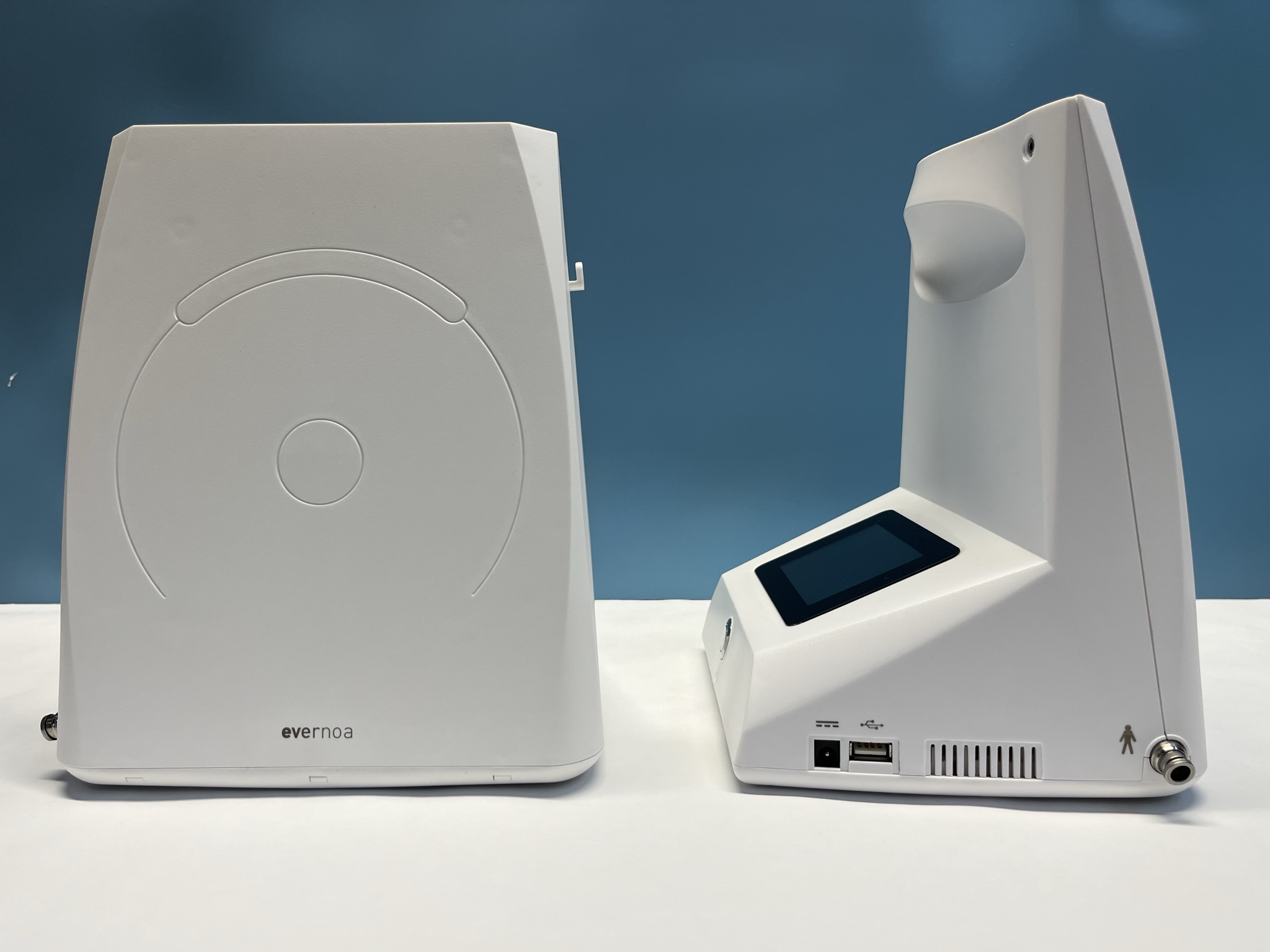
The subject can exhale directly into a measurement device ('online' technique), or into a reservoir that can afterwards be connected to the analyser ('offline' technique). With the former technique, the early and later NO in the breath sample can be analysed separately. The test requires little coordination from the subject, and children older than 4 can be tested successfully.
The National Institute of Clinical Excellence (NICE) in the UK have published guidance on available measuring devices: https://www.nice.org.uk/guidance/dg12
Reference range
The upper normal level of eNO in different studies ranges from 20 to 30 parts per billion. However, several major features influence the reference values. Men have higher eNO values than women. Smoking notoriously lowers eNO values, and even former smoking status can influence results. The levels are higher in people with an atopic constitution (a tendency towards allergies). The fraction of eNO is also flow-dependent (higher at lower flow rates and vice versa), so measurements are normally measured at 50 ml/s. Age or height could also considerably confound eNO values in children. The magnitude of these effects lies in the order of 10%, so even single cut-off values might be useful.
History
Until the 1980s, nitric oxide, a product of fossil fuel combustion, was thought only to play a role the detrimental effects of air pollution on the respiratory tract. In 1987, experiments with coronary arteries showed that nitric oxide was the long sought endothelium-derived relaxing factor. After scientists realised that NO played a biological role, its role as a cell signalling molecule and neurotransmitter became clear from abundant studies.
NO was first detected in exhaled breath samples in 1991. In 1992, NO was voted molecule of the year by the scientific journal Science. In 1993, researchers from the Karolinska Institute in Sweden were the first to report increased eNO in asthmatics.
The first commercial FeNO testing device was developed in 1998 by the Swedish company Aerocrine AB, which is now a part of the NIOX Group of companies.
Today, NO is not only used in breath tests but also as a therapeutic agent for conditions such as pulmonary arterial hypertension and possibly for the acute respiratory distress syndrome.
References
References
- (February 2008). "Exhaled nitric oxide in childhood asthma: a review". Clinical and Experimental Allergy.
- (September 2004). "Epithelial inducible nitric oxide synthase activity is the major determinant of nitric oxide concentration in exhaled breath". Thorax.
- (August 2007). "Effect of an inducible nitric oxide synthase inhibitor on differential flow-exhaled nitric oxide in asthmatic patients and healthy volunteers". Chest.
- (May 1999). "Contribution of nitric oxide synthases 1, 2, and 3 to airway hyperresponsiveness and inflammation in a murine model of asthma". The Journal of Experimental Medicine.
- (October 1997). "Contribution of type I NOS to expired gas NO and bronchial responsiveness in mice". The American Journal of Physiology.
- (June 2006). "Daily home measurements of exhaled nitric oxide in asthmatic children during natural birch pollen exposure". The Journal of Allergy and Clinical Immunology.
- (March 1999). "Sputum eosinophils and exhaled nitric oxide during late asthmatic reaction in patients with western red cedar asthma". The European Respiratory Journal.
- (May 2005). "Use of exhaled nitric oxide measurements to guide treatment in chronic asthma". The New England Journal of Medicine.
- (August 2007). "The use of exhaled nitric oxide to guide asthma management: a randomized controlled trial". American Journal of Respiratory and Critical Care Medicine.
- (September 2008). "Management of asthma based on exhaled nitric oxide in addition to guideline-based treatment for inner-city adolescents and young adults: a randomised controlled trial". Lancet.
- (September 2016). "Exhaled nitric oxide levels to guide treatment for adults with asthma". The Cochrane Database of Systematic Reviews.
- (November 2016). "Exhaled nitric oxide levels to guide treatment for children with asthma". The Cochrane Database of Systematic Reviews.
- (March 2000). "Endogenous airway acidification. Implications for asthma pathophysiology". American Journal of Respiratory and Critical Care Medicine.
- (March 2007). "Airway nitric oxide release is reduced after PBS inhalation in asthma". Journal of Applied Physiology.
- (June 2003). "Exhaled nitric oxide rather than lung function distinguishes preschool children with probable asthma". Thorax.
- (June 2007). "Diagnostic tests for asthma in firefighters". Chest.
- (May 2008). "Exhaled nitric oxide levels in patients with atopic cough and cough variant asthma". Respirology.
- (November 2008). "Exhaled nitric oxide measurement is useful for the exclusion of nonasthmatic eosinophilic bronchitis in patients with chronic cough". Chest.
- (October 2008). "Clinical usefulness of fractional exhaled nitric oxide for diagnosing prolonged cough". Respiratory Medicine.
- (November 2007). "Use of exhaled nitric oxide in predicting response to inhaled corticosteroids for chronic cough". Mayo Clinic Proceedings.
- (September 2014). "Exhaled nitric oxide and nasal tryptase are associated with wheeze, rhinitis and nasal allergy in primary school children". Biomarkers.
- (October 2010). "Subclinical responses in healthy cyclists briefly exposed to traffic-related air pollution: an intervention study". Environmental Health.
- (1999). "Air pollution is associated with increased level of exhaled nitric oxide in nonsmoking healthy subjects". Archives of Environmental Health.
- (April 2007). "Ambient and microenvironmental particles and exhaled nitric oxide before and after a group bus trip". Environmental Health Perspectives.
- (March 2013). "Subclinical effects of aerobic training in urban environment". Medicine and Science in Sports and Exercise.
- (April 2005). "ATS/ERS recommendations for standardized procedures for the online and offline measurement of exhaled lower respiratory nitric oxide and nasal nitric oxide, 2005". American Journal of Respiratory and Critical Care Medicine.
- (August 2005). "Methodological issues related to exhaled nitric oxide measurement in children aged four to six years". Pediatric Pulmonology.
- (August 2007). "Reference ranges for exhaled nitric oxide derived from a random community survey of adults". American Journal of Respiratory and Critical Care Medicine.
- (June 2005). "Measurements of exhaled nitric oxide in healthy subjects age 4 to 17 years". The Journal of Allergy and Clinical Immunology.
- (February 2008). "Exhaled nitric oxide in the diagnosis and management of asthma". Current Opinion in Allergy and Clinical Immunology.
- (May 2007). "The role of exhaled nitric oxide in the diagnosis, management and treatment of asthma". Mini Reviews in Medicinal Chemistry.
- (December 1991). "Endogenous nitric oxide is present in the exhaled air of rabbits, guinea pigs and humans". Biochemical and Biophysical Research Communications.
- (December 1992). "The molecule of the year". Science.
- (October 1993). "Increased amount of nitric oxide in exhaled air of asthmatics". The European Respiratory Journal.
- NIOX.com. "NIOX VERO® Heritage - 26 years of innovation".
This article was imported from Wikipedia and is available under the Creative Commons Attribution-ShareAlike 4.0 License. Content has been adapted to SurfDoc format. Original contributors can be found on the article history page.
Ask Mako anything about Exhaled nitric oxide — get instant answers, deeper analysis, and related topics.
Research with MakoFree with your Surf account
Create a free account to save articles, ask Mako questions, and organize your research.
Sign up freeThis content may have been generated or modified by AI. CloudSurf Software LLC is not responsible for the accuracy, completeness, or reliability of AI-generated content. Always verify important information from primary sources.
Report