From Surf Wiki (app.surf) — the open knowledge base
Exeter (UK Parliament constituency)
Parliamentary constituency in the United Kingdom, 1295 onwards

Parliamentary constituency in the United Kingdom, 1295 onwards
| Field | Value | ||
|---|---|---|---|
| name | Exeter | ||
| parliament | uk | ||
| image | |||
| caption | Interactive map of boundaries from 2024 | ||
| image2 | [[File:South West England - Exeter constituency.svg | 255px | alt=Map of constituency]] |
| caption2 | Boundary of Exeter in South West England | ||
| year | 1295 | ||
| type | Borough | ||
| elects_howmany | 1295–1885: Two | ||
| 1885–present: One | |||
| electorate | 71,713 (2023){{cite web | url= https://boundarycommissionforengland.independent.gov.uk/2023-review/the-2023-review-of-parliamentary-constituency-boundaries-in-england-volume-two-constituency-names-designations-and-composition/the-2023-review-of-parliamentary-constituency-boundaries-in-england-volume-two-constituency-names-designations-and-composition-south-west/#lg_exeter-bc-71713 | |
| title | The 2023 Review of Parliamentary Constituency Boundaries in England – Volume two: Constituency names, designations and composition – South West | ||
| publisher | Boundary Commission for England | ||
| access-date | 27 June 2024 | ||
| df | dmy | ||
| mp | Steve Race | ||
| party | Labour Party (UK) | ||
| region | England | ||
| county | Devon | ||
| european | South West England | ||
| towns | Exeter |
1885–present: One |access-date=27 June 2024 Exeter ( ) is a constituency composed of the cathedral city and county town of Devon represented in the House of Commons of the UK Parliament since 2024 by Steve Race of the Labour Party.
Constituency profile
The Exeter constituency is located in Devon and covers most of the city of Exeter excluding some of its eastern suburbs. Exeter is a historic cathedral city with origins in the Roman period. It is home to the University of Exeter, which has around 30,000 students. The city is an important centre of employment with many commuters from nearby towns. The constituency has average levels of deprivation; the suburb of Pennsylvania near the university is affluent whilst the area around Wonford is more deprived. House prices are slightly below the national average.
In general, residents of the constituency are young and well-educated. Levels of professional employment and household income are similar to national averages. White people made up 89% of the population at the 2021 census. At the city council, most of Exeter's suburbs are represented by the Labour Party with Green Party councillors elected in the city centre. At the county council, the suburbs are instead mostly represented by Reform UK. An estimated 57% of voters in the constituency supported remaining in the European Union in the 2016 referendum compared to 48% nationwide.
History
The constituency existed continuously as a parliamentary borough/borough constituency, electing two MPs from 1295 (the Model Parliament) until 1885, when its representation was reduced to one MP by the Redistribution of Seats Act 1885.
The constituency has had a history of representatives from 1900 of Conservative, Liberal Party, Independent and Labour representation. Since 1997, it has been held by the Labour Party, which currently has a majority of over 10,000, suggesting this is a safe seat for the party.
Boundaries
1918–1950: The County Borough of Exeter.
1950–1974: As prior but with redrawn boundaries.
1974–1983: As prior but with redrawn boundaries.
1983–2010: The City of Exeter.
2010–2024: The City of Exeter wards of Alphington, Cowick, Duryard, Exwick, Heavitree, Mincinglake, Newtown, Pennsylvania, Pinhoe, Polsloe, Priory, St David's, St James, St Leonard's, St Thomas, and Whipton and Barton.
2024–present: The following wards of the City of Exeter (as they existed on 1 December 2020):
- Alphington, Duryard & St James, Exwick, Heavitree, Mincinglake & Whipton, Newtown & St Leonard's, Pennsylvania, Priory, St David's, and St Thomas.
The constituency currently covers most of the city of Exeter in Devon. It covered the entire city until 2010, when, under the Fifth Periodic Review of Westminster constituencies, which increased the number of seats in the county from 11 to 12, two wards of the City of Exeter (St Loyes and Topsham) were transferred to the neighbouring East Devon constituency.
The 2023 Periodic Review of Westminster constituencies concluded that the electoral wards of Pinhoe, St Loyes and Topsham (which incorporates part of the Countess Wear area) would be included in the new constituency of Exmouth and Exeter East.
Members of Parliament
MPs 1295–1660
| Parliament | First member | Second member | |||
|---|---|---|---|---|---|
| 1351 | John Prescott | ||||
| 1353 | John Prescott | ||||
| 1365 | John Prescott | ||||
| 1368 | John Prescott | ||||
| 1386 | John Grey | url = http://www.historyofparliamentonline.org/volume/1386-1421/constituencies/exeter | title= History of Parliament | publisher = History of Parliament Trust | access-date= 2011-10-24}} |
| 1388 (Feb) | Peter Hadley | Thomas Raymond | |||
| 1388 (Sep) | Peter Hadley | Adam Creedy | |||
| 1390 (Jan) | Adam Golde | William Frye | |||
| 1390 (Nov) | |||||
| 1391 | John Grey | William Frye | |||
| 1393 | John Grey | Robert Cobbley | |||
| 1394 | John Grey | Richard Bosom | |||
| 1395 | John Grey | William Wilford | |||
| 1397 (Jan) | John Grey | William Wilford | |||
| 1397 (Sep) | William Frye | William Wilford | |||
| 1399 | Roger Golde | Robert Cobbley | |||
| 1401 | Adam Scut | John Coscombe | |||
| 1402 | Roger Golde | William Morehay | |||
| 1404 (Jan) | William Wilford | Thomas Raymond | |||
| 1404 (Oct) | John Nywaman | John Lake | |||
| 1406 | Roger Golde | William Dimmock | |||
| 1407 | Nicholas Clerk | William Morehay | |||
| 1410 | Richard Raymond | John Shaplegh I | |||
| 1411 | William Wilford | John Lake | |||
| 1413 (Feb) | Thomas Eston | Peter Sturt | |||
| 1413 (May) | Richard Bosom | John Pollow | |||
| 1414 (Apr) | John Wilford | John Shaplegh II | |||
| 1414 (Nov) | Roger Golde | John Wilford | |||
| 1415 | Richard Crese | John Pollow | |||
| 1416 (Mar) | Roger Golde | Robert Vessy | |||
| 1416 (Oct) | Roger Golde | John Pollow | |||
| 1417 | John Shaplegh II | Thomas Cook | |||
| 1419 | John Shaplegh II | John Pollow | |||
| 1420 | John Shaplegh II | Richard Crese | |||
| 1421 (May) | John Cutler alias Carwithan | Roger Shillingford | |||
| 1421 (Dec) | John Shaplegh II | John Shillingford | |||
| 1510 | Thomas Andrew | url = http://www.historyofparliamentonline.org/volume/1509-1558/constituencies/exeter | title= History of Parliament | publisher = History of Parliament Trust | access-date= 2011-10-24}} |
| 1512 | Richard Hewet | John Simon | |||
| 1515 | Richard Hewet | John Simon | |||
| 1523 | John Noseworthy | John Bridgeman | |||
| 1529 | Henry Hamlin | John Blackaller, | |||
| replaced 1534 by Robert Hooker alias Vowell | |||||
| 1536 | ? | ||||
| 1539 | John Hull | William Hurst | |||
| 1542 | Thomas Spurway | William Hurst | |||
| 1543 | Gilbert Kirk replaced Spurway and John Pasmore replaced Hurst | ||||
| 1543 | (substitution reversed) Thomas Spurway replaced Kirk, William Hurst replaced Pasmore | ||||
| 1545 | John Grenville | William Hurst | |||
| 1547 | John Hull, *died | ||||
| and replaced 1549 by* Thomas Prestwood | Griffith Ameredith | ||||
| 1553 (Mar) | Robert Weston | Richard Hart | |||
| 1553 (Oct) | John Ridgeway | Richard Hart | |||
| 1554 (Apr) | John Ridgeway | Richard Hart | |||
| 1554 (Nov) | John Grenville | John Petre | |||
| 1555 | Sir John Pollard | Edmund Sture | |||
| 1558 | John Grenville | Walter Staplehill | |||
| 1558–9 | Sir John Pollard | url = http://www.historyofparliamentonline.org/volume/1558-1603/constituencies/exeter | title= History of Parliament | publisher = History of Parliament Trust | access-date= 2011-10-24}} |
| 1562–3 | Thomas Williams, *died | ||||
| and replaced 1566 by* Sir Peter Carew | Geoffrey Tothill | ||||
| 1571 | Geoffrey Tothill | John Vowell alias Hooker | |||
| 1572 | Geoffrey Tothill, *died | ||||
| and replaced 1576 by* Edward Ameredith | Simon Knight | ||||
| 1584 | Thomas Bruarton | Richard Prowse | |||
| 1586 | Edward Drew | John Vowell alias Hooker | |||
| 1588 | Edward Drew | John Peryam | |||
| 1593 | John Hele | John Peryam | |||
| 1597 | John Hele | William Martin | |||
| 1601 | John Hele | John Howell | |||
| 1604 | George Smith | John Prowse | |||
| 1614 | John Prowse | Thomas Martyn | |||
| 1621–1622 | John Prowse | Ignatius Jordain | |||
| 1624 | John Prowse | Nicholas Duck | |||
| 1625 | Ignatius Jordain | Nicholas Duck | |||
| 1626 | Ignatius Jordain | John Hayne | |||
| 1628–1629 | Ignatius Jordain | John Lynn | |||
| 1629–1640 | No Parliaments summoned | ||||
| Apr 1640 | Robert Walker | Simon Snow in place of Jacob Tucker | |||
| Nov 1640 | Robert Walker | ||||
| disabled 1643 | Simon Snow | ||||
| 1645 | Simon Snow | ||||
| secluded in Pride's Purge | Samuel Clark | ||||
| 1648 | Samuel Clark | (one seat only) | |||
| 1653 | Exeter not represented in the Barebones Parliament | ||||
| 1654 | Thomas Bampfield | Thomas Gibbons | |||
| 1656 | Thomas Bampfield | Thomas Westlake | |||
| 1659 | Thomas Bampfield | Maj. Thomas Gibbon |
MPs 1660–1885
Two members
| Year | e | 2 | date=March 2012}} | First party | Second member | Second party |
|---|---|---|---|---|---|---|
| 1660 | John Maynard | |||||
| 1661 | Sir James Smyth | |||||
| 1673 | Thomas Walker | |||||
| 1679 | William Glyde | |||||
| 1681 | Sir Thomas Carew | |||||
| 1685 | James Walker | Tories (British political party)}}" | ||||
| Jan 1689 | Sir Henry Pollexfen | |||||
| Jun 1689 | Christopher Bale | |||||
| 1695 | Edward Seyward | |||||
| 1698 | Tories (British political party)}}" | Sir Edward Seymour | Tory | |||
| 1702 | Tories (British political party)}}" | John Snell | Tory | |||
| Apr 1708 | Whigs (British political party)}}" | John Harris | Whig | |||
| May 1708 | Tories (British political party)}}" | Nicholas Wood | Tory | |||
| 1710 | Tories (British political party)}}" | Sir Coplestone Bampfylde | Tory | Tories (British political party)}}" | ||
| 1713 | John Rolle | |||||
| 1715 | John Bampfylde | |||||
| 1722 | John Rolle | |||||
| 1727 | Samuel Molyneux | |||||
| 1728 | John Belfield | |||||
| 1734 | John King | |||||
| 1735 | Sir Henry Northcote | |||||
| 1741 | Humphrey Sydenham | |||||
| 1743 | Sir Richard Bampfylde, Bt | |||||
| 1747 | John Tuckfield | |||||
| 1754 | John Rolle Walter | |||||
| 1767 | William Spicer | |||||
| 1768 | John Buller | |||||
| 1774 | Whigs (British political party)}}" | Sir Charles Bampfylde | Whig{{cite book | last=Stooks Smith | ||
| 1776 | John Baring | |||||
| 1790 | James Buller | |||||
| 1796 | Whigs (British political party)}}" | Sir Charles Bampfylde | Whig | |||
| 1802 | Tories (British political party)}}" | James Buller | Tory | |||
| 1812 | Tories (British political party)}}" | William Courtenay | Tory | |||
| 1818 | Whigs (British political party)}}" | Robert Newman | Whig | |||
| Feb 1826 | Tories (British political party)}}" | Samuel Trehawke Kekewich | Tory | |||
| Jun 1826 | Tories (British political party)}}" | Lewis William Buck | Tory | |||
| 1830 | Whigs (British political party)}}" | James Wentworth Buller | Whig | |||
| 1832 | Radicals (UK)}}" | Edward Divett | Radical | |||
| 1835 | Conservative Party (UK)}}" | Sir William Webb Follett | Conservative | |||
| 1845 | Conservative Party (UK)}}" | Sir John Duckworth, Bt | Conservative | |||
| 1857 | Conservative Party (UK)}}" | Richard Gard | Conservative | |||
| 1864 | Conservative Party (UK)}}" | Viscount Courtenay | Conservative | |||
| 1865 | Liberal Party (UK)}}" | John Coleridge | Liberal | |||
| 1868 | Liberal Party (UK)}}" | Edgar Alfred Bowring | Liberal | |||
| 1873 | Conservative Party (UK)}}" | Arthur Mills | Conservative | |||
| 1874 | Conservative Party (UK)}}" | John George Johnson | Conservative | |||
| 1880 | Liberal Party (UK)}}" | Edward Johnson | Liberal | Conservative Party (UK)}}" | ||
| 1885 | representation reduced to one member |
MPs since 1885
| Election | Member | Party | |
|---|---|---|---|
| Conservative Party (UK)}}" | 1885 | Henry Northcote | |
| Conservative Party (UK)}}" | 1899 by-election | Sir Edgar Vincent | |
| Liberal Party (UK)}}" | 1906 | Sir George Kekewich | |
| Conservative Party (UK)}}" | January 1910 | Henry Duke | |
| Liberal Party (UK)}}" | December 1910 | Harold St Maur | |
| Conservative Party (UK)}}" | 1911 | Henry Duke | |
| Conservative Party (UK)}}" | 1918 | Sir Robert Newman | |
| Independent}}" | 1929 | Independent | |
| Conservative Party (UK)}}" | 1931 | Arthur Reed | |
| Conservative Party (UK)}}" | 1945 | John Maude | |
| Conservative Party (UK)}}" | 1951 | Sir Rolf Dudley-Williams, Bt | |
| Labour Party (UK)}}" | 1966 | Gwyneth Dunwoody | |
| Conservative Party (UK)}}" | 1970 | Sir John Hannam | |
| Labour Party (UK)}}" | 1997 | Sir Ben Bradshaw | |
| Labour Party (UK)}}" | 2024 | Steve Race |
Elections
Elections in the 2020s
Elections in the 2010s
| 2019 notional result | Party | Vote | % |
|---|---|---|---|
| Labour | 26,500 | 54.8 | |
| Conservative | 15,512 | 32.1 | |
| Green | 4,516 | 9.3 | |
| Brexit Party | 1,257 | 2.6 | |
| Others | 565 | 1.1 | |
| Liberal Democrats | 8 | ||
| Turnout | 48,358 | 67.4 | |
| Electorate | 71,713 |
Elections in the 2000s
Elections in the 1990s
Elections in the 1980s
Elections in the 1970s
Elections in the 1960s
Elections in the 1950s
Election in the 1940s
Elections in the 1930s
General Election 1939–40: Another General Election was required to take place before the end of 1940. The political parties had been making preparations for an election to take place and by the Autumn of 1939, the following candidates had been selected;
- Conservative: Arthur Reed
- Labour: William Robert Robins
- Liberal: Henry Gebhardt
- British Union: Rafe Temple Cotton
Elections in the 1920s

Election results 1885–1918
Elections in the 1880s
|reg. electors = 6,963 |reg. electors = 6,963
Elections in the 1890s
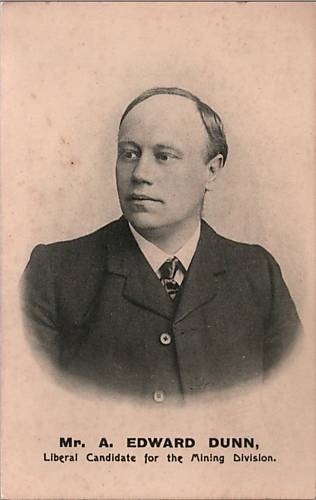
|reg. electors = 7,972 |reg. electors = 8,198 |reg. electors = 8,595
Elections in the 1900s
|reg. electors = 8,708

|reg. electors = 9,567
Elections in the 1910s
|reg. electors = 10,383

|reg. electors = 10,383
Upon petition, this election was subject to a recount due to the closeness of the results. On the first count, St. Maur led with 4,786 votes to Duke's 4,782. On a second count, St. Maur again led with 4,782 votes to Duke's 4,778. Closer scrutiny led to the above count, allowing Duke to retain the seat.
General Election 1914–15:
Another General Election was required to take place before the end of 1915. The political parties had been making preparations for an election to take place and by July 1914, the following candidates had been selected;
- Unionist: Henry Duke
- Liberal:
Duke is appointed Chief Secretary to the Lord Lieutenant of Ireland, prompting a by-election.
Duke is appointed Lord Justice of Appeal and resigns, prompting a by-election.
Election results 1868–1880
Elections in the 1860s
|reg. electors = 3,088
|reg. electors = 6,156
Coleridge was appointed Solicitor General for England and Wales, requiring a by-election.
Elections in the 1870s
Coleridge resigned after being appointed Chief Justice of the Court of Common Pleas
|reg. electors = 6,206
|reg. electors = 6,337
Elections in the 1880s
|reg. electors = 7,361
Election results 1832–1868
Elections in the 1830s
|reg. electors = 2,952
|reg. electors = 3,239
|reg. electors = 3,488
Elections in the 1840s
|reg. electors = 3,698
Follett was appointed Solicitor General of England and Wales, requiring a by-election.
Follett was appointed Attorney General of England and Wales, requiring a by-election.
|reg. electors = 3,728
Follett's death caused a by-election.
|reg. electors = 3,728
|reg. electors = 3,798
Elections in the 1850s
|reg. electors = 2,501
|reg. electors = 3,162
|reg. electors = 3,216
Elections in the 1860s
Divett's death caused a by-election.
|reg. electors = 2,564
Elections before 1832
|reg. electors =
Notes
References
References
- {{HESA citation
- "Exeter commuters". Exeter City Council.
- "Constituency data: Deprivation in England".
- "Seat Details - Exeter".
- "The Parliamentary Constituencies Order 2023".
- (2004-11-24). "Final recommendations for Parliamentary constituencies in the counties of Devon, Plymouth and Torbay". [[Boundary Commission for England]].
- (2023-06-28). "Parliamentary constituency of Exmouth and East Exeter proposed".
- "PRESCOTT, John (c.1327–1412), of Prescott, Rake and Exeter, Devon.". History of Parliament Online.
- "History of Parliament". History of Parliament Trust.
- "History of Parliament". History of Parliament Trust.
- "History of Parliament". History of Parliament Trust.
- {{Rayment-hc. e. 2. (March 2012)
- (1836). "The Assembled Commons or Parliamentary Biographer: 1836".
- (1847). "Dod's Parliamentary Companion, Volume 15". [[Dod's Parliamentary Companion]].
- At the December 1910 election, [[Harold St Maur]] was declared the winner by 4 votes, and the same majority was recorded after a recount. However, an electoral petition was decided on April 11, 1911, at which [[Henry Duke, 1st Baron Merrivale. Henry Duke]] was declared the winner by 1 vote ( "Exeter Election Petition— Sensational Finish: Liberals Lose the Seat by a Majority of One", ''Staffordshire Sentinel'', April 11, 1977, p. 1)
- "Election Notices – Exeter City Council". Exeter City Council.
- "Exeter - General election results 2024".
- "Notional results for a UK general election on 12 December 2019". [[UK Parliament]].
- Street, John. (14 November 2019). "Statement of persons nominated and notice of poll". Acting Returning Officer.
- (13 December 2019). "Exeter parliamentary constituency – Election 2019". BBC.
- (11 May 2017). "2017 general election candidates in Devon". Devon Live.
- "Election Data 2015". [[Electoral Calculus]].
- "Election Data 2010". [[Electoral Calculus]].
- Bostock, Philip. (20 April 2010). "Statement of Persons Nominated and Notice of Poll". Acting Returning Officer, Exeter City Council.
- "Election Data 2005". [[Electoral Calculus]].
- "Election Data 2001". [[Electoral Calculus]].
- "Election Data 1997". [[Electoral Calculus]].
- "Exeter: Constituency". The Guardian.
- Morgan, Bryn. (29 March 2001). "General Election results, 1 May 1997". Social & General Statistics Section, House of Commons Library.
- "Election Data 1992". [[Electoral Calculus]].
- (9 April 1992). "Politics Resources". Politics Resources.
- "Election Data 1987". [[Electoral Calculus]].
- "Election Data 1983". [[Electoral Calculus]].
- The Returning Officer gave Dunwoody 22,189 when announcing the result on the night. This was broadcast on the BBC election Night coverage
- Report of the Annual Conference of the Labour Party, 1939
- Craig, F. W. S. (1983). British parliamentary election results 1918–1949 (3 ed.). Chichester: Parliamentary Research Services. {{ISBN. 0-900178-06-X.
- British Parliamentary Election Results 1885–1918, FWS Craig
- The Liberal Year Book, 1907
- Debrett's House of Commons & Judicial Bench, 1886
- Debrett's House of Commons & Judicial Bench, 1901
- Debrett's House of Commons & Judicial Bench, 1916
- (10 November 1873). "Exeter Representation". Western Times.
- (1977). "British Parliamentary Election Results 1832–1885". Macmillan Press.
- (20 April 1844). "Derbyshire Courier".
- (10 July 1852). "Exeter Election". Exeter and Plymouth Gazette.
- "Exeter".
This article was imported from Wikipedia and is available under the Creative Commons Attribution-ShareAlike 4.0 License. Content has been adapted to SurfDoc format. Original contributors can be found on the article history page.
Ask Mako anything about Exeter (UK Parliament constituency) — get instant answers, deeper analysis, and related topics.
Research with MakoFree with your Surf account
Create a free account to save articles, ask Mako questions, and organize your research.
Sign up freeThis content may have been generated or modified by AI. CloudSurf Software LLC is not responsible for the accuracy, completeness, or reliability of AI-generated content. Always verify important information from primary sources.
Report