From Surf Wiki (app.surf) — the open knowledge base
Eurovision Song Contest 1981
International song competition
International song competition
| Field | Value |
|---|---|
| name | Eurovision Song Contest |
| year | 1981 |
| logo | ESC 1981 logo.png |
| final | 4 April 1981 |
| presenter | Doireann Ní Bhriain |
| musdirector | Noel Kelehan |
| director | Ian McGarry |
| scrutineer | Frank Naef |
| exproducer | Noel D Greene |
| organiser | European Broadcasting Union (EBU) |
| host | Radio Telefís Éireann (RTÉ) |
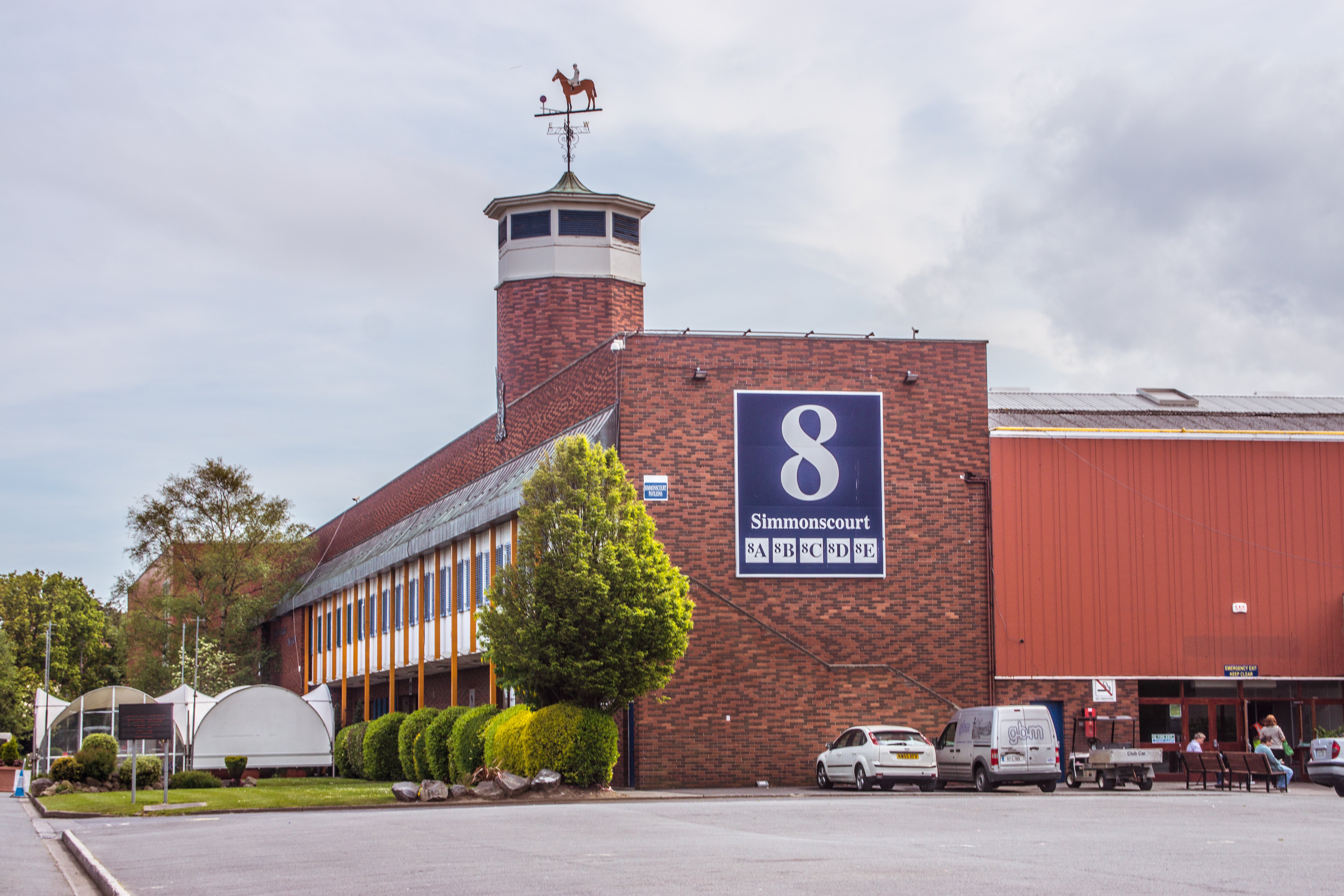
| venue | RDS Simmonscourt |
| Dublin, Ireland | |
| winner | |
| "Making Your Mind Up" | |
| vote | Each country awarded 12, 10, 8-1 point(s) to their 10 favourite songs |
| entries | 20 |
| debut | |
| return | |
| nonreturn | |
| Map NoSemis | Y |
Dublin, Ireland "Making Your Mind Up"
The Eurovision Song Contest 1981 was the 26th edition of the Eurovision Song Contest, held on 4 April 1981 at the RDS Simmonscourt in Dublin, Ireland, and presented by Doireann Ní Bhriain. It was organised by the European Broadcasting Union (EBU) and host broadcaster Radio Telefís Éireann (RTÉ), who staged the event after winning the for with the song "What's Another Year" performed by Johnny Logan.
Broadcasters from twenty countries participated in the contest, equalling the record of the . made their debut this year, while and both returned to the competition, after their one-year and five-year absences, respectively. and decided not to participate.
The winner was the with the song "Making Your Mind Up", performed by Bucks Fizz, written by Andy Hill and John Danter. finished second for the second consecutive year, while finished third. again finished last, with its third 'nul points' in the contest.
Bucks Fizz's win launched the group's hugely successful international career. Their performance on the Eurovision stage included a dance routine in which at one point the two male members ripped the skirts off the two female members, only to reveal mini-skirts; this today stands as one of the most defining moments in the contest's history.
Location
Some hours after Johnny Logan won the 1980 contest, the head of Irish broadcaster, Radio Telefís Éireann (RTÉ), Brian MacLochlainn announced that they would take on the responsibility of hosting the 1981 contest. This ended up taking the 1981 contest, for the second time in the event's history, to Dublin, the capital of Ireland; the first such occasion was ten years earlier in 1971.
Participants
By October 1980, it looked as though 21 countries were planning to take part, the largest number so far, but then declared that they were no longer interested. They finished seventh. also returned to the competition after a five-year absence. decided not to enter due to lack of interest, while declined to take part after their debut entry the year before. Morocco's king, Hassan II, "reportedly withdrew Rabat's participation from the contest the following year, saying that the country will never participate again". The draw for the running order took place on 14 November 1980, with it being confirmed that there was a total of 20 entrants.
Many previous contestants returned to the contest this year – notably Jean-Claude Pascal, who had won the contest for , although he could only manage 11th place this time. Peter, Sue and Marc returned for the fourth time, after representing , , and . Performing again for Switzerland, they remain the only act to sing Contest entries in four different languages (French, English, German and, on this occasion, Italian). Other returnees were Marty Brem who had represented as part of Blue Danube, Tommy Seebach who had represented –with Debbie Cameron providing him backing vocals in 1979–, and Björn Skifs who had represented . Cheryl Baker, a member of Bucks Fizz, had represented the as part of Co-Co, while Maxi, a member of Sheeba, had represented as a solo artist. In addition, Ismeta Dervoz, who had represented as part of Ambasadori, and Anita Skorgan, who had represented and , provided backing vocals for the same country.
| Country | Broadcaster | Artist | Song | Language | Songwriter(s) | Conductor |
|---|---|---|---|---|---|---|
| ORF | Marty Brem | "Wenn du da bist" | German | Werner Böhmler | Richard Oesterreicher | |
| BRT | Emly Starr | "Samson" | Dutch | Giuseppe Marchese | ||
| CyBC | "Monika" (Μόνικα) | Greek | ||||
| DR | Tommy Seebach and Debbie Cameron | "Krøller eller ej" | Danish | Allan Botschinsky | ||
| YLE | Riki Sorsa | "Reggae O.K." | Finnish | Henrik Otto Donner | ||
| TF1 | Jean Gabilou | "Humanahum" | French | David Sprinfield | ||
| BR | Lena Valaitis | "Johnny Blue" | German | |||
| ERT | "Feggari kalokerino" (Φεγγάρι καλοκαιρινό) | Greek | Giorgos Niarchos | |||
| RTÉ | Sheeba | "Horoscopes" | English | Noel Kelehan | ||
| IBA | Habibi | "Halayla" (הלילה) | Hebrew | |||
| CLT | Jean-Claude Pascal | "C'est peut-être pas l'Amérique" | French | Joël Rocher | ||
| NOS | Linda Williams | "Het is een wonder" | Dutch | Rogier van Otterloo | ||
| NRK | Finn Kalvik | "Aldri i livet" | Norwegian | Finn Kalvik | Sigurd Jansen | |
| RTP | Carlos Paião | "Playback" | Portuguese | Carlos Paião | ||
| TVE | Bacchelli | "Y sólo tú" | Spanish | Joan Barcons | ||
| SVT | Björn Skifs | "Fångad i en dröm" | Swedish | Anders Berglund | ||
| SRG SSR | Peter, Sue and Marc | "Io senza te" | Italian | Rolf Zuckowski | ||
| TRT | Modern Folk Trio and Ayşegül | "Dönme Dolap" | Turkish | Onno Tunç | ||
| BBC | Bucks Fizz | "Making Your Mind Up" | English | John Coleman | ||
| JRT | Seid Memić Vajta | "Lejla" (Лејла) | Serbo-Croatian | Ranko Boban | Ranko Rihtman |
Format
The contest took place under heavy guard at the 1,600 seat Simmonscourt Pavilion of the RDS, which was normally used for agricultural and horse shows. The set was the largest ever seen in the contest so far, being 150 feet across, 80 feet deep and 30 feet high. Over 250 armed soldiers and police were on hand to protect against any likely political demonstrations, with the British entrants being under constant guard during their time in Dublin due to threats from the IRA. This included an evacuation of the participants' hotel at one point due to a bomb scare. The security measures were reported on British news reports on the day of the contest.
Rehearsals at the Pavilion began on 31 March with each act allowed 30 minutes with the orchestra, continuing up until the day of the contest, which ended with a dress rehearsal at 16:30. On 1 April, the Irish Tourist Board held a reception for the contest at Jurys Hotel, Dublin.
The presenter on this occasion was Doireann Ni Bhriain, who was well known in Ireland at the time as a television presenter and for the current affairs radio show Women Today. She was chosen for her fluency in Irish and English as well as having studied French and Spanish, which she spoke with some ease. She had also worked on the 1971 contest as an interpreter in the RTE press office. The director was Ian McGarry, while Noel Kelehan was the chief conductor of the RTÉ Concert Orchestra, which comprised 46 musicians.
It cost RTÉ £530,000 to stage the show, although this included £110,000 from the EBU. From this, the Irish Government expected to make around £2,000,000 from tourism as a result of staging the show. It was expected that the worldwide audience would be some 500 million with 30 countries broadcasting the event, including countries such as Hong Kong, the Soviet Union, the United Arab Emirates, and for the first time, Egypt.
Each song was introduced by a filmed 'postcard', framed by an animated identification of the nation's location. Unlike previous films used in 1970 and 1976 that had also featured the performing artist, the 1981 films prominently included the authors and composers alongside the performing artist.
Contest overview
The interval act was traditional Irish band Planxty, who performed the lengthy piece "Timedance", which depicted Irish music through the ages. The accompanying dancers were from Dublin City Ballet. This is seen as a precursor to Riverdance, which became famous after its performance in 1994. The song, which was written by Bill Whelan, went on to be released as a Planxty single and became a No. 3 hit in the Irish charts.
| R/O | Country | Artist | Song | Points | Place | 1 | 2 | 3 | 4 | 5 | 6 | 7 | 8 | 9 | 10 | 11 | 12 | 13 | 14 | 15 | 16 | 17 | 18 | 19 | 20 |
|---|---|---|---|---|---|---|---|---|---|---|---|---|---|---|---|---|---|---|---|---|---|---|---|---|---|
| "Wenn du da bist" | 20 | 17 | |||||||||||||||||||||||
| Modern Folk Trio and Ayşegül | "Dönme Dolap" | 9 | 18 | ||||||||||||||||||||||
| "Johnny Blue" | 132 | 2 | |||||||||||||||||||||||
| "C'est peut-être pas l'Amérique" | 41 | 11 | |||||||||||||||||||||||
| Habibi | "Halayla" | 56 | 7 | ||||||||||||||||||||||
| and Debbie Cameron | "Krøller eller ej" | 41 | 11 | ||||||||||||||||||||||
| "Lejla" | 35 | 15 | |||||||||||||||||||||||
| "Reggae O.K." | 27 | 16 | |||||||||||||||||||||||
| "Humanahum" | 125 | 3 | |||||||||||||||||||||||
| Bacchelli | "Y sólo tú" | 38 | 14 | ||||||||||||||||||||||
| "Het is een wonder" | 51 | 9 | |||||||||||||||||||||||
| Sheeba | "Horoscopes" | 105 | 5 | ||||||||||||||||||||||
| "Aldri i livet" | 0 | 20 | |||||||||||||||||||||||
| Bucks Fizz | "Making Your Mind Up" | 136 | 1 | ||||||||||||||||||||||
| "Playback" | 9 | 18 | |||||||||||||||||||||||
| "Samson" | 40 | 13 | |||||||||||||||||||||||
| "Feggari kalokerino" | 55 | 8 | |||||||||||||||||||||||
| Island | "Monika" | 69 | 6 | ||||||||||||||||||||||
| Peter, Sue and Marc | "Io senza te" | 121 | 4 | ||||||||||||||||||||||
| "Fångad i en dröm" | 50 | 10 |
Spokespersons
Each participating broadcaster appointed a spokesperson who was responsible for announcing the votes for its respective country via telephone. Known spokespersons at the 1981 contest are listed below.
- FinlandAnnemi Genetz
- NetherlandsFlip van der Schalie
- Spain
- SwedenBengteric Nordell
- United KingdomColin Berry
- YugoslaviaHelga Vlahović
Detailed voting results
Each country had a jury who awarded 12, 10, 8, 7, 6, 5, 4, 3, 2, 1 point(s) for their top ten songs.
| nb=1 | Total score}} | nb=1 | Austria}} | nb=1 | Turkey}} | nb=1 | Germany}} | nb=1 | Luxembourg}} | nb=1 | Israel}} | nb=1 | Denmark}} | nb=1 | Yugoslavia}} | nb=1 | Finland}} | nb=1 | France}} | nb=1 | Spain}} | nb=1 | Netherlands}} | nb=1 | Ireland}} | nb=1 | Norway}} | nb=1 | United Kingdom}} | nb=1 | Portugal}} | nb=1 | Belgium}} | nb=1 | Greece}} | nb=1 | Cyprus}} | nb=1 | Switzerland}} | nb=1 | Sweden}} | va=middle | Contestants}} | Austria | Turkey | Germany | Luxembourg | Israel | Denmark | Yugoslavia | Finland | France | Spain | Netherlands | Ireland | Norway | United Kingdom | Portugal | Belgium | Greece | Cyprus | Switzerland | Sweden |
|---|---|---|---|---|---|---|---|---|---|---|---|---|---|---|---|---|---|---|---|---|---|---|---|---|---|---|---|---|---|---|---|---|---|---|---|---|---|---|---|---|---|---|---|---|---|---|---|---|---|---|---|---|---|---|---|---|---|---|---|---|---|---|---|
| 20 | 6 | 1 | 5 | 6 | 2 | ||||||||||||||||||||||||||||||||||||||||||||||||||||||||||
| 9 | 1 | 3 | 5 | ||||||||||||||||||||||||||||||||||||||||||||||||||||||||||||
| 132 | 5 | 12 | 3 | 8 | 8 | 2 | 7 | 8 | 12 | 3 | 6 | 4 | 7 | 12 | 10 | 5 | 8 | 12 | |||||||||||||||||||||||||||||||||||||||||||||
| 41 | 10 | 5 | 3 | 4 | 3 | 1 | 4 | 6 | 5 | ||||||||||||||||||||||||||||||||||||||||||||||||||||||
| 56 | 8 | 4 | 6 | 7 | 7 | 8 | 4 | 5 | 4 | 3 | |||||||||||||||||||||||||||||||||||||||||||||||||||||
| 41 | 1 | 1 | 7 | 4 | 3 | 2 | 5 | 2 | 12 | 4 | |||||||||||||||||||||||||||||||||||||||||||||||||||||
| 35 | 4 | 8 | 2 | 1 | 5 | 2 | 3 | 10 | |||||||||||||||||||||||||||||||||||||||||||||||||||||||
| 27 | 2 | 1 | 2 | 5 | 5 | 1 | 5 | 6 | |||||||||||||||||||||||||||||||||||||||||||||||||||||||
| 125 | 12 | 12 | 12 | 7 | 2 | 4 | 10 | 6 | 4 | 5 | 1 | 10 | 3 | 8 | 7 | 12 | 10 | ||||||||||||||||||||||||||||||||||||||||||||||
| 38 | 10 | 6 | 4 | 3 | 10 | 3 | 2 | ||||||||||||||||||||||||||||||||||||||||||||||||||||||||
| 51 | 3 | 5 | 3 | 4 | 7 | 2 | 7 | 6 | 7 | 2 | 3 | 2 | |||||||||||||||||||||||||||||||||||||||||||||||||||
| 105 | 7 | 3 | 6 | 10 | 10 | 12 | 5 | 6 | 5 | 10 | 1 | 10 | 12 | 1 | 7 | ||||||||||||||||||||||||||||||||||||||||||||||||
| 0 | |||||||||||||||||||||||||||||||||||||||||||||||||||||||||||||||
| 136 | 4 | 8 | 4 | 5 | 12 | 10 | 10 | 3 | 7 | 8 | 12 | 10 | 3 | 6 | 8 | 6 | 4 | 8 | 8 | ||||||||||||||||||||||||||||||||||||||||||||
| 9 | 8 | 1 | |||||||||||||||||||||||||||||||||||||||||||||||||||||||||||||
| 40 | 1 | 7 | 1 | 6 | 8 | 2 | 3 | 7 | 5 | ||||||||||||||||||||||||||||||||||||||||||||||||||||||
| 55 | 6 | 2 | 6 | 1 | 10 | 1 | 2 | 8 | 6 | 6 | 7 | ||||||||||||||||||||||||||||||||||||||||||||||||||||
| 69 | 5 | 3 | 6 | 8 | 8 | 7 | 10 | 7 | 12 | 3 | |||||||||||||||||||||||||||||||||||||||||||||||||||||
| 121 | 2 | 2 | 7 | 8 | 4 | 12 | 12 | 10 | 4 | 1 | 12 | 12 | 12 | 8 | 4 | 10 | 1 | ||||||||||||||||||||||||||||||||||||||||||||||
| 50 | 10 | 2 | 5 | 7 | 1 | 12 | 6 | 2 | 4 | 1 |
12 points
Below is a summary of all 12 points in the final:
| N. | Contestant | Nation(s) giving 12 points | 5 | 4 | 2 | 1 |
|---|---|---|---|---|---|---|
| , , , , | ||||||
| , , , | ||||||
| , , , | ||||||
| , | ||||||
| **** | , |
Broadcasts
Each participating broadcaster was required to relay the contest via its networks. Non-participating EBU member broadcasters were also able to relay the contest as "passive participants". Broadcasters were able to send commentators to provide coverage of the contest in their own native language and to relay information about the artists and songs to their television viewers. In addition to the participating countries, the contest was also reportedly broadcast in Iceland; in Bulgaria, Czechoslovakia, Hungary, Poland, Romania, and the Soviet Union via Intervision; and in Egypt, Hong Kong, South Korea, and the United Arab Emirates, with an estimated global audience of 600 million viewers.
Known details on the broadcasts in each country, including the specific broadcasting stations and commentators are shown in the tables below.
| Country | Broadcaster | Channel(s) | Commentator(s) | Ref(s) | Austria | Belgium | Cyprus | Denmark | Finland | France | Germany | Greece | Ireland | Israel | Luxembourg | Netherlands | Norway | Portugal | Spain | Sweden | Switzerland | Turkey | United Kingdom | Yugoslavia | ||
|---|---|---|---|---|---|---|---|---|---|---|---|---|---|---|---|---|---|---|---|---|---|---|---|---|---|---|
| ORF | FS2 | Ernst Grissemann | ||||||||||||||||||||||||
| BRT | TV1 | Luc Appermont | ||||||||||||||||||||||||
| RTBF | RTBF1 | |||||||||||||||||||||||||
| RTBF Radio 1 | ||||||||||||||||||||||||||
| CyBC | RIK | |||||||||||||||||||||||||
| DR | DR TV | Jørgen de Mylius | ||||||||||||||||||||||||
| YLE | TV1 | Ossi Runne | ||||||||||||||||||||||||
| {{ill | Rinnakkaisohjelma | fi}} | ||||||||||||||||||||||||
| TF1 | Patrick Sabatier | |||||||||||||||||||||||||
| ARD | Deutsches Fernsehen | |||||||||||||||||||||||||
| ERT | ERT, A Programma | |||||||||||||||||||||||||
| RTÉ | RTÉ 1 | Larry Gogan | ||||||||||||||||||||||||
| RTÉ Radio 1 | Pat Kenny | |||||||||||||||||||||||||
| IBA | Israeli Television | |||||||||||||||||||||||||
| CLT | RTL Télé-Luxembourg | Jacques Navadic | ||||||||||||||||||||||||
| NOS | Nederland 1 | Pim Jacobs | ||||||||||||||||||||||||
| NRK | NRK Fjernsynet | Knut Aunbu | ||||||||||||||||||||||||
| NRK | ||||||||||||||||||||||||||
| RTP | RTP1 | |||||||||||||||||||||||||
| RDP | Antena 1 | |||||||||||||||||||||||||
| TVE | TVE 1 | |||||||||||||||||||||||||
| SVT | TV1 | Ulf Elfving | ||||||||||||||||||||||||
| SRG SSR | TV DRS | |||||||||||||||||||||||||
| TSR | ||||||||||||||||||||||||||
| TSI | Giovanni Bertini | |||||||||||||||||||||||||
| TRT | TRT Televizyon | |||||||||||||||||||||||||
| BBC | BBC1 | Terry Wogan | ||||||||||||||||||||||||
| BBC Radio 2 | Ray Moore | |||||||||||||||||||||||||
| JRT | TV Beograd 1, TV Novi Sad, TV Prishtina, TV Zagreb 1 | Minja Subota and Helga Vlahović | ||||||||||||||||||||||||
| TV Ljubljana 1 |
Notes
References
References
- "Dublin 1981".
- (11 December 1979). "Israel no participará en Eurovisión de este año". Maariv.
- "ESCToday – 1981".
- (13 May 2023). "Eurovision: Why Arab countries refuse to compete".
- "Dublin 1981 – Participants". [[European Broadcasting Union]].
- "Alle deutschen ESC-Acts und ihre Titel". ARD.
- "Eurovision Song Contest 1981 at RDS Simmonscourt (Dublin) on 4 Apr 1981".
- "[http://entertainment.timesonline.co.uk/tol/arts_and_entertainment/article433319.ece Sunday Times – Doireann Ni Bhriain, Keeping the faith] {{Webarchive. link. (15 June 2011)
- Walsh, Ciarán. (30 November 2022). "How roots of Riverdance can be found in Kerry". [[RTÉ]].
- "Ceolas: Planxty".
- "The Irish Charts – All there is to know".
- "Dublin 1981 – Scoreboard". European Broadcasting Union.
- Murtomäki, Asko. (2007). "Finland 12 points! Suomen Euroviisut". Teos.
- (4 April 1981). "Artiesten op Songfestival". [[Leydse Courant.
- (4 April 1981). "Jurado español para el Festival de Eurovisión". [[Diario de Burgos]].
- (2006). "Melodifestivalen genom tiderna: de svenska uttagningarna och internationella finalerna". Premium Publishing.
- (2016). "Songs for Europe: The United Kingdom at the Eurovision Song Contest". [[Telos Publishing]].
- (27 February 2012). "Helga Vlahović: 1990 presenter has died".
- "Dublin 1981 – Detailed voting results". European Broadcasting Union.
- "Eurovision Song Contest 1981 – Scoreboard". European Broadcasting Union.
- (31 October 2018). "The Rules of the Contest". European Broadcasting Union.
- (4 April 1981). "The festival of song that grabs you by the throat". [[The Guardian]].
- (3 April 1981). "Radio – Televizija". Slovenski vestnik.
- (22 May 2015). "Ein virtueller Disput der ESC-Kommentatoren". [[Kurier]].
- (4 April 1981). "TV–programma's van zaterdag 4 april 1981". [[De Standaard]].
- (4–5 April 1981). "programmes TV". {{ill.
- (3 April 1981). "Rundfunk-programm". [[Grenz-Echo]] and {{ill.
- (4 April 1981). "Τηλεόραση". {{lang.
- "Alle tiders programoversigter – Lørdag den 4. april 1981". [[DR (broadcaster).
- (4 April 1981). "Radio · TV". [[Helsingin Sanomat]].
- (2 April 1981). "Téléprogrammes". {{ill.
- (4 April 1981). "Fernsehen aktuell". {{ill.
- (4 April 1981). "Τηλεόραση". [[Makedonia (newspaper).
- (4 April 1981). "Το ραδιόφωνο". Makedonia.
- (4 April 1981). "Critics' guide to tonight's TV and Radio". [[The Herald (Ireland).
- (4 April 1981). "Doireann on screen". Evening Herald.
- (3 April 1981). "שבת – טלוויזיה". [[Davar]].
- (4 April 1981). "Samstag, 4. April".
- (4 April 1981). "Radio en televisie, programma's". [[Limburgs Dagblad]].
- (4 April 1981). "RadioTV". [[Telen]].
- (4 April 1981). "Hoje". [[Diário de Lisboa]].
- (4 April 1981). "Rádio". Diário de Lisboa.
- (4 April 1981). "TV". {{ill.
- (4 April 1981). "tv-programmen". [[Svenska Dagbladet]].
- (4 April 1981). "Tele-tip heute". [[Bieler Tagblatt]].
- (2 April 1981). "TV – samedi 4 avril".
- (4 April 1981). "Oggi e domani sul video". Popolo e Libertà.
- (7 April 1981). "Visto alla televisione: Trepidando per Nella". {{ill.
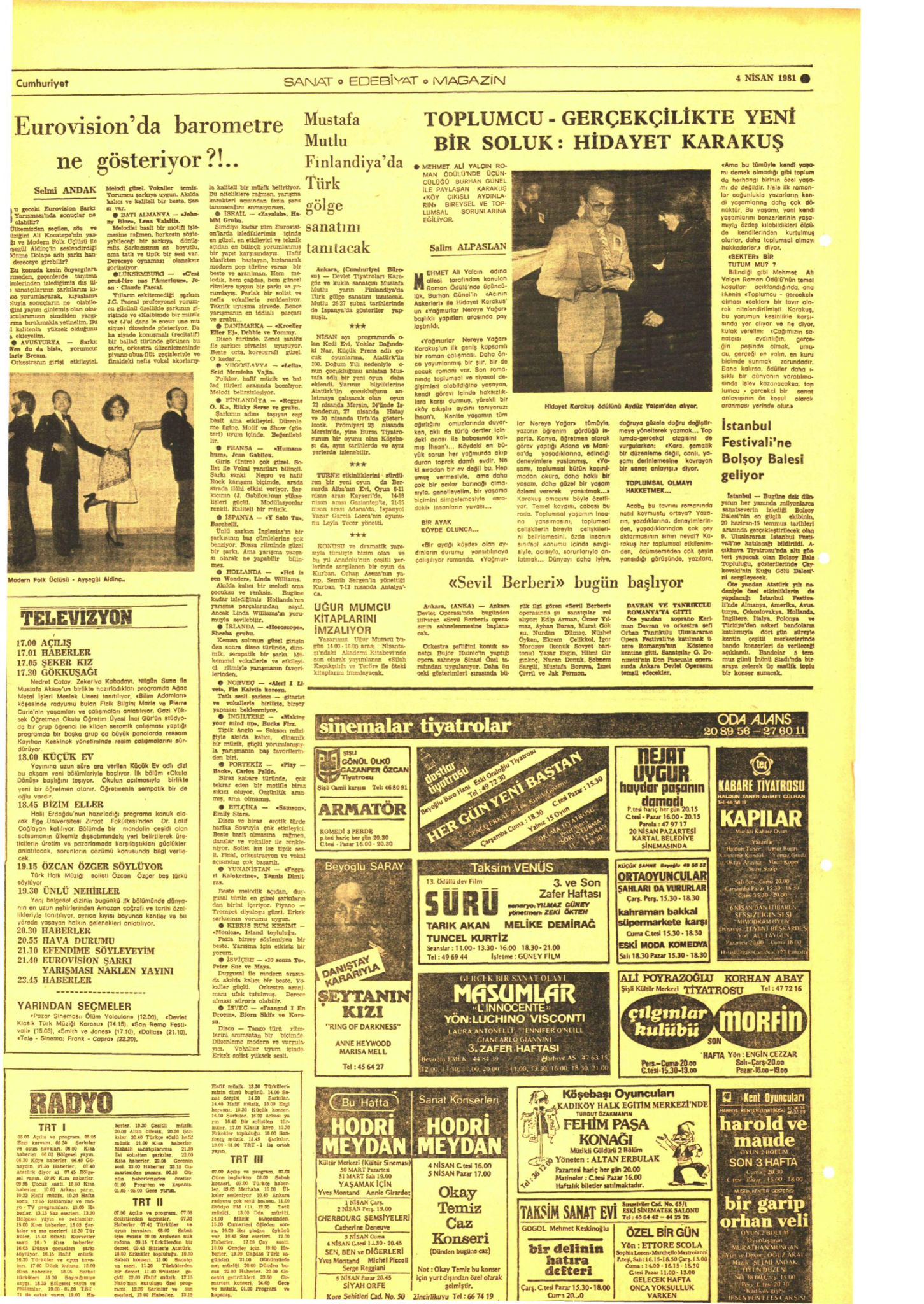
- (4 April 1981). "Televizyon". [[Cumhuriyet]].
- (4 April 1981). "Eurovision Song Contest 1981 – BBC1".
- (4 April 1981). "Broadcasting Guide". [[The Times]].
- (4 April 1981). "Weekend TV programmes". [[Coventry Evening Telegraph.
- (4 April 1981). "TV and radio this week end". [[Lancashire Telegraph.
- (4 April 1981). "switch-on guide". [[The Journal (Newcastle upon Tyne newspaper).
- (4 April 1981). "Television and radio guide". [[Grimsby Telegraph.
- (4 April 1981). "Weekend TV–radio". [[Leicester Mercury]].
- (4 April 1981). "Saturday's radio". [[Manchester Evening News]].
- (4 April 1981). "Weekend television and radio". [[The Sentinel (Staffordshire).
- (4 April 1981). "Eurovision Song Contest 1981 – BBC Radio 2".
- (4 April 1981). "Телевизија". [[Politika]].
- (4 April 1981). "Televizió". [[Magyar Szó]].
- (3 April 1981). "RTZ TV Program". Glas Podravine.
- (4 April 1981). "RTV danes". [[Delo (newspaper).
- (1981). "Special Broadcasting Service 1980/81 Annual Report". [[Special Broadcasting Service]].
- (17 April 1981). "ne 3. května".
- (21 May 1981). "Isiginnaarut / TV". [[Atuagagdliutit/Grønlandsposten.
- (5 April 1981). "星期二 – Tuesday, 7 April – 四月七日". [[Wah Kiu Yat Po.
- (27 April 1981). "Szombat – május 2".
- (16 April 1981). "Dagskráin". [[Morgunblaðið]].
- (4 April 1981). "Jordan Television – Channel 6". [[The Jordan Times]].
- (25 July 1981). "Telearuba – zaterdag". [[Amigoe]].
- (13 July 1981). "(zaterdag) Telecuraçao". [[Amigoe]].
- (13 July 1981). "Eurovisie-festival op Telecuraçao". [[Amigoe]].
- (24–26 April 1981). "Program telewizji". [[Dziennik Polski]].
- (16 April 1981). "音楽". [[The Chosun Ilbo]].
This article was imported from Wikipedia and is available under the Creative Commons Attribution-ShareAlike 4.0 License. Content has been adapted to SurfDoc format. Original contributors can be found on the article history page.
Ask Mako anything about Eurovision Song Contest 1981 — get instant answers, deeper analysis, and related topics.
Research with MakoFree with your Surf account
Create a free account to save articles, ask Mako questions, and organize your research.
Sign up freeThis content may have been generated or modified by AI. CloudSurf Software LLC is not responsible for the accuracy, completeness, or reliability of AI-generated content. Always verify important information from primary sources.
Report