From Surf Wiki (app.surf) — the open knowledge base
Eurovision Song Contest 1980
International song competition

International song competition
| Field | Value |
|---|---|
| name | Eurovision Song Contest |
| year | 1980 |
| logo | ESC 1980 logo.png |
| final | 19 April 1980 |
| presenter | Marlous Fluitsma |
| musdirector | Rogier van Otterloo |
| director | Theo Ordeman |
| scrutineer | Frank Naef |
| exproducer | Fred Oster |
| organiser | European Broadcasting Union (EBU) |
| host | Nederlandse Omroep Stichting (NOS) |
| venue | Nederlands Congresgebouw |
| The Hague, Netherlands | |
| winner | |
| "What's Another Year" | |
| vote | Each country awarded 12, 10, 8-1 point(s) to their 10 favourite songs |
| entries | 19 |
| debut | |
| return | |
| nonreturn | |
| Map NoSemis | Y |
The Hague, Netherlands "What's Another Year"
The Eurovision Song Contest 1980 was the 25th edition of the Eurovision Song Contest, held on 19 April 1980 at the Nederlands Congresgebouw in The Hague, Netherlands, and presented by Marlous Fluitsma. It was organised by the European Broadcasting Union (EBU) and host broadcaster Nederlandse Omroep Stichting (NOS), who staged the event after the Israel Broadcasting Authority (IBA), which had won the for , declined hosting responsibilities as it had staged the competition in 1979. Although Fluitsma was the main presenter, each song was introduced by a presenter appointed by each participating broadcaster, that in some cases was the same person providing the commentary.
Broadcasters from nineteen countries took part this year, with and the previous year's winner deciding not to participate, and returning. made its only appearance in the contest. It was the last Eurovision Song Contest not to be hosted in the previous edition's winning country until .
The winner was with the song "What's Another Year", sung by Johnny Logan and written by Shay Healy.
Location
The Israel Broadcasting Authority (IBA), which won the contest in 1979, renounced its right to host the 1980 edition on 13 August 1979. The resignation was the result of failed negotiations between the broadcaster and the Knesset, after lawmakers did not authorize extra budget allocations for another international production hosted by IBA in a short space of time. However, rumours later emerged that the resignation was in actuality due to a controversy related to the date of the contest, which had been provisionally confirmed for 19 April 1980, coinciding with the Yom HaZikaron holiday. The issue itself became controversial in Israel, thanks to a translation error in several documents sent by the European Broadcasting Union (EBU) to IBA at the end of 1979, when negotiations regarding the holding of the contest would begin. However, IBA tried to negotiate several times with the EBU the possibility of changing the date. However, none of them were fruitful and on 10 December 1979, the Israeli withdrawal was confirmed, following confirmation that the date chosen for the competition was 19 April 1980.
Following these incidents, the EBU apologised to IBA, but even with their arguments, the date of the competition could not be changed, since the schedule for the participating broadcasters was tight and many of them already had their participation plans and programming schedules set up. This caused an atypical situation, because it was the only time in history that the country that had won the previous year could not defend its title.
Upon learning of the decision taken by the IBA, the EBU sent a public apology, claiming that "the lack of employees with knowledge of the Hebrew language has placed it in a strained situation". The issue was resolved when the IBA publicly accepted the apologies and confirmed that regardless of what happened in the 1980 contest, it would return in 1981.
Many years later, Yair Lapid, son of the late Tommy Lapid who was the general director of the IBA at the time, told in his father's biography, "that when his father discovered that holding the contest for two years in a row by IBA could result in unexpected bankruptcy. In December 1979, when this argument was presented to the other broadcasters, only NOS immediately accepted".
As news arrived, the EBU triggered an emergency protocol and invited the British Broadcasting Corporation (BBC) as reserve host broadcaster, something that had already happened four other times (, , , and ). However, this time alleging the same financial problems that delayed the contest, the BBC ended up not taking over production. The third option was Televisión Española (TVE), due to the fact that the Spanish entry had finished second the previous year. However, with the period of the Spanish transition to democracy having already started, TVE also declined, despite the fact that the tourism board of the Costa del Sol was already working in a bid with the Convention Center of Torremolinos as the venue with the aim of harnessing the area's touristic potential.
With negative responses from the reserve options, the EBU and the IBA decided to offer hosting rights to any of the other 15 broadcasters which had participated in the previous edition. 14 of them also gave negative responses to the situation, as no one expected the IBA to give up the rights. The situation only calmed down at the end of 1979, when Nederlandse Omroep Stichting (NOS) confirmed the date of the competition and its location, which was decided on 23 October. As it accepted the responsibility with little time to organize and produce the event, NOS allocated a smaller budget and reused many elements of the stage design from the contest.
Production
As in and , the stage design was the work of . The main platform was decorated with a five-step staircase and three curved horizontal panels, in front of which participants performed their songs. The technique included a series of geometric elements suspended by cables that accompanied each performance, transforming into totally different images accompanied by colored lights that also changed with each song.
Given the short time for production, the Dutch art team ended up opting to recycle several elements from the 1976 contest stage, but with different uses. They chose to rescue several pieces from sets from other productions by the broadcaster, a warehouse and also a scrapyard, observing the conditions of use. Recycling also involved the contest's visual identity, in the same way that the opening video was a reissue of the one used four years earlier.
Participants
After Israel announced its absence, entered the contest for its first, and to date only, participation. also withdrew from the contest, and would not return until 2004.
Several of the performing artists had previously competed as lead artists representing the same country in past editions: Paola del Medico had represented , Katja Ebstein had represented and , and Maggie MacNeal had represented the as part of Mouth and MacNeal.
| Country | Broadcaster | Artist | Song | Language | Songwriter(s) | Conductor |
|---|---|---|---|---|---|---|
| ORF | "Du bist Musik" | German | Richard Oesterreicher | |||
| RTBF | Telex | "Euro-Vision" | French | |||
| DR | Bamses Venner | "Tænker altid på dig" | Danish | Allan Botschinsky | ||
| YLE | Vesa-Matti Loiri | "Huilumies" | Finnish | Ossi Runne | ||
| TF1 | "Hé, hé m'sieurs dames" | French | Sylvano Santorio | |||
| BR | Katja Ebstein | "Theater" | German | |||
| ERT | Anna Vissi and the | "Autostop" (Ωτοστόπ) | Greek | Jick Nacassian | ||
| RTÉ | Johnny Logan | "What's Another Year" | English | Shay Healy | Noel Kelehan | |
| RAI | Alan Sorrenti | "Non so che darei" | Italian | Alan Sorrenti | Del Newman | |
| CLT | Sophie and Magaly | "Papa Pingouin" | French | Norbert Daum | ||
| RTM | Samira Bensaïd | "Bitakat Hob" (بطاقة حب) | Arabic | |||
| NOS | Maggie MacNeal | "Amsterdam" | Dutch | Rogier van Otterloo | ||
| NRK | Sverre Kjelsberg and Mattis Hætta | "Sámiid ædnan" | Norwegian | Sigurd Jansen | ||
| RTP | José Cid | "Um grande, grande amor" | Portuguese | José Cid | ||
| TVE | Trigo Limpio | "Quédate esta noche" | Spanish | José Antonio Martín | Javier Iturralde | |
| SVT | Tomas Ledin | "Just nu" | Swedish | Tomas Ledin | Anders Berglund | |
| SRG SSR | Paola | "Cinéma" | French | Peter Reber | ||
| TRT | Ajda Pekkan | "Pet'r Oil" | Turkish | Attila Özdemiroğlu | ||
| BBC | Prima Donna | "Love Enough for Two" | English | John Coleman |
Format
The venue that had hosted the , the Congresgebouw, was again chosen to stage the event. Because of the limited budget and time available, NOS decided to recycle several elements of the 1976 production such as several opening video sequences and many pieces and elements that had been used in other NOS shows since then. Again, Roland de Groot took charge of the design. As with the 1977 and 1978 contests, there were no pre-filmed postcards between the songs, with a guest presenter appointed by each participating broadcaster introducing the entries. Apart from this, Marlous Fluitsma presented the contest almost entirely in Dutch, with exceptions in the protocol parts and in the voting where she used French and English. Thus, the broadcaster host spent only NLG 900.000 on organizing the contest, from the overall amount of NLG 1.5 million.{{cite web|access-date=27 January 2025 |date=April 29, 2021 |title=81-year-old Eurovision stage designer takes a look at Ahoy: 'unbelievable'
Song presenters
Each of the 19 contestants was presented by a presenter from that country appointed by each participating broadcaster, in some cases the same person providing the commentary. Each of the songs was introduced in the same language as the song was performed, with the exception of the Irish introduction, which was made in Irish, whereas the song was performed in English. The British presenter was incorrectly identified in the onscreen caption as 'Noel Edmunds' and the Finnish presenter as 'Heikki Haarma'.
- Austria
- TurkeyŞebnem Savaşçı
- GreeceKelly Sakakou
- Luxembourg
- MoroccoMohammed Bouzidi
- ItalyBeatrice Cori
- DenmarkJørgen de Mylius
- SwedenUlf Elfving
- SwitzerlandLyliam Stambac
- FinlandHeikki Harma
- NorwayÅse Kleveland
- GermanyCarolin Reiber
- United KingdomNoel Edmonds
- PortugalEládio Clímaco
- NetherlandsMarlous Fluitsma
- FranceÉvelyne Dhéliat
- IrelandThelma Mansfield
- SpainMari Cruz Soriano
- Belgium
Contest overview
During the live interval act performance of San Fernando by The Dutch Rhythm Steel and Show Band with the Lee Jackson dancers, Hans van Willigenburg intercut brief interviews with some of the participants backstage in the green room, speaking to the singers from Germany, Luxembourg, the United Kingdom, Ireland, Norway, and the Netherlands, each in their own language.
Australian-born Johnny Logan, representing his parents' country , was ultimately crowned the winner with the song "What's Another Year". This was Ireland's second victory in the competition, having previously won in with "All Kinds of Everything", coincidentally also held on Dutch soil. It was also the first time that a male solo artist (albeit with backing vocals) had won the contest since Udo Jürgens won for .
| R/O | Country | Artist | Song | Points | Place | 1 | 2 | 3 | 4 | 5 | 6 | 7 | 8 | 9 | 10 | 11 | 12 | 13 | 14 | 15 | 16 | 17 | 18 | 19 |
|---|---|---|---|---|---|---|---|---|---|---|---|---|---|---|---|---|---|---|---|---|---|---|---|---|
| Blue Danube | "Du bist Musik" | 64 | 8 | |||||||||||||||||||||
| "Pet'r Oil" | 23 | 15 | ||||||||||||||||||||||
| and the Epikouri | "Autostop" | 30 | 13 | |||||||||||||||||||||
| Sophie and Magaly | "Papa Pingouin" | 56 | 9 | |||||||||||||||||||||
| "Bitakat Hob" | 7 | 18 | ||||||||||||||||||||||
| "Non so che darei" | 87 | 6 | ||||||||||||||||||||||
| Bamses Venner | "Tænker altid på dig" | 25 | 14 | |||||||||||||||||||||
| "Just nu" | 47 | 10 | ||||||||||||||||||||||
| Paola | "Cinéma" | 104 | 4 | |||||||||||||||||||||
| "Huilumies" | 6 | 19 | ||||||||||||||||||||||
| and Mattis Hætta | "Sámiid ædnan" | 15 | 16 | |||||||||||||||||||||
| "Theater" | 128 | 2 | ||||||||||||||||||||||
| Prima Donna | "Love Enough for Two" | 106 | 3 | |||||||||||||||||||||
| "Um grande, grande amor" | 71 | 7 | ||||||||||||||||||||||
| "Amsterdam" | 93 | 5 | ||||||||||||||||||||||
| Profil | "Hé, hé m'sieurs dames" | 45 | 11 | |||||||||||||||||||||
| "What's Another Year" | 143 | 1 | ||||||||||||||||||||||
| Trigo Limpio | "Quédate esta noche" | 38 | 12 | |||||||||||||||||||||
| Telex | "Euro-Vision" | 14 | 17 |
Spokespersons
Each participating broadcaster appointed a spokesperson who was responsible for announcing the votes for its respective country via telephone. Known spokespersons at the 1980 contest are listed below.
- DenmarkBent Evold
- FinlandKaarina Pönniö
- IrelandDavid Hefferman
- SwedenArne Weise
- United KingdomRay Moore
Detailed voting results
_winnaar_Johnny_Logan_in_aktie,_Bestanddeelnr_930-7803.jpg)
The scoring system implemented in 1975 remained the same; each country had a jury who awarded 12, 10, 8, 7, 6, 5, 4, 3, 2, 1 point(s) for their top ten songs. However this year for the first time, spokespersons were required to declare their scores in ascending order, 1,2,3 etc. This change made for the added excitement of waiting for each country to award their highest 12 points at the end of each voting round.
For the voting sequence, Marlous Fluitsma used a different telephone to speak to each of the nineteen jury spokespersons, although the phones were simply props and were not connected.
| nb=1 | Total score}} | nb=1 | Austria}} | nb=1 | Turkey}} | nb=1 | Greece}} | nb=1 | Luxembourg}} | nb=1 | Morocco}} | nb=1 | Italy}} | nb=1 | Denmark}} | nb=1 | Sweden}} | nb=1 | Switzerland}} | nb=1 | Finland}} | nb=1 | Norway}} | nb=1 | Germany}} | nb=1 | United Kingdom}} | nb=1 | Portugal}} | nb=1 | Netherlands}} | nb=1 | France}} | nb=1 | Ireland}} | nb=1 | Spain}} | nb=1 | Belgium}} | va=middle | Contestants}} | Austria | Turkey | Greece | Luxembourg | Morocco | Italy | Denmark | Sweden | Switzerland | Finland | Norway | Germany | United Kingdom | Portugal | Netherlands | France | Ireland | Spain | Belgium |
|---|---|---|---|---|---|---|---|---|---|---|---|---|---|---|---|---|---|---|---|---|---|---|---|---|---|---|---|---|---|---|---|---|---|---|---|---|---|---|---|---|---|---|---|---|---|---|---|---|---|---|---|---|---|---|---|---|---|---|---|---|
| 64 | 1 | 3 | 4 | 5 | 1 | 4 | 5 | 6 | 4 | 6 | 3 | 3 | 4 | 10 | 4 | 1 | ||||||||||||||||||||||||||||||||||||||||||||
| 23 | 3 | 12 | 8 | |||||||||||||||||||||||||||||||||||||||||||||||||||||||||
| 30 | 5 | 1 | 2 | 2 | 4 | 3 | 1 | 8 | 4 | |||||||||||||||||||||||||||||||||||||||||||||||||||
| 56 | 1 | 1 | 4 | 6 | 3 | 7 | 8 | 7 | 8 | 3 | 8 | |||||||||||||||||||||||||||||||||||||||||||||||||
| 7 | 7 | |||||||||||||||||||||||||||||||||||||||||||||||||||||||||||
| 87 | 2 | 6 | 2 | 3 | 10 | 8 | 6 | 2 | 7 | 4 | 12 | 1 | 2 | 2 | 10 | 10 | ||||||||||||||||||||||||||||||||||||||||||||
| 25 | 4 | 2 | 6 | 7 | 1 | 5 | ||||||||||||||||||||||||||||||||||||||||||||||||||||||
| 47 | 8 | 10 | 10 | 6 | 5 | 5 | 2 | 1 | ||||||||||||||||||||||||||||||||||||||||||||||||||||
| 104 | 6 | 2 | 5 | 7 | 3 | 8 | 2 | 12 | 10 | 10 | 7 | 6 | 10 | 12 | 2 | 2 | ||||||||||||||||||||||||||||||||||||||||||||
| 6 | 5 | 1 | ||||||||||||||||||||||||||||||||||||||||||||||||||||||||||
| 15 | 4 | 6 | 2 | 3 | ||||||||||||||||||||||||||||||||||||||||||||||||||||||||
| 128 | 8 | 10 | 3 | 10 | 12 | 7 | 5 | 7 | 2 | 10 | 8 | 12 | 10 | 5 | 12 | 7 | ||||||||||||||||||||||||||||||||||||||||||||
| 106 | 7 | 5 | 8 | 8 | 10 | 12 | 10 | 4 | 3 | 7 | 7 | 5 | 6 | 8 | 6 | |||||||||||||||||||||||||||||||||||||||||||||
| 71 | 4 | 5 | 4 | 10 | 6 | 8 | 2 | 1 | 8 | 1 | 5 | 6 | 7 | 4 | ||||||||||||||||||||||||||||||||||||||||||||||
| 93 | 12 | 12 | 6 | 12 | 3 | 3 | 10 | 8 | 2 | 4 | 12 | 1 | 5 | 3 | ||||||||||||||||||||||||||||||||||||||||||||||
| 45 | 3 | 7 | 2 | 1 | 1 | 4 | 1 | 3 | 5 | 4 | 3 | 6 | 5 | |||||||||||||||||||||||||||||||||||||||||||||||
| 143 | 10 | 12 | 7 | 1 | 12 | 7 | 12 | 8 | 12 | 12 | 12 | 5 | 6 | 8 | 7 | 12 | ||||||||||||||||||||||||||||||||||||||||||||
| 38 | 4 | 7 | 8 | 6 | 5 | 6 | 2 | |||||||||||||||||||||||||||||||||||||||||||||||||||||
| 14 | 3 | 1 | 10 |
12 points
Below is a summary of all 12 points in the final:
| N. | Contestant | Nation(s) giving 12 points | 7 | 4 | 3 | 2 | 1 |
|---|---|---|---|---|---|---|---|
| **** | , , , , , , | ||||||
| , , , | |||||||
| , , | |||||||
| , |
Broadcasts
Each participating broadcaster was required to relay the contest via its networks. Non-participating EBU member broadcasters were also able to relay the contest as "passive participants". Broadcasters were able to send commentators to provide coverage of the contest in their own native language and to relay information about the artists and songs to their television viewers. The contest was also reportedly broadcast in Cyprus, Israel, Iceland, and Jordan; in Czechoslovakia, Poland, Romania, and the Soviet Union via Intervision; and in Cuba, South Korea, and the United Arab Emirates, with an estimated audience of 450 million viewers. The contest was reportedly broadcast via radio in countries including Belgium, Finland, Germany, Ireland, the Netherlands, Norway, Sweden, Turkey, and the United Kingdom. Known details on the broadcasts in each country, including the specific broadcasting stations and commentators are shown in the tables below.
| Country | Broadcaster | Channel(s) | Commentator(s) | Ref(s) | Austria | Belgium | Denmark | Finland | France | Germany | Greece | Ireland | Italy | Luxembourg | Netherlands | Norway | Portugal | Spain | Sweden | Switzerland | Turkey | United Kingdom | ||
|---|---|---|---|---|---|---|---|---|---|---|---|---|---|---|---|---|---|---|---|---|---|---|---|---|
| ORF | FS2 | Ernst Grissemann | ||||||||||||||||||||||
| RTBF | RTBF1 | Jacques Mercier | ||||||||||||||||||||||
| RTBF Radio 1 | ||||||||||||||||||||||||
| BRT | TV1 | Luc Appermont | ||||||||||||||||||||||
| DR | DR TV | Jørgen de Mylius | ||||||||||||||||||||||
| YLE | TV1, {{ill | Rinnakkaisohjelma | fi}} | Heikki Harma | ||||||||||||||||||||
| TF1 | Patrick Sabatier | |||||||||||||||||||||||
| ARD | Deutsches Fernsehen | |||||||||||||||||||||||
| ERT | ERT | |||||||||||||||||||||||
| RTÉ | RTÉ 1 | Larry Gogan | ||||||||||||||||||||||
| RTÉ Radio 1 | Pat Kenny | |||||||||||||||||||||||
| RAI | Rete Due | Michele Gammino | ||||||||||||||||||||||
| CLT | RTL Télé-Luxembourg | Jacques Navadic | ||||||||||||||||||||||
| NOS | Nederland 2 | Pim Jacobs | ||||||||||||||||||||||
| Hilversum 1 | Willem van Beusekom | |||||||||||||||||||||||
| NRK | NRK Fjernsynet | Knut Aunbu | ||||||||||||||||||||||
| NRK | ||||||||||||||||||||||||
| RTP | RTP1 | |||||||||||||||||||||||
| RDP | RDP Programa 1 | |||||||||||||||||||||||
| TVE | TVE 1 | |||||||||||||||||||||||
| SVT | TV1 | Ulf Elfving | ||||||||||||||||||||||
| SR P3 | Kent Finell | |||||||||||||||||||||||
| SRG SSR | TV DRS | |||||||||||||||||||||||
| TSR | ||||||||||||||||||||||||
| TSI | ||||||||||||||||||||||||
| TRT | TRT Televizyon | Bülend Özveren | ||||||||||||||||||||||
| Radyo 3 | Şebnem Savaşçı | |||||||||||||||||||||||
| BBC | BBC1 | Terry Wogan | ||||||||||||||||||||||
| BBC Radio 2 | Steve Jones | |||||||||||||||||||||||
| BFBS | BFBS Radio | Andrew Pastouna |
| Country | Broadcaster | Channel(s) | Commentator(s) | Ref(s) | Cyprus | Hong Kong | Iceland | Israel | Jordan | Netherlands Antilles | Romania | South Korea |
|---|---|---|---|---|---|---|---|---|---|---|---|---|
| CyBC | RIK | |||||||||||
| TVB | TVB Jade | |||||||||||
| TVB Pearl | ||||||||||||
| RÚV | Sjónvarpið | Björn Baldursson | ||||||||||
| IBA | Israeli Television | |||||||||||
| , | ||||||||||||
| JTV | JTV2 | |||||||||||
| ATM | TeleAruba | |||||||||||
| TVR | Programul 1 | |||||||||||
| KBS | KBS |
Notes
References
References
- "Eurovision 1980 Results: Voting & Points". Eurovisionworld.
- "The Eurovision Song Contest".
- (14 August 1979). "El consejo director". El País.
- (22 August 1979). "El Festival de Eurovisión 1980 no se celebrará en Israel por falta de dinero". Maariv.
- (25 March 1980). "Sin Eurovisión, pero con ahorros". Maariv.
- (11 December 1979). "Israel no participará en Eurovisión de este año". Maariv.
- Yair Lapid, "Memoires After my Death", Keter Books, Jerusalem 2010 (ISBN 978-965-07-1792-6), p. 239 (in Hebrew)
- (24 August 1979). "El Patronato". El País.
- (24 October 1979). "Eurovisie-songfestival definitief in Den Haag". [[Leidsch Dagblad]].
- (1 March 1980). "Décor Songfestival moet goedkoper". [[Het Vrije Volk]].
- (25 January 2025). "Eurovision 1980". OGAE Spain.
- (25 January 2025). "La Haia 1980". Songfestival.be.
- "The Hague 1980 – Participants". European Broadcasting Union.
- "Alle deutschen ESC-Acts und ihre Titel". ARD.
- (18 April 1980). "Korte berichten uit het binnenland". [[Zierikzeesche Nieuwsbode]].
- (18 April 1980). "Jubileum Songfestival niet zonder problemen". [[Provinciale Zeeuwse Courant]].
- "The Hague 1980 – Scoreboard". European Broadcasting Union.
- "12 sange er klar til Grand Prix". [[Aalborg Stiftstidende]].
- Murtomäki, Asko. (2007). "Finland 12 points! Suomen Euroviisut". Teos.
- (19 April 1980). "TV Page". [[The Herald (Ireland).
- (2006). "Melodifestivalen genom tiderna : de svenska uttagningarna och internationella finalerna". Premium Publishing.
- (2016). "Songs for Europe: The United Kingdom at the Eurovision Song Contest". [[Telos Publishing]].
- "The Hague 1980 – Detailed voting results". European Broadcasting Union.
- "Eurovision Song Contest 1980 – Scoreboard". European Broadcasting Union.
- (31 October 2018). "The Rules of the Contest". European Broadcasting Union.
- (14 April 1980). "Eurovisie Songfestival gaat de wereld over". [[Provinciale Zeeuwse Courant]].
- (18 April 1980). "Eurofestival: l'appuntamento è per domani". [[Il Piccolo]].
- (21 April 1980). "Sigurlagið samið í strætó í Dublin". [[Dagblaðið]].
- (10 April 1980). "Avstrija TV". Naš tednik.
- (22 May 2015). "Ein virtueller Disput der ESC-Kommentatoren". [[Kurier]].
- (19 April 1980). "TV–programma's van zaterdag 19 april 1980". [[De Standaard]].
- (18 April 1980). "Rundfunk-programm". [[Grenz-Echo]] and {{ill.
- "Alle tiders programoversigter – Lørdag den 19. april 1980". [[DR (broadcaster).
- (19 April 1980). "Radio · TV". [[Helsingin Sanomat]].
- (22 April 1980). "Brittivinoilua euroviisuista". Helsingin Sanomat.
- (19-20 April 1980). "Téléprevision – Samedi 19 avril". {{ill.
- "Diese woche im Fernsehen – Samstag, 19. 4.".
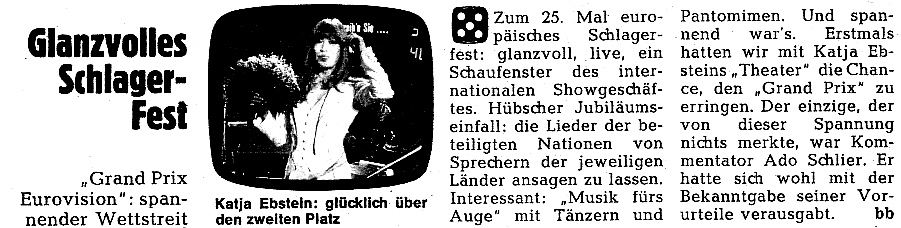
- "Glanzvolles Schlager-Fest".
- (19 April 1980). "TV". {{ill.
- (19 April 1980). "Η ΕΡΤ θα μεταδώσει σήμερα το βράδυ το διαγωνισμό της "Γιουροβίζιον"". [[Makedonia (newspaper).
- (19 April 1980). "Double Dutch". Evening Herald.
- (13–19 April 1980). "Sabato 19 aprile".
- (18 April 1980). "Télé hebdo". [[Luxemburger Wort]].
- (19 April 1980). "Radio en televisie, programma's". [[Limburgs Dagblad]].
- (18 April 1980). "Het grote gebeuren van morgenavond! Eurovisie Songfestival..". [[De Volkskrant]].
- (19 April 1980). "Radio TV i helgen". [[Tønsbergs Blad]].
- (19 April 1980). "Hoje". [[Diário de Lisboa]].
- (19 April 1980). "Rádio". Diário de Lisboa.
- (19 April 1980). "Programas para hoy". {{ill.
- (19 April 1980). "Esta noche, Festival de la Canción de Eurovisión". La Gaceta del Norte.
- (19 April 1980). "tv programmen". [[Svenska Dagbladet]].
- (19 April 1980). "radioprogrammen". Svenska Dagbladet.
- (19 April 1980). "Tele-tip heute". [[Berner Zeitung.
- (17 April 1980). "TV – samedi 19 avril".
- (19 April 1980). "Oggi e domani sul video". Popolo e Libertà.
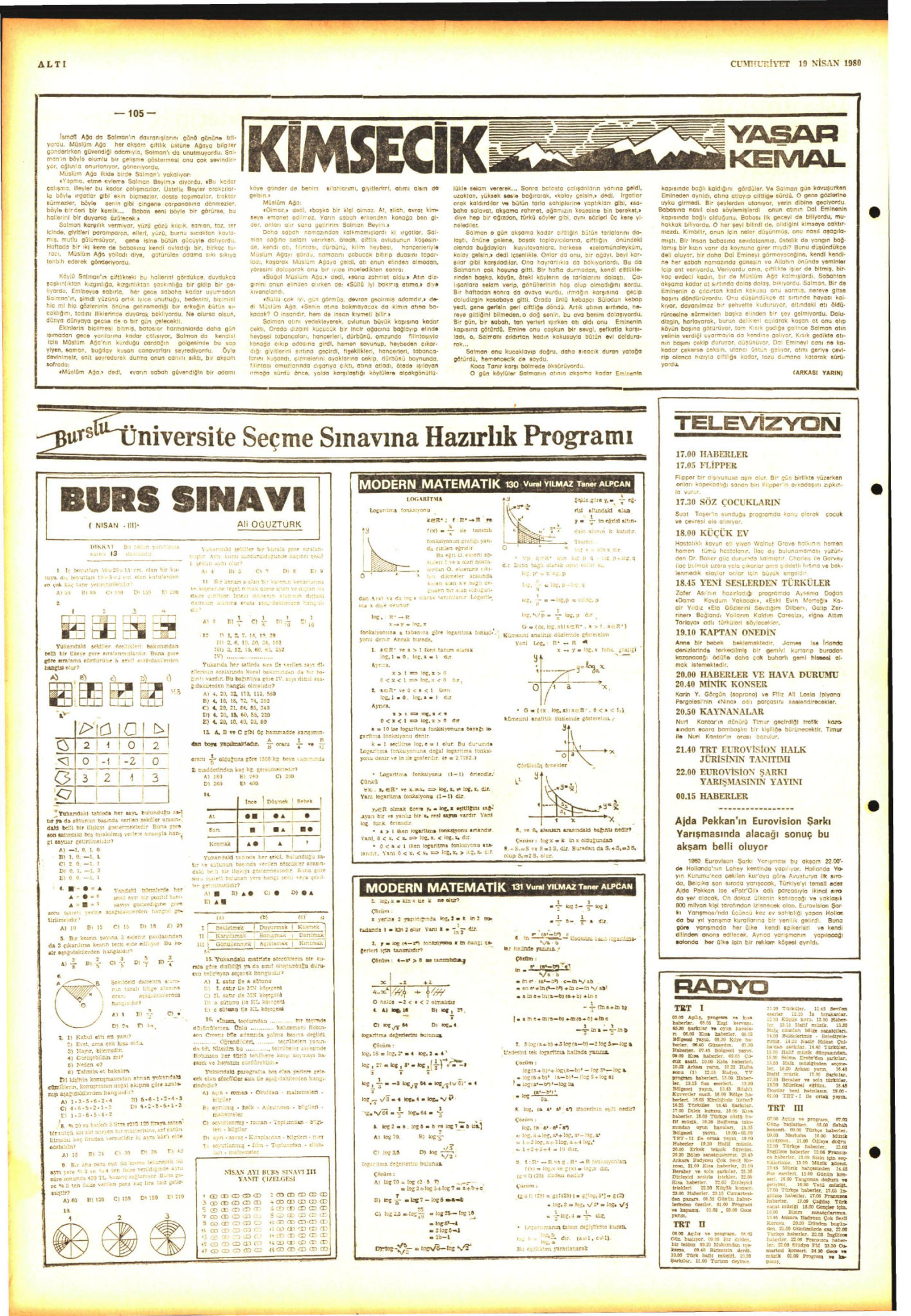
- (19 April 1980). "Televizyon". [[Cumhuriyet]].
- (19 April 1980). "Bütün kalpler Eurovision Yarışması için atiyor "Haydi Ajda" Diyoruz...". [[Milliyet]].
- (19 April 1980). "Eurovision Song Contest 1980 – BBC1".
- (19 April 1980). "with Radio 2 through the night – BBC Radio 1".
- (19 April 1980). "TV and Radio". [[Coventry Evening Telegraph.
- (19 April 1980). "TV and radio this week end". [[Lancashire Telegraph.
- (19 April 1980). "Saturday radio and television". [[The Journal (Newcastle upon Tyne newspaper).
- (19 April 1980). "Weekend TV and radio". [[Isle of Wight County Press]].
- (19 April 1980). "Saturday's radio". [[Manchester Evening News]].
- (19 April 1980). "And on your radio". [[Liverpool Daily Post.
- (19 April 1980). "Eurovision Song Contest – BBC Radio 2".
- (19 April 1980). "Τηλεόραση". {{lang.
- (20 April 1980). "星期日 – Sunday, 20 April – 四月二十號". [[Wah Kiu Yat Po.
- (26 April 1980). "Sjónvarp". [[Dagblaðið]].
- (22 April 1980). "20.4.80 – טלוויזיה". [[Maariv (newspaper).
- (22 April 1980). "20.4.80 – רדיו". Maariv.
- (19 April 1980). "Jordan Times Daily Guide". [[The Jordan Times]].
- (19 July 1980). "Telearuba – Zondag". [[Amigoe]].
- (4-10 May 1980). "tv1".
- (3 May 1980). "TV프로". [[The Chosun Ilbo]].
This article was imported from Wikipedia and is available under the Creative Commons Attribution-ShareAlike 4.0 License. Content has been adapted to SurfDoc format. Original contributors can be found on the article history page.
Ask Mako anything about Eurovision Song Contest 1980 — get instant answers, deeper analysis, and related topics.
Research with MakoFree with your Surf account
Create a free account to save articles, ask Mako questions, and organize your research.
Sign up freeThis content may have been generated or modified by AI. CloudSurf Software LLC is not responsible for the accuracy, completeness, or reliability of AI-generated content. Always verify important information from primary sources.
Report