From Surf Wiki (app.surf) — the open knowledge base
Eurovision Song Contest 1978
International song competition
International song competition
| Field | Value |
|---|---|
| name | Eurovision Song Contest |
| year | 1978 |
| logo | ESC 1978 logo.png |
| size | 200px |
| final | 22 April 1978 |
| presenters | |
| musdirector | François Rauber |
| director | Bernard Lion |
| scrutineer | Frank Naef |
| organiser | European Broadcasting Union (EBU) |
| host | Télévision Française 1 (TF1) |
| venue | Palais des Congrès |
| Paris, France | |
| winner | |
| "A-Ba-Ni-Bi" | |
| vote | Each country awarded 12, 10, 8-1 points to their 10 favourite songs |
| entries | 20 |
| return | |
| Map NoSemis | Y |
Paris, France "A-Ba-Ni-Bi"
The Eurovision Song Contest 1978 was the 23rd edition of the Eurovision Song Contest, held on 22 April 1978 at the Grand Amphitheatre of the Palais des Congrès in Paris, France, and presented by Denise Fabre and Léon Zitrone. It was organised by the European Broadcasting Union (EBU) and host broadcaster Télévision Française 1 (TF1), who staged the event after winning the for with the song "L'Oiseau et l'Enfant" by Marie Myriam. This was the first time that more than one presenter had hosted the contest as well as the first to have a male presenter since the .
Broadcasters from twenty countries participated, the highest number of competing countries in the history of the competition at the time. and both returned to the contest. Denmark had not participated since , 12 years before.
The winner of the contest was with the song "A-Ba-Ni-Bi" by Izhar Cohen and the Alphabeta. The winning entry was a love song sung in the Hebrew equivalent of Ubbi dubbi (the title is an expansion of the Hebrew word ani, meaning "I"). This was 's first Eurovision win, and it was also the first winning song to be performed in one of the Semitic languages. Furthermore, it was also the only winning song to be conducted by a woman, Nurit Hirsh. finished last for the fifth time, gaining the first nul points after the new voting system was implemented in .
Location
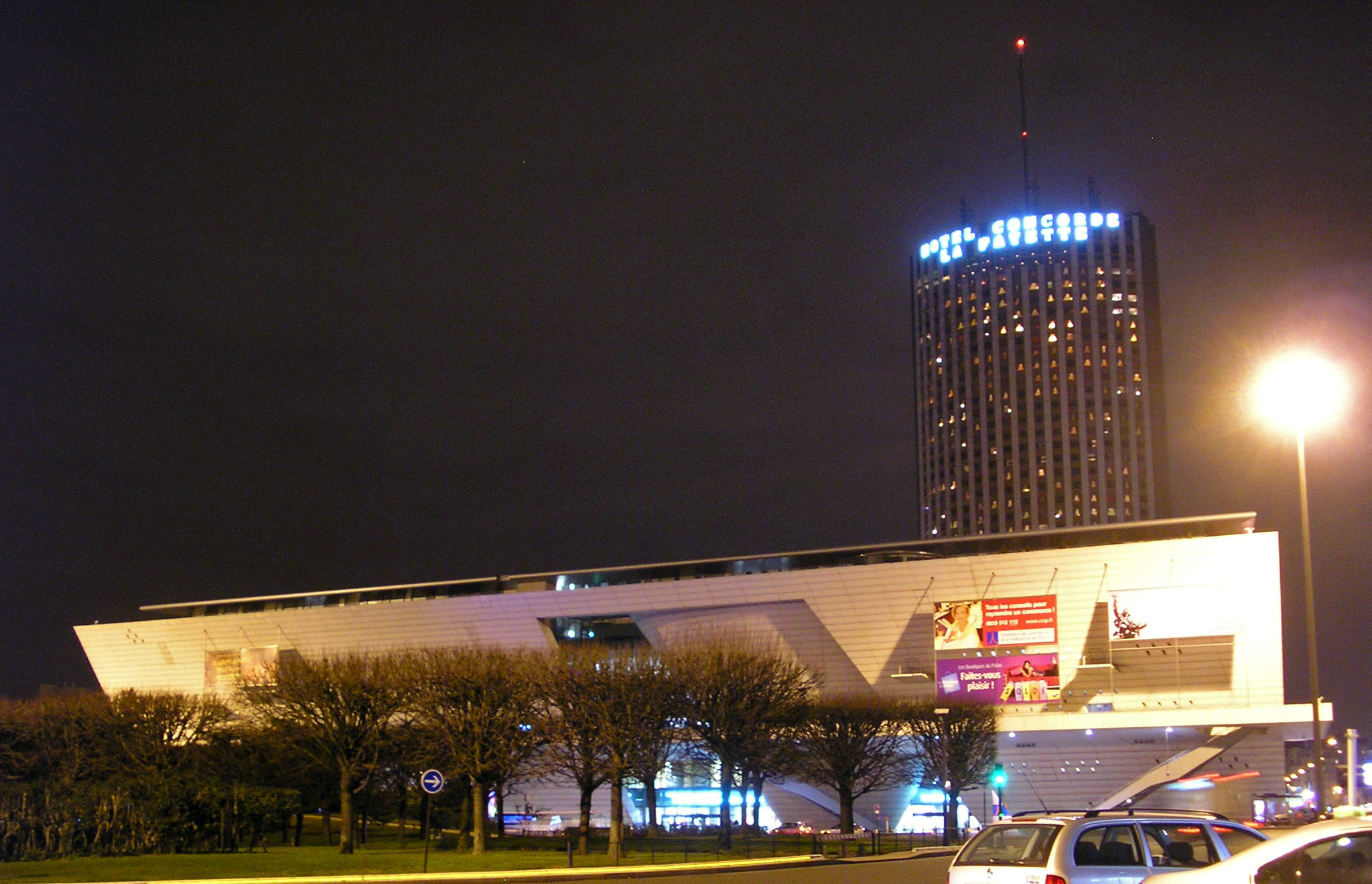
Télévision Française 1 (TF1) staged the contest at the Palais des congrès de Paris, a multi propose venue in the 17th arrondissement of Paris. Designed by French architect Guillaume Gillet, the venue was inaugurated in 1974.
Participants
Denmark returned to the competition after having been absent for twelve years, while Turkey did so after missing out two years. This meant that, for the first time, the contest had twenty entries competing.
Several of the performing artists had previously competed as lead artists representing the same country in past editions: Jean Vallée had represented ; and Norbert Niedermeyer as part of had represented as part of Milestones. In addition, Ireen Sheer representing Germany, had represented .
| Country | Broadcaster | Artist | Song | Language | Songwriter(s) | Conductor | ||
|---|---|---|---|---|---|---|---|---|
| ORF | "Mrs. Caroline Robinson" | German | Richard Oesterreicher | |||||
| RTBF | Jean Vallée | "L'amour ça fait chanter la vie" | French | Jean Vallée | ||||
| DR | Mabel | "Boom Boom" | Danish | |||||
| YLE | Seija Simola | "Anna rakkaudelle tilaisuus" | Finnish | Ossi Runne | ||||
| TF1 | Joël Prévost | "Il y aura toujours des violons" | French | Alain Goraguer | ||||
| SWF | Ireen Sheer | "Feuer" | German | Jean Frankfurter | ||||
| ERT | Tania Tsanaklidou | "Charlie Chaplin" (Τσάρλυ Τσάπλιν) | Greek | Haris Andreadis | ||||
| RTÉ | Colm C. T. Wilkinson | "Born to Sing" | English | Colm C. T. Wilkinson | Noel Kelehan | |||
| IBA | Izhar Cohen and the Alphabeta | "A-Ba-Ni-Bi" (א-ב-ני-בי) | Hebrew | Nurit Hirsh | ||||
| RAI | Ricchi e Poveri | "Questo amore" | Italian | Nicola Samale | ||||
| CLT | Baccara | "Parlez-vous français ?" | French | Rolf Soja | ||||
| TMC | and Olivier Toussaint | "Les Jardins de Monaco" | French | Yvon Rioland | ||||
| NOS | Harmony | nl | 't Is OK | i=unset}}" | Dutch | Harry van Hoof | ||
| NRK | Jahn Teigen | "Mil etter mil" | Norwegian | Carsten Klouman | ||||
| RTP | Gemini | "Dai li dou" | Portuguese | |||||
| TVE | José Vélez | "Bailemos un vals" | Spanish | Ramón Arcusa | ||||
| SR | Björn Skifs | "Det blir alltid värre framåt natten" | Swedish | |||||
| SRG SSR | "Vivre" | French | ||||||
| TRT | Nilüfer and Nazar | "Sevince" | Turkish | Onno Tunç | ||||
| BBC | Co-Co | "The Bad Old Days" | English | Alyn Ainsworth |
Format
The postcards were filmed live, featuring the artists making their way to the stage. They took a corridor, then an elevator. Leaving the lift, they were greeted by the previous participants and then made their entrances to the stage. The camera also made several shots of the audience, notably Jane Birkin and Serge Gainsbourg.
Each song was accompanied by a 45-piece orchestra.
The Swedish participant Björn Skifs was unhappy with the rule that every country would have to perform in their native language. He planned to sing in English anyway, but changed his mind at the last moment, causing him to completely forget the lyrics. He therefore sang the first few lines in gibberish before finding the words again.
The Israeli win caused problems for several North African and Middle-Eastern nations that were televising the contest, even though they were not participating. According to author and political commentator John Kennedy O'Connor in his book The Eurovision Song Contest: The Official History, when Israel became the clear winners during the voting, most of the Arabic stations ended their transmission of the contest. Jordan Television finished the show with a photo of a bunch of daffodils on screen, later announcing that the Belgian entry (which finished second) was the winner.
Contest overview
The contest was held on 22 April 1978, beginning at 21:30 (CEST).
Fears of terrorist attacks like at the Summer Olympics 1972 in Munich and of stage invasions like in meant that security measures in and around the Palais des Congrès were particularly tight: 200 police officers, some of them as undercover agents, tried to prevent any potential incidents. Spectators had to go through metal detectors upon arrival at the Palais des Congrès.
In addition to his duties as a host together with Denise Fabre, Léon Zitrone also served as commentator for France, in an own commentary box backstage.
| R/O | Country | Artist | Song | Points | Place | 1 | 2 | 3 | 4 | 5 | 6 | 7 | 8 | 9 | 10 | 11 | 12 | 13 | 14 | 15 | 16 | 17 | 18 | 19 | 20 | ||
|---|---|---|---|---|---|---|---|---|---|---|---|---|---|---|---|---|---|---|---|---|---|---|---|---|---|---|---|
| "Born to Sing" | 86 | 5 | |||||||||||||||||||||||||
| "Mil etter mil" | 0 | 20 | |||||||||||||||||||||||||
| Ricchi e Poveri | "Questo amore" | 53 | 12 | ||||||||||||||||||||||||
| "Anna rakkaudelle tilaisuus" | 2 | 18 | |||||||||||||||||||||||||
| Gemini | "Dai li dou" | 5 | 17 | ||||||||||||||||||||||||
| "Il y aura toujours des violons" | 119 | 3 | |||||||||||||||||||||||||
| "Bailemos un vals" | 65 | 9 | |||||||||||||||||||||||||
| Co-Co | "The Bad Old Days" | 61 | 11 | ||||||||||||||||||||||||
| "Vivre" | 65 | 9 | |||||||||||||||||||||||||
| "L'amour ça fait chanter la vie" | 125 | 2 | |||||||||||||||||||||||||
| Harmony | nl | 't Is OK | i=unset}}" | 37 | 13 | ||||||||||||||||||||||
| Nilüfer and Nazar | "Sevince" | 2 | 18 | ||||||||||||||||||||||||
| "Feuer" | 84 | 6 | |||||||||||||||||||||||||
| Caline and Olivier Toussaint | "Les Jardins de Monaco" | 107 | 4 | ||||||||||||||||||||||||
| "Charlie Chaplin" | 66 | 8 | |||||||||||||||||||||||||
| Mabel | "Boom Boom" | 13 | 16 | ||||||||||||||||||||||||
| Baccara | "Parlez-vous français ?" | 73 | 7 | ||||||||||||||||||||||||
| and the Alphabeta | "A-Ba-Ni-Bi" | 157 | 1 | ||||||||||||||||||||||||
| Springtime | "Mrs. Caroline Robinson" | 14 | 15 | ||||||||||||||||||||||||
| "Det blir alltid värre framåt natten" | 26 | 14 |
Spokespersons
Each participating broadcaster appointed a spokesperson who was responsible for announcing the votes for its respective country via telephone. Known spokespersons at the 1978 contest are listed below.
- FinlandKaarina Pönniö
- Germany
- SpainMatías Prats Luque
- SwedenSven Lindahl
- TurkeyMeral Savcı
- United KingdomColin Berry
Detailed voting results
| nb=1 | Total score}} | nb=1 | Ireland}} | nb=1 | Norway}} | nb=1 | Italy}} | nb=1 | Finland}} | nb=1 | Portugal}} | nb=1 | France}} | nb=1 | Spain}} | nb=1 | United Kingdom}} | nb=1 | Switzerland}} | nb=1 | Belgium}} | nb=1 | Netherlands}} | nb=1 | Turkey}} | nb=1 | Germany}} | nb=1 | Monaco}} | nb=1 | Greece}} | nb=1 | Denmark}} | nb=1 | Luxembourg}} | nb=1 | Israel}} | nb=1 | Austria}} | nb=1 | Sweden}} | va=middle | Contestants}} | Ireland | Norway | Italy | Finland | Portugal | France | Spain | United Kingdom | Switzerland | Belgium | Netherlands | Turkey | Germany | Monaco | Greece | Denmark | Luxembourg | Israel | Austria | Sweden |
|---|---|---|---|---|---|---|---|---|---|---|---|---|---|---|---|---|---|---|---|---|---|---|---|---|---|---|---|---|---|---|---|---|---|---|---|---|---|---|---|---|---|---|---|---|---|---|---|---|---|---|---|---|---|---|---|---|---|---|---|---|---|---|---|
| 86 | 12 | 3 | 5 | 7 | 10 | 10 | 5 | 10 | 10 | 6 | 8 | ||||||||||||||||||||||||||||||||||||||||||||||||||||
| 0 | |||||||||||||||||||||||||||||||||||||||||||||||||||||||||||||||
| 53 | 10 | 6 | 1 | 4 | 8 | 6 | 1 | 1 | 1 | 2 | 8 | 2 | 3 | ||||||||||||||||||||||||||||||||||||||||||||||||||
| 2 | 2 | ||||||||||||||||||||||||||||||||||||||||||||||||||||||||||||||
| 5 | 4 | 1 | |||||||||||||||||||||||||||||||||||||||||||||||||||||||||||||
| 119 | 6 | 3 | 10 | 2 | 2 | 5 | 8 | 6 | 8 | 6 | 4 | 10 | 5 | 8 | 8 | 1 | 5 | 12 | 10 | ||||||||||||||||||||||||||||||||||||||||||||
| 65 | 7 | 8 | 2 | 4 | 7 | 4 | 6 | 12 | 2 | 6 | 7 | ||||||||||||||||||||||||||||||||||||||||||||||||||||
| 61 | 3 | 6 | 2 | 3 | 2 | 4 | 2 | 6 | 8 | 7 | 3 | 5 | 2 | 5 | 3 | ||||||||||||||||||||||||||||||||||||||||||||||||
| 65 | 5 | 1 | 1 | 7 | 4 | 2 | 7 | 8 | 6 | 2 | 3 | 8 | 1 | 10 | |||||||||||||||||||||||||||||||||||||||||||||||||
| 125 | 12 | 7 | 6 | 6 | 4 | 12 | 2 | 12 | 10 | 5 | 3 | 12 | 12 | 7 | 7 | 4 | 4 | ||||||||||||||||||||||||||||||||||||||||||||||
| 37 | 5 | 3 | 4 | 1 | 5 | 6 | 12 | 1 | |||||||||||||||||||||||||||||||||||||||||||||||||||||||
| 2 | 1 | 1 | |||||||||||||||||||||||||||||||||||||||||||||||||||||||||||||
| 84 | 1 | 3 | 12 | 7 | 10 | 3 | 5 | 7 | 8 | 10 | 7 | 1 | 3 | 7 | |||||||||||||||||||||||||||||||||||||||||||||||||
| 107 | 4 | 4 | 7 | 8 | 5 | 1 | 10 | 5 | 6 | 10 | 5 | 7 | 4 | 10 | 8 | 1 | 12 | ||||||||||||||||||||||||||||||||||||||||||||||
| 66 | 7 | 2 | 5 | 8 | 10 | 7 | 4 | 4 | 4 | 10 | 3 | 2 | |||||||||||||||||||||||||||||||||||||||||||||||||||
| 13 | 6 | 1 | 4 | 2 | |||||||||||||||||||||||||||||||||||||||||||||||||||||||||||
| 73 | 2 | 12 | 12 | 12 | 7 | 3 | 3 | 2 | 6 | 1 | 7 | 6 | |||||||||||||||||||||||||||||||||||||||||||||||||||
| 157 | 8 | 8 | 8 | 10 | 10 | 8 | 6 | 5 | 12 | 12 | 12 | 12 | 12 | 3 | 5 | 6 | 12 | 8 | |||||||||||||||||||||||||||||||||||||||||||||
| 14 | 3 | 3 | 1 | 2 | 5 | ||||||||||||||||||||||||||||||||||||||||||||||||||||||||||
| 26 | 5 | 10 | 4 | 3 | 4 |
12 points
Below is a summary of all 12 points in the final:
| N. | Contestant | Nation(s) giving 12 points | 6 | 5 | 3 | 1 |
|---|---|---|---|---|---|---|
| **** | , , , , , | |||||
| , , , , | ||||||
| , , |
Broadcasts
Each participating broadcaster was required to relay the contest via its networks. Non-participating EBU member broadcasters were also able to relay the contest as "passive participants". Broadcasters were able to send commentators to provide coverage of the contest in their own native language and to relay information about the artists and songs to their television viewers. TF1 provided 29 commentary boxes in the auditorium for foreign broadcasters.
In addition to the participating countries, the contest was also reportedly broadcast in 17 other countries, including Algeria, Iceland, Jordan, Morocco, Tunisia, and Yugoslavia; in Czechoslovakia, East Germany, Hungary, Poland, and the Soviet Union via Intervision; and in Hong Kong, Japan, and the United Arab Emirates. No official accounts of the viewing figures are known to exist; an estimate given in French press outlets ahead of the contest put the expected audience at around 350 million viewers worldwide, while media reports put viewing figures between 500 and 600 million.
Known details on the broadcasts in each country, including the specific broadcasting stations and commentators are shown in the tables below.
| Country | Broadcaster | Channel(s) | Commentator(s) | Ref(s) | Austria | Belgium | Denmark | Finland | France | Germany | Greece | Ireland | Israel | Italy | Luxembourg | Monaco | Netherlands | Norway | Portugal | Spain | Sweden | Switzerland | Turkey | United Kingdom |
|---|---|---|---|---|---|---|---|---|---|---|---|---|---|---|---|---|---|---|---|---|---|---|---|---|
| ORF | FS2 | Ernst Grissemann | ||||||||||||||||||||||
| RTBF | RTBF1 | |||||||||||||||||||||||
| BRT | TV1 | Luc Appermont | ||||||||||||||||||||||
| DR | DR TV | Jørgen de Mylius | ||||||||||||||||||||||
| YLE | TV1 | |||||||||||||||||||||||
| TF1 | Léon Zitrone | |||||||||||||||||||||||
| ARD | Deutsches Fernsehen | Werner Veigel | ||||||||||||||||||||||
| ERT | ERT, A Programma | |||||||||||||||||||||||
| RTÉ | RTÉ | Larry Gogan | ||||||||||||||||||||||
| RTÉ Radio | Liam Devally | |||||||||||||||||||||||
| IBA | Israeli Television, | |||||||||||||||||||||||
| RAI | Rete Due, Rai Radio 2 | Tullio Grazzini | ||||||||||||||||||||||
| CLT | RTL Télé-Luxembourg | Jacques Navadic and | ||||||||||||||||||||||
| Télé Monte-Carlo | ||||||||||||||||||||||||
| NOS | Nederland 2 | Willem Duys | ||||||||||||||||||||||
| NRK | NRK Fjernsynet | Bjørn Scheele | ||||||||||||||||||||||
| NRK | ||||||||||||||||||||||||
| RTP | I Programa | Eládio Clímaco | ||||||||||||||||||||||
| RDP | RDP Programa 1 | |||||||||||||||||||||||
| TVE | TVE 1 | |||||||||||||||||||||||
| RNE | RNE Canarias | |||||||||||||||||||||||
| SR | TV1 | Ulf Elfving | ||||||||||||||||||||||
| SR P3 | Kent Finell | |||||||||||||||||||||||
| SRG SSR | TV DRS | |||||||||||||||||||||||
| TSR | ||||||||||||||||||||||||
| TSI | ||||||||||||||||||||||||
| RSR 1 | Robert Burnier | |||||||||||||||||||||||
| TRT | TRT Televizyon | |||||||||||||||||||||||
| BBC | BBC1 | Terry Wogan | ||||||||||||||||||||||
| BBC Radio 2 | Ray Moore |
| Country | Broadcaster | Channel(s) | Commentator(s) | Ref(s) | Bulgaria | Cyprus | Hong Kong | Hungary | Iceland | Jordan | Netherlands Antilles | Poland | Yugoslavia |
|---|---|---|---|---|---|---|---|---|---|---|---|---|---|
| BT | BT 1 | ||||||||||||
| CyBC | RIK | ||||||||||||
| TVB | TVB Pearl | ||||||||||||
| RTV | RTV-2 | ||||||||||||
| MTV | MTV2 | ||||||||||||
| RÚV | Sjónvarpið | Ragna Ragnars | |||||||||||
| JTV | JTV2 | ||||||||||||
| ATM | TeleCuraçao | ||||||||||||
| TP | TP1 | ||||||||||||
| JRT | TV Beograd 1 | ||||||||||||
| TV Koper-Capodistria | |||||||||||||
| TV Ljubljana 1 | |||||||||||||
| TV Zagreb 1 |
Notes
References
References
- Chaillet, Cathérine. (4 April 1978). "Concours Eurovision de la chanson". [[TF1]].
- "Paris 1978".
- "Paris 1978 – Participants". European Broadcasting Union.
- "Alle deutschen ESC-Acts und ihre Titel". ARD.
- O'Connor, John Kennedy. The Eurovision Song Contest – The Official History. Carlton Books, UK. 2007 {{ISBN. 978-1-84442-994-3
- Didi, Franklin. (22 April 1978). "350 millions de téléspectateurs et 200 policiers". [[Télé 7 Jours]].
- "Paris 1978 – Scoreboard". European Broadcasting Union.
- Murtomäki, Asko. (2007). "Finland 12 points! Suomen Euroviisut". Teos.
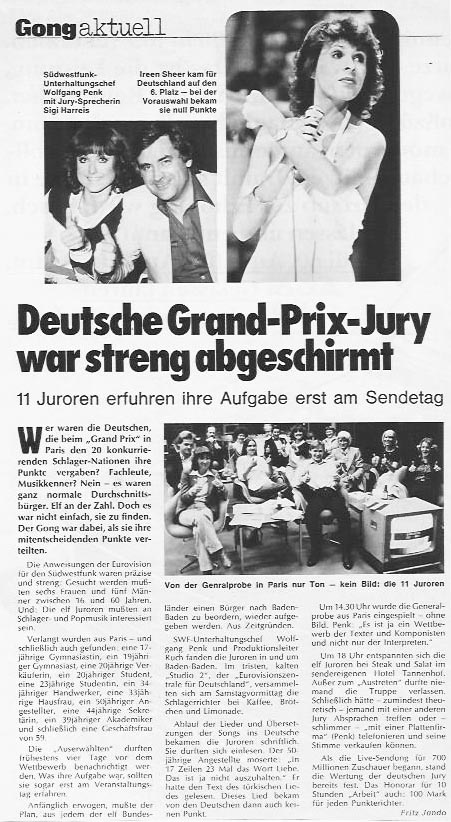
- Janda, Fritz. "Deutsche Grand-Prix-Jury war streng abgeschirmt: 11 Juroren erfuhren ihre Aufgabe erst am Sendetag". [[Gong (magazine).
- (22 April 1978). "Television". {{ill.
- (2006). "Melodifestivalen genom tiderna : de svenska uttagningarna och internationella finalerna". Premium Publishing.
- (22 April 1978). "Yirmi ülke yarısıyor Eurovision". [[Milliyet]].
- (2014). "Songs for Europe: The United Kingdom at the Eurovision Song Contest". [[Telos Publishing]].
- "Paris 1978 – Detailed voting results". European Broadcasting Union.
- "Eurovision Song Contest 1978 – Scoreboard". European Broadcasting Union.
- (31 October 2018). "The Rules of the Contest". European Broadcasting Union.
- (24 April 1978). "La Suisse neuvième au Grand Prix eurovision de la chanson remporté par Israël". [[Journal de Genève]].
- (22 April 1978). "Wie wint het Songfestival?". [[Leidsch Dagblad]].
- (13 April 1978). "TV Avstrija". Naš tednik.
- (22 May 2015). "Ein virtueller Disput der ESC-Kommentatoren". [[Kurier]].
- (22 April 1978). "TV–programma's van zaterdag 22 april 1978". [[De Standaard]].
- "Alle tiders programoversigter – Lørdag den 22. april 1978". [[DR (broadcaster).
- "Det Internationale Melodi Grand Prix 1978". {{ill.
- (22 April 1978). "Radio ja TV". [[Helsingin Sanomat]].
- (16–17 April 1978). "Radio-télévision". [[Le Monde]].
- (22 April 1978). "Fernsehen aktuell". {{ill.
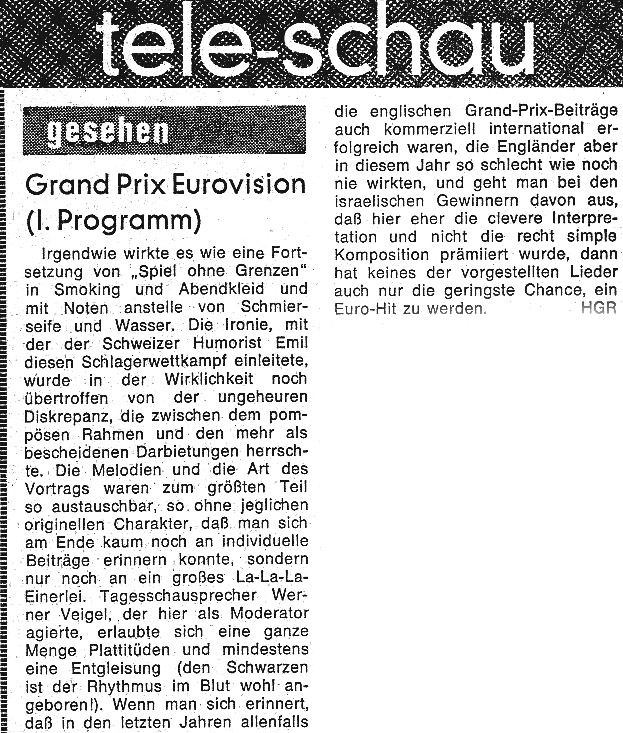
- "Tele-schau: Gesehen – Grand Prix Eurovision (I. Program)". {{ill.
- (22 April 1978). "τηλεοραση". [[Rizospastis]].
- (22 April 1978). "ραδιοφωνο". Rizospastis.
- (21 April 1978). "Saturday April 22 – Television".
- (21 April 1978). "Saturday April 22 – Radio".
- (21 April 1978). "שבת – 22.4.78 – טלוויזיה". [[Davar]].
- (21 April 1978). "Rádio". [[Új Kelet]].
- (16–22 April 1978). "TV2 {{!}} sabato 22 aprile".
- (16–22 April 1978). "sabato 22 aprile".
- (22–28 April 1978). "Samstag, 22. April 1978".
- (16–17 April 1978). "Les écrans francophones – Samedi 22 avril". Le Monde.
- (22 April 1978). "Radio en televisie dit weekend". [[Limburgs Dagblad]].
- Berkenbosch, Co. (22 April 1978). "Groep Harmony in Parijs: 'Alleen Engeland grote concurrent'". [[De Telegraaf]].
- (22 April 1978). "TV-radio programmene". [[Oppland Arbeiderblad]].
- (22 April 1978). "Hoje". [[Diário de Lisboa]].
- (7 April 2018). "O número do dia. Quantos festivais comentou Eládio Clímaco na televisão portuguesa?". N-TV.
- (22 April 1978). "Rádio". Diário de Lisboa.
- (22 April 1978). "1er programa – Sábado".
- Cayon, José A.. (22 April 1978). "Esta noche Eurovisión-78". {{ill.
- (22 April 1978). "Emisoras". {{ill.
- (22 April 1978). "tv programmen". [[Svenska Dagbladet]].
- (22 April 1978). "radioprogrammen". Svenska Dagbladet.
- (22 April 1978). "Fernsehen – Samstag". [[Neue Zürcher Zeitung]].
- (20 April 1978). "TV – samedi 22 avril".
- (22 April 1978). "Televisione". {{ill.
- (20 April 1978). "Radio – samedi 22 avril".
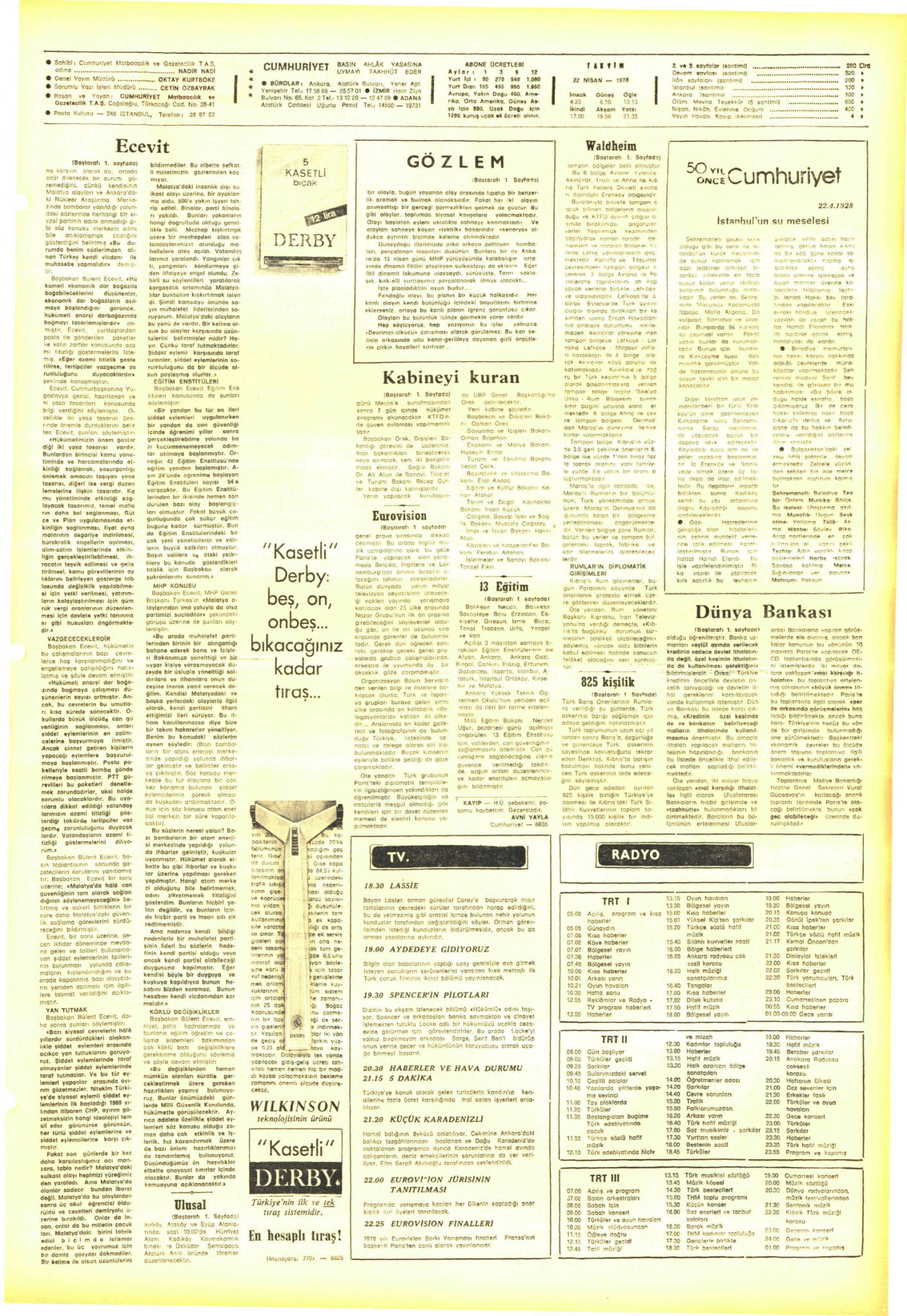
- (22 April 1978). "TV.". [[Cumhuriyet]].
- (22 April 1978). "Eurovision Song Contest 1978 – BBC1". [[Radio Times]].
- (22 April 1978). "as Radio 2 – BBC Radio 1". Radio Times.
- (22 April 1978). "TV and Radio". [[Coventry Evening Telegraph.
- (22 April 1978). "T.V. Weekend Guide". [[Kent and Sussex Courier.
- (22 April 1978). "Saturday radio and television". [[The Journal (Newcastle upon Tyne newspaper).
- (22 April 1978). "Radio". [[Nottingham Post.
- (22 April 1978). "television and radio". [[Grimsby Telegraph.
- (22 April 1978). "Radio:". [[Huddersfield Daily Examiner]].
- (22 April 1978). "Weekend TV and radio guide". [[Leicester Mercury]].
- (22 April 1978). "Saturday radio". [[Daily Mirror]].
- (22 April 1978). "All the weekend porgorammes". [[Manchester Evening News]].
- (22 April 1978). "And on your radio". [[Liverpool Daily Post]].
- (22 April 1978). "TV and radio". [[Reading Post.
- (22 April 1978). "TV and radio". [[Western Daily Press]].
- (22 April 1978). "Weekend Television and Radio". [[The Sentinel (Staffordshire).
- (22 April 1978). "Eurovision Song Contest 1978 – BBC Radio 2". Radio Times.
- (29 April 1978). "Телевизия". {{lang.
- (22 April 1978). "Τηλεοραση". {{lang.
- (23 April 1978). "星期日 – 當歸北芪酒 – 四月廿三日". [[Wah Kiu Yat Po.
- (22 May 1978). "Kedd – május 23".
- (29 April 1978). "Sjónvarp". [[Dagblaðið]].
- (29 May 1978). "Israël vastbesloten Songfestival te organiseren". [[BN DeStem.
- (22 April 1978). "Jordan Times Daily Guide". [[The Jordan Times]].
- (5 May 1978). "Eurosong-festival op tv". [[Amigoe]].
- (22–23 April 1978). "Tygodniowy program telewizji od 22 IV do 28 IV 1978 r.". [[Dziennik Polski]].
- (22 April 1978). "Телевизија". [[Borba (newspaper).
- (22 April 1978). "Radio Televizija". [[Primorski dnevnik]].
- (22 April 1978). "Jutri na RTV". [[Delo (newspaper).
- (21 April 1978). "TV Zagreb {{!}} od 22. do 28. travnja". Glas Podravine.
This article was imported from Wikipedia and is available under the Creative Commons Attribution-ShareAlike 4.0 License. Content has been adapted to SurfDoc format. Original contributors can be found on the article history page.
Ask Mako anything about Eurovision Song Contest 1978 — get instant answers, deeper analysis, and related topics.
Research with MakoFree with your Surf account
Create a free account to save articles, ask Mako questions, and organize your research.
Sign up freeThis content may have been generated or modified by AI. CloudSurf Software LLC is not responsible for the accuracy, completeness, or reliability of AI-generated content. Always verify important information from primary sources.
Report