From Surf Wiki (app.surf) — the open knowledge base
European contribution to the International Space Station
Overview of the contribution to the International Space Station from Europe
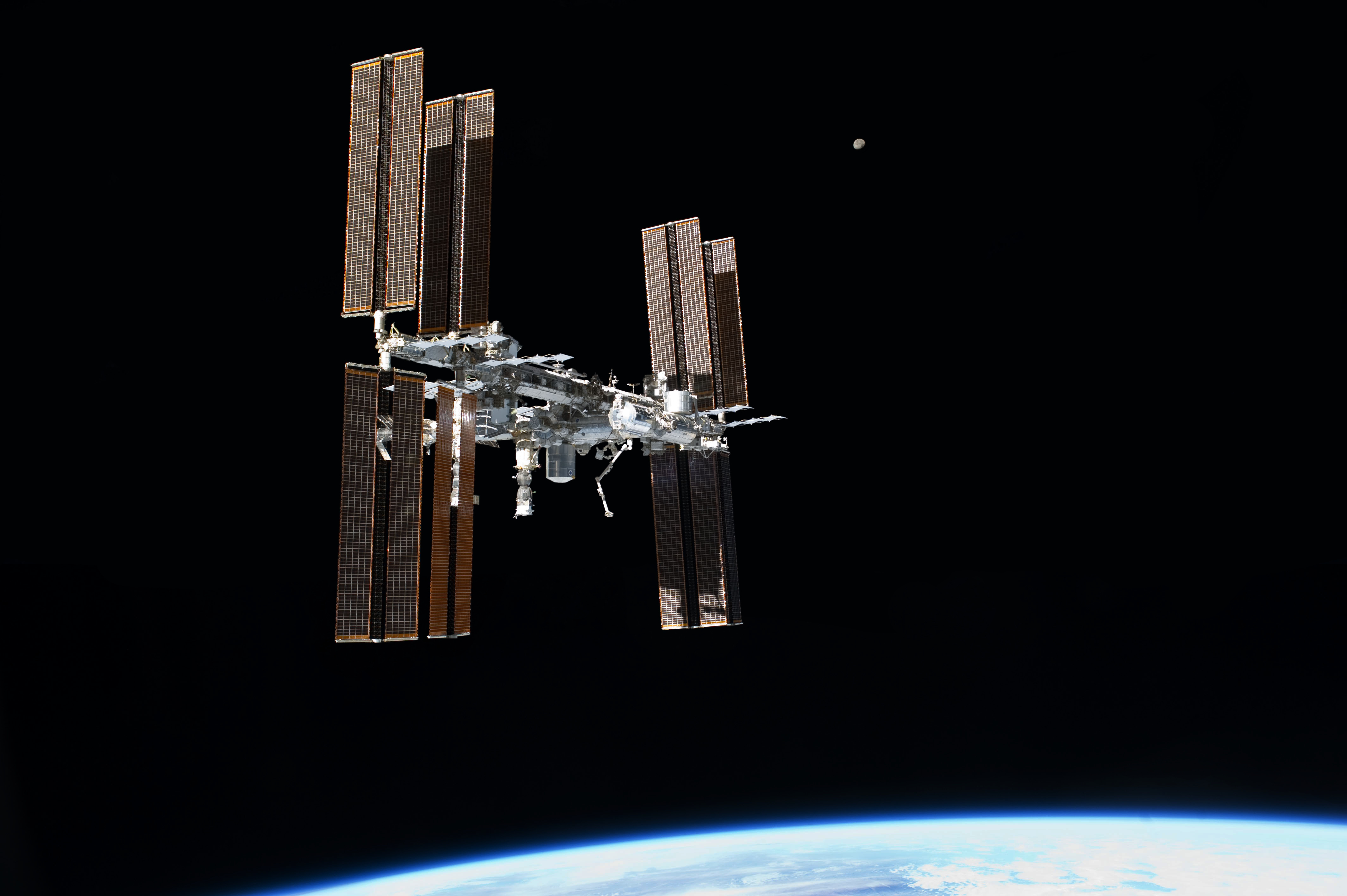
Overview of the contribution to the International Space Station from Europe


The European contribution to the International Space Station comes from 10 members of the European Space Agency (ESA) and amounts to an 8% share in the programme. It consists of a number of modules (primarily the Columbus laboratory) in the US Orbital Segment, ATV supply ships, launchers, software and €8 billion.
History
Main article: Columbus (ISS module), Columbus Man-Tended Free Flyer, Hermes (spacecraft)
In the 1980s, ESA devised plans for its own space station called Columbus Man-Tended Free Flyer which could be attached to NASA's Space Station Freedom. America objected to ESA's using Columbus as a building block of a future European space station, and were concerned that they would facilitate the creation of a potential competitor if the crewed space outpost fulfilled its promise as supplier of commercially viable products, such as new materials and pharmaceuticals. Plans were scaled down as a result, and by 1988, Europe proposed to participate with three elements: Attached Pressurized Module, Man Tended Free-Flying platform, plus an uncrewed polar remote sensing platform. This would be supported by the Ariane 5 rocket and the Hermes spacecraft. However, after German reunification, ESA's budget reductions meant something had to be cancelled.
The collapse of the Soviet Union and the Space Shuttle Challenger disaster meant a radical change in plans for a space station. The US and Russia decided to cooperate on an International Space Station. ESA cancelled much of its space station programme to focus on the Columbus module, reconfigured for the ISS. The module was approved in 1995 but delays in station construction meant Columbus would not fly until 2008.
Modules
ESA's largest physical contribution has been the Columbus laboratory, launched in 2008. It is a flexible and extensive scientific research facility planned to last at least 10 years. Columbus was constructed in Italy by Thales Alenia Space, an Italian and French group, with functional architecture and software designed by Airbus in Germany. Unlike other ESA built modules, Columbus is operated by ESA rather than NASA and is controlled by the Columbus Control Centre in Germany. It cost (about ) on building Columbus, including the experiments that will fly in it and the ground control infrastructure necessary to operate them.
ESA has contributed a further two nodes (Harmony and Tranquility) which connect modules of the station and had docking ports for visiting ships. They were built by ESA in Italy for NASA and launched in 2007 and 2010. The Italian Space Agency, in addition and independently from its participation to ESA programs, also built the Multi-Purpose Logistics Module for NASA. Likewise, ESA built the Cupola module for NASA which is used for observing Canadarm and was launched in 2009.
In 2021 the European Robotic Arm was launched and attached to the Russian module Nauka. The ERM allows servicing to the Russian segment, where the Canadarm-2 and the Japanese Experiment Module Remote Manipulator System (JEMRMS) cannot reach.
ESA also provides the DMS-R data management system designed for the Russian segment of the ISS. It provides control, navigation, mission management and failure management for the Russian segment and is installed on the Zvezda module.
Automated Transfer Vehicle
Main article: Automated Transfer Vehicle
ESA developed the Automated Transfer Vehicle (ATV) as an expendable, uncrewed resupply spacecraft to resupply the ISS. It's capable of bringing 6.6 tonnes of supplies to the ISS and docking automatically. As a pressurised component it stays docked as part of the station for several months and boosts it orbit. It is then filled with waste and burnt up in the atmosphere. Five ATVs, Jules Verne, Johannes Kepler, Edoardo Amaldi, Albert Einstein, and Georges Lemaître have visited the International Space Station. No additional ATVs will be funded.
ATV missions were monitored and controlled from the ATV Control Centre (ATV-CC) located at the Toulouse Space Centre (CST) in Toulouse, France. The centre was responsible for all planning and executing of every orbital manoeuvre and mission task of the ATV, from the moment of separation from its launch vehicle, until it would burn up in the Earth's atmosphere.
The prime contractor for the ATV was EADS Astrium Space Transportation, leading a consortium of many sub-contractors. Development was started in Les Mureaux, France and moved to Bremen, Germany, as the project moved from its development to production stage of the four initial units starts. In order to facilitate the relationship between the contractor and ESA, an integrated ESA team at the Les Mureaux site had been established for the duration of the development. The development cost of the ATV was approximately , and each ATV spacecraft costs about US$300 million, not including launch costs.
The ATV also participated in an early round of the Commercial Orbital Transportation Services; Boeing submitted a proposal in conjunction with Arianespace to launch the ESA ATV module on a Delta IV rocket. Whereas the ESA launched the ATV on an Ariane 5, the two companies worked together to make this proposal. The ATV could carry up to 7.6 metric tons with a suitable launcher.
Launchers
ESA's Ariane 5 act as one of the launchers for the ISS components. Guiana Space Centre provides a launch pad for Ariane and Russian Soyuz rockets. All ATV crafts were launched from Ariane rockets at Guiana.
For human spaceflight, ESA crew members would be transported on either the Space Shuttle or various versions of the Soyuz launch vehicle. The Soyuz spacecraft is designated as an ISS lifeboat, so crews needed to train on if they stayed for along periods. This is why there is two of these three spacecraft docked to enable an ISS crew of six, or three when there is one docked. The Space Shuttle was retired in 2011, which created a human spaceflight gap for the U.S. until the launch of Crew Dragon Demo-2 on 30 May 2020.
Research
ELIPS is ESA's space research programme on the ISS. Columbus provides ESA's research labs through its 10 payload racks stocked with equipment and external facilities for experiments. ESA run experiments on the ISS include an ultra-stable atomic clock, an Atmosphere-Space Interaction Monitor, an Eye tracking experiment and the Matroshka experiments.
NASA's ISS-RapidScat was attached to and powered via the Columbus module. Its rotating microwave antenna can be seen in select ISS videos in the period from late 2014 to mid 2016 when that instrument was used.
Astronauts
The first ESA astronaut to board the ISS was Umberto Guidoni on a resupply mission. The first ESA astronaut to stay on board in an expedition was Thomas Reiter in 2006. In 2009 Frank De Winne became the first European to serve as expedition commander of ISS.
| Astronaut | State | Flight | Expedition/Visitor | Year | Thomas Reiter | Léopold Eyharts | Frank De Winne | Paolo A. Nespoli | André Kuipers | Luca Parmitano | Alexander Gerst | Samantha Cristoforetti | Timothy Peake | Thomas Pesquet | Paolo A. Nespoli | Alexander Gerst | Luca Parmitano | Thomas Pesquet | Matthias Maurer | Samantha Cristoforetti |
|---|---|---|---|---|---|---|---|---|---|---|---|---|---|---|---|---|---|---|---|---|
| Umberto Guidoni | Italy | STS-100 | Visitor | 2001 | ||||||||||||||||
| Claudie Haigneré | France | Soyuz TM-33 | Visitor | 2001 | ||||||||||||||||
| Roberto Vittori | Italy | Soyuz TM-34 | Visitor | 2002 | ||||||||||||||||
| Philippe Perrin | France | STS-111 | Visitor | 2002 | ||||||||||||||||
| Frank De Winne | Belgium | Soyuz TMA-1 | Visitor | 2002 | ||||||||||||||||
| Pedro Duque | Spain | Soyuz TMA-3 | Visitor | 2003 | ||||||||||||||||
| André Kuipers | Netherlands | Soyuz TMA-4 | Visitor | 2003 | ||||||||||||||||
| Roberto Vittori | Italy | Soyuz TMA-6 | Visitor | 2005 | ||||||||||||||||
| Germany | STS-121 | Expedition 13 & Expedition 14 | 2006 | |||||||||||||||||
| Christer Fuglesang | Sweden | STS-116 | Visitor | 2006 | ||||||||||||||||
| Paolo A. Nespoli | Italy | STS-120 | Visitor | 2007 | ||||||||||||||||
| Hans Schlegel | Germany | STS-122 | Visitor | 2008 | ||||||||||||||||
| France | STS-122 | Expedition 16 | 2008 | |||||||||||||||||
| Belgium | Soyuz TMA-15 | Expedition 20 & Expedition 21 | 2009 | |||||||||||||||||
| Christer Fuglesang | Sweden | STS-128 | Visitor | 2009 | ||||||||||||||||
| Italy | Soyuz TMA-20 | Expedition 26 & Expedition 27 | 2010 | |||||||||||||||||
| Roberto Vittori | Italy | STS-134 | Visitor | 2011 | ||||||||||||||||
| Netherlands | Soyuz TMA-03M | Expedition 30 & Expedition 31 | 2012 | |||||||||||||||||
| Italy | Soyuz TMA-09M | Expedition 36 & Expedition 37 | 2013 | |||||||||||||||||
| Germany | Soyuz TMA-13M | Expedition 40 & Expedition 41 | 2014 | |||||||||||||||||
| Italy | Soyuz TMA-15M | Expedition 42 & Expedition 43 | 2014 | |||||||||||||||||
| Andreas Mogensen | Denmark | Soyuz TMA-18M | Visitor | 2015 | ||||||||||||||||
| United Kingdom | Soyuz TMA-19M | Expedition 46 & Expedition 47 | 2015 | |||||||||||||||||
| France | Soyuz MS-03 | Expedition 50 & Expedition 51 | 2016– | |||||||||||||||||
| Italy | Soyuz MS-05 | Expedition 52 & Expedition 53 | 2017 | |||||||||||||||||
| Germany | Soyuz MS-09 | Expedition 56 & Expedition 57 | 2018 | |||||||||||||||||
| Italy | Soyuz MS-13 | Expedition 60 & Expedition 61 | 2019-20 | |||||||||||||||||
| France | SpaceX Crew-2 | Expedition 65 & Expedition 66 | 2021 | |||||||||||||||||
| Germany | SpaceX Crew-3 | Expedition 66 & Expedition 67 | 2021-22 | |||||||||||||||||
| Italy | SpaceX Crew-4 | Expedition 67 & Expedition 68 | 2022 |
Participants and costs
In contributing to the ISS, ESA only represents 10 of its member states: Belgium, Denmark, France, Germany, Italy, Netherlands, Norway, Spain, Sweden and Switzerland. Austria, Finland, and Ireland chose not to participate, because of lack of interest or concerns about the expense of the project. The United Kingdom withdrew from the preliminary agreement because of concerns about the expense of the project. The other states joined ESA after the agreement had been signed. Non-participating ESA states were allowed access to the ISS for a 3-year trial period between 2010 and 2013.
As of 2005, the cost estimates for the ISS were approaching €135 billion in total (development, construction and 10 years of maintaining the station) of which ESA has committed to paying €8 billion. About 90% of the costs of ESA's ISS share will be contributed by Germany (41%), France (28%) and Italy (20%).
Mission control centres
- ESA's Columbus Control Centre in Oberpfaffenhofen, near Munich, controls the European Columbus research laboratory.
- ESA's ATV Control Centre, at the Toulouse Space Centre (CST) in Toulouse, France, formerly controlled flights of the Automated Transfer Vehicle.
- German Space Operations Center
References
References
- "ESA Polar Platform". Friends-partners.org.
- "Columbus space station module". Russianspaceweb.com.
- "Marcus Lindroos: Columbus Man-Tended Free Flyer – MTFF".
- [http://www.esa.int/Our_Activities/Human_Spaceflight/Space_Shuttle/From_Spacelab_to_Columbus From Spacelab to Columbus], ESA
- [http://www.esa.int/Our_Activities/Human_Spaceflight/Columbus/Columbus_laboratory Columbus laboratory], ESA
- Harwood, William. (February 11, 2008). "Station arm pulls Columbus module from cargo bay". spaceflightnow.com.
- [http://www.esa.int/esaHS/ESAWEL0VMOC_iss_0.html Node 2: Connecting Module], ESA
- [http://www.esa.int/Our_Activities/Human_Spaceflight/International_Space_Station/Node_3_Connecting_Module Node 3: Connecting Module], ESA
- "ISS Elements: Multi-Purpose Logistics Modules (MPLM)". Space Station User's Guide.
- [http://www.nasa.gov/mission_pages/station/structure/elements/mplm.html Multi-Purpose Logistics Modules], NASA
- [http://www.esa.int/Our_Activities/Human_Spaceflight/International_Space_Station/Cupola Cupola], ESA
- Pearlman, Robert Z.. (2022-04-28). "European Robotic Arm moves for first time during 250th spacewalk at space station".
- [http://www.esa.int/Our_Activities/Human_Spaceflight/International_Space_Station/DMS-R_ESA_s_Data_Management_System DMS-R: ESA's Data Management System for the Russian Segment of the ISS], ESA
- [http://www.esa.int/Our_Activities/Human_Spaceflight/ATV/Mission_concept_and_the_role_of_ATV Mission concept and the role of ATV], ESA
- (2012-04-02). "Breaking News | ATV production terminated as decision on follow-on nears". Spaceflight Now.
- "ATV Control Centre". [[European Space Agency]].
- (25 February 2008). "Europe sets a course for the ISS". German Aerospace Cente.
- Clark, Stephen. (1 December 2009). "Space station partners assess logistics needs beyond 2015". Spaceflight Now.
- "Boeing set to offer Delta IV-launched ATV".
- "Frank De Winne". ESA.
- (2009). "International Space Station: European Participating States". European Space Agency.
- [http://www.space-travel.com/reports/EU_mulls_opening_ISS_to_more_countries_999.html EU mulls opening ISS to more countries], Space Travel 27 October 2010
- [https://archive.today/20130202235430/http://spacenews.com/civil/101021-europe-broaden-access-iss.html New ESA Policy Broadens European Access to the International Space Station ], Space News 21 October 2010
- (9 August 2005). "International Space Station: How much does it cost?". European Space Agency.
- Gary Kitmacher. (2006). "Reference Guide to the International Space Station". [[Apogee Books]].
This article was imported from Wikipedia and is available under the Creative Commons Attribution-ShareAlike 4.0 License. Content has been adapted to SurfDoc format. Original contributors can be found on the article history page.
Ask Mako anything about European contribution to the International Space Station — get instant answers, deeper analysis, and related topics.
Research with MakoFree with your Surf account
Create a free account to save articles, ask Mako questions, and organize your research.
Sign up freeThis content may have been generated or modified by AI. CloudSurf Software LLC is not responsible for the accuracy, completeness, or reliability of AI-generated content. Always verify important information from primary sources.
Report