From Surf Wiki (app.surf) — the open knowledge base
European Committee of the Regions
Institution of the European Union
Institution of the European Union
| Field | Value |
|---|---|
| name | European Committee of the Regions |
| native_name | |
| logo | European Committee of the Regions logo.svg |
| logo_size | 150px |
| logo_alt | European Committee of the Regions logo |
| logo_caption | European Committee of the Regions logo |
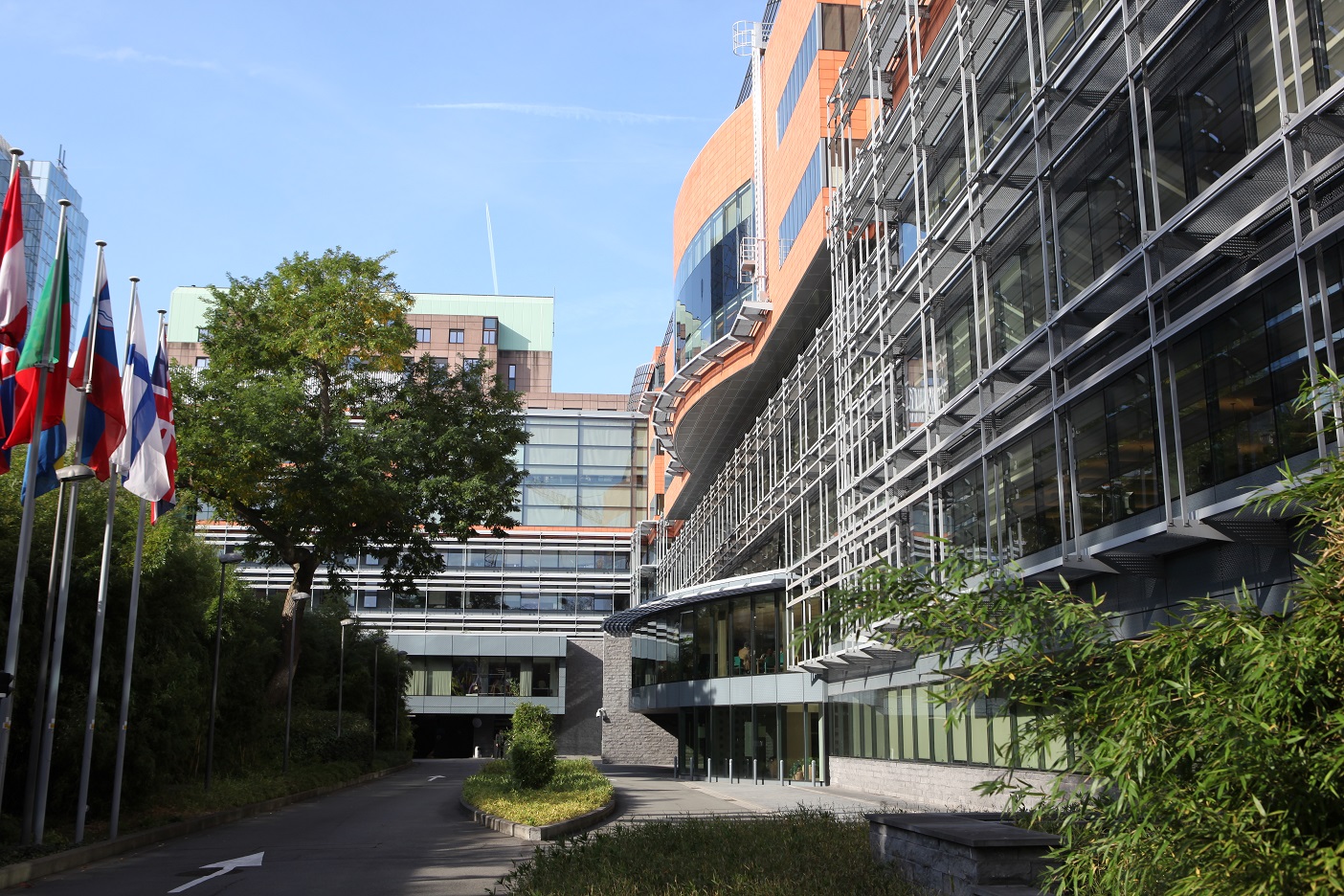
| image | Jacques Delors Building 02.jpg |
| alt | Jacques Delors building |
| caption | Jacques Delors building, which houses the CoR and the European Economic and Social Committee |
| abbreviation | CoR |
| formation | |
| extinction | |
| type | Advisory body to the European Union |
| registration_id | |
| purpose | Consultative to the EU institutions; subsidiarity monitoring – can approach the Court of Justice of the European Union with regard to the application of subsidiarity principle |
| headquarters | Jacques Delors building, Brussels, Belgium |
| coordinates | |
| membership | 329 |
| owner | |
| leader_title | President |
| leader_name | Kata Tüttő, PSE |
| leader_title2 | First Vice President |
| leader_name2 | Juanma Moreno, EPP |
| website |
The European Committee of the Regions (CoR) is the European Union's (EU) assembly of local and regional representatives that provides sub-national authorities (i.e. regions, counties, provinces, municipalities and cities) with a direct voice within the EU's institutional framework.
Established in 1994, the CoR was set up to address two main issues. First, about three quarters of EU legislation is implemented at local or regional level, so local and regional representatives needed to have a say in the development of new EU laws. Second, there were concerns about a widening gap between the public and the process of European integration; involving the elected level of government closest to the citizens was one way of closing the gap.
History
Within the European Union, local and regional authorities have lobbied for an increased say in EU affairs. This resulted in the creation of the European Committee of the Regions by the Maastricht Treaty, and the provision for Member States to be represented in the Council of the EU by ministers from their regional governments.
Principles
There are three main principles at the heart of the committee's work:
; Subsidiarity : This principle, enshrined into the Treaties at the same time as the creation of the CoR, means that decisions within the European Union should be taken at the closest practical level to the citizen. The European Union, therefore, should not take on tasks which are better suited to national, regional or local administrations. ; Proximity : All levels of government should aim to be 'close to the citizens', in particular by organising their work in a transparent fashion, so people know who is in charge of what and how to make their views heard. ; Partnership : Sound European governance means European, national, regional and local government working together – all four are indispensable and should be involved throughout a "multi-level governance" decision-making process.
Scope
The Treaties oblige the European Commission and the Council of the European Union to consult the Committee of the Regions whenever new proposals are made in areas that have repercussions at regional or local level. Outside these areas, the commission, Council and European Parliament have the option to consult the CoR on issues if they see important regional or local implications to a proposal. The CoR can also draw up an opinion on its own initiative, which enables it to put issues on the EU agenda.
The CoR has gained the right (semi-privileged status) to approach the European Court of Justice now that the Treaty of Lisbon has entered into force following ratification by all EU Member States (Article 8, Protocol (No. 2) on the Application of the Principles of Subsidiarity and Proportionality).
Composition
The CoR has 329 full members and the same number of alternate members. The number from each EU country reflects the size of its population, but ranges from a representation of an average of 88087 citizens of Malta per seat to 3.45 million citizens per German seat. Its members are locally and regionally elected representatives including mayors, regional presidents and councillors. The numbers per country are as follows:
| State | Members | State | Members | State | Members | |
|---|---|---|---|---|---|---|
| Germany | 24 | Belgium | 12 | Ireland | 9 | |
| Hungary | 12 | Croatia | 9 | France | 24 | |
| Portugal | 12 | Lithuania | 9 | Italy | 24 | |
| Sweden | 12 | Latvia | 7 | Spain | 21 | |
| Bulgaria | 12 | Slovenia | 7 | Poland | 21 | |
| Austria | 12 | Estonia | 7 | Romania | 15 | |
| Slovakia | 9 | Cyprus | 6 | Netherlands | 12 | |
| Denmark | 9 | Luxembourg | 6 | Greece | 12 | |
| Finland | 9 | Malta | 5 | Czech Republic | 12 | |
| Total | 329 |
Internal structure
President
Elected for a two-and-a-half-year term at the plenary assembly, the President guides the committee's work, chairs plenary sessions and is the CoR's official representative.
List of presidents
| CoR President | Presidency | Nationality | European political group | |
|---|---|---|---|---|
| Kata Tüttő, Budapest | 2025–present | Hungary | Party of European Socialists}}" | |
| Vasco Cordeiro, Azores | 2022–2025 | Party of European Socialists}}" | ||
| Apostolos Tzitzikostas, Central Macedonia | 2020–2022 | Greece | European People's Party}}" | |
| Karl-Heinz Lambertz, German-speaking Community of Belgium | 2017–2020 | Belgium | Party of European Socialists}}" | |
| Markku Markkula, Espoo | 2015–2017 | Finland | European People's Party}}" | |
| Michel Lebrun, Wallonia | 2014–2015 | Belgium | European People's Party}}" | |
| Ramón Luis Valcárcel, Región de Murcia | 2012–2014 | Spain | European People's Party}}" | |
| Mercedes Bresso, Piedmont | 2010–2012 | Italy | Party of European Socialists}}" | |
| Luc Van den Brande, Flanders | 2008–2010 | Belgium | European People's Party}}" | |
| Michel Delebarre, Dunkirk, Nord-Pas-de-Calais | 2006–2008 | France | Party of European Socialists}}" | |
| Peter Straub, Baden-Württemberg | 2004–2006 | Germany | European People's Party}}" | |
| Sir Albert Bore, Birmingham | 2002–2004 | United Kingdom | Party of European Socialists}}" | |
| Jos Chabert, Brussels-Capital Region | 2000–2002 | Belgium | European People's Party}}" | |
| Manfred Dammeyer, North Rhine-Westphalia | 1998–2000 | Germany | Party of European Socialists}}" | |
| Pasqual Maragall, Barcelona, Catalonia | 1996–1998 | Spain | Party of European Socialists}}" | |
| Jacques Blanc, Languedoc-Roussillon | 1994–1996 | France | European People's Party}}" |
First Vice-President
The First Vice-president is also elected by the plenary assembly for two-and-a-half years and represents the president in the latter's absence. Juanma Moreno (Spain / European People's Party, EPP), President of the Regional Government of Andalusia, was elected First Vice-president of the European Committee of the Regions on 19 February 2025.
Bureau
The Bureau is the executive body of the CoR. It comprises 61 members: the president, the First Vice-president, the presidents of the six political groups, one vice-president per member state (27), and 26 other members from the national delegations, enabling it to reflect national and political balances. The Bureau generally meets seven or eight times a year to draw up the CoR policy programme and instructs the administration on the implementation of its decisions.
Plenary assembly
The members of the CoR meet in plenary session in Brussels six times a year, to discuss and adopt opinions, reports and resolutions.
Committee for Financial and Administrative Affairs
CoR commissions
The CoR structures its work by means of six thematic commissions, which specialise in topical areas:
- CIVEX: citizenship, governance, institutional and external affairs
- COTER: territorial cohesion policy;
- ECON: economic policy;
- ENVE: environment, climate change and energy;
- NAT: natural resources and agriculture;
- SEDEC: social policy, employment, education, culture and research.
They prepare draft opinions and hold conferences and seminars focused on their areas of competence. Each commission has approximately 100 members (each member can be part of two commissions) and is supported by a secretariat within the administration. A special Commission for Financial and Administrative Affairs (CFAA) is also established to assist the CoR Bureau.
Political groups
The CoR has six political groups: the Progressive Alliance of Socialists and Democrats (PES), the European People's Party (EPP), Renew Europe (RE), the European Alliance (EA), the European Conservatives and Reformists Group (ECR Group) and The Greens (GRE). The members of each political group meet before major meetings to adopt common positions, membership of the plenary body is as follows, with 15 seats currently vacant:

| Group | Seats |
|---|---|
| European People's Party (EPP) | |
| Progressive Alliance of Socialists and Democrats (PES) | |
| Renew Europe (RE) | |
| European Conservatives and Reformists (ECR) | |
| European Alliance (EA) | |
| The Greens (GRE) | |
| Members not belonging to any group |
Conference of Presidents
The CoR president, first vice-president, presidents of the political groups and the secretary general gather within a Conference of Presidents before each plenary session and other important meetings, with the aim of reaching a political consensus on strategic questions.
National delegations
The CoR also comprises 27 national delegations. Members meet in their national delegations before plenary sessions and other events to discuss common positions.
Secretary-General
The Secretary-General is appointed for five years by the Bureau. As head of the CoR administration, the Secretary-General must not hold a political mandate. He is responsible for implementing President's and Bureau decisions and the smooth running of the CoR administration. Petr Blížkovský is the CoRs' Secretary-General since 16 December 2019.
Secretariat-General
The Secretariat-General consists of five directorates: Members and Plenaries; Legislative Work 1; Legislative Work 2; Communication; Human Resources and Finance. The Logistics and Translations Directorates are jointly managed with the European Economic and Social Committee. The total number of CoR staff in 2015 was 527.
Budget
The CoR's 2013 budget (€36.5M) represents 0.06% of the total EU budget which makes it the third smallest EU institution in terms of budgetary needs. Its 2014 budget (€90.2M) breakdown according to purpose of expenditure is as follows: 39.7% – Consultative Works (€35.8M); 30.3% – Translation, Interpretation and Print (€27.2M); 30% – Administration and Functioning (€27M). The CoR's 2015 budget was €89.2M. Although all CoR expenditure formally falls under Heading 5 (Administrative expenditure) of the EU Budget, as is the case for the European Parliament budget, a substantial part of its budget relates to non-administrative expenditure. Most obvious examples are all CoR expenses related to its Members and their political activities.
Work


Opinions
The European Commission, Council of Ministers and European Parliament consult the CoR when drawing up legislative texts (directives, regulations, etc.) on areas affecting local and regional authorities. The draft texts are forwarded to the relevant CoR commission. A rapporteur is then appointed to draw up the committee's opinion. This draft opinion must be adopted by the CoR commission before being discussed at the plenary session. Once it has been approved in plenary, the official opinion is sent to all the European institutions and published in the Official Journal of the European Union.
Resolutions
Resolutions enable the committee to express its view on important and topical issues. The CoR's political groups or 32 CoR members can draw up resolutions.
Studies and other publications
The CoR produces studies on various aspects of the local and regional dimension of the EU (education, transport, social issues, enlargement, etc.). They are drawn up with the help of outside experts. The CoR also produces publications for both the general public and for regional and local players, aimed at explaining its activities and outlining current political developments.
Events
As a meeting place for regions and cities, the CoR organises conferences, seminars and exhibitions in cooperation with local and regional partners and other EU institutions. Once a year, during the European Week of Regions and Cities, the CoR welcomes to its headquarters thousands of participants who take part in lively discussions or seek partners to collaborate on joint projects.
Key dates
; 1992 – Maastricht Treaty : EU leaders decide to set up the Committee of the Regions (CoR) as a consultative assembly which will provide regions and cities with a voice in the EU decision-making process and act as a direct link between Brussels and the citizens. The Treaty makes it mandatory for the European Commission and the Council of Ministers to consult the CoR on key areas of regional concern. CoR members are to be nominated by the governments of Member States and will serve for four years. In March 1994 the CoR holds its first plenary session in Brussels. ; 1995 – EU enlargement : The CoR's membership increases from 189 to 222, following the accession of Austria, Finland and Sweden. ; 1997 – Amsterdam Treaty : Extends the CoR's remit to cover around two thirds of the EU's legislative proposals. The Treaty also makes it possible for the Committee to be consulted by the European Parliament. ; 2001 – Nice Treaty : Underlines the democratic legitimacy of the CoR by requiring that its members are elected or politically accountable to an elected regional or local assembly. Caps the number of members at 350. ; 2002–03 – Convention on the Future of the EU : CoR members take part in the convention responsible for drafting an EU constitution. The text expressly recognises the role and powers of local and regional government; it also gives the CoR the right to go to the Court of Justice of the European Communities to challenge EU laws which do not comply with the principle of subsidiarity. ; May 2004 – EU enlargement : Number of CoR members increases from 222 to 317, following the accession of 10 new Member States. ; February 2006 – New term of office : The CoR starts a new four-year term. Its political priorities include boosting the role of local and regional authorities in line with the Lisbon Strategy for Jobs and Growth, strengthening cohesion and solidarity, and spearheading the 'Communicating Europe – Going local' campaign to bring the EU closer to its citizens. ; January 2007 – EU enlargement : With the accession of Bulgaria and Romania, the number of CoR members rises from 317 to 344. ; December 2007 – Lisbon Treaty : The Lisbon Treaty confirms the CoR's right to appeal to the Court of Justice of the European Communities to safeguard its prerogatives and the subsidiarity principle – a right already recognised by the Convention on the Future of the EU. This new entitlement will strengthen the CoR's political role, by enabling it to act more effectively on the EU stage for the benefit of regional and local authorities. The Lisbon Treaty extends the term of office of CoR members from four to five years. July 2013 – EU enlargement : Number of CoR Members increases from 344 to 353, following the accession of Croatia (CoR members later decreased to 350). Early 2020 – Brexit and Greens
Following Brexit (31 January), the number of CoR Members decreased to 329 due to the removal of the 24 members from the United Kingdom. As of February, a new Political Group was represented in the CoR, The Greens.
Criticism
In 2020, the Committee of the Regions was criticized for its 20-year-old unresolved case of Robert McCoy, a former internal auditor, who has been severely harassed after he blew the whistle on "fraud and embezzlement" at the EU body. In his speech before the European Parliament, McCoy claimed the CoR had run "a vindictive campaign" against him and "denigrated" his personal and professional reputation. That issue made the Committee receive criticism also from the Dutch MEP Sophie in 't Veld, who used to work for the Committee of the Regions. She told Parliament that from her experience, the administration at the CoR had been "totally incompetent and rotten to the core". She also accused the CoR of being stuck in "full denial mode" and suggested potential budgetary sanctions. One of the leading critics of the Committee of the Regions' inaction on this issue was also the Czech MEP Tomáš Zdechovský: "When I look at this case, it reminds me of the American film 'Groundhog Day' where the protagonist becomes trapped in a time loop".
References
References
- "Summaries of EU legislation". Europa.
- Wagstaff, Peter. (1999). "Regionalism in the European Union". Intellect Books.
- "Key Facts". Committee of the Regions.
- "Summaries of EU legislation". Europa.
- "CoR - the role of the CoR in EU policy-making and legislation".
- (August 2022)
- Delegation of the European Union to Croatia. "Croatian Delegation in EU Committee of the Regions".
- "CoR – Bureau".
- "CoR members".
- "CoR – National delegations". Europa.
- "Budget On-line".
- "POLITICO Brussels Playbook: Health power grab – Budget deal – Whistleblower saga". Politico.eu.
- "POLITICO Brussels Playbook: Health power grab – Budget deal – Whistleblower saga". Politico.eu.
This article was imported from Wikipedia and is available under the Creative Commons Attribution-ShareAlike 4.0 License. Content has been adapted to SurfDoc format. Original contributors can be found on the article history page.
Ask Mako anything about European Committee of the Regions — get instant answers, deeper analysis, and related topics.
Research with MakoFree with your Surf account
Create a free account to save articles, ask Mako questions, and organize your research.
Sign up freeThis content may have been generated or modified by AI. CloudSurf Software LLC is not responsible for the accuracy, completeness, or reliability of AI-generated content. Always verify important information from primary sources.
Report