From Surf Wiki (app.surf) — the open knowledge base
Eudaemon (mythology)
Good spirit in Greek mythology
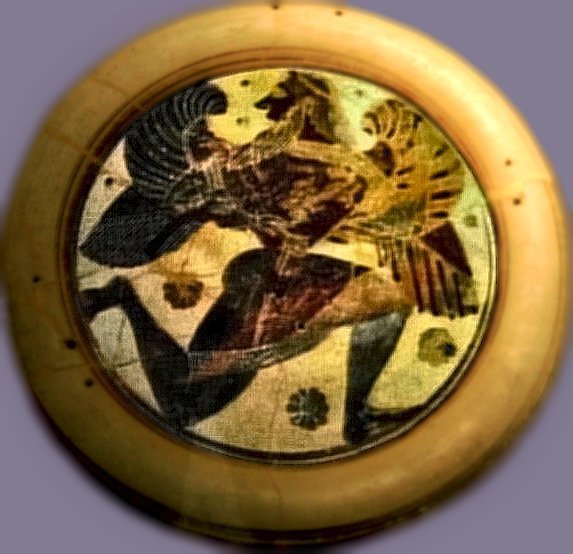
Good spirit in Greek mythology
The eudaemon, eudaimon, or eudemon () in Greek mythology was a type of daemon or genius (deity), which in turn was a kind of spirit. A eudaemon was regarded as a good spirit or angel, and the evil cacodaemon was its opposing spirit.
Etymology
The word eudaimon in Greek means having a good attendant spirit, and consequently being happy. It is composed of the words εὖ eu, which means "well" or "good" and δαίμων daimon, which means "divinity, spirit, divine power, fate, or god." Sometimes eudaimon is taken to mean literally "good spirit". Also daimon is the Greek derivative for the term demon, in which case "demon" means "replete with knowledge".
Moreover, Eudaimon is as well an ancient proper noun, in particular it was the Greek name of a priest of Zeus and father of P. Aelius Aristeides, a notorious rhetorician of the second century AD.
Characteristics
Eudaemons in Greek mythology included deified heroes. They were regarded intermediary spirits between gods and the men. Eudaemons, the good daemons, were understood as guardian spirits, bestowing protection and guidance to ones they watched over.
As a counselor, the eudaemon whispered advice and opinions in one's ear. Such person escorted by the eudaemon was considered fortunate. It was said that Socrates during his lifetime had a daemon that always warned him of threats and bad judgment, but never directed his actions. According to Socrates, his daemon was more accurate than the respected forms of divination at that time, such as either reading the entrails or watching the flights of birds.

A worshiped good daemon was Agathodaemon in whose honor the first libation to the god Dionysus was dedicated.
Other definitions
The philosopher Aristotle believed that a happy person is one who is eudaemon, but still in a literal manner one possessing a good or fortunate daemon. Heraclitus believed that a person’s character is his guardian daemon.
Once in a while the good daemon may also stand for the souls of the deceased. For example, the heroine Alcestis in 438 BCE Athenian tragedy by the Greek Euripides, is reported as a "blessed daemon" subsequent to her death.
According to psychologist Carl Jung there is not eudaemon or else cacodaemon but only the daemon, which is a unique independent spirit neither good nor bad, living in everyone.
Notes
References
References
- Russell, Michael; W, J. T. (1865); Vol I, p 157.
- Merriam-Webster (1995); p 392.
- Prior, William J. (1990); p 150.
- Guiley, Rosemary E. (2008); p 94.
- Wilhelm, Robert (1995); p 22.
- Smith, William (1844); p 295.
- Cooksey, Thomas L. ( 2010); pp 69-71.
This article was imported from Wikipedia and is available under the Creative Commons Attribution-ShareAlike 4.0 License. Content has been adapted to SurfDoc format. Original contributors can be found on the article history page.
Ask Mako anything about Eudaemon (mythology) — get instant answers, deeper analysis, and related topics.
Research with MakoFree with your Surf account
Create a free account to save articles, ask Mako questions, and organize your research.
Sign up freeThis content may have been generated or modified by AI. CloudSurf Software LLC is not responsible for the accuracy, completeness, or reliability of AI-generated content. Always verify important information from primary sources.
Report