From Surf Wiki (app.surf) — the open knowledge base
Ethology
Scientific objective study of non-human animal behaviour

Scientific objective study of non-human animal behaviour
.jpg)
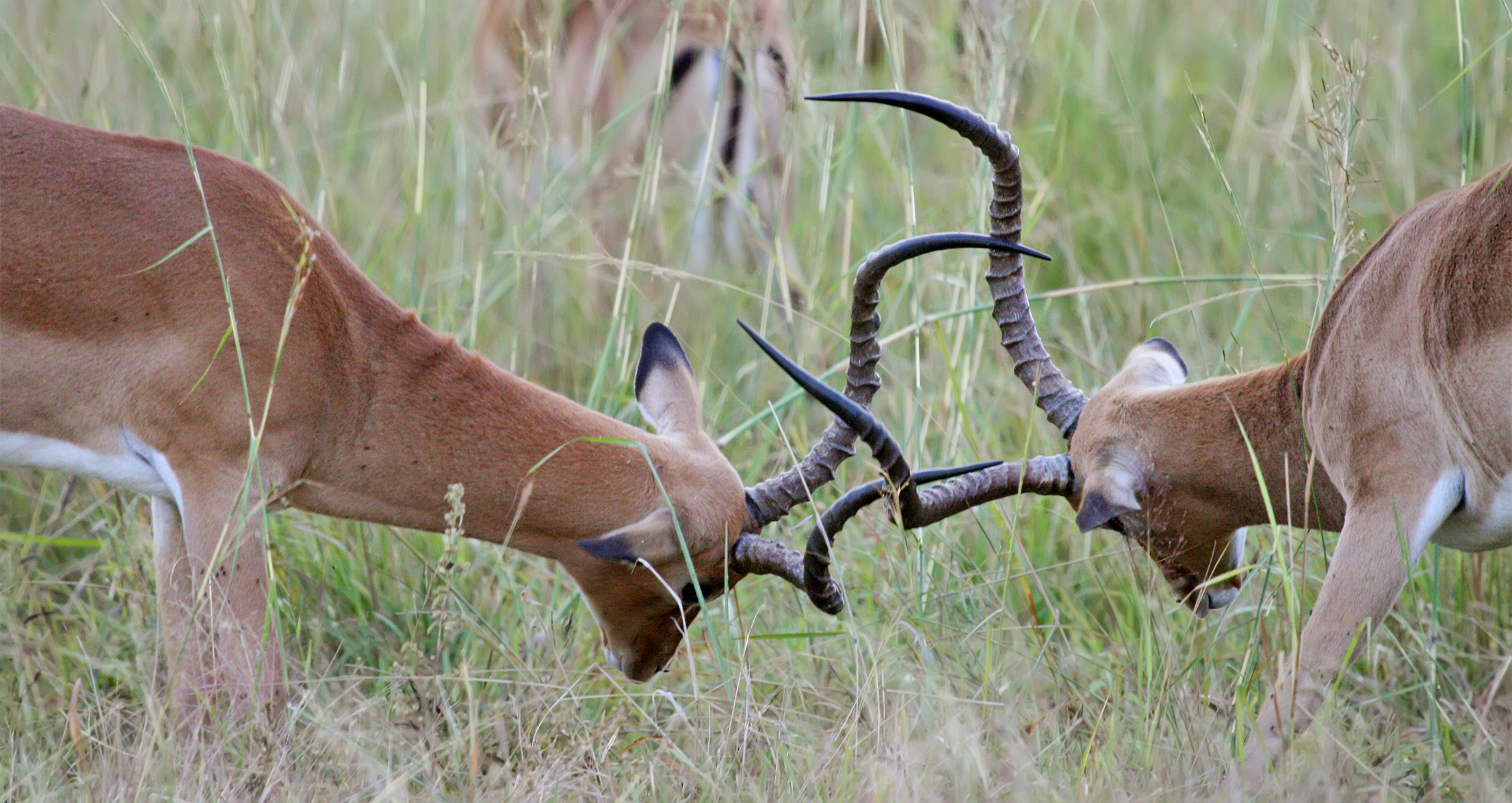
Ethology is a branch of zoology that studies the behaviour of non-human animals. It has its scientific roots in the work of Charles Darwin and of American and German ornithologists of the late 19th and early 20th century, including Charles O. Whitman, Oskar Heinroth, and Wallace Craig. The modern discipline of ethology is generally considered to have begun during the 1930s with the work of the Dutch biologist Nikolaas Tinbergen and the Austrian biologists Konrad Lorenz and Karl von Frisch, the three winners of the 1973 Nobel Prize in Physiology or Medicine. Ethology combines laboratory and field science, with a strong relation to neuroanatomy, ecology, and evolutionary biology.
Etymology
The modern term ethology derives from the Greek language: ἦθος, ethos meaning "character" and -λογία, -logia meaning "the study of". The term was first popularized by the American entomologist William Morton Wheeler in 1902.
History
The beginnings of ethology

Ethologists have been concerned particularly with the evolution of behaviour and its understanding in terms of natural selection. In one sense, the first modern ethologist was Charles Darwin, whose 1872 book The Expression of the Emotions in Man and Animals influenced many ethologists. He pursued his interest in behaviour by encouraging his protégé George Romanes, who investigated animal learning and intelligence using an anthropomorphic method, anecdotal cognitivism, that did not gain scientific support.
Other early ethologists, such as Eugène Marais, Charles O. Whitman, Oskar Heinroth, Wallace Craig and Julian Huxley, instead concentrated on behaviours that can be called instinctive in that they occur in all members of a species under specified circumstances. Their starting point for studying the behaviour of a new species was to construct an ethogram, a description of the main types of behaviour with their frequencies of occurrence. This provided an objective, cumulative database of behaviour.
Growth of the field
Due to the work of Konrad Lorenz and Niko Tinbergen, ethology developed strongly in continental Europe during the years prior to World War II.
Lorenz, Tinbergen, and von Frisch were jointly awarded the Nobel Prize in Physiology or Medicine in 1973 for their work of developing ethology.
Ethology is now a well-recognized scientific discipline, with its own journals such as Animal Behaviour, Applied Animal Behaviour Science, Animal Cognition, Behaviour, Behavioral Ecology and Ethology. In 1972, the International Society for Human Ethology was founded along with its journal, Human Ethology.
Social ethology
In 1972, the English ethologist John H. Crook distinguished comparative ethology from social ethology, and argued that much of the ethology that had existed so far was really comparative ethology—examining animals as individuals—whereas, in the future, ethologists would need to concentrate on the behaviour of social groups of animals and the social structure within them.
E. O. Wilson's book Sociobiology: The New Synthesis appeared in 1975, and since that time, the study of behaviour has been much more concerned with social aspects. It has been driven by the Darwinism associated with Wilson, Robert Trivers, and W. D. Hamilton. The related development of behavioural ecology has helped transform ethology. Furthermore, a substantial rapprochement with comparative psychology has occurred, so the modern scientific study of behaviour offers a spectrum of approaches. In 2020, Tobias Starzak and Albert Newen from the Institute of Philosophy II at the Ruhr University Bochum postulated that animals may have beliefs.
Tinbergen's four questions for ethologists
Main article: Tinbergen's four questions
Tinbergen argued that ethology needed to include four kinds of explanation in any instance of behaviour:
- Function – How does the behaviour affect the animal's chances of survival and reproduction? Why does the animal respond that way instead of some other way?
- Causation – What are the stimuli that elicit the response, and how has it been modified by recent learning?
- Development – How does the behaviour change with age, and what early experiences are necessary for the animal to display the behaviour?
- Evolutionary history – How does the behaviour compare with similar behaviour in related species, and how might it have begun through the process of phylogeny?
These explanations are complementary rather than mutually exclusive—all instances of behaviour require an explanation at each of these four levels. For example, the function of eating is to acquire nutrients (which ultimately aids survival and reproduction), but the immediate cause of eating is hunger (causation). Hunger and eating are evolutionarily ancient and are found in many species (evolutionary history), and develop early within an organism's lifespan (development). It is easy to confuse such questions—for example, to argue that people eat because they are hungry and not to acquire nutrients—without realizing that the reason people experience hunger is because it causes them to acquire nutrients.
References
References
- Scott, Graham. (2007). "Essential animal behavior". Blackwell Publ.
- (2009). "Insect Behaviour". Springer.
- Keeley, Brian L.. (2004). "Anthropomorphism, primatomorphism, mammalomorphism: understanding cross-species comparisons". York University.
- "Guide to the Charles Otis Whitman Collection ca. 1911".
- (2015-01-01). "The ethology and life history of birds: the forgotten contributions of Oskar, Magdalena and Katharina Heinroth". Journal of Ornithology.
- Bateson, Patrick. (1991). "The Development and Integration of Behaviour: Essays in Honour of Robert Hinde". Cambridge University Press.
- "The Nobel Prize in Physiology or Medicine 1973". Nobelprize.org..
- "Goals". [[International Society for Human Ethology]].
- (1972). "Social Ethology". Annual Review of Psychology.
- Wilson, Edward O.. (2000). "Sociobiology: the new synthesis". Harvard University Press.
- (2012). "An Introduction to Behavioural Ecology". John Wiley & Sons.
- (17 June 2020). "What it means when animals have beliefs". ScienceDaily.
- (1963). "On aims and methods in ethology". Zeitschrift für Tierpsychologie.
- MacDougall-Shackleton, Scott A.. (2011-07-27). "The levels of analysis revisited". Philosophical Transactions of the Royal Society B: Biological Sciences.
- Barrett et al. (2002) ''Human Evolutionary Psychology''. Princeton University Press. {{ISBN. 9780691096223{{page?. (June 2023)
This article was imported from Wikipedia and is available under the Creative Commons Attribution-ShareAlike 4.0 License. Content has been adapted to SurfDoc format. Original contributors can be found on the article history page.
Ask Mako anything about Ethology — get instant answers, deeper analysis, and related topics.
Research with MakoFree with your Surf account
Create a free account to save articles, ask Mako questions, and organize your research.
Sign up freeThis content may have been generated or modified by AI. CloudSurf Software LLC is not responsible for the accuracy, completeness, or reliability of AI-generated content. Always verify important information from primary sources.
Report