From Surf Wiki (app.surf) — the open knowledge base
Ethnic groups in Chad
none
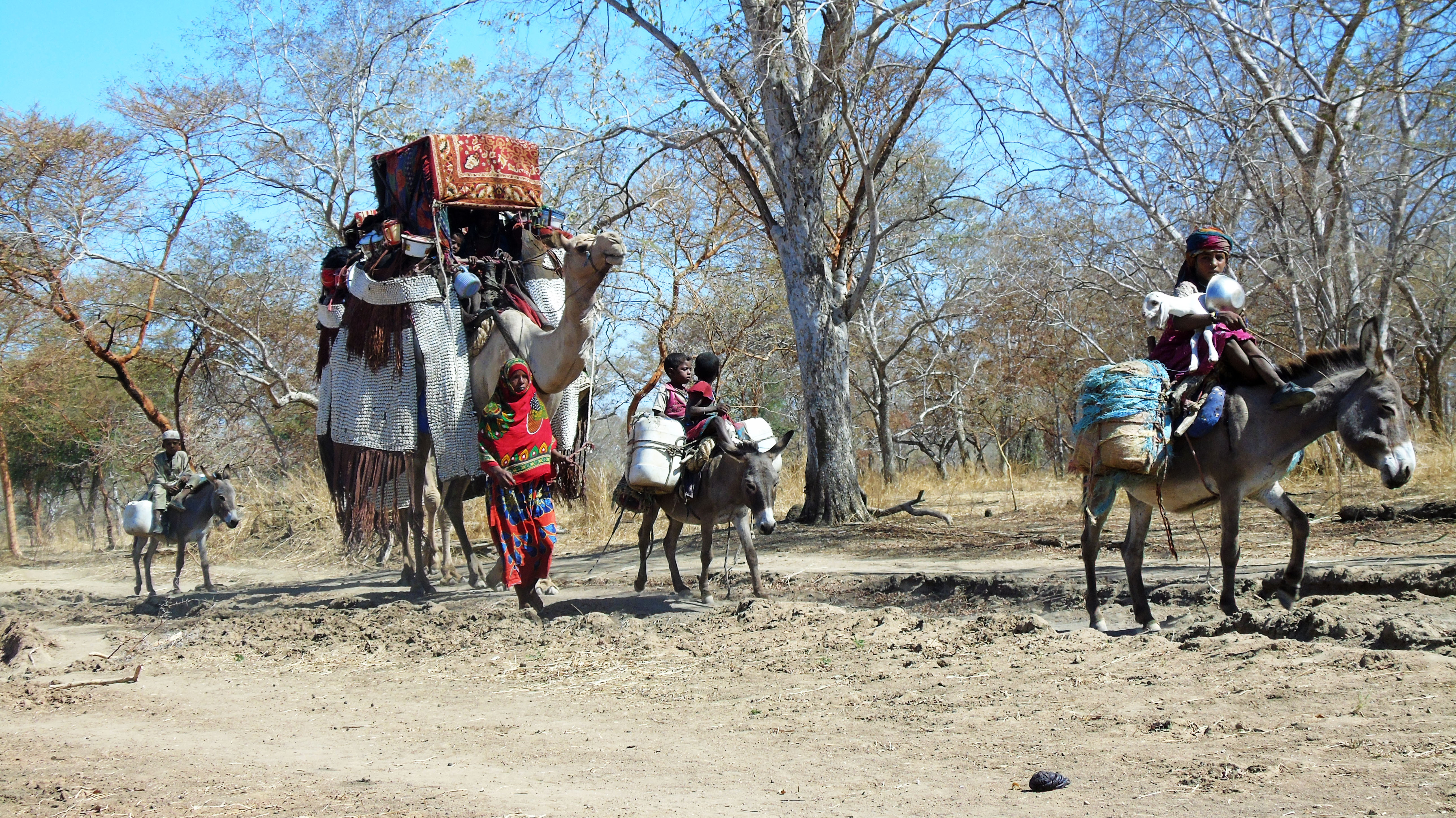
none
NOTOC
The population of Chad has numerous ethnic groups. SIL Ethnologue reports more than 130 distinct languages spoken in Chad.
History and demographics
The 14 million inhabitants of Chad belong to some 200 ethnicities, who speak numerous languages. The peoples of Chad carry significant ancestry from Eastern, Central, Western, and Northern Africa. The population can be broadly divided between those in the east, north and west who follow Islam, and the peoples of the south, the five southernmost prefectures, who are mostly Christian or animist. The southern part of the country was historically the cross roads of the caravan routes below the Sahara, forming a link between West Africa and the Arabic region, as well as one between North Africa and sub-Saharan Africa. The slave trade between sub-Saharan Africa and the Middle East passed through the slave markets of Chad and Western Sudan, slave-trading was a key component of Chad's historic economy, and this brought people of various ethnicities into Chad. The CIA Factbook estimates the largest ethnic groups as of the 2014-2015 census as:

| Groups | Percentage |
|---|---|
| Sara (Ngambaye/Sara/Madjingaye/Mbaye) | 30.5% |
| Arabs | 15.8% |
| Kanembu/Bornu/Buduma | 10.3% |
| Masalit people (Wadai/Maba/Masalit/Mimi) | 5.0% |
| Gorane | 8.8% |
| Bilala/Medogo/Kuka | 3.7% |
| Marba/Lele/Mesme | 3.5% |
| Mundang | 2.7% |
| Bidiyo/Migaama/Kenga/Dangleat | 2.5% |
| Dadjo/Kibet/Muro | 2.4% |
| Tupuri/Kera | 2.0% |
| Gabri/Kabalaye/Nanchere/Somrai | 2.0% |
| Fulani/Fulbe/Bodore | 1.8% |
| Karo/Zime/Peve | 1.3% |
| Baguirmi/Barma | 1.2% |
| Zaghawa/Bideyat/Kobe | 1.1% |
| Tama/Assongori/Mararit | 1.1% |
| Mesmedje/Massalat/Kadjakse | 0.8% |
| Other Chadian ethnicities | 3.4% |
| Chadians of foreign ethnicities | 0.9% |
| Foreign nationals | 0.3% |
| Unspecified | 1.7% |
Other little-known ethnic groups believed to be living in Chad include the Kujarke people.
Muslim groups
Islamization began as early as the 8th century and was mostly complete by the 11th, when Islam became the official religion of the Kanem–Bornu Empire.
Muslim groups other than the Shuwa include the Toubou, Hadjerai, Fulbe/Fulani, Kotoko, Kanembou, Baguirmi, Boulala, Zaghawa, and Maba.
Non-Muslim groups
Language and ethnic groups
Ethno-linguistically, the groups may be divided into:
- Chadian Arabic-speaking Shuwa
- Chadic: Marba, Hausa, numerous minor groups
- Nilo-Saharan:
- Maban (Ouaddai)
- Saharan: Kanembu, Kanuri, Zaghawa, Toubou
- Eastern Sudanic: Daju
- Central Sudanic: Baguirmi, Sinyar
- Niger–Congo:
- Bua
- Atlantic-Congo: Fula people.
References
References
- [http://www.ethnologue.com/%5C/15/show_country.asp?name=TD Ethnologue: Languages of the World, Fifteenth edition, online version]
- M. J. Azevedo. (2005). "The Roots of Violence: A History of War in Chad". Routledge.
- (2016-12-01). "Chad Genetic Diversity Reveals an African History Marked by Multiple Holocene Eurasian Migrations". The American Journal of Human Genetics.
- Martha Kneib. (2007). "Chad". Marshall Cavendish.
- Christopher R. DeCorse. (2001). "West Africa During the Atlantic Slave Trade: Archaeological Perspectives". Bloomsbury Academic.
- "The World Factbook".
- Blažek, Václav. (2015). "On the position of Kujarke within Chadic". Folia Orientalia.
This article was imported from Wikipedia and is available under the Creative Commons Attribution-ShareAlike 4.0 License. Content has been adapted to SurfDoc format. Original contributors can be found on the article history page.
Ask Mako anything about Ethnic groups in Chad — get instant answers, deeper analysis, and related topics.
Research with MakoFree with your Surf account
Create a free account to save articles, ask Mako questions, and organize your research.
Sign up freeThis content may have been generated or modified by AI. CloudSurf Software LLC is not responsible for the accuracy, completeness, or reliability of AI-generated content. Always verify important information from primary sources.
Report