From Surf Wiki (app.surf) — the open knowledge base
Et facere et pati fortia Romanum est
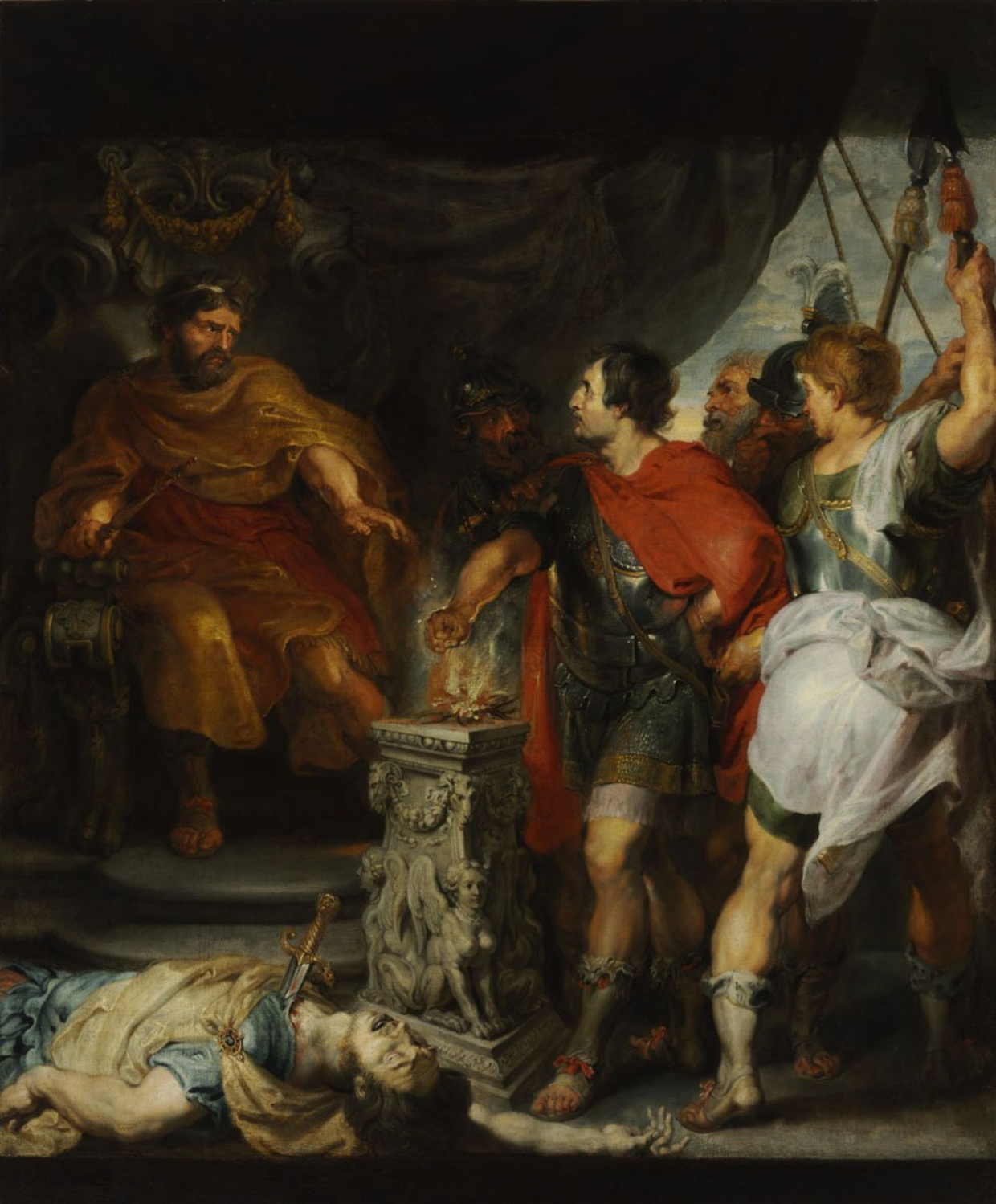
Et facere et pati fortia Romanum est is a Latin phrase meaning "It is the attribute of a Roman to perform as well as to suffer mighty things." Its comes from Livy's Ab urbe condita 2, 12, 9.
Origin
According to legend, a certain Mucius Cordus attempted to kill the Etruscan king Lars Porsena, who was besieging Rome. When the Etruscans caught him, he said “Romanus sum civis” (I am a Roman citizen) and continued with "et facere et pati fortia Romanum est". To prove his point, he held his right hand without flinching in a fire that the king had ordered to torture him. Porsena was so impressed by this, that he gave up the besiegement of Rome.
In this way Mucius Cordus became an example for a brave and audacious Roman burgess. He is assumed to have got his byname “Scaevola” ("The “left-hand”) because of his act.
Cicero was later famously to use the phrase civis romanus sum in a different context.
References
References
- [https://www.perseus.tufts.edu/hopper/text?doc=Perseus%3Atext%3A1999.02.0151%3Abook%3D2%3Achapter%3D12 Liv.2.12]
This article was imported from Wikipedia and is available under the Creative Commons Attribution-ShareAlike 4.0 License. Content has been adapted to SurfDoc format. Original contributors can be found on the article history page.
Ask Mako anything about Et facere et pati fortia Romanum est — get instant answers, deeper analysis, and related topics.
Research with MakoFree with your Surf account
Create a free account to save articles, ask Mako questions, and organize your research.
Sign up freeThis content may have been generated or modified by AI. CloudSurf Software LLC is not responsible for the accuracy, completeness, or reliability of AI-generated content. Always verify important information from primary sources.
Report