From Surf Wiki (app.surf) — the open knowledge base
Ernst Zermelo
German logician and mathematician (1871–1953)
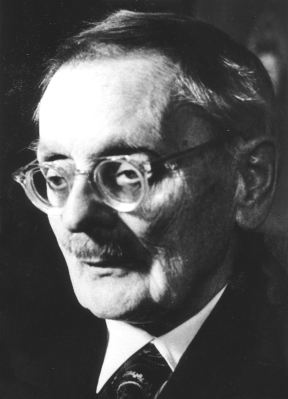
German logician and mathematician (1871–1953)
| Field | Value | |
|---|---|---|
| name | Ernst Zermelo | |
| image | Ernst Zermelo 1900s.jpg | |
| caption | Ernst Zermelo in the 1900s | |
| birth_date | ||
| birth_place | Berlin, German Empire | |
| death_date | ||
| death_place | Freiburg im Breisgau, West Germany | |
| nationality | German | |
| fields | Mathematics | |
| workplaces | University of Zürich | |
| alma_mater | University of Berlin | |
| doctoral_advisor | {{plainlist | |
| doctoral_students | ||
| known_for | {{plainlist | |
| awards | Ackermann–Teubner Memorial Award (1916) | |
| spouse | Gertrud Seekamp (1944 – death) |
- Lazarus Fuchs
- Hermann Schwarz}}
- Zermelo ordinal
- Zermelo set theory
- Zermelo's categoricity theorem
- Zermelo's navigation problem
- Zermelo's theorem
- Zermelo–Fraenkel set theory
- Choice function
- Infinitary logic
- Roster notation}} Ernst Friedrich Ferdinand Zermelo (; ; 27 July 187121 May 1953) was a German logician and mathematician, whose work has major implications for the foundations of mathematics. He is known for his role in developing Zermelo–Fraenkel axiomatic set theory and his proof of the well-ordering theorem. Furthermore, his 1929 work on ranking chess players is the first description of a model for pairwise comparison that continues to have a profound impact on various applied fields utilizing this method.
Life
Ernst Zermelo graduated from Berlin's Luisenstädtisches Gymnasium (now ) in 1889. He then studied mathematics, physics and philosophy at the University of Berlin, the University of Halle, and the University of Freiburg. He finished his doctorate in 1894 at the University of Berlin, awarded for a dissertation on the calculus of variations (Untersuchungen zur Variationsrechnung). Zermelo remained at the University of Berlin, where he was appointed assistant to Planck, under whose guidance he began to study hydrodynamics. In 1897, Zermelo went to the University of Göttingen, at that time the leading centre for mathematical research in the world, where he completed his habilitation thesis in 1899.
In 1910, Zermelo left Göttingen upon being appointed to the chair of mathematics at the University of Zurich, which he resigned in 1916. He was appointed to an honorary chair at the University of Freiburg in 1926, which he resigned in 1935 because he disapproved of Adolf Hitler's regime. At the end of World War II and at his request, Zermelo was reinstated to his honorary position in Freiburg.
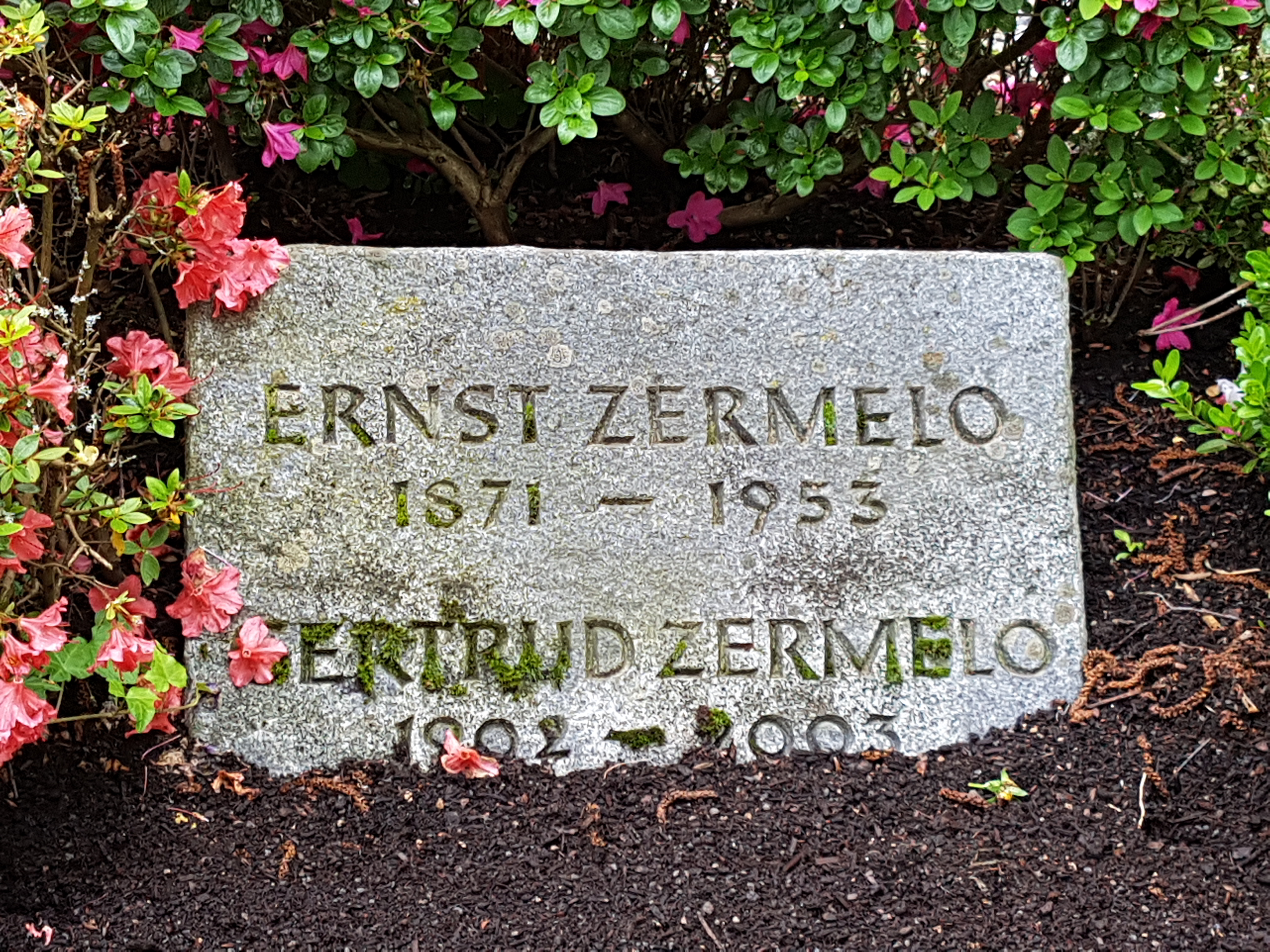
Research in set theory
In 1900, in the Paris conference of the International Congress of Mathematicians, David Hilbert challenged the mathematical community with his famous Hilbert's problems, a list of 23 unsolved fundamental questions which mathematicians should attack during the coming century. The first of these, a problem of set theory, was the continuum hypothesis introduced by Cantor in 1878, and in the course of its statement Hilbert also mentioned the need to prove the well-ordering theorem.
Zermelo began to work on the problems of set theory under Hilbert's influence and in 1902 published his first work concerning the addition of transfinite cardinals. By that time he had also discovered the so-called Russell paradox. In 1904, he succeeded in taking the first step suggested by Hilbert towards the continuum hypothesis when he proved the well-ordering theorem (every set can be well ordered). This result brought fame to Zermelo, who was appointed Professor in Göttingen, in 1905. His proof of the well-ordering theorem, based on the powerset axiom and the axiom of choice, was not accepted by all mathematicians, mostly because the axiom of choice was a paradigm of non-constructive mathematics. In 1908, Zermelo succeeded in producing an improved proof making use of Dedekind's notion of the "chain" of a set, which became more widely accepted; this was mainly because that same year he also offered an axiomatization of set theory.
Zermelo began to axiomatize set theory in 1905; in 1908, he published his results despite his failure to prove the consistency of his axiomatic system. See the article on Zermelo set theory for an outline of this paper, together with the original axioms, and the original numbering.
In 1922, Abraham Fraenkel and Thoralf Skolem independently improved Zermelo's axiom system. The resulting system, now called Zermelo–Fraenkel axioms (ZF), is now the most commonly used system for axiomatic set theory.
Publications
- Jean van Heijenoort, 1967. From Frege to Gödel: A Source Book in Mathematical Logic, 1879–1931. Harvard Univ. Press.
-
- "Proof that every set can be well-ordered," 139−41.
-
- "A new proof of the possibility of well-ordering," 183–98.
-
- "Investigations in the foundations of set theory I," 199–215.
-
-
- "On an Application of Set Theory to the Theory of the Game of Chess" in Rasmusen E., ed., 2001. Readings in Games and Information, Wiley-Blackwell: 79–82.
-
- "On boundary numbers and domains of sets: new investigations in the foundations of set theory" in Ewald, William B., ed., 1996. From Kant to Hilbert: A Source Book in the Foundations of Mathematics, 2 vols. Oxford University Press: 1219–33.
Works by others:
- Zermelo's Axiom of Choice, Its Origins, Development, & Influence, Gregory H. Moore, being Volume 8 of Studies in the History of Mathematics and Physical Sciences, Springer Verlag, New York, 1982.
Citations
References
References
- Zermelo, Ernst. (1929). "Die Berechnung der Turnier-Ergebnisse als ein Maximumproblem der Wahrscheinlichkeitsrechnung". [[Mathematische Zeitschrift]].
- (2020). "Set Theory and Metric Spaces". American Mathematical Society.
This article was imported from Wikipedia and is available under the Creative Commons Attribution-ShareAlike 4.0 License. Content has been adapted to SurfDoc format. Original contributors can be found on the article history page.
Ask Mako anything about Ernst Zermelo — get instant answers, deeper analysis, and related topics.
Research with MakoFree with your Surf account
Create a free account to save articles, ask Mako questions, and organize your research.
Sign up freeThis content may have been generated or modified by AI. CloudSurf Software LLC is not responsible for the accuracy, completeness, or reliability of AI-generated content. Always verify important information from primary sources.
Report