From Surf Wiki (app.surf) — the open knowledge base
Eridu
Archaeological site in Iraq

Archaeological site in Iraq
| Field | Value |
|---|---|
| name | Eridu |
| native_name | |
| alternate_name | Tell Abu Shahrain |
| image | Ziggurat at Eridu (30809118442).jpg |
| caption | Ruins of a ziggurat at Eridu |
| map_type | Iraq |
| relief | yes |
| coordinates | |
| location | Al-Batha Subdistrict, Nasiriyah District, Dhi Qar Governorate, Iraq |
| region | Lower Mesopotamia, Mesopotamia, West Asia |
| type | Ancient city |
| area | At most 10 ha |
| built | |
| abandoned | |
| epochs | {{Collapsible list |
| bullets | on |
| 1 | Ubaid period |
| 2 | Uruk period |
| 3 | Early Dynastic period |
| 4 | Akkadian period |
| 5 | Gutian period |
| 6 | Ur III period |
| 7 | Isin-Larsa period |
| 8 | Old Babylonian period |
| 9 | Middle Babylonian period |
| 10 | Neo-Babylonian period |
| excavations | 1855, 1918–1919, 1946–1949, 2018 |
| archaeologists | John George Taylor, R. Campbell Thompson, H. R. Hall, Fuad Safar, Seton Lloyd, Franco D’Agostino |
| notes | {{Infobox UNESCO World Heritage Site |
| child | yes |
| Official_name | Tell Eridu Archaeological Site |
| Part_of | Ahwar of Southern Iraq |
| Type | Mixed |
| Criteria | (iii)(v)(ix)(x) |
| ID | 1481-007 |
| Coordinates | |
| Year | 2016 |
| Area | 33 ha |
| Buffer_zone | 1,069 ha |
Eridu (; Sumerian: eridugki; Akkadian: irîtu) was a Sumerian city located at Tell Abu Shahrain (), also Abu Shahrein or Tell Abu Shahrayn, an archaeological site in Lower Mesopotamia. It is located in Dhi Qar Governorate, Iraq, near the modern city of Basra. Eridu is traditionally considered the earliest city in southern Mesopotamia based on the Sumerian King List. Located 24 km south-southwest of the ancient site of Ur, Eridu was the southernmost of a conglomeration of Sumerian cities that grew around temples, almost in sight of one another. The city gods of Eridu were Enki and his consort Damkina. Enki, later known as Ea, was considered to have founded the city. His temple was called E-Abzu, as Enki was believed to live in Abzu, an aquifer from which all life was thought to stem. According to Sumerian temple hymns, another name for the temple of Ea/Enki was called Esira (Esirra).
At nearby Ur there was a temple of Ishtar of Eridu (built by Lagash's ruler Ur-Baba) and a sanctuary of Inanna of Eridu (built by Ur III ruler Ur-Nammu). Ur-Nammu also recorded building a temple of Ishtar of Eridu at Ur which is assumed to have been a rebuild.
One of the religious quarters of Babylon, containing the temple called the Esagila as well as the temple of Annunitum, among others, was also named Eridu.
Archaeology
Eridu is located on a natural hill in a basin approximately 15 mi long and 20 ft deep, which is separated from the Euphrates River by a sandstone ridge called the Hazem. This basin, the As Sulaybiyat Depression (formerly: Khor en-Nejeif), becomes a seasonal lake (Arabic: Sebkha) during the rainy season from November to April. During this period, it is filled by the discharge of the Wadi Khanega. Adjacent to eastern edge of the seasonal lake are the Hammar Marshes.
In the 3rd Millennium BC a canal, Id-edin-Eriduga (NUN)ki "the canal of the Eridug plain", connected Eridu to the Euphrates River, which later shifted its course. The path of the canal is marked by several low tells with 2nd Millennium BC surface pottery and later burials. The site contains 8 mounds:
- Mound 1 – Abū Šahrain, 580 x 540 m in area NW to WE, 25 m in height, Enki Temple, Ur III Ziggurat (É-u₆-nir) Sacred Area, Early Dynastic plano-convex bricks found, Ubaid Period cemetery
- Mound 2 – 350 x 350 m in area, 4.3 m in height, 1 km N of Abū Šahrain, Early Dynastic Palace, remnants of city wall built with plano-convex bricks
- Mound 3 – 300 × 150 m in area, 2.5 m high, 2.2 km SSW of Abū Šahrain, Isin-Larsa pottery found
- Mound 4 – 600 × 300 m in area, 2.5 km SW of Abū Šahrain, Kassite pottery found
- Mound 5 – 500 × 300 m in area, 3 m high, 1.5 km SE of Abū Šahrain, Neo-Babylonian and Achaemenid periods
- Mound 6 – 300 × 200 m in area, 2 m high, 2.5 km SW of Abū Šahrain
- Mound 7 – 400 × 200 m in area, 1.5 m high, 3 km E of Abū Šahrai
- Mound 8 – Usalla, flat area, 8 km NW of Abū Šahrain, Hajj Mohammed and later Ubaid
The site was initially excavated by John George Taylor, the British Vice-counsel at Basra, in 1855. Among the finds were inscribed bricks enabling the identification of the site as Eridu. Excavation on the main tell next occurred by R. Campbell Thompson from April 10 until May 8, 1918, and H. R. Hall from April 21 until May 8, 1919, who also conducted a survey in the area around the tell. An interesting find by Hall was a piece of manufactured blue glass which he dated to . The blue color was achieved with cobalt, long before this technique emerged in Egypt.
This lump of glass is currently dated to the 21st century BC or even earlier, and is considered as perhaps the earliest such glass object in the world in the History of glass. It was produced during the Akkadian Empire or the early Ur III period.

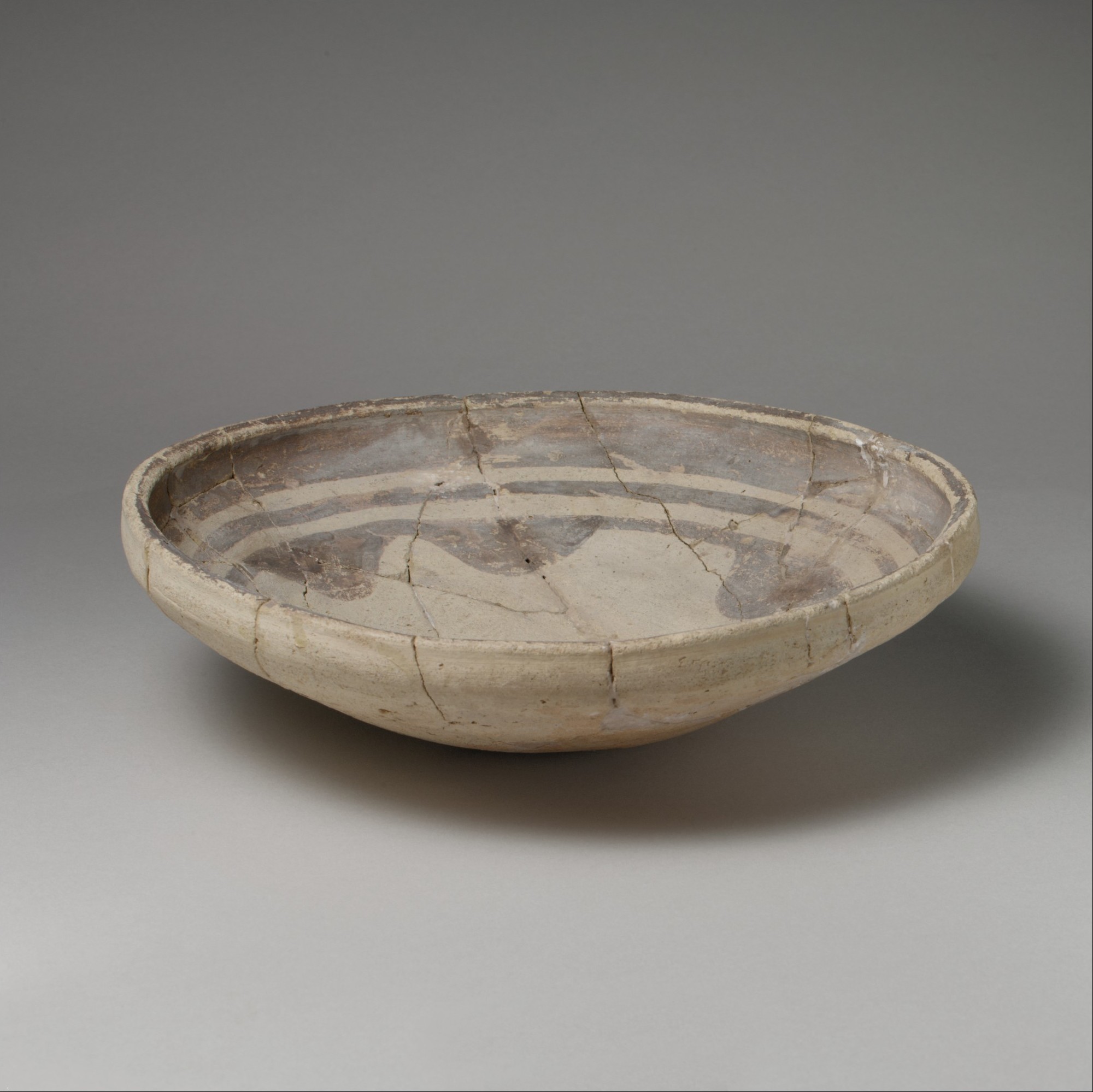
Excavation there resumed from 1946 to 1949 under Fuad Safar and Seton Lloyd of the Iraqi Directorate General of Antiquities and Heritage. Among the finds were a Ubaid period terracotta boat model, complete with a socket amidship for a mast and hole for stays and rudder, bevel-rimmed bowls, and a "lizard type" figurine like those found in a sounding under the Royal Cemetery of Ur. Soundings in the cemetery showed it to have about 1000 graves, all from the end of the Ubaid period (Temple levels VI and VII).{{cite journal| url= https://findit.library.yale.edu/images_layout/view?parentoid=15763206&increment=41| last1= al Asil
In October 2014, Franco D’Agostino visited the site in preparation for the coming resumption of excavation, noting a number of inscribed Amar-Sin brick fragments on the surface. In 2019, excavations at Eridu were resumed by a joint Italian, French, and Iraqi effort which included the University of Rome La Sapienza and the University of Strasbourg. Work has included producing new detail topographic and photogrammetric maps and is mainly focused on the Ubaid period cemetery and its associated Ubaid residential area.
Artifacts

In March 2006, Giovanni Pettinato and S. Chiod from Rome's La Sapienza University claimed to have discovered 500 Early Dynastic historical and literary cuneiform tablets on the surface at Eridu "disturbed by an explosion". The tablets were said to be from 2600 to 2100 BC (rulers Eannatum to Amar-Sin) and be part of a library. A team was sent to the site by Iraq's State Board of Antiquities and Heritage which found no tablets, only stamped bricks from Eridu and surrounding sites such as Ur. Nor was there a permit to excavate at the site issued to anyone. At this point Pettinato stated that they had actually found 70 inscribed bricks. This turned out to be stamped bricks used to build the modern Eridu dig-house. The dig-house had been built using bricks from the demolished Leonard Woolley's expedition house at Ur (clearly spelled out in the 1981 Iraqi excavation report to avoid confusion to future archaeologists). Most of the bricks in question were returned to Ur in 1962 for use in restoration efforts.
Architecture
Temple and ziggurat
The urban nucleus of Eridu was Enki's temple, called House of the Aquifer (Cuneiform: {{cuneiform|4|𒂍𒍪𒀊}}, sux; Sumerian: sux; Akkadian: akk), which in later history was called House of the Waters (Cuneiform: {{cuneiform|4|𒂍𒇉}}, sux; Sumerian: e₂-engur; Akkadian: bītu engurru). The name refers to Enki's realm. His consort Ninhursag had a nearby temple at Ubaid.
During the Ur III period, Ur-Nammu had a ziggurat built over the remains of previous temples. Aside from Enmerkar of Uruk (as mentioned in the Aratta epics), several later historical Sumerian kings are said in inscriptions found here to have worked on or renewed the e-abzu temple, including Elili of Ur; Ur-Nammu, Shulgi and Amar-Sin of Ur-III, and Nur-Adad of Larsa.
| Level | Date (BC) | Period | Size (m) | Note |
|---|---|---|---|---|
| XVIII | 5300 | – | 3×0.3 | Sleeper walls |
| XVII | 5300–5000 | – | 2.8×2.8 | First cella |
| XVI | 5300–4500 | Early Ubaid | 3.5×3.5 | |
| XV | 5000–4500 | Early Ubaid | 7.3×8.4 | |
| XIV | 5000–4500 | Early Ubaid | – | No structure found |
| XIII | 5000–4500 | Early Ubaid | – | No structure found |
| XII | 5000–4500 | Early Ubaid | – | No structure found |
| XI | 4500–4000 | Ubaid | 4.5×12.6 | First platform |
| X | 4500–4000 | Ubaid | 5×13 | |
| IX | 4500–4000 | Ubaid | 4×10 | |
| VIII | 4500–4000 | Ubaid | 18×11 | |
| VII | 4000–3800 | Ubaid | 17×12 | |
| VI | 4000–3800 | Ubaid | 22×9 | |
| V | 3800–3500 | Early Uruk | – | Only platform remains |
| IV | 3800–3500 | Early Uruk | – | Only platform remains |
| III | 3800–3500 | Early Uruk | – | Only platform remains |
| II | 3500–3200 | Early Uruk | – | Only platform remains |
| I | 3200 | Early Uruk | – | Only platform remains |
Lament for Eridu
The fall of early Mesopotamia cities and empires was typically believed to be the result of falling out of favor with the gods. A genre called City Laments developed during the Isin-Larsa period, of which the Lament for Ur is the most famous. These laments had a number of sections (kirugu) of which only fragments have been recovered. The Lament for Eridu describes the fall of that city.
History
._From_Eridu_(Tell_Abu_Shahrain),_Iraq._3500-2800_BCE._Iraq_Museum,_Baghdad.jpg)
Eridu is one of the earliest settlements in the region, founded during the early Ubaid period, at that time close to the Persian Gulf near the mouth of the Euphrates, although in modern times it is about 90 miles inland. Excavation has shown that the city was founded on a virgin sand dune site with no previous habitation. According to the excavators, construction of the Ur III ziggurat and associated buildings was preceded by the destruction of preceding construction and its use as leveling fill so no remains from that time were found. At a small mound 1 kilometer north of Eridu two Early Dynastic III palaces were found, with an enclosure wall. The palaces measured 45 meters by 65 meters with 2.6 meter wide walls and were constructed in the standard Early Dynastic period method of plano-convex bricks laid in a herringbone fashion.
.jpg)
With possible breaks in occupation in the Early Dynastic III and Akkadian Empire periods, the city was inhabited until the Neo-Babylonian Empire, though in later times it was primarily a cultic site.

During the Ubaid period the site extended out to an area of about 12 hectares (about 30 acres). Twelve neolithic clay tokens, the precursor to Proto-cuneiform, were found in the Ubaid levels of the site. Eighteen superimposed mudbrick temples at the site underlie the unfinished ziggurat of Amar-Sin (c. 2047–2039 BC). Levels XIX to VI were from the Ubaid period and Levels V to I were dated to the Uruk period. Significant habitation was found from the Uruk period with "non-secular" buildings being found in soundings. Uruk finds included decorative terracotta cones topped with copper, copper nails topped with gold, a pair of basalt stone lion statues, columns several meters in diameter coated with cones and gypsum, and extensive Uruk period pottery. Occupation increased in the Early Dynastic period with a monumental 100 x palace being constructed. An inscription of Elulu, a ruler of the First Dynasty of Ur (), was found at Eridu. On a statue of the Early Dynastic ruler of Lagash named Entemena (), it reads, "he built Ab-zupasira for Enki, king of Eridu ...",

Eridu was active during the Third Dynasty of Ur (22nd to 21st century BC) and royal building activity is known from inscribed bricks notably those of Ur-Nammu from his ziggurat marked "Ur-Nammu, king of Ur, the one who built the temple of the god Enki in Eridu." Three Third Dynasty rulers designated Year Names based on the appointment of an en(tu)-priestess (high priestess) of the temple of Enki in Eridu, the highest religious office in the land at that time. In each the first two cases it was also used as the succeeding Year Name.
- Sulgi Year 28 – "Year the szita-priest-who-intercedes-for-Szulgi, the son of Szulgi, the strong man, the king of Ur, the king of the four corners of the universe, was installed as en-priest of Enki in Eridu"
- Amar-Sin Year 8 – "Year (Ennune-kiag-Amar-Sin) Ennune-the beloved (of Amar-Sin, was installed as en-priestess of Enki in Eridu)"
- Ibbi-Sin Year 11 – "Year the szita-priest who prays piously for Ibbi-Sin was chosen by means of the omens as en-priest of Enki in Eridu"
After the fall of Ur III the site was occupied and active during the Isin-Larsa period (early 2nd Millennium BC) as evidenced by a Year Name of Nur-Adad, ruler of Larsa "Year the temple of Enki in Eridu was built" and prior texts of Isin rulers Ishbi-Erra and Ishme-Dagan showing control over Eridu. Inscribed construction bricks of Nur-Adad have also been found at Eridu. This continued in the Old Babylonian period with Hammurabi stating in his 33rd Year Name "Year Hammu-rabi the king dug the canal (called) 'Hammu-rabi is abundance to the people', the beloved of An and Enlil, established the everlasting waters of plentifulness for Nippur, Eridu, Ur, Larsa, Uruk and Isin, restored Sumer and Akkad which had been scattered, overthrew in battle the army of Mari and Malgium and caused Mari and its territory and the various cities of Subartu to dwell under his authority in friendship"

In an inscription of Kurigalzu I (), a ruler of the Kassite dynasty one of his epitaphs is "[he one who ke]eps the sanctuary in Eridu in order".
An inscription of the Second Sealand Dynastic ruler Simbar-shipak (c. 1021–1004 BCE) mentions a priest of Eridu.
The Neo-Assyrian emperor Sargon II (722–705 BCE) awarded andurāru-status (described as "a periodic reinstatement of goods and persons, alienated because of want, to their original status") to Eridu.
The Neo-Babylonian ruler Nebuchadnezzar II (605–562 BC) built at Eridu as evidenced by inscribed bricks found there.
Mythology
In some, but not all, versions of the Sumerian King List, Eridu is the first of five cities where kingship was received before a flood came over the land. The list mentions two rulers of Eridu from the Early Dynastic period, Alulim and Alalngar. |[nam]-lugal an-ta èd-dè-a-ba [eri]duki nam-lugal-la eridugki a₂-lu-lim lugal mu 28800 i₃-ak a₂-lal₃-ĝar mu 36000 i₃-ak |When kingship from heaven was lowered, the kingship was in Eridu In Eridug, Alulim became king; he ruled for 28800 years. Alaljar ruled for 36000 years}}

In Sumerian mythology, Eridu was the home of the Abzu temple of the god Enki, the Sumerian counterpart of the Akkadian god Ea, god of deep waters, wisdom and magic. Like all the Sumerian and Babylonian gods, Enki/Ea began as a local god who, according to the later cosmology, came to share the rule of the cosmos with Anu and Enlil. His kingdom was the sweet waters that lay below earth (Sumerian ab=water; zu=far). The bright star Canopus was known to the ancient Mesopotamians and represented the city of Eridu in the Three Stars Each Babylonian star catalogues and later around 1100 BC on the MUL.APIN tablets. Canopus was called MUL.NUNKI by the Babylonians, which translates as "star of the city of Eridu". From most southern city of Mesopotamia, Eridu, there is a good view to the south, so that about 6000 years ago due to the precession of the Earth's axis the first rising of the star Canopus in Mesopotamia could be observed only from there at the southern meridian at midnight. In the city of Ur this was the case only 60 years later.
In the flood myth tablet found in Ur, how Eridu and Alulim were chosen by gods as first city and first priest-king is described in more detail. The following is the English translation of the tablet: |(Obverse) 1 They (the chief deities) created humanity 2 After the [animals/vermin?] were proliferating below/from the earth in unison 3 They made livestock and quadrupeds as fitting things in the steppe(eden-na) 4 In the high steppe ... joyous plants broadly 5 At that time, the canal was not dug ... 6 The dike and ditch [were not dredged(?) ...] 7 The ox ... the plow/farmer/furrow(?) ... 8 The lands ... a single track ... 9 Humanity ... their eyes/faces ... [rain?] 10 Šakkan/Šumugan [did not go out(?)] in the desert ... 11 Weaving the cap/headcloth(?) ... 12 Humanity ... 13 At that time, the snake was not present, [the scorpion was not present ...] 14 The lion was not present, [the hyena was not present ...] 15 The dog and wolf were not present ... 16 Humanity [had no opponent ...] 17 Fear and [gooseflesh(?) were not present ...] 18 ... 19 The king ... 20 ...
|(Reverse) 1 First ... were giving [Eridu or Ku’ara?] to Asalluhi, 2 Second ... were giving [Bad-tibira to the nugig midwife?], 3 Third ... were giving [Larak[ to Pabilsaĝ, 4 Fourth ... were giving [Sippar to Utu?] 5 Fifth ... were giving Š[uruppak?] to [Sud?]. 6 Those cities .. their settlements ... 7 An, Enlil, [Enki?] and Ninhursaĝ 8 Among(?) those cities, Eridu .. they established at the front/as the leader(?) 9 They led(?) a man who was lying(?) among its vast and many people ... 10 An, Enlil, and Enki, the father(s) of the gods(?) 11 They chose Alulim/the "seed of the red deer" for the shepherdship of the entirety of the many people 12 They named him(!) Alulim/named the "seed of the red deer" ... 13 After they served according to the command to check thusly/forever after(?) 14 [So that?] humanity, whoever possessed a name, were grasping his feet (in submission)/following his path(?) 15 They put both (capital) offense and sin(?) in his hand 16 was giving ... to him 17 ... 18 ...

Adapa, a man of Eridu, is depicted as an early culture hero. Although earlier tradition, Me-Turan/Tell-Haddad tablet, describes Adapa as postdiluvian ruler of Eridu, in late tradition, Adapa came to be viewed as Alulim's vizier, and he was considered to have brought civilization to the city as the sage of King Alulim.

The stories of Inanna, goddess of Uruk, describe how she had to go to Eridu in order to receive the gifts of civilization. At first Enki, the god of Eridu, attempted to retrieve these sources of his power but later willingly accepted that Uruk now was the centre of the land.
List of rulers
The following list should not be considered complete:
| # | Depiction | Ruler | Succession | Title | Approx. dates | Notes | Predynastic Sumer () |
|---|---|---|---|---|---|---|---|
| Early Dynastic I period () | |||||||
| 1 | [[File:Lista Reale Sumerica.jpg | 128px]] | Alulim | ||||
| 𒀉𒇻𒅆 | King of SumerKing of Eridu | ||||||
| (28800–67200 years) | |||||||
| 2 | [[File:Initial paragraph about rule of Alulim in Eridu for 28800 years (photograph, transcription and translation).jpg | 128px]] | Alalngar | ||||
| 𒀉𒋭𒃻 | Brother of Alulim (?) | King of SumerKing of Eridu | |||||
| (36000 years) | |||||||
| 3 | Amelon | ||||||
| 𒁹𒄠𒈨𒇻𒀭𒈾 | King of SumerKing of Eridu | ||||||
| (46800 years) |
References
Citations
References
- Langdon, S.. (1922). "Review of 'Campbell Thompson, R. "The British Museum excavations at Abu Shahrain in Mesopotamia in 1918", 1920'". Journal of the Royal Asiatic Society of Great Britain and Ireland.
- Langdon, S.. (1923). "Two Sumerian Hymns from Eridu and Nippur". The American Journal of Semitic Languages and Literatures.
- Clayden, Tim, "Kassite housing at Ur: the dates of the EM, YC, XNCF, AH and KPS houses", Iraq, vol. 76, pp. 19–64, 2014
- Radau, Hugo, "Letters to Cassite Kings from the Temple Archives of Nippur", Philadelphia: University of Pennsylvania Press, 1908
- Gurney, O. R., "The Fifth Tablet of ‘The Topography of Babylon’", Iraq, vol. 36, no. 1/2, pp. 39–52, 1974
- "The Cambridge Ancient History. Vol. I, Part 1: Prolegomena and Prehistory". Cambridge University Press.
- Jacobsen, Thorkild. (1970). ""The Waters of Ur", Toward the Image of Tammuz and Other Essays on Mesopotamian History and Culture". Harvard University Press.
- Safar, Fuad. (1981). "Eridu". Ministry of Culture and Information, Iraq.
- Taylor, J. E.. (1855). "Notes on Abu Shahrein and Tell el Lahm". Journal of the Royal Asiatic Society.
- Hilprecht, H. V.. (2004). "First Successful Attempts In Babylonia". Gorgias Press.
- Hall, H. R.. (1920). "Recent Excavations of the British Museum at Tell el-Mukayyar (Ur 'of the Chaldees'), Tell Abu Shahrein (Eridu), and Tell el-Ma'abed or Tell el-'Obeid, near Ur". Proceedings of the Society of Antiquaries.
- Thompson, Campbell. (1920). "The British Museum Excavations at Abu Shahrain in Mesopotamia in 1918". Archaeologia.
- Hall, H. R.. (1924). "Notes on the Excavations of 1919 at Muqayyar, el-'Obeid, and Abu Shahrein". Journal of the Royal Asiatic Society of Great Britain and Ireland.
- Hall, H. R.. (1925). "The Excavations of 1919 at Ur, el-'Obeid, and Eridu, and the History of Early Babylonia". Royal Anthropological Institute of Great Britain and Ireland.
- Hall, H. R.. (1923). "Ur and Eridu: The British Museum Excavations of 1919". The Journal of Egyptian Archaeology.
- Hall, H. R.. (1930). "A Season's Work at Ur, Al-ʻUbaid, Abu Shahrain (Eridu) and Elsewhere. Being an Unofficial Account of the British Museum Archaeological Mission to Babylonia, 1919".
- (1956). "An Early Piece of Glass from Eridu". Iraq.
- (2022). "Primary Evidence for Glassmaking in Late Bronze Age Alalakh/Tell Atchana (Amuq Valley, Turkey". Corning Museum of Glass.
- (September 1948). "Eridu. A Preliminary Communication on the Second Season’s Excavations. 1947–1948". Sumer.
- Safar, Fuad. (1949). "The Third Season's Excavation at Eridu". Sumer.
- Safar, Fuad. (1950). "ERIDU A Preliminary Report on the Third Season's Excavation at Eridu, 1948–1949". Sumer.
- Lloyd, Seton. (1974). "Abu Shahrein: A Memorandum". Iraq.
- Laneri, Nicola. (2022). "From High to Low: Reflections about the Emplacement of Religion in Ancient Mesopotamia". De Gruyter.
- Oppenheim, A. Leo. (1977). "Ancient Mesopotamia: Portrait of a Dead Civilization". University of Chicago Press.
- Moore, A. M. T.. (2002). "Pottery Kiln Sites at al 'Ubaid and Eridu". Iraq.
- D’Agostino, Franco. (2017). "The First Ninety Years: A Sumerian Celebration in Honor of Miguel Civil". De Gruyter.
- (April 2019). "The first campaign at Eridu". Rivista degli studi orientali.
- Ramazzotti, Marco. (2015). "The Iraqi-Italian Archaeological Mission at The Seven Mounds of Eridu (AMEr)". The Iraqi-Italian Archaeological Mission at The Seven Mounds of Eridu.
- Rendu Loisel, Anne-Caroline. (2020). "Another brick (-stamp) in the wall: few remarks on Amar-Suena's bricks in Eridu". Oriens antiquus: rivista di studi sul Vicino Oriente Antico e il Mediterraneo orientale.
- Brienza, Emanuele. (2024). "Smart tools for archaeological survey in different frameworks and contexts: approaches, analysis, results". Acta IMEKO.
- (10 April 2006). "Iraq Antiquities Find Sparks Controversy". [[Science (journal).
- Curtis, John et al., "An Assessment of Archaeological Sites in June 2008: An Iraqi-British Project", Iraq, vol. 70, pp. 215–237, 2008
- Pettinato, Giovanni, "Eridu Texts", Time and History in the Ancient Near East: Proceedings of the 56th Rencontre Assyriologique Internationale, Barcelona, July 26th–30th, 2010, edited by Lluis Feliu, J. Llop, A. Millet Albà and Joaquin Sanmartín, University Park, USA: Penn State University Press, pp. 799–802, 2013
- Green, Margaret Whitney. (1975). "Eridu in Sumerian Literature". University of Chicago, Unpublished Ph.D dissertation.
- Delougaz, P.. (1938). "A Short Investigation of the Temple at Al-'Ubaid, Iraq".
- George, AR. (2003). "House most high: the temples of ancient Mesopotamia". Eisenbrauns.
- (2019). "A new foundation clay-nail of Nūr-Adad from Eridu". Oriens antiquus : rivista di studi sul Vicino Oriente Antico e il Mediterraneo orientale.
- Green, M. W., "The Eridu Lament.", JCS 30, pp. 127–67, 1978
- Peled, Ilan. (2015). "A New Manuscript of the Lament for Eridu". Journal of Cuneiform Studies.
- "The lament for Eridug ETSCL".
- Schmandt-Besserat, Denise. ''Before writing: From counting to cuneiform'', Vol. II, University of Texas Press, 1992
- Overmann, Karenleigh A., ''The Material Origin of Numbers: Insights from the Archaeology of the Ancient Near East'', Piscataway, NJ, USA: Gorgias Press, Table 9.2, pp. 169–170, 2019
- [https://isac.uchicago.edu/sites/default/files/uploads/shared/docs/heartland_of_cities.pdf] Wright, H. T., "Appendix: The Southern Margins of Sumer. Archaeological Survey of the Area of Eridu and Ur", In: R. M. Adams (ed.), The Heartland of Cities: Survey of Ancient Settlement and Land Use on the Central Flood Plain of the Euphrates (Chicago-London), pp. 295–345, 1981
- Quenet, Philippe, "Eridu: Note on the Decoration of the Uruk ‘Temples.’", Proceedings of the 11th International Congress on the Archaeology of the Ancient Near East: Vol. 2: Field Reports. Islamic Archaeology, edited by Adelheid Otto et al., 1st ed., Harrassowitz Verlag, pp. 341–48, 2020
- Lloyd, S.. (1948). "Uruk Pottery: A Comparative Study in relation to recent Finds at Eridu". Sumer.
- Van Buren, E. Douglas. (1948). "Excavations at Eridu". Orientalia.
- Becker, A.. (1993). "Uruk Kleinfunde I". Stein.
- al-Soof, A. B.. (1973). "Uruk Pottery from Eridu, Ur, and al-Ubaid". Sumer.
- Adams, Robert McCormick. (1966). "The Evolution of Urban Society: Early Mesopotamia and Prehistoric Mexico". University of Chicago Press.
- Sollberger, Edmond, and Jean-Robert Kupper, "Inscriptions royales sumeriennese akkadiennes", Littératures Anciennes du Proche-Orient 3, Paris: Les Éditions du Cerf, 1971
- Schmandt-Besserat, Denise, "Six Votive and Dedicatory Inscriptions", When Writing Met Art: From Symbol to Story, New York, USA: University of Texas Press, pp. 71–86, 2007
- Frayne, Douglas, "Ur-Nammu E3/2.1.1", Ur III Period (2112–2004 BC), Toronto: University of Toronto Press, pp. 5–90, 1997
- De Graef, Katrien. "Bad Moon Rising: The Changing Fortunes of Early Second-Millennium BCE Ur", Ur in the Twenty-First Century CE: Proceedings of the 62nd Rencontre Assyriologique Internationale at Philadelåpåphia, July 11–15, 2016, edited by Grant Frame, Joshua Jeffers and Holly Pittman, University Park, USA: Penn State University Press, pp. 49–88, 2021
- “RIME 4.02.08.05, Ex. 01 Artifact Entry.” (2006) 2023. Cuneiform Digital Library Initiative (CDLI). June 15, 2023. https://cdli.ucla.edu/P345487.
- Oshima, Takayoshi, "Another Attempt at Two Kassite Royal Inscriptions: The Agum-Kakrime Inscription and the Inscription of Kurigalzu the Son of Kadashmanharbe", Babel und Bibel 6, edited by Leonid E. Kogan, N. Koslova, S. Loesov and S. Tishchenko, University Park, USA: Penn State University Press, pp. 225–268, 2012
- [https://archive.org/download/babylonianbounda00brituoft/babylonianbounda00brituoft.pdf] L.W. King, "Babylonian Boundary Stones and Memorial Tablets in the British Museum (BBSt)", London: Trustees of the British Museum, 1912
- Frazer, Mary and Adalı, Selim Ferruh, "“The just judgements that Ḫammu-rāpi, a former king, rendered”: A New Royal Inscription in the Istanbul Archaeological Museums", Zeitschrift für Assyriologie und vorderasiatische Archäologie, vol. 111, no. 2, pp. 231–262, 2021
- BMHBA 94, 17 05 artifact entry (No. P283716). (2005, November 15). Cuneiform Digital Library Initiative (CDLI). https://cdli.ucla.edu/P283716
- G. Marchesi, "The Sumerian King List and the Early History of Mesopotamia", in:ana turri gimilli, studi dedicati alPadre Werner R. Mayer, S.J. da amici e allievi, Vicino Oriente Quader-no5, Rome: Università di Roma, pp. 231–248, 2010
- "The Electronic Text Corpus of Sumerian Literature".
- "The Sumerian king list: translation".
- Jacobsen, Thorkild, "The Eridu Genesis", Journal of Biblical Literature, vol. 100, no. 4, pp. 513–29, 1981
- Rogers, John H.. (1998). "Origins of the Ancient Constellations: I. The Mesopotamian Traditions". Journal of the British Astronomical Association.
- "Canopus, der "Stern der Stadt Eridu"". Dem Himmel Nahe.
- UET 6, 61 + UET 6, 503 + UET 6, 691 (+) UET 6, 701 or [https://cdli.mpiwg-berlin.mpg.de/artifacts/346146 CDLI Literary 000357, ex. 003 (P346146)]
- Ansky, S., "The Eridu Genesis", The Harps that Once..., edited by David G. Roskies, New Haven: Yale University Press, pp. 145–150, 1992
- (January 2018). "The Divine Appointment of the First Antediluvian King: Newly Recovered Content from the Ur Version of the Sumerian Flood Story". Journal of Cuneiform Studies.
- Cavigneaux, Antoine. “Une version Sumérienne de la légende d’Adapa (Textes de Tell Haddad X) : Zeitschrift Für Assyriologie104 (2014): 1–41.
- Brandon, S. G. F., "The Origin of Death in Some Ancient Near Eastern Religions", Religious Studies, vol. 1, no. 2, pp. 217–28, 1966
- Milstein, Sara J., "The “Magic” of Adapa", Texts and Contexts: The Circulation and Transmission of Cuneiform Texts in Social Space, edited by Paul Delnero and Jacob Lauinger, Berlin, München, Boston: De Gruyter, pp. 191–213, 2015
- Gertrud Farber-Fliigge, "Der Mythos 'Inanna und Enki' unter besonderer Berücksichti-gung der Liste der me", Rome, St Pohl 10, 1973
- Alster, Bendt, "On the Interpretation of the Sumerian Myth 'Inanna and Enki'", vol. 64, no. 1, pp. 20–34, 1974
This article was imported from Wikipedia and is available under the Creative Commons Attribution-ShareAlike 4.0 License. Content has been adapted to SurfDoc format. Original contributors can be found on the article history page.
Ask Mako anything about Eridu — get instant answers, deeper analysis, and related topics.
Research with MakoFree with your Surf account
Create a free account to save articles, ask Mako questions, and organize your research.
Sign up freeThis content may have been generated or modified by AI. CloudSurf Software LLC is not responsible for the accuracy, completeness, or reliability of AI-generated content. Always verify important information from primary sources.
Report