From Surf Wiki (app.surf) — the open knowledge base
Equals sign
Mathematical symbol of equality

Mathematical symbol of equality
| Field | Value |
|---|---|
| mark | |
| unicode | |
| see also | |
The equals sign (British English) or equal sign (American English), also known as the equality sign, is the mathematical symbol ****, which is used to indicate equality. In an equation it is placed between two expressions that have the same value, or for which one studies the conditions under which they have the same value.
In Unicode and ASCII it has the code point U+003D. It was invented in 1557 by the Welsh mathematician Robert Recorde.
History


Prior to 16th century there was no common symbol for equality, and equality was usually expressed with a word, such as aequales, aequantur, esgale, faciunt, ghelijck or gleich, and sometimes by the abbreviated form aeq, or simply and . Diophantus's use of , short for ἴσος ( 'equals'), in Arithmetica () is considered one of the first uses of an equals sign.
The symbol, now universally accepted in mathematics for equality, was first recorded by the Welsh mathematician Robert Recorde in The Whetstone of Witte (1557), just one year before his death. The original form of the symbol was much wider than the present form. In his book Recorde explains his design of the "Gemowe lines" (meaning twin lines, from the Latin )
And to avoid the tedious repetition of these words: "is equal to" I will set as I do often in work use, a pair of parallels, or duplicate lines of one [the same] length, thus: , because no 2 things can be more equal. The symbol was not immediately popular. After its introduction by Recorde, it was not used again in print until 1618 (61 years later), in an anonymous Appendix in Edward Wright's English translation of Descriptio, by John Napier. It was not until 1631 that it received more than general recognition in England, being adopted as the symbol for equality in three influential works, Thomas Harriot's Artis analyticae praxis, William Oughtred's Clavis mathematicae and Richard Norwood's Trigonometria. Later used by John Wallis, Isaac Barrow and Isaac Newton, which helped it to spread to continental Europe.
Competing symbols
There were several other competing symbols for equality, especially outside of England around the 16th and 17th centuries, and Recorde's version made no significant influence in the European continent until 1650 or 1660. In 1559 the French monk Johannes Buteo published his Logistica using the symbol\ for equality. In 1571 [Wilhelm Xylander published an edition of Diophantus' Arithmetica in which two parallel vertical lines were used for equality. This version was adopted by several prominent writers, including Giovanni Glorioso, Cardinal Michelangelo Ricci, and many French and Dutch mathematicians in the hundred years after, including René Descartes in 1621.
A major competitor to Recorde's sign was Descartes' own symbol, introduced in his La Géométrie (1637). In fact, Descartes himself used the sign for equality in a letter in 1640. Descartes does not give any reason for introducing his new symbol; however, Florian Cajori suggests it is because was also being used for a difference operation at the time. Due to the prominence of La Géométrie, by 1675, Descartes' symbol gained favour over Recorde's in Europe, and most 17th-century writers on the continent either used Descartes' notation for equality or none at all. Around the turn of the 18th century, Recorde's notation gained favour rapidly. The dominating trend in mathematics of the time was differential and integral calculus. The fact that both Newton and Gottfried Wilhelm Leibniz used Recorde's symbol led to its general adoption.
Usage in mathematics and computer programming
In mathematics, the equals sign can be used as a simple statement of fact in a specific case (""), or to create definitions (""), conditional statements (""), or to express a universal equivalence ("").
The first important computer programming language to use the equals sign was the original version of Fortran, FORTRAN I, designed in 1954 and implemented in 1957. In Fortran, serves as an assignment operator: sets the value of to 2. This somewhat resembles the use of in a mathematical definition, but with different semantics: the expression following is evaluated first, and may refer to a previous value of . For example, the assignment increases the value of by 2.
A rival programming-language usage was pioneered by the original version of ALGOL, which was designed in 1958 and implemented in 1960. ALGOL included a relational operator that tested for equality, allowing constructions like with essentially the same meaning of as the conditional usage in mathematics. The equals sign was reserved for this usage.
Both usages have remained common in different programming languages into the early-21st century. As well as Fortran, is used for assignment in such languages as C, Perl, Python, AWK and their descendants. But is used for equality and not assignment in the Pascal family, Ada, Eiffel, APL, and other languages.
A few languages, such as BASIC and PL/I, have used the equals sign to mean both assignment and equality, distinguished by context. However, in most languages where has one of these meanings, a different character or, more often, a sequence of characters is used for the other meaning. Following ALGOL, most languages that use for equality use for assignment, although APL, with its special character set, uses a left-pointing arrow.
Fortran did not have an equality operator (it was only possible to compare an expression to zero, using the arithmetic IF statement) until FORTRANIV was released in 1962, since when it has used the four characters to test for equality. The language B introduced the use of with this meaning, which has been copied by its descendant C and most later languages where means assignment.
Some languages additionally feature the "spaceship operator", or three-way comparison operator, , to determine whether one value is less than, equal to, or greater than another.
Several equals signs
In some programming languages, == and === are used to check equality, so 1844 == 1844 will return true.
In PHP, the triple equals sign, , denotes value and type equality,{{cite web | access-date = 19 October 2013 | archive-date = 19 October 2013 | archive-url = https://web.archive.org/web/20131019192727/http://php.net/manual/en/language.operators.comparison.php | url-status = live
JavaScript has the same semantics for , referred to as "equality without type coercion". However, in JavaScript the behavior of cannot be described by any simple consistent rules. The expression is true, but is false, even though both sides of the act the same in Boolean context. For this reason it is sometimes recommended to avoid the operator in JavaScript in favor of .{{cite web |access-date = 19 October 2013 |archive-date = 4 November 2013 |archive-url = https://web.archive.org/web/20131104115604/http://www.youtube.com/watch?v=hQVTIJBZook |url-status = live
In Ruby, equality under requires both operands to be of identical type, e.g. is false. The operator is flexible and may be defined arbitrarily for any given type. For example, a value of type is a range of integers, such as . is false, since the types are different (Range vs. Integer); however is true, since on values means "inclusion in the range".{{cite book |author-link = why the lucky stiff |chapter-url = http://mislav.uniqpath.com/poignant-guide/book/chapter-5.html#section1 |access-date = 19 October 2013 |archive-date = 24 September 2015 |archive-url = https://web.archive.org/web/20150924063735/http://mislav.uniqpath.com/poignant-guide/book/chapter-5.html#section1 |url-status = dead |access-date = 19 October 2013 |archive-url = https://web.archive.org/web/20131021062941/http://www.pmamediagroup.com/2009/07/dont-call-it-case-equality/ |archive-date = 21 October 2013
Other uses
Spelling
Tone letter
The equals sign is also used as a grammatical tone letter in the orthographies of Budu in the Congo-Kinshasa, in Krumen, Mwan and Dan in the Ivory Coast. The Unicode character used for the tone letter () is different from the mathematical symbol (U+003D).
Personal names
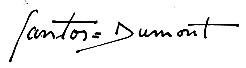
A possibly unique case of the equals sign of European usage in a person's name, specifically in a double-barreled name, was by the aviation pioneer Alberto Santos-Dumont, as he is also known not only to have often used a double hyphen resembling an equal sign between his two surnames in place of a hyphen, but also seems to have personally preferred that practice, to display equal respect for his father's French ethnicity and the Brazilian ethnicity of his mother.
Instead of a double hyphen, the equals sign is sometimes used in Japanese as a separator between names. In Ojibwe, the readily available equals sign on most keyboards is commonly used as a substitute for a double hyphen.
Linguistics
In linguistic interlinear glosses, an equals sign is conventionally used to mark clitic boundaries: the equals sign is placed between the clitic and the word that the clitic is attached to.
Chemistry
In chemical formulas, the two parallel lines denoting a double bond are commonly rendered using an equals sign (hence, a triple bond is commonly rendered using a triple bar).
LGBT activism
In recent years, the equals sign has been used as a symbol in favor of LGBT rights. It has been used since 1995 by the Human Rights Campaign, which lobbies for marriage equality, and subsequently by the United Nations Free & Equal, which promotes LGBT rights at the United Nations."HRC Story: Our Logo." The Human Rights Campaign. HRC.org, Retrieved 4 December 2018.
Telegrams and Telex
In Morse code the equals sign is encoded by the letters B (-...) and T (-) run together (-...-). The letters BT stand for Break Text, and are put between paragraphs, or groups of paragraphs in messages sent via Telex, a standardised tele-typewriter. The sign, used to mean Break Text, is given at the end of a telegram to separate the text of the message from the signature.
Incorrect usage
The equals sign is sometimes used incorrectly within a mathematical argument to connect math steps in a non-standard way, rather than to show equality (especially by early mathematics students).
For example, if one were finding the sum, step by step, of the numbers 1, 2, 3, 4, and 5, one might incorrectly write :1 + 2 = 3 + 3 = 6 + 4 = 10 + 5 = 15. Structurally, this is shorthand for :([(1 + 2 = 3) + 3 = 6] + 4 = 10) + 5 = 15, but the notation is incorrect, because each part of the equality has a different value. If interpreted strictly as it says, it would imply that :3 = 6 = 10 = 15 = 15. A correct version of the argument would be :1 + 2 = 3, 3 + 3 = 6, 6 + 4 = 10, 10 + 5 = 15.
This difficulty results from subtly different uses of the sign in education. In early, arithmetic-focused grades, the equals sign may be operational; like the equal button on an electronic calculator, it demands the result of a calculation. Starting in algebra courses, the sign takes on a relational meaning of equality between two calculations. Confusion between the two uses of the sign sometimes persists at the university level.
Encodings
Notes
References
- Boyer, C. B.: A History of Mathematics, 2nd ed. rev. by Uta C. Merzbach. New York: Wiley, 1989 (1991 pbk ed. )
References
- Weisstein, Eric W.. "Equal".
- "C0 Controls and Basic Latin Range: 0000–007F". Unicode Consortium.
- (2002). "Robert Recorde".
- Derbyshire, John. (2006). "Unknown Quantity: A Real And Imaginary History of Algebra". Joseph Henry Press.
- (24 April 2017). "The History of Equality Symbols in Math".
- See also [[wiktionary:geminus. geminus]] and [[Gemini (constellation). Gemini]].
- Cajori, Florian. (1928). "A History Of Mathematical Notations Vol I". The Open Court Company, Publishers.
- Peter G. Constable. (31 July 2006). "Proposal to Encode Additional Orthographic and Modifier Characters".
- (1993). "The Alphabets of Africa". [[UNESCO]] and SIL.
- "Unicode Latin Extended-D code chart".
- Gray, Carroll F.. (November 2006). "The 1906 Santos=Dumont No. 14bis". W.W.1 Aero: The Journal of the Early Aeroplane.
- "Conventions for interlinear morpheme-by-morpheme glosses".
- "Recommendation ITU-R M.1677-1".
- "Mathematical Operators".
- (2011). "An International Perspective between Problem Types in Textbooks and Students' understanding of relational equality". Mediterranean Journal for Research in Mathematics Education.
This article was imported from Wikipedia and is available under the Creative Commons Attribution-ShareAlike 4.0 License. Content has been adapted to SurfDoc format. Original contributors can be found on the article history page.
Ask Mako anything about Equals sign — get instant answers, deeper analysis, and related topics.
Research with MakoFree with your Surf account
Create a free account to save articles, ask Mako questions, and organize your research.
Sign up freeThis content may have been generated or modified by AI. CloudSurf Software LLC is not responsible for the accuracy, completeness, or reliability of AI-generated content. Always verify important information from primary sources.
Report