From Surf Wiki (app.surf) — the open knowledge base
Equal opportunity
State of fairness in which individuals are all treated the same (with justified exceptions)

State of fairness in which individuals are all treated the same (with justified exceptions)
Equal opportunity is a state of fairness in which individuals are treated similarly, unhampered by artificial barriers, prejudices, or preferences, except when particular distinctions can be explicitly justified. race, caste,
According to proponents of the concept, chances for advancement should be open to everybody without regard for wealth, status, or membership in a privileged group. The idea is to remove arbitrariness from the selection process and base it on some "pre-agreed basis of fairness, with the assessment process being related to the type of position" It is opposed to nepotism
The concept is applicable in areas of public life in which benefits are earned and received such as employment and education, although it can apply to many other areas as well. Equal opportunity is central to the concept of meritocracy.
There are two major types of equality: formal equality, the individual merit-based comparison of opportunity, and substantive equality, which moves away from individual merit-based comparison towards group equality of outcomes.
Differing political viewpoints
People with differing political viewpoints often view the concept differently. The meaning of equal opportunity is debated in fields such as political philosophy, sociology and psychology. It is being applied to increasingly wider areas beyond employment, housing, college admissions, voting rights, and elsewhere. In the classical sense, equality of opportunity is closely aligned with the concept of equality before the law and ideas of meritocracy.
Generally, the terms equality of opportunity and equal opportunity are interchangeable, with occasional slight variations; the former has more of a sense of being an abstract political concept while "equal opportunity" is sometimes used as an adjective, usually in the context of employment regulations, to identify an employer, a hiring approach, or the law. Equal opportunity provisions have been written into regulations and have been debated in courtrooms. It is sometimes conceived as a legal right against discrimination. It is an ideal which has become increasingly widespread in Western nations during the last several centuries and is intertwined with social mobility, most often with upward mobility and with rags to riches stories:
Theory
Outline of the concept

According to the Stanford Encyclopedia of Philosophy, the concept assumes that society is stratified with a diverse range of roles, some of which are more desirable than others. According to one view, there is no "formal linking" between equality of opportunity and political structure, in the sense that there can be equality of opportunity in democracies, autocracies and in communist nations, People with different political perspectives see equality of opportunity differently: liberals disagree about which conditions are needed to ensure it and many "old-style" conservatives see inequality and hierarchy in general as beneficial out of a respect for tradition. It can apply to a specific hiring decision, or to all hiring decisions by a specific company, or rules governing hiring decisions for an entire nation. The scope of equal opportunity has expanded to cover more than issues regarding the rights of minority groups, but covers practices regarding "recruitment, hiring, training, layoffs, discharge, recall, promotions, responsibility, wages, sick leave, vacation, overtime, insurance, retirement, pensions, and various other benefits".
The concept has been applied to numerous aspects of public life, including accessibility of polling stations, care provided to HIV patients, whether men and women have equal opportunities to travel on a spaceship, bilingual education, skin color of models in Brazil, television time for political candidates, army promotions, admittance to universities and ethnicity in the United States. The term is interrelated with and often contrasted with other conceptions of equality such as equality of outcome and equality of autonomy. Equal opportunity emphasizes the personal ambition and talent and abilities of the individual, rather than his or her qualities based on membership in a group, such as a social class or race or extended family. Further, it is seen as unfair if external factors that are viewed as being beyond the control of a person significantly influence what happens to him or her. Equal opportunity then emphasizes a fair process whereas in contrast equality of outcome emphasizes an equal outcome. In sociological analysis, equal opportunity is seen as a factor correlating positively with social mobility, in the sense that it can benefit society overall by maximizing well-being.
Different types
There are different concepts lumped under equality of opportunity.
Formal equality of opportunity describes equal opportunities based only on merit but these opportunities should not depend on your identity such as gender or race. Formal equality does not guarantee equal outcomes for groups or equal representation of groups, but requires that deliberate discrimination be only meritocratic. For instance, job interviews should only discriminate against applicants based on job competence. Meritocratic universities should not accept a less-capable applicant instead of a more-capable applicant who cannot pay tuition. Formal equality can be called racial color blindness and gender blindness.
Substantive equality describes equal outcomes for groups or equal representation of identities such as gender or race. Substantive does not guarantee equality of opportunity based only on merit. For instance, substantive equality includes that jobs are distributed according to the race and gender proportions of the whole population.
Equality before the law describes where the law does not discriminate explicitly based on protected identity such as gender or race. Equality before the law does not imply Formal equality of opportunity or substantive equality. If firing any pregnant employee is legal, it would meet Equality before the law but would violate both Formal equality of opportunity and substantive equality.
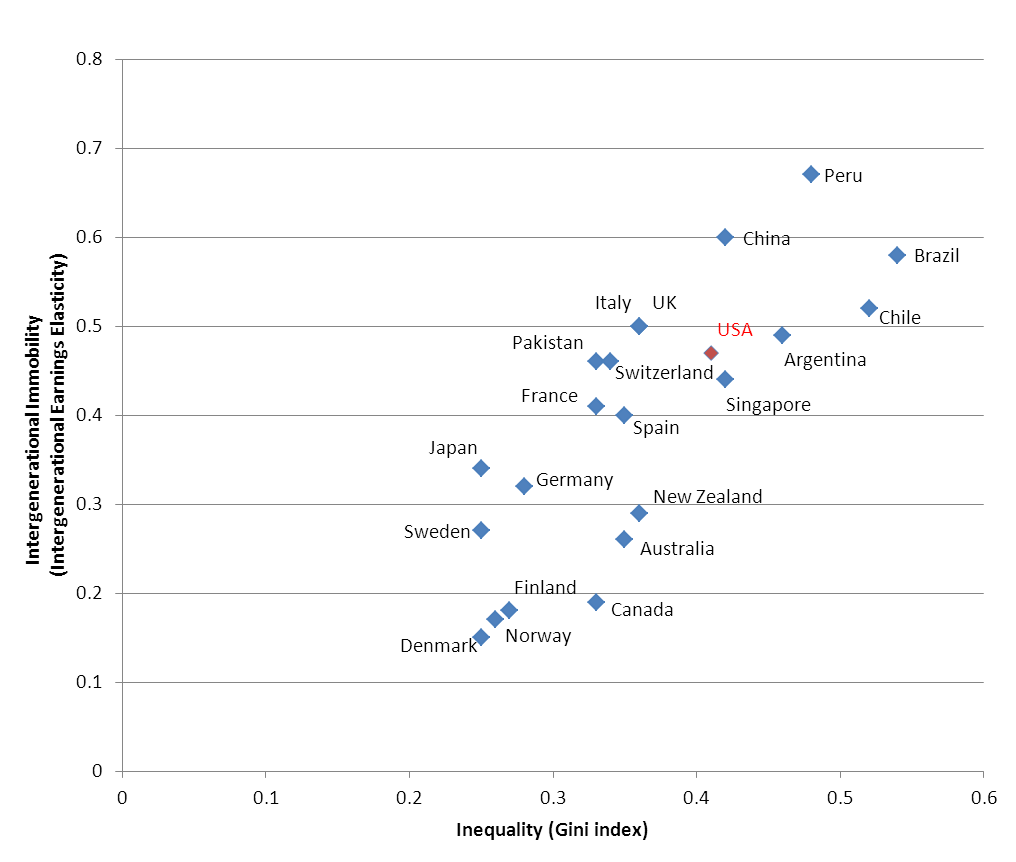
Formal equality of opportunity is often more difficult to measure. A political party that formally allows anyone to join, but meets in a non-wheelchair-accessible building far from public transit, substantively discriminates against both young and old members as they are less likely to be able-bodied car-owners. However, if the party raises membership dues in order to afford a better building, it discourages poor members instead. A workplace in which it is difficult for persons with special needs and disabilities to perform can considered as a type of substantive inequality, although job restructuring activities can be done to make it easier for disabled persons to succeed. Grade-cutoff university admission is formally fair, but if in practice it overwhelmingly picks women and graduates of expensive user-fee schools, it is substantively unfair to men and the poor. The unfairness has already taken place and the university can choose to try to counterbalance it, but it likely can not single-handedly make pre-university opportunities equal. Social mobility and the Great Gatsby curve are often used as an indicator of substantive equality of opportunity.
Both equality concepts say that it is unfair and inefficient if extraneous factors rule people's lives. Both accept as fair inequality based on relevant, meritocratic factors. They differ in the scope of the methods used to promote them. The difference between the two equality concepts is also referred to as Dilemma of Difference.
Formal equality of opportunity
Formal equality of opportunity is sometimes referred to as the nondiscrimination principle It is characterized by:
- Open call. Positions bringing superior advantages should be open to all applicants and job openings should be publicized in advance giving applicants a "reasonable opportunity" to apply. Further, all applications should be accepted.
- Fair judging. Applications should be judged on their merits,
- An application is chosen. The applicant judged as "most qualified" is offered the position while others are not. There is agreement that the result of the process is again unequal, in the sense that one person has the position while another does not, but that this outcome is deemed fair on procedural grounds.
The formal approach is limited to the public sphere as opposed to private areas such as the family, marriage, or religion. An expression of this version appeared in The New York Times: "There should be an equal opportunity for all. Each and every person should have as great or as small an opportunity as the next one. There should not be the unfair, unequal, superior opportunity of one individual over another."

This sense was also expressed by economists Milton and Rose Friedman in their 1980 book Free to Choose.
It is a relatively straightforward task for legislators to ban blatant efforts to favor one group over another and encourage equality of opportunity as a result. Japan banned gender-specific job descriptions in advertising as well as sexual discrimination in employment as well as other practices deemed unfair, although a subsequent report suggested that the law was having minimal effect in securing Japanese women high positions in management. In the United States, the Equal Employment Opportunity Commission sued a private test preparation firm, Kaplan, for unfairly using credit histories to discriminate against African Americans in terms of hiring decisions.
Meritocracy
Main article: Meritocracy
There is some overlap among these different conceptions with the term meritocracy which describes an administrative system which rewards such factors as individual intelligence, credentials, education, morality, knowledge or other criteria believed to confer merit. Equality of opportunity is often seen as a major aspect of a meritocracy.}}
Substantive equality
Main article: Substantive equality
Substantive equality of opportunity, sometimes called fair equality of opportunity, The substantive equality embraced by Court of Justice of the European Union focuses on equality of outcomes for group characteristics and group outcomes.
Substantive equality has been identified as more of a left-leaning political position, but this is not a hard-and-fast rule. The substantive model is advocated by people who see limitations in formal equality. In the substantive approach, the starting point before the race begins is unfair since people have had differing experiences before even approaching the competition. The substantive approach examines the applicants themselves before applying for a position and judges whether they have equal abilities or talents; and if not, then it suggests that authorities (usually the government) take steps to make applicants more equal before they get to the point where they compete for a position and fixing the before-the-starting-point issues has sometimes been described as working towards "fair access to qualifications".
According to John Hills, children of wealthy and well-connected parents usually have a decisive advantage over other types of children and he notes that "advantage and disadvantage reinforce themselves over the life cycle, and often on to the next generation" so that successful parents pass along their wealth and education to succeeding generations, making it difficult for others to climb up a social ladder. However, so-called positive action efforts to bring an underprivileged person up to speed before a competition begins are limited to the period of time before the evaluation begins. At that point, the "final selection for posts must be made according to the principle the best person for the job", that is, a less qualified applicant should not be chosen over a more qualified applicant.}}
In a sense, substantive equality of opportunity moves the "starting point" further back in time. Sometimes it entails the use of affirmative action policies to help all contenders become equal before they get to the starting point, perhaps with greater training, or sometimes redistributing resources via restitution or taxation to make the contenders more equal. It holds that all who have a "genuine opportunity to become qualified" be given a chance to do so and it is sometimes based on a recognition that unfairness exists, hindering social mobility, combined with a sense that the unfairness should not exist or should be lessened in some manner. One example postulated was that a warrior society could provide special nutritional supplements to poor children, offer scholarships to military academies and dispatch "warrior skills coaches" to every village as a way to make opportunity substantively more fair. The idea is to give every ambitious and talented youth a chance to compete for prize positions regardless of their circumstances of birth.
The substantive approach tends to have a broader definition of extraneous circumstances which should be kept out of a hiring decision. One editorial writer suggested that among the many types of extraneous circumstances which should be kept out of hiring decisions was personal beauty, sometimes termed "lookism":
The substantive position was advocated by Bhikhu Parekh in 2000 in Rethinking Multiculturalism, in which he wrote that "all citizens should enjoy equal opportunities to acquire the capacities and skills needed to function in society and to pursue their self-chosen goals equally effectively" and that "equalising measures are justified on grounds of justice as well as social integration and harmony".
Affirmative action programs usually fall under the substantive category. In another instance, upper-middle-class students taking the Scholastic Aptitude Test in the United States performed better since they had had more "economic and educational resources to prepare for these test than others". Elite universities in France began a special "entrance program" to help applicants from "impoverished suburbs".
Luck egalitarianism
Luck egalitarianism views the unequal outcomes that are connected to bad luck of unchosen circumstances as unjust, but just if when connected to circumstances chosen by the individual and that weighing matters such as personal responsibility was important. Matt Cavanagh argued that race and sex should not matter when getting a job, but that the sense of equality of opportunity should not extend much further than preventing straightforward discrimination.
Equality of fair opportunity
Philosopher John Rawls offered this variant of substantive equality of opportunity and explained that it happens when individuals with the same "native talent and the same ambition" have the same prospects of success in competitions. Gordon Marshall offers a similar view with the words "positions are to be open to all under conditions in which persons of similar abilities have equal access to office". An example was given that if two persons X and Y have identical talent, but X is from a poor family while Y is from a rich one, then equality of fair opportunity is in effect when both X and Y have the same chance of winning the job. It suggests the ideal society is "classless" without a social hierarchy being passed from generation to generation, although parents can still pass along advantages to their children by genetics and socialization skills. One view suggests that this approach might advocate "invasive interference in family life". Marshall posed this question:
Economist Paul Krugman agrees mostly with the Rawlsian approach in that he would like to "create the society each of us would want if we didn't know in advance who we'd be". Krugman elaborated: "If you admit that life is unfair, and that there's only so much you can do about that at the starting line, then you can try to ameliorate the consequences of that unfairness".
Level playing field

Some theorists have posed a level playing field conception of equality of opportunity, and Ronald Dworkin and others. Like the substantive notion, the level playing field conception goes farther than the usual formal approach. This system helps undergird the legitimacy of a society's divvying up of roles as a result in the sense that it makes certain achieved inequalities "morally acceptable", according to persons who advocate this approach. John Rawls postulated the difference principle which argued that "inequalities are justified only if needed to improve the lot of the worst off, for example by giving the talented an incentive to create wealth".
Moral senses
There is general agreement that equality of opportunity is good for society, although there are diverse views about how it is good since it is a value judgement. In nations where equality of opportunity is absent, it can negatively impact economic growth, according to some views and one report in Al Jazeera suggested that Egypt, Tunisia and other Middle Eastern nations were stagnating economically in part because of a dearth of equal opportunity.
Practical considerations
Difficulties with implementation
There is general agreement that programs to bring about certain types of equality of opportunity can be difficult and that efforts to cause one result often have unintended consequences or cause other problems.
A government policy that requires equal treatment can pose problems for lawmakers. A requirement for the government to provide equal health care services for all citizens can be prohibitively expensive. If the government seeks equality of opportunity for citizens to get health care by rationing services using a maximization model to try to save money, new difficulties might emerge. For example, trying to ration health care by maximizing the "quality-adjusted years of life" might steer monies away from disabled persons even though they may be more deserving, according to one analysis. In another instance, BBC News questioned whether it was wise to ask female army recruits to undergo the same strenuous tests as their male counterparts since many women were being injured as a result.
Age discrimination can present vexing challenges for policymakers trying to implement equal opportunity. According to several studies, attempts to be equally fair to both a young and an old person are problematic because the older person has presumably fewer years left to live and it may make more sense for a society to invest greater resources in a younger person's health. Treating both persons equally while following the letter of the equality of opportunity seems unfair from a different perspective.
Efforts to achieve equal opportunity along one dimension can exacerbate unfairness in other dimensions. For example, public bathrooms: If for the sake of fairness the physical area of men's and women's bathrooms is equal, the overall result may be unfair since men can use urinals, which require less physical space.
Another difficulty is that it is hard for a society to bring substantive equality of opportunity to every type of position or industry. If a nation focuses efforts on some industries or positions, then people with other talents may be left out. For example, in an example in the Stanford Encyclopedia of Philosophy, a warrior society might provide equal opportunity for all kinds of people to achieve military success through fair competition, but people with non-military skills such as farming may be left out.
Lawmakers have run into problems trying to implement equality of opportunity. In 2010 in Britain, a legal requirement "forcing public bodies to try to reduce inequalities caused by class disadvantage" was scrapped after much debate and replaced by a hope that organizations would try to focus more on "fairness" than "equality" as fairness is generally seen as a much unclear concept than equality, but easier for politicians to manage if they are seeking to avoid fractious debate. In New York City, mayor Ed Koch tried to find ways to maintain the "principle of equal treatment" while arguing against more substantive and abrupt transfer payments called minority set-asides.
Cultural diversity of lifestyles, value systems, traditions, and beliefs can explain differences in outcomes between subgroups.
Measures
Many economists measure the degree of equal opportunity with measures of economic mobility. For instance, Joseph Stiglitz asserts that with five economic divisions and full equality of opportunity, "20 percent of those in the bottom fifth would see their children in the bottom fifth. Denmark almost achieves that – 25 percent are stuck there. Britain, supposedly notorious for its class divisions, does only a little worse (30 percent). That means they have a 70 percent chance of moving up. The chances of moving up in America, though, are markedly smaller (only 58 percent of children born to the bottom group make it out), and when they do move up, they tend to move up only a little". Similar analyses can be performed for each economic division and overall. They all show how far from the ideal all industrialized nations are and how correlated measures of equal opportunity are with income inequality and wealth inequality. Equal opportunity has ramifications beyond income; the American Human Development Index, rooted in the capabilities approach pioneered by Amartya Sen, is used to measure opportunity across geographies in the U.S. using health, education, and standard of living outcomes.
Difficulties with measurement
The consensus view is that trying to measure equality of opportunity is difficult whether examining a single hiring decision or looking at groups over time.
- Single instance. It is possible to reexamine the procedures governing a specific hiring decision, see if they were followed, and re-evaluate the selection by asking questions such as "Was it fair? Were fair procedures followed? Was the best applicant selected?". This is a judgment call and biases may enter into the minds of decision-makers. The determination of equality of opportunity in such an instance is based on mathematical probability: if equality of opportunity is in effect, then it is seen as fair if each of two applicants has a 50 percent chance of winning the job, that is, they both have equal chances to succeed (assuming of course that the person making the probability assessment is unaware of all variables – including valid ones such as talent or skill as well as arbitrary ones such as race or gender). However, it is hard to measure whether each applicant had a 50 percent chance based on the outcome.
- Groups. When assessing the equal opportunity for a type of job or company or industry or nation, then statistical analysis is often done by looking at patterns and abnormalities, While substantive equality for group outcomes can be measured by comparing statistically significant differences in subgroup outcomes, formal equality of opportunities does not require equal outcomes between groups. If equality of opportunity is violated, perhaps by discrimination which affects a subgroup or population over time, it is possible to make this determination using statistical analysis, but there are numerous difficulties involved. and universities have hired full-time professionals with knowledge of statistics to ensure compliance with equal opportunity regulations. For example, Colorado State University requires the director of its Office of Equal Opportunity to maintain extensive statistics on its employees by job category as well as minorities and gender. In Britain, Aberystwyth University collects information including the "representation of women, men, members of racial or ethnic minorities and people with disabilities amongst applicants for posts, candidates interviewed, new appointments, current staff, promotions and holders of discretionary awards" to comply with equal opportunity laws.
It is difficult to prove unequal treatment although statistical analysis can provide indications of problems, it is subject to conflicts over interpretation and methodological issues. For example, a study in 2007 by the University of Washington examined its treatment of women. Researchers collected statistics about female participation in numerous aspects of university life, including percentages of women with full professorships (23 percent), enrollment in programs such as nursing (90 percent), engineering (18 percent). There is wide variation in how these statistics might be interpreted. For example, the 23 percent figure for women with full professorships could be compared to the total population of women (presumably 50 percent) perhaps using census data, or it might be compared to the percentage of women with full professorships at competing universities. It might be used in an analysis of how many women applied for the position of full professor compared to how many women attained this position. Further, the 23 percent figure could be used as a benchmark or baseline figure as part of an ongoing longitudinal analysis to be compared with future surveys to track progress over time. In addition, the strength of the conclusions is subject to statistical issues such as sample size and bias. For reasons such as these, there is considerable difficulty with most forms of statistical interpretation.

Statistical analysis of equal opportunity has been done using sophisticated examinations of computer databases. An analysis in 2011 by University of Chicago researcher Stefano Allesina examined 61,000 names of Italian professors by looking at the "frequency of last names", doing one million random drawings and he suggested that Italian academia was characterized by violations of equal opportunity practices as a result of these investigations. The last names of Italian professors tended to be similar more often than predicted by random chance. The study suggested that newspaper accounts showing that "nine relatives from three generations of a single-family (were) on the economics faculty" at the University of Bari were not aberrations, but indicated a pattern of nepotism throughout Italian academia.
Substative equality is typically measured by the criteria of equality of outcome for groups, although with difficulty. In one example, an analysis of relative equality of opportunity was done based on outcomes, such as a case to see whether hiring decisions were fair regarding men versus women – the analysis was done using statistics based on average salaries for different groups. In another instance, a cross-sectional statistical analysis was conducted to see whether social class affected participation in the United States Armed Forces during the Vietnam War: a report in Time by the Massachusetts Institute of Technology suggested that soldiers came from a variety of social classes and that the principle of equal opportunity had worked, possibly because soldiers had been chosen by a lottery process for conscription. In college admissions, equality of outcome can be measured directly by comparing offers of admission given to different groups of applicants: for example, there have been reports in newspapers of discrimination against Asian Americans regarding college admissions in the United States which suggest that Asian American applicants need higher grades and test scores to win admission to prestigious universities than other ethnic groups.
Marketplace considerations
Equal opportunity of opportunity has been described as a fundamental basic notion in business and commerce and described by economist Adam Smith as a basic economic precept. and firms, seeing how fairness is beneficial while competing for contracts, can apply the lesson to other areas such as internal hiring and promotion decisions. A report in USA Today suggested that the goal of equal opportunity was "being achieved throughout most of the business and government labor markets because major employers pay based on potential and actual productivity".
Fair opportunity practices include measures taken by an organization to ensure efficiency effectiveness and fairness in the employment process. A basic definition of equality is the idea of equal treatment and respect. In job advertisements and descriptions, the fact that the employer is an equal opportunity employer is sometimes indicated by the abbreviations EOE or MFDV, which stands for Minority, Female, Disabled, Veteran. Analyst Ross Douthat in The New York Times suggested that equality of opportunity depends on a rising economy which brings new chances for upward mobility and he suggested that greater equality of opportunity is more easily achieved during "times of plenty". Efforts to achieve equal opportunity can rise and recede, sometimes as a result of economic conditions or political choices. Empirical evidence from public health research also suggests that equality of opportunity is linked to better health outcomes in the United States and Europe.
History
According to professor David Christian of Macquarie University, an underlying Big History trend has been a shift from seeing people as resources to exploiting towards a perspective of seeing people as individuals to empower. According to Christian, in many ancient agrarian civilizations, roughly nine of every ten persons was a peasant exploited by a ruling class. In the past thousand years, there has been a gradual movement in the direction of greater respect for equal opportunity as political structures based on generational hierarchies and feudalism broke down during the late Middle Ages and new structures emerged during the Renaissance. Monarchies were replaced by democracies: kings were replaced by parliaments and congresses. Slavery was also abolished generally. The new entity of the nation state emerged with highly specialized parts, including corporations, laws, and new ideas about citizenship as well as values about individual rights found expression in constitutions, laws, and statutes.

In the United States, one legal analyst suggested that the real beginning of the modern sense of equal opportunity was in the Fourteenth Amendment which provided "equal protection under the law". The amendment did not mention equal opportunity directly, but it helped undergird a series of later rulings which dealt with legal struggles, particularly by African Americans and later women, seeking greater political and economic power in the growing republic. In 1933, a congressional "Unemployment Relief Act" forbade discrimination "based on race, color, or creed". The Supreme Court's 1954 Brown v. Board of Education decision furthered government initiatives to end discrimination.
In 1961, President John F. Kennedy signed Executive Order 10925 which enabled a presidential committee on an equal opportunity, The Civil Rights Act of 1964 became the legal underpinning of equal opportunity in employment. In 1990, the Americans with Disabilities Act prohibited discrimination against disabled persons, including cases of equal opportunity. In 2008, the Genetic Information Nondiscrimination Act prevents employers from using genetic information when hiring, firing, or promoting employees.

Many countries have specific bodies tasked with looking at equality of opportunity issues. In the United States, for example, it is the Equal Employment Opportunity Commission; in Britain, there is the Equality of Opportunity Committee and in China, the Equal Opportunities Commission handles matters regarding ethnic prejudice. In addition, there have been political movements pushing for equal treatment, such as the Women's Equal Opportunity League which in the early decades of the twentieth century, pushed for fair treatment by employers in the United States. One of the group's members explained: {{blockquote|I am not asking for sympathy but for an equal right with men to earn my own living in the best way open and under the most favorable conditions that I could choose for myself.
Criticism
There is agreement that the concept of equal opportunity lacks a precise definition. While it generally describes "open and fair competition" with equal chances for achieving sought-after jobs or positions the concept is elusive with a "wide range of meanings". Formal equality is hard to measure, and implementation of substantive equality poses problems as well as disagreements about what to do.
There have been various criticisms directed at both the substantive and formal approaches. One account suggests that left-leaning thinkers who advocate equality of outcome fault even formal equality of opportunity because it "legitimates inequalities of wealth and income". Substantive equality of opportunity has led to concerns that efforts to improve fairness "ultimately collapses into the different one of equality of outcome or condition".
Economist Larry Summers advocated an approach of focusing on equality of opportunity and not equality of outcomes and that the way to strengthen equal opportunity was to bolster public education. A contrasting report in The Economist criticized efforts to contrast equality of opportunity and equality of outcome as being opposite poles on a hypothetical ethical scale, such that equality of opportunity should be the "highest ideal" while equality of outcome was "evil". Rather, the report argued that any difference between the two types of equality was illusory and that both terms were highly interconnected.
There is speculation that since equality of opportunity is only one of sometimes competing "justice norms", there is a risk that following equality of opportunity too strictly might cause problems in other areas. A hypothetical example was suggested: suppose wealthier people gave excessive amounts of campaign contributions; suppose further that these contributions resulted in better regulations, and then laws limiting such contributions based on equal opportunity for all political participants may have the unintended long term consequence of making political decision-making lackluster and possibly hurting the groups that it was trying to protect. Kekes advocated having a balanced perspective, including a continuing dialog between cautionary elements and reform elements. A similar view was expressed by Ronald Dworkin in The Economist:
Economist Paul Krugman sees equality of opportunity as a "non-Utopian compromise" which works and is a "pretty decent arrangement" which varies from country to country. However, there are differing views such as by Matt Cavanagh, who criticised equality of opportunity in his 2002 book Against Equality of Opportunity. Cavanagh favored a limited approach of opposing specific kinds of discrimination as steps to help people get greater control over their lives.
Conservative thinker Dinesh D'Souza criticized equality of opportunity on the basis that "it is an ideal that cannot and should not be realized through the actions of the government" and added that "for the state to enforce equal opportunity would be to contravene the true meaning of the Declaration and to subvert the principle of a free society". D'Souza described how his parenting undermined equality of opportunity:
D'Souza argued that it was wrong for the government to try to bring his daughter down, or to force him to raise other people's children, but a counterargument is that there is a benefit to everybody, including D'Souza's daughter, to have a society with less anxiety about downward mobility, less class resentment, and less possible violence.
An argument similar to D'Souza's was raised in Anarchy, State, and Utopia by Robert Nozick, who wrote that the only way to achieve equality of opportunity was "directly worsening the situations of those more favored with opportunity, or by improving the situation of those less well-favored". Nozick gave an argument of two suitors competing to marry one "fair lady": X was plain while Y was better looking and more intelligent. If Y did not exist, then "fair lady" would have married X, but Y exists and so she marries Y. Nozick asks: "Does suitor X have a legitimate complaint against Y based on unfairness since Y did not earn his good looks or intelligence?". Nozick suggests that there are no grounds for complaint. Nozick argued against equality of opportunity because it violates the rights of property since the equal opportunity maxim interferes with an owner's right to do what he or she pleases with a property.
Property rights were a major component of the philosophy of John Locke and are sometimes referred to as "Lockean rights". The sense of the argument is along these lines: equal opportunity rules regarding, say, a hiring decision within a factory, made to bring about greater fairness, violate a factory owner's rights to run the factory as he or she sees best; it has been argued that a factory owner's right to property encompasses all decision-making within the factory as being part of those property rights. That some people's "natural assets" were unearned is irrelevant to the equation according to Nozick and he argued that people are nevertheless entitled to enjoy these assets and other things freely given by others.
Friedrich Hayek felt that luck was too much of a variable in economics, such that one can not devise a system with any kind of fairness when many market outcomes are unintended. By sheer chance or random circumstances, a person may become wealthy just by being in the right place and time and Hayek argued that it is impossible to devise a system to make opportunities equal without knowing how such interactions may play out. Hayek saw not only equality of opportunity, but all of social justice as a "mirage".
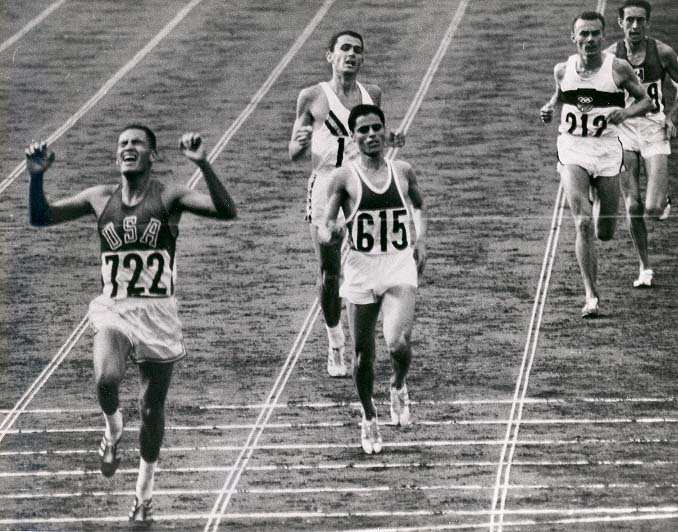
Some conceptions of equality of opportunity, particularly the substantive and level playing field variants, have been criticized on the basis that they make assumptions to the effect that people have similar genetic makeups. Other critics have suggested that social justice is more complex than mere equality of opportunity. Nozick made the point that what happens in society can not always be reduced to competition for a coveted position and in 1974 wrote that "life is not a race in which we all compete for a prize which someone has established", that there is "no unified race" and there is not someone person "judging swiftness".
References
References
- (2006). "Encyclopedia of multicultural psychology". Sage Publications.
- "Diversity, Inclusion, and Equal Opportunity in the Armed Services: Background and Issues for Congress". Cornell University Library.
- John W. Gardner. (1984). "Excellence: Can we be equal and excellent too?". Norton.
- (2015-12-16). "Gender Equality".
- Valentino Dardanoni, University of Palermo, Gary S. Fields, Cornell University, John E. Roemer, Yale University, Maria Laura Sánchez Puerta, The World Bank. (2006). "How Demanding Should Equality of Opportunity Be, and How Much Have We Achieved?". Cornell University – Digital Commons ILR.
- Crossman, Ashley. "Understanding Meritocracy From a Sociological Perspective".
- Ricardo Paes de Barros. Francisco H. G. Ferreira, Jose R. Molinas Vega, and Jaime Saavedra Chanduvi. (2009). "Measuring inequality of opportunity in Latin America and the Caribbean". Palgrave Macmillan and the World Bank.
- including lending,Swire, Peter P. "Equality of opportunity and investment in creditworthiness. (Symposium – Shaping American Communities: Segregation, Housing & the Urban Poor)". ''[[University of Pennsylvania Law Review]]''. University of Pennsylvania, Law School. 1995. [https://web.archive.org/web/20070125054610/http://www.highbeam.com/doc/1G1-17237458.html Highbeam Research article] September 12, 2012.
- Paul de Vries. (September 12, 2011). "equal opportunity". Blackwell Reference.
- Young, Michael. (1963). "The Rise of the Meritocracy". Penguin Books.
- Steven Greenhouse. (December 21, 2010). "E.E.O.C. Sues Kaplan Over Hiring". [[The New York Times]].
- (2008). "Equal Opportunity". International Encyclopedia of the Social Sciences.
- (1997). "Real life dictionary of the law: taking the mystery out of legal language". General Pub. Group.
- "equal opportunity". Merriam-Webster.
- (2010). "Encyclopedia of Political Theory". Sage Publications.
- The Montreal Gazette. (January 20, 1906). "Equal Opportunity". The New York Times.
- staff writers. (September 21, 2010). "Equality of opportunity committee". BBC.
- staff writers. (November 30, 2009). "The Royal College of Nursing has called for an increase in the number of specialist nurses working with HIV patients.". BBC News.
- (April 17, 2010). "Space mom wants equal opportunity for all". [[The Japan Times]].
- Robert Garcia. (August 18, 1989). "Bilingual Education Means Equal Opportunity (letter to the editor)". The New York Times.
- (June 20, 2009). "Brazil fashion week goes equal opportunity". The Daily Telegraph.
- Howard Klieman. (September 12, 2011). "Equal Time Rule: U.S. Broadcasting Regulatory Rule". Museum of Broadcast Communications.
- (March 5, 2002). "Army Promotion Process Is Held Unconstitutional by U.S. Judge". The New York Times.
- (September 14, 1993). "Illiterate Americans (opinion)". The New York Times.
- Celia W. Dugger. (February 29, 1992). "U.S. Study Says Asian-Americans Face Widespread Discrimination". The New York Times.
- Laura, Laubeová. (2000). "Encyclopedia of The World's Minorities". Fitzroy Dearborn Publishers.
- Barbara Bagihole, Equal Opportunities and Social Policy: Issues of gender, race and disability, (pp. 37–39, 183–84)London: Longman, 1997
- (2010). "Encyclopedia of Political Theory". Sage Publications.
- [https://www.lac.org.na/projects/grap/Pdf/unravellingt.pdf#page=94 Hubbard, Dianne. "Ideas about equality: Gender, sexuality and the law." Unravelling Taboos (2007): 86.]
- Ricardo Paes de Barros. Francisco H. G. Ferreira, Jose R. Molinas Vega, and Jaime Saavedra Chanduvi. (2009). "Measuring inequality of opportunity in Latin America and the Caribbean". Palgrave Macmillan and the World Bank.
- (1 August 2013). "Income Inequality, Equality of Opportunity, and Intergenerational Mobility". Journal of Economic Perspectives.
- (1985). "Learning to Live with the Dilemma of Difference: Bilingual and Special Education". Law and Contemporary Problems.
- Arneson, Richard. (2015). "Equality of Opportunity". Metaphysics Research Lab, Stanford University.
- (August 2024)
- Leonard K. Hirshberg. (December 30, 1917). "What 'Equal Opportunity to All' Really Means". The New York Times.
- (1980). "Free to choose: a personal statement". Harcourt.
- Akemi Nakamura. (March 31, 1999). "New equal opportunity law called a start". The Japan Times.
- Martin Fackler. (August 6, 2007). "Career Women In Japan Find A Blocked Path, Despite Equal Opportunity Law". The New York Times.
- Christiano, Thomas. (August 2024). "The Rule of the Many: Fundamental Issues in Democratic Theory". Westview Press.
- [http://ftp.iza.org/dp7155.pdf Inequality of Opportunity, Income Inequality and Economic Mobility: Some International Comparisons], Paolo Brunori, University of Bari, Francisco H. G. Ferreira, World Bank and IZA, Vito Peragine, University of Bari, Discussion Paper No. 7155, January 2013.
- (2020). "The European Court of Justice and the march towards substantive equality in European Union anti-discrimination law". International Journal of Discrimination and the Law.
- (2011). "Socialism And Social Democracy". Encyclopedia69.com.
- John Hills. (January 27, 2010). "Equality of opportunity remains a distant ideal". The Guardian.
- Paul Krugman. (January 10, 2011). "Economics and Morality". The New York Times.
- (September 8, 2011). "For Equality of Opportunity". [[The Times of India]].
- Rawls, John, 1999, A Theory of Justice, revised edition, Cambridge: Harvard University Press
- Rawls, John, 2001, Justice as Fairness: A Restatement, ed. by Erin Kelly, Cambridge, Harvard University Press.
- Roemer, John, 1998, Equality of Opportunity, Cambridge: Cambridge University Press.
- Dworkin, Ronald, 2000, ''Sovereign Virtue'', Cambridge: Harvard University Press, chapters 1–3.
- staff writer. (September 21, 2000). "Forgotten value". The Economist.
- Pogge, Thomas W., 2000, "Justice for People with Disabilities: the Semiconsequentialist Approach", in Leslie Pickering Francis and Anita Silvers. eds., ''Americans with Disabilities: Exploring Implications of the Law for Individuals and Institutions'', New York and London: Routledge, pp. 34–53.
- Buchanan, Allen, Brock, Dan W., Daniels, Norman, and Wikler, Daniel, 2000, ''From Chance to Choice – Genetics and Justice'', Cambridge: Cambridge University Press, chapters 3, 4 and 7.
- Richard Arneson. (August 29, 2008). "Equality of Opportunity".
- (March 24, 2011). "Exaggerated hopes for Mideast prosperity?". Al Jazeera.
- (January 7, 2002). "Are equal opportunity policies right for every profession?". BBC News.
- McKerlie, Dennis, 1989, "Equality and Time", ''Ethics'' 99, pp. 475–491
- McKerlie, Dennis, 1999, "Justice Between the Young and the Old", ''[[Philosophy & Public Affairs]]'' 30, pp. 152–17
- Temkin, Larry S., 1993, Inequality, New York and Oxford: Oxford University Press, chapter 8
- Molotch, Harvey. (1988). "The Rest Room and Equal Opportunity". Sociological Forum.
- Amelia Gentleman. (November 17, 2010). "Theresa May Scraps Legal Requirement to Reduce Inequality". The Guardian.
- Edward I. Koch. (February 20, 1989). "Equal Opportunity – Without Minority Set-Asides". The New York Times.
- Stamatopoulou, Elsa. (2007). "Cultural Rights in International Law: Article 27 of the Universal Declaration of Human Rights and Beyond". B)till.
- Garner, Ben. (2011). "Cultural and Ethical Turns: Interdisciplinary Reflections on Culture, Politics and Ethics". Inter-Disciplinary Press.
- (2002). "Cultural differences explaining the differences in results in GSS: Implications for the next decade". Decision Support Systems.
- Stiglitz, Joseph E. (2012). ''The Price of Inequality: How Today's Divided Society Endangers Our Future'' (pp. 18–19). Norton. Kindle Edition.
- "Measure of America - Human Development".
- Stiglitz, Joseph E. (2012). ''The Price of Inequality: How Today's Divided Society Endangers Our Future'' (p. 25). Norton. Kindle Edition.
- (2011). "1690 Equal Opportunity Specialist". Missouri State University.
- (2010). "Affirmative Action Program – IV. Utilization Analyses/Workforce Analyses". Colorado State University.
- Ben Schock. (December 4, 2007). "Study Finds Women Underrepresented In Some Fields". The Daily of the University of Washington.
- (UW) President's Advisory Committee on Women. (2007). "Term Definitions". University of Washington.
- (December 21, 2004). "General: Guidelines to Policy Implementation". Aberystwyth university.
- Marcia Killien. (2007). "PACW's 2007 Report on Women at UW – Executive Summary". University of Washington.
- staff writer; Stefano Allesina (researcher). (August 3, 2011). "Italian academia is a family business, statistical analysis reveals". The University of Chicago Medical Center.
- Anne Phillips. (2004). "Defending Equality of Outcome". Journal of Political Philosophy.
- Susie O'Brien. (March 8, 2011). "Equal opportunity still a way off because 'men don't get it'". The Daily Telegraph.
- (November 9, 1992). "Equal Opportunity War".
- (December 4, 2011). "Some Asians' college strategy: Don't check 'Asian'". USA Today.
- Kara Miller. (February 8, 2010). "Do colleges redline Asian-Americans?". Boston Globe.
- Don Raiff. (May 18, 2011). "Roundup: Average pay comparisons misleading". USA Today.
- Ross Douthat. (April 10, 2011). "Budgeting for Opportunity". The New York Times.
- Claudia H. Deutsch. (January 4, 1987). "The Ax Falls On Equal Opportunity". The New York Times.
- (March 2016). "Economic Opportunity, Health Behaviors, and Mortality in the United States". American Journal of Public Health.
- (5 November 2019). "Equality of opportunity is linked to lower mortality in Europe". Journal of Epidemiology and Community Health.
- (September 12, 2011). "The Executive Order 11246". United States Department of Labor.
- [http://www.genome.gov/Pages/PolicyEthics/GeneticDiscrimination/SAPonHR493.pdf Statement of Administration policy], Executive Office of the President, Office of Management and Budget, April 27, 2007
- Peter Bregg. (February 3, 1967). "Equality First: The Royal Commission on the Status of Women". CBC Digital Archives.
- Timothy Chui. (June 18, 2010). "EOC: Discrimination cases warrant special tribunal". China Daily.
- (January 18, 1920). "Women's Work Limited By-Law; Equal Opportunity League Fighting Legislation Which Restricts Their Hours of Labor A Case In Point.". The New York Times.
- "Sustainable Development Goal 5: Gender equality".
- "Goal 10 targets".
- (2012). "The American Heritage dictionary.". Dell.
- Lawrence Summers. (July 15, 2012). "Focus on equality of opportunity, not outcomes". Reuters.
- (April 20, 2012). "Inequality and mobility: Against equality of opportunity". The Economist.
- Daniel Knowles. (May 21, 2012). "'Equality of opportunity is a buzzword designed to get around talking about inequality of income". The Guardian.
- Paul Krugman. (January 11, 2011). "More Thoughts on Equality of Opportunity". The New York Times.
- Matt Cavanagh. (2002). "Against equality of opportunity". Oxford.
- [http://www.spectator.co.uk/books/19930/part_2/more-like-a-beauty-contest.thtml Against Equality of Opportunity. Matt Cavanagh. Review by The Spectator] {{webarchive. link. (May 4, 2011)
- Timothy Noah. (October 10, 2000). "Dinesh D'Souza vs. 'Equality of Opportunity'".
- Robert Nozick. (1974). "Anarchy, State, and Utopia". Basic Books.
- Robert Nozick. (1974). "Anarchy, State, and Utopia". Basic Books.
This article was imported from Wikipedia and is available under the Creative Commons Attribution-ShareAlike 4.0 License. Content has been adapted to SurfDoc format. Original contributors can be found on the article history page.
Ask Mako anything about Equal opportunity — get instant answers, deeper analysis, and related topics.
Research with MakoFree with your Surf account
Create a free account to save articles, ask Mako questions, and organize your research.
Sign up freeThis content may have been generated or modified by AI. CloudSurf Software LLC is not responsible for the accuracy, completeness, or reliability of AI-generated content. Always verify important information from primary sources.
Report