From Surf Wiki (app.surf) — the open knowledge base
Epic poetry
Lengthy poem dealing with supernatural forces
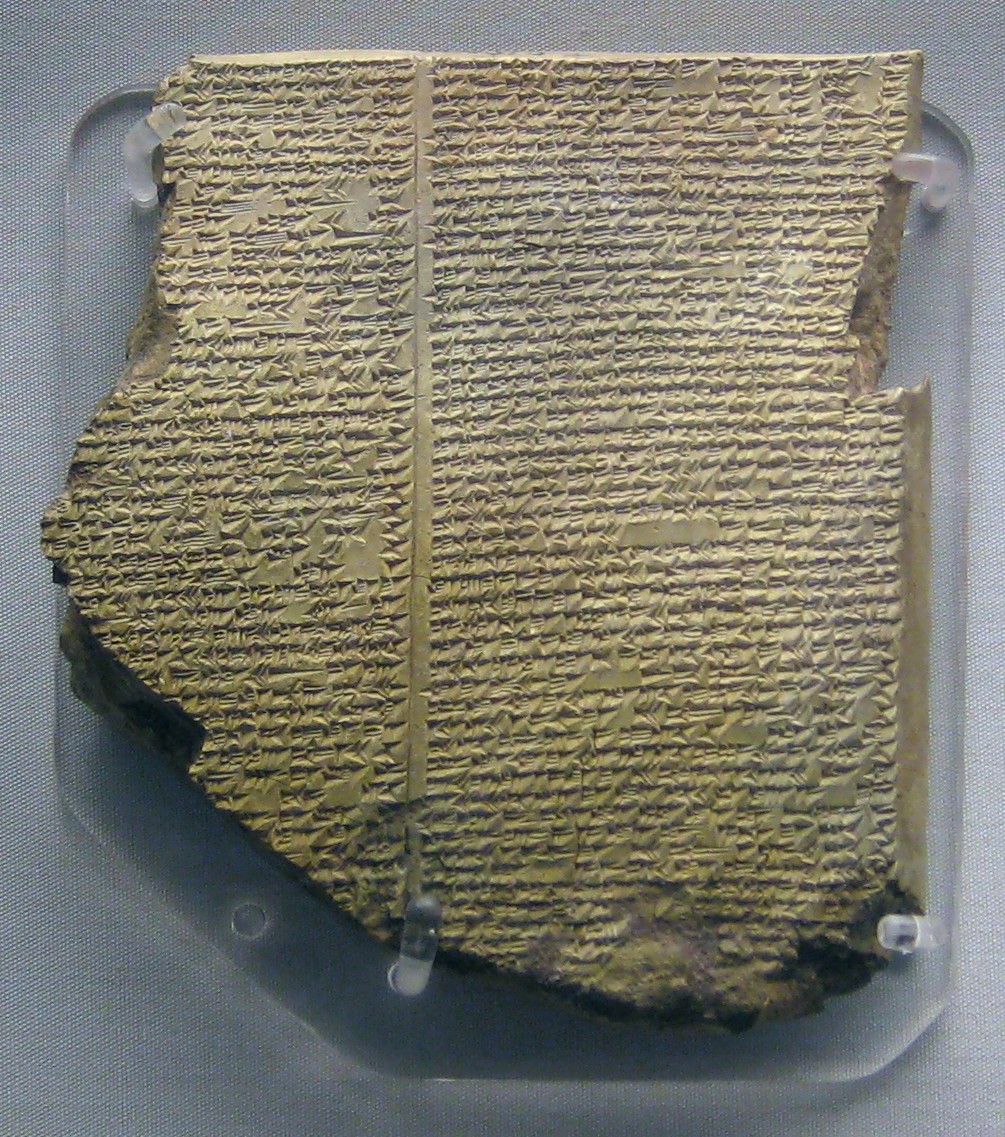
Lengthy poem dealing with supernatural forces

In poetry, an epic is a lengthy narrative poem typically about the extraordinary deeds of extraordinary characters who, in dealings with gods or other superhuman forces, gave shape to the mortal universe for their descendants. With regard to oral tradition, epic poems consist of formal speech and are usually learnt word for word, contrasted with narratives that consist of everyday speech, categorised into 'factual' or fiction, the former of which is less susceptible to variation.
Influential epics that have shaped Western literature and culture include Homer's Iliad and Odyssey; Virgil's Aeneid; and the anonymous Beowulf. The genre has inspired the adjective epic as well as derivative works in other mediums (such as epic films) that evoke or emulate the characteristics of epics.
Etymology
The English word epic comes from Latin epicus, which itself comes from the Ancient Greek adjective epikos (ἐπικός), from epos (ἔπος), 'word, story, poem'.{{cite dictionary
In Ancient Greek, 'epic' could refer to all poetry in dactylic hexameter (), which included not only Homer but also the wisdom poetry of Hesiod, the utterances of the Delphic oracle, and the strange theological verses attributed to Orpheus. Later tradition, however, has restricted the term 'epic' to heroic epic, as described in this article.
Overview

Originating before the invention of writing, primary epics, such as those of Homer, were composed by bards who used complex rhetorical and metrical schemes by which they could memorize the epic as received in tradition and add to the epic in their performances. Later writers like Virgil, Apollonius of Rhodes, Dante, Camões, and Milton adopted and adapted Homer's style and subject matter, but used devices available only to those who write.
The oldest epic recognized is the Epic of Gilgamesh (), which was recorded in ancient Sumer during the Neo-Sumerian Empire. The poem details the exploits of Gilgamesh, the king of Uruk. Although recognized as a historical figure, Gilgamesh, as represented in the epic, is a largely legendary or mythical figure.{{cite book |editor1-last=Lawall |editor1-first=Sarah N. |editor2-last=Mack |editor2-first=Maynard
The longest written epic from antiquity is the ancient Indian Mahabharata (–3rd century AD), which consists of 100,000 ślokas or over 200,000 verse lines (each shloka is a couplet), as well as long prose passages, so that at ~1.8 million words it is roughly twice the length of Shahnameh, four times the length of the Rāmāyaṇa, and roughly ten times the length of the Iliad and the Odyssey combined.{{cite book |url-access=registration
Famous examples of epic poetry include the Sumerian Epic of Gilgamesh, the ancient Indian Mahabharata and Rāmāyaṇa in Sanskrit and Silappatikaram and Manimekalai in Tamil, the Persian Shahnameh, the Ancient Greek Odyssey and Iliad, Virgil's Aeneid, the Old English Beowulf, Dante's Divine Comedy, the Finnish Kalevala, the German Nibelungenlied, the French Song of Roland, the Spanish Cantar de mio Cid, the Portuguese Os Lusíadas, the Armenian Daredevils of Sassoun, the Old Russian The Tale of Igor's Campaign, John Milton's Paradise Lost, The Secret History of the Mongols, the Kyrgyz Manas, and the Malian Sundiata. Epic poems of the modern era include Derek Walcott's Omeros, Mircea Cărtărescu's The Levant and Adam Mickiewicz's Pan Tadeusz. Paterson by William Carlos Williams, published in five volumes from 1946 to 1958, was inspired in part by another modern epic, The Cantos by Ezra Pound.{{cite news |access-date=2020-10-12
Oral epics
The first epics were products of preliterate societies and oral history poetic traditions. Oral tradition was used alongside written scriptures to communicate and facilitate the spread of culture.{{cite book |url-access=registration In these traditions, poetry is transmitted to the audience and from performer to performer by purely oral means. Early 20th-century study of living oral epic traditions in the Balkans by Milman Parry and Albert Lord demonstrated the paratactic model used for composing these poems. What they demonstrated was that oral epics tend to be constructed in short episodes, each of equal status, interest and importance. This facilitates memorization, as the poet is recalling each episode in turn and using the completed episodes to recreate the entire epic as he performs it. Parry and Lord also contend that the most likely source for written texts of the epics of Homer was dictation from an oral performance.
Milman Parry and Albert Lord have argued that the Homeric epics, the earliest works of Western literature, were fundamentally an oral poetic form. These works form the basis of the epic genre in Western literature. Nearly all of Western epic (including Virgil's Aeneid and Dante's Divine Comedy) self-consciously presents itself as a continuation of the tradition begun by these poems.
Composition and conventions
In his work Poetics, Aristotle defines an epic as one of the forms of poetry, contrasted with lyric poetry and drama (in the form of tragedy and comedy).
Harmon & Holman (1999) define an epic: ;Epic: A long narrative poem in elevated style presenting characters of high position in adventures forming an organic whole through their relation to a central heroic figure and through their development of episodes important to the history of a nation or race.|author=Harmon & Holman (1999)}}
Harmon and Holman delineate ten main characteristics of an epic:{{cite book
- Begins in medias res ("in the thick of things").
- The setting is vast, covering many nations, the world or the universe.
- Begins with an invocation to a muse (epic invocation).
- Begins with a statement of the theme.
- Includes the use of epithets.
- Contains long lists, called an epic catalogue.
- Features long and formal speeches.
- Shows divine intervention in human affairs.
- Features heroes that embody the values of the civilization.
- Often features the tragic hero's descent into the underworld or hell.
The hero generally participates in a cyclical journey or quest, faces adversaries that try to defeat them in their journey, and returns home significantly transformed by their journey. The epic hero illustrates traits, performs deeds, and exemplifies certain morals that are valued by the society the epic originates from. Many epic heroes are recurring characters in the legends of their native cultures.
Conventions of the Indian Epic
In the Indian mahākāvya epic genre, more emphasis was laid on description than on narration. Indeed, the traditional characteristics of a mahākāvya are listed as:{{efn| itihāsa-kath-ôdbhūtam, itarad vā sad-āśrayam, ,
, ,
, ;
, ,
|trans-title = The Mirror of Poetry It springs from a historical incident or is otherwise based on some fact;
it turns upon the fruition of the fourfold ends and its hero is clever and noble;
By descriptions of cities, oceans, mountains, seasons and risings of the moon or the sun;
through sportings in garden or water, and festivities of drinking and love;
Through sentiments-of-love-in-separation and through marriages,
by descriptions of the birth-and-rise of princes,
and likewise through state-counsel, embassy, advance, battle, and the hero's triumph;
Embellished; not too condensed, and pervaded all through with poetic sentiments and emotions;
with cantos none too lengthy and having agreeable metres and well-formed joints,
And in each case furnished with an ending in a different metre –
such a poem possessing good figures-of-speech wins the people's heart and endures longer than even a kalpa.{{cite book |title-link=Kāvyādarśa |translator-first=S.K. |translator-last=Belvalkar
- It must take its subject matter from the epics (Ramayana or Mahabharata), or from history,
- It must help further the four goals of man (purusharthas),
- It must contain descriptions of cities, seas, mountains, moonrise and sunrise, and accounts of merrymaking in gardens, of bathing parties, drinking bouts, and love-making.
- It should tell the sorrow of separated lovers and should describe a wedding and the birth of a son.
- It should describe a king's council, an embassy, the marching forth of an army, a battle, and the victory of a hero.{{cite book |chapter-url=https://books.google.com/books?id=AjEdCVZ5uoQC&pg=PA34
Themes
Classical epic poetry recounts a journey, either physical (as typified by Odysseus in the Odyssey) or mental (as typified by Achilles in the Iliad) or both. Epics also tend to highlight cultural norms and to define or call into question cultural values, particularly as they pertain to heroism.
Conventions
Proem
In the proem or preface, the poet may begin by invoking a Muse or similar divinity. The poet prays to the Muses to provide them with divine inspiration to tell the story of a great hero.{{cite journal
Example opening lines with invocations: | | | | | Sing Heav'nly Muse, that on the secret top of Oreb, or of Sinai, didst inspire|author=Paradise Lost 1.6–7}} An alternative or complementary form of proem, found in Virgil and his imitators, opens with the performative verb "I sing". Examples: | | This Virgilian epic convention is referenced in Walt Whitman's poem title / opening line "I sing the body electric".{{cite book
Compare the first six lines of the Kalevala:
Mastered by desire impulsive, By a mighty inward urging, I am ready now for singing, Ready to begin the chanting Of our nation's ancient folk-song Handed down from by-gone ages.
These conventions are largely restricted to European classical culture and its imitators. The Epic of Gilgamesh, for example, or the Bhagavata Purana do not contain such elements, nor do early medieval Western epics that are not strongly shaped by the classical traditions, such as the Chanson de Roland or the Poem of the Cid.
In medias res
Narrative opens "in the middle of things", with the hero at his lowest point. Usually flashbacks show earlier portions of the story. For example, the Iliad does not tell the entire story of the Trojan War, starting with the judgment of Paris, but instead opens abruptly on the rage of Achilles and its immediate causes. So, too, Orlando Furioso is not a complete biography of Roland, but picks up from the plot of Orlando Innamorato, which in turn presupposes a knowledge of the romance and oral traditions.
Enumeratio
Epic catalogues and genealogies are given, called enumeratio. These long lists of objects, places, and people place the finite action of the epic within a broader, universal context, such as the catalog of ships. Often, the poet is also paying homage to the ancestors of audience members. Examples:
- In The Faerie Queene, the list of trees I.i.8–9.
- In Paradise Lost, the list of demons in Book I.{{cite journal
- In the Aeneid, the list of enemies the Trojans find in Etruria (Central Italy) in Book VII. Also, the list of ships in Book X.{{cite book |archive-date=10 May 2017 |access-date=4 March 2021 |archive-url=https://web.archive.org/web/20170510071910/http://www.oupress.com/ECommerce/Book/Detail/909/Reading%20Vergil%20s%20Aeneid |url-status=dead
- In the Iliad,{{cite journal
Stylistic features
In the Homeric and post-Homeric tradition, epic style is typically achieved through the use of the following stylistic features:
- Heavy use of repetition or stock phrases: e.g., Homer's "rosy-fingered dawn" and "wine-dark sea".
- Epic similes
Form
Many verse forms have been used in epic poems through the ages, but each language's literature typically gravitates to one form, or at least to a very limited set.
Ancient Sumerian epic poems did not use any kind of poetic meter and lines did not have consistent lengths;{{cite book instead, Sumerian poems derived their rhythm solely through constant repetition and parallelism, with subtle variations between lines. Indo-European epic poetry, by contrast, usually places strong emphasis on the importance of line consistency and poetic meter. Ancient Greek epics were composed in dactylic hexameter.{{cite encyclopedia Very early Latin epicists, such Livius Andronicus and Gnaeus Naevius, used Saturnian meter. By the time of Ennius, however, Latin poets had adopted dactylic hexameter.
Dactylic hexameter has been adapted by a few anglophone poets such as Longfellow in "Evangeline", whose first line is as follows:
This is the | forest pri | meval. The | murmuring | pines and the | hemlocks
Old English, German and Norse poems were written in alliterative verse,{{cite encyclopedia usually without rhyme. The alliterative form can be seen in the Old English "Finnsburg Fragment" (alliterated sounds are in bold):
Ac onwacnigeað nū, wīgend mīne ealra ǣrest eorðbūendra, |But awake now, my warriors, of all first the men While the above classical and Germanic forms would be considered stichic, Italian, Spanish and Portuguese long poems favored stanzaic forms, usually written in terza rima{{cite encyclopedia or especially ottava rima.{{cite encyclopedia Terza rima is a rhyming verse stanza form that consists of an interlocking three-line rhyme scheme. An example is found in the first lines of the Divine Comedy by Dante, who originated the form:
mi ritrovai per una selva oscura (B) ché la diritta via era smarrita. (A)
Ahi quanto a dir qual era è cosa dura (B) esta selva selvaggia e aspra e forte (C) che nel pensier rinnova la paura! (B)
In ottava rima, each stanza consists of three alternate rhymes and one double rhyme, following the ABABABCC rhyme scheme. Example: Che 'l gran sepolcro liberò di Cristo. Molto egli oprò col senno e con la mano; Molto soffrì nel glorioso acquisto: E invan l'Inferno a lui s'oppose; e invano s'armò d'Asia e di Libia il popol misto: Chè 'l Ciel gli diè favore, e sotto ai santi Segni ridusse i suoi compagni erranti.}} | The sacred armies, and the godly knight, That the great sepulchre of Christ did free, I sing; much wrought his valor and foresight, And in that glorious war much suffered he; In vain 'gainst him did Hell oppose her might, In vain the Turks and Morians armèd be: His soldiers wild, to brawls and mutines prest, Reducèd he to peace, so Heaven him blest.
From the 14th century English epic poems were written in heroic couplets,{{cite encyclopedia and rhyme royal,{{cite encyclopedia though in the 16th century the Spenserian stanza{{cite encyclopedia and blank verse{{cite encyclopedia were also introduced. The French alexandrine is currently the heroic line in French literature, though in earlier literature – such as the chanson de geste – the decasyllable grouped in laisses took precedence. In Polish literature, couplets of Polish alexandrines (syllabic lines of 7+6 syllables) prevail.{{cite book In Russian, iambic tetrameter verse is the most popular.{{cite book In Serbian poetry, the decasyllable is the only form employed.{{cite book |orig-date=1915 |date=2012-10-06
Balto-Finnic (e.g. Estonian, Finnish, Karelian) folk poetry uses a form of trochaic tetrameter that has been called the Kalevala meter. The Finnish and Estonian national epics, Kalevala and Kalevipoeg, are both written in this meter. The meter is thought to have originated during the Proto-Finnic period.{{cite book | editor1-first=Matti |editor1-last=Kuusi |editor1-link=Matti Kuusi | editor2-first=Keith |editor2-last=Bosley |editor2-link=Keith Bosley | editor3-first=Michael |editor3-last=Branch | url-access = registration
In Indic epics such as the Ramayana and Mahabharata, the shloka form is used.
Footnotes
References
Bibliography
- {{cite book | editor-last=Cavallo | editor-first=Jo Ann
- {{cite book
- {{cite periodical
- {{cite book
- {{cite book
- {{cite book |chapter-url=https://books.google.com/books?id=PZsOAAAAQAAJ
- {{cite book
- {{cite book
- {{cite book |url-access=registration
References
- Michael Meyer. (2005). "The Bedford Introduction to Literature". St. Martin's Press.
- Vansina, Jan. (1985). "Oral tradition as history".
- "Epic".
- {{Cite OED. epic
- link. (25 December 2022 .)
- ''Aristotle: Poetics'', translated with an introduction and notes by Malcolm Heath, (Penguin) London 1996.
- Kisak, Paul F.. (19 May 2016). "Epic Literature: " The Grand & Heroic Genre of Literature "". CreateSpace Publishing.
- "The Finnsburg Fragment", line 10
- "The Finnsburg Fragment", line 32
- "Siri Epic as performed by Gopala Naika".
- "The Three Twins: The Telling of a South Indian Folk Epic, by Brenda E. F. Beck {{!}} The Online Books Page".
- Connelly, Bridget. (1986). "Arab folk epic and identity". Berkeley : University of California Press.
- Honko, Lauri. (2002). "The Kalevala and the World's Traditional Epics". Finnish Literature Society.
- "Oral epics in India {{!}} WorldCat.org".
- "Japanese Singers of Tales: Ten Centuries of Performed Narrative".
- Barber, Karin. (2007). "The Anthropology of Texts, Persons and Publics". Cambridge University Press.
- Repinecz, Jonathon. ''Subversive traditions: Reinventing the West African Epic''. Michigan State University Press, 2019.
- p. ix, Camara, Sirifo. ''The Epic of Kelefaa Saane.'' Indiana University Press, 2010.
- "Memory Making in Folk Epics of China: The Intimate and the Local in Chinese Regional Culture By Anne E. McLaren".
- (May 2011). "The Columbia Anthology of Chinese Folk and Popular Literature". Columbia University Press.
This article was imported from Wikipedia and is available under the Creative Commons Attribution-ShareAlike 4.0 License. Content has been adapted to SurfDoc format. Original contributors can be found on the article history page.
Ask Mako anything about Epic poetry — get instant answers, deeper analysis, and related topics.
Research with MakoFree with your Surf account
Create a free account to save articles, ask Mako questions, and organize your research.
Sign up freeThis content may have been generated or modified by AI. CloudSurf Software LLC is not responsible for the accuracy, completeness, or reliability of AI-generated content. Always verify important information from primary sources.
Report