From Surf Wiki (app.surf) — the open knowledge base
Entisol
Type of soil

Type of soil
| Field | Value |
|---|---|
| name | Entisol |
| image | Entisol profile.jpg |
| image_size | 200px |
| image_caption | Entisol profile showing little or no evidence of pedogenic horizon development |
| classification_system | USDA soil taxonomy |

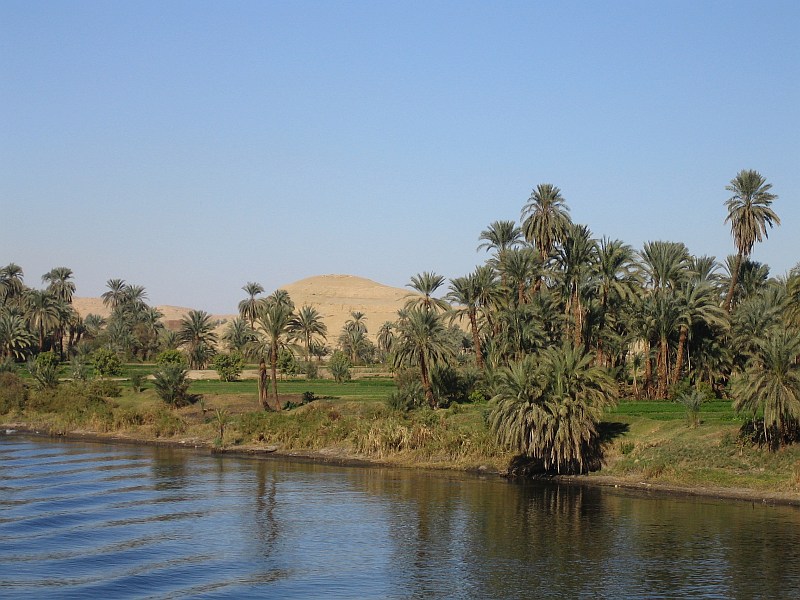
Entisols are soils, as defined under USDA soil taxonomy, that do not show any profile development other than an A-horizon (or “A” horizon). Entisols have no diagnostic horizons, and are unaltered from their parent material, which could be unconsolidated sediment, or rock. Entisols are the most common soils, occupying about 16% of the global ice-free land area.
Because of the diversity of their properties, suborders of entisols form individual Reference Soil Groups in the World Reference Base for Soil Resources (WRB): psamments correlate with arenosols, and fluvents with fluvisols. Many orthents belong to regosols or leptosols. Most wassents and aquic subgroups of other suborders belong to the gleysols.
In Australia, most entisols are known as rudosols or tenosols.
Causes of delayed or absent development
- Unweatherable parent materials – sand, iron oxide, aluminium oxide, kaolinite clay.
- Erosion – common on shoulder slopes; other kinds also important.
- Deposition – continuous, repeated deposition of new parent materials by flood as diluvium, aeolian processes which means by wind, slope processes as colluvium, mudflows, other means.
- Flooding or saturation.
- Cold climate – must not be sufficiently cold in winter for permafrost.
- Dry climate.
- Shallow to bedrock – may be rock resistant to weathering, such as quartzite or ironstone.
- Toxic parent materials – serpentine soil, mine spoils, sulfidic clays.
Suborders
- Aquents – heavily saturated or soaked soils, mostly present at riparian locations (such as river banks, tidal mudflats, estuaries, etc). Here, consistent saturation limits development.
- Fluvents – alluvial soils, where development is prevented by repeated deposition of sediment during periodic flooding events; present in valleys or river deltas, especially those with high sediment load.
- Orthents – shallow or "skeletal" soils; found at sites of recent erosion events, or very old landforms completely devoid of weatherable minerals.
- Psamments – Entisols that are sandy (through all layers), and in which development is precluded by the impossibility of weathering the sand; formed from shifting or glacial sand dunes.
- Wassents – Entisols that have a positive water potential at the soil surface for more than 21 hours of each day, in all years.
Paleopedology
Most fossil soils, before the development of terrestrial vegetation in the Silurian, are entisols that show no distinct soil horizons. Entisols are common in the paleopedological record ever since the Silurian; however, unlike other soil orders (oxisol, ultisol, gelisol, etc) they do not have value as indicators of climate. Orthents may sometimes indicate an extremely ancient landscape with minimal soil formation (i.e., Australia today).
References
References
- IUSS Working Group WRB. (2015). "World Reference Base for Soil Resources 2014, Update 2015". World Soil Resources Reports 106, FAO, Rome.
This article was imported from Wikipedia and is available under the Creative Commons Attribution-ShareAlike 4.0 License. Content has been adapted to SurfDoc format. Original contributors can be found on the article history page.
Ask Mako anything about Entisol — get instant answers, deeper analysis, and related topics.
Research with MakoFree with your Surf account
Create a free account to save articles, ask Mako questions, and organize your research.
Sign up freeThis content may have been generated or modified by AI. CloudSurf Software LLC is not responsible for the accuracy, completeness, or reliability of AI-generated content. Always verify important information from primary sources.
Report