From Surf Wiki (app.surf) — the open knowledge base
Enneahedron
Polyhedron with 9 faces
Polyhedron with 9 faces
In geometry, an enneahedron (or nonahedron) is a polyhedron with nine faces. There are 2606 types of convex enneahedra, each having a different pattern of vertex, edge, and face connections. None of them are regular.
Examples
File:Octagonal pyramid1.png | Octagonal pyramid: a pyramid with eight isosceles triangular faces around a regular octagonal base. File:Prism 7.png | Heptagonal prism: a prismatic uniform polyhedron with two regular heptagon faces and seven square faces. File:Elongated square pyramid.png | Elongated square pyramid: a Johnson solid with four equilateral triangles and five squares. It is obtained by attaching an equilateral square pyramid to the face of a cube. File:Elongated triangular dipyramid.png | Elongated triangular bipyramid: a Johnson solid with six equilateral triangles and three squares. Obtained by attaching two regular tetrahedra onto the face of a triangular prism's bases. File:Dual triangular cupola.png | Dual of triangular cupola File:Dual gyroelongated square pyramid.png | Dual of gyroelongated square pyramid File:Cell of the dual snub 24-cell (transparent).svg | The vertex figure of a dual snub 24-cell with six isosceles triangles and three kites as its faces. File:Diminished square trapezohedron.png | Square diminished trapezohedron File:Associahedron.gif | The dual of a triaugmented triangular prism, realized with three non-adjacent squares and six irregular pentagonal faces. It is an order-5 associahedron K_5 , a polyhedron whose vertices represent the 14 triangulations of a regular hexagon. File:Herschel enneahedron animated.gif | The Herschel enneahedron. All of the faces are quadrilaterals. It is the simplest polyhedron without a Hamiltonian cycle, the only convex enneahedron in which all faces have the same number of edges, and one of only three bipartite convex enneahedra. File:Isospectral enneahedra.svg|The two smallest possible isospectral polyhedral graphs, enneahedra with eight vertices each.
Space-filling enneahedra
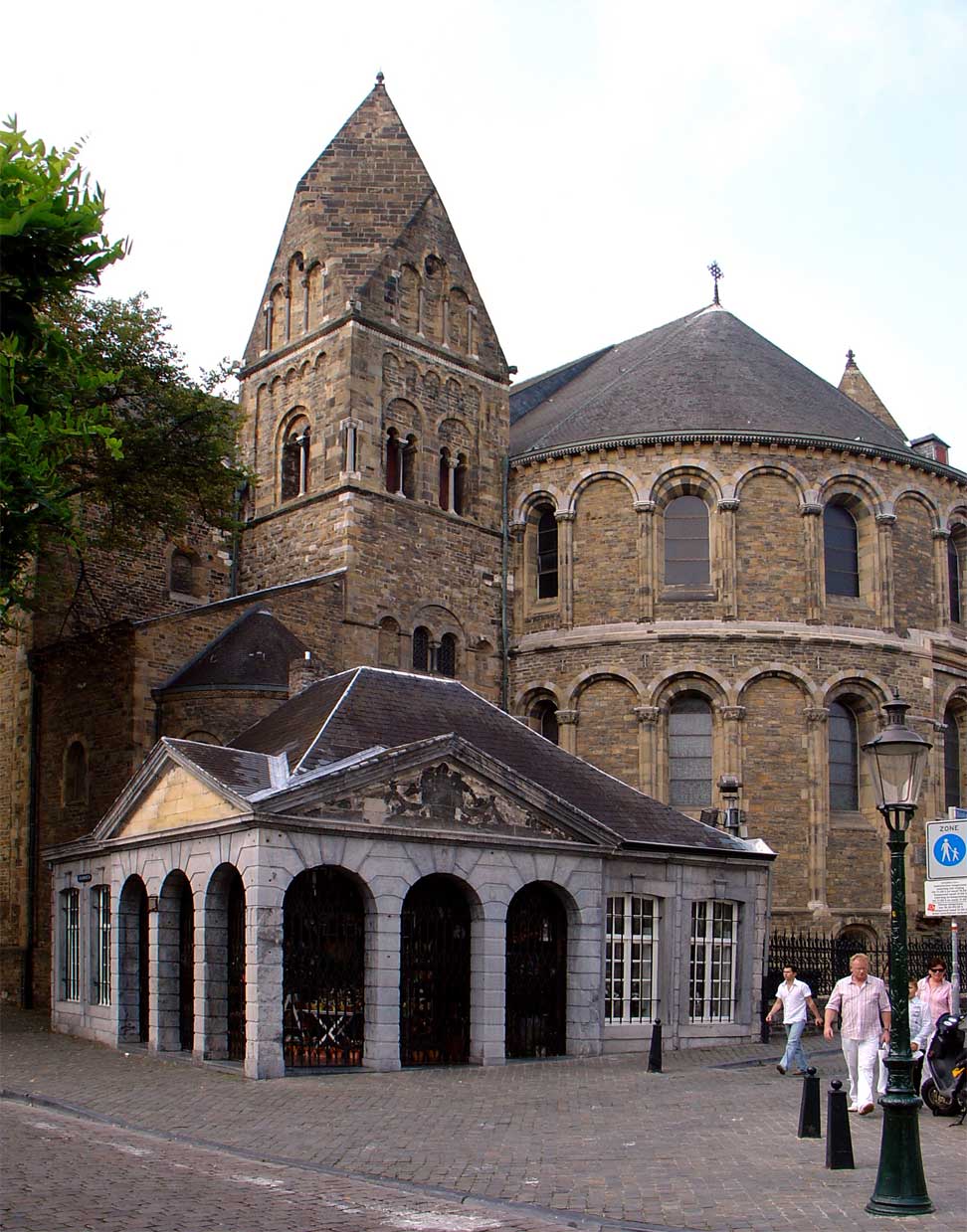
Slicing a rhombic dodecahedron in half through the long diagonals of four of its faces results in a self-dual enneahedron, the square diminished trapezohedron, with one large square face, four rhombus faces, and four isosceles triangle faces. Like the rhombic dodecahedron itself, this shape can be used to tessellate three-dimensional space. An elongated form of this shape that still tiles space can be seen atop the rear side towers of the 12th-century Romanesque Basilica of Our Lady (Maastricht). The towers themselves, with their four pentagonal sides, four roof facets, and square base, form another space-filling enneahedron.
More generally, found at least 40 topologically distinct space-filling enneahedra.
Topologically distinct enneahedra
There are 2606 topologically distinct convex enneahedra, excluding mirror images. These can be divided into subsets of 8, 74, 296, 633, 768, 558, 219, 50, with 7 to 14 vertices, respectively. A table of these numbers, together with a detailed description of the nine-vertex enneahedra, was first published in the 1870s by Thomas Kirkman.
References
| editor1-last = Torrence | editor1-first = Eve | editor1-link = Eve Torrence | editor2-last = Torrence | editor2-first = Bruce | editor3-last = Séquin | editor3-first = Carlo | editor3-link = Carlo H. Séquin | editor4-last = Fenyvesi | editor4-first = Kristóf | contribution-url = https://archive.bridgesmathart.org/2018/bridges2018-131.html
By the handshaking lemma, a face-regular polyhedron with an odd number of faces must have faces with an even number of edges, which for convex polyhedra can only be quadrilaterals. An enumeration of the dual graphs of quadrilateral-faced polyhedra is given by {{citation
| editor1-last = Miller | editor1-first = Ezra | editor2-last = Reiner | editor2-first = Victor | editor3-last = Sturmfels | editor3-first = Bernd
References
- Steven Dutch: [http://www.uwgb.edu/dutchs/symmetry/POLYHOWM.HTM How Many Polyhedra are There?] {{Webarchive. link. (2010-06-07)
- Critchlow, Keith. (1970). "Order in space: a design source book". Viking Press.
- [http://www.numericana.com/data/polycount.htm Counting polyhedra]
- Goldberg, Michael. (1982). "On the space-filling enneahedra". Geometriae Dedicata.
- (1970). "Hamiltonian circuits on 3-polytopes". [[Journal of Combinatorial Theory]].
This article was imported from Wikipedia and is available under the Creative Commons Attribution-ShareAlike 4.0 License. Content has been adapted to SurfDoc format. Original contributors can be found on the article history page.
Ask Mako anything about Enneahedron — get instant answers, deeper analysis, and related topics.
Research with MakoFree with your Surf account
Create a free account to save articles, ask Mako questions, and organize your research.
Sign up freeThis content may have been generated or modified by AI. CloudSurf Software LLC is not responsible for the accuracy, completeness, or reliability of AI-generated content. Always verify important information from primary sources.
Report