From Surf Wiki (app.surf) — the open knowledge base
England cricket team
Men's national cricket team
Men's national cricket team
| Field | Value | ||
|---|---|---|---|
| name | England | ||
| image | [[File:England cricket team logo.svg | 125px | class=skin-invert]] |
| association | England and Wales Cricket Board | ||
| test_captain | Ben Stokes | ||
| od_captain | Harry Brook | ||
| t20i_captain | Harry Brook | ||
| coach | Brendon McCullum | ||
| test_status_year | 1877 | ||
| icc_status | Full Membership | ||
| icc_member_year | 1909 | ||
| icc_region | Europe | ||
| test_rank | 3rd | ||
| odi_rank | 8th | ||
| t20i_rank | 3rd | ||
| test_rank_best | 1st (1 June 1955) | ||
| odi_rank_best | 1st (1 January 1981) | ||
| t20i_rank_best | 1st (24 October 2011) | ||
| first_test | v. at the Melbourne Cricket Ground, Melbourne; 15–19 March 1877 | ||
| most_recent_test | v. at Sydney Cricket Ground, Sydney; 4–8 January 2026 | ||
| num_tests | 1,094 | ||
| num_tests_this_year | 1 | ||
| test_record | 404/334 | ||
| (356 draws) | |||
| test_record_this_year | 0/1 | ||
| (0 draws) | |||
| wtc_apps | 3 | ||
| wtc_first | 2021 | ||
| wtc_best | Fourth place (2021, 2023) | ||
| first_odi | v. at the Melbourne Cricket Ground, Melbourne; 5 January 1971 | ||
| most_recent_odi | v. at R. Premadasa Stadium, Colombo; 27 January 2026 | ||
| num_odis | 823 | ||
| num_odis_this_year | 3 | ||
| odi_record | 409/374 | ||
| (9 ties, 31 no results) | |||
| odi_record_this_year | 2/1 | ||
| (0 ties, 0 no results) | |||
| wc_apps | 13 | ||
| wc_first | 1975 | ||
| wc_best | Champions (2019) | ||
| first_t20i | v. at the Ageas Bowl, Southampton; 13 June 2005 | ||
| most_recent_t20i | v. at Pallekele International Cricket Stadium, Kandy; 30 January 2026 | ||
| num_t20is | 215 | ||
| num_t20is_this_year | 1 | ||
| t20i_record | 113/90 | ||
| (2 ties, 10 no results) | |||
| t20i_record_this_year | 1/0 | ||
| (0 ties, 0 no results) | |||
| wt20_apps | 8 | ||
| wt20_first | 2007 | ||
| wt20_best | Champions (2010, 2022) | ||
| h_pattern_b | _whitecollar buttons | ||
| h_leftarm | FFFFF0 | ||
| h_body | FFFFF0 | ||
| h_rightarm | FFFFF0 | ||
| h_pants | FFFFF0 | ||
| a_pattern_la | _eng_odi25 | ||
| a_pattern_b | _eng_odi25 | ||
| a_pattern_ra | _eng_odi25 | ||
| a_leftarm | 00137F | ||
| a_body | 00137F | ||
| a_rightarm | 00137F | ||
| a_pants | 001B39 | ||
| t_pattern_b | _eng_t20i25 | ||
| t_leftarm | C90F14 | ||
| t_body | C90F14 | ||
| t_rightarm | C90F14 | ||
| t_pants | 001B39 | ||
| asofdate | 30 January 2026 |
(356 draws) (0 draws)
(9 ties, 31 no results) (0 ties, 0 no results)
(2 ties, 10 no results) (0 ties, 0 no results)
The England men's cricket team represents England and Wales in international cricket. Since 1997, it has been governed by the England and Wales Cricket Board (ECB), having been previously governed by Marylebone Cricket Club (the MCC) since 1903. England and Wales, as founding nations, are a Full Member of the International Cricket Council (ICC) with Test, One Day International (ODI) and Twenty20 International (T20I) status. Until the 1990s, Scottish and Irish players also played for England as those countries were not yet ICC members in their own right.
England and Australia were the first teams to play a Test match (15–19 March 1877), and along with South Africa, these nations formed the Imperial Cricket Conference (the predecessor to today's International Cricket Council) on 15 June 1909. England and Australia also played the first ODI on 5 January 1971. England's first T20I was played on 13 June 2005, once more against Australia.
, England have played 1,094 Test matches, winning 404 and losing 334 (with 356 draws). In the Test series against Australia, England play for The Ashes, one of the most famous trophies in all of sport, and they have won the urn on 32 occasions. England have also played 823 ODIs, winning 409. They have appeared in the final of the Cricket World Cup four times (1979, 1987, 1992), winning their first in 2019; they have also finished as runners-up in two ICC Champions Trophies (2004 and 2013). England have played 215 T20Is, winning 113. They won the ICC T20 World Cup in 2010 and 2022, and were runners-up in 2016.
, England are ranked third in Tests, eighth in ODIs and third in T20Is by the ICC.
History
Main article: History of the England cricket team to 1939, History of the England cricket team from 1945
The first recorded incidence of a team with a claim to represent England comes from 9 July 1739 when an "All-England" team, which consisted of 11 gentlemen from any part of England exclusive of Kent, played against "the Unconquerable County" of Kent and lost by a margin of "very few notches". Such matches were repeated on numerous occasions for the best part of a century.
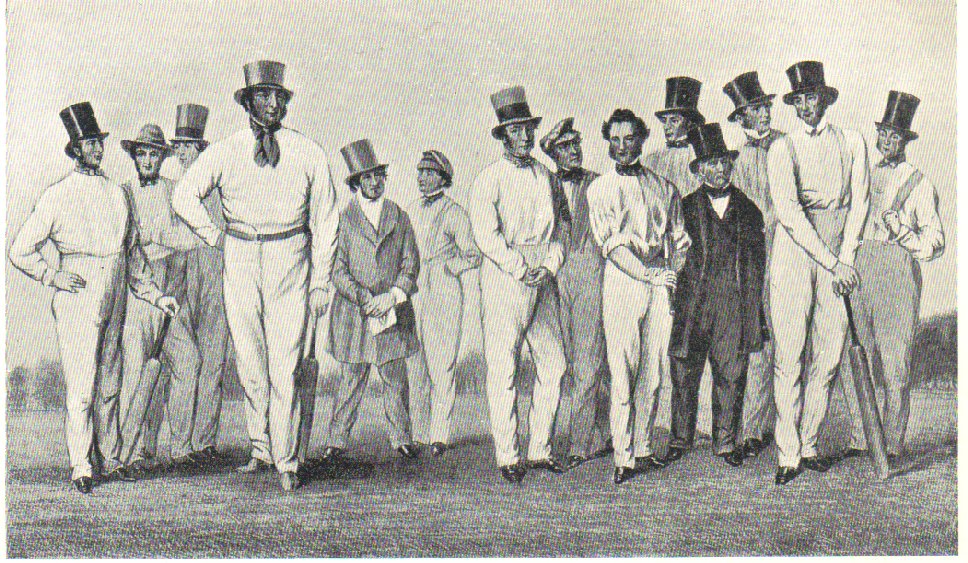
In 1846 William Clarke formed the All-England Eleven. This team eventually competed against a United All-England Eleven with annual matches occurring between 1847 and 1856. These matches were arguably the most important contest of the English season if judged by the quality of the players.
Early tours

The first overseas tour occurred in September 1859 with England touring North America. This team had six players from the All-England Eleven, six from the United All-England Eleven and was captained by George Parr.
With the outbreak of the American Civil War, attention turned elsewhere. English tourists visited Australia in 1861–62 with this first tour organised as a commercial venture by Messrs Spiers and Pond, restaurateurs of Melbourne. Most matches played during tours prior to 1877 were "against odds", with the opposing team fielding more than 11 players to make for a more even contest. This first Australian tour was mostly against odds of at least 18/11.

The tour was so successful that Parr led a second tour in 1863–64. James Lillywhite led a subsequent England team which sailed on the P&O steamship Poonah on 21 September 1876. They played a combined Australian XI, for once on even terms of 11-a-side. The match, starting on 15 March 1877 at the Melbourne Cricket Ground came to be regarded as the inaugural Test match. The combined Australian XI won this Test match by 45 runs with Charles Bannerman of Australia scoring the first Test century. At the time, the match was promoted as James Lillywhite's XI v Combined Victoria and New South Wales. The teams played a return match on the same ground at Easter, 1877, when Lillywhite's team avenged their loss with a victory by four wickets. The first Test match on English soil occurred in 1880 with England victorious; this was the first time England fielded a fully representative side with W. G. Grace included in the team.
1880s

England lost their first home series 1–0 in 1882, with The Sporting Times printing an obituary on English cricket:
OF
ENGLISH CRICKET,
WHICH DIED AT THE OVAL
ON
29th AUGUST, 1882,
Deeply lamented by a large circle of sorrowing friends and acquaintances.
R. I. P.
N.B.—The body will be cremated and the ashes taken to Australia.}}
As a result of this loss, the tour of 1882–83 was dubbed by England captain Ivo Bligh as "the quest to regain the ashes". England, with a mixture of amateurs and professionals, won the series 2–1. Bligh was presented with an urn that contained some ashes, which have variously been said to be of a bail, ball or even a woman's veil, and so The Ashes was born. A fourth match was then played which Australia won by four wickets. However, the match was not considered part of the Ashes series. England dominated many of these early contests, with England winning the Ashes series 10 times between 1884 and 1898. During this period England also played their first Test match against South Africa in 1889 at Port Elizabeth.
1890s
England won the 1890 Ashes series 2–0, with the third match of the series being the first Test match to be abandoned. England lost 2–1 in the 1891–92 series, although England regained the urn the following year. England again won the 1894–95 series, winning 3–2 under the leadership of Andrew Stoddart. In 1895–96, England played South Africa, winning all Tests in the series. The 1899 Ashes series was the first tour where the MCC and the counties appointed a selection committee. There were three active players: Grace, Lord Hawke and Warwickshire captain Herbert Bainbridge. Prior to this, England teams for home Tests had been chosen by the club on whose ground the match was to be played. England lost the 1899 Ashes series 1–0, with Grace making his final Test appearance in the first match of the series.
1900s

The start of the 20th century saw mixed results for England as they lost four of the eight Ashes series between 1900 and 1914. During this period, England lost their first series against South Africa in the 1905–06 season 4–1 as their batting faltered.
England lost their first series of the new century to Australia in 1901–02 Ashes. Australia also won the 1902 series, which was memorable for exciting cricket, including Gilbert Jessop scoring a Test century in just 70 minutes. England regained the Ashes in 1904 under the captaincy of Pelham Warner. R. E. Foster scored 287 on his debut and Wilfred Rhodes took 15 wickets in a match. In 1905–06, England lost 4–1 against South Africa. England avenged the defeat in 1907, when they won the series 1–0 under the captaincy of Foster. However, they lost the 1909 Ashes series against Australia, using 25 players in the process. England also lost to South Africa, with Jack Hobbs scoring his first of 15 centuries on the tour.
1910s
England toured Australia in 1911–12 and beat their opponents 4–1. The team included the likes of Rhodes, Hobbs, Frank Woolley and Sydney Barnes. England lost the first match of the series but bounced back and won the next four Tests. This proved to be the last Ashes series before the war.
The 1912 season saw England take part in a unique experiment. A nine-Test triangular tournament involving England, South Africa and Australia was set up. The series was hampered by a very wet summer and player disputes however and the tournament was considered a failure with the Daily Telegraph stating:
With Australia sending a weakened team and the South African bowlers being ineffective England dominated the tournament winning four of their six matches. The match between Australia and South Africa at Lord's was visited by King George V, the first time a reigning monarch had watched Test cricket. England went on one more tour before the outbreak of the First World War, beating South Africa 4–0, with Barnes taking 49 wickets in the series.
1920s
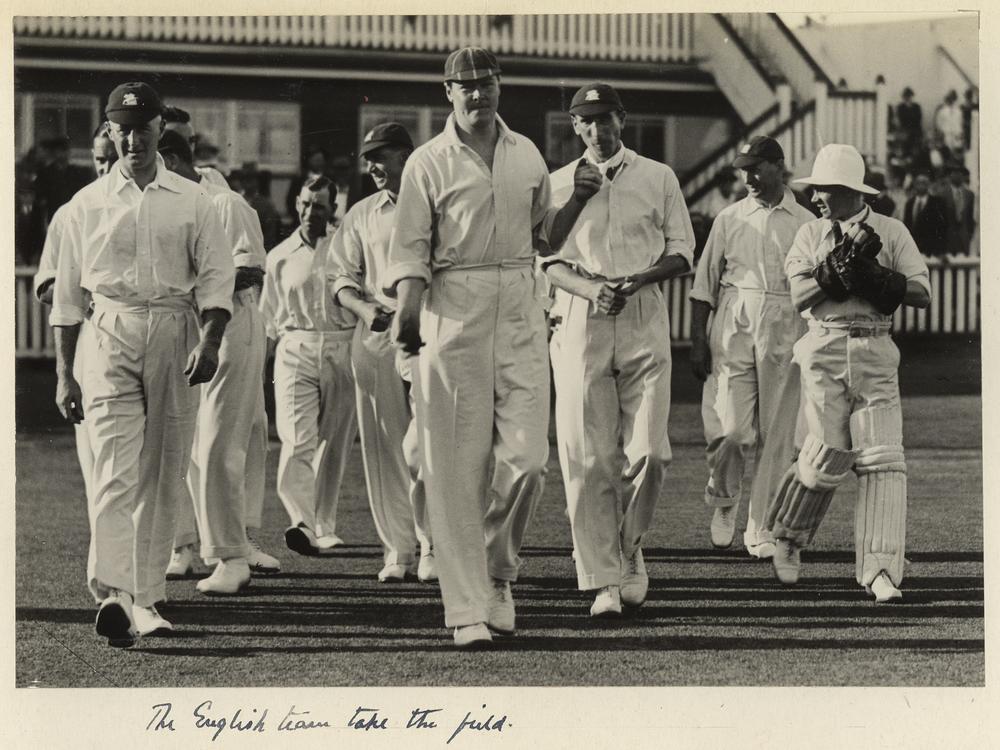
England's first match after the war was in the 1920–21 season against Australia. Still feeling the effects of the war England went down to a series of crushing defeats and suffered their first whitewash losing the series 5–0. Six Australians scored hundreds while Mailey spun out 36 English batsmen. Things were no better in the next few Ashes series losing the 1921 Ashes series 3–0 and the 1924–25 Ashes 4–1. England's fortunes were to change in 1926 as they regained the Ashes and were a formidable team during this period dispatching Australia 4–1 in the 1928–29 Ashes tour.
In the same year the West Indies became the fourth nation to be granted Test status and played their first game against England. England won each of these three Tests by an innings, and a view was expressed in the press that their elevation had proved a mistake although Learie Constantine did the double on the tour. In the 1929–30 season England went on two concurrent tours with one team going to New Zealand (who were granted Test status earlier that year) and the other to the West Indies. Despite sending two separate teams England won against New Zealand 1–0 and drawn with the West Indies 1–1.
1930s

The 1930 Ashes series saw a young Don Bradman dominate the tour, scoring 974 runs in his seven Test innings. He scored 254 at Lord's, 334 at Headingley and 232 at The Oval. Australia regained the Ashes winning the series 2–1. As a result of Bradman's prolific run-scoring the England captain Douglas Jardine chose to develop the already existing leg theory into fast leg theory, or bodyline, as a tactic to stop Bradman. Fast leg theory involved bowling fast balls directly at the batsman's body. The batsman would need to defend himself, and if he touched the ball with the bat, he risked being caught by one of a large number of fielders placed on the leg side.
Using Jardine's fast leg theory, England won the next Ashes series 4–1, but complaints about the Bodyline tactic caused crowd disruption on the tour, and threats of diplomatic action from the Australian Cricket Board, which during the tour sent the following cable to the MCC in London:
Later, Jardine was removed from the captaincy and the Laws of Cricket changed so that no more than one fast ball aimed at the body was permitted per over, and having more than two fielders behind square leg was banned.
England's following tour of India in the 1933–34 season was the first Test match to be staged in the subcontinent. The series was also notable for Stan Nichols and Nobby Clark bowling so many bouncers that the Indian batsman wore solar toupées instead of caps to protect themselves. Australia won the 1934 Ashes series 2–1 and kept the urn for the following 19 years.
England drew the 1938 Ashes, meaning Australia retained the urn. England went into the final match of the series at The Oval 1–0 down, but won the final game by an innings and 579 runs. Len Hutton made the highest ever Test score by an Englishman, making 364 in England first innings to help them reach 903, their highest ever score against Australia.
The 1938–39 tour of South Africa saw another experiment with the deciding Test being a timeless Test that was played to a finish. England lead 1–0 going into the final timeless match at Durban. Despite the final Test being 'timeless', the game ended in a draw after 10 days as England had to catch the train to catch the boat home. A record 1,981 runs were scored, and the concept of timeless Tests was abandoned. England hosted the West Indies in 1939 before the Second World War, although a team for an MCC tour of India was selected more in hope than expectation of the matches being played.
1940s
Test cricket resumed after the war in 1946, and England won their first match back against India. However, they struggled in the 1946–47 Ashes series, losing 3–0 in Australia under Wally Hammond's captaincy. England beat South Africa 3–0 in 1947 with Denis Compton scoring 1,187 runs in the series.
The 1947–48 series against the West Indies was another disappointment for England, with the side losing 2–0 following injuries to several key players. England suffered further humiliation against Bradman's invincible side in the 1948 Ashes series. Hutton was controversially dropped for the third Test, and England were bowled out for just 52 at The Oval. The series proved to be Bradman's final Ashes series.
In 1948–49, England beat South Africa 2–0 under the captaincy of George Mann. The series included a record breaking stand of 359 between Hutton and Cyril Washbrook. The decade ended with England drawing the Test series against New Zealand, with every match ending in a draw.
1950s
On 29 June 1950 England lost to the West Indies for the first time, with this being followed by a 3–1 series loss when they lost at The Oval on 16 August 1950.

Their fortunes against Australia changed on the 1953 Ashes tour as they won the series 1–0. England did not lose a series between their 1950–51 and 1958–59 tours of Australia and secured famous victory in 1954–55 under the captaincy of Len Hutton, thanks to Frank Tyson whose 6/85 at Sydney and 7/27 at Melbourne are remembered as the fastest bowling ever seen in Australia. The 1956 series was remembered for the bowling of Jim Laker who took 46 wickets at an average of 9.62, including figures of 19/90 at Old Trafford. After drawing to South Africa, England defeated the West Indies and New Zealand comfortably.
The England team then left for Australia in the 1958–59 season with a team that had been hailed as the strongest ever to leave on an Ashes tour but lost the series 4–0 as Richie Benaud's revitalised Australians were too strong, with England struggling with the bat throughout the series.
On 24 August 1959, England inflicted its only 5–0 whitewash over India. All out for 194 at The Oval, India lost the last test by an innings. England's batsman Ken Barrington and Colin Cowdrey both had an excellent series with the bat, with Barrington scoring 357 runs across the series and Cowdrey scoring 344.
1960s
The early and middle 1960s were poor periods for English cricket. Despite England's strength on paper, Australia held the Ashes and the West Indies dominated England in the early part of the decade. May stood down as captain in 1961 following the 1961 Ashes defeat.
Ted Dexter succeeded him as captain but England continued to suffer indifferent results. In 1961–62, they beat Pakistan, but also lost to India. The following year saw England and Australia tie the 1962–63 Ashes series 1–1, meaning Australia retained the urn. Despite beating New Zealand 3–0, England went on to lose to the West Indies, and again failed in the 1964 Ashes, losing the home series 1–0, which marked the end of Dexter's captaincy.
However, from 1968 to 1971 they played 27 consecutive Test matches without defeat, winning 9 and drawing 18 (including the abandoned Test at Melbourne in 1970–71). The sequence began when they drew with Australia at Lord's in the Second Test of the 1968 Ashes series and ended in 1971 when India won the Third Test at The Oval by four wickets. They played 13 Tests with only one defeat immediately beforehand and so played a total of 40 consecutive Tests with only one defeat, dating from their innings victory over the West Indies at The Oval in 1966. During this period they beat New Zealand, India, the West Indies, and Pakistan, and under Ray Illingworth's leadership, regained The Ashes from Australia in 1970–71.
1970s

The 1970s, for the England team, can be largely split into three parts. Early in the decade, Illingworth's side dominated world cricket, winning the Ashes away in 1971 and then retaining them at home in 1972. The same side beat Pakistan at home in 1971 and played by far the better cricket against India that season. However, England were largely helped by the rain to sneak the Pakistan series 1–0 but the same rain saved India twice and one England collapse saw them lose to India. This was, however, one of (if not the) strongest England team ever with the likes of Illingworth, Geoffrey Boycott, John Edrich, Basil D'Oliveira, Dennis Amiss, Alan Knott, John Snow and Derek Underwood at its core.
The mid-1970s were more turbulent. Illingworth and several others had refused to tour India in 1972–73 which led to a clamour for Illingworth's job by the end of that summer – England had just been beaten 2–0 by a flamboyant West Indies side – with several England players well over 35. Mike Denness was the surprising choice but only lasted 18 months; his results against poor opposition were good, but England were badly exposed as ageing and lacking in good fast bowling against the 1974–75 Australians, losing that series 4–1 to lose the Ashes.
Denness was replaced in 1975 by Tony Greig. While he managed to avoid losing to Australia, his side were largely thrashed the following year by the young and very much upcoming West Indies for whom Greig's infamous "grovel" remark acted as motivation. Greig's finest hour as England's captain was the 1976–77 win over India in India. When Greig was discovered as being instrumental in World Series Cricket, he was sacked, and replaced by Mike Brearley.
Brearley's side showed again the hyperbole that is often spoken when one side dominates in cricket. While his side of 1977–80 contained some young players who went on to become England greats, most notably future captains Ian Botham, David Gower and Graham Gooch, their opponents were often very much weakened by the absence of their World Series players, especially in 1978, when England drew New Zealand 1–1 and Pakistan 2–0 before thrashing what was effectively Australia's 2nd XI 5–1 in 1978–79.
1980s
.jpg)
The England team, with Brearley's exit in 1980, was never truly settled throughout the 1980s, which will probably be remembered as a low point for the team. While some of the great players like Botham, Gooch and Gower had fine careers, the team seldom succeeded in beating good opposition throughout the decade and did not score a home Test victory (except against minnows Sri Lanka) between September 1985 and July 1990.
Botham took over the captaincy in 1980 and they put up a good fight against the West Indies, losing a five match Test series 1–0, although England were humbled in the return series. After scoring a pair in the first Test against Australia, Botham lost the captaincy due to his poor form, and was replaced by Brearley. Botham returned to form and played exceptionally in the remainder of the series, being named man of the match in the third, fourth and fifth Tests. The series became known as Botham's Ashes as England recorded a 3–1 victory.
Keith Fletcher took over as captain in 1981, but England lost his first series in charge against India. Bob Willis took over as captain in 1982 and enjoyed victories over India and Pakistan, but lost the Ashes after Australia clinched the series 2–1. England hosted the World Cup in 1983 and reached the semi-finals, but their Test form remained poor, as they suffered defeats against New Zealand, Pakistan and the West Indies.
Gower took over as skipper in 1984 and led the team to a 2–1 victory over India. They went on to win the 1985 Ashes 3–1, although after this came a poor run of form. Defeat to the West Indies dented the team's confidence, and they went on to lose to India 2–0. In 1986, Micky Stewart was appointed the first full-time England coach. England beat New Zealand, but there was little hope of them retaining the Ashes in 1986–87. However, despite being described as a team that 'can't bat, can't bowl and can't field', they went on to win the series 2–1.
After losing consecutive series against Pakistan, England drew a three match Test series against New Zealand 0–0. They reached the final of the 1987 World Cup, but lost by seven runs against Australia. After losing 4–0 to the West Indies, England lost the Ashes to a resurgent Australia led by Allan Border. With the likes of Gatting banned following a rebel tour to South Africa, a new look England side suffered defeat again against the West Indies, although this time by a margin of 2–1.
1990s
If the 1980s were a low point for English Test cricket, then the 1990s were only a slight improvement. The arrival of Gooch as captain in 1990 forced a move toward more professionalism and especially fitness though it took some time for old habits to die. Creditable performances against India and New Zealand in 1990 were followed by a hard-fought draw against the 1991 West Indies and a strong performance in the 1992 Cricket World Cup in which the England team finished as runners-up for the second consecutive World Cup, but landmark losses against Australia in 1990–91 and especially Pakistan in 1992 showed England up badly in terms of bowling. So bad was England's bowling in 1993 that Rod Marsh described England's pace attack at one point as "pie throwers". Having lost three of the first four Tests played in England in 1993, Gooch resigned to be replaced by Michael Atherton.1992 also saw Scotland sever ties with the England and Wales team, and begin to compete as the Scotland national team.
More selectorial problems abounded during Atherton's reign as new chairman of selectors and coach Ray Illingworth (then into his 60s) assumed almost sole responsibility for the team off the field. The youth policy which had seen England emerge from the West Indies tour of 1993–94 with some credit (though losing to a seasoned Windies team) was abandoned and players such as Gatting and Gooch were persisted with when well into their 30s and 40s. England continued to do well at home against weaker opponents such as India, New Zealand and a West Indies side beginning to fade but struggled badly against improving sides like Pakistan and South Africa. Atherton had offered his resignation after losing the 1997 Ashes series 3–2 having been 1–0 up after two matches – eventually to resign one series later in early 1998. England, looking for talent, went through a whole raft of new players during this period, such as Ronnie Irani, Adam Hollioake, Craig White, Graeme Hick and Mark Ramprakash. Alec Stewart took the reins as captain in 1998, but another losing Ashes series and early World Cup exit cost him Test and ODI captaincy in 1999. This should not detract from the 1998 home Test series where England showed great fortitude to beat a powerful South African side 2–1.
Another reason for their poor performances were the demands of County Cricket teams on their players, meaning that England could rarely field a full-strength team on their tours. This eventually led to the ECB taking over from the MCC as the governing body of England and the implementation of central contracts. By 1999, with coach David Lloyd resigning after the World Cup exit and new captain Nasser Hussain just appointed, England hit rock bottom (literally ranked as the lowest-rated Test nation) after losing 2–1 to New Zealand in shambolic fashion. Hussain was booed on the Oval balcony as the crowd jeered "We've got the worst team in the world" to the tune of "He's Got the Whole World in His Hands".
2000s

Central contracts were installed – reducing players workloads – and following the arrival of Zimbabwean coach Duncan Fletcher, England thrashed the fallen West Indies 3–1. England's results in Asia improved that winter with series wins against both Pakistan and Sri Lanka. Hussain's side had a far harder edge to it, avoiding the anticipated "Greenwash" in the 2001 Ashes series against the all-powerful Australian team. The nucleus the side was slowly coming together as players such as Hussain himself, Graham Thorpe, Darren Gough and Ashley Giles began to be regularly selected. By 2003 though, having endured another Ashes drubbing as well as another first-round exit from the World Cup, Hussain resigned as captain after one Test against South Africa.
Michael Vaughan took over, with players encouraged to express themselves. England won five consecutive Test series prior to facing Australia in the 2005 Ashes series, taking the team to second place in the ICC Test Championship table. During this period England defeated the West Indies home and away, New Zealand, and Bangladesh at home, and South Africa in South Africa. In June 2005, England played its first ever T20 international match, defeating Australia by 100 runs. Later that year, England defeated Australia 2–1 in a thrilling series to regain the Ashes for the first time in 16 years, having lost them in 1989. Following the 2005 Ashes win, the team suffered from a spate of serious injuries to key players such as Vaughan, Giles, Andrew Flintoff and Simon Jones. As a result, the team underwent an enforced period of transition. A 2–0 defeat in Pakistan was followed by two drawn away series with India and Sri Lanka.
In the home Test series victory against Pakistan in July and August 2006, several promising new players emerged. Most notable were the left-arm orthodox spin bowler Monty Panesar, the first Sikh to play Test cricket for England, and left-handed opening batsman Alastair Cook. The 2006–07 Ashes series was keenly anticipated and was expected to provide a level of competition comparable to the 2005 series. In the event, England, captained by Flintoff who was deputising for the injured Vaughan, lost all five Tests to concede the first Ashes whitewash in 86 years.
In the 2007 Cricket World Cup, England lost to most of the Test playing nations they faced, beating only the West Indies and Bangladesh, although they also avoided defeat by any of the non-Test playing nations. Even so, the unimpressive nature of most of their victories in the tournament, combined with heavy defeats by New Zealand, Australia and South Africa, left many commentators criticising the manner in which the England team approached the one-day game. Coach Duncan Fletcher resigned after eight years in the job as a result and was succeeded by former Sussex coach Peter Moores.

In 2007–08, England toured Sri Lanka and New Zealand, losing the first series 1–0 and winning the second 2–1. These series were followed up at home in May 2008 with a 2–0 home series win against New Zealand, with the results easing pressure on Moores – who was not at ease with his team, particularly star batsman Kevin Pietersen. Pietersen succeeded Vaughan as captain in June 2008, after England had been well beaten by South Africa at home. The poor relationship between the two came to a head on the 2008–09 tour to India. England lost the series 1–0 and both men resigned their positions, although Pietersen remained a member of the England team. Moores was replaced as coach by Zimbabwean Andy Flower. Against this background, England toured the West Indies under the captaincy of Andrew Strauss and, in a disappointing performance, lost the Test series 1–0.
The 2009 Ashes series featured the first Test match played in Wales, at Sophia Gardens, Cardiff. England drew the match thanks to a last-wicket stand by bowlers James Anderson and Panesar. A victory for each team followed before the series was decided at The Oval. Thanks to fine bowling by Stuart Broad and Graeme Swann and a debut century by Jonathan Trott, England regained the Ashes.{{cite web|url=https://www.theguardian.com/sport/2009/aug/23/england-win-ashes-oval-test-australia|title= Paradise regained as England capture the Ashes once more|work=The Guardian|date=23 August 2009|last1=Selvey|first1=Mike}}
2010s
After a drawn Test series in South Africa, England won their first ever ICC event, the 2010 World Twenty20, with a seven-wicket win over Australia in Barbados. The following winter in the 2010–11 Ashes, they beat Australia 3–1 to retain the urn and record their first series win in Australia for 24 years. Furthermore, all three of their wins were by an innings – the first time a touring side had ever recorded three innings victories in a single Test series, Alastair Cook earning Man of the Series with 766 runs.

England struggled to match their Test form in the 2011 Cricket World Cup. Despite beating South Africa and tying with eventual winners India, England suffered shock losses to Ireland and Bangladesh before losing in the quarter-finals to Sri Lanka. However the team's excellent form in the Test match arena continued and on 13 August 2011, they became the world's top-ranked Test team after comfortably whitewashing India 4–0, their sixth consecutive series victory and eighth in the past nine series. However, this status only lasted a year – having lost 3–0 to Pakistan over the winter, England were beaten 2–0 by South Africa, who replaced them at the top of the rankings. It was their first home series loss since 2008, against the same opposition. This loss saw the resignation of Strauss as captain and his retirement from cricket.
Cook, who was already in charge of the ODI side, replaced Strauss and led England to a 2–1 victory in India – their first in the country since 1984–85. In doing so, he became the first captain to score centuries in his first five Tests as captain and became England's leading century-maker with 23 centuries to his name. After finishing as runners-up in the ICC Champions Trophy, England faced Australia in back-to-back Ashes series. A 3–0 home win secured England the urn for the fourth time in five series. However, in the return series, they found themselves utterly demolished in a 5–0 defeat, their second Ashes whitewash in under a decade. Their misery was compounded by batsman Jonathan Trott leaving the tour early due to a stress-related illness and the mid-series retirement of spinner Graeme Swann. Following the tour, head coach Flower resigned his post while Pietersen was dropped indefinitely from the England team. Flower was replaced by his predecessor, Moores, but he was sacked for a second time after a string of disappointing results including failing to advance from the group stage at the 2015 World Cup.


England entered the 2019 Cricket World Cup as favourites, having been ranked the number one ODI side by the ICC for over a year prior to the tournament. However, shock defeats to Pakistan and Sri Lanka during the group stage left them on the brink of elimination and needing to win their final two games against India and New Zealand to guarantee progression to the semi-finals. This was achieved, putting their campaign back on track, and an eight-wicket victory over Australia in the semi-final at Edgbaston meant England were in their first World Cup final since 1992. The final against New Zealand at Lord's has been described as one of the greatest and most dramatic matches in the history of cricket, with some calling it the "greatest ODI in history", as both the match and subsequent Super Over were tied, after England went into the final over of their innings 14 runs behind New Zealand's total. England won by virtue of having scored more boundaries throughout the match, securing their maiden World Cup title in their fourth final appearance.
That summer's Ashes was the last series with Bayliss as coach and the series was full of moments including the emergence of Rory Burns and Jofra Archer, but it was Stokes's virtuosic effort in the third Test at Headingley which entered cricketing folklore: with only one wicket remaining and 76 more runs still to win, Stokes hit an unbeaten 135 to keep the series alive. England eventually drew the series 2–2.
2020s

Under new coach Chris Silverwood, England began the new decade well when they beat South Africa 3–1 away from home in early 2020, the first time that the England cricket team had won three Tests on a tour to South Africa since 1913–14. The impact of the COVID-19 pandemic was immediately felt when England were withdrawn from their tour of Sri Lanka whilst being on the field, England were able to fulfil all of their fixture obligations during this time, but the summer of 2021 would be marred by COVID interruptions: England were forced to select a second-choice XI for the ODI series against Pakistan due to a COVID-19 outbreak, and the deciding test of the 2021 Pataudi Trophy was postponed for 12 months due to a COVID-19 outbreak in the Indian camp.
After being beaten in the semi finals of the 2021 ICC Men's T20 World Cup, the 2021–22 Ashes series could not have started worse for England when Rory Burns was bowled by Mitchell Starc on the first ball of the series. Four heavy defeats led to Silverwood's resignation as coach and Ashley Giles's resignation as director of cricket. England then toured the West Indies and dropped several senior players, including Burns and Dawid Malan but also their leading fast bowlers, James Anderson and Stuart Broad. That decision backfired when England could not bowl out the West Indies in the first two tests and following a loss in the deciding test, Root resigned as captain after winning just one test in his last 17.
2022 saw a period of transition in both Test and white-ball sides; under a new management structure of Rob Key as director of cricket, England hired Ben Stokes as captain and Brendon McCullum as coach of the Test side and their attacking play became known as Bazball, winning 11 of their first 13 tests, beating New Zealand, India, South Africa, Pakistan, and Ireland. The white-ball side hired Matthew Mott as coach and set the highest total in List A cricket when they scored 498–4 against The Netherlands in June. Jos Buttler succeeded Eoin Morgan as white-ball captain and won the 2022 ICC Men's T20 World Cup, becoming the first team to hold both the 50-over and 20-over trophies concurrently. The following year saw England draw the 2023 Ashes series and crash out of the 2023 Cricket World Cup in the group stage.
Recent results
| Test | One Day International | Twenty20 International | Test | One Day International | Twenty20 International | Last match won | Last match lost | Last series won | Last series lost |
|---|---|---|---|---|---|---|---|---|---|
| 3rd Test v India 2025 | 3rd ODI v South Africa 2025 | 2nd T20I v South Africa 2025 | 4th Test v Australia 2025 | 2nd ODI v West Indies 2024 | 2nd T20I v New Zealand 2025 | ||||
| 5th Test v India 2025 | 2nd ODI v South Africa 2025 | 1st T20I v South Africa 2025 | 3rd Test v Australia 2025 | 3rd ODI v New Zealand 2025 | 5th T20I v India 2025 | ||||
| Sri Lanka 2024 | West Indies 2025 | West Indies 2025 | New Zealand 2024–25 | Bangladesh 2022–23 | New Zealand 2025–26 | ||||
| New Zealand 2021 | South Africa 2025 | South Africa 2022 | Pakistan 2024–25 | New Zealand 2025–26 | India 2024–25 | ||||
| Source: ESPNcricinfo.com. Last updated: 4 August 2025. | Source: ESPNcricinfo.com. Last updated: 7 September 2025. | Source: ESPNcricinfo.com. Last updated: 14 September 2025. | Source: ESPNcricinfo.com. Last updated: 29 December 2025. | Source: ESPNcricinfo.com. Last updated: 4 December 2025. | Source: ESPNcricinfo.com. Last updated: 31 October 2025. |
Forthcoming fixtures
As set out by the ICC's Future Tours Programme, below is England's international fixture list until the Spring of 2026.
Winter 2025–26
- January to February : English cricket team in Sri Lanka in 2025–26 for three ODIs and three T20Is
- February to March : 2026 Men's T20 World Cup
Summer 2026
- June : New Zealand cricket team in England in 2026 for three Tests
- July : Indian cricket team in England in 2026 for three ODIs and five T20Is
- August to September : Pakistani cricket team in England in 2026 for three Tests
- September : Sri Lankan cricket team in England in 2026 for three ODIs and three T20Is
Governing body
Main article: England and Wales Cricket Board
The England and Wales Cricket Board (ECB) is the governing body of English and Welsh cricket and the England cricket team. The Board has been operating since 1 January 1997 and represents England on the International Cricket Council. The ECB is also responsible for the generation of income from the sale of tickets, sponsorship and broadcasting rights, primarily in relation to the England team. The ECB's income in the 2006 calendar year was £77 million.
Prior to 1997, the Test and County Cricket Board (TCCB) was the governing body for the English team. Apart from in Test matches, when touring abroad, the England team officially played as MCC up to and including the 1976–77 tour of Australia, reflecting the time when MCC had been responsible for selecting the touring party. The last time the England touring team wore the bacon-and-egg colours of the MCC was on the 1996–97 tour of New Zealand.
Status of Wales
Historically, the England team represented the whole of Great Britain in international cricket, with Scottish or Welsh national teams playing sporadically and players from both countries occasionally representing England. Scotland became an independent member of the ICC in 1994, having severed links with the TCCB two years earlier.
Criticism has been made of the England and Wales Cricket Board using only the England name while utilising Welsh players such as Simon and Geraint Jones. With Welsh players pursuing international careers exclusively with an England team, there have been a number of calls for Wales to become an independent member of the ICC, or for the ECB to provide more fixtures for a Welsh national team. However, both Cricket Wales and Glamorgan County Cricket Club have continually supported the ECB, with Glamorgan arguing for the financial benefits of the Welsh county within the English and Welsh structure, and Cricket Wales stating they are "committed to continuing to play a major role within the ECB"
The absence of a Welsh cricket team has seen a number of debates within the Welsh Senedd. In 2013 a debate saw both Conservative and Labour members lend their support to the establishment of an independent Welsh team.
In 2015, a report produced by the Welsh National Assembly's petitions committee, reflected the passionate debate around the issue. Bethan Jenkins, Plaid Cymru's spokesperson on heritage, culture, sport and broadcasting, and a member of the petitions committee, argued that Wales should have its own international team and withdraw from the ECB. Jenkins noted that Ireland (with a population of 6.4 million) was an ICC member with 6,000 club players whereas Wales (with 3 million) had 7,500. Jenkins said: "Cricket Wales and Glamorgan CCC say the idea of a Welsh national cricket team is 'an emotive subject', of course having a national team is emotive, you only have to look at the stands during any national game to see that. To suggest this as anything other than natural is a bit of a misleading argument."
In 2017, the First Minister of Wales, Carwyn Jones called for the reintroduction of the Welsh one-day team stating: "[It] is odd that we see Ireland and Scotland playing in international tournaments and not Wales."
International grounds
Main article: List of international men's cricket grounds in England and Wales
Listed chronologically in order of first match and include neutral fixtures such as World Cup and Champions Trophy games
| Venue | City | County team | Capacity | Years used | Test | ODI | T20I | Current venues | Former venues |
|---|---|---|---|---|---|---|---|---|---|
| The Oval | London | Surrey | 26,000 | 1880– | 108 | 77 | 17 | ||
| Old Trafford | Manchester | Lancashire | 26,000 | 1884– | 86 | 55 | 13 | ||
| Lord's | London | Middlesex | 28,000 | 1884– | 149 | 71 | 10 | ||
| Trent Bridge | Nottingham | Nottinghamshire | 17,500 | 1899– | 67 | 51 | 14 | ||
| Headingley | Leeds | Yorkshire | 17,500 | 1899– | 82 | 48 | 1 | ||
| Edgbaston | Birmingham | Warwickshire | 25,000 | 1902– | 57 | 65 | 8 | ||
| Riverside Ground | Chester-le-Street | Durham | 19,000 | 1999– | 6 | 22 | 5 | ||
| Sophia Gardens | Cardiff | Glamorgan | 15,500 | 1999– | 3 | 31 | 11 | ||
| Rose Bowl | Southampton | Hampshire | 25,000 | 2003– | 7 | 33 | 13 | ||
| County Ground | Taunton | Somerset | 12,500 | 1983–2019 | – | 6 | 1 | ||
| County Ground | Bristol | Gloucestershire | 17,500 | 1983– | – | 21 | 7 | ||
| Bramall Lane | Sheffield | Yorkshire | 32,000 | 1902 | 1 | – | — | ||
| St. Helen's | Swansea | Glamorgan | 4,500 | 1973–1983 | – | 2 | — | ||
| North Marine Road Ground | Scarborough | Yorkshire | 11,500 | 1976–1978 | – | 2 | — | ||
| Grace Road | Leicester | Leicestershire | 12,000 | 1983–1999 | – | 3 | — | ||
| New Road | Worcester | Worcestershire | 5,500 | 1983–1999 | – | 3 | — | ||
| County Ground | Southampton | Hampshire | 7,000 | 1983–1999 | – | 3 | — | ||
| County Ground | Derby | Derbyshire | 9,500 | 1983–1999 | – | 2 | — | ||
| Nevill Ground | Tunbridge Wells | Kent | 6,000 | 1983 | – | 1 | — | ||
| County Ground | Chelmsford | Essex | 6,500 | 1983–1999 | – | 3 | — | ||
| St Lawrence Ground | Canterbury | Kent | 15,000 | 1999–2005 | – | 4 | — | ||
| County Ground | Northampton | Northamptonshire | 6,500 | 1999 | – | 2 | — | ||
| As of 31 September 2025 |
Current squad
This lists all the active players who are contracted to or have played for England in the past year (since 23 January 2025) and the forms in which they have played, and any players (in italics) outside this criterion who have been selected in the team's most recent Test, ODI or T20I squad.
The ECB offers a number of contracts in October each year to England players which covers both red-ball and white-ball players, considers the likelihood of players featuring in England teams across formats over the next period while recognising performances in the preceding year. Multi-year contracts have been awarded since 2023.
In addition, Chris Woakes has appeared in Tests during this period but has since retired from international cricket, and Jamie Overton has appeared in Tests but is taking an indefinite break from red-ball cricket.
Key
- S/N = Shirt number
- Con = Contract type (Central / Development)
| Name | Age | Batting style | Bowling style | Domestic team | Con | Forms | S/N | Captaincy | Last Test | Last ODI | Last T20I | Batters | All-rounders | Wicket-keeper-batters | Pace bowlers | Spin bowlers |
|---|---|---|---|---|---|---|---|---|---|---|---|---|---|---|---|---|
| Tom Banton | Right-handed | – | Somerset | – | ODI, T20I | 98 | – | 2025 | 2025 | |||||||
| Harry Brook | Right-handed | Right-arm medium | Yorkshire | C | Test, ODI, T20I | 88 | ODI, T20I (C), Test (VC) | 2026 | 2026 | 2025 | ||||||
| Jordan Cox | Right-handed | – | Essex | – | T20I | 93 | – | 2024 | 2025 | |||||||
| Zak Crawley | Right-handed | – | Kent | C | Test, ODI | 6 | 2026 | 2026 | – | |||||||
| Ben Duckett | Left-handed | – | Nottinghamshire | C | Test, ODI, T20I | 17 | 2026 | 2026 | 2025 | |||||||
| Ollie Pope | Right-handed | – | Surrey | C | Test | 80 | 2025 | – | – | |||||||
| Joe Root | Right-handed | Right-arm off break | Yorkshire | C | Test, ODI | 66 | 2026 | 2026 | 2019 | |||||||
| Rehan Ahmed | Right-handed | Right-arm leg spin | Leicestershire | C | ODI, T20I | 53 | 2024 | 2026 | 2025 | |||||||
| Jacob Bethell | Left-handed | Slow left-arm orthodox | Warwickshire | C | Test, ODI, T20I | 82 | 2026 | 2026 | 2025 | |||||||
| Sam Curran | Left-handed | Left-arm medium-fast | Surrey | C | ODI, T20I | 58 | 2021 | 2026 | 2025 | |||||||
| Liam Dawson | Right-handed | Slow left-arm orthodox | Hampshire | C | Test, ODI, T20I | 83 | 2025 | 2026 | 2025 | |||||||
| Will Jacks | Right-handed | Right-arm off break | Surrey | C | Test, ODI, T20I | 85 | 2026 | 2026 | 2025 | |||||||
| Liam Livingstone | Right-handed | Right-arm off break/leg spin | Lancashire | – | ODI, T20I | 23 | 2022 | 2025 | 2025 | |||||||
| Jamie Overton | Right-handed | Right-arm fast | Surrey | C | ODI, T20I | 75 | 2025 | 2026 | 2025 | |||||||
| Ben Stokes | Left-handed | Right-arm fast-medium | Durham | C | Test | 55 | Test (C) | 2026 | 2023 | 2022 | ||||||
| Jos Buttler | Right-handed | – | Lancashire | C | ODI, T20I | 63 | 2022 | 2026 | 2025 | |||||||
| Phil Salt | Right-handed | – | Lancashire | C | ODI, T20I | 61 | – | 2025 | 2025 | |||||||
| Jamie Smith | Right-handed | – | Surrey | C | Test, ODI, T20I | 39 | 2026 | 2025 | 2025 | |||||||
| Jofra Archer | Right-handed | Right-arm fast | Sussex | C | Test, ODI, T20I | 22 | 2025 | 2025 | 2025 | |||||||
| Gus Atkinson | Right-handed | Right-arm fast-medium | Surrey | C | Test, ODI | 37 | 2025 | 2025 | 2025 | |||||||
| Sonny Baker | Right-handed | Right-arm fast | Hampshire | C | ODI, T20I | 60 | – | 2025 | 2025 | |||||||
| Brydon Carse | Right-handed | Right-arm fast-medium | Durham | C | Test, ODI, T20I | 92 | 2026 | 2025 | 2025 | |||||||
| Sam Cook | Right-handed | Right-arm fast-medium | Essex | – | Test | 86 | 2025 | – | – | |||||||
| Matthew Fisher | Right-handed | Right-arm fast-medium | Surrey | – | Test | 74 | 2022 | – | – | |||||||
| Saqib Mahmood | Right-handed | Right-arm fast-medium | Lancashire | C | ODI, T20I | 25 | 2022 | 2025 | 2025 | |||||||
| Matthew Potts | Right-handed | Right-arm fast-medium | Durham | C | Test, ODI, T20I | 35 | 2026 | 2025 | 2025 | |||||||
| Josh Tongue | Right-handed | Right-arm fast-medium | Nottinghamshire | C | Test, T20I | 56 | 2026 | – | – | |||||||
| Luke Wood | Left-handed | Left-arm medium-fast | Lancashire | C | ODI, T20I | 57 | – | 2025 | 2025 | |||||||
| Mark Wood | Right-handed | Right-arm fast | Durham | C | Test, ODI, T20I | 33 | 2025 | 2025 | 2025 | |||||||
| Shoaib Bashir | Right-handed | Right-arm off break | Derbyshire | C | Test | 67 | 2025 | – | – | |||||||
| Adil Rashid | Right-handed | Right-arm leg spin | Yorkshire | C | ODI, T20I | 95 | 2019 | 2026 | 2025 |
Coaching staff
| Position | Name | ||||
|---|---|---|---|---|---|
| Head coach | Brendon McCullum | ||||
| Assistant coach | title=Collingwood named interim England coach | url=https://www.bbc.co.uk/sport/cricket/60288338 | publisher=BBC Sport | date=7 February 2022 | access-date=10 February 2022}} |
| Batting coach | Marcus Trescothick | ||||
| Spin bowling coach | Jeetan Patel | ||||
| Fast-bowling coach | David Saker |
Team colours
| Period | Kit manufacturer | Shirt sponsor |
|---|---|---|
| 1994–1996 | Tetley Bitter | |
| 1996–1998 | ASICS | |
| 1998–2000 | Vodafone | |
| 2000–2008 | Admiral | |
| 2008–2010 | Adidas | |
| 2010–2014 | Brit Insurance | |
| 2014–2017 | Waitrose | |
| 2017–2021 | New Balance | NatWest |
| 2021–2022 | Cinch | |
| 2022–2025 | Castore | |
| 2025–present | Toyota |
When playing Test cricket, England's cricket whites feature the three lions badge on the left of the shirt and the name of the sponsor Toyota on the centre. English and Welsh fielders may wear a navy blue cap or white sun hat with the ECB logo in the middle. Helmets are also coloured navy blue. Before 1997 the uniform sported the TCCB lion and stumps logo on the uniforms, while the helmets, jumpers and hats had the three lions emblem. Before 1996, the caps used in test touring squads featured a crest depicting St. George and a dragon. In April 2017, the ECB brought back the traditional cable-knit sweater for test matches.
In One Day Internationals the kit is a blue shirt with navy trousers, whilst the Twenty20 kit is a flame-red shirt and navy trousers. Over the years, England's ODI kit has cycled between various shades of blue (such as a pale blue used until the mid-1990s, when it was replaced in favour of a bright blue) with the occasional all-red kit.
In limited overs cricket, England's shirts feature the Toyota logo across the centre, except in ICC limited-overs tournaments when a modified kit design is used with 'ENGLAND' printed across the front and the sponsor's logo on the sleeve.
Fan following
Main article: Barmy Army

The Barmy Army is a travel agency that provides tickets and arranges touring parties for some of its members to follow the English cricket team in the UK and overseas. The Barmy Army was at first an informal group but was later turned into a company limited by guarantee, registered in England and Wales.
The name is also applied to followers of the team who join in with match day activities in the crowd, but do not necessarily travel as part of an organised tour. Collins dictionary defines the word barmy as "slightly crazy or very foolish".
The group, then less organised, was given its name by the Australian media during the 1994–95 Test series in Australia, reportedly for the fans' hopeless audacity in travelling all the way to Australia in the near-certain knowledge that their team would lose, and the fact that they kept on chanting encouragement to the England team even when England were losing quite badly. It was co-founded by Paul Burnham.
Tournament history
| Fourth place |
|---|
World Test Championship
| Year | League stage | Final host | Final | Final position | Pos | Matches | Ded | PC | Pts | PCT | P | W | L | D | T |
|---|---|---|---|---|---|---|---|---|---|---|---|---|---|---|---|
| 2019–21 | 4/9 | 21 | 11 | 7 | 3 | 0 | 0 | 720 | 442 | 61.4 | Rose Bowl, England | DNQ | League Stage | ||
| 2021–23 | 4/9 | 22 | 10 | 8 | 4 | 0 | 12 | 264 | 124 | 47 | The Oval, England | DNQ | League Stage | ||
| 2023–25 | 5/9 | 22 | 11 | 10 | 1 | 0 | 22 | 264 | 114 | 43.2 | Lord's, England | DNQ | League Stage | ||
| 2025–27 | 6/9 | 5 | 2 | 2 | 1 | 0 | 2 | 60 | 26 | 43.33 | Lord's, England | TBD | In progress |
Cricket World Cup
Main article: England at the Cricket World Cup
| World Cup record | Year | Round | Position | GP | W | L | T | NR | Win % | Total | 1 title | 13/13 | 93 | 52 | 39 | 1 | 1 | 56.45 | ||||||||
|---|---|---|---|---|---|---|---|---|---|---|---|---|---|---|---|---|---|---|---|---|---|---|---|---|---|---|
| ENG 1975 | Semi-final | 3/8 | 4 | 3 | 1 | 0 | 0 | 75.00 | ||||||||||||||||||
| ENG 1979 | Runners-up | 2/8 | 5 | 4 | 1 | 0 | 0 | 80.00 | ||||||||||||||||||
| ENG WAL 1983 | Semi-final | 3/8 | 7 | 5 | 2 | 0 | 0 | 71.43 | ||||||||||||||||||
| IND PAK 1987 | Runners-up | 2/8 | 8 | 5 | 3 | 0 | 0 | 62.50 | ||||||||||||||||||
| AUS NZL 1992 | 2/9 | 10 | 6 | 3 | 0 | 1 | 66.67 | |||||||||||||||||||
| IND PAK SRI 1996 | Quarter-final | 8/12 | 6 | 2 | 4 | 0 | 0 | 33.33 | ||||||||||||||||||
| ENG WAL SCO IRL NED 1999 | Group stage | 5 | 3 | 2 | 0 | 0 | 60.00 | |||||||||||||||||||
| RSA ZIM KEN 2003 | Group stage | 8/14 | 6 | 3 | 3 | 0 | 0 | 50.00 | ||||||||||||||||||
| WIN 2007 | Super 8 | 5/16 | 9 | 5 | 4 | 0 | 0 | 55.55 | ||||||||||||||||||
| IND SRI BAN 2011 | Quarter-final | 7/14 | 7 | 3 | 3 | 1 | 0 | 50.00 | ||||||||||||||||||
| AUS NZL 2015 | Group stage | 10/14 | 6 | 2 | 4 | 0 | 0 | 33.33 | ||||||||||||||||||
| ENG WAL 2019 | Champions | 1/10 | 11 | 8 | 3 | 0 | 0 | 68.18 | ||||||||||||||||||
| IND 2023 | Group stage | 7/10 | 9 | 3 | 6 | 0 | 0 | 33.33 | ||||||||||||||||||
| RSA ZIM NAM 2027 | TBD | |||||||||||||||||||||||||
| IND BAN 2031 |
:*The win percentage excludes no results and counts ties as half a win.
T20 World Cup
Main article: England at the T20 World Cup
| T20 World Cup record | Year | Round | Position | GP | W | L | T | NR | Win % | Total | 2 titles | 9/9 | 56 | 30 | 23 | 0 | 3 | 53.57 | |||||||||
|---|---|---|---|---|---|---|---|---|---|---|---|---|---|---|---|---|---|---|---|---|---|---|---|---|---|---|---|
| RSA 2007 | Super 8 | 7/12 | 5 | 1 | 4 | 0 | 0 | 20.00 | |||||||||||||||||||
| ENG 2009 | 6/12 | 5 | 2 | 3 | 0 | 0 | 40.00 | ||||||||||||||||||||
| WIN 2010 | Champions | 1/12 | 7 | 5 | 1 | 0 | 1 | 83.33 | |||||||||||||||||||
| SRI 2012 | Super 8 | 6/12 | 5 | 2 | 3 | 0 | 0 | 40.00 | |||||||||||||||||||
| BAN 2014 | Super 10 | 7/16 | 4 | 1 | 3 | 0 | 0 | 25.00 | |||||||||||||||||||
| IND 2016 | Runners-up | 2/16 | 6 | 4 | 2 | 0 | 0 | 66.67 | |||||||||||||||||||
| UAE Oman 2021 | Semi-final | 4/16 | 6 | 4 | 2 | 0 | 0 | 66.67 | |||||||||||||||||||
| AUS 2022 | Champions | 1/16 | 7 | 5 | 1 | 0 | 1 | 83.33 | |||||||||||||||||||
| WIN USA 2024 | Semi-final | 4/20 | 8 | 4 | 3 | 0 | 1 | 57.14 | |||||||||||||||||||
| IND SRI 2026 | Qualified | ||||||||||||||||||||||||||
| AUS NZL 2028 | |||||||||||||||||||||||||||
| ENG WAL SCO IRE 2030 | Qualified as co-hosts |
:*The win percentage excludes no results and counts ties as half a win.
Champions Trophy
| Champions Trophy record | Year | Round | Position | GP | W | L | T | NR | Win % | Total | 0 titles | 9/9 | 27 | 13 | 14 | 0 | 0 | 48.15 | ||||||||
|---|---|---|---|---|---|---|---|---|---|---|---|---|---|---|---|---|---|---|---|---|---|---|---|---|---|---|
| BAN 1998 | Quarter-final | 5/9 | 1 | 0 | 1 | 0 | 0 | 0.00 | ||||||||||||||||||
| KEN 2000 | 7/11 | 1 | 0 | 1 | 0 | 0 | 0.00 | |||||||||||||||||||
| SRI 2002 | Pool stage | 6/12 | 2 | 1 | 1 | 0 | 0 | 50.00 | ||||||||||||||||||
| ENG 2004 | Runners-up | 2/12 | 4 | 3 | 1 | 0 | 0 | 75.00 | ||||||||||||||||||
| IND 2006 | Pool stage | 7/10 | 3 | 1 | 2 | 0 | 0 | 33.33 | ||||||||||||||||||
| RSA 2009 | Semi-final | 4/8 | 4 | 2 | 2 | 0 | 0 | 50.00 | ||||||||||||||||||
| ENG WAL 2013 | Runners-up | 2/8 | 5 | 3 | 2 | 0 | 0 | 60.00 | ||||||||||||||||||
| ENG WAL 2017 | Semi-final | 3/8 | 4 | 3 | 1 | 0 | 0 | 75.00 | ||||||||||||||||||
| PAK UAE 2025 | Pool Stage | 8/8 | 3 | 0 | 3 | 0 | 0 | 0.00 | ||||||||||||||||||
| India 2029 | TBD |
:*The win percentage excludes no results and counts ties as half a win.
Other tournaments
Summer Olympics
| Summer Olympics record | Year | Round | Position | GP | W | L | T | NR | Win % | Total | 1 title | 1/1 | 1 | 1 | 0 | 0 | 0 | 100.00 | |||||||||
|---|---|---|---|---|---|---|---|---|---|---|---|---|---|---|---|---|---|---|---|---|---|---|---|---|---|---|---|
| FRA 1900 | Champions | 1/2 | 1 | 1 | 0 | 0 | 0 | 100.00 |
: *The Summer Olympics Gold medal was won by the Devon and Somerset Wanderers representing Great Britain. :*The win percentage excludes no results and counts ties as half a win.
Honours
ICC
Titles
- World Cup
- T20 World Cup
- Champions Trophy
Awards
- ICC Test Championship
- Winners (1): 2012
Records
Main article: England cricket team record by opponent
Test matches
Main article: List of England Test cricket records
Test record versus other nations
Test team records
- Highest team total: 903–7 dec. v. Australia at The Oval in 1938
- Lowest team total: 45 v. Australia at Sydney in 1886/87
- England are the only team in the history of Test cricket to have secured 100 victories by an innings.
Test individual records
- Most matches: 188 Tests – James Anderson
- Longest-serving captain: 64 Tests – Joe Root
Test batting records
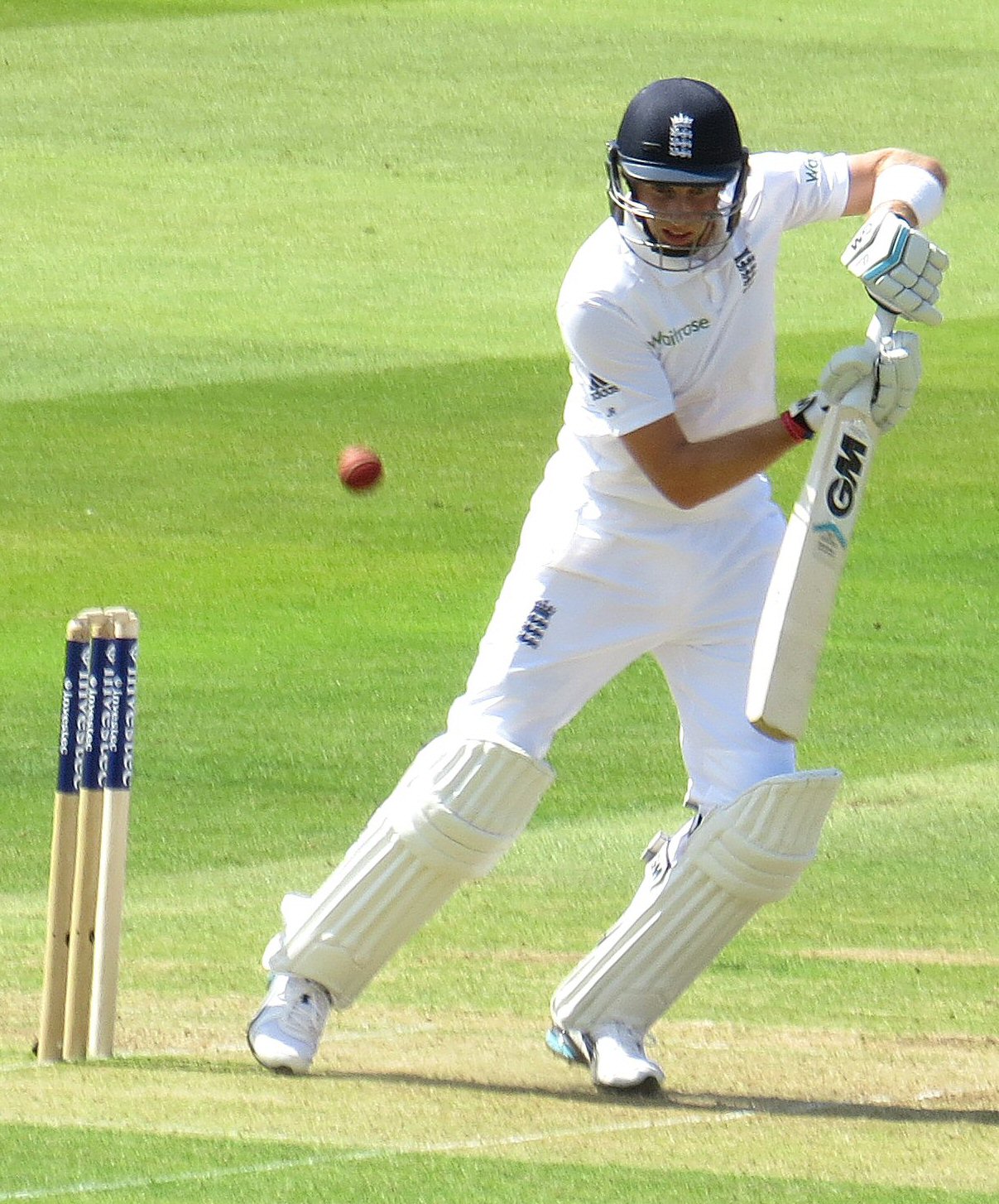
- Most runs: 13,943 – Joe Root
- Best average: 60.73 – Herbert Sutcliffe
- Highest individual score: 364 – Len Hutton v. Australia at The Oval in 1938
- Record partnership: 454 – Joe Root and Harry Brook v. Pakistan at Multan in 2024
- Most centuries: 41 – Joe Root
- Most double centuries: 7 – Wally Hammond
- Most ducks: 39 – Stuart Broad
Test bowling records
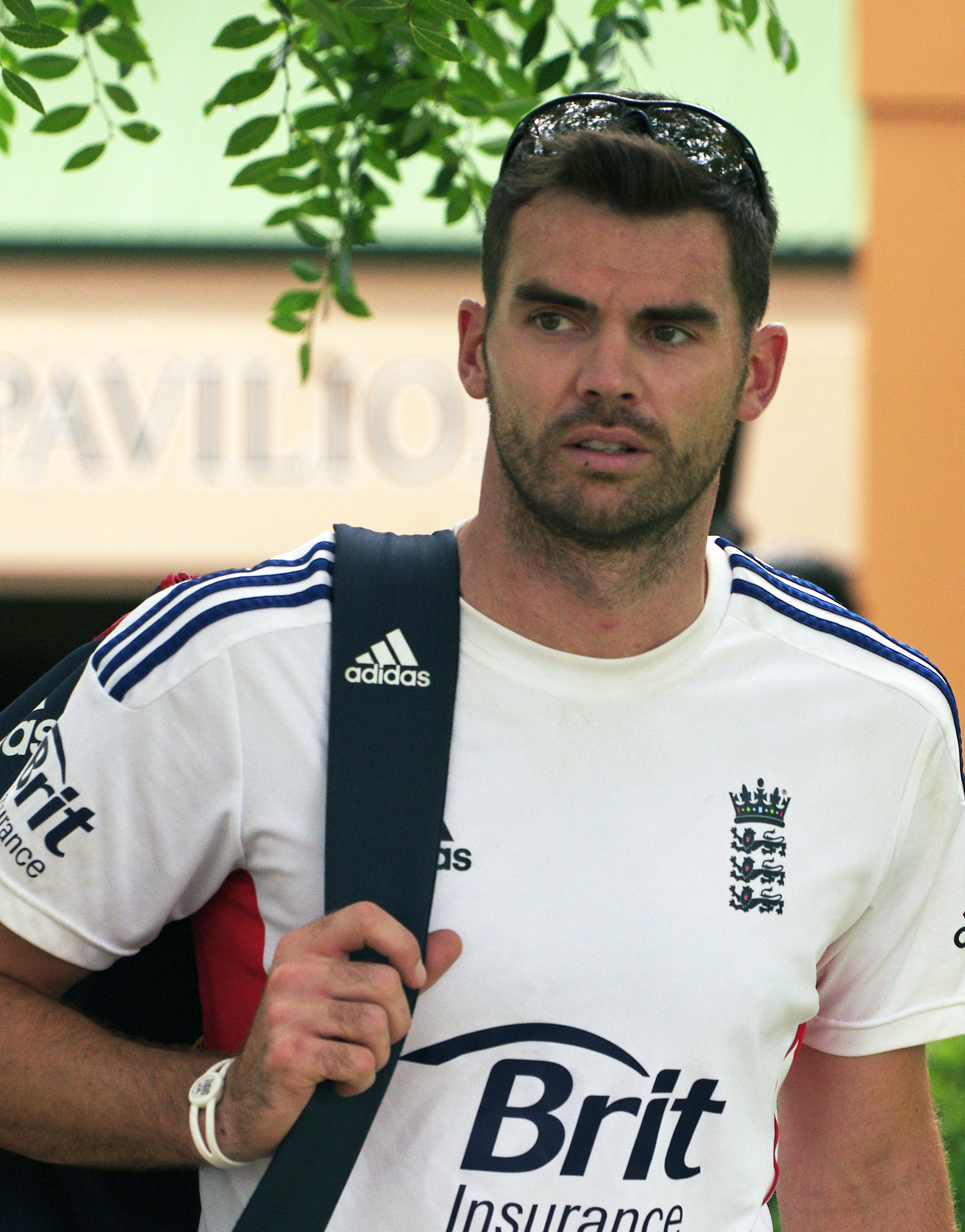
- Most wickets: 704 – James Anderson
- Best average: 10.75 – George Lohmann
- Best innings bowling: 10/53 – Jim Laker v. Australia at Old Trafford in 1956
- Best match bowling: 19/90 – Jim Laker v. Australia at Old Trafford in 1956
- Best strike rate: 34.1 – George Lohmann
- Best economy rate: 1.31 – William Attewell
- Five England bowlers have taken four wickets in an over, three of these at Headingley. They were Maurice Allom v. New Zealand at Christchurch in 1929–30, Kenneth Cranston v. South Africa at Headingley in 1947, Fred Titmus v. New Zealand at Headingley in 1965, Chris Old v. Pakistan at Edgbaston in 1978 and Andy Caddick v. West Indies at Headingley in 2000.
Test fielding records
- Most catches by an outfielder: 216 – Joe Root
- Most dismissals as wicketkeeper: 269 – Alan Knott
- Most dismissals in an innings: 7 – Bob Taylor v. India at Bombay in 1979/80
- Most dismissals in a match: 11 – Jack Russell v. South Africa at Johannesburg in 1995/96
One Day Internationals
Main article: List of England One Day International cricket records
ODI record versus other nations
ODI team records
- Highest team total: 498/4 (50 overs) v. Netherlands at VRA Cricket Ground in 2022
- Lowest team total: 86 (32.4 overs) v. Australia at Old Trafford in 2001
ODI individual records
- Most matches: 225 – Eoin Morgan
- Longest-serving captain: 126 matches – Eoin Morgan
ODI batting records

- Most runs: 7,577 – Joe Root
- Best average: 55.76 – Dawid Malan
- Best strike rate: 115.2 – Jos Buttler
- Highest individual score: 182 – Ben Stokes v. New Zealand at The Oval, London in 2023
- Record partnership: 256* – Alex Hales and Jason Roy v. Sri Lanka at Edgbaston in 2016
- Most centuries: 20 – Joe Root
- Most ducks: 15 – Eoin Morgan & Jos Buttler
ODI bowling records
- Most wickets: 269 – James Anderson
- Best average: 23.61 – Andrew Flintoff
- Best bowling: 6/31 – Paul Collingwood v. Bangladesh at Trent Bridge in 2005
- Best strike rate: 30.6 – Liam Plunkett
- Best economy rate: 3.28 – Bob Willis
ODI fielding records
- Most catches by an outfielder: 108 – Paul Collingwood
- Most dismissals as wicketkeeper: 271 – Jos Buttler
- Most dismissals in a match: 6 – Alec Stewart v. Zimbabwe at Old Trafford in 2000; Matt Prior v. South Africa at Trent Bridge in 2008; Jos Buttler v. South Africa at The Oval in 2013
T20 Internationals
Main article: List of England Twenty20 International cricket records
Figures include games up to 23 October 2025.
T20I record versus other nations
T20I team records
- Highest team total: 267/3 v. West Indies at Brian Lara Cricket Academy in 2023
- Lowest team total: 80 v. India at Colombo (RPS) in 2012
T20I individual records
- Most matches: 144 – Jos Buttler
- Longest-serving captain: 72 matches – Eoin Morgan
T20I batting records====
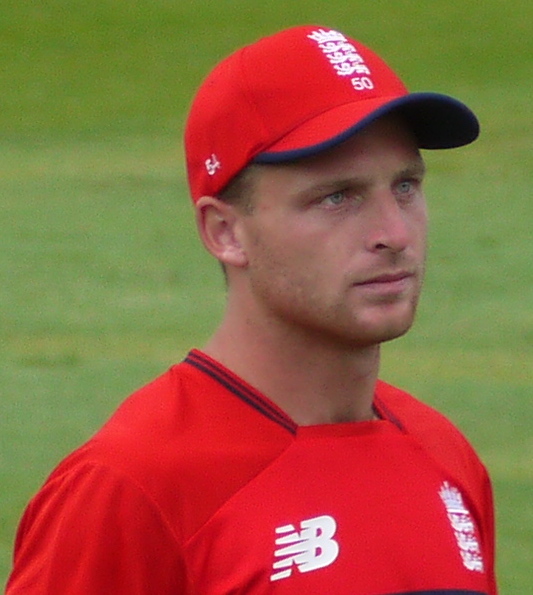
- Most runs: 3,869 – Jos Buttler
- Best average: 38.5 – Phil Salt
- Best strike rate: 168.1 – Phil Salt
- Highest individual score: 141* – Phil Salt v. West Indies at Tarouba in 2023
- Record partnership: 182 – Dawid Malan and Eoin Morgan v. New Zealand at McLean Park in 2019
- Most centuries: 4 – Phil Salt
- Most ducks: 9 – Luke Wright, Moeen Ali and Jos Buttler
T20I bowling records
- Most wickets: 145 – Adil Rashid
- Best average: 16.8 – Graeme Swann
- Best bowling: 5/10 – Sam Curran v. Afghanistan at Perth in 2022
- Best strike rate: 14.4 – Mark Wood
- Best economy rate: 6.4 – Graeme Swann
T20I fielding records
- Most catches by an outfielder: 48 – Chris Jordan
- Most dismissals as wicket-keeper: 89 – Jos Buttler
- Most dismissals in an innings: 4 – Matt Prior v. South Africa at Cape Town in 2007
Most England appearances
Main article: List of England Test cricketers, List of England ODI cricketers, List of England Twenty20 International cricketers
These lists show the five players (or those tied for fifth) with the most appearances for England in each form of the game. The lists are correct up to match starting on 27 January 2026.
- † = players who are available for selection and have represented England in the format during the past 12 months.
| Most Test caps |
|---|
| 188 |
| 167 |
| 163 |
| 161 |
| 133 |
| Most ODI caps |
|---|
| 225 |
| 197 |
| 199 |
| 194 |
| 189 |
| Most T20I caps |
|---|
| 144 |
| 134 |
| 115 |
| 95 |
| 92 |
|}
Eligibility of players
The England cricket team represents England and Wales. However, under ICC regulations, players can qualify to play for a country by nationality, place of birth or residence, so (as with any national sports team) some people are eligible to play for more than one team. ECB regulations state that to play for England, a player must be a British citizen, and have either been born in England or Wales, or have lived in England or Wales for three years. This has led to players who also held other nationalities becoming eligible to play for England. The qualification period for those born outside England and Wales has varied in the past, but in November 2018 the ECB announced that the period would be reduced to three years in all circumstances, in line with ICC regulations.
Of the current squad (see above), Brydon Carse was born in South Africa so had to fulfil residency requirements. In addition, Chris Jordan and Ben Stokes have British citizenship, having lived in England since their youth. Jofra Archer, though born in Barbados to a Barbadian mother, qualifies through his English father. Jacob Bethell was also born in Barbados and moved to England as a teenager to attend Rugby School.
ICC regulations also allow cricketers who represent associate (i.e. non-Test-playing) nations to switch to a Test-playing nation, provided nationality requirements are fulfilled. In recent years, this has seen Irish internationals Ed Joyce, Boyd Rankin and Eoin Morgan switch to represent England (before Ireland were promoted to full member status in 2018), whilst Gavin Hamilton previously played for Scotland – though Joyce, Rankin and Hamilton were later able to re-qualify for and represent the countries of their birth.
Notes
References
Bibliography
References
- "1955 Test Rankings". [[International Cricket Council.
- "1981 ODI Rankings". ICC.
- (24 October 2011). "Reliance ICC Rankings – ICC Team Rankings, ICC Test Rankings, ICC ODI Rankings". Icc-cricket.yahoo.net.
- "About the ECB". [[England and Wales Cricket Board]].
- "MCC History". [[Marylebone Cricket Club.
- "Records {{!}} Test matches {{!}} Team records {{!}} Results summary".
- "Records / One-Day Internationals / Result summary". [[ESPNcricinfo]].
- "Records / Twenty20 Internationals / Result summary". [[ESPNcricinfo]].
- Waghorn, pp.22–23.
- "TOSSING FOR INNINGS. CRICKET EDITED BY HORACE G. HUTCHINSON".
- "All England Eleven Cricket Team".
- "cricket ''Britannica.com''".
- (17 October 2009). "150th anniversary of the first English cricket tour of North America".
- (11 November 2009). "One tour to start them all: how English cricketers blazed a trail 150 years ago". The Guardian.
- (19 September 2006). "England v Australia 1864 – 1888". [[ESPNcricinfo]].
- "Australia in England 1880". [[Wisden Cricketers' Almanack.
- Williams, Marcus. (6 November 2002). "The Ashes in The Times". The Times.
- "The Ashes Story: How it all began".
- "England in Australia, 1882–83". [[Wisden Cricketers' Almanack.
- "Australia v England". [[Wisden Cricketers' Almanack.
- "Test matches".
- "South Africa v England". [[Wisden Cricketers' Almanack.
- "The Ashes 1890".
- "The Ashes 1891/92".
- "The Ashes 1893".
- "England's 1894 SCG miracle".
- "The Ashes 1894/95".
- "England tour of South Africa 1895/96".
- "The Ashes 1899".
- "Test matches".
- "Test matches".
- "England tour of South Africa".
- "The Ashes 1901/02".
- "The 1904 Ashes".
- "The Ashes 1909".
- "The Ashes 1911/12".
- (27 September 2006). "England v Australia 1890 – 1914".
- (14 February 2006). "Australia v South Africa". [[Wisden Cricketers' Almanack.
- "England tour of South Africa 1913/14".
- "Fiery Syd".
- "1920-21 Ashes".
- "The Ashes 1921".
- "The Ashes 1924/25".
- "The Ashes 1926".
- "The Ashes 1928-29".
- "Playing two Tests in a day".
- "Quick, quick Snow". ESPN Cricinfo.
- "England in the West Indies 1929–30". CricketArchive.
- "England to New Zealand 1929-30". Test Cricket Tours.
- "The Ashes 1930".
- (29 October 2015). "Bodyline cricket series, 1932-33".
- (8 February 2004). "It just wasn't cricket". [[Sydney Morning Herald.
- (14 January 2013). "Bodyline: 80 years of cricket's greatest controversy". BBC News.
- (17 September 2024). "Why the 1932-33 'Bodyline' series became cricket's darkest chapter". The Times of India.
- "When Test cricket came to India".
- Guha, Ramachandra. (2002). "A Corner of a Foreign Field – The Indian History of a British Sport". Picador.
- "The Ashes 1934".
- "The Ashes 1938".
- "The Oval grind of 1938".
- (14 December 2020). "When Len Hutton eclipsed Don Bradman with record knock at The Oval".
- "5th test durban, March 1939, England tour of South Africa".
- (22 December 2015). "The Test match that went on and on and on. Without a winner but with meaning". The Guardian.
- "Calling time on eternity".
- "The tour that never was".
- "The West Indian team in England 1939".
- "The Ashes 1946/47".
- "England tour of West Indies 1947-48".
- "5th test, The Oval 1948 Australia tour of England".
- (14 August 2019). "Ashes 1948: The Don's final innings".
- [http://stats.cricinfo.com/ci/content/records/283611.html Test matches – Highest partnership for the first wicket]. Stats.cricinfo.com. Retrieved 2018-07-08.
- [http://stats.cricinfo.com/ci/engine/records/fow/highest_partnerships_by_wicket.html?class=1;id=1;type=team Test matches – Highest partnerships by wicket for England]. Stats.cricinfo.com. Retrieved 2018-07-08.
- "New Zealand tour of England 1949".
- "West Indies tour of England 1950".
- "Ramadhin and Valentine - little friends of mine".
- "Those two little tormentors of mine".
- "The Ashes 1953".
- "The Ashes 1958/59".
- "India in England 1959. England won 5-0".
- "England vs India, 5th Test at London, Aug 20 1959 - Full Scorecard".
- "The Ashes 1961".
- "Benaud's Manchester miracle".
- "England tour of Pakistan 1961/62".
- "The Ashes 1962/63".
- "The 1964 Ashes".
- "1970/71 Ashes".
- "My life through the Ashes: from Deadly Derek to Warnie to Stokes' boys".
- "The Ashes 1970/71".
- "'People don't realise how hard it is to win in Australia'".
- "The Ashes 1972".
- "The fungus that floored the Aussies".
- "Captain Hook".
- "Pakistan tour of England 1971".
- "India tour of England 1971".
- "Sunny's little gem".
- "First love".
- "The Ashes 1974/75".
- "Call in Colin".
- "Shell-shocked and bloodied".
- "Who's grovelling now?".
- (11 November 2012). "How England managed to emerge victorious on the 1976-77 tour to India". The Guardian.
- "The Ashes 1978/79".
- "Pakistan tour of England 1978".
- "England tour of New Zealand 1977/78".
- "'I've run you out, you ****'".
- "Match results in 1985 in Tests - England".
- "Match results in 1986 in Tests - England".
- "Match results in 1987 in Tests - England".
- "Match results in 1988 in Tests - England".
- "Match results in 1989 in Tests - England".
- "Match results in 1990 in Tests - England".
- (2 July 2011). "'Ian Botham's Ashes': The myths, the legends and me". The Guardian.
- "England vs India, 1st Semi-Final at Manchester, Jun 22 1983 - Match Result".
- (7 November 2016). "England went to India in 1984 in disarray but came home with a famous victory". The Guardian.
- (13 August 2017). "The scariest Test England ever played: terror at the hands of West Indies". The Guardian.
- (15 November 2021). "Watching England beat Australia in the 1986-87 Ashes kept me alive". The Guardian.
- (22 January 2017). "Australia receive medals for 1987 Cricket World Cup win over England". BBC Sport.
- "The Ashes 1989".
- "The ghosts of '89".
- "The Wisden Trophy 1989/90".
- "News Roll ''reddif.com''".
- [http://www.cricketarchive.co.uk/Archive/Countries/24.html Scotland] at CricketArchive
- "The Ashes 1997".
- "England's 1999 Cricket World Cup nightmare: 20 years on from last time England hosted". Sky Sports.
- "Rhino's breakthrough".
- "New Zealand tour of England 1999".
- "New Zealand tour of England 1999".
- "West Indies tour of England and Scotland 2000".
- "Australia maintain ICC Test Championship lead with Ashes victory".
- (6 July 2015). "2005 and all that: an alternative history of the greatest Ashes". The Guardian.
- (14 October 2014). "The 2005 Ashes was so special because everyone watched, and everyone could". The Guardian.
- "When Ashes-winning England were derailed by Pakistan".
- "Pakistan in England Test Series 2006".
- (5 January 2007). "Abject England roll over". The Guardian.
- (19 April 2014). "Peter Moores unveiled as England cricket coach for second time". The Guardian.
- "England tour of the West Indies 2008/09".
- "ESPNcricinfo Awards 2009 Test bowling winner: Jerome Taylor swings us back to the '80s".
- (20 April 2006). "Cardiff to host Ashes Test match". British Broadcasting Corporation.
- Brett, Oliver. (12 July 2009). "Defiant England cling on for draw". British Broadcasting Corporation.
- "Flintoff's fling inspires England Ashes glory".
- (16 May 2010). "Craig Kieswetter helps England thrash Australia to win World Twenty20". The Guardian.
- "England retain the Ashes with innings win".
- "Winning Down Under: England's post-war Ashes series victories in Australia".
- (11 March 2011). "Cricket World Cup: Bangladesh rally on to shock England".
- (26 March 2011). "Sri Lanka vs England, 4th quarter-final ICC World Cup 2011".
- (22 August 2011). "England end India's resistance to seal win and whitewash". The Guardian.
- (22 August 2011). "England complete India series whitewash at The Oval". BBC Sport.
- (29 August 2012). "England captain Andrew Strauss retires from professional cricket". The Guardian.
- Higginson, Marc. (17 December 2012). "India v England: Jonathan Trott & Ian Bell lead England to series win". British Broadcasting Corporation.
- "The Ashes 2013".
- (5 January 2014). "Ashes 2013-14: Australia crush England to seal 5-0 whitewash". BBC Sport.
- (4 February 2014). "Kevin Pietersen: Batsman's England career over". BBC Sport.
- (9 May 2015). "Moores leaves role as England Head Coach". England and Wales Cricket Board.
- (9 March 2015). "Cricket World Cup 2015: England knocked out by Bangladesh". BBC Sport.
- (10 March 2015). "Early England exit from Cricket World Cup is new low". The Guardian.
- (26 May 2015). "Bayliss named England's new Head Coach". England and Wales Cricket Board.
- "England move up to fourth position after 4-1 series win". International Cricket Council.
- (28 May 2019). "Why England are favourites for the Cricket World Cup – and who might stop them".
- (25 June 2019). "England lose against Australia in Cricket World Cup as old habits return at the worst of times".
- (11 July 2019). "England reach Cricket World Cup final with thrashing of Australia".
- Anderson, Niall. (14 July 2019). "2019 Cricket World Cup final: England beat Black Caps in greatest ODI in history". The New Zealand Herald.
- (14 July 2019). "England win Cricket World Cup: Ben Stokes stars in dramatic victory over New Zealand".
- (14 July 2019). "Epic final tied, Super Over tied, England win World Cup on boundary count".
- (25 August 2019). "Ashes 2019: Ben Stokes steers England to one-wicket victory over Australia - as it happened".
- (16 September 2019). "Ashes 2019: Australia has the urn but no series win — so where does the result stack up?". Fox Sports Australia.
- "England in South Africa: Joe Root's side win series 3-1". BBC Sport.
- (13 March 2020). "England tour of Sri Lanka cancelled amid COVID-19 spread". ESPN Cricinfo.
- "Ben Stokes to captain England against Pakistan after seven members in bio-bubble test positive for COVID-19". International Cricket Council.
- "England-India fifth Test at Old Trafford cancelled over Covid-19 fears in tourists' camp". The Cricketer.
- "James Anderson & Stuart Broad left out of England squad for West Indies tour". BBC Sport.
- "Joe Root to remain England Test captain as Graham Thorpe becomes latest Ashes casualty". ESPN Cricinfo.
- "England break ODI record with total of 498-4 in Netherlands". BBC Sport.
- "England smash world-record 498-4 against Netherlands; Jos Buttler one of three players to hit hundreds". Sky Sports.
- (13 November 2022). "England script history, become first team to hold both men's ODI and T20 World Cup titles".
- (4 November 2023). "Cricket World Cup 2023: England's defence ended by Australia defeat". BBC Sport.
- "2018 Men's Future Tour Programme".
- "Men's FTP 2023–2027".
- "England face stacked schedule as Future Tours Programme confirmed for 2023-2027 | the Cricketer".
- "ECB Annual Report and Accounts 2006". [[England and Wales Cricket Board]].
- (15 September 2005). "ICC Cricket World Cup countdown - Scotland".
- "Cricket Scotland".
- Lewis, Thomas. (2022-01-18). "Some fans think Wales should declare independence from England - at cricket".
- (13 September 2004). "England's Welshmen call for name change".
- (23 October 2013). "Should Wales have its own international cricket team, ask Assembly Members".
- "Clearing the Boundaries".
- (14 June 2018). "Glamorgan chief executive says Wales cricket team makes 'no sense'".
- (12 December 2011). "Glamorgan oppose petition to form a Wales cricket team".
- (23 October 2013). "Establishment of a Welsh Cricket Team". BBC Democracy Live.
- Shipton, Martin. (12 August 2013). "A Welsh national cricket team? AMs will have their say on the possibility this autumn".
- Wyn-Williams, Gareth. (14 March 2015). "Welsh national cricket team should be set up says Rhun ap Iorwerth".
- "Jonathan EdwardsTowards a National Future for Welsh Cricket".
- Shipton, Martin. (23 October 2013). "Should Wales have its own international cricket team, ask Assembly Members".
- "The bat and the daffodil". The Economist.
- Williamson, David. (7 September 2008). "Call for Wales to have its own cricket team".
- (4 July 2017). "Wales cricket team should play one-day games, Carwyn Jones says". BBC.
- (5 July 2017). "Carwyn Jones says Wales should have a one-day international Welsh cricket team". Wales Online.
- "List of cricket grounds in England and Wales".
- "ECB announces updated England Men's Central Contract list for 2025–26".
- "Brendon McCullum named as England's new Test coach". ESPNcricinfo.
- (7 February 2022). "Collingwood named interim England coach". BBC Sport.
- Ponsonby, Cameron. (17 Oct 2025). "Saker returns to England set-up as Ashes fast-bowling coach".
- (13 September 2021). "Castore confirmed as Official kit supplier to England Cricket".
- "QA: The sinister aspect of golf". The Independent.
- (2018-02-06). "Lions in sheep's clothing".
- (4 April 2017). "All hail the return of cricket's traditional cable-knit sweater". The Telegraph.
- "Classic World Cup Kits 1996".
- "Classic World Cup Kits 1999".
- "England's ODI kits down the years". The Daily Telegraph.
- "History of the Barmy Army".
- (2006-11-30). "Crass and corporate - why the Barmy Army are no laughing matter". [[The Guardian]].
- (2006-12-05). "Dominic Lawson: Fight back against the Barmy Army". [[The Independent]].
- "BARMY ARMY by BACSC Ltd and Peacock, David John - Australian Trademark No.1114806". Trade Marks Australia.
- "ICC World Test Championship 2021–2023 Table". ESPNcricinfo.
- "ICC World Test Championship 2019–2021 Table". ESPNcricinfo.
- "ICC World Test Championship 2023–2025 Points Table". [[ESPNcricinfo]].
- "ICC World Test Championship 2025–2027 Points Table". [[ESPNcricinfo]].
- "A retrospective: How the mace has changed hands".
- "Highest totals by England in Tests".
- "Lowest totals by England in Tests".
- Seervi, Bharath. (2015-08-11). "Analysis of England's 100 Test wins by an innings".
- "Most Test matches playing for England".
- "Most matches as captain for England in Tests".
- "Most Runs for England".
- "Highest Batting Averages". ESPNcricinfo.
- "High scores for England in Tests".
- "Highest partnerships for England in Tests".
- "Most hundreds for England in Tests".
- "Most double hundreds in a career for England in Tests".
- "Most ducks for England".
- "Most wickets for England in Tests".
- "Best averages for England in Tests".
- "Best bowling figures in an innings for England in Tests".
- "Best bowling figures in a match for England in Tests".
- "Best strike rates for England in Tests".
- "Best economy rates for England in Tests".
- (18 August 2020). "When Andy Caddick took four Test wickets for England in a single over". The Guardian.
- "Most catches for England in Tests".
- "Most dismissals for England in Tests".
- "Most dismissals in an innings for England in Tests".
- "Most dismissals in a match for England in Tests".
- (17 June 2022). "Jos Buttler unleashes mayhem against Dutch as England smash ODI record". The Guardian.
- "5th match ENG v AUS, Manchester, June 14, 2001".
- "Most matches for England in ODIs".
- "Records / England / One-Day Internationals / Most matches as captain".
- "Most runs for England in ODIs".
- "Highest averages for England in ODIs".
- "Highest strike rates for England in ODIs".
- "High scores for England in ODIs".
- "Highest partnerships for England in ODIs".
- "Most hundreds for England in ODIs".
- "Most ducks for England in ODIs".
- "Most wickets for England in ODIs".
- "Best averages for England in ODIs".
- "Best bowling figures in a match for England in ODIs".
- "Best strike rates for England in ODIs".
- "Best economy rates for England in ODIs".
- "Most catches for England in ODIs".
- "Most dismissals for England in ODIs".
- "Most dismissals in a match for England in ODIs".
- "Highest totals by England in T20Is".
- "Lowest totals by England in T20Is".
- "Most matches for England in T20Is".
- "Most matches as captain for England in T20Is".
- "Most runs for England in T20Is".
- "Highest averages for England in T20Is".
- "Highest strike rates for England in T20Is".
- "High scores for England in T20Is".
- "Highest partnerships for England in T20Is".
- "Most hundreds for England in T20Is".
- "Most ducks for England in T20Is".
- "Most wickets for England in T20Is".
- "Best averages for England in T20Is".
- "Best bowling figures in an innings for England in T20Is".
- "Best strike rates for England in T20Is".
- "Best economy rates for England in T20Is".
- "Most catches for England in T20Is".
- "Most dismissals for England in T20Is".
- "Most dismissals in an innings for England in T20Is".
- "England Cricket Team Records & Stats: Most Test matches".
- "England Cricket Team Records & Stats: Most One-Day International matches".
- "England Cricket Team Records & Stats: Most Twenty20 International matches".
- (18 September 2013). "The International Cricket Council Player Eligibility Regulations".
- "Regulations Governing the Qualification and Registration of Cricketers". England and Wales Cricket Board.
- "Jofra Archer could play for England at World Cup after ECB amend eligibility rules". ESPNcricinfo.
- (12 April 2018). "The who's who of South Africa's Kolpak brigade".
- (29 November 2018). "England accused of poaching after rule change boosts Jofra Archer prospects". The Guardian.
- Dobell, George. (6 January 2021). "Warwickshire teenager signs first professional contract as Caribbean talent drain continues".
- "Some sports are more jingoistic than others".
- Will Luke. (7 April 2009). "Ireland frustration at Morgan call". ESPNcricinfo.
- Staff. (24 May 2010). "Ed Joyce hopes for early Ireland switch". ESPNcricinfo.
This article was imported from Wikipedia and is available under the Creative Commons Attribution-ShareAlike 4.0 License. Content has been adapted to SurfDoc format. Original contributors can be found on the article history page.
Ask Mako anything about England cricket team — get instant answers, deeper analysis, and related topics.
Research with MakoFree with your Surf account
Create a free account to save articles, ask Mako questions, and organize your research.
Sign up freeThis content may have been generated or modified by AI. CloudSurf Software LLC is not responsible for the accuracy, completeness, or reliability of AI-generated content. Always verify important information from primary sources.
Report