From Surf Wiki (app.surf) — the open knowledge base
Elixir
Sweet-flavored liquid used for medicinal purposes

Sweet-flavored liquid used for medicinal purposes
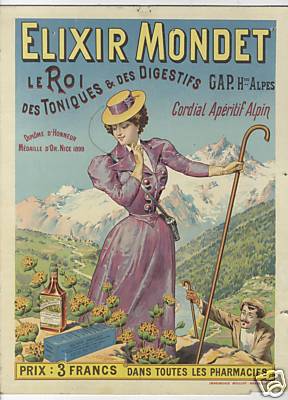
An elixir is a sweet liquid used for medical purposes, to be taken orally and intended to cure one's illness. When used as a pharmaceutical preparation, an elixir contains at least one active ingredient designed to be taken orally.
Etymology
The word was introduced in late Middle English, through Latin from the Arabic الإكسير (ar), which in turn is the Arabization of the Ancient Greek ξήριον (grc) (from ξηρός (grc) ).
Types
Non-medicated elixirs
These are used as solvents or vehicles for the preparation of medicated elixirs. Active ingredients are dissolved in a 15–50% by volume solution of ethyl alcohol:
- aromatic elixirs (USP)
- isoalcoholic elixirs (NF)
- compound benzaldehyde elixirs (NF)
Medicated elixirs
These include:
- antihistaminic elixirs used against allergy, such as chlorpheniramine maleate (USP) or diphenhydramine HCl
- sedative and hypnotic elixirs, the former to induce drowsiness, the latter to induce sleep
- pediatric elixirs such as chloral hydrate
- expectorant elixirs used to facilitate productive cough (i.e. cough with sputum), such as terpin hydrate
East Asian vitamin drinks
Daily non-alcoholic non-caffeinated 'vitamin drinks' have been popular in East Asia since the 1950s, with Oronamin from Otsuka Pharmaceutical perhaps the market leader. Packaged in brown light-proof bottles, these drinks have the reputation of being enjoyed by old men and other health-conscious individuals. Counterparts exist in South Korea and China.
Western energy drinks typically have caffeine and are targeted at a younger demographic, with colorful labels and printed claims of increased athletic/daily performance.
Pseudomedicinal drinks
See Patent medicine.
Composition
An elixir is a hydro-alcoholic solution of at least one active ingredient. The alcohol is mainly used to:
- Solubilize the active ingredient(s) and some excipients
- Retard the crystallization of sugar
- Preserve the finished product
- Provide a sharpness to the taste
- Aid in masking the unpleasant taste of the active ingredient(s)
- Enhance the flavor. The lowest alcoholic quantity that will dissolve completely the active ingredient(s) and give a clear solution is generally chosen. High concentrations of alcohol give burning taste to the final product.
An elixir may also contain the following excipients:
- Sugar and/or sugar substitutes like the sugar polyols glycerol and sorbitol.
- Preservatives like parabens and benzoates and antioxidants like butylated hydroxytoluene (BHT) and sodium metabisulfite.
- Buffering agents
- Chelating agents like sodium ethylenediaminetetraacetic acid (EDTA)
- Flavoring agents and flavor enhancers
- Coloring agents
Storage
Elixirs should only be stored in a tightly closed, light resistant container away from direct heat and sunlight.
References
References
- {{Cite EB1911
- For centuries, ''elixir'' primarily meant an ingredient used in [[alchemy]], either referring to a liquid which purportedly converts lead to gold, or a substance or liquid which is believed to cure all ills and [[Elixir of immortality. give eternal life]]. That which would indefinitely prolong life (more fully ''elixir vitae'', "elixir of life") was considered to be closely related to, or even identical with, the substance for transmuting metals.Encyclopedia Britannica, "Elixir"
This article was imported from Wikipedia and is available under the Creative Commons Attribution-ShareAlike 4.0 License. Content has been adapted to SurfDoc format. Original contributors can be found on the article history page.
Ask Mako anything about Elixir — get instant answers, deeper analysis, and related topics.
Research with MakoFree with your Surf account
Create a free account to save articles, ask Mako questions, and organize your research.
Sign up freeThis content may have been generated or modified by AI. CloudSurf Software LLC is not responsible for the accuracy, completeness, or reliability of AI-generated content. Always verify important information from primary sources.
Report