From Surf Wiki (app.surf) — the open knowledge base
Elisheba
Biblical figure
Biblical figure
| Field | Value | |
|---|---|---|
| name | Elisheba | |
| image | Aaron and Nadab Taking Leave of Elisheba (?), with the Israelites Camped before Mount Sinai and Moses Ascending the Mountain. MET DP801461.jpg | |
| caption | Aaron and Nadab take leave of Elisheba (pictured from left to right), camped before Mount Sinai, while Moses ascends. | |
| native_name | אֱלִישֶׁבַע | |
| birth_place | (possibly) Goshen, Lower Egypt, Ancient Egypt | |
| death_place | Unknown | |
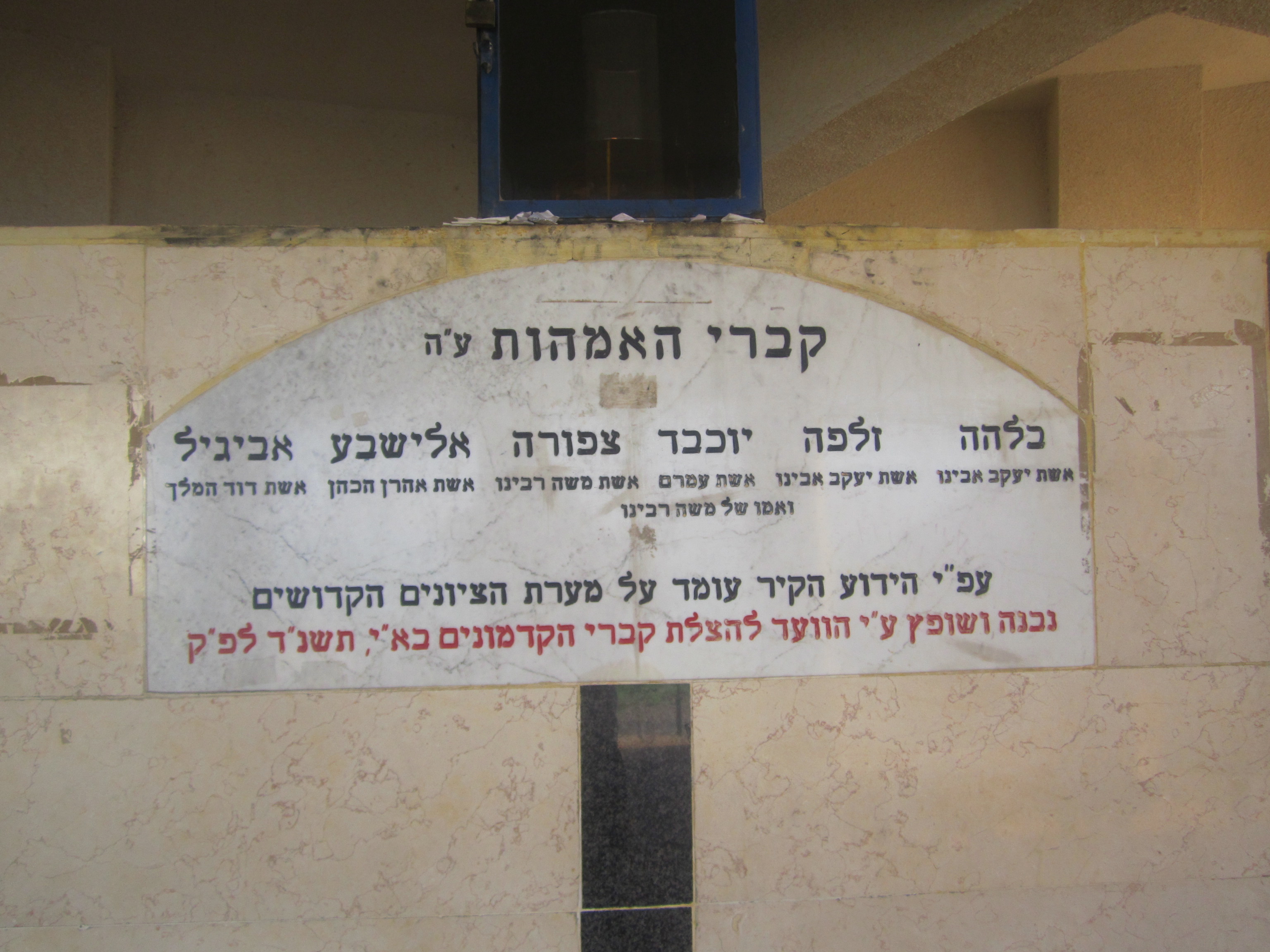
| resting_place | Tiberias, Israel | |
| other_names | Elisheva (original form) | |
| known_for | Being the wife of Aaron, and the matriarch of the first Kohanim of Israel; she is also remembered as one of the prominent women among women in the Bible. | |
| spouse | Aaron | |
| children | {{Plainlist | |
| father | Amminadab | |
| relatives | {{Plainlist |
- Nadab
- Abihu
- Eleazar
- Ithamar
- Nahshon (brother)
- Amram (father-in-law)
- Jochebed (mother-in-law)
- Miriam (sister-in-law)
- Moses (brother-in-law)
- Zipporah (sister-in-law)
- Eliezer (nephew)
- Gershom (nephew)
Elisheba (; (original) ) was the wife of Aaron, the older brother of Moses and the first High Priest of Israel. She was mentioned once in Exodus 6:23 in the Torah and the Old Testament.
]]
In the Torah
In the book of Exodus, she was said to be a daughter of Amminadab from the Tribe of Judah and a sister of Nahshon. The Hebrew name Elisheva is composed of two parts: "Eli", from Elohim (Hebrew: ), one of the Hebrew words for God, and "sheva", which roughly translates to "oath". Thus, the name Elisheva translated into English means "God is my oath" or "my God is an oath".
The Torah mentions that Elisheba and Aaron had four sons: Nadab, Abihu, Eleazar, and Ithamar. As per halakha, in order for a Jewish person to be legitimately recognized as one of the Kohanim () and a member of the priestly lineage/bloodline, they must be a Levite of direct patrilineal descent from Eleazar and Ithamar, the two youngest sons of Aaron and Elisheba (i.e. be descendants of Aaron on both sides of the family).
In the Christian Bible
In the first chapter of the Gospel of Luke in the New Testament, a woman named Elisabet () is said to have been a descendant of Aaron and the wife of Zechariah, who was also a Jewish priest. Elisabet was a relative of Jesus' mother, Mary, and was the mother of John the Baptist with Zechariah.
Derivations
In English
Elizabeth is the common English-language variant of Elisabet, which is derived from Elisheva.
In Spanish/Portuguese
Isabel is the Spanish and Portuguese version of the name Elisheva or Elizabeth in English.
In Italian
Elisabetta is the Italian version of Elizabeth, while Isabella is the Italian version of Elisheva.
In the Muslim world
Alishba is a modern name that is believed to have been derived from an Arabic-language translation of Elisheva. It is prevalent among Muslims in the Indian subcontinent.
References
References
- "Exodus 6:23".
- "Bible Gateway passage: Exodus 6:23 - New International Version".
- "These Nine Tombs Have Attracted Jewish Pilgrims for Centuries".
- "Strong's Greek: 2241. ἠλί (éli) -- Eli".
- Gesenius, Wilhelm. (1857). "Hebrew and Chaldee lexicon to the Old Testament Scriptures; translated, with additions, and corrections from the author's Thesaurus and other works". London, Bagster.
- "Elisheva".
- "Exodus 6:23".
- "Exodus 28:1".
- "Numbers 3:10".
- "Numbers 3:4".
- "Bible Gateway passage: Luke 1:5 - New International Version".
- "Bible Gateway passage: Luke 1:36 - New International Version".
- "Bible Gateway passage: Luke 1:13 - New International Version".
- Campbell, Mike. "Meaning, origin and history of the name Elizabeth".
- "What Does the Name Elizabeth Mean?".
- Campbell, Mike. "Meaning, origin and history of the name Isabel".
- Campbell, Mike. "Meaning, origin and history of the name Elisabetta".
- "Isabella/Elisheva".
- "Isabella - Baby Name Meaning, Origin and Popularity".
- "Alishba Baby Name: Meaning, Origin, Popularity".
- "Alishba Baby Name: Meaning, Origin, Popularity".
This article was imported from Wikipedia and is available under the Creative Commons Attribution-ShareAlike 4.0 License. Content has been adapted to SurfDoc format. Original contributors can be found on the article history page.
Ask Mako anything about Elisheba — get instant answers, deeper analysis, and related topics.
Research with MakoFree with your Surf account
Create a free account to save articles, ask Mako questions, and organize your research.
Sign up freeThis content may have been generated or modified by AI. CloudSurf Software LLC is not responsible for the accuracy, completeness, or reliability of AI-generated content. Always verify important information from primary sources.
Report