From Surf Wiki (app.surf) — the open knowledge base
Eleven-Faced Avalokitesvara Heart Dharani Sutra
Buddhist sutra

Buddhist sutra
The Dhāraṇī of Avalokiteśvara Ekadaśamukha Sūtra (Eleven-Faced Avalokiteśvara Heart Dharani Sutra, Chinese: 佛說十一面觀世音神咒經 / 圣十一面观自在菩萨根本咒) is a Dhāraṇī sutra (a sutra focused on specific magical chants, incantations, recitations called dhāraṇī) first translated from Sanskrit into Chinese on the 28th day of the third lunar month of 656 CE, by Xuanzang.
This sutra contains the dhāraṇī Heart-dhāraṇī of Avalokiteśvara-ekadaśamukha (Chinese:聖十一面觀自在菩薩根本咒). "Eleven faced Avalokiteśvara" is a form of Avalokiteśvara bodhisattva with eleven heads. In the text, the Buddha introduces, discussed how to practice the dhāraṇī and talks about the benefits and the incredible power of this dhāraṇī.
This is a popular chant throughout East Asia. There is a sung version of the dhāraṇī that is very popular among Asian Buddhists and is performed by famous religious or lay artists, which again is also mislabeled as the Great Compassion Mantra in Sanskrit.
The Dhāraṇī sutra

Title
The title of the sutras in different languages are:
- Chinese: 佛說十一面觀世音神咒經 (pinyin: Fó shuō shí yī miàn Guānshìyīn shén zhòu jīng) or 圣十一面观自在菩萨根本咒 (pinyin: Shèng shí yī miàn Guānzìzài Púsà gēnběn zhòu
- Japanese: 十一面神呪心經, Romanji: Jūichimen-jinshushin-gyō
- The title in Tibetan is Spyan-ras-gzigs-dbang-phyug-shal bcu-gcig-pa,
- The Sanskrit title recovered from the Tibetan translation is: Avalokiteśvara ekadaśamukha dhāraṇī.
- Alternatively, the sutra's title has been translated as the Eleven-Faced Avalokitesvara Heart Dharani Sutra by Professor Ryuichi Abe.
Versions
There are several versions, which are often confused with each other. It is generally believed that this dhāraṇī has no direct relationship with the Great Compassion Mantra in Mahayana Buddhism. However, it is often falsely named as the Tibetan Great Compassion Mantra (藏傳大悲咒) or the Great Compassion Mantra in Sanskrit (梵音大悲咒) in Chinese-speaking regions and in Vietnam, many people unduly conflating the two texts.
We can refer to at least three sources to study this sutra, whose respective versions do not coincide exactly. The scholar Nalinaksha Dutt wrote in his book Gilgit manuscripts (1939):
It should be kept in mind that until the discovery of the Gilgit manuscripts in 1931, the Ekadaśamukha-sūtra was known only from the Chinese and Tibetan versions, which in turn were retranslated into Sanskrit. This means that the original language text could only be studied from 1931. Unfortunately, the manuscripts found dating from the 5th or 6th century are deteriorated or incomplete, and it is often difficult to reconstruct the exact text.
Hence the differences mentioned (at best), or (at worst), the near impossibility of reconstructing the text in its entirety. The Indian scholar Nalinaksha Dutt carried out, between 1939 and 1943, a considerable work of reconstitution of the Sanskrit manuscripts, without however translating them into English.
The Dhāraṇī
The Heart-dhāraṇī of Avalokiteśvara-ekadaśamukha Sūtra
The text introduces the heart dhāraṇī of the Bodhisattva, Avalokitesvara, as the following lines, translated by Prof. Abe indicate:
Later, the Bodhisattva states:
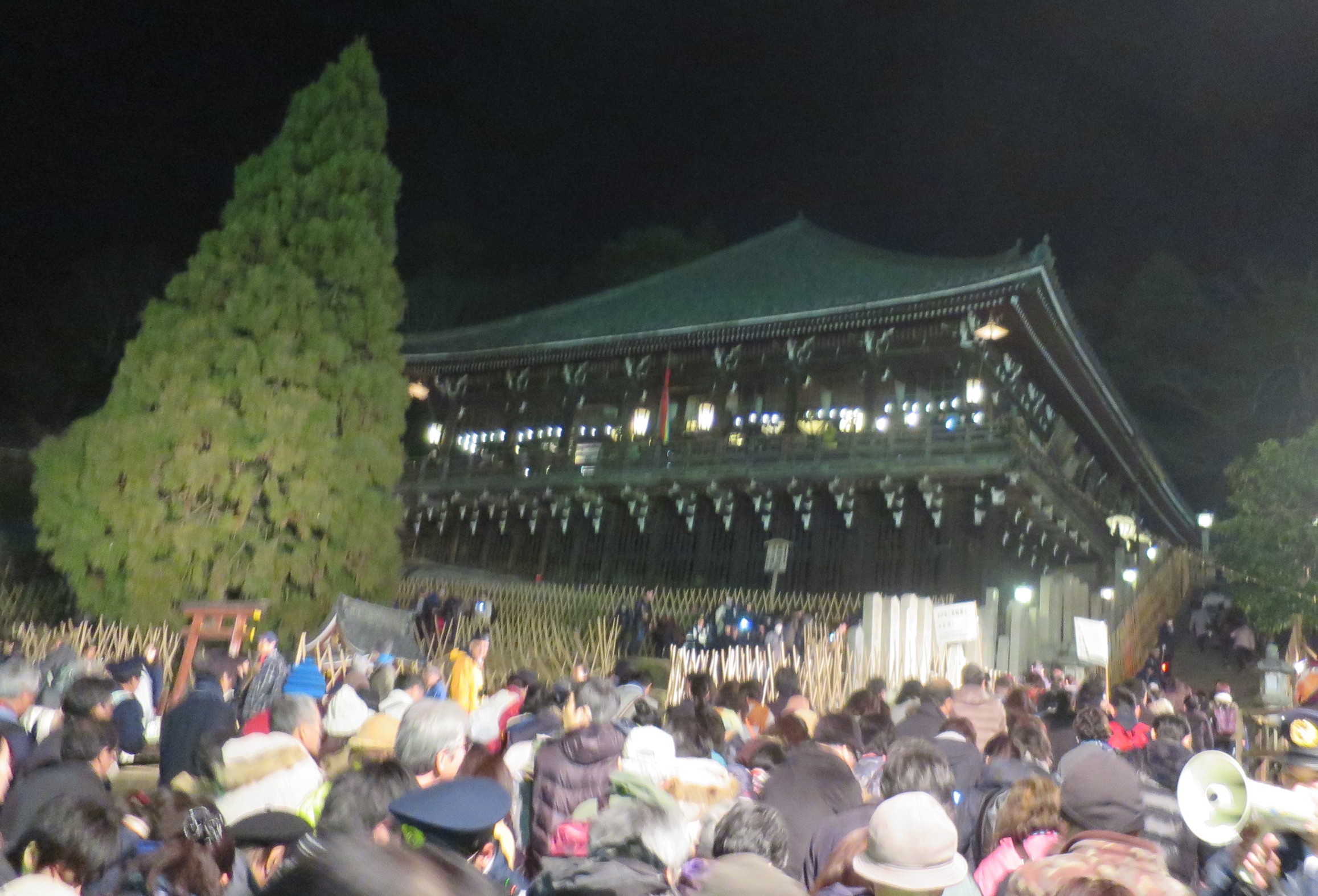
The sutra is used in various Buddhist ceremonies, including the famous Shuni-e ceremony at Tōdai-ji Temple in Nara, Japan. There is no full English translation.
Heart-dhāraṇī of Avalokiteśvara-ekadaśamukha
The Heart-dhāraṇī of Avalokiteśvara-ekadaśamukha (Chinese:聖十一面觀自在菩薩根本咒/十一面觀音心咒) is the dhāraṇī introduced in Heart-dhāraṇī of Avalokiteśvara-ekadaśamukha Sūtra. Below is the romanized Sanskrit from Indian monk Amoghavajra (around 750 AD) version, Taishō T20n1069_001:
南无·怛那他亚亚 | 敬礼三宝
Nama Ārya Jñānasāgara Vairocana Vyūharājāya Tathāgatāya Arhate Samyaksaṃbuddhāya ǀ 南无·阿唎亚迦那 萨嘎啦般若迦那 侞哈啦迦亚 哒他哒他亚 啊啦哈呗三呀三菩他亚 | 敬礼圣智海遍照庄严王如来的正等正覺
Namaḥ Sarva Tathāgatebhyaḥ ǀ Arhatebhyaḥ Samyaksaṃbuddhebhyaḥ ǀ 南无·萨唎咓哒他嘎嘚悲 | 啊兒哈那呗 三呀三卟嘚悲 | 敬礼一切如来应正等觉。
Nama Āryāvalokiteśvarāya Bodhisattvāya Mahāsattvāya Mahākāruṇikāya ǀ 南无·阿唎亚阿咓卟嘚悲 数咓啦亚菩提萨啦咓亚 摩诃萨啦咓亚摩诃嘎嚧尼哒亚 敬礼圣观自在菩萨摩诃萨大悲者
Tadyathā । Oṃ Dhara Dhara Dhiri Dhiri Dhuru Dhuru Iṭṭe Viṭṭe Cale Cale Pracale Pracale Kusume Kusumavare Ili Mili Citijvālaṃ Āpanāya Svāhā ॥ 哒嗝亚他 | 唵他喇他喇体厘体厘图嚧图嚧 伊嘀威伊嘀迦嘞迦嘞卟喇迦嘞卟喇迦嘞 咕粟咩咕粟咓哇厽伊唎秘唎吉体唑哈啦喇叭麽呀 莎哈 怛侄他 闇(一)达罗 达罗(二)地[口+履]地[口+履](三)杜噜杜噜(四)壹[齿+来](去声呼下同)伐[齿+来](五)折隶折隶(六)钵罗 折隶 钵罗 折隶(七)俱素谜(八)俱蘇摩伐隶(九)壹履弭履(十)止履止徵(知里反,十一)社(时贺反)摩波隶耶(夷何反,十二)戍(输律十)陀萨埵(十三)莫诃迦嚧尼(上声呼)迦(十四)莎(去声呼下皆同)诃(十五)
Ekadaśamukha-sūtra
thumb|South Asian Eleven Faced Avalokitesvara, circa 1000. A third version must also be mentioned here. It differs slightly from that of Amoghavajra's quoted above. Here is the romanised version in Sanskrit IAST.
In fact, the Devanagari text is identical to that of Dutt, completed by the IAST transcription : 南无佛陀耶 南无达摩耶 南无僧伽耶 | 南无若那娑伽罗
namo vairocanāya tathāgatāya ǀ 毘卢遮那耶 多他伽多耶 |
nama āryāvalokiteśvarāya bodhisattvāya mahāsattvāya mahākāruṇikāya ǀ 南无阿利耶跋路 吉帝摄婆罗耶 菩提萨埵耶 摩诃萨埵耶 摩诃伽楼腻伽耶
namaḥ atītānāgatapratyutpa (nnebhyaḥ) sarvatathāgatebhyo'rhad bhyaḥ samyaksaṃbuddhebhyaḥ ǀ 南无萨婆哆他伽帝毘耶 阿罗诃陀毘耶 三藐三佛提毘耶
om (dhara dhara dhiri dhiri) ǀ 多侄他 | 唵 陀罗陀罗 地利地利 dhuru dhuru ǀ 豆楼 豆楼
iṭṭe viṭṭe ǀ 壹知 跋知
cale cale ǀ 遮离 遮离
pracale pracale ǀ 钵遮离 钵遮离
(kusume) kusumavare ǀ 鸠蘇咩 鸠蘇摩婆离
ili mili viṭi svāhā ǀ 伊利弥利脂致 莎诃
evaṃ mūlamantraḥ ǀǀ }}
Benefits of reciting the dhāraṇī
In the sutra, Avalokiteśvara bodhisattva explains the benefits which come from reciting the dhāraṇī.
Ten main benefits:
- One's body will be free from illness.
- One will be constantly remembered by the Buddhas of the ten directions.
- All wealth, clothing, and food will naturally be abundant without lack.
- One will be able to defeat all enemies.
- One will instill compassion in all sentient beings.
- No poison or fever will be able to harm one.
- No weapons will be able to injure one.
- One will not be swept away by water-related disasters.
- One will not be burned by fire-related disasters.
- One will not experience untimely death.
Four additional results in this life:
- At the time of death, one will see the Buddhas of the ten directions.
- One will never fall into the hells.
- One will not be harmed by any wild beasts.
- After death, one will be reborn in the Land of Infinite Life (Amitābha's Pure Land). Furthermore, the sutra also promises the state of Avinivartaniya (non-retrogression on the path of the bodhisattva, meaning one will not fall back to an earlier state of spiritual development).
Relationship to the Great Compassion Mantra
_(38468770192).jpg)
It is generally believed that this dhāraṇī has no direct relationship with the Great Compassion Mantra, or Nīlakantha dhāranī in Mahayana Buddhism. However, it is often falsely named as Tibetan Great Compassion Mantra (藏傳大悲咒) or The Great Compassion Mantra in Sanskrit (梵音大悲咒).
In Chinese-speaking countries and in Vietnam, the Eleven-Faced Avalokiteśvara Heart dhāraṇī Sutra is as popular as the Nīlakaṇṭha Dhāraṇī, so much so that they are often confused with each other. The confusion probably arises from the fact that the two dhāraṇī, though distinct, are also referred to by the same alternative title: Great Compassion Mantra. Their respective texts are very different, having only their reference to Avalokitesvara in common.
Some people believe that the dhāraṇī is told by the Eleven-Faced Avalokitesvara, an esoteric bodhisattva in Tibetan Buddhism, and that it is the equivalent Tibetan version of The Great Compassion Mantra in Mahayana Buddhism. This is why it is often being referred to as Tibetan Great Compassion Mantra, while the sung text currently discussed is in Sanskrit. However, this opinion is not accepted by most Mahayana Buddhists.
The title Eleven-Faced Avalokitesvara Heart Dharani Sutra is due to the Japanese historian Ryuichi Abe. The dhāraṇī is also known with the title Tibetan Great Compassion Mantra (藏傳大悲咒), which suggests a Tibetan.
In Buddhist music
About the text
The sung version presents several variants between the three known versions in Sanskrit, in Chinese and Tibetan, as already mentioned (see section "Several versions").
The text of the sung version of the dhāraṇī (only in Sanskrit) appears in N. Dutt's Gilgit Manuscripts, volume I p. 148 of the digitized version accessible via archive.org, the Chinese is that of Amoghavajra already mentioned, and the Tibetan is by an unidentified translator. The lyrics of this sung version are always interpreted in Sanskrit, regardless of the countries and interpreters.
One Song Two titles

There are several musical scores, whose tempo varies (slow or fast) depending on the performers. The chanting of this dhāraṇī is one of the most popular and famous piece of Buddhist music in Chinese-speaking countries and in Vietnam. Its popularity is probably due to the fact that it sung by famous Asian performers among Buddhists, such as the Nepalese-Tibetan bhikkhunī Ani Chöying Drölma, or the Malaysian-Chinese singer Imee Ooi.
However, many recordings of this chant is falsely named Tibetan Great Compassion Mantra (藏傳大悲咒) or The Great Compassion Mantra in Sanskrit (梵音大悲咒) by Chinese-language publishing brands.
Following the development of the internet in recent decades, the number of online postings by religious organisations is constantly increasing. Tens of thousands of sites offer the same interpretation, sometimes choreographed, some of which have several million views.
The fact that a dharani including in its title: Avalokiteśvara with eleven faces is the subject of a real craze to the point of being assimilated to the "Nīlakaṇṭha" can easily be understood. Indeed, the scholar Lokesh Chandra wrote:
English translation
Here is the English translation of the most popular sung text in Chinese speaking countries and in Vietnam, realized from the romanized Sanskrit (or IAST) Amogavajra's version. The numbers in brackets have been added, as the sentences (or verses) in the original are not numbered:
_4.Viêt_Nam.Dépliant-couleur_(Format_21x14,5_cm).jpg)
- Namo Ratna Trayāya (Homage to the Triple Gem)
- Namaḥ Ārya Jñāna Sāgara (Homage to the ocean of noble wisdom)
- Vairocana (The Luminous One or The Illuminator)
- Vyūha Rājāya (To the King of the Manifestations.)
- Tathāgatāya (To the Tathāgata)
- Arhate (To the Arhat)
- Samyaksam Buddhāya (To the perfectly awakened one)
- Namo Sarwa Tathāgatebhyaḥ (Homage to all Tathāgatas)
- Arahatabhyah (To the Arhats)
- Samyaksam Buddhebhyaḥ (*To the fully and perfectly awakened ones *)
- Namo Arya Avalokiteśvarāya (*Homage to Noble Avalokiteśvara *)
- Bodhisattvāya (To the Bodhisattva)
- Mahasattvāya (To the Great)
- Mahakarunikāya (To the Greatly Compassionate one)
- Tadyathā. Ōṃ (Thus. Om)
- Dhara Dhara, Dhiri Dhiri, Dhuru Dhuru (Sustain us, Sustain us, Sustain us )
- Iṭṭe vitte (* May we have the strength *)
- Cale Cale (or Itte cale) (* To move forward, to move forward *)
- Pracale Pracale (* To move forward further, to move further along the path *)
- Kusumē, Kusumavare (* Where to pick the fruits *.)
- **Ili Milli Citi jvalam Apanāye. Svāhā. ** (Who bring the blazing understanding. Hail!). Ani Chöying Drölma 2011 (cropped).jpg|Ani Chöying Drölma Imee Ooi黄慧音.jpg|Imee Ooi
- Ani Chöying Drölma is a Nepalese-Tibetan Buddhist bhikkhunī. In concert and recordings, she performs the sung version of the Eleven-Faced Avalokiteśvara Heart dhāraṇī Sutra, in Sanskrit, but entitled Namo Ratna Great Compassion Mantra.
- Imee Ooi is a Malaysian-Chinese singer, who has recorded the Eleven-Faced Avalokiteśvara Heart dhāraṇī Sutra in Sanskrit, but entitled Arya Ekadasa-Mukha Dharani which she also performs in concert.
Notes
References
Works cited
- .
- . .
- . .
References
- [[Nalinaksha Dutt]]. "''Gilgit manuscripts, Volume 1, 1939 p. 59''".
- [https://dsbcproject.org/canon-text/content/15/207 Digital Sanskrit Buddhist Canon, entry: «''ekādaśamukham-sutra''» (Sanskrit IAST)] {{access-date. 20 April 2022
- [https://dsbcproject.org/canon-text/content/385/1773 Digital Sanskrit Buddhist Canon: « एकादशमुखम् »(Devanagari)]. {{access-date. 20 April 2022
- "Avalokiteśvaraikādaśamukhadhāraṇīsūtra (Sutra of the Divine Spell of the Eleven-Faced Avalokiteśvara) 佛說十一面觀世音神呪經 {{!}} NTI Reader".
- [https://archive.org/details/in.ernet.dli.2015.281050/page/n147/mode/2up Dhāraṇī of the Ekadaśamukha-sūtra in Sanskrit]. {{access-date. 17 April 2022
- 20 April 2022
- 20 April 2022.
- 20 April 2022
- [[Gérard Huet]] Sanskrit Heritage site: [https://sanskrit.inria.fr/cgi-bin/SKT/sktconjug.cgi?q=dh.r;c=1;font=roma Huet Dictionary « Conjugation table of dhṛ »].
- [https://www.sanskrit-lexicon.uni-koeln.de/scans/MWScan/2020/web/webtc/indexcaller.php Monier-Williams Sanskrit-English Dictionary, 1899: entry : «Kusuma»]. {{access-date. 22 April 2022
- 20 April 2022
- 20 April 2022
- 20 April 2022
This article was imported from Wikipedia and is available under the Creative Commons Attribution-ShareAlike 4.0 License. Content has been adapted to SurfDoc format. Original contributors can be found on the article history page.
Ask Mako anything about Eleven-Faced Avalokitesvara Heart Dharani Sutra — get instant answers, deeper analysis, and related topics.
Research with MakoFree with your Surf account
Create a free account to save articles, ask Mako questions, and organize your research.
Sign up freeThis content may have been generated or modified by AI. CloudSurf Software LLC is not responsible for the accuracy, completeness, or reliability of AI-generated content. Always verify important information from primary sources.
Report