From Surf Wiki (app.surf) — the open knowledge base
Eka Pada Rajakapotasana
Seated back-bending posture in modern yoga
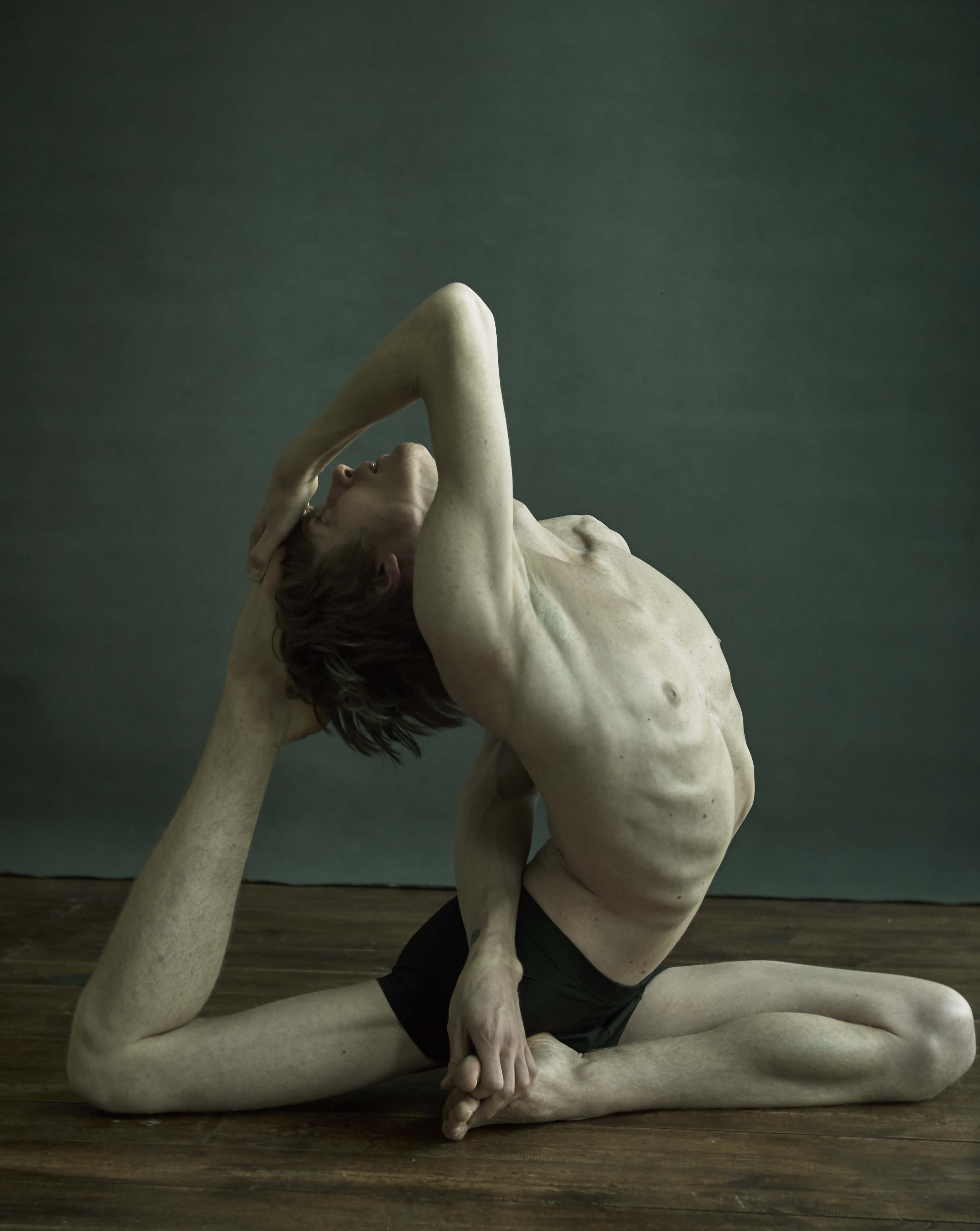
Seated back-bending posture in modern yoga
Eka Pada Rajakapotasana (; ), Rajakapotasana, or [One-legged] King Pigeon Pose is a seated back-bending asana in modern yoga as exercise. The Yin Yoga form of the asana is named Swan Pose, while the Aerial yoga variant, supported in a hammock, is called Flying Pigeon Pose. The basic pose is described in the 20th century by two of Krishnamacharya's pupils, Pattabhi Jois and B. K. S. Iyengar; several other variants have been created. It is one of the yoga poses often used in advertising to convey desired qualities such as flexibility and grace.
Etymology and origins
The name comes from the Sanskrit words eka (एक) meaning "one"; pada (पाद) meaning "foot", rāja (राज) meaning "king", kapota (कपोत) meaning "pigeon"
The pose is described in the 20th century by two of Krishnamacharya's pupils, Pattabhi Jois in his Ashtanga Vinyasa Yoga, and B. K. S. Iyengar in his Light on Yoga.
Description
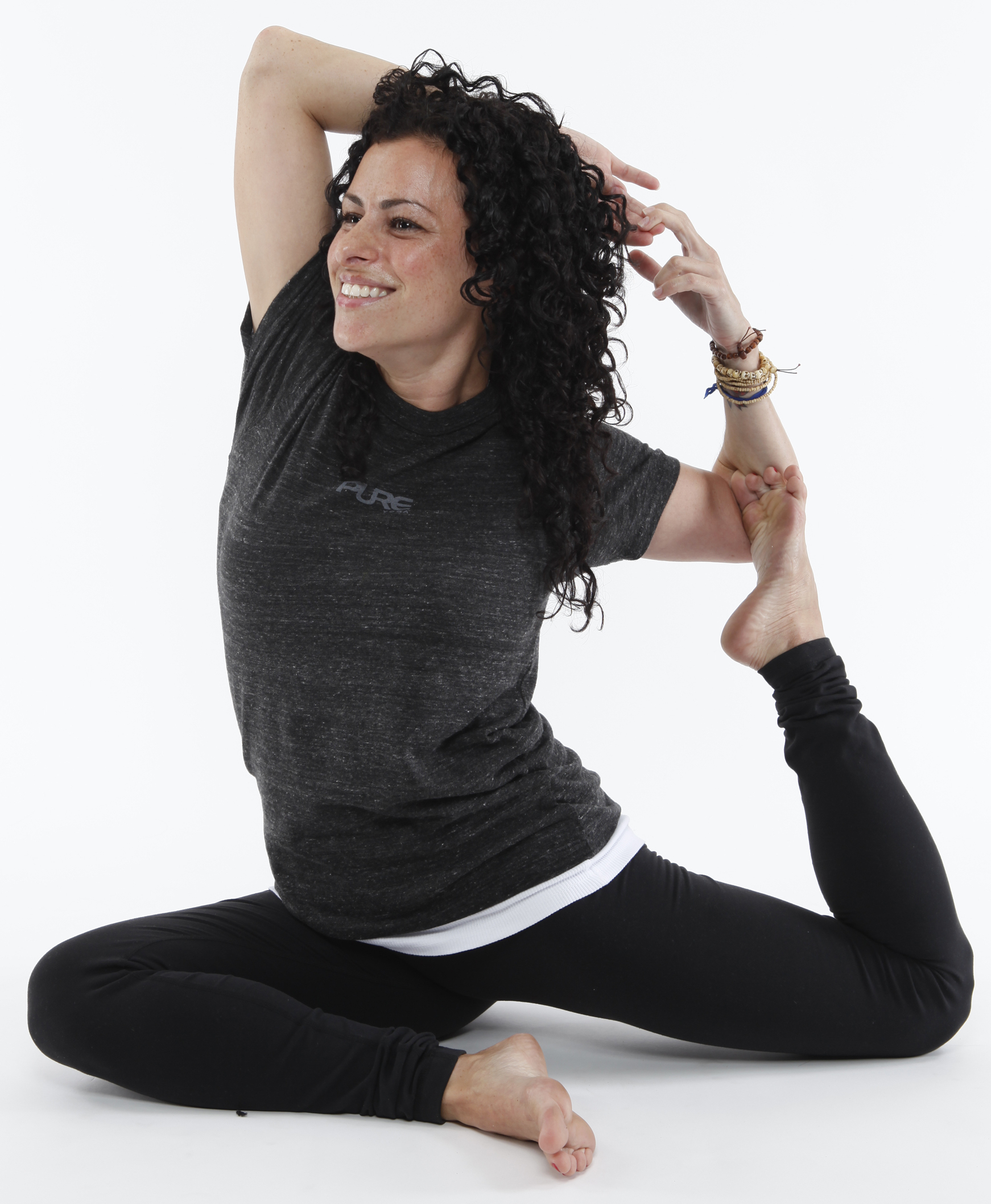
Starting from sitting in Dandasana (stick pose), one knee is bent, keeping the knee on the floor, so the foot is just in front of the groin, and the other leg is taken straight back. For the completed pose bend the knee of the rear leg, and grasp the foot or ankle with one or both hands.
Variations
Of Rajakapotasana I
In Supported [King] Pigeon or Salamba Kapotasana, the rear leg is straight out and the hands are on the ground beside the hips, reducing the backbend. If comfortable, the back may be arched and the gaze directed straight upwards.
In Sleeping Pigeon (or Sleeping Swan in Yin Yoga but it is a different pose from the advanced kneeling backbend of Kapotasana.
In Aerial yoga, Flying Pigeon Pose is a hammock-supported variant with one foot hooked across the front of the hammock.
The pose can be practised with the rear knee against a wall, the lower leg vertical with a strap around the foot, working towards the full pose. The strap is grasped with both hands, the arms reversed so that the elbows point upwards.
File:Kapotasana-Yoga-Posture-Pigeon.jpg|In this variation, the rear foot hooks the arm on the same side. File:IMG 0585 2-- Swan.jpg|Swan Pose in Yin Yoga is similar to Salamba Kapotasana. For the 'sleeping' variant, the body is reclined forwards over the bent leg. File:Aerial Yoga.jpg|Aerial yoga class practising Flying Pigeon Pose, a hammock-supported variant File:Taube2a (cropped).jpg|Variation with both hands grasping the rear foot
Eka Pada Rajakapotasana II, III, and IV
For Eka Pada Rajakapotasana II, the hands and the rear foot are as for Rajakapotasana I, but the sole of the front foot is on the floor in front of the hip, and the front knee is sharply bent with the knee forwards of the foot; the hips are off the ground.
In Eka Pada Rajakapotasana III, the hands and the rear foot are as for Rajakapotasana I, but according to Iyengar Yoga the front knee points forwards, with the front foot and lower leg on the ground beneath the thigh.
For Eka Pada Rajakapotasana IV, the hands and the rear foot are as for Rajakapotasana I, but the front foot is stretched straight forwards along the ground. The pose may be practised using props: the rear lower leg vertically up a wall, a yoga block under the sitting bones, another block if needed under the front leg, and a strap between the hands and the rear foot.
References
References
- "Eka Pada Raja Kapotasana".
- Sinha, S. C.. (1996). "Dictionary of Philosophy". Anmol Publications.
- Sjoman, Norman E.. (1999). "The Yoga Tradition of the Mysore Palace". Abhinav Publications.
- Iyengar, B. K. S.. (1979). "[[Light on Yoga". Thorsons.
- "One-Legged King Pigeon Pose". [[Yoga Journal]].
- (2006). "Hatha Yoga Illustrated". Human Kinetics.
- Lidell, Lucy; [[Sivananda yoga. (1983). "The Book of Yoga: the complete step-by-step guide". Ebury.
- (16 July 2008). "The King of Hip Openers: Pigeon Pose". [[Yoga Journal]].
- Dortignac, Michelle. (17 June 2015). "The Aerial Yoga Sequence: 9 Poses to Defy Gravity".
- Mehta, Silva; Mehta, Mira; Mehta, Shyam. (1990). "Yoga: The Iyengar Way". Dorling Kindersley.
- "Swan". [[Yin Yoga]].
- (5 May 2008). "One-Legged King Pigeon Pose II". [[Yoga Journal]].
- Beaumont, Jennifer. (23 January 2018). "In the Heart: Eka Pāda Rajakapotāsana III". Light on Yoga Institute ([[Iyengar Yoga]] Center).
- Benagh, Barbara. (16 March 2010). "Eka Pada Rajakapotasana IV (Bird by Bird: One-Legged King Pigeon Pose IV)". [[Yoga Journal]].
This article was imported from Wikipedia and is available under the Creative Commons Attribution-ShareAlike 4.0 License. Content has been adapted to SurfDoc format. Original contributors can be found on the article history page.
Ask Mako anything about Eka Pada Rajakapotasana — get instant answers, deeper analysis, and related topics.
Research with MakoFree with your Surf account
Create a free account to save articles, ask Mako questions, and organize your research.
Sign up freeThis content may have been generated or modified by AI. CloudSurf Software LLC is not responsible for the accuracy, completeness, or reliability of AI-generated content. Always verify important information from primary sources.
Report