From Surf Wiki (app.surf) — the open knowledge base
Eintracht Braunschweig
German association football club from Braunschweig, Lower Saxony
.jpg)
German association football club from Braunschweig, Lower Saxony
| Field | Value |
|---|---|
| clubname | Eintracht Braunschweig |
| fullname | Braunschweiger Turn- und |
| Sportverein Eintracht von 1895 e.V. | |
| current | 2025–26 Eintracht Braunschweig season |
| image | Eintracht Braunschweig logo.svg |
| upright | 0.9 |
| nickname | Die Löwen (The Lions) |
| founded | |
| ground | Eintracht-Stadion, |
| Braunschweig | |
| capacity | 23,325 |
| chairman | Nicole Kumpis |
| chrtitle | President |
| mgrtitle | Head coach |
| manager | Heiner Backhaus |
| league | |
| season | |
| position | |
| website | |
| pattern_la1 | _braun2425h |
| pattern_b1 | _braun2425h |
| pattern_ra1 | _braun2425h |
| pattern_sh1 | _braun2324h |
| leftarm1 | FFDD00 |
| body1 | FFDD00 |
| rightarm1 | FFDD00 |
| shorts1 | 0044FF |
| socks1 | FFDD00 |
| pattern_la2 | _braun2425a |
| pattern_b2 | _braun2425a |
| pattern_ra2 | _braun2425a |
| leftarm2 | 0044FF |
| body2 | 0044FF |
| rightarm2 | 0044FF |
| shorts2 | FFDD00 |
| socks2 | 0044FF |
Sportverein Eintracht von 1895 e.V. Braunschweig
Braunschweiger Turn- und Sportverein Eintracht von 1895 e.V., commonly known as Eintracht Braunschweig () or BTSV (), is a German football and sports club based in Braunschweig, Lower Saxony. They compete in the 2. Bundesliga, the second tier of the German football pyramid, and have played home games at the 24,406-capacity Eintracht-Stadion since 1923.
Established in 1895 as FuCC Eintracht 1895, the club was a founding member of the German Football Association (DFB) in 1900. They enjoyed regional success before World War II, winning the Northern German Championship in 1908 and 1913. After the war, Braunschweig re-established itself in the Oberliga Nord and was among the original 16 clubs admitted to the inaugural Bundesliga season in 1963. Their golden era came in the 1960s and 1970s, when they were crowned Bundesliga champions in 1966–67 under manager Helmut Johannsen and finished third in 1976-77.
Braunchschweig were a Bundesliga mainstay until their relegation in 1985, following which they have spent decades oscillating between the second and third tiers. The club survived a financial crisis and near-relegation to the fourth tier in the late 2000s. A dramatic resurgence under manager Torsten Lieberknecht saw their promotion to the Bundesliga in 2013 after a 28-year absence, though the return lasted just one season. In recent years, the club has remained a yo-yo side between the 2. Bundesliga and 3. Liga.
Nicknamed Die Löwen (The Lions) for the red lion on their crest, Braunschweig's traditional blue and yellow kit colours are derived from the flag of the Duchy of Brunswick. Their longest-standing and fiercest rivalry is with Hannover 96, against whom they contest the Lower Saxony derby.
History
Foundation and early years
Eintracht Braunschweig was founded as the football and cricket club FuCC Eintracht 1895 in 1895, became FC Eintracht von 1895 in 1906, and then SV Eintracht in 1920.
The team has a colourful history and it quickly became one of northern Germany's favourite sides. In 1900, Eintracht Braunschweig was among the founding members of the German Football Association (DFB). It enjoyed success early on, playing in the upper-tier league, winning the Northern German championship in 1908 and 1913, and placing three players on the Germany national team by 1914. Under the Third Reich, the team played in the Gauliga Niedersachsen and managed two appearances in the national final rounds. According to a book about the Massaker von Prerau, the mass murderer Karol Pazúr played for Eintracht Braunschweig in 1940. In 1942–43, Eintracht Braunschweig went into the national championship play-offs as one of the favourites. The team under manager Georg "Schorsch" Knöpfle had just won the newly formed Gauliga Südhannover-Braunschweig with a record of 17 wins and 1 draw in 18 games, scoring 146 goals in the process. After a convincing 5–1 win over Victoria Hamburg in the first round, the draw saw the club paired with the other favourites for the title, Helmut Schön's Dresdner SC. Dresden won the game held in Dresden with 4–0, and subsequently won the German championship, with an undefeated season.
Post-war football

As part of the denazification of Germany after World War II, the British authorities dissolved all previously existing sports clubs in Braunschweig and demanded the creation of a single, united sports club for the city. As such, Eintracht Braunschweig was merged into the new club TSV Braunschweig on 2 November 1945. TSV Braunschweig finally took on the club's current name, Braunschweiger TSV Eintracht von 1895, on 1 April 1949.
The club continued to play in the top division – now the Oberliga Nord – after the war, except a single season (1952–53) spent in tier II. The side was touched by tragedy in 1949 when goalkeeper Gustav Fähland died of internal bleeding a few days after being injured during a game in a collision with a Werder Bremen striker. Another appearance in the final round of the national championship came in 1958.
Bundesliga football 1963 to 1985

Eintracht Braunschweig's consistently high standard of play and financial stability helped it to become one of the 16 teams selected out of a group of 46 applicants for play in the Bundesliga, the new federal professional league formed in 1963. Once again the side enjoyed early success, winning the national title in the 1966–67 season under manager Helmuth Johannsen with solid defensive play. That championship team gave up only 27 goals against, which stood as a Bundesliga record until bettered by Werder Bremen in 1988. Another ten players joined the national side from the team, mostly through the 1960s and 1970s.
The club was hit by tragedy again during the winter break of the 1968–69 season when forward Jürgen Moll, aged 29 at the time, and his wife died in a car accident. Two charity matches were played for the benefit of the Molls' children, the first featured West Germany's 1954 FIFA World Cup-winning squad in the line-up of the tournament's final, and the second saw a combined squad of Eintracht Braunschweig and rivals Hannover 96 take on a Bundesliga all-star team.
The club found itself embroiled in the Bundesliga scandal of 1971, but with a somewhat unusual twist. Several players accepted payments totalling 40,000 DM – not to underperform and so lose or tie a game, but rather to put out an extra effort to win. Ultimately, two players were suspended and another ten were fined.
In 1973, in the face of some opposition from the league, Braunschweig became the first Bundesliga side to sport a sponsor logo on its jerseys – that of Wolfenbüttel-based liquor producer Jägermeister. The move paid the team 100,000 DM and introduced a new way of doing business to football that is worth millions today. Other clubs quickly followed suit. Braunschweig's game against Schalke 04 on 24 March 1973 became the first Bundesliga match to feature a club having sponsorship on its jersey. Jägermeister continued to sponsor the club until 1987, although a later attempt to rename the team "Jägermeister Braunschweig" was finally refused by the DFB in 1983.
Eintracht Braunschweig just missed a second title in 1977 when it finished third, one point back of champion Borussia Mönchengladbach and just behind second-place finisher Schalke 04 on goal difference. The club made news after the season by signing 1974 World Cup winner Paul Breitner from Real Madrid for a transfer fee of 1.6 million DM. Breitner, however, did not fit into the team at all and was sold to Bayern Munich after just one season.

Decline
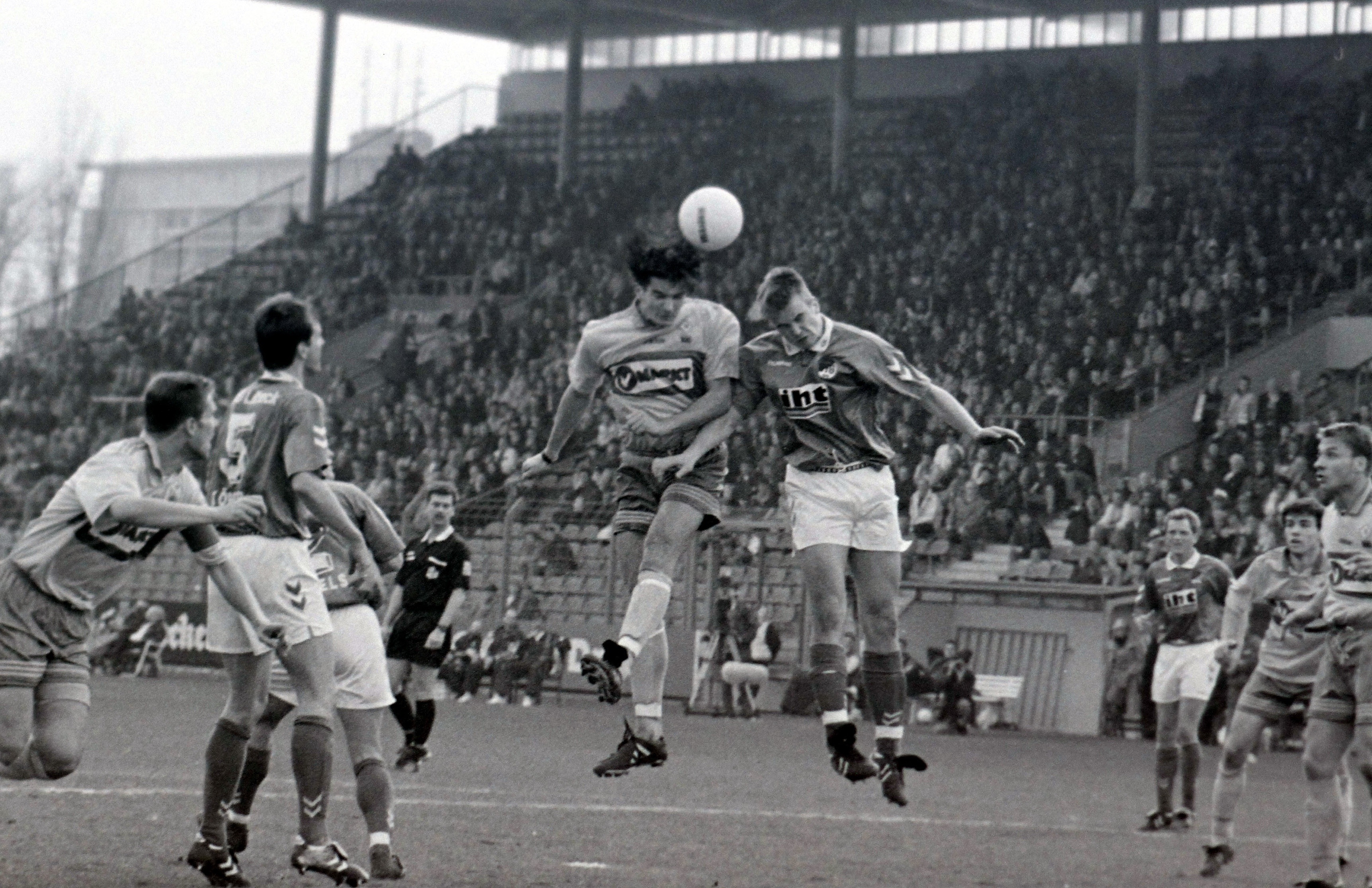
Since the 1985–86 season, the side has played at the tier II and III levels, with the exception of the 2013–14 season. In 1987, Braunschweig set a mark even as they were demoted; it became the only team ever to have been relegated with a positive goal difference. The side counted a casualty in the Cold War in the death of Lutz Eigendorf, who fled East Germany in 1979, where he played for Dynamo Berlin, to come to the west to play for 1. FC Kaiserslautern. Shortly after his transfer to Braunschweig in 1983, he died in a motor vehicle accident, which was revealed in 2000 as the assassination of a "traitor" arranged by the Stasi, East Germany's secret police.
The club played in the Bundesliga through to the mid-1980s, having been relegated just twice, playing in the second division in 1973–74 and again in 1980–81. During the club's run of 322 games in the Bundesliga from 1963 to 1973, it set a record that still stands by not seeing a single player red-carded. In 1984–85, Eintracht Braunschweig was relegated from the Bundesliga for the third time.
al difference, with 52 goals for and 47 against. After having been stuck in the Regionalliga for most of the 1990s, Eintracht Braunschweig moved constantly between the 2. Bundesliga and the Regionalliga during the 2000s. At the end of the 2007–08 Regionalliga season, the club was facing a severe crisis, both financially and on the field: Eintracht was in danger of missing out on qualification for Germany's new nationwide third-tier league 3. Liga, which would have meant Braunschweig's first ever relegation to the fourth level of the German football league system.
Recent history
However, under new manager Torsten Lieberknecht—who had taken on the role just a few weeks earlier—Eintracht Braunschweig secured qualification for the 3. Liga on the last matchday of the season. Moreover, under Lieberknecht and also newly appointed director of football Marc Arnold, the club continued to steadily improve throughout the next few seasons; a resurgence on and off the field that was widely recognized by the German media. In 2010–11, the team won promotion back to the 2. Bundesliga as champions of the 3. Liga. There, Eintracht Braunschweig re-established itself quickly, finishing the 2011–12 season comfortably mid-table. The 2012–13 season should prove even more successful: on the second matchday, Braunschweig took over a direct promotion spot and kept it for the rest of the season. On the 31st matchday, the club secured its return to the Bundesliga after 28 years in the second and third divisions with a 1–0 away win over FC Ingolstadt 04.
The team finished the 2013–14 Bundesliga season in 18th place and was therefore relegated again after one season in the top-flight. Eintracht Braunschweig had spent most of the season in a relegation spot, but had a chance to stay in the league until the last matchday. However, the club was officially relegated on 10 May 2014 after a 3–1 loss at 1899 Hoffenheim. Eintracht came close to a return to the Bundesliga in 2016–17: the club finished third in the 2. Bundesliga and qualified for the promotion play-off to the Bundesliga, but lost 2–0 on aggregate to VfL Wolfsburg to remain in the 2. Bundesliga.
On 13 May 2018, Eintracht Braunschweig were relegated to the 3. Liga after a 6–2 loss to Holstein Kiel.
In 2018–19, poor performances on the pitch meant that Braunschweig almost got relegated to the fourth tier, Regionalliga Nord, surviving relegation on goal difference. In the following season, the club finished third to be promoted back to the 2. Bundesliga, before being relegated in 2020–21, followed by another promotion after a second-place finish.
Crest and colours
Colours
Traditionally, Eintracht Braunschweig plays its home games in the colours blue and yellow. These colours are derived from the flag of the Duchy of Brunswick.
| pattern_la = _blue_stripes | pattern_b = _bluefourstripes | pattern_ra = _blue_stripes | leftarm = FFFF00 | body = FFFF00 | rightarm = FFFF00 | shorts = 0000FF | socks = FFFF00 | title = 1963–1964}} | pattern_la =_yellow_border | pattern_b = _yellowvertical | pattern_ra = _yellow_border | leftarm = 0000FF | body = 0000FF | rightarm = 0000FF | shorts = 0000FF | socks = FFFF00 | title = 1964–1966}} | pattern_la = | pattern_b = | pattern_ra = | leftarm = FFFF00 | body = FFFF00 | rightarm = FFFF00 | shorts = 0000FF | socks = FFFF00 | title = 1966–1971}} | pattern_la = | pattern_b = | pattern_ra = | leftarm = FFFF00 | body = FFFF00 | rightarm = FFFF00 | shorts = 0000FF | socks = 0000FF | title = 1971–1981}} | pattern_la = _shoulder_stripes_blue_stripes | pattern_b = _bluecollar_2 | pattern_ra = _shoulder_stripes_blue_stripes | leftarm = FFFF00 | body = FFFF00 | rightarm = FFFF00 | shorts = 0000FF | socks = 0000FF | title = 1981–1987}} |
|---|
Crest
The club's crest contains a red lion on a white ground. This symbol is derived from the coat of arms of the city of Braunschweig, which in turn is based on the insignia of Henry the Lion. The club badge went through various different versions during its history, most of the time however, it consisted of a circular badge in blue and yellow, with a red lion on a white shield in the center of the circle.
In 1972–73, Eintracht Braunschweig scrapped the original crest and replaced it with a new design based on the logo of its sponsor, Jägermeister. This was initially done to circumvent the DFB's ban on shirt sponsors – a loophole in those rules allowed to club to put a very close looking symbol on their shirt as long as it was the club's official crest. In 1986, after Jägermeister stopped the sponsorship of the club, Eintracht Braunschweig adopted a new, diamond-shaped logo containing the traditional red lion as well as the club's colours blue and yellow.
In 2011, the club members voted to return to the club's more traditional round crest. In March 2012, the club then presented the new version of the crest, which was adopted as the official logo at the start of the 2012–13 season. For the 2016–17 season, the club wore a special anniversary crest to commemorate the 50th anniversary of the club's 1966–67 Bundesliga title.
File:Flagge Herzogtum Braunschweig.svg| File:DEU Braunschweig COA.svg| File:Eintracht Braunschweig (Hist.).svg| File:Eintracht Braunschweig logo (1986-2012).svg| File:Eintracht Braunschweig logo 2016.svg|
Stadium

Main article: Eintracht-Stadion
Eintracht Braunschweig plays at the Eintracht-Stadion in Braunschweig, built in 1923. Currently the stadium has a capacity of ca. 25,000, during the 1960s it held up to 38,000 people. Before the construction of the Eintracht-Stadion, the club played its home games at Sportplatz an der Helmstedter Straße, which held 3,000 people.
Supporters

Despite spending recent years in the lower divisions, the club's fan support has remained strong: with 21,396 per game, Eintracht Braunschweig had the 24th-highest average attendance of any sports team in Germany during the 2011–12 season.
While friendly fan relations exist with 1. FC Magdeburg, Waldhof Mannheim, and Swiss club Basel, Eintracht Braunschweig has a strong rivalry with Hannover 96.
Because of Wolfsburg's immediate proximity to Braunschweig, journalists often report a rivalry with VfL Wolfsburg. Matches between the two are often referred to as a derby. This is denied by the fans of Eintracht Braunschweig as well as those of Hannover 96, who only consider their matches against each other as the only true Lower Saxony derby.
Recent seasons
| Year | Division | Tier | Position |
|---|---|---|---|
| 1963–64 | Bundesliga | I | 11th |
| 1964–65 | Bundesliga | 9th | |
| 1965–66 | Bundesliga | 10th | |
| 1966–67 | Bundesliga | 1st | |
| 1967–68 | Bundesliga | 9th | |
| 1968–69 | Bundesliga | 4th | |
| 1969–70 | Bundesliga | 16th | |
| 1970–71 | Bundesliga | 4th | |
| 1971–72 | Bundesliga | 12th | |
| 1972–73 | Bundesliga | 17th ↓ | |
| 1973–74 | 2. Bundesliga | II | 1st ↑ |
| 1974–75 | Bundesliga | I | 9th |
| 1975–76 | Bundesliga | 5th | |
| 1976–77 | Bundesliga | 3rd | |
| 1977–78 | Bundesliga | 13th | |
| 1978–79 | Bundesliga | 9th | |
| 1979–80 | Bundesliga | 18th ↓ | |
| 1980–81 | 2. Bundesliga | II | 2nd ↑ |
| 1981–82 | Bundesliga | I | 11th |
| 1982–83 | Bundesliga | 15th | |
| 1983–84 | Bundesliga | 9th | |
| 1984–85 | Bundesliga | 18th ↓ | |
| 1985–86 | 2. Bundesliga | II | 12th |
| 1986–87 | 2. Bundesliga | 17th ↓ | |
| 1987–88 | Amateur-Oberliga Nord | III | 1st ↑ |
| 1988–89 | 2. Bundesliga | II | 9th |
| 1989–90 | 2. Bundesliga | 7th | |
| 1990–91 | 2. Bundesliga | 13th | |
| 1991–92 | 2. Bundesliga | 7th | |
| 1992–93 | 2. Bundesliga | 19th ↓ | |
| 1993–94 | Amateur-Oberliga Nord | III | 2nd |
| 1994–95 | Regionalliga Nord | 6th | |
| 1995–96 | Regionalliga Nord | 2nd | |
| 1996–97 | Regionalliga Nord | 2nd | |
| 1997–98 | Regionalliga Nord | 2nd | |
| 1998–99 | Regionalliga Nord | 3rd | |
| 1999–2000 | Regionalliga Nord | 3rd | |
| 2000–01 | Regionalliga Nord | 8th | |
| 2001–02 | Regionalliga Nord | 2nd ↑ | |
| 2002–03 | 2. Bundesliga | II | 15th ↓ |
| 2003–04 | Regionalliga Nord | III | 6th |
| 2004–05 | Regionalliga Nord | 1st ↑ | |
| 2005–06 | 2. Bundesliga | II | 12th |
| 2006–07 | 2. Bundesliga | 18th ↓ | |
| 2007–08 | Regionalliga Nord | III | 10th |
| 2008–09 | 3. Liga | 13th | |
| 2009–10 | 3. Liga | 4th | |
| 2010–11 | 3. Liga | 1st ↑ | |
| 2011–12 | 2. Bundesliga | II | 8th |
| 2012–13 | 2. Bundesliga | 2nd ↑ | |
| 2013–14 | Bundesliga | I | 18th ↓ |
| 2014–15 | 2. Bundesliga | II | 6th |
| 2015–16 | 2. Bundesliga | 8th | |
| 2016–17 | 2. Bundesliga | 3rd | |
| 2017–18 | 2. Bundesliga | 17th ↓ | |
| 2018–19 | 3. Liga | III | 16th |
| 2019–20 | 3. Liga | 3rd ↑ | |
| 2020–21 | 2. Bundesliga | II | 17th ↓ |
| 2021–22 | 3. Liga | III | 2nd ↑ |
| 2022–23 | 2. Bundesliga | II | 15th |
| 2023–24 | 2. Bundesliga | 15th | |
| 2024–25 | 2. Bundesliga | 16th |
;Key
| ↑ Promoted | ↓ Relegated |
|---|
League history
Main article: List of Eintracht Braunschweig seasons
Between 1904 and 1985, Eintracht Braunschweig spent all but three seasons in Germany's top division. Between 1985 and 2013, the club then alternated between the second and third level of the German league pyramid, before returning to the top flight for the first time in 28 years at the end of the 2012–13 season.
ImageSize = width:900 height:85 PlotArea = left:15 right:22 bottom:20 top:22 Legend = columns:4 left:15 top:80 columnwidth:150
DateFormat = dd/mm/yyyy Period = from:1904 till:30/06/2025 TimeAxis = orientation:horizontal format:yyyy ScaleMajor = unit:year increment:4 start:1904
Colors= id:first value:blue legend:First_division id:second value:yellow legend:Second_division id:third value:red legend:Third_division
PlotData= bar:Leaders width:25 mark:(line,white) align:left fontsize:S from:start till:30/06/1952 shift:(25,5) color:first from:01/07/1952 till:30/06/1953 shift:(25,5) color:second from:01/07/1953 till:30/06/1973 shift:(25,5) color:first from:01/07/1973 till:30/06/1974 shift:(25,5) color:second from:01/07/1974 till:30/06/1980 shift:(25,5) color:first from:01/07/1980 till:30/06/1981 shift:(25,5) color:second from:01/07/1981 till:30/06/1985 shift:(25,5) color:first from:01/07/1985 till:30/06/1987 shift:(25,5) color:second from:01/07/1987 till:30/06/1988 shift:(25,5) color:third from:01/07/1988 till:30/06/1993 shift:(25,5) color:second from:01/07/1993 till:30/06/2002 shift:(25,5) color:third from:01/07/2002 till:30/06/2003 shift:(25,5) color:second from:01/07/2003 till:30/06/2005 shift:(25,5) color:third from:01/07/2005 till:30/06/2007 shift:(25,5) color:second from:01/07/2007 till:30/06/2011 shift:(25,5) color:third from:01/07/2011 till:30/06/2013 shift:(25,5) color:second from:01/07/2013 till:30/06/2014 shift:(25,5) color:first from:01/07/2014 till:30/06/2018 shift:(25,5) color:second from:01/07/2018 till:30/06/2020 shift:(25,5) color:third from:01/07/2020 till:30/06/2021 shift:(25,5) color:second from:01/07/2021 till:30/06/2022 shift:(25,5) color:third from:01/07/2022 till:30/06/2025 shift:(25,5) color:second
Honours
;League
- Bundesliga:
- Champions: 1966–67
- 2. Bundesliga (II):2
- 3. Liga (III):
- Champions: 2010–11
- Regionalliga Nord (II):
- Champions: 1973–74
- Amateuroberliga Niedersachsen-Ost (II):
- Champions: 1952–53
- Regionalliga Nord (III):
- Champions: 2004–05
- Amateur-Oberliga Nord (III):
- Champions: 1987–88 2Includes 2. Bundesliga Nord (1974–81).
;Regional
- Northern German championship:
- Champions: 1907–08, 1912–13
- Gauliga Südhannover-Braunschweig:
- Champions: 1942–43, 1943–44
- Südkreisliga/Bezirksliga Südhannover-Braunschweig/Oberliga Südhannover-Braunschweig:
- Champions: 1923–24, 1924–25
- Duchy/Free State of Brunswick championship:1
- Champions: 1904–05, 1905–06, 1906–07, 1907–08, 1908–09, 1909–10, 1910–11, 1911–12, 1912–13, 1915–16, 1916–17, 1917–18, 1919–20
- Lower Saxony Cup (Tiers III–V):
- Winners: 2003–04, 2010–11
- Runners-up: 1998–99, 2008–09
1No championship was played in 1914 and 1915
European record
| Season | Competition | Round | Nation | Club | Home | Away | Aggregate | Result |
|---|---|---|---|---|---|---|---|---|
| 1967–68 | European Cup | 1st round | Dinamo Tirana | – | – | Win | ||
| 2nd round | Rapid Wien | 2–0 | 0–1 | Win | ||||
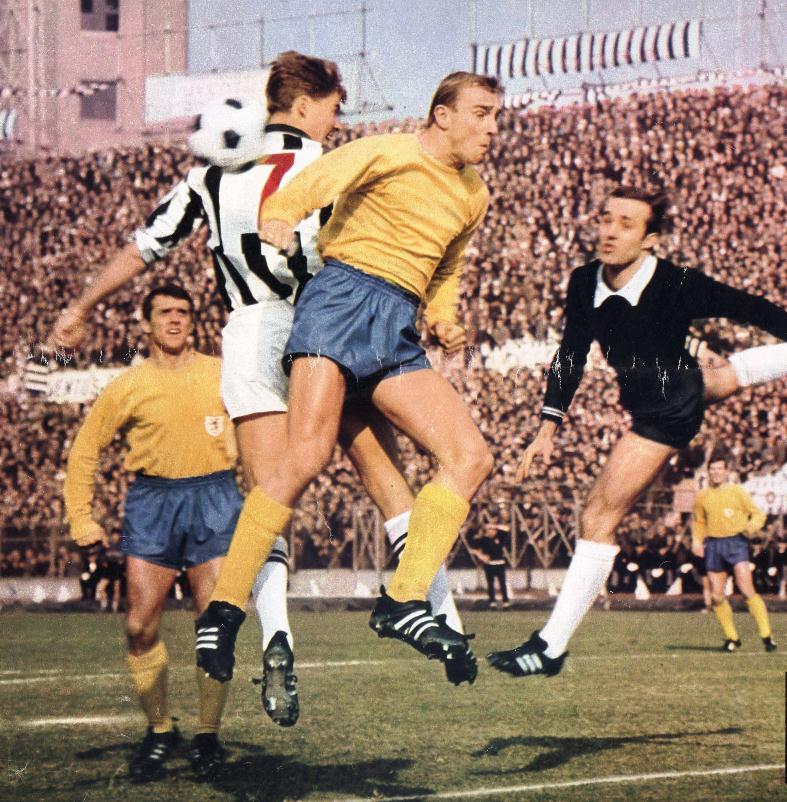
| Quarter-finals | Juventus | 3–2 | 0–1 | Loss | ||||
| 1971–72 | UEFA Cup | 1st round | Glentoran | 6–1 | 1–0 | Win | ||
| 2nd round | Atlético Bilbao | 2–1 | 2–2 | Win | ||||
| 3rd round | Ferencváros | 1–1 | 2–5 | Loss | ||||
| 1976–77 | UEFA Cup | 1st round | Holbæk B&I | 7–0 | 0–1 | Win | ||
| 2nd round | Español | 2–1 | 0–2 | Loss | ||||
| 1977–78 | UEFA Cup | 1st round | Dinamo Kiev | 0–0 | 1–1 | Win | ||
| 2nd round | Start | 4–0 | 0–1 | Win | ||||
| 3rd round | PSV | 1–2 | 0–2 | Loss |
1 Juventus beat Eintracht Braunschweig 1–0 in a play-off in Bern to reach the semi-finals.
2 Eintracht Braunschweig progressed to the second round on away goals.
Intertoto Cup record
| Season | Competition | Round | Nation | Club | Home | Away | |
|---|---|---|---|---|---|---|---|
| 1964–65 | International Football Cup | Group A2 | DWS | 2–0 | 0–4 | ||
| Group A2 | FC La Chaux-de-Fonds | 1–1 | 0–2 | ||||
| Group A2 | Beringen | 2–1 | 3–2 | ||||
| 1965–66 | International Football Cup | Group A4 | Örgryte IS | 3–0 | 1–3 | ||
| Group A4 | Sparta Rotterdam | 1–2 | 0–3 | ||||
| Group A4 | Luzern | 7–0 | 4–4 | ||||
| 1966–67 | International Football Cup | Group B3 | Górnik Zabrze | 8–0 | 0–4 | ||
| Group B3 | Carl Zeiss Jena | 1–2 | 1–2 | ||||
| Group B3 | AIK | 5–1 | 2–0 | ||||
| 1968 | Intertoto Cup | Group B7 | Lausanne-Sports | 2–1 | 1–4 | ||
| Group B7 | Wacker Innsbruck | 3–1 | 2–1 | ||||
| Group B7 | AB | 2–0 | 0–0 | ||||
| 1970 | Intertoto Cup | Group B1 | Grasshopper | 2–0 | 1–5 | ||
| Group B1 | IFK Norrköping | 1–0 | 2–2 | ||||
| Group B1 | Wiener SC | 3–0 | 1–1 | ||||
| 1971 | Intertoto Cup | Group 6 | Malmö FF | 0–1 | 1–0 | ||
| Group 6 | Zagłębie Wałbrzych | 1–0 | 1–0 | ||||
| Group 6 | Young Boys | 2–0 | 5–1 | ||||
| 1972 | Intertoto Cup | Group 6 | TJ ZVL Žilina | 5–0 | 1–1 | ||
| Group 6 | Landskrona BoIS | 2–0 | 0–3 | ||||
| Group 6 | Vejle BK | 4–1 | 3–0 | ||||
| 1973 | Intertoto Cup | Group 9 | AC Nitra | 1–2 | 1–1 | ||
| Group 9 | FC Amsterdam | 1–4 | 0–0 | ||||
| Group 9 | Vejle BK | 0–3 | 2–0 | ||||
| 1975 | Intertoto Cup | Group 3 | Vojvodina | 2–1 | 1–3 | ||
| Group 3 | Zürich | 2–0 | 0–1 | ||||
| Group 3 | Vejle BK | 3–0 | 5–0 | ||||
| 1976 | Intertoto Cup | Group 4 | Baník Ostrava | 0–2 | 0–0 | ||
| Group 4 | SSW Innsbruck | 1–1 | 0–1 | ||||
| Group 4 | AIK | 2–1 | 3–1 | ||||
| 1978 | Intertoto Cup | Group 4 | Standard Liège | 0–1 | 1–0 | ||
| Group 4 | Grasshoppers | 0–0 | 2–0 | ||||
| Group 4 | B 1903 | 5–1 | 2–1 | ||||
| 1979 | Intertoto Cup | Group 3 | Malmö FF | 3–1 | 2–2 | ||
| Group 3 | Slavia Prague | 2–0 | 1–1 | ||||
| Group 3 | St. Gallen | 3–2 | 4–1 | ||||
| 1983 | Intertoto Cup | Group 10 | TJ Vítkovice | 0–2 | 2–2 | ||
| Group 10 | Trakia Plovdiv | 2–0 | 1–0 | ||||
| Group 10 | IF Elfsborg | 4–0 | 0–1 | ||||
| 1984 | Intertoto Cup | Group 4 | Standard Liège | 3–1 | 1–4 | ||
| Group 4 | OB | 0–0 | 1–1 | ||||
| Group 4 | Go Ahead Eagles | 2–1 | 1–2 | ||||
| 1985 | Intertoto Cup | Group 5 | Wismut Aue | 2–1 | 2–3 | ||
| Group 5 | Slavia Prague | 4–1 | 0–4 | ||||
| Group 5 | Viking | 6–3 | 1–2 |
Players
Current squad
Out on loan
Former players
Main article: List of Eintracht Braunschweig players
The list includes players with at least 250 games or 50 goals for Eintracht Braunschweig's first team, as well as players with at least one cap for their country's national or Olympic football team. However, players who did not receive any of their caps while playing for Eintracht Braunschweig are only included if they made at least ten appearances for the club.
;Germany
- GER Holger Aden (1989–1992)
- GER Joachim Bäse (1959–1973)
- GER Karim Bellarabi (2008–2011, 2013–2014)
- GER Mirko Boland (2009–2018)
- GER Paul Breitner (1977–1978)
- GER Ludwig Bründl (1971–1975)
- GER Bernd Buchheister (1985–1993)
- GER Konrad "Otto" Bülte (1903–1911)
- GER Bernd Dörfel (1968–1970)
- GER Wolfgang Dremmler (1973–1979)
- GER Dietmar Erler (1970–1981)
- GER Wolfgang Frank (1974–1978)
- GER Bernd Franke (1971–1985)
- GER Willi Fricke (1938–1952)
- GER Bernd Gersdorff (1969–1977)
- GER Klaus Gerwien (1961–1974)
- GER Wolfgang Grzyb (1966–1978)
- GER Friedhelm Haebermann (1969–1978)
- GER Otto Harder (1909–1913)
- GER Winfried Herz (1951–1961)
- GER Reiner Hollmann (1973–1984)
- GER Hans Jäcker (1956–1967)
- GER Peter Kaack (1963–1973)
- GER Dennis Kruppke (2008–2015)
- GER Ludwig Lachner (1934–1949)
- GER Max Lorenz (1969–1972)
- GER Peter Lux (1981–1985, 1990–1993)
- GER Erich Maas (1964–1970)
- GER Franz Merkhoffer (1968–1984)
- GER Jürgen Moll (1957–1968)
- GER Harald Nickel (1978–1979)
- GER Walter Poppe (1904–1912)
- GER Richard Queck (1907–1914)
- GER Tobias Rau (1999–2001)
- GER Uwe Reinders (1987–1988)
- GER Walter Schmidt (1959–1969)
- GER Dirk Schuster (1990–1991)
- GER Albert Sukop (1930–1948)
- GER Werner Thamm (1950–1962)
- GER Lothar Ulsaß (1964–1971)
- GER Horst Wolter (1961–1972)
- GER Ronald Worm (1979–1987)
- GER Heinz Wozniakowski (1951–1958)
- GER Dieter Zembski (1975–1980)
;International
- NOR Mushaga Bakenga (2014–2015)
- UKR Ihor Belanov (1991–1994)
- ISL Magnús Bergs (1984–1985)
- BIH Ermin Bičakčić (2012–2014)
- SWE Hasse Borg (1977–1983)
- CMR Serge Branco (1998–2000)
- DEN Tommy Christensen (1988–1989)
- IRN Daniel Davari (2009–2014)
- TUN Fahed Dermech (1999–2000)
- CAN Randy Edwini-Bonsu (2011–2013)
- NOR Omar Elabdellaoui (2013–2014)
- URSRUS Sergei Fokin (1992–2000)
- JAM Milton Griffiths (2000–2001)
- NOR Vegar Eggen Hedenstad (2014–2015)
- AUT Reinhold Hintermaier (1984–1986)
- TJK Alexander Huber (2007)
- SLO Rudi Istenič (2001–2002)
- CAN Simeon Jackson (2013)
- DEN Bent Jensen (1972–1973)
- ALB Bekim Kastrati (2006–2007)
- JPN Yahiro Kazama (1988–1989)
- SCG Miloš Kolaković (1995–2001)
- TUN Jameleddine Limam (1990–1991)
- TUN Mohamed Ali Mahjoubi (1991–1993)
- POL Adam Matuszczyk (2015–2017)
- COD Michél Mazingu-Dinzey (2002–2004)
- DEN Allan Michaelsen (1972–1974)
- ROM Valentin Năstase (2007–2009)
- NOR Håvard Nielsen (2014–2015)
- GHA Phil Ofosu-Ayeh (2015–2017)
- SLO Nik Omladič (2015–2017)
- UKR Viktor Pasulko (1993–1996)
- YUG Danilo Popivoda (1975–1981)
- USA Horst Rick (1960–1961)
- MLT André Schembri (2007–2008)
- BIH Damir Vrančić (2009–2016)
- LBR Josephus Yenay (2000–2001)
- YUG Ilija Zavišić (1980–1984)
- CHN Zhang Chengdong (2012–2013)
Staff
Current technical staff
| Position | Name |
|---|---|
| Head coach | Heiner Backhaus |
| Athletic trainer | Rolf Berghauser |
| Goalkeeping coach | Ronny Teuber |
| Sporting director | Peter Vollmann |
| Physiotherapist | Florian Horn |
| Physiotherapist | Goce Janevski |
| Physiotherapist | Philipp Glawe |
| Club doctor | Florian Brand |
| Club internist | Simon Fitzner |
| Club internist | Andreas Düker |
| Club chiropractor | Dr. Alexander Ruhe |
| Team manager | Holm Stelzer |
| Kit and equipment manager/Bus driver | Christian Skolik |
Manager history
Caretaker managers in italics.
Notable former presidents
The list includes former presidents and chairmen of Eintracht Braunschweig who have their own Wikipedia article.
Records
- Home victory, Bundesliga: 6–0 v Rot-Weiss Essen, 21 May 1977/6–0 v VfB Stuttgart, 5 April 1975
- Away victory, Bundesliga: 7–1 v Arminia Bielefeld, 28 June 1972
- Home loss, Bundesliga: 0–6 v Borussia Mönchengladbach, 29 October 1977
- Away loss, Bundesliga: 0–10 v Borussia Mönchengladbach, 11 October 1984
- Most appearances, all competitions total: 563, Franz Merkhoffer 1968–1984
- Most appearances, Bundesliga: 419, Franz Merkhoffer 1968–1984
- Most goals scored, total: 116, Werner Thamm 1950–1962
- Most goals scored, Bundesliga: 84, Lothar Ulsaß 1964–1971
- Most goals scored, season, Bundesliga: 24, Wolfgang Frank, 1976–77
- Most goals scored, season, 2. Bundesliga: 30, Ronald Worm, 1980–81
Reserve and youth teams

Reserve team
Main article: Eintracht Braunschweig II
Honours
- German amateur championship:
- Runners-up: 1970
- Amateuroberliga Niedersachsen-Ost (II):
- Champions: 1956
- Runners-up: 1955
- Amateurliga Niedersachsen, Staffel 4 (Braunschweig) (III):
- Champions: 1954
- Lower Saxony championship:
- Champions: 1970, 2000, 2002, 2010, 2013
- Runners-up: 1985, 2005
Youth
Honours
- German Youth Cup:
- Winners: 2017
- Runners-up: 1992
Other sports
As a multi-sports club, Eintracht Braunschweig also has departments for athletics, basketball, chess, darts, field hockey, gymnastics, team handball, swimming and water polo, tennis and winter sports. The club was especially successful in athletics and swimming from the 1940s until the 1960s, with the club's athletes, among them the then-current 800 metres world record holder Rudolf Harbig, winning over 40 national championships during that period.
Field hockey

The field hockey department historically has been one of Eintracht Braunschweig's most successful sections. Eintracht's women's field hockey team has won numerous titles, mostly during the 1970s.
Honours
- Bundesliga:
- Champions: 1965, 1969, 1974, 1975, 1976, 1978
- Runners-up: 1964, 1977
- German women's championship (indoor):
- Champions: 1973, 1974, 1975
- Runners-up: 1970, 1978, 1983, 2003
- EuroHockey Club Champions Cup:
- Runners-up: 1975, 1976, 1977
Notable players
The list includes current or former players of Eintracht Braunschweig who have won medals at major international tournaments, e.g. the Women's Hockey World Cup or the Summer Olympics.
- Tina Bachmann
- Bettina Blumenberg
- Ingrid Bruckert
- Nadine Ernsting-Krienke
- Karen Haude
- Carola Hoffmann
- Katrin Kauschke
- Anke Kühne
- Irina Kuhnt
- Heike Lätzsch
- Christel Lau
- Margit Müller
- Pia-Sophie Oldhafer
- Eva Pagels
- Gudrun Scholz
- Julia Zwehl
Ice hockey
Eintracht Braunschweig's ice hockey department was founded in 1981. After years in the lower divisions, the team played its first and only season in Germany's second division, then named 1. Liga, in 1997–1998. In 2000, the ice hockey section became independent as Eintracht Braunschweig Eissport e.V., and eventually dissolved in 2003.
Basketball
Eintracht Braunschweig's basketball department was founded in 1956. The club's women's team currently plays in the , the second tier of women's basketball in Germany.
In popular culture
The German 2009 drama film 66/67: Fairplay Is Over () tells the story of a group of Eintracht Braunschweig hooligans. The title is a reference to Eintracht's championship winning season 1966–67, as well as the name of the fictional supporters club the characters in the film belong to.
In 2008, the German jazz funk/hip hop band Jazzkantine produced a musical about Eintracht Braunschweig, titled Unser Eintracht, in cooperation with the Staatstheater Braunschweig.
Bibliography
References
References
- "Chronik". eintracht.com.
- Krvavá noc na Švédských šancích nedaleko Přerova 18. a 19. června 1945 = Die blutige Nacht des 18. und 19. Juni 1945 auf den Schwedenschanzen unweit der Stadt Přerov. Přerov 2018. ISBN 978-80-907231-1-5. (pp.81)
- Peters, Stefan. (1998). "Eintracht Braunschweig. Die Chronik". Agon-Sportverlag.
- "Unbeaten during a League Season". [[Rec.Sport.Soccer Statistics Foundation]].
- "Stadtchronik Braunschweig: 1949". [[braunschweig]].
- (28 September 2013). "Charting the rise, fall and rise of Eintracht Braunschweig". [[Newstalk]].
- "Jürgen Moll – Ein junger Eintracht-Held". [[Norddeutscher Rundfunk.
- (15 December 2015). "Zehn Fakten über Eintracht Braunschweig". [[Stuttgarter Zeitung]].
- (30 July 2003). "Der Hirsch des Anstoßes". [[Süddeutsche Zeitung]].
- (28 February 2003). "Eintracht Jägermeister". [[Der Tagesspiegel]].
- (25 July 2009). "Breitner – viele Mitspieler schnitten ihn, die Touristen liebten ihn". [[Braunschweiger Zeitung]].
- "The curious case of Lutz Eigendorf – Part 1". ESPN Soccernet.
- "The curious case of Lutz Eigendorf – Part 2". ESPN Soccernet.
- Gisler, Omar. (2012). "Das große Buch der Fußball-Rekorde: Superlative, Kuriositäten, Sensationen". Copress Verlag.
- (April 2011). "Die ewige Tochter blüht wieder auf". [[Der Spiegel]].
- (18 December 2012). "Kein Geld – und trotzdem erfolgreich". [[Die Zeit]].
- (7 April 2013). "Braunschweigs großer Klimmzug". [[Die Welt]].
- (5 December 1983). "Die Schnapsidee". [[Der Spiegel]].
- de, published: 14 March 2012. Retrieved 28 March 2012
- "Eintracht startet in die Jubiläumssaison". eintracht.com.
- "Stadion: Geschichte".
- link. (17 August 2012 {{in lang). de, published: 7 May 2012. Retrieved 4 June 2012
- (5 September 2013). "Lieberknecht: Wir hoffen, dass viele Leute nach Magdeburg kommen.". eintracht.com.
- (19 August 2011). "Zwei neue Testspiele". bundesliga.de.
- (29 January 2015). "Eintracht-Fans wollen Basel-Spiel boykottieren". [[Braunschweiger Zeitung]].
- (8 November 2013). "Local hero Torsten Lieberknecht draws praise for his Eintracht Braunschweig approach from Borussia Dortmund manager Jürgen Klopp". [[The Independent]].
- "Braunschweig – Hannover: Rivalen aus Tradition". ndr.de.
- "Verfeindet seit 1636". [[Frankfurter Allgemeine Zeitung]].
- "Schalke gegen Dortmund ist Kleinkram dagegen". [[Kicker (sports magazine).
- (4 April 2014). "In tiefer Abneigung verbunden.". hna.de.
- "Kader – Eintracht Braunschweig". Eintracht Braunschweig.
- "Eintracht Braunschweig – Historie". [[Kicker (magazine).
- (2010). "Ein Roter Löwe auf der Brust. Die Geschichte von Eintracht Braunschweig". Die Werkstatt.
- [http://www.dsfs.de/uploads/media/Niedersachsen_Meister_und_Pokalsieger.pdf Lower Saxony: List of champions and cup winners] {{Webarchive. link. (5 October 2018 {{in lang). de, published: 16 August 2011. Retrieved 12 April 2012
- Hoffmeister, Kurt. (1986). "Meister und Medaillen. Braunschweigs Olympiasieger, Welt-, Europa-, Deutsche Meister 1946–1986". Stadtbibliothek Braunschweig.
- "German cinema: 66/67 – Fairplay war gestern". [[Berlin International Film Festival.
- [http://unser-eintracht.de/unser_eintracht Unser Eintracht] {{Webarchive. link. (12 May 2011 {{in lang). de. Retrieved 23 April 2012
This article was imported from Wikipedia and is available under the Creative Commons Attribution-ShareAlike 4.0 License. Content has been adapted to SurfDoc format. Original contributors can be found on the article history page.
Ask Mako anything about Eintracht Braunschweig — get instant answers, deeper analysis, and related topics.
Research with MakoFree with your Surf account
Create a free account to save articles, ask Mako questions, and organize your research.
Sign up freeThis content may have been generated or modified by AI. CloudSurf Software LLC is not responsible for the accuracy, completeness, or reliability of AI-generated content. Always verify important information from primary sources.
Report