From Surf Wiki (app.surf) — the open knowledge base
Eighty Years' War
c. 1566/1568–1648 war in Habsburg Netherlands
c. 1566/1568–1648 war in Habsburg Netherlands
| Field | Value | ||||||||||||||||
|---|---|---|---|---|---|---|---|---|---|---|---|---|---|---|---|---|---|
| conflict | Eighty Years' War | ||||||||||||||||
| Dutch Revolt | |||||||||||||||||
| partof | the European wars of religion | ||||||||||||||||
| image | Battle of Gibraltar 1607.jpg | ||||||||||||||||
| image_size | 300px | ||||||||||||||||
| caption | The Battle of Gibraltar, 1607 | ||||||||||||||||
| date | 1566/1568 – 30 January 1648 | ||||||||||||||||
| place | {{collapsible list | ||||||||||||||||
| title | European theatre (/1568): | ||||||||||||||||
| bullets | yes | ||||||||||||||||
| title | Overseas (from the 1590s): | ||||||||||||||||
| bullets | yes | ||||||||||||||||
| result | Peace of Münster | ||||||||||||||||
| territory | Spain recognises Dutch independence | ||||||||||||||||
| combatant1 | {{collapsible list | ||||||||||||||||
| title | Dutch Republic Dutch Republic | ||||||||||||||||
| (from 1588) | |||||||||||||||||
| bullets | yes | ||||||||||||||||
| States-General<br>(1576–1588){{efn | With the Pacification of Ghent on 8 November 1576, the States General of the Seventeen Provinces, except Luxemburg, managed to articulate a joint Catholic-Protestant political and military rebellion against the Spanish imperial government.{{sfn | van der Lem | 1995 | p | Chapter IV}} But various political, religious and military circumstances caused this union to collapse in 1579, the year in which the Netherlands was divided in two, with the Catholic provinces of the south joining in the Union of Arras on 6 January and the Protestant provinces of the north (in general terms) at the Union of Utrecht of 23 January. The southern provinces would once again be under the orbit of the Spanish government, while the northern provinces would reaffirm their political and military alliance against Spain.}} | ||||||||||||
| Dutch rebels<br>(c. 1566/68–1576){{efn | The rebellious provinces of the Netherlands managed to form a joint political and military rebellion against Spain after the Pacification of Ghent on 8 November 1576.{{sfn | van der Lem | 1995 | p | Chapter IV}} | ||||||||||||
| title | European allies: | ||||||||||||||||
| bullets | yes | ||||||||||||||||
| 23px Anjou<br>(1578–1583){{efn | In 1576, the States General called, at the suggestion of William the Silent, Francis, Duke of Anjou, to request his protection. In 1578 Anjou intervened with an army of French in the south of the Netherlands, but did not achieve the expected results and withdrew. In the following years he again invaded the southern Netherlands, and on 23 January 1581 the Treaty of Plessis-les-Tours was ratified between Anjou and the States General to agree to his reign in the region. His intervention in the Netherlands ended in 1583 after several defeats of his forces.<ref>{{cite journal | last | Gallegos Vázquez | first=Federico | date=2014 | title=La dimensión internacional de la guerra de los Países Bajos | url=https://dialnet.unirioja.es/servlet/articulo?codigo=4962504 | language=es | location=España | journal=Guerra, derecho y política: Aproximaciones a una interacción inevitable | pages=45–64 | isbn=978-84-617-1675-3 | access-date=10 October 2023 | archive-date=22 November 2023 | archive-url=https://web.archive.org/web/20231122060209/https://dialnet.unirioja.es/servlet/articulo?codigo=4962504 | url-status=live }}}}}} | |
| Kingdom of Portugal<br>(from 1641){{efn | After the outbreak of the Portuguese rebellion in 1640, on 12 June 1641, to the detriment of Spain, a truce and alliance agreement was reached between the Dutch Republic and Portugal with the Treaty of The Hague.<ref>{{cite book | last | Fernández Duro | first=Cesáreo | author-link=Cesáreo Fernández Duro | date=1900 | title=Armada española desde la unión de los reinos de Castilla y Aragón | url=https://armada.defensa.gob.es/html/historiaarmada/tomo4.html | volume=IV | language=es | location=Madrid, España | publisher=Instituto de Historia y Cultura Naval | page=269 | access-date=10 October 2023 | archive-date=24 June 2023 | archive-url=https://web.archive.org/web/20230624102019/https://armada.defensa.gob.es/html/historiaarmada/tomo4.html | url-status=live }} But this agreement was only limited to Europe, thus continuing the struggle between the Dutch and Portuguese in the colonies.}} |
| combatant2 | Spain Spanish Empire | ||||||||||||||||
| European co-belligerent:<br> Holy Roman Empire<br>(1629, 1632, 1635){{efn | During the Thirty Years' War, the Holy Roman Empire supported Spain with Imperial forces on the Low Countries front in 1629, 1632, and 1635, although it never directly waged war against the Dutch Republic.<ref>{{cite book | last | van Nimwegen | first=Olaf | date=2010 | title=The Dutch Army and the Military Revolutions, 1588–1688 | location=Woodbridge, UK | publisher=The Boydell Press | pages=217–234, 247–248 | isbn=978-1-84383-575-2 }}}} | |||||||
| commander1 | {{plainlist | ||||||||||||||||
| commander2 | {{plainlist | ||||||||||||||||
| strength1 | 1629: | ||||||||||||||||
| 70,000 regular soldiers | |||||||||||||||||
| 50,000 militia | |||||||||||||||||
| 8,500 sailors with 100+ warships | |||||||||||||||||
| strength2 | 60,000 (average strength in the Army of Flanders) | ||||||||||||||||
| 88,000 (peak strength in the Army of Flanders) | |||||||||||||||||
| casualties1 | 100,000 Dutch killed (1568–1609) | ||||||||||||||||
| 2,029 Dutch ships sunk or captured (1627–35) | |||||||||||||||||
| casualties2 | 27,000 Spaniards dead (1582–1600), in addition to further losses among their Walloon, Italian and German troops | ||||||||||||||||
| 40,000 dead in the siege of Ostend (1601–04) | |||||||||||||||||
| 100 warships and 20,000 sailors (1638–40) | |||||||||||||||||
| campaignbox |
Dutch Revolt |The Low Countries (present-day Belgium, Luxembourg, Netherlands, and part of western Germany and northern France) |European waters: North Sea, English Channel, coast of the Iberian Peninsula, Mediterranean Sea}} |Atlantic Ocean: Canary Islands and Azores |Americas: Caribbean Sea, the Guianas, Northeast Brazil and southwest South America |Africa: West Africa and Southern Africa |Asia: Indian Ocean, South Asia, Southeast Asia and East Asia (from 1588) |Dutch Republic States-General (1576–1588) |Dutch rebels (c. 1566/68–1576){{efn|The rebellious provinces of the Netherlands managed to form a joint political and military rebellion against Spain after the Pacification of Ghent on 8 November 1576.
|Kingdom of England Kingdom of England (1585–1604, 1625–1630) |Kingdom of FranceKingdom of France Kingdom of France (1589–1598, from 1635){{unordered list | [[File:Flag of Anjou.svg|23px]] Anjou (1578–1583)}} |Portugal Kingdom of Portugal (from 1641) |[[File:Croix huguenote.svg|20px]] Huguenots |Holy Roman Empire Various German States}} |Arms of Nassau.svg Nassau
European co-belligerent: Habsburg Monarchy Holy Roman Empire (1629, 1632, 1635)
- Dutch Republic Arms of Nassau.svg William the Silent
- Dutch Republic Arms of Nassau.svg Maurice of Orange
- Dutch Republic Arms of Nassau.svg Frederick Henry
- Dutch Republic Johan van Oldenbarnevelt
- Dutch Republic William Louis
- Dutch Republic Maarten Tromp
- Kingdom of England Elizabeth I
- Kingdom of England Robert Dudley
- Kingdom of England Francis Vere
- Kingdom of EnglandKingdom of Scotland James VI and I
- Kingdom of EnglandKingdom of Scotland Charles I
- Kingdom of France Henry IV
- Kingdom of France Duke of Bouillon
- Kingdom of France Louis XIII
- Kingdom of France Cardinal Richelieu}}
- SpainPortugal Philip II
- SpainPortugal Philip III
- SpainPortugal Philip IV
- Spain Margaret of Parma
- Spain Duke of Alba
- Spain Álvarez de Toledo
- Spain John of Austria
- Spain Alexander Farnese
- Spain Archduke Albert
- Spain Isabella Eugenia
- Spain Ambrogio Spinola
- Spain Cardinal-Infante Ferdinand
- Spain Fadrique de Toledo
- Spain Antonio de Oquendo}} 70,000 regular soldiers 50,000 militia 8,500 sailors with 100+ warships 88,000 (peak strength in the Army of Flanders) 2,029 Dutch ships sunk or captured (1627–35) 40,000 dead in the siege of Ostend (1601–04) 100 warships and 20,000 sailors (1638–40)
The Eighty Years' War or Dutch Revolt ( 1566/1568–1648) was an armed conflict in the Habsburg Netherlands between disparate groups of rebels and the Spanish government. The causes of the war included the Reformation, centralisation, excessive taxation, and the rights and privileges of the Dutch nobility and cities.
After the initial stages, Philip II of Spain, the sovereign of the Netherlands, deployed his armies and regained control over most of the rebel-held territories. However, widespread mutinies in the Spanish army caused a general uprising. Under the leadership of the exiled William the Silent, the Catholic and Protestant-dominated provinces sought to establish religious peace while jointly opposing the king's regime with the Pacification of Ghent, but the general rebellion failed to sustain itself.
Despite steady military and diplomatic successes by the Governor of Spanish Netherlands and General for Spain, the Duke of Parma, the Union of Utrecht continued their resistance, proclaiming their independence through the 1581 Act of Abjuration and establishing the Calvinist-dominated Dutch Republic in 1588. In the Ten Years thereafter, the Republic (whose heartland was no longer threatened) made conquests in the north and east and received diplomatic recognition from France and England in 1596. The Dutch colonial empire emerged, which began with Dutch attacks on Portugal's overseas territories.
Facing a stalemate, the two sides agreed to a Twelve Years' Truce in 1609; when it expired in 1621, fighting resumed as part of the broader Thirty Years' War. An end was reached in 1648 with the Peace of Münster when Spain retained the Southern Netherlands and recognised the Dutch Republic as an independent country.
Background
War
Insurrection, repression, and invasion (1566–1572)
Rebellion (1572–1576)
From Pacification of Ghent to Union of Utrecht (1576–1579)
Secession and reconquest (1579–1588)
Ten Years (1588–1598)
Run-up to the Truce (1599–1609)
Twelve Years' Truce (1609–1621)
Main article: Twelve Years' Truce, Trial of Oldenbarnevelt, Grotius and Hogerbeets, Synod of Dort
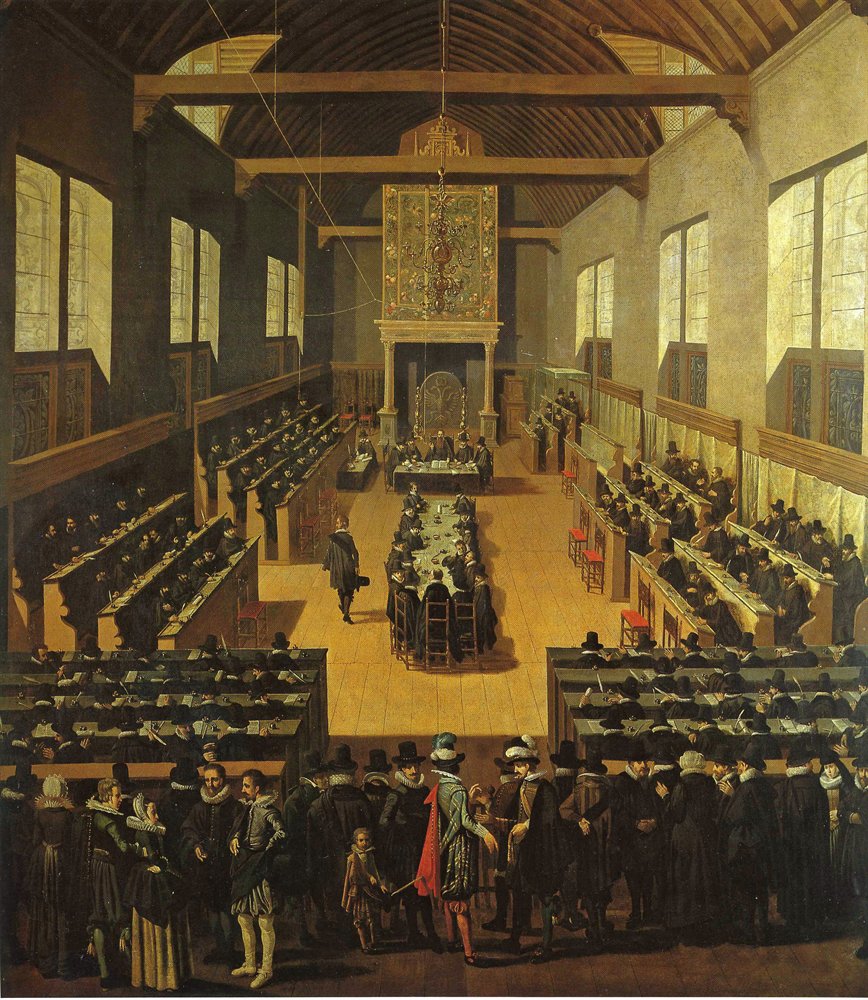
The military upkeep and decreased trade had put both Spain and the Dutch Republic under financial strain. To alleviate conditions, a ceasefire was signed in Antwerp on 9 April 1609, marking the end of the Dutch Revolt and the beginning of the Twelve Years' Truce. The conclusion of this Truce was a major diplomatic coup for Holland's advocate Johan van Oldenbarnevelt, as Spain by concluding the Treaty, formally recognised the independence of the Republic. In Spain the truce was seen as a major humiliationshe had suffered a political, military and ideological defeat, and the affront to its prestige was immense. The closure of the river Scheldt to traffic in and out of Antwerp, and the acceptance of Dutch commercial operations in the Spanish and Portuguese colonial maritime lanes were just a few points that the Spanish found objectionable.
Although there was peace on an international level, political unrest took hold of Dutch domestic affairs. What had started as a theological quarrel resulted in riots between Remonstrants (Arminians) and Counter-Remonstrants (Gomarists). In general, regents would support the former and civilians the latter. Even the government got involved, with Oldenbarnevelt taking the side of the Remonstrants and stadtholder Maurice of Nassau their opponents. In the end, the Synod of Dort condemned the Remonstrants for heresy and excommunicated them from the national Public Church. Van Oldenbarnevelt was sentenced to death, together with his ally Gilles van Ledenberg, while two other Remonstrant allies, Rombout Hogerbeets and Hugo Grotius received life imprisonment.
Final phase of the war (1621–1648)
Peace of Münster
Main article: Peace of Münster
.jpg)

The negotiations between Spain and the Republic formally started in January 1646 as part of the more general peace negotiations between the warring parties in the Thirty Years' War. The States General sent eight delegates from several of the provinces as none trusted the others to represent them adequately. They were Willem van Ripperda (Overijssel), Frans van Donia (Friesland), Adriaen Clant tot Stedum (Groningen), Adriaan Pauw and Jan van Mathenesse (Holland), Barthold van Gent (Gelderland), Johan de Knuyt (Zeeland) and Godert van Reede (Utrecht). The Spanish delegation was led by Gaspar de Bracamonte, 3rd Count of Peñaranda. The negotiations were held in what is now the Haus der Niederlande in Münster.
The Dutch and Spanish delegations soon reached an agreement, based on the text of the Twelve Years' Truce. It therefore confirmed Spain's recognition of Dutch independence. The Dutch demands (closure of the Scheldt, cession of the Meierij, formal cession of Dutch conquests in the Indies and Americas, and lifting of the Spanish embargoes) were generally met. However, the general negotiations between the main parties dragged on, because France kept formulating new demands. Eventually it was decided therefore to split off the peace between the Republic and Spain from the general peace negotiations. This enabled the two parties to conclude what technically was a separate peace (to the annoyance of France, which maintained that this contravened the alliance treaty of 1635 with the Republic).
The text of the Treaty (in 79 articles) was fixed on 30 January 1648. It was then sent to the principals (King Philip IV of Spain and the States General) for ratification. Five provinces voted to ratify (against the advice of stadtholder William) on 4 April (Zeeland and Utrecht being opposed). Utrecht finally yielded to pressure by the other provinces, but Zeeland held out and refused to sign. It was eventually decided to ratify the peace without Zeeland's consent. The delegates to the peace conference affirmed the peace on oath on 15 May 1648 (though the delegate of Zeeland refused to attend, and the delegate of Utrecht suffered a possibly diplomatic illness).
In the broader context of the treaties between France and the Holy Roman Empire, and Sweden and the Holy Roman Empire of 14 and 24 October 1648, which comprise the Peace of Westphalia, but which were not signed by the Republic, the Republic now also gained formal "independence" from the Holy Roman Empire, just like the Swiss Cantons. In both cases this was just a formalisation of a situation that had already existed for a long time. France and Spain did not conclude a treaty and so remained at war until the peace of the Pyrenees of 1659. The peace was celebrated in the Republic with sumptuous festivities. It was solemnly promulgated on the 80th anniversary of the execution of the Counts of Egmont and Horne on 5 June 1648.
Aftermath
Historiography
Gallery
File:Philip II of Spain berating William the Silent Prince of Orange by Cornelis Kruseman.jpg|Philip II, King of Spain, Reproaches William I, Prince of Orange, in Vlissingen upon his Departure from the Netherlands in 1559. By Cornelis Kruseman. File:Herman Frederik Carel ten Kate - Beleg van Alkmaar, 18 september 1573, Spaanse troepen bestormen de stad - 023931 - Stedelijk Museum Alkmaar (cropped).jpg|Siege of Alkmaar, by Herman Frederik Carel ten Kate. File:El milagro de Empel.jpg|El milagro de Empel, by Augusto Ferrer-Dalmau. File:Vroom Hendrick Cornelisz Dutch Ships Ramming Spanish Galleys off the Flemish Coast in October 1602.jpg|Battle of the Narrow Seas, by Hendrick Cornelisz Vroom. File:Velazquez-The Surrender of Breda.jpg|The Surrender of Breda by Diego Velázquez. File:Jan Martszen dj, Ruitergevecht.jpg|A cavalry battle, by Jan Martszen de Jonge. File:Jan Martszen de Jonge - A cavalry skirmish with two fallen soldiers.jpg|A battle scene from the Eighty Years' War by Jan Martszen de Jonge. File:Reinier Nooms - Before the Battle of the Downs - c.1639.jpg|Before the Battle of the Downs by Reinier Nooms.
Notes
References
Bibliography
- (5th ed.; original published in 1857)
- (in cooperation with H.L.Ph. Leeuwenberg and H.B. van der Weel)
- [2001] paperback
- paperback
References
- Gallegos Vázquez, Federico. (2014). "La dimensión internacional de la guerra de los Países Bajos". Guerra, derecho y política: Aproximaciones a una interacción inevitable.
- "Francisco de Alençon". Real Academia de la Historia.
- Fernández Duro, Cesáreo. (1900). "Armada española desde la unión de los reinos de Castilla y Aragón". Instituto de Historia y Cultura Naval.
- Aleixandre Tena, Francisca. (1967). "La revolución portuguesa de 1640". Saitabi: Revista de la Facultat de Geografia i Història.
- van Nimwegen, Olaf. (2010). "The Dutch Army and the Military Revolutions, 1588–1688". The Boydell Press.
- Wilson, p. 434,
- Jan Glete. "War and the State in Early Modern Europe: Spain, the Dutch Republic and Sweden as Fiscal-Military States (Warfare and History)." Routledge: November 8, 2001. Page 33.
- (2017). "Warfare and Armed Conflicts: A Statistical Encyclopedia of Casualty and Other Figures, 1492–2015".
- (1969). "Spain Under the Habsburgs: Spain and America, 1598–1700 Volume 2 of Spain Under the Habsburgs". B. Blackwell.
- (2001). "The Politics of Diplomacy: The Palatinate and Anglo-Imperial Relations in the Thirty Years' War". University of Wisconsin.
- Maanen, Hans van (2002), ''Encyclopedie van misvattingen'', Boom, p. 68. {{ISBN. 9053528342.
This article was imported from Wikipedia and is available under the Creative Commons Attribution-ShareAlike 4.0 License. Content has been adapted to SurfDoc format. Original contributors can be found on the article history page.
Ask Mako anything about Eighty Years' War — get instant answers, deeper analysis, and related topics.
Research with MakoFree with your Surf account
Create a free account to save articles, ask Mako questions, and organize your research.
Sign up freeThis content may have been generated or modified by AI. CloudSurf Software LLC is not responsible for the accuracy, completeness, or reliability of AI-generated content. Always verify important information from primary sources.
Report