From Surf Wiki (app.surf) — the open knowledge base
Eighteenth Dynasty of Egypt
Dynasty of Egypt from c. 1550 to 1292 BCE
Dynasty of Egypt from c. 1550 to 1292 BCE
| Field | Value |
|---|---|
| conventional_long_name | Eighteenth Dynasty of Egypt |
| era | New Kingdom of Egypt |
| government_type | Absolute monarchy |
| image_map | Respaldo del trono de oro de Tutankamón.jpg |
| map_width | 300px |
| map_caption | King Tutankhamun with his half sister and consort, Ankhesenamun |
| capital | Thebes, Akhetaten (1351–1334) BC |
| common_languages | Middle Egyptian (to 1350 BC) |
| Late Egyptian (from 1350 BC) | |
| Canaanite languages | |
| Nubian languages | |
| Akkadian (diplomatic and trade language) | |
| religion | Ancient Egyptian religion |
| Atenism (1351–1334) BC | |
| event_start | Defeat of the Fifteenth Dynasty (expulsion of the Hyksos) |
| year_start | |
| event1 | Battle of Megiddo |
| date_event1 | 1457 BC |
| event2 | Amarna Period |
| date_event2 | 1350–1330 BC |
| event_end | Death of Horemheb |
| year_end | 1292 BC |
| p1 | Fifteenth Dynasty of Egypt |
| p2 | Seventeenth Dynasty of Egypt |
| s1 | Nineteenth Dynasty of Egypt |
Late Egyptian (from 1350 BC) Canaanite languages Nubian languages Akkadian (diplomatic and trade language) Atenism (1351–1334) BC The Eighteenth Dynasty of Egypt (notated Dynasty XVIII, alternatively 18th Dynasty or Dynasty 18) is classified as the first dynasty of the New Kingdom of Egypt, the era in which ancient Egypt achieved the peak of its power. The Eighteenth Dynasty spanned the period from 1550/1549 to 1292 BC. This dynasty is also known as the Thutmoside Dynasty for the four pharaohs named Thutmose.
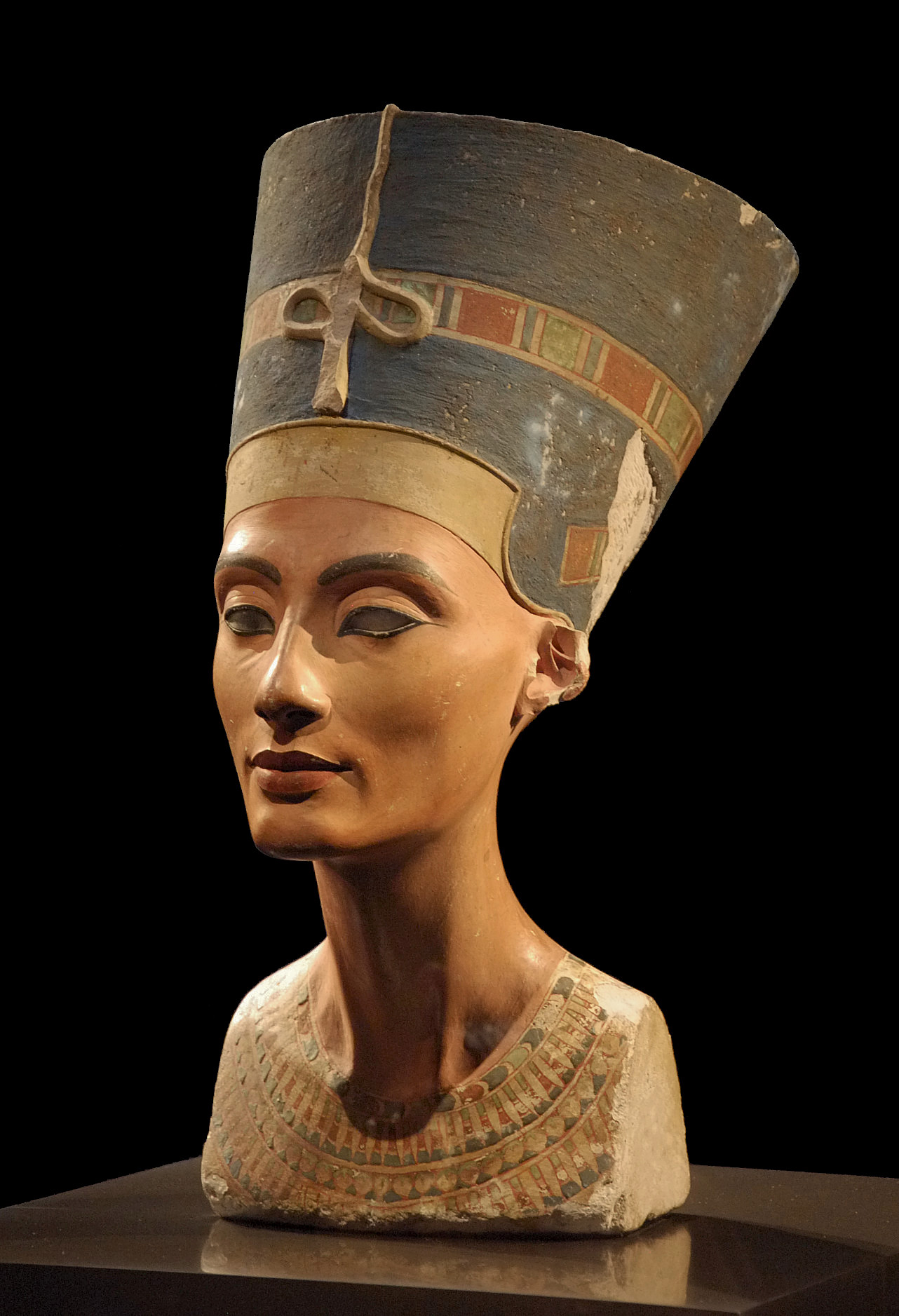
Several of Egypt's most famous pharaohs were from the Eighteenth Dynasty, including Tutankhamun. Other famous pharaohs of the dynasty include Hatshepsut (c. 1479 BC–1458 BC), the longest-reigning woman pharaoh of an indigenous dynasty, and Akhenaten (c. 1353–1336 BC), the "heretic pharaoh", with his Great Royal Wife, Nefertiti.
The Eighteenth Dynasty is unique among indigenous Egyptian dynasties in that it had two queens regnant women who ruled as pharaohs: Hatshepsut and Neferneferuaten, usually identified as Nefertiti.
History
Early Dynasty XVIII


Dynasty XVIII was founded by Ahmose I, the brother or son of Kamose, the last ruler of the 17th Dynasty. Ahmose finished the campaign to expel the Hyksos rulers. His reign is seen as the end of the Second Intermediate Period and the start of the New Kingdom. Ahmose's consort, Queen Ahmose-Nefertari was "arguably the most venerated woman in Egyptian history, and the grandmother of the 18th Dynasty." She was deified after she died. Ahmose was succeeded by his son, Amenhotep I, whose reign was relatively uneventful.
Amenhotep I probably left no male heir and the next pharaoh, Thutmose I, seems to have been related to the royal family through marriage. During his reign, the borders of Egypt's empire reached their greatest expanse, extending in the north to Carchemish on the Euphrates and in the south up to Kanisah Kurgus beyond the fourth cataract of the Nile. Thutmose I was succeeded by Thutmose II and his queen, Hatshepsut, who was the daughter of Thutmose I. After her husband's death and a period of regency for her minor stepson (who would later become pharaoh as Thutmose III) Hatshepsut became pharaoh in her own right and ruled for over twenty years.
Thutmose III, who became known as the greatest military pharaoh ever, also had a lengthy reign after becoming pharaoh. He had a second co-regency in his old age with his son Amenhotep II. Amenhotep II was succeeded by Thutmose IV, who in his turn was followed by his son Amenhotep III, whose reign is seen as a high point in this dynasty.
Amenhotep III's reign was a period of unprecedented prosperity, artistic splendor, and international power, as attested by over 250 statues (more than any other pharaoh) and 200 large stone scarabs discovered from Syria to Nubia. Amenhotep III undertook large scale building programmes, the extent of which can only be compared with those of the much longer reign of Ramesses II during Dynasty XIX. Amenhotep III's consort was the Great Royal Wife Tiye, for whom he built an artificial lake, as described on eleven scarabs.
Akhenaten, the Amarna Period, and Tutankhamun
Main article: Amarna Period

_(Musée_du_Caire)_(2076972086).jpg)
Amenhotep III may have shared the throne for up to twelve years with his son Amenhotep IV. There is much debate about this proposed co-regency, with different experts considering that there was a lengthy co-regency, a short one, or none at all.
In the fifth year of his reign, Amenhotep IV changed his name to Akhenaten (ꜣḫ-n-jtn, "Effective for the Aten") and moved his capital to Amarna, which he named Akhetaten. During the reign of Akhenaten, the Aten (jtn, the sun disk) became, first, the most prominent deity, and eventually came to be considered the only god. Whether this amounted to true monotheism continues to be the subject of debate within the academic community. Some state that Akhenaten created a monotheism, while others point out that he merely suppressed a dominant solar cult by the assertion of another, while he never completely abandoned several other traditional deities.
Later Egyptians considered this "Amarna Period" an unfortunate aberration. After his death, Akhenaten was succeeded by two short-lived pharaohs, Smenkhkare and Neferneferuaten, of which little is known. In 1334 BC, Akhenaten's son, Tutankhaten, ascended to the throne: shortly after, he restored Egyptian polytheist cult and subsequently changed his name to Tutankhamun, in honor to the Egyptian god Amun. His infant daughters represent the final genetically related generation of the Eighteenth Dynasty.
Ay and Horemheb

The last two members of the Eighteenth Dynasty—Ay and Horemheb—became rulers from the ranks of officials in the royal court, although Ay might also have been the maternal uncle of Akhenaten as a fellow descendant of Yuya and Tjuyu.
Ay may have married the widowed Great Royal Wife and young half-sister of Tutankhamun, Ankhesenamun, in order to obtain power; she did not live long afterward. Ay then married Tey, who was originally Nefertiti's wet-nurse.
Ay's reign was short. His successor was Horemheb, a general during Tutankhamun's reign whom the pharaoh may have intended as his successor in case he had no surviving children, which is what came to pass. Horemheb may have taken the throne away from Ay in a coup d'état. Although Ay's son or stepson Nakhtmin was named as his father/stepfather's Crown Prince, Nakhtmin seems to have died during the reign of Ay, leaving the opportunity for Horemheb to claim the throne next.
Horemheb also died without surviving children, having appointed his vizier, Pa-ra-mes-su, as his heir. This vizier ascended the throne in 1292 BC as Ramesses I, and was the first pharaoh of the Nineteenth Dynasty.
This example to the right depicts a man named Ay who achieved the exalted religious positions of Second Prophet of Amun and High Priest of Mut at Thebes. His career flourished during the reign of Tutankhamun, when the statue was made. The cartouches of King Ay, Tutankhamun's successor appearing on the statue, were an attempt by an artisan to "update" the sculpture.
Relations with Nubia
The Eighteenth Dynasty empire conquered all of Lower Nubia under Thutmose I. By the reign of Thutmose III, the Egyptians directly controlled Nubia to the Nile river, 4th cataract, with Egyptian influence / tributaries extending beyond this point. The Egyptians referred to the area as Kush and it was administered by the Viceroy of Kush. The 18th dynasty obtained Nubian gold, animal skins, ivory, ebony, cattle, and horses, which were of exceptional quality. The Egyptians built temples throughout Nubia. One of the largest and most important temples was dedicated to Amun at Jebel Barkal in the city of Napata. This Temple of Amun was enlarged by later Egyptian and Nubian Pharaohs, such as Taharqa. File:Nubian Tribute Presented to King Tutankhamun, Tomb of Huy MET DT221112.jpg|Nubian Tribute Presented to the King, Tomb of Huy MET DT221112 File:Nubian Prince Hekanefer bringing tribute for King Tut, 18th dynasty, Tomb of Huy.jpg|Nubian Prince Heqanefer bringing tribute for King Tutankhamun, 18th dynasty, Tomb of Huy File:Nubians bringing tribute for King Tut, Tomb of Huy.jpg|Nubians bringing tribute for King Tutankhamun, Tomb of Huy
Relations with the Near-East
After the end of the Hyksos period of foreign rule, the Eighteenth Dynasty engaged in a vigorous phase of expansionism, conquering vast areas of the Near-East, with especially Pharaoh Thutmose III submitting the "Shasu" Bedouins of northern Canaan, and the land of Retjenu, as far as Syria and Mittani in numerous military campaigns circa 1450 BC. File:Block from a Relief Depicting a Battle MET 213 S3BR2 01GG.jpg|Egyptian relief depicting a battle against West Asiatics. Reign of Amenhotep II, Eighteenth Dynasty, c. 1427–1400 BC File:West Asiatic tribute bearers tomb of Sobekhotep 18th Dynasty Thebes.jpg|West Asiatic tribute bearers in the tomb of Sobekhotep, c. 1400 BC, Thebes. British Museum
Dating
Radiocarbon dating suggests that Dynasty XVIII may have started a few years earlier than the conventional date of 1550 BC. The radiocarbon date range for its beginning is 1570–1544 BC, the mean point of which is 1557 BC.
Pharaohs of the 18th Dynasty
Main article: List of pharaohs#Eighteenth dynasty
The pharaohs of Dynasty XVIII ruled for approximately 250 years (c. 1550–1298 BC). The dates and names in the table are taken from Dodson and Hilton. Many of the pharaohs were buried in the Valley of the Kings in Thebes (designated KV). More information can be found on the Theban Mapping Project website. Several diplomatic marriages are known for the New Kingdom. These daughters of foreign kings are often only mentioned in cuneiform texts and are not known from other sources. The marriages were likely to have been a way to confirm good relations between these states. Royal brother-sister marriages were observed, as a means to strengthen the royalty by echoing the practices in their creation myths.
| Pharaoh | Image | Prenomen (Throne name) | Horus-name | Reign | Burial | Consort(s) | Comments | ||
|---|---|---|---|---|---|---|---|---|---|
| Ahmose I / Ahmosis I | [[File:Head of Ahmose I MET DP140854.jpg | 100px | alt="head of Ahmose I"]] | Nebpehtire | Aakheperu | 1549–1524 BC | Dra' Abu el-Naga'? | Ahmose-Nefertari | |
| Ahmose-Henuttamehu | |||||||||
| Ahmose-Sitkamose | |||||||||
| Amenhotep I | [[File:Statua cultuale di Amenhotep I ATG 1766.TIF | 100px | alt="Amenhotep I seated"]] | Djeserkare | Kauwaftau | 1524–1503 BC | Tomb ANB? or KV39? | Ahmose-Meritamon | |
| Thutmose I | [[File:ColossalSandstoneHeadOfThutmoseI-BritishMuseum-August19-08.jpg | 100px | alt="head of Thutmose I"]] | Aakheperkare | Kanakhtmerymaat | 1503–1493 BC | KV20, KV38 | Ahmose | |
| Mutnofret | |||||||||
| Thutmose II | [[File:Stone block with relief at Karnak Temple Thutmosis II.jpg | 100px]] | Aakheperenre | Kanakhtuserpehty | 1493–1479 BC | Wadi C-4 | Hatshepsut | ||
| Iset | |||||||||
| Hatshepsut | [[File:Hatshepsut.jpg | 100px]] | Maatkare | Useretkau | 1479–1458 BC | KV20 | Thutmose II (Before reign) | ||
| Thutmose III | [[File:Thutmosis III-2 (upclose).jpg | 100px]] | Menkheper(en)re | Kanakhtkhaemwaset | 1479–1425 BC | KV34 | Satiah | ||
| Merytre-Hatshepsut | |||||||||
| Nebtu | |||||||||
| Menhet, Menwi and Merti | |||||||||
| Amenhotep II | [[File:Amenophis II-E 10896-IMG 0085-gradient.jpg | 100px | alt="head of Amenotep II"]] | Aakheperure | Kanakhtwerpehty | 1427–1397 BC | KV35 | Tiaa | |
| Thutmose IV | [[File:Thumtmoses IV-E 13889-Louvre Museum (7465530452).jpg | 100px | alt="head of Thutmose IV"]] | Menkheperure | Kanakhttutkhau | 1397–1388 BC | KV43 | Nefertari | |
| Iaret | |||||||||
| Mutemwiya | |||||||||
| Daughter of Artatama I of Mitanni | |||||||||
| Amenhotep III | [[File:Colossal Amenhotep III British Museum.jpg | 100px]] | Nebmaatre | Kanakhtkhaemmaat | 1388–1351 BC | KV22 | Tiye | ||
| Gilukhipa of Mitanni | |||||||||
| Tadukhipa of Mitanni | |||||||||
| Sitamun | |||||||||
| Iset | |||||||||
| Daughter of Kurigalzu I of Babylon | |||||||||
| Daughter of Kadashman-Enlil of Babylon | |||||||||
| Daughter of Tarhundaradu of Arzawa | |||||||||
| Daughter of the ruler of Ammia | |||||||||
| Amenhotep IV/Akhenaten | [[File:GD-EG-Caire-Musée061.JPG | 100px | alt="head of Amenotep IV"]] | Neferkepherure-Waenre | Kanakhtqaishuti (originally) | ||||
| Meryaten (later) | 1351–1334 BC | Royal Tomb of Akhenaten, KV55 (?) | Nefertiti | ||||||
| Kiya | |||||||||
| Tadukhipa of Mitanni | |||||||||
| Daughter of Šatiya, ruler of Enišasi | |||||||||
| Meritaten? | |||||||||
| Meketaten? | |||||||||
| Ankhesenamun | |||||||||
| Daughter of Burna-Buriash II, King of Babylon | |||||||||
| Smenkhkare | [[File:Spaziergang im Garten Amarna Berlin.jpg | 100px | alt="painting of Smenkhkare"]] | Ankhkheperure | (unknown) | 1335–1334 BC | KV55 (?) | Meritaten | |
| Neferneferuaten | [[File:Golden Nut Pectoral Carter no. 261p1 (cropped).jpg | 100px]] | Ankhkheperure-Akhet-en-hyes | (unknown) | 1334–1332 BC | Akhenaten? | |||
| Smenkhkare? | Usually identified as Queen Nefertiti | ||||||||
| Tutankhamun | [[File:CairoEgMuseumTaaMaskMostlyPhotographed.jpg | 100px | alt="mask of Tutankhamun"]] | Nebkheperure | Kanakhttutmesut | 1332–1323 BC | KV62 | Ankhesenamun | |
| Ay | [[File:Opening of the Mouth - Tutankhamun and Aja-2.jpg | 100px]] | Kheperkheperure | Kanakhttjehenkhau | 1323–1319 BC | KV23 | Ankhesenamun? | ||
| Tey | |||||||||
| Horemheb | [[File:StatueOfHoremhebAndTheGodHorus-DetailOfHoremheb01 KunsthistorischesMuseum Nov13-10.jpg | 100px | alt="head of Horemheb"]] | Djeserkheperure-Setepenre | Kanakhtsepedsekheru | 1319–1292 BC | KV57 | Mutnedjmet | |
| Amenia |
Comparison of regnal lists
The Eighteenth Dynasty is well-recorded across Egyptian king lists, mostly due to being written extensively by their Nineteenth Dynasty sucessors. The Abydos, Saqqara and Ramesseum king lists, all from the New Kingdom of Egypt, provide a list of kings of this dynasty and are in broad agreement on the order of most kings in this dynasty, though they omit Hatshepsut and the Amarna pharaohs as a form of damnatio memoriae; the repudiation of Hatshepsut and the Amarna Period had been state policy since the reign of Horemheb. A Theban tomb, TT19, also provides a king list. It's possible the Turin King List originally listed the Eighteenth Dynasty, but it's now in a fragmentary state and some information is lost, including a section that contained Dynasties 18–19/20. Manetho's now-lost work Aegyptiaca also provided individual reign lengths, however the lengths seem to be inaccurate and later Epitomes of the work were misunderstood by various writers who conflated multiple kings into a single figure, failed to understand the number of kings in this dynasty.
| Historical Pharaoh | TT19 | Abydos King List | Saqqara King List | Ramesseum King List | last=Lundström | first=Peter | title=The Dynasties of Manetho | url=https://pharaoh.se/ancient-egypt/kinglist/manetho-king-list/ | access-date=2025-09-10 | website=Pharaoh.se | language=en}} |
|---|---|---|---|---|---|---|---|---|---|---|---|
| Ahmose I | Nebpehtire | Nebpehtire | Nebpehtire | Nebpehtire | Amosis | ||||||
| Amenhotep I | Djeserkare | Djeserkare | Djeserkare | Djeserkare | Ammenophis | ||||||
| Thutmose I | Aakheperkare | Aakheperkare | Name lost | Aakheperkare | Misaphris | ||||||
| Thutmose II | Aakheperenre | Aakheperenre | Name lost | Aakheperenre | Chebron | ||||||
| Hatshepsut | Omitted | Omitted | Omitted | Omitted | Amenssis | ||||||
| Thutmose III | Menkheperre | Menkheperre | Name lost | Menkheperre | Mesphragmouthosis | ||||||
| Amenhotep II | Aakheperure | Aakheperure | Name lost | Aakheperure | Amenophis | ||||||
| Thutmose IV | Menkheperure | Menkheperure | Name lost | Menkheperure | Tuthmosis | ||||||
| Amenhotep III | Nebmaatre | Nebmaatre | Name lost | Nebmaatre | Amenophis | ||||||
| Akhenaten | Omitted | Omitted | Omitted | Omitted | Akhenkherses | ||||||
| Smenkhkare | Omitted | Omitted | Omitted | Omitted | Omitted | ||||||
| Neferneferuaten | Omitted | Omitted | Omitted | Omitted | Omitted | ||||||
| Tutankhamun | Omitted | Omitted | Omitted | Omitted | Rathos | ||||||
| Ay | Omitted | Omitted | Omitted | Omitted | Armais | ||||||
| Horemheb | Djeserkheperure Setepenre | Djeserkheperure Setepenre | Djeserkheperure Setepenre | Djeserkheperure Setepenre | Oros |
Timeline of the 18th Dynasty
ImageSize = width:801 height:auto barincrement:12 PlotArea = top:10 bottom:30 right:130 left:20 AlignBars = justify
DateFormat = yyyy Period = from:-1550 till:-1285 TimeAxis = orientation:horizontal ScaleMajor = unit:year increment:100 start:-1550 ScaleMinor = unit:year increment:10 start:-1550
Colors = id:canvas value:rgb(0.97,0.97,0.97) id:PA value:green id:GP value:red id:eon value:rgb(1,0.7,1) # light purple
Backgroundcolors = canvas:canvas
BarData = barset:Rulers
PlotData= width:5 align:left fontsize:S shift:(5,-4) anchor:till barset:Rulers
from: -1550 till: -1525 color:PA text:"Ahmose I (1550–1525 BC)" from: -1525 till: -1504 color:PA text:"Amenhotep I (1525–1504 BC)" from: -1504 till: -1492 color:PA text:"Thutmose I (1504–1492 BC)" from: -1492 till: -1479 color:PA text:"Thutmose II (1492–1479 BC)" from: -1479 till: -1457 color:PA text:"Hatshepsut (1479–1457 BC)" from: -1479 till: -1425 color:PA text:"Thutmose III (1479–1425 BC)" from: -1427 till: -1401 color:PA text:"Amenhotep II" (1427–1401 BC) from: -1401 till: -1391 color:PA text:"Thutmose IV" (1401–1391 BC) from: -1391 till: -1353 color:PA text:"Amenhotep III" (1391–1353 BC) from: -1353 till: -1335 color:PA text:"Akhenaten" (1353–1335 BC) from: -1336 till: -1335 color:PA text:"Smenkhkare ?" (1336–1335 BC?) from: -1335 till: -1333 color:PA text:"Neferneferuaten?" (1335–1333 BC?) from: -1333 till: -1323 color:PA text:"Tutankhamun (1333–1323 BC)" from: -1323 till: -1319 color:PA text:"Ay (1323–1319 BC)" from: -1319 till: -1292 color:PA text:"Horemheb (1319–1292 BC)"
barset:skip
Gallery of images
File:Trial piece showing a head of an unknown king in profile. Uraeus on forehead. Limestone relief. 18th Dynasty. From Thebes, Egypt. The Petrie Museum of Egyptian Archaeology, London.jpg|Trial piece showing a head of an unknown king in profile. Uraeus on forehead. Limestone relief. 18th Dynasty. From Thebes, Egypt. The Petrie Museum of Egyptian Archaeology, London File:AhmoseI-StatueHead MetropolitanMuseum.png|Ahmose I. Though he was called the founder of the 18th dynasty, he was the brother of Kamose, the last pharaoh of the 17th dynasty. During his reign, he expelled the Hyksos from Lower Egypt and brought the Nile Delta under his control, politically unifying Egypt once again. File:Statua cultuale di Amenhotep I ATG 1778.TIF|Amenhotep I gained the throne after his two elder brothers had died. He was the son of Ahmose and Ahmose-Nefertari. He was succeeded by Thutmose I who married his daughter, Ahmose. File:Amenhotep I.jpg|Amenhotep I with his mother, Ahmose-Nefertari. Both royals are credited with opening a workmen's village at Deir el-Medina. Deir el-Medina housed the artisans and workers of the pharaohs tombs in the Valley of the Kings, from the 18th to 21st dynasties. Amenhotep I and his mother were deified and were the village's principal gods. File:ColossalSandstoneHeadOfThutmoseI-BritishMuseum-August19-08.jpg|Thutmose I. A military man, he came to power by marrying the sister of Amenhotep I, or may have been his son to a secondary wife. During his reign, he pushed the borders of Egypt into Nubia and the Levant. He is credited with the starting the building projects in what is now the temple of Karnak. File:Thotmes II. (1884) - TIMEA.jpg|Sketch from temple relief of Thutmose II. Considered a weak ruler, he was married to his sister Hatshepsut. He named Thutmose III, his son as successor, but Thutmose III was too young to rule at his father's death and thus his stepmother Hatshepsut was his regent. Hatshepsut and Thutmose II had a daughter, Neferure. File:Hatshepsut temple33.JPG|Hatshepsut. Daughter of Thutmose I, she ruled jointly as her stepson Thutmose III's co-regent. She soon took the throne for herself, and declared herself pharaoh. While there were other female rulers and regents before her, she is the only one who used the symbolic beard. File:Thutmosis III wien front.jpg|Thutmosis III, a military man and member of the Thutmosid royal line is commonly called the "Napoleon of Egypt". His conquests of the Levant brought Egypt's territories and influence to its greatest extent. He also built numerous monuments, most famously his Festival Hall and "botanical garden" at Karnak, and ordered the construction of the city of Napata in Nubia. File:Statue of Amenhotep II from the Museo Egizio.jpg|Amenhotep II. File:Thutmosis IV.jpg|Thutmosis IV. File:GD-EG-Louxor-114-2.JPG|Amenhotep III, whose long reign over Egypt found it at the height of its imperial splendor. He built numerous monuments, including the palace of Malqata, the Colossi of Memnon, and extensive expansions of the Temples of Karnak and Luxor, and has more surviving statutes than any other ancient Egyptian monarch. File:Akhenaten statue.jpg|Akhenaten, initially Amenhotep IV, began a religious revolution in which he declared Aten was a supreme god and turned his back on the old traditions. He moved the capital to Akhetaten. File:Wiki nefertiti bittidjz.jpg|Queen Nefertiti, possibly the daughter of Ay, married Akhenaten. Her role in daily life at the court soon extended from Great Royal Wife to that of a co-regent. It is also possible that she may have ruled Egypt in her own right as pharaoh Neferneferuaten. File:PrincesseAmarna.jpg|Queen Meritaten, was the eldest daughter of Akhenaten and Nefertiti. She was the wife of Smenkhkare. She also may have ruled Egypt in her own right as pharaoh and is one of the possible candidates of being the pharaoh Neferneferuaten. File:Ägyptischer Maler um 1360 v. Chr. 002.jpg|Neferneferure and Neferneferuaten Tasherit. Shown here as children, they were two of six daughters born to Akhenaten and Nefertiti. It is possible that Neferneferuaten Tasherit was the one who may have been her father's co-regent and may have ruled as the female pharaoh, Neferneferuaten. File:PortraitStudyOfAkhenaten-ThutmoseWorkshop EgyptianMuseumBerlin.png|Smenkhkare, was a co-regent of Akhenaten who ruled after his death. It was once believed that Smenkhkare was a male guise of Nefertiti, however, it is accepted that Smenkhkare was a male. He took Meritaten, Queen Nefertiti's daughter as his wife. File:Tutmask.jpg|Tutankhamun, born Tutankhaten, was Akhenaten's son and the successor to Neferneferuaten. As pharaoh, he instigated policies to restore Egypt to its old religion and moved the capital away from Akhetaten. File:Opening of the Mouth - Tutankhamun and Aja-2.jpg|Ay served as a high official to Akhenaten, and a vizier to Tutankhamun. He may have been the father of Nefertiti. After the death of Tutankhamun, Ay laid a claim to the throne by burying him and marrying Tutankhamun's wife Ankhesenamun. File:StatueOfHoremhebAndTheGodHorus-DetailOfHoremheb02 KunsthistorischesMuseum Nov13-10.jpg|After the death of Ay, Horemheb assumed the throne. A commoner, he had served as a military official to both Tutankhamun and Ay. Horemheb instigated a policy of damnatio memoriae, against everyone associated with the Amarna period. With no heir born to him, he appointed his own vizier, Paramessu as his successor. File:Ägyptisches Museum Berlin 027.jpg|Tiye was the daughter of the court official Yuya. She married Amenhotep III, and became his principal wife. Her knowledge of government helped her gain power in her position and she was soon running affairs of state and foreign affairs for her husband, Amenhotep III and later her son, Akhenaten. She was also Tutankhamun's grandmother. File:Senenu Grinding Grain, ca. 1352-1336 B.C..jpg|Senenu, High Priest of Amun at Deir El-Baḥri, grinding grain, c. 1352–1292 BC, Limestone, Brooklyn Museum. File:Tomb of Nakht (6).jpg|Beautiful Festival of the Valley (Celebration of the dead in Thebes)
References
Bibliography
References
- Wilkinson, Toby. (2010). "The Rise and Fall of Ancient Egypt". Random House.
- Daniel Molinari. (2014-09-16). "Egypts Lost Queens".
- Nozomu Kawai, "Neferneferuaten from the Tomb of Tutankhamun Revisited" in Wonderful Things Essays in Honor of Nicholas Reeves, Lockwood Press, (2023), pp.109-121 & [[Aidan Dodson]], Nefertiti, Queen and Pharaoh of Egypt: Her Life and Afterlife, The American University in Cairo Press, 2020.
- Graciela Gestoso Singer, "[https://www.academia.edu/414029/Ahmose_Nefertari_the_Woman_in_Black Ahmose-Nefertari, The Woman in Black]". ''Terrae Antiqvae'', January 17, 2011
- Aidan Dodson, Dyan Hilton: pg 122
- Aidan Dodson, Dyan Hilton: pg 130
- (2010). "The Complete Royal Families of Ancient Egypt". Thames & Hudson.
- (2010). "The Complete Royal Families of Ancient Egypt". Thames & Hudson.
- Gardiner, Alan. (1953). "The Coronation of King Haremhab". Journal of Egyptian Archaeology.
- "Block Statue of Ay".
- (1993). "Ancient Nubia: Egypt's Rival in Africa". University Museum of Archaeology and Anthropology.
- Shaw, Ian. (2004). "The Oxford History of Ancient Egypt". Oxford University Press.
- "Early History", [[Helen Chapin Metz]], ed., [http://countrystudies.us/sudan Sudan A Country Study]. Washington: GPO for the Library of Congress, 1991.
- (2009). "Thutmose III: The Military Biography of Egypt's Greatest Warrior King". Potomac Books, Inc..
- (2000). "Middle Egyptian: An Introduction to the Language and Culture of Hieroglyphs". Cambridge University Press.
- "Tomb-painting British Museum".
- (2010). "Radiocarbon-Based Chronology for Dynastic Egypt". Science.
- Aidan Dodson, Dyan Hilton: ''The Complete Royal Families of Ancient Egypt''. The American University in Cairo Press, London 2004
- (2010). "Sites in the Valley of the Kings".
- Grajetzki, ''Ancient Egyptian Queens: A Hieroglyphic Dictionary'', Golden House Publications, London, 2005, {{ISBN. 978-0954721893
- (2025). "Ancient Egyptian Creation Myths and Brother-sister Marriage in the 18th Dynasty and the 19th Dynasty". Studies in Mythology.
- Lundström, Peter. "The Dynasties of Manetho".
- https://pharaoh.se/ancient-egypt/dynasty/18/
- Lundström, Peter. "The Dynasties of Manetho".
This article was imported from Wikipedia and is available under the Creative Commons Attribution-ShareAlike 4.0 License. Content has been adapted to SurfDoc format. Original contributors can be found on the article history page.
Ask Mako anything about Eighteenth Dynasty of Egypt — get instant answers, deeper analysis, and related topics.
Research with MakoFree with your Surf account
Create a free account to save articles, ask Mako questions, and organize your research.
Sign up freeThis content may have been generated or modified by AI. CloudSurf Software LLC is not responsible for the accuracy, completeness, or reliability of AI-generated content. Always verify important information from primary sources.
Report