From Surf Wiki (app.surf) — the open knowledge base
Egyptian Museum of Berlin
Collection of ancient Egyptian artefacts
Collection of ancient Egyptian artefacts
| Field | Value |
|---|---|
| name | Egyptian Museum of Berlin |
| image | Berlin_Neues_Museum_001.JPG |
| coordinates | |
| former_name | |
| established | |
| dissolved | |
| location | Museum Island, Berlin |
| parking | |
| website | |
| embedded |
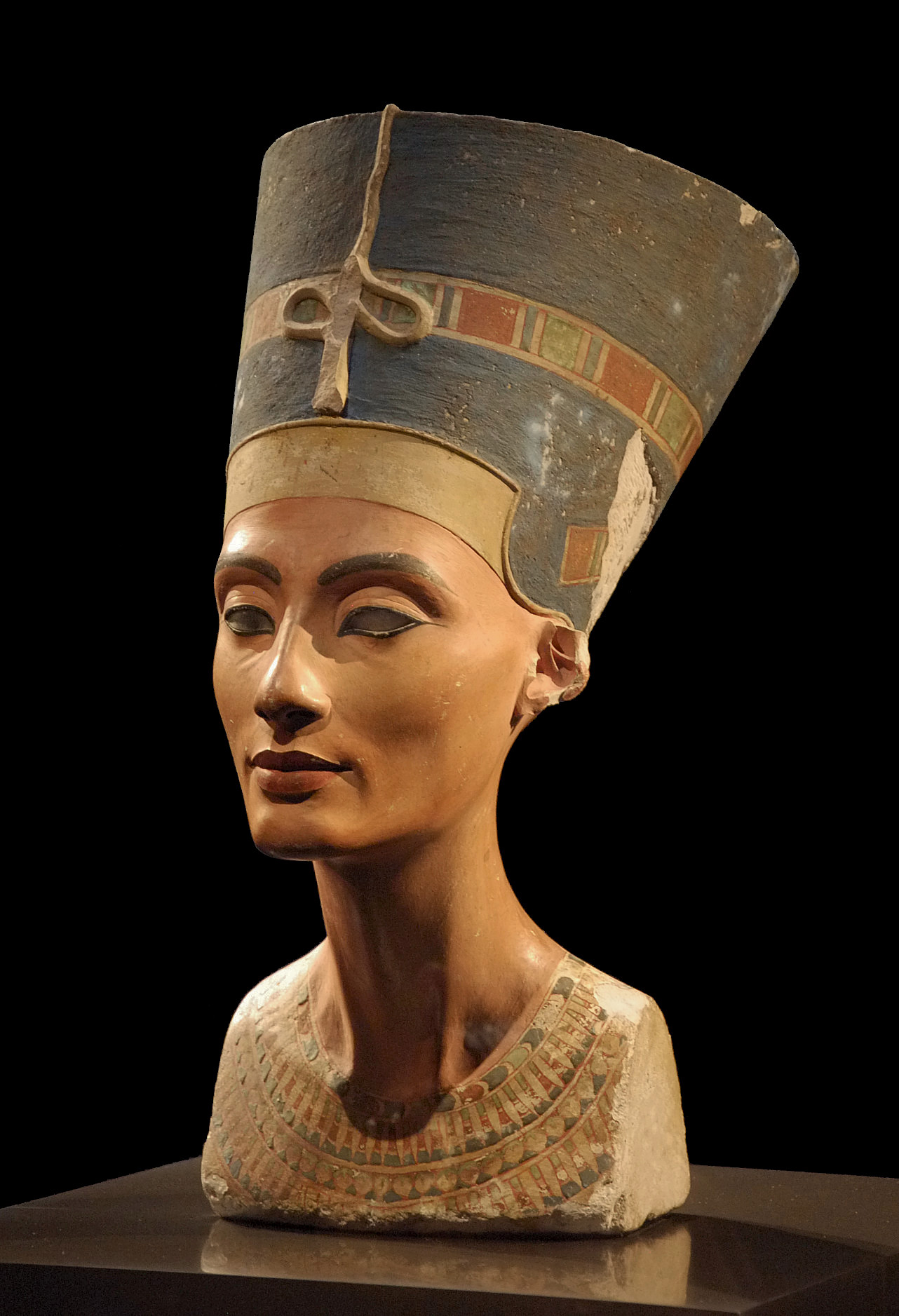
The Egyptian Museum and Papyrus Collection of Berlin () is home to one of the world's most important collections of ancient Egyptian artefacts, including the Nefertiti Bust. Since 1855, the collection is a part of the Neues Museum on Berlin's Museum Island, which reopened after renovations in 2009.
History

The museum originated in the 18th century from the royal art collection of the Hohenzollern kings of Prussia. Alexander von Humboldt had recommended that an Egyptian section be created, and the first objects were brought to Berlin in 1828 under King Friedrich Wilhelm III. Initially housed in Monbijou Palace, the department was headed by the Trieste merchant Giuseppe Passalacqua (1797–1865), whose extensive collections formed the basis. A Prussian expedition to Egypt and Nubia led by Karl Richard Lepsius in 1842–45 brought additional pieces to Berlin.
In 1850, the collections moved to its present-day home in the Neues Museum, built according to plans designed by Friedrich August Stüler. The Nefertiti Bust, discovered during the excavations by Ludwig Borchardt in Amarna, was donated to the museum by the entrepreneur Henri James Simon in 1920; it quickly became its best-known exhibit. After World War II, during which the Neues Museum was heavily damaged by strategic bombing, the collections were divided between East and West Berlin. The main part remained in East Berlin and was displayed at the Bode Museum, while those artifacts evacuated to West Germany, including the Nefertiti Bust, returned to West Berlin. From 1967 to 2005, these items were housed vis-à-vis Charlottenburg Palace. The whole collection was reunited again after the Reunification of Germany, when it returned to Museum Island.
Collection
The collection contains artefacts dating from between 4000 BC (the Predynastic era) to the period of Roman rule, though most date from the rule of Akhenaten (around 1340BC).
The most famous piece on display is the exceptionally well preserved and vividly coloured bust of Queen Nefertiti. The collection was moved from Charlottenburg to the Altes Museum in 2005 and was rehoused within the newly reconstructed Neues Museum on Berlin's Museum Island in October 2009.
The museum is home to at least 23 mummified ancient Egyptians.
Gallery
File:Kalabsha Gate, ca. 30 BCE, Scharf-Gerstenberg Museum, Berlin (2) (40205520311).jpg| Kalabsha Gate, from the Temple of Kalabsha, donated as part of the International Campaign to Save the Monuments of Nubia File:Girl with a cat.jpg|Figure of a girl with a cat and standing figure of a young woman, 18th Dynasty, and 19. Dynasty, Abusir el Meleq and Thebes File:Head of Ptolemy X, from Egypt, Ptolemaic period, 2nd century BCE. Neues Museum, Germany.jpg|Head of a statue of king Ptolemaios X (reign 110–88 BC) File:Nefertiti Standing-striding Berlin.jpg|Standing Figure of Nefertiti File:Portrait head of one of the daughters of Akhenaton and Nefertiti from a composite statue 09.jpg| File:ReliefPortraitOfAkhenaten02.png|Relief portrait of Akhenaten File:Tai-tai, the priest.jpg|Tai-tai, the Priest. New Kingdom, Eighteenth Dynasty, 1380 BC File:Akhenaten, Nefertiti and their children.jpg|Akhenaten and Nefertiti with their children. Amarna Period, 1350 BC File:QueenTiy01-AltesMuseum-Berlin.png|Queen Tiye, Amarna Period, 1355 BC File:Berlin Green Head - Neues Museum - Berlin - Germany 2017 (2).jpg|Berlin Green Head, 100-50 BC File:Amenemhat III Berlin 01.JPG|Statue of Amenemhat III (Berlin)
References
References
- "Egyptian Museum and Papyrus Collection". Encyclopædia Britannica.
- "Egyptian Museum and Papyrus Collection". Staatliche Museen zu Berlin.
- (2 April 2024). "Preservation of the heart in ancient Egyptian mummies: A computed tomography investigation with focus on the myocardium". Wiley.
This article was imported from Wikipedia and is available under the Creative Commons Attribution-ShareAlike 4.0 License. Content has been adapted to SurfDoc format. Original contributors can be found on the article history page.
Ask Mako anything about Egyptian Museum of Berlin — get instant answers, deeper analysis, and related topics.
Research with MakoFree with your Surf account
Create a free account to save articles, ask Mako questions, and organize your research.
Sign up freeThis content may have been generated or modified by AI. CloudSurf Software LLC is not responsible for the accuracy, completeness, or reliability of AI-generated content. Always verify important information from primary sources.
Report