From Surf Wiki (app.surf) — the open knowledge base
EFL League Two play-offs
Annual postseason elimination tournament of English Football League

Annual postseason elimination tournament of English Football League
| Field | Value |
|---|---|
| title | EFL League Two play-offs |
| logo | EFL playoff.svg |
| sport | Football |
| founded | 1987 |
| teams | 4 |
| region | England |
| Wales | |
| TV | {{unbulleted list |
| streaming | {{unbulleted list |
Wales | United Kingdom: | Sky Sports | International: | Varies by territory | United Kingdom: | Sky Go | NOW TV | International: | Varies by region The EFL League Two play-offs are a series of play-off matches contested by the association football teams finishing from fourth to seventh in EFL League Two, the fourth tier of the English football league system. They are part of the annual EFL playoffs. , the play-offs comprise two semi-finals, where the team finishing fourth plays the team finishing seventh, and the team finishing fifth plays the team finishing sixth, each conducted as a two-legged tie. The winners of the semi-finals progress to the final which is contested at Wembley Stadium.
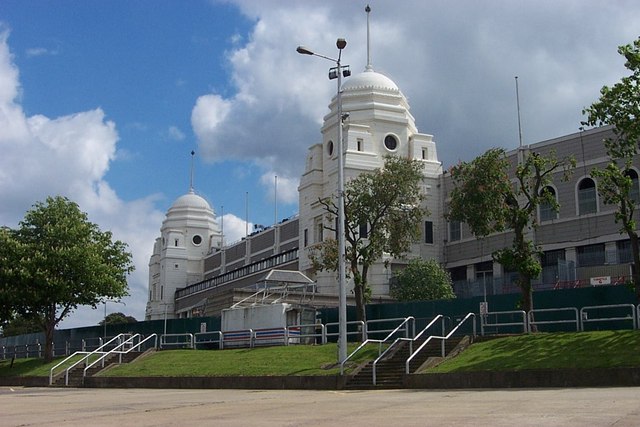
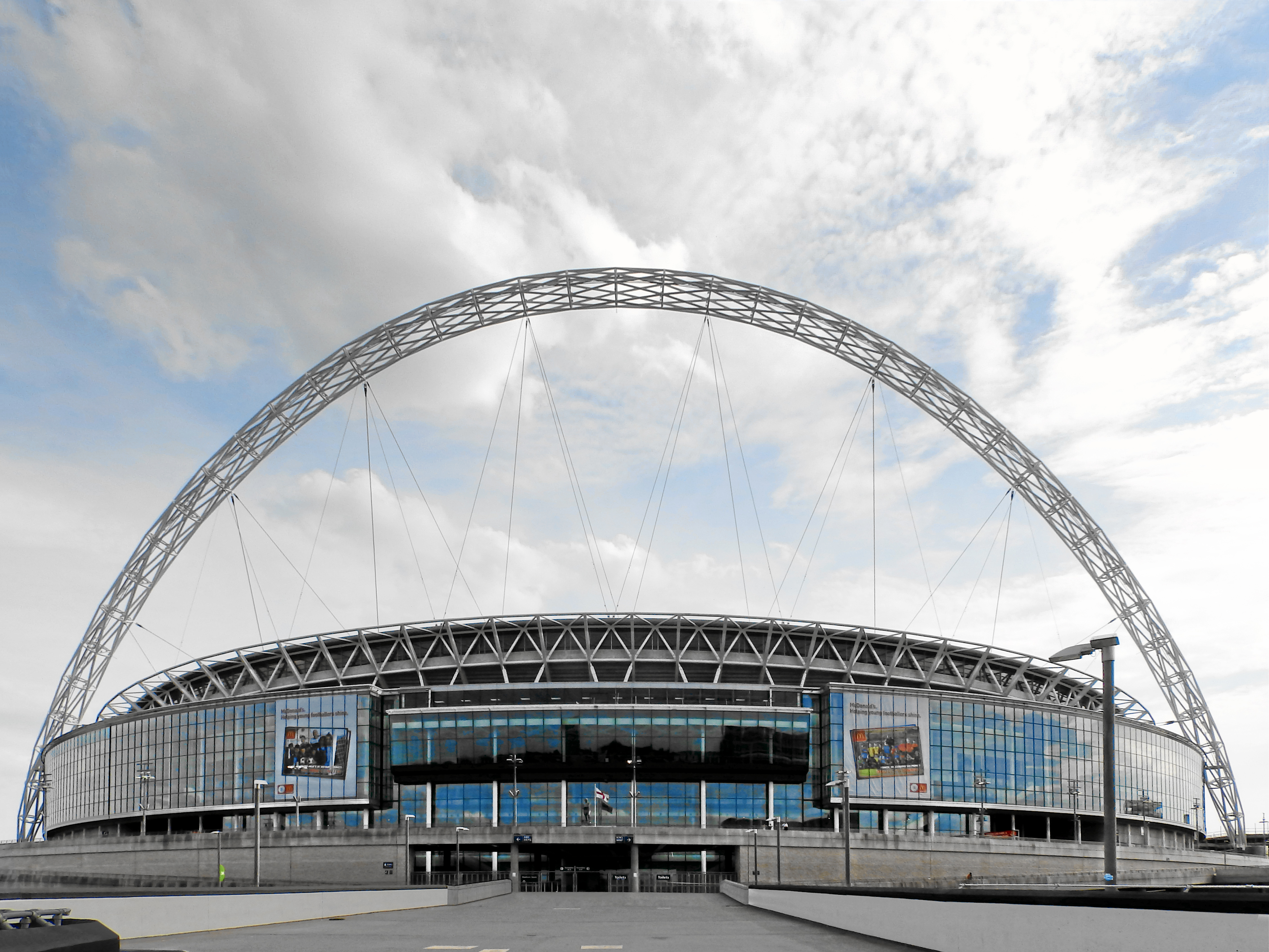
For the first three years, the play-off final took place over two legs, played at both side's grounds. Aldershot won the first Fourth Division play-off final in 1987, beating Wolverhampton Wanderers 2–1 on aggregate. From 1990, the play-off final was a one-off match, hosted at the original Wembley Stadium, while from 2001 to 2006, the final was played at the Millennium Stadium in Cardiff as Wembley was being rebuilt. Since 2007, the match has been hosted at Wembley Stadium except for the 2011 final which took place at Old Trafford to avoid a clash with the 2011 UEFA Champions League Final.
When the fourth tier play-offs were first contested in 1987, they were known as the Football League Fourth Division play-offs. From 1993 to 2004, following the creation of the FA Premier League as a breakaway from the Football League, the competition became known as the Third Division play-offs, and since 2005 has taken its current name as the League Two play-offs following a rebranding of the remaining three divisions of the Football League.
Format
, the League Two play-offs involve the four teams that finish directly below the automatic promotion places in EFL League Two, the fourth tier of the English football league system. These teams meet in a series of play-off matches to determine the final team that will be promoted to the EFL League One. Based on the rankings, the team finishing in fourth place plays the seventh-placed team while the team in fifth plays the sixth-placed team in the "play-off semi-finals". Two ties are played over two legs, with the higher-ranked side hosting the second leg. According to the EFL, "this is designed to give the highest finishing team an advantage".
The winner of each semi-final is determined by the aggregate score across the two legs, with the number of goals scored in each match of the tie being added together. The team with the higher aggregate score qualifies for the final. If, at the end of regular 90 minutes of the second leg, the aggregate score is level then the match goes into extra time where two 15-minute halves are played. If the score remains level at the end of extra time, the tie is decided by a penalty shootout. The away goals rule does not apply in the play-off semi-finals.
The clubs that win the semi-finals then meet at Wembley Stadium, a neutral venue, for a one-off match referred to as the "play-off final". If required, extra time and a penalty shootout can be employed in the same manner as for the semi-finals to determine the winner. The runner-up and losing semi-finalists remain in League Two while the winning side are promoted.
Background
Main article: English Football League play-offs
The mid-1980s saw a decline in attendances at football matches and public disenchantment with English football. A number of instances of violence and tragedy struck the game. In March 1985, at the semi-final of the 1984–85 Football League Cup between Chelsea and Sunderland, more than 100 people were arrested after various invasions of the Stamford Bridge pitch and more than 40 people, including 20 policemen, were injured. Nine days later, violence flared at the FA Cup match between Millwall and Luton Town; seats were used as missiles against the police and resulted in Luton Town banning away supporters. On 11 May, 56 people were killed and 265 injured in the Bradford City stadium fire. Less than three weeks later, 39 supporters died and more than 600 were injured in the Heysel Stadium disaster where Liverpool were playing Juventus in the European Cup final.
In an attempt to persuade fans to return to the stadia, the Football League had rejected a £19million television deal to broadcast matches live on the BBC and ITV before the 1985–86 Football League season, with League president Jack Dunnett suggesting that "football is prepared to have a year or two with no television". In December 1985, the "Heathrow Agreement" was agreed which aimed to revitalise the financial affairs of the league. It was a ten-point plan which included a structural reorganisation of the league, reducing the top tier from 22 clubs to 20, and the introduction of play-offs to facilitate the change. The play-offs were introduced to the end of the 1986–87 Football League season. They were initially introduced for two years with the proviso that if they were successful with the general public, they would be retained permanently.
History
In the first two seasons, the team one place above the relegation zone in the Third Division, along with the three clubs below the automatic promotion positions in the Fourth Division, took part in the play-offs. In the inaugural play-offs in 1987, Third Division Bolton Wanderers were eliminated in the semi-finals by Fourth Division side Aldershot who replaced them when they won the final. The following season, Rotherham United also swapped places with Fourth Division opposition when they lost to Swansea City in the semi-finals who defeated Torquay in the final 5–4 on aggregate.
| Years | Name | 1987–1992 | 1993–2004 | 2005–2015 | 2016–present |
|---|---|---|---|---|---|
| Football League Fourth Division play-offs | |||||
| Football League Third Division play-offs | |||||
| Football League Two play-offs | |||||
| EFL League Two play-offs |
The primary objective of the play-offs was achieved within the first two seasons, namely the reorganisation of the four leagues with 20 clubs in the first tier and 24 in the second to fourth tiers. However, the popularity of the play-offs was such that the post-season games were retained and the play-offs were the first to feature four teams from the Fourth Division: Leyton Orient defeated Wrexham over two legs in the 1989 Football League Fourth Division play-off final. From 1990, the format of the final changed to a single match played at a neutral venue, initially the original Wembley Stadium. The first winners of the inaugural one-off final were Cambridge United who beat Chesterfield 1–0 in front of 26,404 spectators.
Wembley underwent renovations early in the 21st century and the 2000 final was the last to be hosted at the original stadium. Subsequently the finals were hosted at the Millennium Stadium in Cardiff, where Blackpool won their second fourth-tier play-off final, beating Leyton Orient 4–2 in the final watched by a crowd of 23,600. The Millennium Stadium held the finals until 2007 when the match was moved to the renovated Wembley Stadium, the first such final seeing Bristol Rovers defeat Shrewsbury Town 3–1 with an attendance of 61,589.
The game was relocated to Manchester United's ground, Old Trafford, for a single season as a result of a scheduling clash with the 2011 UEFA Champions League Final. The most recent final, in 2020, was held behind closed doors as a result of the COVID-19 pandemic in the United Kingdom: Northampton Town defeated Exeter City 4–0 in front of an official attendance of 0.
Since the first play-off final, the third tier of English football's league itself has undergone a number of re-brands. In 1993, the Premier League was formed, a move which caused the fourth-tier league to be renamed as the Third Division. In 2004, the Third Division was re-branded as Football League Two, before the League's adoption of English Football League (EFL) led to a 2016 renaming as the EFL League Two.
Prize
The financial value of winning the EFL League Two play-off is derived from the additional remuneration clubs receive in League One. , clubs in League One receive around £675,000 from the Premier League as a "core club" payment compared to £450,000 in League Two. The winners of the final receive a trophy.
Winners and semi-finalists
| Year | Venue | Winner (X) | Final | ^ | R | Runner-up | Semi-finalists |
|---|---|---|---|---|---|---|---|
| Link to play-off article for specified year | |||||||
| Location(s) of the final match(es) | |||||||
| Team that won play-off final, (X) indicates cumulative number of play-off final victories | |||||||
| Link to play-off final article for the specified match | |||||||
| Final played over two legs | |||||||
| Final decided by a replay | |||||||
| Final decided in extra time | |||||||
| Final decided by a penalty shoot-out | |||||||
| Team that lost play-off final | |||||||
| Two teams that lost in play-off semi-finals |
.jpg)
.jpg)
.jpg)


| Year | Venue | Winner | Final | Runner-up | Semi-finalists | Ref. | 3–0 | 5–4 | 2–1 | 1–0 | 2–2 | 1–1 | 1–1 | 4–2 | 2–0 | 1–0 | 1–0 | 1–0 | 1–0 | 1–0 | 4–2 | 3–1 | 5–2 | 0–0 | 2–0 | 1–0 | 3–1 | 3–2 | 1–0 | 3–2 | 1–0 | 2–0 | 3–0 | 1–0 | 1–1 | 2–0 | 2–1 | 3–1 | 1–0 | 4–0 | 1–0 | 3–0 | 1–1 | 2–0 | 1-0 |
|---|---|---|---|---|---|---|---|---|---|---|---|---|---|---|---|---|---|---|---|---|---|---|---|---|---|---|---|---|---|---|---|---|---|---|---|---|---|---|---|---|---|---|---|---|---|
| 1987 | Recreation Ground/Molineux ^ | Aldershot (1) | Wolverhampton Wanderers | Bolton Wanderers | |||||||||||||||||||||||||||||||||||||||||
| Colchester United | |||||||||||||||||||||||||||||||||||||||||||||
| 1988 | Vetch Field/Plainmoor ^ | Swansea City (1) | Torquay United | Rotherham United | |||||||||||||||||||||||||||||||||||||||||
| Scunthorpe United | |||||||||||||||||||||||||||||||||||||||||||||
| 1989 | Racecourse Ground/Brisbane Road ^ | Leyton Orient (1) | Wrexham | Scarborough | |||||||||||||||||||||||||||||||||||||||||
| Scunthorpe United | |||||||||||||||||||||||||||||||||||||||||||||
| 1990 | Wembley Stadium (original) | Cambridge United (1) | Chesterfield | Maidstone United | |||||||||||||||||||||||||||||||||||||||||
| Stockport County | |||||||||||||||||||||||||||||||||||||||||||||
| 1991 | Torquay United (1) | Blackpool | Burnley | ||||||||||||||||||||||||||||||||||||||||||
| Scunthorpe United | |||||||||||||||||||||||||||||||||||||||||||||
| 1992 | Blackpool (1) | Scunthorpe United | Barnet | ||||||||||||||||||||||||||||||||||||||||||
| Crewe Alexandra | |||||||||||||||||||||||||||||||||||||||||||||
| 1993 | York City (1) | Crewe Alexandra | Bury | ||||||||||||||||||||||||||||||||||||||||||
| Walsall | |||||||||||||||||||||||||||||||||||||||||||||
| 1994 | Wycombe Wanderers (1) | Preston North End | Carlisle United | ||||||||||||||||||||||||||||||||||||||||||
| Torquay United | |||||||||||||||||||||||||||||||||||||||||||||
| 1995 | Chesterfield (1) | Bury | Mansfield Town | ||||||||||||||||||||||||||||||||||||||||||
| Preston North End | |||||||||||||||||||||||||||||||||||||||||||||
| 1996 | Plymouth Argyle (1) | Darlington | Colchester United | ||||||||||||||||||||||||||||||||||||||||||
| Hereford United | |||||||||||||||||||||||||||||||||||||||||||||
| 1997 | Northampton Town (1) | Swansea City | Cardiff City | ||||||||||||||||||||||||||||||||||||||||||
| Chester City | |||||||||||||||||||||||||||||||||||||||||||||
| 1998 | Colchester United (1) | Torquay United | Barnet | ||||||||||||||||||||||||||||||||||||||||||
| Scarborough | |||||||||||||||||||||||||||||||||||||||||||||
| 1999 | Scunthorpe United (1) | Leyton Orient | Rotherham United | ||||||||||||||||||||||||||||||||||||||||||
| Swansea City | |||||||||||||||||||||||||||||||||||||||||||||
| 2000 | Peterborough United (1) | Darlington | Barnet | ||||||||||||||||||||||||||||||||||||||||||
| Hartlepool United | |||||||||||||||||||||||||||||||||||||||||||||
| 2001 | Millennium Stadium | Blackpool (2) | Leyton Orient | Hartlepool United | |||||||||||||||||||||||||||||||||||||||||
| Hull City | |||||||||||||||||||||||||||||||||||||||||||||
| 2002 | Cheltenham Town (1) | Rushden & Diamonds | Hartlepool United | ||||||||||||||||||||||||||||||||||||||||||
| Rochdale | |||||||||||||||||||||||||||||||||||||||||||||
| 2003 | Bournemouth (1) | Lincoln City | Bury | ||||||||||||||||||||||||||||||||||||||||||
| Scunthorpe United | |||||||||||||||||||||||||||||||||||||||||||||
| 2004 | Huddersfield Town (1) | Mansfield Town | Lincoln City | ||||||||||||||||||||||||||||||||||||||||||
| Northampton Town | |||||||||||||||||||||||||||||||||||||||||||||
| 2005 | Southend United (1) | Lincoln City | Macclesfield Town | ||||||||||||||||||||||||||||||||||||||||||
| Northampton Town | |||||||||||||||||||||||||||||||||||||||||||||
| 2006 | Cheltenham Town (2) | Grimsby Town | Lincoln City | ||||||||||||||||||||||||||||||||||||||||||
| Wycombe Wanderers | |||||||||||||||||||||||||||||||||||||||||||||
| 2007 | Wembley Stadium | Bristol Rovers (1) | Shrewsbury Town | Lincoln City | |||||||||||||||||||||||||||||||||||||||||
| Milton Keynes Dons | |||||||||||||||||||||||||||||||||||||||||||||
| 2008 | Stockport County (1) | Rochdale | Darlington | ||||||||||||||||||||||||||||||||||||||||||
| Wycombe Wanderers | |||||||||||||||||||||||||||||||||||||||||||||
| 2009 | Gillingham (1) | Shrewsbury Town | Bury | ||||||||||||||||||||||||||||||||||||||||||
| Rochdale | |||||||||||||||||||||||||||||||||||||||||||||
| 2010 | Dagenham & Redbridge (1) | Rotherham United | Aldershot Town | ||||||||||||||||||||||||||||||||||||||||||
| Morecambe | |||||||||||||||||||||||||||||||||||||||||||||
| 2011 | Old Trafford | Stevenage (1) | Torquay United | Accrington Stanley | |||||||||||||||||||||||||||||||||||||||||
| Shrewsbury Town | |||||||||||||||||||||||||||||||||||||||||||||
| 2012 | Wembley Stadium | Crewe Alexandra (1) | Cheltenham Town | Southend United | |||||||||||||||||||||||||||||||||||||||||
| Torquay United | |||||||||||||||||||||||||||||||||||||||||||||
| 2013 | Bradford City (1) | Northampton Town | Burton Albion | ||||||||||||||||||||||||||||||||||||||||||
| Cheltenham Town | |||||||||||||||||||||||||||||||||||||||||||||
| 2014 | Fleetwood Town (1) | Burton Albion | Southend United | ||||||||||||||||||||||||||||||||||||||||||
| York City | |||||||||||||||||||||||||||||||||||||||||||||
| 2015 | Southend United (2) | Wycombe Wanderers | Plymouth Argyle | ||||||||||||||||||||||||||||||||||||||||||
| Stevenage | |||||||||||||||||||||||||||||||||||||||||||||
| 2016 | AFC Wimbledon (1) | Plymouth Argyle | Accrington Stanley | ||||||||||||||||||||||||||||||||||||||||||
| Portsmouth | |||||||||||||||||||||||||||||||||||||||||||||
| 2017 | Blackpool (3) | Exeter City | Carlisle United | ||||||||||||||||||||||||||||||||||||||||||
| Luton Town | |||||||||||||||||||||||||||||||||||||||||||||
| 2018 | Coventry City (1) | Exeter City | Lincoln City | ||||||||||||||||||||||||||||||||||||||||||
| Notts County | |||||||||||||||||||||||||||||||||||||||||||||
| 2019 | Tranmere Rovers (1) | Newport County | Forest Green Rovers | ||||||||||||||||||||||||||||||||||||||||||
| Mansfield Town | |||||||||||||||||||||||||||||||||||||||||||||
| 2020 | Northampton Town (2) | Exeter City | Cheltenham Town | ||||||||||||||||||||||||||||||||||||||||||
| Colchester United | |||||||||||||||||||||||||||||||||||||||||||||
| 2021 | Morecambe (1) | Newport County | Tranmere Rovers | ||||||||||||||||||||||||||||||||||||||||||
| Forest Green Rovers | |||||||||||||||||||||||||||||||||||||||||||||
| 2022 | Port Vale (1) | Mansfield Town | Northampton Town | ||||||||||||||||||||||||||||||||||||||||||
| Swindon Town | |||||||||||||||||||||||||||||||||||||||||||||
| 2023 | Carlisle United (1) | Stockport County | Salford City | ||||||||||||||||||||||||||||||||||||||||||
| Bradford City | |||||||||||||||||||||||||||||||||||||||||||||
| 2024 | Crawley Town (1) | Crewe Alexandra | Doncaster Rovers | ||||||||||||||||||||||||||||||||||||||||||
| Milton Keynes Dons | |||||||||||||||||||||||||||||||||||||||||||||
| 2025 | AFC Wimbledon (2) | Walsall | Notts County | ||||||||||||||||||||||||||||||||||||||||||
| Chesterfield |
Records
Blackpool have been promoted from the fourth tier of English football by winning the play-off final on three occasions, more than any other team, while Cheltenham Town, Northampton Town, Southend United and AFC Wimbledon have won two finals. Both Exeter City and Torquay United have lost in the final three times.
Notes
References
Bibliography
References
- EFL. "About the Play-Offs".
- link. [[English Football League]]. "About the Play-Offs"
- Woodcock, Ian. (22 May 2020). "EFL play-offs: Relive some of the most memorable games". [[BBC Sport]].
- Pye, Steven. (22 May 2015). "How Charlton, Swindon and Aldershot triumphed in the first play-offs in 1987". [[The Guardian]].
- (21 January 2011). "Old Trafford to host League One and Two play-off finals". [[BBC News]].
- Pilnick, Brent. (29 June 2020). "Exeter City 0–4 Northampton Town". [[BBC Sport]].
- Foster, p. 23
- (10 June 2004). "Division One renamed The Championship". [[The Guardian]].
- Rej, Arindam. (1 August 2004). "Pop goes the Championship". [[The Guardian]].
- Rumsby, Ben. (12 November 2015). "Rebranded Football League changing its name to English Football League as EFL unveils new logo". [[The Daily Telegraph]].
- (18 December 2020). "Premier League reveals funding for EFL clubs in 2019/20". [[Premier League]].
- (18 December 2020). "Premier League 2019/20 funding for EFL clubs". [[Premier League]].
- (28 May 2017). "Sky Bet League Two Play-Off Final: Cullen and Potts fire Blackpool to promotion". [[English Football League]].
- "League Two end of season table for 2015–16 season". AFS Enterprises.
- "League Two end of season table for 2016–17 season". AFS Enterprises.
- "League Two end of season table for 2017–18 season". AFS Enterprises.
- "League Two end of season table for 2018–19 season". AFS Enterprises.
- "League Two end of season table for 2019–20 season". AFS Enterprises.
- "League Two table 2020/21".
- "League Two table 2021/22".
- "2022/23 Playoff Final".
This article was imported from Wikipedia and is available under the Creative Commons Attribution-ShareAlike 4.0 License. Content has been adapted to SurfDoc format. Original contributors can be found on the article history page.
Ask Mako anything about EFL League Two play-offs — get instant answers, deeper analysis, and related topics.
Research with MakoFree with your Surf account
Create a free account to save articles, ask Mako questions, and organize your research.
Sign up freeThis content may have been generated or modified by AI. CloudSurf Software LLC is not responsible for the accuracy, completeness, or reliability of AI-generated content. Always verify important information from primary sources.
Report