From Surf Wiki (app.surf) — the open knowledge base
Education in California
none

none
The educational system in California consists of public, NPS, and private schools in the U.S. state of California, including the public University of California, California State University, and California Community Colleges systems, private colleges and universities, and elementary, middle, and high schools.
History
Main article: History of education in California
K–12

California is the most populous state of the U.S. and has the most school students, with over 6.2 million in the 2005–06 school year, giving California more students in school than 36 states have in total population and one of the highest projected enrollments in the country. About 25% of school students are English learners, compared to 9% nationally. Approximately 22% of African Americans and Hispanic Californians are living in poverty and only 68% of students living below the poverty line will graduate from high school. The state of California implemented the Dropout Recovery and Prevention Act (SB 65) in 1985 to address high school and elementary dropout rates. The program was expanded in 2004 due to its success in lowering the state's dropout rate. Senate Bill 65 initiated three new dropout prevention efforts: the Pupil Motivation and Maintenance Program, the Alternative Education Outreach Consultant (AEOC) Program, and the Educational Clinic Program.
According to Governor Jerry Brown in 2014, "almost 30% are either undocumented or don't speak English."
Funding levels, costs, and metrics
In the 2024, National Assessment of Educational Progress California 4th graders' test scores in the subjects of mathematics and reading were in the bottom 15 of all states and territories.
For the 2022-2023 school year, California K-12 public school teachers had the highest average pay in the nation, at $95,160.
In 2016, California's K–12 public school per-pupil spending was ranked 22nd in the nation ($11,500/student vs. $11,800 for the US average).
For 2012, California's public schools ranked 48th in the number of employees per student, at 0.102 (the US average was 0.137), while paying the 7th most per employee, $49,000 (the US average was $39,000).
California public schools are funded through four main revenue streams: Local Control Funding Formula (LCFF), Federal Revenue, Other State revenue, and Other Local revenue. LCFF makes up the largest chunk of public school funding, including property and local taxes. Federal revenue is a significantly smaller portion of funding, given as part of free or reduced lunch programs and other federal-based aid programs.
Other state and local revenue make up less significant revenue streams. Schools receive a general, “basic aid” amount, based on a formula for the grades a school holds, number of students, etc… In a "basic aid" district, property taxes generate more revenue than the funding limit, a benchmark set by the state to qualify for additional funding. Of the 944 school districts in California, 80 are labeled basic aid, 40 of which are in the Bay Area.
Because LCFF is the largest portion of public school funding, schools capable of generating more LCFF funding often have more overall funding per student, but it’s those same districts that already have well-off families and students. This issue is prominent in East San Jose, CA, where Alum Rock Union School District receives about 25% less funding than Saratoga Union School District per student. Homes in the Alum Rock region sell for between $589,100 and $686,100 and Saratoga homes sell for over $2 million.
Public school facilities
.JPG)
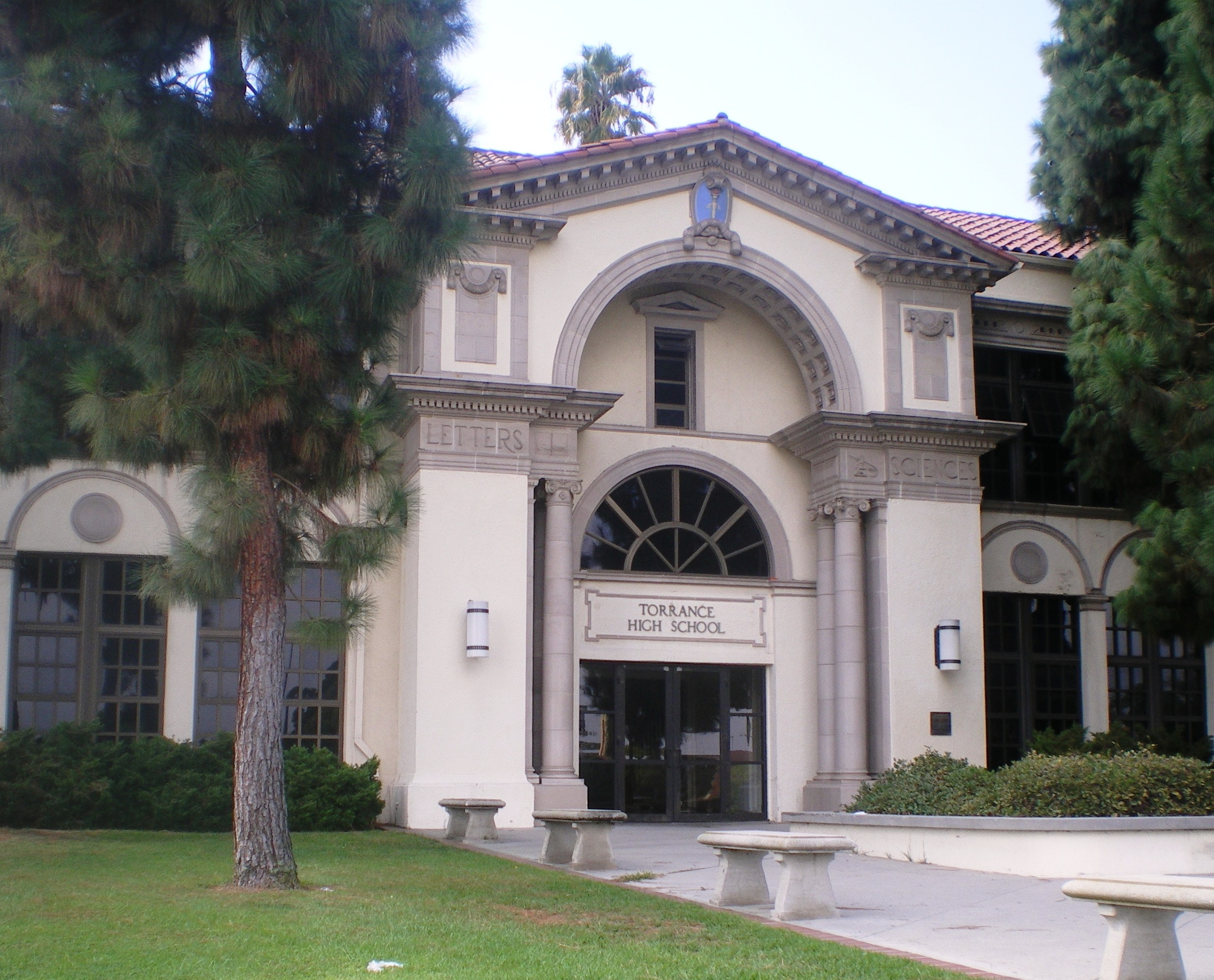
Many public school facilities throughout California are in various stages of disrepair. In a report to the public, the federal government noted that 75% of California schools, 13,096 in total, were in need of renovation and modernization. Furthermore, the renovations and modernizations needed were required to elevate the schools standing/rating to "good". In a 2007 financial analysis report, published by the U.S. General Accounting Office, it was estimated that it would cost $112 billion to bring all K–12 public school buildings in line with building codes.
- In 2014 at a meeting of the Fremont School Board, it was made public that students could not study effectively due to the Heating and Air Conditioning (HVAC) not working.
- In 2003 students at Fremont High School in Los Angeles voiced their feelings of humiliation with regards to the needed repairs at their school.
Nonpublic Nonsectarian Schools
“Nonpublic, nonsectarian school” (NPS) means a private, nonsectarian school that enrolls individuals with exceptional needs pursuant to an individualized education program and is certified by the department. Unlike private schools, tuition for the NPS is paid for by the Local Educational Agencies (LEA) and the schools must conform to California Department of Education standards.
Universities and colleges
Public universities

The main state research university is the University of California (UC). The University of California has ten major campuses. Each major UC campus is headed by a chancellor that is appointed by the Regents of the University of California.
The ten major campuses of the University of California are located in Berkeley, Los Angeles, San Diego, Davis, Santa Cruz, Santa Barbara, Irvine, Riverside, Merced and San Francisco. The University of California, San Francisco, teaches only graduate health-sciences students. The UC Hastings College of the Law, also in San Francisco, is affiliated with UC, but is not administered by the UC Regents. The UC system was originally intended to accept students from the top one-eighth (1/8th) of California high school graduates, however several of the schools in the UC system have become even more selective. The awarding of doctoral degrees from California public universities was originally intended to be the sole domain of the UC system, however several doctoral degrees are now also awarded by the Cal State system.
The University of California also administers one national laboratory directly for the United States Department of Energy: Lawrence Berkeley National Laboratory. The university indirectly manages Los Alamos National Laboratory through Los Alamos National Security, LLC and Lawrence Livermore National Laboratory through Lawrence Livermore National Security, LLC.
_(cropped).jpg)
The California State University (CSU) system describes itself as the largest four-year public university system in the United States. The CSU was originally intended to accept students from the top one-third (1/3rd) of California high school graduates, however several of the schools in the CSU system have become much more selective. Many of the larger campuses, such as Cal Poly, Cal Poly Pomona, Long Beach State, Cal State Fullerton, Cal State San Bernardino, Fresno State, Sacramento State, San Francisco State, San Diego State, and San José State (the oldest public university in California) have become more research oriented than they were in the past. A marked change and a shift from the California Master Plan for Higher Education began in 2007 with the CSU gaining the ability to grant doctoral level degrees in education (Ed.D.). The CSU has since gained the authority to grant many other Doctoral degrees, such as the Doctor of Nursing Practice, the Doctor of Physical Therapy, and the Au.D. The CSU also has the ability to grant joint Ph.D.s with other universities. Kevin Starr (State Librarian emeritus) and others have argued that this small change is the beginning of a larger reorganization of higher education in California.
.jpg)
The California Community Colleges system provides lower division "General Education" courses, whose credit units are transferable to the CSU and UC systems, as well as vocational education, remedial education, and continuing education programs. It awards certificates and associate degrees. It is composed of 112 colleges organized into 72 districts, serving a student population of over 2.9 million. The system also provides the education certification, basic training, and some advanced training to all police officers, fire fighters and Emergency Medical Tech's in the state either directly (via on campus academies) or indirectly (via affiliations with police / sheriff department's and fire department's "in house" academies).
Private universities

California has hundreds of other private colleges and universities, including many religious and special-purpose institutions. This leads to many unique entertainment and educational opportunities for residents. The San Francisco Bay area and greater Los Angeles have an abundance of these private universities, with some of the highest densities of post-secondary institutions in the world.
References
References
- {{CongRec. 2000. S2337. April 6, 2000
- Deborah Reed. "Educational Resources and Outcomes in California, by Race and Ethnicity".
- "SB 65 Program Summary - Dropout Prevention (CA Dept of Education)".
- (2014). "California Gubernatorial Debate". C-SPAN.
- (2025-01-29). "California students’ test scores show slow recovery from pandemic-era learning losses". [[San Jose Mercury News]].
- Gibbs, Molly. (2025-02-04). "California teachers demand better pay, fully staffed schools as districts battle financial woes". [[San Jose Mercury News]].
- (2018-06-01). "Education Spending Per Student by State".
- (2017-01-01). "What Everyone Should Know about Their State's Budget". [[Urban Institute]].
- (2017-01-01). "What Everyone Should Know about Their State's Budget". [[Urban Institute]].
- Woolfolk, John. (2018-01-15). "Why do Californians pay more state and local taxes than Texans?". [[The Mercury News.
- "Ravenswood City School District - Budget and Finances".
- "Local Control Funding Formula - Allocations & Apportionments (CA Dept of Education)".
- "How Funding K-12 Via Property Taxes Fuels Social Inequality".
- Gabbert, Lorraine. (2022-07-10). "Santa Clara County school funding disparity widens". [[San José Spotlight]].
- "Schools Lack Repair Funds". Sacramento Observer.
- Sohrabji, Sunita. (October 19, 2012). "School Bd. Contender Wants Budget Restructured". [[India West]].
- Kozol, Jonathan. (2006). "The Shame of the Nation: The Restoration of Apartheid Schooling in America". Broadway Paperbacks.
- "Special Education Programs Definitions".
- "Private Schools Frequently Asked Questions - Private Schools and Schooling at Home (CA Dept of Education)".
- "University of California - Campuses - The University of California campuses provide environments that foster world-class educational and research opportunities, generating a wide range of public benefits and services". Universityofcalifornia.edu.
- "University of California News Room". Universityofcalifornia.edu.
- "CSU Facts 2017". The California State University.
This article was imported from Wikipedia and is available under the Creative Commons Attribution-ShareAlike 4.0 License. Content has been adapted to SurfDoc format. Original contributors can be found on the article history page.
Ask Mako anything about Education in California — get instant answers, deeper analysis, and related topics.
Research with MakoFree with your Surf account
Create a free account to save articles, ask Mako questions, and organize your research.
Sign up freeThis content may have been generated or modified by AI. CloudSurf Software LLC is not responsible for the accuracy, completeness, or reliability of AI-generated content. Always verify important information from primary sources.
Report