From Surf Wiki (app.surf) — the open knowledge base
Economy of Taiwan
none

none
| Field | Value | ||||||||
|---|---|---|---|---|---|---|---|---|---|
| country | Taiwan | ||||||||
| image | Taipei_Skyline_2022.06.29.jpg | ||||||||
| image_size | 330px | ||||||||
| caption | Taipei, the capital and financial center of Taiwan | ||||||||
| currency | New Taiwan dollar (TWD) | ||||||||
| year | Calendar year | ||||||||
| organs | WTO, APEC and ICC | ||||||||
| group | {{plainlist | ||||||||
| *Developed/Advanced<ref>{{cite web | url | https://www.imf.org/external/pubs/ft/weo/2019/01/weodata/weoselco.aspx?g=110&sg=All+countries+%2f+Advanced+economies | title=World Economic Outlook Database, April 2019 | publisher=International Monetary Fund | website=IMF.org | access-date=29 September 2019 | archive-date=17 June 2019 | archive-url=https://web.archive.org/web/20190617091701/https://www.imf.org/external/pubs/ft/weo/2019/01/weodata/weoselco.aspx?g=110&sg=All+countries+%2f+Advanced+economies | url-status=live }} |
| *High-income economy<ref>{{cite web | url | https://datahelpdesk.worldbank.org/knowledgebase/articles/906519-world-bank-country-and-lending-groups | title=World Bank Country and Lending Groups | publisher=World Bank | website=datahelpdesk.worldbank.org | access-date=29 September 2019 | archive-date=28 October 2019 | archive-url=https://web.archive.org/web/20191028223324/https://datahelpdesk.worldbank.org/knowledgebase/articles/906519-world-bank-country-and-lending-groups | url-status=dead }} |
| population | 23,196,178 (May 2022) | ||||||||
| gdp | {{plainlist | ||||||||
| * $884.39 billion (nominal; 2025)<ref name | "IMFWEODE" | ||||||||
| * $1.99 trillion (PPP; 2025)<ref name | "IMFWEODE"/ | ||||||||
| gdp rank | {{plainlist | ||||||||
| per capita | {{plainlist | ||||||||
| * $37,830 (nominal; 2025)<ref name | "IMFWEODE"/ | ||||||||
| * $85,130 (PPP; 2025)<ref name | "IMFWEODE"/ | ||||||||
| per capita rank | {{plainlist | ||||||||
| growth | {{plainlist | ||||||||
| * 4.84% (2024)<ref name | "DGBAS_mayreport" | ||||||||
| * 7.37% <ref name | "DGBAS_novemberreport" | ||||||||
| * 3.54% <ref name | "DGBAS_novemberreport"/ | ||||||||
| sectors | {{plainlist | ||||||||
| *(2017 est.)<ref name | "CIATW"/}} | ||||||||
| inflation | 1.66% (April 2025) | ||||||||
| poverty | 1.13% (2024){{notetag | This statistic measures the percentage of the population classified as low-income persons. After 2011, Taiwan classifies those living below the poverty line, which is 60% of the median disposable income per capita, set per city, as low-income persons.{{cite web | url=https://www.taipeitimes.com/News/taiwan/archives/2010/09/17/2003483104 | title= | |||||
| Cabinet moves to redefine poverty | publisher | Taipei Times | date=17 September 2010 | access-date=29 November 2025}}}} | |||||
| labor | 12.001 million (2024) | ||||||||
| 59.3% participation rate (2024) | |||||||||
| average gross salary | NT$ 60,984 | ||||||||
| US$2,026 per month (2024) | |||||||||
| gini | 33.9 (2023 est.) | ||||||||
| hdi | 0.926 (2021) | ||||||||
| occupations | {{plainlist | ||||||||
| *(2022 est.)<ref name | "CIATW"/}} | ||||||||
| unemployment | 3.35% (2025) | ||||||||
| industries | {{plainlist | ||||||||
| exports | $475 billion (2024) | ||||||||
| export-goods | Semiconductors, petrochemicals, automobile/auto parts, ships, wireless communication equipment, flat panel displays, steel, electronics, plastics, computers | ||||||||
| export-partners | |||||||||
| *(2024)<ref name | "Trade Profile"/ | ||||||||
| imports | $394 billion (2024) | ||||||||
| import-goods | Oil/petroleum, semiconductors, natural gas, coal, steel, computers, wireless communication equipment, automobiles, fine chemicals, textiles | ||||||||
| import-partners | {{plainlist | ||||||||
| *(2024)<ref name | "Trade Profile"/}} | ||||||||
| current account | $112 billion (2024) | ||||||||
| FDI | {{plainlist | ||||||||
| * Outward: $567.3 billion (2024)<ref name | "FDIStockTW" | ||||||||
| * Inward: $152.2 billion (2024)<ref name | "FDIStockTW"/}} | ||||||||
| gross external debt | $219.947 billion (2024) | ||||||||
| debt | 27.1% of GDP (2024) | ||||||||
| revenue | TWD 4.18 trillion (2024) | ||||||||
| USD 133 billion | |||||||||
| expenses | TWD 4.07 trillion (2024) | ||||||||
| USD 130 billion | |||||||||
| balance | −0.2% (of GDP) (2022 est.) | ||||||||
| credit | {{plainlist | ||||||||
| *Standard & Poor's:<ref>{{cite web | title | Sovereign Ratings List | url=https://www.spglobal.com/ratings/en/research/articles/231207-sovereign-ratings-list-12938153 | publisher=S&P Global | access-date=27 April 2024}} | ||||
| *Outlook: Stable<ref name | guardian | ||||||||
| *Moody's:<ref>{{cite web | title | Moody's - credit ratings, research, tools and analysis for the global capital markets | url=https://m.moodys.com/research-preview/Moodys-changes-Taiwans-outlook-to-positive-from-stable-affirms-Aa3--PR_433862? | publisher=Moody's | access-date=2021-08-11 | date=2021-02-24}} | |||
| *Fitch:<ref name | "FitchTW" | ||||||||
| reserves | $600 billion (Oct 2025) | ||||||||
| spelling | US | ||||||||
| cpi | 67 (2024) (25th) | ||||||||
| NIIP | 1.556 trillion (2024) |
- Developed/Advanced
- High-income economy
- $884.39 billion (nominal; 2025)
- $1.99 trillion (PPP; 2025)
- 22nd (nominal, 2025)
- 20st (PPP, 2025)
- $37,830 (nominal; 2025)
- $85,130 (PPP; 2025)
- 32nd (nominal, 2025)
- 12th (PPP, 2025)
- 4.84% (2024)
- 7.37% (2025f)
- 3.54% (2026f)
- Agriculture: 1.8%
- Industry: 36%
- Services: 62.1%
- (2017 est.)}} Cabinet moves to redefine poverty|publisher= Taipei Times|date=17 September 2010|access-date=29 November 2025}}}} 59.3% participation rate (2024) US$2,026 per month (2024)
- Agriculture: 5%
- Industry: 30%
- Services: 65%
- (2022 est.)}}
- Electronics, communications and information technology products, petroleum refining, chemicals, textiles, iron and steel, machinery, cement, food processing, vehicles, consumer products, pharmaceuticals
- Agricultural: Rice, corn, vegetables, fruit, tea; pigs, poultry, beef, milk; fish
- Natural: Small deposits of coal, natural gas, limestone, marble, and asbestos}} | export-goods = Semiconductors, petrochemicals, automobile/auto parts, ships, wireless communication equipment, flat panel displays, steel, electronics, plastics, computers | export-partners =
- China 31.7%
- Hong Kong 11.3%
- United States 23.4%
- ASEAN 18.5%
- European Union 7.0%
- Japan 5.4%
- South Korea 4.4%
- (2024) | import-goods = Oil/petroleum, semiconductors, natural gas, coal, steel, computers, wireless communication equipment, automobiles, fine chemicals, textiles | import-partners = {{plainlist|
- China 20.4%
- ASEAN 12.5%
- United States 11.8%
- Japan 11.8%
- South Korea 11.0%
- European Union 8.9%
- Australia 3.7%
- (2024)}}
- Outward: $567.3 billion (2024)
- Inward: $152.2 billion (2024)}} USD 133 billion USD 130 billion
- Standard & Poor's:
- AA+ (Domestic)
- AA+ (Foreign)
- AAA (T&C Assessment)
- Outlook: Stable
- Moody's:
- Aa3
- Outlook: Stable
- Fitch:
- AA
- Outlook: Stable}} Taiwan is a highly developed free-market economy. It is the 8th-largest in Asia and 21st-largest in the world by purchasing power parity, allowing Taiwan to be included in the advanced economies group by the International Monetary Fund. Taiwan is notable for its rapid economic development from an agriculture-based society to an industrialized, high-income country. This economic growth has been described as the Taiwan Miracle. It is gauged in the high-income economies group by the World Bank. Taiwan is one of the leading producers of computer microchip and high-tech electronics.
History
Main article: Taiwan Miracle
Taiwan has transformed itself from a recipient of U.S. aid in the 1950s and early 1960s to an aid donor and major foreign investor, with investments primarily centered in Asia. Private Taiwanese investment in mainland China is estimated to total in excess of US$150 billion, and official tallies cite Taiwan as having invested a comparable amount in Southeast Asia.
In 1949, over two million Kuomintang supporters fled to the island following the loss of Mainland China in the Chinese Civil War. The sudden increase in population also affected Taiwan's economy.
Facing the economic pressure, the Kuomintang regime established several economic plans and policies. The first step towards industrialization was land reforms, a crucial step in modernizing the economy, as it created a class of landowners with the capital they could invest in future economic endeavors. US aid was also important in stabilizing post-war Taiwan, and it constituted more than 30 percent of domestic investment from 1951 to 1962. These factors, together with government planning and universal education, brought rapid advancements in industry and agriculture, and living standards. The economy shifted from an agriculture-based economy (32% of GDP in 1952) to an industry-oriented economy (47% of GDP in 1986). Between 1952 and 1961, the economy grew by an average of 9.21% each year.
The transformation of Taiwan's economy has been influenced by broader geopolitical dynamics. Although aid was cut back in the 1970s, it was crucial in its formative years, spurring industrialization, and security and economic links between Taiwan and the United States were maintained. Uncertainty about the US commitment accelerated the country's shift from subsidized import-substitution in the 1950s to export-led growth. The development of foreign trade and exports helped absorb excess labor from a decreased importance of agriculture in the economy. Taiwan moved from cheap, labor-intensive manufactures, such as textiles and toys, into an expansion of heavy industry and infrastructure in the 1970s and then to advanced electronics in the subsequent decade. By the 1980s, the economy was becoming increasingly open, and the government moved towards the privatization of government enterprises. Technological development led to the establishment of the Hsinchu Science Park in 1981. Investments in mainland China spurred cross-strait trade, decreasing Taiwan's dependence on the United States market. From 1981 to 1995, the economy grew at an annual rate of 7.52%, and the service sector became the largest sector at 51.67%, surpassing the industrial sector and becoming a major source of the economy's growth.
International Trade is officially assisted by Taiwan External Trade Development Council. Because of the financial policy by the Central Bank of the Republic of China (Taiwan) and its entrepreneurial strengths, Taiwan suffered little from the 1997 Asian financial crisis compared to other economies in the region.
]]
Data
The following table shows the main economic indicators in 1980–2021 (with IMF staff estimates in 2021–2027). Inflation under 5% is in green.
| Year | GDP | GDP per capita | GDP | GDP per capita | GDP growth | Inflation rate | Unemployment | Government debt |
|---|---|---|---|---|---|---|---|---|
| 1980 | 61.6 | 3,446.2 | 42.3 | 2,366.8 | 8.0% | 19.0% | 1.2% | n/a |
| 1981 | 72.2 | 3,967.2 | 49.0 | 2,691.5 | 7.1% | 15.7% | 1.4% | n/a |
| 1982 | 80.3 | 4,338.3 | 49.5 | 2,675.3 | 4.8% | 3.0% | 2.1% | n/a |
| 1983 | 91.0 | 4,843.1 | 54.1 | 2,881.7 | 9.0% | 1.4% | 2.7% | n/a |
| 1984 | 103.8 | 5,441.4 | 61.1 | 3,202.6 | 10.0% | 0.0% | 2.5% | n/a |
| 1985 | 112.2 | 5,808.8 | 63.6 | 3,293.9 | 4.8% | -0.2% | 2.9% | n/a |
| 1986 | 127.6 | 6,541.8 | 78.2 | 4,008.1 | 11.5% | 0.7% | 2.7% | n/a |
| 1987 | 147.5 | 7,475.6 | 105.0 | 5,325.2 | 12.8% | 0.5% | 2.0% | n/a |
| 1988 | 164.9 | 8,264.1 | 126.5 | 6,338.1 | 8.0% | 1.3% | 1.7% | n/a |
| 1989 | 186.3 | 9,243.6 | 152.7 | 7,575.9 | 8.7% | 4.4% | 1.6% | n/a |
| 1990 | 204.0 | 9,999.4 | 166.6 | 8,167.2 | 5.5% | 4.1% | 1.7% | n/a |
| 1991 | 228.6 | 11,091.9 | 187.1 | 9,081.9 | 8.4% | 3.6% | 1.5% | n/a |
| 1992 | 253.2 | 12,171.2 | 222.9 | 10,715.5 | 8.3% | 4.5% | 1.5% | n/a |
| 1993 | 276.9 | 13,186.4 | 236.3 | 11,256.7 | 6.8% | 2.9% | 1.5% | n/a |
| 1994 | 304.0 | 14,353.8 | 256.2 | 12,099.7 | 7.5% | 4.1% | 1.6% | n/a |
| 1995 | 330.5 | 15,475.9 | 279.1 | 13,066.1 | 6.5% | 3.7% | 1.8% | n/a |
| 1996 | 357.4 | 16,602.1 | 292.5 | 13,588.3 | 6.2% | 3.1% | 2.6% | n/a |
| 1997 | 385.5 | 17,731.3 | 303.3 | 13,948.7 | 6.1% | 0.9% | 2.7% | 25.0% |
| 1998 | 406.3 | 18,526.5 | 280.0 | 12,767.1 | 4.2% | 1.7% | 2.7% | 23.7% |
| 1999 | 439.7 | 19,903.7 | 303.8 | 13,752.7 | 6.7% | 0.2% | 2.9% | 23.7% |
| 2000 | 478.1 | 21,460.9 | 330.7 | 14,844.2 | 6.3% | 1.3% | 3.0% | 26.2% |
| 2001 | 482.0 | 21,512.3 | 299.3 | 13,357.2 | -1.4% | 0.0% | 4.6% | 30.1% |
| 2002 | 516.3 | 22,927.3 | 307.4 | 13,651.4 | 5.5% | -0.2% | 5.2% | 29.8% |
| 2003 | 548.8 | 24,277.2 | 317.4 | 14,040.6 | 4.2% | -0.3% | 5.0% | 32.2% |
| 2004 | 602.7 | 26,562.5 | 346.9 | 15,290.3 | 7.0% | 1.6% | 4.4% | 33.4% |
| 2005 | 655.0 | 28,767.3 | 374.1 | 16,427.5 | 5.4% | 2.3% | 4.1% | 34.1% |
| 2006 | 714.2 | 31,220.7 | 386.5 | 16,892.9 | 5.8% | 0.6% | 3.9% | 33.3% |
| 2007 | 783.8 | 34,138.8 | 406.9 | 17,723.7 | 6.9% | 1.8% | 3.9% | 32.2% |
| 2008 | 805.2 | 34,951.8 | 415.9 | 18,053.6 | 0.8% | 3.5% | 4.1% | 33.4% |
| 2009 | 797.3 | 34,484.6 | 390.8 | 16,904.5 | -1.6% | -0.9% | 5.9% | 36.7% |
| 2010 | 889.5 | 38,404.3 | 444.3 | 19,181.4 | 10.2% | 1.0% | 5.2% | 36.9% |
| 2011 | 941.4 | 40,532.6 | 484.0 | 20,838.6 | 3.7% | 1.4% | 4.4% | 38.3% |
| 2012 | 973.2 | 41,741.3 | 495.6 | 21,256.4 | 2.2% | 1.9% | 4.2% | 39.2% |
| 2013 | 1,015.2 | 43,435.5 | 512.9 | 21,945.5 | 2.5% | 0.8% | 4.2% | 38.9% |
| 2014 | 1,066.1 | 45,494.3 | 535.3 | 22,844.3 | 4.7% | 1.2% | 4.0% | 37.5% |
| 2015 | 1,102.0 | 46,911.0 | 534.5 | 22,753.0 | 1.5% | -0.3% | 3.8% | 35.9% |
| 2016 | 1,112.8 | 47,272.3 | 543.1 | 23,070.7 | 2.2% | 1.4% | 3.9% | 35.4% |
| 2017 | 1,143.2 | 48,500.8 | 590.7 | 25,061.6 | 3.3% | 0.6% | 3.8% | 34.5% |
| 2018 | 1,203.2 | 51,005.0 | 609.2 | 25,825.6 | 2.8% | 1.4% | 3.7% | 33.9% |
| 2019 | 1,262.2 | 53,476.0 | 611.4 | 25,903.2 | 3.1% | 0.6% | 3.7% | 32.7% |
| 2020 | 1,320.3 | 56,037.8 | 669.3 | 28,404.7 | 3.4% | -0.2% | 3.9% | 32.6% |
| 2021 | 1,465.5 | 62,696.1 | 774.7 | 33,143.0 | 6.6% | 2.0% | 4.0% | 28.4% |
| 2022 | 1,621.7 | 69,500.0 | 828.7 | 35,513.2 | 3.3% | 3.1% | 3.6% | 24.1% |
| 2023 | 1,727.2 | 74,066.5 | 859.0 | 36,833.9 | 2.8% | 2.2% | 3.6% | 22.1% |
| 2024 | 1,801.1 | 77,231.7 | 901.6 | 38,662.5 | 2.1% | 1.4% | 3.6% | 20.2% |
| 2025 | 1,871.4 | 80,247.1 | 948.5 | 40,673.6 | 2.0% | 1.4% | 3.6% | 18.1% |
| 2026 | 1,945.2 | 83,412.7 | 996.8 | 42,745.0 | 2.0% | 1.4% | 3.6% | 16.2% |
| 2027 | 2,022.6 | 86,730.1 | 1,045.2 | 44,820.8 | 2.0% | 1.4% | 3.6% | 14.4% |

Economic outlook
As of 2021, the three highest-paid sectors in Taiwan include telecommunication service, financial services, and information services. The economy of Taiwan ranked the highest in Asia in the 2015 Global Entrepreneurship Index (GEI). With the technocracy-centered economic planning until 1987, real growth in GDP has averaged about 8% during the past three decades. Exports have grown since World War II, with inflation and unemployment staying low and foreign reserves being the world's fourth largest. Directorate General of Budget, Accounting and Statistics and Ministry of Economic Affairs release major economic indicators of the economy of Taiwan.
Taiwan now faces many of the same economic issues as other developed economies. With the prospect of continued relocation of labor-intensive industries to economies with cheaper workforces, such as in mainland China, the Philippines, and Vietnam, Taiwan's future development will have to rely on further transformation to a high-technology and service-oriented economy. In recent years, Taiwan has successfully diversified its trade markets, cutting its share of exports to the United States from 49% in 1984 to 20% in 2002. Taiwan's dependence on the United States should continue to decrease as its exports to Southeast Asia and mainland China grow, and its efforts to develop European markets produce results. Taiwan's accession to the WTO and its desire to become an Asia-Pacific "regional operations center" are spurring further economic liberalization. The economy of Taiwan is facing economic marginalization in the world economy de-internationalization and lower salaries. This results in human resource talents seeking career opportunities elsewhere. Businesses in Taiwan suffer most from being the size of small and medium enterprises, which impedes attempts at economic transformation in Taiwan by the Taiwanese government.
The indirect tax system of the economy of Taiwan comprises Gross Business Receipts Tax (GBRT) (gross receipts tax) and value-added tax (VAT). The economy of Taiwan is ranked 15th overall in the Global Top 20 Top Destination Cities by International Overnight Visitors (2014) by the MasterCard 2014 Global Destination Cities Index.
In addition, economic inequality, as measured by the Gini coefficient, has been on the rise in Taiwan, rising from a value of 0.47 in 1980 to 0.61 in 2022 (before considering taxes and welfare transfers). Post-tax GINI was 0.32, similar to most other developed countries.
2008 financial crisis
Taiwan recovered quickly from the 2008 financial crisis and the Great Recession, and its economy has been growing steadily since. Its economy faced a downturn in 2009 due to a heavy reliance on exports which in turn made it vulnerable to world markets. Unemployment reached levels not seen since 2003, and the economy fell 8.36% in the fourth quarter of 2008. In response, the government launched a US$5.6 billion economic stimulus package (3% of its GDP), provided financial incentives for businesses, and introduced tax breaks. The stimulus package focused on infrastructure development, small and medium-sized businesses, tax breaks for new investments, and low-income households. Boosting shipments to new overseas markets, such as Russia, Brazil, and the Middle East, was also a main goal of the stimulus. The economy has since slowly recovered; by November 2010, Taiwan's unemployment rate had fallen to a two-year low of 4.73%, and continued dropping to a 40-month low of 4.18% by the end of 2011. The average salary has also been rising steadily for each month in 2010, up 1.92% from the same period in 2009. Industrial output for November 2010 reached another high, up 19.37% from a year earlier, indicating strong exports and a growing local economy. Private consumption is also increasing, with retail sales up 6.4% compared to 2009. After 10.5% economic growth in 2010, the World Bank expected growth to continue and reach 5% for 2011.
According to the National Development Council, Taiwan's economy declined in May 2019 due to the ongoing China–United States trade war.
Foreign trade

Foreign trade has been the engine of Taiwan's rapid growth during the past 40 years. Taiwan's economy remains export-oriented; thus, it depends on an open world trade regime and remains vulnerable to downturns in the world economy. The total value of trade increased over fivefold in the 1960s, nearly tenfold in the 1970s, and doubled again in the 1980s. The 1990s saw a more modest, slightly less than twofold, growth. Export composition changed from predominantly agricultural commodities to industrial goods (now 98%). The electronics sector is Taiwan's most important industrial export sector and is the largest recipient of United States investment.
Taiwan is a member of numerous trade agreements, with China, Japan, USA, the European Union, and Hong Kong as top 5 trade partners in 2010. Taiwan has one of the world's lowest fertility rate and high housing prices. Labor shortages, falling domestic demand, and declining tax revenues are concerns as Taiwan's population decline is faster than other advanced economies.
As an island economy with a lack of natural resources and comparatively lower domestic aggregate demand, Taiwan's highly educated human resources would contribute greatly to Value added Innovation management for expanding Taiwan's international trade.
Taiwan, as an independent economy, became a member of the World Trade Organization (WTO) as Separate Customs Territory of Taiwan, Penghu, Kinmen and Matsu (often shortened to "Chinese Taipei" - both names resulting from PRC interference in the WTO) in January 2002. In a 2011 report by Business Environment Risk Intelligence (BERI), Taiwan ranked third-best globally for its investment environment.
Taiwan is the world's largest supplier of contract computer chip manufacturing (foundry services) and is a leading LCD panel manufacturer, DRAM computer memory, networking equipment, and consumer electronics designer and manufacturer. Major hardware companies include Acer, Asus, HTC, Foxconn, TSMC and Pegatron. Textiles are another major industrial export sector, though of declining importance due to labor shortages, increasing overhead costs, land prices, and environmental protection.
Imports are dominated by raw materials and capital goods, which account for more than 90% of the total. Taiwan imports most of its energy needs. The United States is Taiwan's third largest trading partner, taking 11.4% of Taiwanese exports and supplying 10.0% of its imports. Mainland China has recently become Taiwan's largest import and export partner. In 2010, the mainland accounted for 28.0% of Taiwan's exports and 13.2% of imports. This figure is growing rapidly as both economies become ever more interdependent. Imports from mainland China consist mostly of agricultural and industrial raw materials. Exports to the United States are mainly electronics and consumer goods. As the Taiwanese per capita income level has risen, demand for imported, high-quality consumer goods has increased. Taiwan's 2002 trade surplus with the United States was $8.70 billion.
The lack of formal diplomatic relations between the Republic of China (Taiwan) with Taiwan's trading partners appears not to have seriously hindered Taiwan's rapidly expanding commerce. The Republic of China maintains cultural and trade offices in more than 60 countries with which it does not have official relations to represent Taiwanese interests. In addition to the WTO, Taiwan is a member of the Asian Development Bank as "Taipei, China" (a name resulting from PRC influence on the bank) and the Asia-Pacific Economic Cooperation (APEC) forum as "Chinese Taipei" (for the same reason as above). These developments reflect Taiwan's economic importance and its desire to become further integrated into the global economy.
Taiwan is a member of the Asian Development Bank (ADB), the World Trade Organization (WTO), and the Asia-Pacific Economic Cooperation (APEC). Taiwan is also an observer at the Organisation for Economic Co-operation and Development (OECD) and International Energy Agency (IEA) as Member under the acronym of Chinese Taipei, and a member of International Chamber of Commerce as Chinese Taipei. Taiwan signed Economic Cooperation Framework Agreement with People's Republic of China on 29 June 2010. Taiwan has also signed free trade pacts with Singapore and New Zealand. Taiwan applied for the membership in the Asian Infrastructure Investment Bank in 2015.
The Economic Cooperation Framework Agreement (ECFA) with the People's Republic of China was signed on 29 June 2010, in Chongqing. It could potentially widen the market for Taiwan's exports. However, the true benefits and impacts brought by ECFA to Taiwan's overall economy are still in dispute. The newly signed agreement will allow for more than 500 products made in Taiwan to enter mainland China at low or no tariffs. As of 2021, Taiwan's exports to the People's Republic of China (including Hong Kong) totaled about US$270 billion per year, which is equivalent to more than 40% of Taiwan's total GDP. The government is also looking to establish trade agreements with Singapore and the United States.
Industry

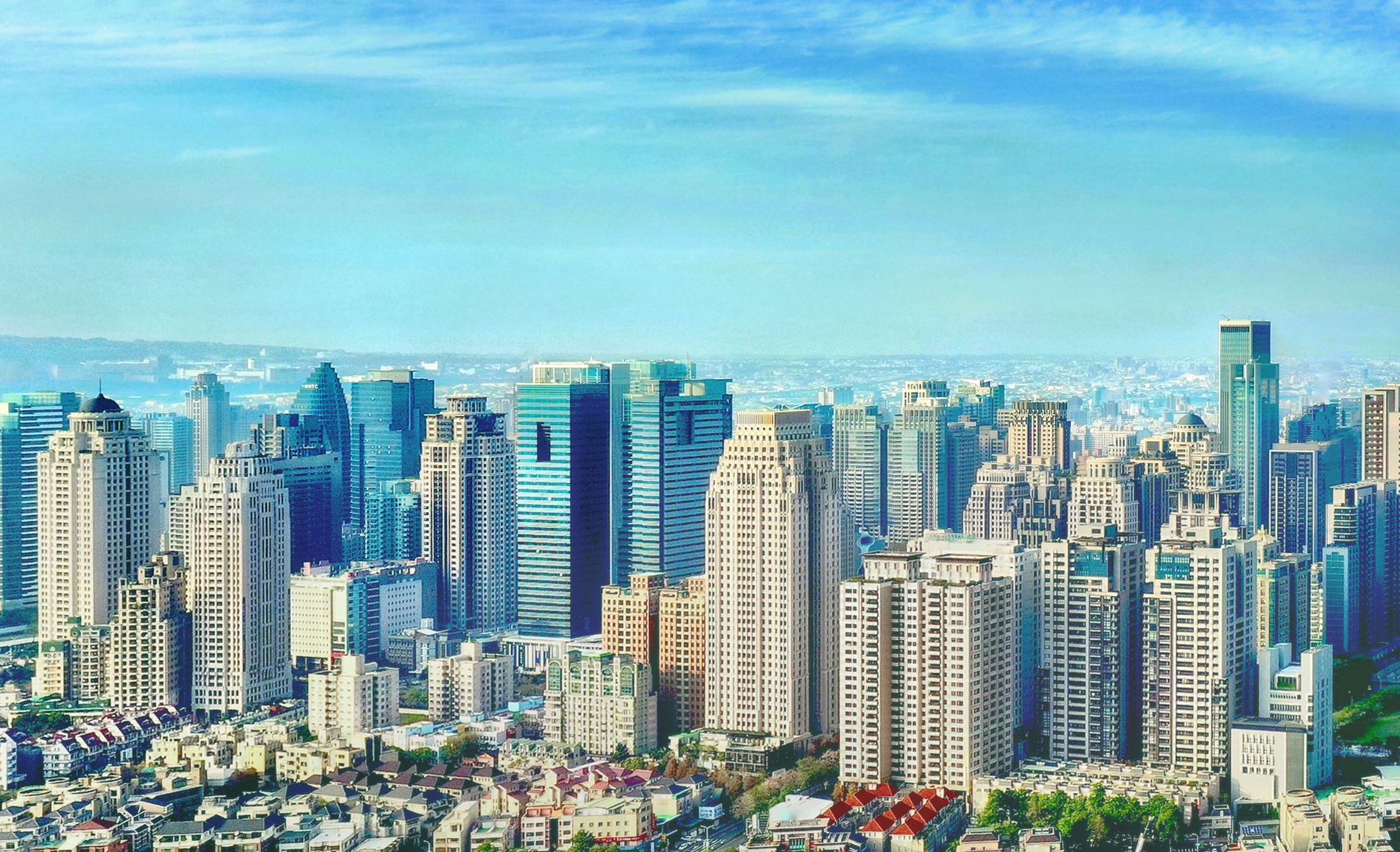
Industrial output has gradually decreased from accounting for over half of Taiwan's GDP in 1986 to just 31% in 2002. Industries have gradually moved to the capital and technology-intensive industries from more labor-intensive industries, with electronics and information technology accounting for 35% of the industrial structure. Industry in Taiwan primarily consists of many small and medium-sized enterprises (SME) with fewer large enterprises. Traditional labor-intensive industries are being moved off-shore and replaced with capital and technology-intensive industries. These industries are in the pre-mature stage of the manufacturing industry in various global economic competitions, and growing from the over-reliance from the original equipment manufacturer and original design manufacturer models. The Institute for Information Industry is responsible for the development of the IT and ICT industry in Taiwan. Industrial Technology Research Institute is the advanced research center for applied technology for the economy of Taiwan. The art industry is significant with sales worth $225.4 million made domestically in 2019. Taiwanese collectors and artists are also prominent in the global art market.
The "e-Taiwan" project launched by the government seeks to use US$1.83 billion to improve the information and communications infrastructure in Taiwan in five major areas: government, life, business, transport, and broadband. The program seeks to raise industry competitiveness, improve government efficiency, and improve the quality of life, and aims to increase the number of broadband users on the island to 6 million. In 2010, Taiwan's software market grew by 7.1% to reach a value of US$4 billion, accounting for 3.3% of the Asia-Pacific region market value. The digital content production industry grew by 15% in 2009, reaching US$14.03 billion. The optoelectronics industry (including flat panel displays and photovoltaics) totaled NT$2.2 trillion in 2010, a 40% jump from 2009, representing a fifth of the global market share. The economy of Taiwan is a partner in the Global Value Chains of Electronics Industry. Electronic components and personal computer are areas of international strength of Taiwan's Information Technology industry.
Taiwan has a growing startup sector.
Consumer goods
Taiwan is a major producer of sporting goods with NT$59.8 billion of production in 2020, 40–50% of production is indoor fitness equipment. Taiwan is the global leader in golf equipment with 80% of global production concentrated in the country. The four largest golf OEM are all Taiwanese, however, these firms are increasingly selling products under their own brands.
The Taiwanese bicycle industry is significant. Production peaked at ten million units a year in the 1980s but declined as low end production moved abroad and domestic manufactures moved upmarket. Giant Bicycles and Merida Bikes are the largest Taiwanese bicycle manufacturers. Mountain bikes and ebikes make up much of contemporary production. In 2022 the bicycle industry hit a record $6 billion US in revenue.
Semiconductor industry
Main article: Semiconductor industry in Taiwan
The semiconductor industry, including IC manufacturing, design, and packing, forms a major part of Taiwan's IT industry. Due to its strong capabilities in OEM wafer manufacturing and a complete industry supply chain, Taiwan has been able to distinguish itself from its competitors. The sector output reached US$39 billion in 2009, ranking first in global market share in IC manufacturing, packaging, and testing, and second in IC design. Taiwan Semiconductor Manufacturing Company (TSMC) and United Microelectronics Corporation (UMC) are the two largest contract chipmakers in the world, while MediaTek is the fourth-largest fabless supplier globally. In 1987, TSMC pioneered the fabless foundry model, reshaping the global semiconductor industry. From ITRI's first 3-inch wafer fabrication plant built in 1977 and the founding of UMC in 1980, the industry has developed into a world leader with 40 fabs in operation by 2002. In 2007, the semiconductor industry overtook that of the United States, second only to Japan. Although the 2008 financial crisis affected sales and exports, the industry has rebounded with companies posting record profits for 2010. The international industrial forecast of semiconductor manufacturing, which is the flagship industry of the economy of Taiwan that faces immense competition ahead with its American counterparts. By 2020 Taiwan was the unmatched leader of the global semiconductor industry with Taiwan Semiconductor Manufacturing Company (TSMC) alone accounting for more than 50% of the global market.
Information technology
Taiwan's information technology industry has played an important role in the worldwide IT market over the last 20 years. In 1960, the electronics industry in Taiwan was virtually nonexistent. However, with the government's focus on development of expertise with high technology, along with marketing and management knowledge to establish its own industries, companies such as TSMC and UMC were established. The industry used its industrial resources and product management experience to cooperate closely with major international suppliers to become the research and development hub of the Asia-Pacific region. The structure of the industry in Taiwan includes a handful of companies at the top along with many small and medium-sized enterprises (SME) which account for 85% of industrial output. These SMEs usually produce products on an original equipment manufacturer (OEM) or original design manufacturer (ODM) basis, resulting in less resources spent on research and development. Due to the emphasis of the OEM/ODM model, companies are usually unable to make in-depth assessments for investment, production, and marketing of new products, instead relying upon importation of key components and advanced technology from the United States and Japan. Twenty of the top information and communication technology (ICT) companies have International Procurement Offices set up in Taiwan. As a signer of the Information Technology Agreement, Taiwan phased out tariffs on IT products since 1 January 2002.
Taiwan is a hub for global computing, telecommunications, and data management with a number of large server farms operating in the country. Google's data center in Changhua is believed to be the largest in Asia. Taiwan is well connected to the global undersea fiber optic cable network and serves as a substantial traffic interchange.
Agriculture
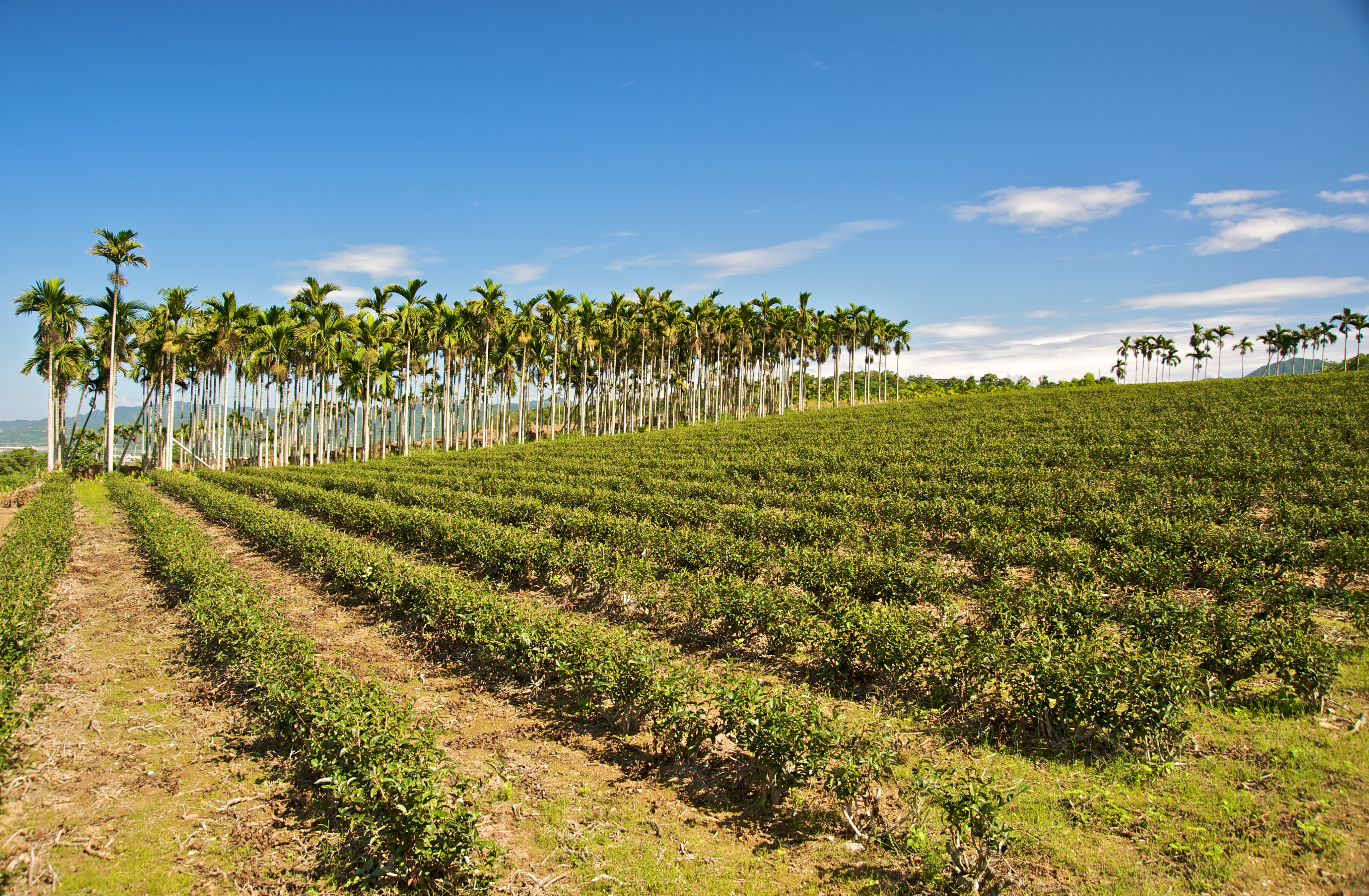
Main article: Agriculture in Taiwan
Agriculture has served as a strong foundation for Taiwan's economic miracle. It contributes 3% to GDP and the service sector makes up 73% of the economy. After retrocession from Japan in 1945, the government announced a long-term strategy of "developing industry through agriculture, and developing agriculture through industry". As such, agriculture became the foundation for Taiwan's economic development during early years and served as an anchor for growth in industry and commerce. Whereas in 1951, agricultural production accounted for 35.8% of Taiwan's GDP, by 2013, it had been vastly surpassed, and its NT$475.90 billion accounted for only 1.69% of the GDP. , Taiwan's agriculture was a mixture of crops (47.88%), livestock (31.16%), fishery (20.87%), and forestry (0.09%). Since its accession into the World Trade Organization and the subsequent trade liberalization, the government has implemented new policies to develop the sector into a more competitive and modernized green industry.
Although only about one-quarter of Taiwan's land area is suitable for farming, virtually all farmland is intensely cultivated, with some areas suitable for two and even three crops a year. However, increases in agricultural production have been much slower than industrial growth. Agricultural modernization has been inhibited by the small size of farms and the lack of investment in better facilities and training to develop more profitable businesses. Taiwan's agricultural population has steadily decreased from 1974 to 2002, prompting the Council of Agriculture to introduce modern farm management, provide technical training, and offer counseling for better production and distribution systems. Promotion of farm mechanization has helped to alleviate labor shortages while increasing productivity; both rice and sugar cane production are completely mechanized. Taiwan's main crops are rice, sugar cane, fruits (many of them tropical), and vegetables. Although self-sufficient in rice production, Taiwan imports large amounts of wheat, mostly from the United States. Meat production and consumption have risen sharply, reflecting a high standard of living. Taiwan has exported large amounts of frozen pork, although this was affected by an outbreak of hoof and mouth disease in 1997. Other agricultural exports include fish, aquaculture, and sea products, canned and frozen vegetables, and grain products. Imports of agriculture products are expected to increase due to the WTO accession, which is opening previously protected agricultural markets.
Energy
Main article: Energy in Taiwan
Due to the lack of natural resources on the island, Taiwan is forced to import many of its energy needs (currently at 98%). Imported energy totaled US$11.52 billion in 2002, accounting for 4.1% of its GDP. Although the industrial sector has traditionally been Taiwan's largest energy consumer, its share has dropped in recent years from 62% in 1986 to 58% in 2002. Taiwan's energy consumption is dominated by crude oil & petroleum products (48.52%), followed by coal (29.2%), natural gas (12.23%), nuclear power (8.33%), and hydroelectric power (0.28%). The island is also heavily dependent on imported oil, with 72% of its crude oil coming from the Middle East in 2002. Although the Taiwan Power Company (Taipower), a state-owned enterprise, is in charge of providing electricity for the Taiwan area, a 1994 measure has allowed independent power producers (IPPs) to provide up to 20% of the island's energy needs. Indonesia and Malaysia supply most of Taiwan's natural gas needs. It currently has three operational nuclear power plants. A fourth plant under construction was mothballed in 2014.
Although Taiwan's per capita energy use is on par with neighboring Asian countries, in July 2005 the Ministry of Economic Affairs announced plans to cut 170 million tons of carbon dioxide emissions by 2025. In 2010, carbon dioxide emissions have been reduced by 5.14 million metric tons. In order to further reduce emissions, the government also plans to increase energy efficiency by 2% each year through 2020. In addition, by 2015, emissions are planned to be reduced by 7% compared to 2005 levels.
Taiwan is the world's 4th largest producer of solar-powered batteries and largest LED manufacturer by volume. In 2010, Taiwan had over 1.66 million square meters of solar heat collectors installed, with an installation density that ranks it as third in the world. The government has already built 155 sets of wind turbines capable of producing 281.6 MW of electricity, and additional projects are planned or under construction. Renewable energy accounts for 6.8% of Taiwan's energy usage as of 2010. In 2010, the green energy sector generated US$10.97 billion in production value. The government also announced plans to invest US$838 million for renewable energy promotion and an additional US$635 million for research and development.
Steel and heavy manufacturing
Main article: Steel industry in Taiwan
Taiwan, as of 2017, is the world's thirteenth-largest steel exporter. In 2018, Taiwan exported 12.2 million metric tons of steel, a one percent increase from 12.0 million metric tons in 2017. Taiwan's exports represented about 3 percent of all steel exported globally in 2017, based on available data. The volume of Taiwan's 2018 steel exports was one-sixth that of the world's largest exporter, China, and nearly one-third that of the second-largest exporter, Japan. In value terms, steel represented just 3.6 percent of the total amount of goods Taiwan exported in 2018. Taiwan exports steel to more than 130 countries and territories. Over the decade from 2009 to 2019, Taiwan grew its steel exports by 24%. In 2018, the US imported 300,000 metric tons of pipe and tube products. Taiwan has developed a vast export trade to its most proximate neighbors in flat products. Taiwan's stainless steel exports numbered 2018 about 500,000 metric tons.
Taiwan is the fourth largest exporter of machine tools and machine tool components in the world. The greater Taichung area is home to a cluster of machine tool manufacturers.
Taiwanese company Techman Robot Inc. is the world's second largest producer of cobots.
The automotive industry in Taiwan is significant, with Taiwanese firms increasingly invested in automotive electrification; 75% of Tesla, Inc.’s suppliers are Taiwanese.
Maritime industries
Main article: Maritime industries of Taiwan
In 2017, Taiwan exported one hundred and sixty-two yachts. In 2018 Taiwan was the fourth largest yacht building nation by feet of yacht built after Italy, The Netherlands and Turkey. Taiwan is one of the largest fishing nations on earth and the associated fish processing industry is also significant.
Tourism industry
Main article: Tourism in Taiwan
Fashion industry
Main article: Fashion in Taiwan
Largest companies
According to the 2019 Forbes Global 2000 index, Taiwan's largest publicly traded companies are:
| Rank | Company | Revenues | |||
|---|---|---|---|---|---|
| ($ billion) | Profit | ||||
| ($ billion) | Assets | ||||
| ($ billion) | Market value | ||||
| ($ billion) | |||||
| 1 | Hon Hai Precision | 175.6 | 4.3 | 110 | 41.2 |
| 2 | TSMC | 34.2 | 11.6 | 68 | 222.4 |
| 3 | Cathay Financial | 3.5 | 0.1 | 73.0 | 4.1 |
| 4 | Fubon Financial | 21.9 | 1.6 | 250.6 | 14.9 |
| 5 | CTBC Financial | 16.7 | 1.2 | 187.2 | 12.8 |
| 6 | Formosa Petrochemical | 25.5 | 2 | 13.2 | 35.4 |
| 7 | Formosa Chemicals | 13.5 | 1.6 | 19.2 | 20.6 |
| 8 | Nan Ya Plastics | 11 | 1.7 | 18.6 | 19.9 |
| 9 | Formosa Plastics | 7.6 | 1.6 | 13.2 | 35.4 |
| 10 | China Steel | 13.3 | 0.8 | 21.9 | 12.6 |
| 11 | Chunghwa Telecom | 7.1 | 1.2 | 15.2 | 27.7 |
| 12 | Mega Financial Holding | 3.2 | 0.9 | 115.2 | 12.4 |
| 13 | ASE Group | 12.3 | 0.8 | 17.4 | 10.2 |
| 14 | Quanta Computer | 34.1 | 0.5 | 21.5 | 7.6 |
| 15 | Uni-President | 14.3 | 0.6 | 13.2 | 13.1 |
| 16 | Shin Kong Financial | 13.1 | 0.3 | 118.7 | 3.4 |
| Rank | Company | Revenues | |||
|---|---|---|---|---|---|
| ($ billion) | Profit | ||||
| ($ billion) | Assets | ||||
| ($ billion) | Market value | ||||
| ($ billion) | |||||
| 1 | Hon Hai Precision | 214.6 | 4.99 | 141.0 | 2.39 |
| 2 | TSMC | 56.8 | 21.21 | 134.4 | 446.25 |
| 3 | Pegatron | 45.2 | 0.73 | 24.4 | 5.67 |
| 4 | Compal Electronics | 44.3 | 0.45 | 19.4 | 3.42 |
| 5 | Quanta Computer | 40.4 | 1.20 | 25.9 | 10.48 |
| 6 | Cathay Financial Holding | 37.5 | 4.99 | 418.3 | 23.90 |
| 7 | Fubon Financial Holding | 32.2 | 5.18 | 378.9 | 26.92 |
| 8 | Wistron | 30.9 | 0.37 | 17.9 | 2.75 |
| 9 | CPC | 30.0 | -1.4 | 30.4 | 71.44 |
| Rank | Company | Revenues | |||
|---|---|---|---|---|---|
| ($ billion) | Profit | ||||
| ($ billion) | Assets | ||||
| ($ billion) | Market value | ||||
| ($ billion) | |||||
| 1 | Hon Hai Precision | 214.6 | 4.98 | 141 | 41.2 |
| 2 | TSMC | 34.2 | 11.6 | 68 | 222.4 |
| 3 | Cathay Financial | 3.5 | 0.1 | 73.0 | 4.1 |
| 4 | Fubon Financial | 21.9 | 1.6 | 250.6 | 14.9 |
| 5 | CTBC Financial | 16.7 | 1.2 | 187.2 | 12.8 |
| 6 | Formosa Petrochemical | 25.5 | 2 | 13.2 | 35.4 |
| 7 | Formosa Chemicals | 13.5 | 1.6 | 19.2 | 20.6 |
| 8 | Nan Ya Plastics | 11 | 1.7 | 18.6 | 19.9 |
| 9 | Formosa Plastics | 7.6 | 1.6 | 13.2 | 35.4 |
| 10 | Formosa Petrochemical | 25.5 | 2 | 16.3 | 22.3 |
| 11 | China Steel | 13.3 | 0.8 | 21.9 | 12.6 |
| 12 | Chunghwa Telecom | 7.1 | 1.2 | 15.2 | 27.7 |
| 13 | Mega Financial Holding | 3.2 | 0.9 | 115.2 | 12.4 |
| 14 | ASE Group | 12.3 | 0.8 | 17.4 | 10.2 |
| 15 | Quanta Computer | 34.1 | 0.5 | 21.5 | 7.6 |
| 16 | Uni-President | 14.3 | 0.6 | 13.2 | 13.1 |
Labor policy
Union policies
The Labor Union Laws, legislated by the Kuomintang (KMT) on the mainland, gave Taiwan workers the right to unionize. However, prior to the democratization of Taiwan, the functions of trade unions were limited under strict regulation and state corporatism. Under the Labor Union Laws, workers were only allowed to be organized at the companies, which means industry level unions were forbidden. Also, only one union could exist within each company or geographical area. Special occupational groups such as teachers were not allowed to unionize. The right to strike and collective bargaining were also hamstrung by law. The Collective Bargaining Agreement in 1930 stipulated that collective bargains were not legally valid without government approval. The democratization in 1986 brought dramatic changes to union participation and policies. Between 1986 and 1992, unionized workers increased by 13%. A number of autonomous, non-official trade unions emerged, including the Taiwan Confederation of Trade Unions (TCTU) which acquired legal recognition in 2000. The amendments to the Labor Union Laws and Collective Bargaining Agreement both became effective in the early 21st century. The amended Labor Union Law lifted the limitations on special occupational groups from collective representation. The Collective Bargaining Agreement Act in 2008 guaranteed trade unions the power to negotiate with employers.
Employment protection
Taiwan's labor rights and employment protections increased with its democratization progress in the 1980s, and it still has a relatively high level of employment protection compared to other East Asia countries. Implemented in August 1984, Labor Standards Law was the first comprehensive employment protection law for Taiwan workers. Prior to its implementation, the Factory Act was the primary law governing labor affairs, but was ineffective in practice because of its narrow coverage of businesses and issues and absence of penalties for violation. In contrast, Labor Standards Law covered a broader range of businesses and labor affairs and detailed penalties for its violation. It regulated a period of notice before firing employees and also required a higher level of severance payment. Other labor issues were also regulated by the law, including contract, wage, overtime payment, compensations for occupational accidents, etc. Penalties for employer violation were also clear in the law, stating fines and criminal liabilities. Council of Labor Affairs (CLA) was set up on 1 August 1987 to help with labor inspection and the enforcement of the Labor Standards Law.
In Taiwan, companies with at least a single employee have the compulsion to contribute to the insurer's employment service insurance premium. The share of labor insurance is divided into a 7:2:1 ratio between employer, employee, and state. As far as a contribution towards social security, companies should pay at least 6% of the wages of its employees towards the social security.
Active labor market policies
Active labour market policies were carried out in Taiwan in the late 20th and early 21st centuries as a result of economic structural changes caused by globalization and deindustrialization. Unemployment increased and reached approximately 5% in 2002 and 2009. A set of policies was adopted to help the unemployed and provide jobs. The Employment Insurance Act of 2002 grants income security during unemployment but, at the same time, requires beneficiaries to use all available resources to find jobs. The Multi-Faceted Job Creation Program, first introduced in 1999, creates job in the third sector groups, especially in nonprofit organizations. It subsidizes those companies to provide vocational trainings and job opportunities. The Public Sector Temporary Employment Creation Program directly addressed the 2008 financial crisis. Unlike the Multi-Faceted Job Creation Programs, the Public Sector Temporary Employment Creation Program creates jobs in the government itself. From 2008 to 2009, the government was estimated to create 102,000 job opportunities through that program. A job creation project was also implemented to help young people by subsidizing the hiring of young people in universities and private companies.
Working hours
On 30 July 1984, Taiwan implemented an eighty-six article Labor Standards Act under Presidential Order No.14069. The act defined the standard work week as 40 labor hours with an eight-hour limit per day, permitting an overtime-included maximum of forty-eight labor hours per week.
Article 25 of the Labor Standards Act upholds there will be no sexual discrimination in the conditions of workers, however, because the Taiwanese culture and thus political economy traditionally "categorizes female employees as naturally marriage- and family-oriented," women are assumed to obtain employment in fields that are limited to these ideals. As a result of feminist ideals becoming more prevalent with women seeking equal work conditions in modern societies such as Taiwan, even marital status policy and immigration policy have been affected as women seek less patriarchal roles to the point where Taiwanese men have sought higher rates of transnational marriages since the 1990s.
Science and industrial parks

In order to promote industrial research and development, the government began establishing science parks, economic zones which provide rent and utility breaks, tax incentives, and specialized lending rates to attract investment. The first of these, the Hsinchu Science Park was established in 1980 by the National Science Council with a focus on research and development in information technology and biotechnology. It has been called Taiwan's "Silicon Valley" and has expanded to six campuses covering an area of 1140 ha. Over 430 companies (including many listed on TAIEX) employing over 130,000 people are located within the park, and paid in capital totaled US$36.10 billion in 2008. Both Taiwan Semiconductor Manufacturing Company and United Microelectronics Corporation, the world's largest and second largest contract chipmakers, are headquartered within the park. Since 1980, the government has invested over US$1 billion in the park's infrastructure, and further expansion for more specialized parks have been pursued. The Industrial Technology Research Institute (ITRI), headquartered within the park, is the largest nonprofit research organization in Taiwan and has worked to develop applied technological research for industry, including for many of Taiwan's traditional industries (such as textiles).
Following the success of the first park, the Southern Taiwan Science Park (STSP), consisting of the Tainan Science Park and the Kaohsiung Science Park, was established in 1996. In addition to companies, several research institutes (including Academia Sinica) and universities have set up branches within the park with a focus on integrated circuits (ICs), optoelectronics, and biotechnology. The Central Taiwan Science Park (CTSP) was established more recently in 2003. While the CTSP is still under development, many firms (including AU Optronics) have already moved into the park and begun manufacturing operations. Like the other parks, CTSP also focuses on ICs, optoelectronics, and biotechnology, with the optoelectronics industry accounting for 78% of its revenue in 2008. These three science parks alone have attracted over NT$4 trillion (US$137 billion) worth of capital inflow, and in 2010 total revenue within the parks reached NT$2.16 trillion (US$72.8 billion).
The Linhai Industrial Park, established in Kaohsiung in 1960, is a well-developed industrial zone with over 490 companies focusing on other industries including base metals, machinery and repairs, nonmetallic mineral products, chemical products, and food and beverage manufacturing. The Changhua Coastal Industrial Park, located in Changhua County, is a newer industrial cluster with many different industries such as food production, glass, textiles, and plastics.
Industrial and science parks in Taiwan include:
- Central Taiwan Science Park
- Hsinchu Science Park
- Hsinchu Biomedical Science Park
- Nankang Software Park
- Neihu Technology Park
- Tainan Science Park
- Southern Taiwan Science Park
- Kaohsiung Science Park
- National Biotechnology Research Park
- Shalun Smart Green Energy Science City
- Kaohsiung Software Park
Economic research institutes

- Taiwan Institute of Economic Research
- Chung-Hua Institution for Economic Research
- Institute of Economics, Academia Sinica
- Industrial Technology Research Institute
- Taiwan Livestock Research Institute
Exchange rates

]]

]]
Notes
References
References
- "World Economic Outlook Database, April 2019". [[International Monetary Fund]].
- "World Bank Country and Lending Groups". [[World Bank]].
- (10 June 2022). "民國111年5月戶口統計資料分析".
- "Taiwan Province of China". [[International Monetary Fund]].
- "GDP: Preliminary Estimate for 2025Q1, and Outlook for 2025".
- "GDP: Preliminary Estimate for 2025Q3, and Outlook for 2025-26".
- (24 February 2022). "GDP: Preliminary Estimate for 2022Q1 and Outlook for 2022". Directorate-General of Budget Accounting and Statistics Executive Yuan.
- (16 September 2025). "STATISTICAL YEARBOOK OF THE REPUBLIC OF CHINA 2024, Table 33. Low-income families and living assistance". Directorate-General of Budget Accounting and Statistics Executive Yuan.
- "STATISTICAL YEARBOOK OF THE REPUBLIC OF CHINA 2024, Table 7. Indicators of labor force status".
- (17 February 2025). "113年全年受僱員工人數平均為845萬7千人,全年每人每月總薪資平均為60,984元". [[Directorate General of Budget, Accounting and Statistics]].
- (2020). "Human Development Report 2020: Reader's Guide". United Nation Development Program.
- "What is the human development index (HDI)? How are relevant data queried?". Directorate General of Budget, Accounting and Statistics, Executive Yuan, Taiwan (ROC).
- (6 January 2011). "人類發展指數(Human Development Index, HDI)". Directorate General of Budget, Accounting and Statistics, Executive Yuan, Taiwan (ROC).
- (14 October 2021). "國情統計通報(第 195 號)". [[Directorate General of Budget, Accounting and Statistics]], Executive Yuan, Taiwan (ROC).
- (14 October 2022). "National Statistics, Republic of China (Taiwan)". Directorate General of Budget, Accounting and Statistics, Executive Yuan, Taiwan (ROC).
- (2024). "Export/Import Value (By Country)". [[Bureau of Foreign Trade]].
- (16 September 2025). "STATISTICAL YEARBOOK OF THE REPUBLIC OF CHINA 2024, Table 87. Balance of payments". Directorate-General of Budget Accounting and Statistics Executive Yuan.
- "Taiwan's International Investment Position".
- (29 November 2025). "A1 External Debt and Debt-Service Ratio (by Year)". Central Bank of the Republic of China (Taiwan).
- (20 November 2025). "Measures for maintaining fiscal stability". Ministry of Finance, R.O.C..
- (16 September 2025). "STATISTICAL YEARBOOK OF THE REPUBLIC OF CHINA 2024, Table 89. Net government revenues of all levels". Directorate-General of Budget Accounting and Statistics Executive Yuan.
- (16 September 2025). "STATISTICAL YEARBOOK OF THE REPUBLIC OF CHINA 2024, Table 90. Net government expenditures of all levels". Directorate-General of Budget Accounting and Statistics Executive Yuan.
- "The World Factbook". [[Central Intelligence Agency]].
- "Sovereign Ratings List". S&P Global.
- (15 April 2011). "How Fitch, Moody's and S&P rate each country's credit rating". The Guardian.
- (2021-02-24). "Moody's - credit ratings, research, tools and analysis for the global capital markets". Moody's.
- "Taiwan - Credit Rating".
- "Taiwan Credit Rating".
- (November 5, 2025). "Foreign Exchange Reserves as of the End of October 2025". Central Bank of the Republic of China (Taiwan).
- (11 February 2025). "Corruption Perceptions Index". [[Transparency International]].
- (13 June 2025). "Taiwan's International Investment Position (2024)". Central Bank of the Republic of China (Taiwan).
- "Select Aggregates".
- "World Bank Country and Lending Groups – World Bank Data Help Desk".
- "TSMC is about to become the world's most advanced chipmaker". [[The Economist]].
- (28 November 2018). "Taiwan's TSMC Could be About to Dethrone Intel".
- "TSMC set to beat Intel to become the world's most advanced chipmaker - PCMag India".
- [http://www.winklerpartners.com/a/comment/taiwanese-investment-in-china.php Taiwan Investment in China] {{webarchive. link. (21 April 2011)
- Dunbabin, J. P. D.. (2008). "The Cold War". Pearson Education.
- Ng, Franklin. (1998). "The Taiwanese Americans". Greenwood Publishing Group.
- (2000). "Taiwan Timeline - Retreat to Taiwan". BBC News.
- "The Story of Taiwan - Economy".
- "Taipei Taitra - List of TAITRA overseas offices".
- "Banking Environment and Reform Measures of Taipei, China During the Asian Financial Crisis".
- "The Definition, Purposes, Functions and Services of Incubation Centers".
- "Report for Selected Countries and Subjects".
- (July 2025). ["Taiwan's 5 high-paying industries must see job changing workers"](https://today.line.me/tw/v2/amp/article/7wVM2M&ved=2ahUKEwituZPiltf6AhWrgFYBHdVwCI8QFnoECBAQAQ&usg=AOvVaw0OG2A8wcKes0KFVIBAHiDa }}{{Dead link).
- "The China Post".
- "Documents".
- "National Statistics, Republic of China (Taiwan)".
- (14 November 2013). "Ministry of Economic Affairs, R.O.C. - Statistics of Economic".
- "Taiwan - Economy". QFinance.
- Skarica, David. (2010). "The Great Super Cycle: Profit from the Coming Inflation Tidal Wave and Dollar Devaluation". John Wiley and Sons.
- "Downloads - 2013 - White Paper - AmCham - American Chamber of Commerce in Taipei - 臺北市美國商會".
- "Market Insights - Michael Page".
- "Asia Pacific Indirect Tax Country Guide".
- "Mastercard : 2014 Global Destination Cities Index".
- (2024-01-03). "Economic Inequality". Our World in Data.
- (2024-05-06). "Notes from Central Taiwan: Wealth inequality - Taipei Times".
- (22 December 2010). "Jobless rate falls to 2-year low in November". China Post.
- (30 January 2011). "Taiwan's jobless rate drops to 40-month low in December". Focus Taiwan News Channel.
- (22 December 2010). "Regular salary up for 12 consecutive months". Focus Taiwan News Channel.
- (23 December 2010). "November industrial production index hits fresh high". Focus Taiwan News Channel.
- (24 December 2010). "Taiwan retail sales forecast to hit record high this year". Focus Taiwan News Channel.
- Judy Li. (19 January 2011). "Taiwan's Economic Growth to Reach 5% in 2011: the World Bank". China Economic News Service.
- (29 June 2019). "Taiwan economy remains sluggish in May amid global trade war".
- Ralph Jennings. (10 January 2011). "Tablets, Internet-linked Smart Sensors to Star at Computex". PC World.
- (11 June 2001). "Computex show draws over 23,300 foreign buyers". ZDNet.
- "Services of Economic Division". Taipei Economic and Cultural Office, Canada.
- (December 2010). "Import by Key Trading Partners". Ministry of Economic Affairs.
- (December 2010). "Export by Key Trading Partners". Ministry of Economic Affairs.
- (2020-02-07). "East Asia/Southeast Asia :: Taiwan - The World Factbook".
- (2020-04-03). "Asian Development Outlook (ADO) 2020: What Drives Innovation in Asia?". Asian Development Bank.
- "THE WORLD FACTBOOK - Birth rate". CIA: Central Intelligence Agency.
- "Background paper".
- "Data".
- Karimaa, Alexandra. (February 2013). "Value-Aware Approach to Management of Innovative Software Products and Services".
- "Developing Innovation Capability In Organizations".
- "Bloomberg Pursuits - Bloomberg".
- "Chinese Taipei".
- (1 September 2011). "Taiwan world's third-best for investment: research firm". Focus Taiwan News Channel.
- (23 December 2010). "Taiwan's ICT industry gears up for prosperous 2011". Taiwan Today.
- "Major Industries in Taiwan".
- "Research from TASC".
- "Chinese Taipei".
- (2011). "Chinese Taipei - Organisation for Economic Co-operation and Development".
- "Chinese Taipei Business Council of ICC details | ICC - International Chamber of Commerce".
- Jenny W. Hsu. (7 November 2013). "Taiwan, Singapore Sign Free-Trade Pact". WSJ.
- Lucy Craymer. (11 July 2013). "Taiwan and New Zealand Sign Free-Trade Agreement". WSJ.
- "Hong Kong, Taiwan seek to join AIIB".
- (24 June 2010). "Chinese, Taiwan sign landmark economic pact".
- link. (21 October 2013 25 June 2010)
- John Pike. (16 July 2009). "Taiwan Sees Gains in Closer Ties With China".
- (2 January 2011). "Taiwan ranks fifth in major importers to China in 2010". China Post.
- (14 April 2022). "China's trade boom defies new Cold War".
- (15 December 2010). "Taiwan, Singapore prepare to forge economic partnership (update)". Focus Taiwan News Channel.
- (23 December 2010). "Taiwan-US TIFA talks to resume next month". China Post.
- San, Gee. (1 April 1992). "Taiwanese Corporations in Globalisation and Regionalisation". OECD Development Centre Working Papers.
- (18 July 2018). "Are Three-letter Acronyms Holding Taiwan Hostage?".
- (4 December 2013). "The Transformation of Taiwan's Status Within the Production and Supply Chain in Asia". Brookings Institution.
- "III - Institute for Information Industry".
- "FIND-Foreseeing Innovative New Digiservices".
- "Measuring the Information Society 2011".
- (1 April 2013). "Industrial Technology Research Institute".
- (14 July 2021). "Taipei's Thriving Art Scene Looks to Become an International Star". Art News.
- (5 May 2005). "e-Taiwan Program 2004". eTaiwan Program.
- (6 January 2011). "Taiwan's Optoelectronics industry totals NT$2.2 tril.". China Post.
- (2010). "Electronics industry stats".
- "Data".
- (13 November 2015). "Slush CSO on Taiwan's Startups: Youth Must Take the Lead".
- (July 2016). "Taiwan Students Fly To Israel for a Taste of Startup Sauce".
- (5 August 2021). "Taiwan's sporting goods production expected to break NT$60 billion this year". Taiwan News.
- "Taiwan's Golf Gear Manufacturers Bounce Back as Tiger Woods Returns to Glory". Commonwealth Magazine.
- (13 August 2015). "Swinging For the Fairway: Taiwan Golf Equipment". Taiwan Topics.
- (6 March 2024). "Taipei Cycle: Guide to an industry geared up for change".
- "Taiwan: The powerhouse behind the Tour De France". Bike News.
- "Emerging Industries".
- "The Status of the Semiconductor Industry in Taiwan". Department of Investment Services, MOEA.
- (21 December 2010). "13 Fabless IC Suppliers Forecast to Top $1.0 Billion in Sales in 2010!". IC Insights.
- Jeffrey Word. (2009). "Business Network Transformation: Strategies to Reconfigure Your Business Relationships for Competitive Advantage". John Wiley and Sons.
- Meg Chang. (18 June 2010). "Veteran tells story of Taiwan's semiconductor industry". Taiwan Today.
- John A. Matthews. (1997). "A Silicon Valley of the East: Creating Taiwan's Semiconductor Industry". California Management Reviews.
- (29 October 2007). "Taiwan semiconductor output overtakes United States". China Post.
- (6 January 2010). "Taiwan's Semiconductor Industry Records Fastest YOY Growth". RNCOS.
- (10 January 2011). "Taiwan's TSMC sales rise more than 40% in 2010".
- (8 January 2011). "UMC posts record annual sales as foundry picks up". Taipei Times.
- Agam Shah. (8 May 2013). "Intel: We don't see the end of Moore's Law yet". CITEworld.
- "Science and technology: No Moore? - The Economist". The Economist.
- (22 September 2020). "Taiwan to remain largest semiconductor material market in 2020, 2021". Focus Taiwan.
- Chang, Chun-Yen. (2001). "Made by Taiwan: booming in the information technology era". World Scientific.
- Chang, Chun-Yen. (2001). "Made by Taiwan: booming in the information technology era". World Scientific.
- "Schedules of concessions". World Trade Organization.
- (18 November 2010). "ICT to Taiwan". Australian Government.
- (19 June 2020). "Taiwan lures businesses amid Hong Kong jitters". Asia Times.
- "Land and Natural Environment". Council of Agriculture, Executive Yuan.
- "The Story of Taiwan: Preface". Government Information Office, ROC.
- "Executive Yuan, R.O.C. (Taiwan)-Agriculture".
- "Agriculture".
- "Mechanization". Council of Agriculture, Executive Yuan.
- "Sustainable Development of Renewable Energy". Ministry of Economic Affairs, Bureau of Energy.
- "Energy".
- "Energy Supply". Ministry of Economic Affairs, Bureau of Energy.
- "Taiwan". Energy Information Administration, Department of Energy, USA.
- Lin, Sean. (4 February 2015). "AEC approves plan to shutter fourth nuclear facility". Taipei Times.
- "Per Capita GDP and Primary Energy Consumption in Major Countries (2007)". Ministry of Economic Affairs, Bureau of Energy.
- (23 December 2010). "Taiwan's Green Energy Production Value Surges to NT$340B. in First 11 Months of 2010". CENS.
- "II. Solar Energy". Ministry of Economic Affairs, Bureau of Energy.
- "I. Wind Energy". Ministry of Economic Affairs, Bureau of Energy.
- Edward C. Gates. (25 December 2010). "Investment Plan by Taiwan". Biofuels Watch.
- (May 2019). "Global Steel Trade Monitor - Steel Exports Report: Taiwan". US Department of Commerce.
- "Taiwan: Supporting the Next Generation of Aerospace Manufacturing". Modern Machine Shop.
- "This Made-in-Taiwan Robot Is Drawing International Attention". CommonWealth.
- (20 October 2020). "Taiwan's Tesla Boom, and Looking for More". Topics.
- (27 April 2018). "Yacht Building in Taiwan". Power and Motoryacht.
- "Global Order Book". Boat International.
- (January 2009). "Fishing industry - Taiwan". Berkshire Publishing Group.
- "Forbes The World's Biggest Public Companies 2016 Ranking".
- Chu, Yin-wah. (1996). "Democracy and Organized Labor in Taiwan: The 1986 Transition". Asian Survey.
- Shi, Shih-Jiunn. (2012). "Shifting dynamics of the welfare politics in Taiwan: from income maintenance to labour protection". Journal of Asian Public Policy.
- Wang, James W. Y.. (2010). "The Political Economy of Collective Labour Legislation in Taiwan". Journal of Current Chinese Affairs.
- Caraway, Teri. (2009). "Labor Rights in East Asia: Progress or Regress?". Journal of East Asian Studies.
- Lin, Yen-Ling. (2013). "Wage Effects of Employment Protection Legislation in Taiwan". Asian Economic Journal.
- Camhon, Kan. (2011). "The Effects of Employment Protection on Labor Turnover: Empirical Evidence from Taiwan". Economic Inquiry.
- "Bureau of Labor Insurance Website-Employer-Labors Insurance and Employment Insurance Premium-Premium Sharing Ratio".
- "Bureau of Labor Insurance Website-Employment Insurance-Introduction".
- (2020-03-09). "Hiring Employees in Taiwan: Benefits, Time-Off, & Termination".
- Aspalter, Christian. (2017-01-12). "The Routledge International Handbook to Welfare State Systems". Taylor & Francis.
- Lue, Jen-Der. (2013). "Promoting Work: A Review of Active Labour Market Policies in Taiwan". Journal of Asian Public Policy.
- Shi, Shih-Jiunn. (2012). "Shifting Dynamics of the Welfare Politics in Taiwan: from Income Maintenance to Labour Protection". Journal of Asian Public Policy.
- Fen-ling Chen. "Unemployment and the Government's Role in a Risk Society: A Case Study in Taiwan". Risk and Public Policy in East Asia, edited by Raymond K.H. Chan et al., 2010, 115-131.
- "Labor Standards Act - Article Content - Laws & Regulations Database of the Republic of China".
- Chin TF. (2018) Being Employed as a ‘Nyusheng’: Gendered and Heteronormative Management in the Workplace. In: Everyday Gender at Work in Taiwan. Gender, Sexualities and Culture in Asia. Palgrave Macmillan, Singapore
- TSENG, H. (2016). Racialization of Foreign Women in the Transnational Marriage Market of Taiwan. In Zheng T. (Ed.), Cultural Politics of Gender and Sexuality in Contemporary Asia (pp. 205-222). Honolulu: University of Hawai'i Press. Retrieved from http://www.jstor.org/stable/j.ctvvn5tw.16
- "Taiwan's biotech-focused Science Parks". Biotech East.
- (25 September 2008). "Science Parks in Taiwan".
- Sara Robinson. (22 September 1999). "Taiwan's Chip Plants Left Idle by Earthquake". The New York Times.
- Dan Nystedt. (24 April 2008). "LSI's China Plan Changed by Taiwan Election". ABC News.
- "An introduction to the Hsinchu Science Park". Hsinchu Science Park.
- (7 January 2011). "UPDATE 1-UMC posts weaker sales; fresh demand seen". Reuters.
- "Public Sector Research Facilities".
- (25 May 2010). "Science Parks". [[Government Information Office]], [[Executive Yuan]].
- "Origins". Central Taiwan Science Park.
- (24 February 2011). "Taiwan top-3 science parks to generate revenues of NT$2.45 trillion in 2011". DigiTimes.
- "Kaohsiung LihHai Industrial Park". Kaohsiung LinHai Industrial Park Service Center.
- "About Us". Kaohsiung LinHai Industrial Park Service Center.
- "Environments of Changhua County". Invest in Taiwan, Department of Investment Services.

This article was imported from Wikipedia and is available under the Creative Commons Attribution-ShareAlike 4.0 License. Content has been adapted to SurfDoc format. Original contributors can be found on the article history page.
Ask Mako anything about Economy of Taiwan — get instant answers, deeper analysis, and related topics.
Research with MakoFree with your Surf account
Create a free account to save articles, ask Mako questions, and organize your research.
Sign up freeThis content may have been generated or modified by AI. CloudSurf Software LLC is not responsible for the accuracy, completeness, or reliability of AI-generated content. Always verify important information from primary sources.
Report