From Surf Wiki (app.surf) — the open knowledge base
Economy of Hong Kong
Set of productive activities developed in Hong Kong

Set of productive activities developed in Hong Kong
| Field | Value | ||||||||
|---|---|---|---|---|---|---|---|---|---|
| country | Hong Kong | ||||||||
| image | Hong Kong Harbour Night 2019-06-11.jpg | ||||||||
| image_size | 310px | ||||||||
| population | 7,527,500 (2025) | ||||||||
| caption | Central and Victoria Harbour of Hong Kong | ||||||||
| currency | Hong Kong dollar (HKD) | ||||||||
| year | 1 April – 31 March | ||||||||
| organs | APEC, WTO, Group of Twenty (Chinese delegation), One Belt One Road, AIIB and ICC etc. | ||||||||
| group | {{plainlist | ||||||||
| *Developed/Advanced<ref>{{cite web | url | https://www.imf.org/external/datamapper/profile/HKG | title=IMF DataMapper: HongKong | website=International Monetary Fund | date=22 October 2024 | access-date=11 November 2024}} | |||
| *High-income economy<ref>{{cite web | url | https://datahelpdesk.worldbank.org/knowledgebase/articles/906519-world-bank-country-and-lending-groups | title=World Bank Country and Lending Groups | publisher=World Bank | website=datahelpdesk.worldbank.org | access-date=29 September 2019 | archive-url=https://web.archive.org/web/20191028223324/https://datahelpdesk.worldbank.org/knowledgebase/articles/906519-world-bank-country-and-lending-groups | archive-date=28 October 2019 | url-status=dead }}}} |
| gdp | {{plainlist | ||||||||
| * $428.233 Billion (nominal; )<ref name | "IMF DataMapper" | ||||||||
| * $594.533 Billion (PPP; )<ref name | "IMF DataMapper"/ | ||||||||
| growth | {{plainlist | ||||||||
| * -3.7% (2022)<ref name | "IMF DataMapper" / | ||||||||
| * 3.2% (2023)<ref name | "IMF DataMapper" / | ||||||||
| * 2.5% ()<ref name | "IMF DataMapper" / | ||||||||
| * 3.5% ()<ref name | "IMF DataMapper" / | ||||||||
| per capita | {{plainlist | ||||||||
| * $56,844 (nominal; )<ref name | "IMF DataMapper"/ | ||||||||
| * $78,919 (PPP; )<ref name | "IMF DataMapper"/ | ||||||||
| sectors | {{plainlist | ||||||||
| *(2024)<ref name | "C&SD"/}} | ||||||||
| inflation | 1.9% (2022) | ||||||||
| poverty | 19.9% (2016 est.) | ||||||||
| gini | 39.7 (2021) | ||||||||
| hdi | {{plainlist | ||||||||
| * 0.956 (2022)<ref name | "hkhdi" (4th) | ||||||||
| * 0.840 IHDI (21st) (2022)<ref name | "hkhdi"/}} | ||||||||
| labour | {{plainlist | ||||||||
| * 3,385,727 (2024)<ref>{{cite web | url | https://data.worldbank.org/indicator/SL.TLF.TOTL.IN?locations=HK | title=Labor force, total – Hong Kong SAR, China | publisher=World Bank | website=data.worldbank.org | access-date=11 December 2019 | archive-url=https://web.archive.org/web/20190814172858/https://data.worldbank.org/indicator/SL.TLF.TOTL.IN%3Flocations%3DHK | archive-date=14 August 2019 | url-status=live }} |
| * 55.6% employment rate (2024)<ref>{{cite web | url | https://data.worldbank.org/indicator/SL.EMP.TOTL.SP.NE.ZS?locations=HK&name_desc=true | title=Employment to population ratio, 15+, total (%) (national estimate) | publisher=World Bank | website=data.worldbank.org | access-date=24 August 2019 | archive-url=https://web.archive.org/web/20190824162607/https://data.worldbank.org/indicator/SL.EMP.TOTL.SP.NE.ZS%3Flocations%3DHK%26name_desc%3Dtrue | archive-date=24 August 2019 | url-status=live }}}} |
| average gross salary | HK$ 28,340 | ||||||||
| US$ 3,661 per month (2022 May) | |||||||||
| average net salary | HK$ 23,807 | ||||||||
| US$ 3,070 per month (2022 May) | |||||||||
| occupations | {{plainlist | ||||||||
| unemployment | 4.3% (2022) | ||||||||
| industries | Financing and insurance, import and export trade, professional and business services | ||||||||
| exports | $582.1 billion (2024) | ||||||||
| export-partners | {{plainlist | ||||||||
| *India 3.0% (2024)<ref name | "C&SD"/}} | ||||||||
| imports | $630.8 billion (2024) | ||||||||
| import-partners | {{plainlist | ||||||||
| *Japan 4.6% (2024)<ref name | "C&SD"/}} | ||||||||
| FDI | {{plainlist | ||||||||
| *$2.2 trillion (31 December 2017 est.)<ref name | "CIAWFHK"/ | ||||||||
| * Abroad: $2.036 trillion (31 December 2017 est.)<ref name | "CIAWFHK"/}} | ||||||||
| current account | $14.75 billion (2017 est.) | ||||||||
| gross external debt | $633.6 billion (31 December 2017 est.) | ||||||||
| debt | 0.1% of GDP (2017 est.) | ||||||||
| revenue | 79.34 billion (2017 est.) | ||||||||
| expenses | 61.64 billion (2017 est.) | ||||||||
| balance | +5.2% (of GDP) (2017 est.) | ||||||||
| credit | Standard & Poor's: | ||||||||
| AAA (Domestic) | |||||||||
| AAA (Foreign) | |||||||||
| AAA (T&C Assessment) | |||||||||
| Outlook: Stable | |||||||||
| Moody's: | |||||||||
| Aa3 | |||||||||
| Outlook: Negative | |||||||||
| Fitch: | |||||||||
| AA+ | |||||||||
| Outlook: Stable | |||||||||
| reserves | $430.7 billion (April 2023) |
- Developed/Advanced
- High-income economy}}
- $428.233 Billion (nominal; 2025)
- $594.533 Billion (PPP; 2025)
- -3.7% (2022)
- 3.2% (2023)
- 2.5% (2024f)
- 3.5% (2025)
- $56,844 (nominal; 2025)
- $78,919 (PPP; 2025)
- Agriculture: 0.1%
- Industry: 6.4%
- Services: 93.6%
- (2024)}}
- 0.956 (2022) (4th)
- 0.840 IHDI (21st) (2022)}}
- 3,385,727 (2024)
- 55.6% employment rate (2024)}} US$ 3,661](list-of-asian-countries-by-average-wage) per month (2022 May) US$ 3,070](list-of-asian-countries-by-average-wage) per month (2022 May)
- Agriculture, fishing, mining and quarrying: 0.1%
- Manufacturing: 1.0%
- Electricity, gas, water supply, and waste management: 1.1%
- Construction: 4.4%
- Wholesale and retail trade, restaurants and hotels: 19.6%
- Transport and communications: 9.5%
- Financing, insurance, real estate, professional and business service: 43.5%
- Community, social, and personal services: 20.9%}} | export-partners = {{plainlist|
- Mainland China 59.0%
- United States 6.5%
- Vietnam 3.2%
- Taiwan 3.1%
- India 3.0% (2024)}} | import-partners = {{plainlist|
- Mainland China 43.6%
- Taiwan 11.3%
- Singapore 7.9%
- South Korea 5.8%
- Japan 4.6% (2024)}}
- $2.2 trillion (31 December 2017 est.)
- Abroad: $2.036 trillion (31 December 2017 est.)}} AAA (Domestic) AAA (Foreign) AAA (T&C Assessment) Outlook: Stable Moody's: Aa3 Outlook: Negative Fitch: AA+ Outlook: Stable The economy of Hong Kong is a highly developed free-market economy. It is characterised by low taxation, almost free port trade and a well-established international financial market. Its currency, called the Hong Kong dollar, is legally issued by three major international commercial banks, and is pegged to the US dollar. Interest rates are determined by the individual banks in Hong Kong to ensure that they are market driven. There is no officially recognised central banking system, although the Hong Kong Monetary Authority functions as a financial regulatory authority.
Its economy is governed under positive non-interventionism, and is highly dependent on international trade and finance. For this reason it is regarded as among the most favorable places to start a company. In fact, a recent study shows that Hong Kong has come from 998 registered start-ups in 2014 to over 2800 in 2018, with eCommerce (22%), Fintech (12%), Software (12%) and Advertising (11%) companies comprising the majority. The Economic Freedom of the World Index lists Hong Kong as the freest economy, with a score of 8.58 based on data from 2022.
Effects
Hong Kong's economic strengths include a sound banking system, virtually no public debt, a strong legal system, ample foreign exchange reserves with assets of US$481.6 billion represent over six times the currency in circulation or about 46 per cent of Hong Kong dollar M3 as at the end of March 2022, rigorous anti-corruption measures and close ties with mainland China. The Hong Kong Stock Exchange is a favourable destination for international firms and firms from mainland China to be listed, due to Hong Kong's highly internationalised and modernised financial industry. Additional advantages include the city's capital market in Asia, its size, regulations and available financial tools, which are comparable to London and New York City.
Hong Kong's gross domestic product had grown 180 times between 1961 and 1997. Also, the GDP per capita rose by 87 times within the same time frame. Its economy is slightly larger than Chile's or Romania's and its GDP per capita at purchasing power parity was the twelfth highest globally in 2023. By the latter measure, its GDP per capita was higher than those of the Netherlands, and slightly lower than Brunei. In 2009, Hong Kong's real economic growth fell by 2.8% as a result of the Great Recession.
By the late 20th century, Hong Kong was the seventh largest port in the world and second only to New York City and Rotterdam in terms of container throughput. Hong Kong is a full Member of the World Trade Organization. The Kwai Chung container complex was the largest in Asia, while Hong Kong shipping owners were second only to those of Greece in terms of total tonnage holdings in the world. The Hong Kong Stock Exchange is the sixth largest in the world, with a market capitalisation of about US$3.732 trillion.
Hong Kong has also had an abundant supply of labour from the regions nearby. A skilled labour force coupled with the adoption of modern British/Western business methods and technology ensured that opportunities for external trade, investment, and recruitment were maximised. Prices and wages in Hong Kong are relatively flexible, depending on the performance and stability of the economy of Hong Kong.
Hong Kong raises revenues from the sale and taxation of land and through attracting international businesses to provide capital for its public finance, due to its low tax policy. According to Healy Consultants, Hong Kong has the most attractive business environment within East Asia, in terms of attracting foreign direct investment (FDI). In 2013, Hong Kong was the third largest recipient of FDI in the world.
Hong Kong ranked fourth on the Tax Justice Network's 2011 Financial Secrecy Index. The Hong Kong Government was the fourth highest ranked Asian government in the World Economic Forum's Network Readiness Index (NRI), a measure of a government's information and communication technologies in 2016, and ranked 13th globally.
Hong Kong is ranked as the 18th most innovative territory in the Global Innovation Index in 2024, and 3rd in the Global Financial Centres Index.
According to the Economic Freedom of the World 2024 report, Hong Kong emerged as the top-ranked region, excelling particularly in the domains of Freedom to Trade Internationally and Regulation.
Since the 1997 handover
Since the 1997 handover, Hong Kong's economic future became far more exposed to the challenges of economic globalisation and the direct competition from cities in mainland China. In particular, Shanghai claimed to have a geographical advantage. The Shanghai municipal government dreamt of turning the city into China's main economic centre by as early as 2010.
Since the 1997 handover, Hong Kong's share of China's GDP has dropped from 18.4% to 2.1% in 2021. In 2021, the Housing Price Index was double of what it was in 1997, while the Real Wage Index was almost unchanged.
Positive non-interventionism
Main article: Positive non-interventionism
Hong Kong's economic policy has often been cited by economists such as Milton Friedman and the Cato Institute as an example of laissez-faire capitalism, attributing the city's success to the government having a relatively low level of involvement in the economy. However, others have argued that the economic strategy is not at all adequately characterised by the term laissez-faire. They point out that there are still many ways in which the government is involved in the economy, some of which exceed the degree of involvement in other capitalist countries. For example, the government is involved in public works projects, healthcare, education, and social welfare spending. Further, although rates of taxation on personal and corporate income are low by international standards, unlike most other countries Hong Kong's government raises a significant portion of its revenues from land leases and land taxation. All land in Hong Kong is owned by the government and is leased to private developers and users on fixed terms, for fees which are paid to the state treasury. By restricting the sale of land leases, the Hong Kong government keeps the price of land at what some consider as artificially high prices and this allows the government to support public spending with a low tax rate on income and profit. Moreover, as demonstrated in the regulation of finance companies in the 1970s and 1980s, the principle of positive non-interventionism in practice involved the government intervening in markets, albeit often hesitantly and belatedly, when the public interest was perceived to be threatened. The concept evolved towards a policy of "when in doubt, do nothing" during this period of financial instability.
Economic data
The following table shows the main economic indicators in 1980–2021 (with IMF staff estimates in 2022–2027). Inflation below 5% is in green.
| Year | GDP | GDP per capita | GDP | GDP per capita | GDP growth | Inflation rate | Unemployment | Government debt |
|---|---|---|---|---|---|---|---|---|
| 1980 | 36.1 | 7,130.7 | 28.9 | 5,704.0 | 10.3% | 4.4% | 3.8% | n/a |
| 1981 | 43.1 | 8,325.5 | 31.1 | 5,995.2 | 9.2% | 9.5% | 3.9% | n/a |
| 1982 | 47.1 | 8,956.7 | 32.3 | 6,139.0 | 2.9% | 11.0% | 3.5% | n/a |
| 1983 | 51.9 | 9,701.3 | 29.9 | 5,590.2 | 6.0% | 9.9% | 4.4% | n/a |
| 1984 | 59.2 | 10,892.1 | 33.5 | 6,170.5 | 10.0% | 8.5% | 3.9% | n/a |
| 1985 | 61.5 | 11,173.8 | 35.7 | 6,490.4 | 0.7% | 3.6% | 3.2% | n/a |
| 1986 | 69.7 | 12,515.9 | 41.1 | 7,380.1 | 11.1% | 3.6% | 2.8% | n/a |
| 1987 | 80.9 | 14,415.0 | 50.6 | 9,015.2 | 13.4% | 5.7% | 1.7% | n/a |
| 1988 | 90.9 | 16,032.8 | 59.7 | 10,527.5 | 8.5% | 7.8% | 1.4% | n/a |
| 1989 | 96.6 | 16,877.5 | 68.8 | 12,012.6 | 2.3% | 10.2% | 1.1% | n/a |
| 1990 | 104.1 | 18,099.3 | 76.9 | 13,374.3 | 3.8% | 10.3% | 1.3% | n/a |
| 1991 | 113.8 | 19,563.0 | 89.0 | 15,297.6 | 5.7% | 11.2% | 1.8% | n/a |
| 1992 | 123.6 | 20,995.4 | 104.3 | 17,710.5 | 6.2% | 9.6% | 2.0% | n/a |
| 1993 | 134.4 | 22,405.6 | 120.4 | 20,065.7 | 6.2% | 8.8% | 2.0% | n/a |
| 1994 | 145.5 | 23,784.5 | 135.8 | 22,194.0 | 6.0% | 8.8% | 1.9% | n/a |
| 1995 | 152.1 | 24,262.2 | 144.7 | 23,070.5 | 2.4% | 9.0% | 3.2% | n/a |
| 1996 | 161.5 | 24,975.4 | 159.7 | 24,699.0 | 4.3% | 6.3% | 2.8% | n/a |
| 1997 | 172.7 | 26,496.4 | 177.3 | 27,214.6 | 5.1% | 5.8% | 2.2% | n/a |
| 1998 | 164.3 | 24,962.9 | 168.9 | 25,649.1 | -5.9% | 2.8% | 4.7% | n/a |
| 1999 | 170.8 | 25,737.3 | 165.7 | 24,969.0 | 2.5% | -4.0% | 6.3% | n/a |
| 2000 | 188.1 | 28,025.5 | 171.6 | 25,574.5 | 7.7% | -3.7% | 4.9% | n/a |
| 2001 | 193.4 | 28,737.1 | 169.4 | 25,166.9 | 0.6% | -1.6% | 5.1% | n/a |
| 2002 | 199.7 | 29,688.3 | 166.3 | 24,731.1 | 1.7% | -3.0% | 7.3% | n/a |
| 2003 | 209.8 | 31,022.4 | 161.4 | 23,856.5 | 3.1% | -2.6% | 7.9% | n/a |
| 2004 | 234.2 | 34,456.0 | 169.1 | 24,873.9 | 8.7% | -0.4% | 6.8% | 1.9% |
| 2005 | 259.4 | 37,938.2 | 181.6 | 26,551.8 | 7.4% | 0.9% | 5.6% | 1.7% |
| 2006 | 286.2 | 41,456.1 | 193.5 | 28,028.2 | 7.0% | 2.0% | 4.8% | 1.4% |
| 2007 | 313.0 | 45,106.1 | 211.6 | 30,494.6 | 6.5% | 2.0% | 4.0% | 1.2% |
| 2008 | 325.8 | 46,777.4 | 219.3 | 31,487.9 | 2.1% | 4.3% | 3.5% | 1.0% |
| 2009 | 319.8 | 45,706.2 | 214.0 | 30,594.0 | -2.5% | 0.6% | 5.3% | 0.7% |
| 2010 | 345.5 | 48,996.0 | 228.6 | 32,421.4 | 6.8% | 2.3% | 4.3% | 0.6% |
| 2011 | 369.7 | 51,998.8 | 248.5 | 34,955.1 | 4.8% | 5.3% | 3.4% | 0.6% |
| 2012 | 373.5 | 52,082.4 | 262.6 | 36,623.7 | 1.7% | 4.1% | 3.3% | 0.5% |
| 2013 | 385.4 | 53,453.6 | 275.7 | 38,233.4 | 3.1% | 4.3% | 3.4% | 0.5% |
| 2014 | 396.0 | 54,604.9 | 291.5 | 40,185.3 | 2.8% | 4.4% | 3.3% | 0.1% |
| 2015 | 411.3 | 56,266.9 | 309.4 | 42,325.4 | 2.4% | 3.0% | 3.3% | 0.1% |
| 2016 | 419.8 | 56,903.2 | 320.9 | 43,488.2 | 2.2% | 2.4% | 3.4% | 0.1% |
| 2017 | 442.4 | 59,667.9 | 341.3 | 46,025.7 | 3.8% | 1.5% | 3.1% | 0.1% |
| 2018 | 465.9 | 62,220.8 | 361.7 | 48,310.0 | 2.8% | 2.4% | 2.8% | 0.1% |
| 2019 | 466.3 | 61,999.4 | 363.1 | 48,274.9 | -1.7% | 2.9% | 2.9% | 0.3% |
| 2020 | 441.0 | 59,380.4 | 344.9 | 46,443.6 | -6.5% | 0.3% | 5.8% | 1.0% |
| 2021 | 488.5 | 65,980.6 | 369.2 | 49,865.4 | 6.3% | 1.6% | 5.2% | 2.1% |
| 2022 | 518.7 | 69,987.0 | 368.4 | 49,699.6 | -0.9% | 1.9% | 4.5% | 3.3% |
| 2023 | 558.4 | 75,134.8 | 387.5 | 52,132.1 | 3.9% | 2.4% | 4.0% | 4.3% |
| 2024 | 587.1 | 78,651.5 | 406.7 | 54,494.0 | 3.0% | 2.5% | 3.7% | 4.7% |
| 2025 | 615.2 | 81,952.1 | 427.3 | 56,912.0 | 2.9% | 2.5% | 3.4% | 4.8% |
| 2026 | 644.9 | 85,404.0 | 449.4 | 59,514.7 | 2.9% | 2.5% | 3.1% | 4.7% |
| 2027 | 675.8 | 88,978.9 | 471.0 | 62,015.3 | 2.8% | 2.5% | 2.9% | 5.4% |
GDP
- GDP – nominal (2022): HK$2,818,046 million
- GDP – nominal in US$ (2022): $359,812 million
- GDP – real growth rate (2022): −3.5%
- GDP – per capita (2022): HK$383,611
- GDP – per capita US$ (2022): $48,980
- GDP – composition by sector (2022):
- Financing and insurance: 21.3%
- Import/export, wholesale and retail trades: 19.4%
- Real estate, professional and business services: 9.1%
- Public administration, social and personal services: 20.5%
- Ownership of premises: 10.8%
- Other Sectors: 18.9% Source:
Labour
- Labour force (2022): 3.78 million -2.4% year-on-year
- Persons Engaged in various sectors (Dec 2022):
- Social and personal services: 544,279
- Import/export trade and wholesale: 679,161
- Professional and business services: 384,439
- Accommodation and food services: 258,304
- Retail: 246,424
- Finance and insurance: 233,440
- Human health and social work services: 217,867
- Education: 209,448
- Unemployed (2022): 163,100 4.3%
- Underemployed (2022): 88,100 2.3% Source:
2022–2023 fiscal year budget
- Total Revenues: HK$715.9 billion
- Total Expenditures: HK$807.3 billion
- Deficit: HK$91.4 billion
- Government debt at 31 March 2022: HK$56.68 billion Sources:
Trade
;Selective data in HK$ for Main Countries/Territories (2022)
- Total Trade: $9,459.1 billion −7.9% year-on-year, trade balance −$347.1 billion
- With mainland China: $4,648.4 billion (49.1% share), −13.7% year-on-year
- With Taiwan: $741.6 billion (7.8% share), +7.3% year-on-year
- With the United States: $502.1 billion (5.3% share), −2.8% year-on-year
- With Singapore: $481.2 billion (5.1% share), −0.5% year-on-year
- With South Korea: $371.2 billion (3.9% share), −7.0% year-on-year
- With Japan: $345.3 billion (3.7% share), −11.4% year-on-year
- With Vietnam: $256.3 billion (2.7% share), +16.0% year-on-year
- With India: $252.4 billion (2.7% share), +17.7% year-on-year
- Imports: $4,927.5 billion −7.2% year-on-year
- From mainland China: $2,077.7 billion (42.2% share), −14.6% year-on-year
- From Taiwan: $587.4 billion (11.9% share), +7.3% year-on-year
- From Singapore: $398.5 billion (8.1% share), −3.7% year-on-year
- From South Korea: $289.8 billion (5.9% share), −10.7% year-on-year
- From Japan: $242.8 billion (4.9% share), −10.4% year-on-year
- From the United States: $209.4 billion (4.3% share), +1.3% year-on-year
- From Malaysia: $176.9 billion (3.6% share), +6.1% year-on-year
- From Vietnam: $143.9 billion (2.9% share), +22.3% year-on-year
- Exports: $4,531.7 billion −8.6% year-on-year
- To mainland China: $2,570.8 billion (56.7% share), −12.9% year-on-year
- To the United States: $292.7 billion (6.5% share), −5.5% year-on-year
- To India: $171.7 billion (3.8% share), +29.0% year-on-year
- To Taiwan: $154.2 billion (3.4% share), +7.2% year-on-year
- To Vietnam: $112.4 billion (2.5% share), +8.9% year-on-year
- To Japan: $102.5 billion (2.3% share), −13.8% year-on-year
- To the United Arab Emirates : $95.0 billion (2.1% share), +35.3% year-on-year
- To Singapore: $82.9 billion (1.8% share), +18.6% year-on-year Source:
Trade with Macau
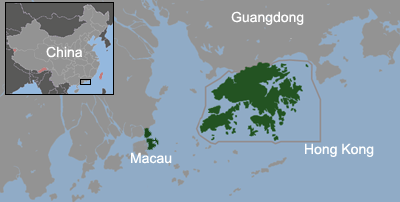
As at 2015, Macau is Hong Kong's second largest export destination, occupying 6.1% of Hong Kong's total exports. The amount of export totaled US$8.4B, with broadcasting equipment, jewelry, and precious metal watches as the major products. On the other hand, Hong Kong is Macau's largest export destination. Totaled USD 774M, with precious metal watches, jewelry, trunks and cases as the major trading products, the exports to the Hong Kong forms 53% of Macau's total exports. Since 2018, Hong Kong and Macau have been connected via road by the Hong Kong–Zhuhai–Macau Bridge.
Poverty
The international poverty line is a monetary threshold under which an individual is considered to be living in poverty. This threshold is calculated using Purchasing Power Parity. According to the World Bank, the international poverty line was most recently updated in October 2015, in which it was increased from $1.25 per day to $1.90 per day using the value of 2011 dollars. Raising this threshold helps account for changes in costs of living, which directly effects individuals ability to obtain basic necessities across countries.
Recent figures show that 1.37 million people are living below the poverty line and struggling to survive on HK$4,000 (US$510) per month for a one-person household, HK$9,800 for a two-person household earning, and HK$15,000 or a three-person household. The poverty rate in Hong Kong hit a high of 20.1%, but recent efforts by government programs have lowered this number to 14.7%.
In December 2012, the Commission on Poverty (CoP) was reinstated to prevent and alleviate poverty with three primary functions; analyze the poverty situation, assist policy formulation and to assess policy effectiveness. Cash handouts have been credited with alleviating much of the poverty, but the extent in which poverty has been alleviated is still questionable. Although cash handouts raise households above the poverty line, they are still struggling to meet certain standards as the cost of living in Hong Kong steadily increases.
Coupled with these cash payments, statutory minimum wage is set to increase for a second time in the past 10 years. Statutory Minimum Wage (SMW) came into existence on 1 May 2011 and the SMW rate has been HK$34.5 per hour since May 2017. The Legislative Council in Hong Kong most recently approved the revision on the SMW rate to increase to HK$37.5 per hour, effective 1 May 2019. Although the total statistics for Hong Kong show declining poverty, child poverty increased .3 percentage points from 2017 to 2018, up to a total of 23.1%, as a result of larger households due to children staying with their elderly parents. With economic growth projected to slow in the coming years, poverty becomes an increasingly pressing issue.
One of the largest issues affecting low income families is the availability of affordable housing. Over the past decade, residential Hong Kong property prices have increased close to 242%, with growth finally starting to decelerate in 2019. Considering housing is a basic necessity, prices have continuously increased while disposable incomes remain virtually unchanged. As the amount of affordable housing diminishes, it has become much harder for families to find homes in their home country. Public housing programs have been implemented by the government, but delayed construction and growing waitlists have not helped to the extent they planned for. Recent results from a Hong Kong think tank show that by 2022, the average citizen could wait up to 6 years for public housing. Evidence shows that the availability of affordable housing has declined, forcing households to spend more on shelter and less on other necessities. These issues can lead to worse living conditions and imbalanced diets, both of which pose problems beyond just financial well-being.
Financial markets
Stock exchange

Main article: Hong Kong Stock Exchange
The Hong Kong Stock Exchange is the sixth largest in the world, with a market capitalisation of about US$3.732 trillion as of mid-2017. In 2006, the value of initial public offerings (IPO) conducted in Hong Kong was second highest in the world after London. In 2009, Hong Kong raised 22 percent of IPO capital, becoming the largest centre of IPOs in the world. The exchange is the world's 10th largest by turnover and third largest in China.
Bond market

]]
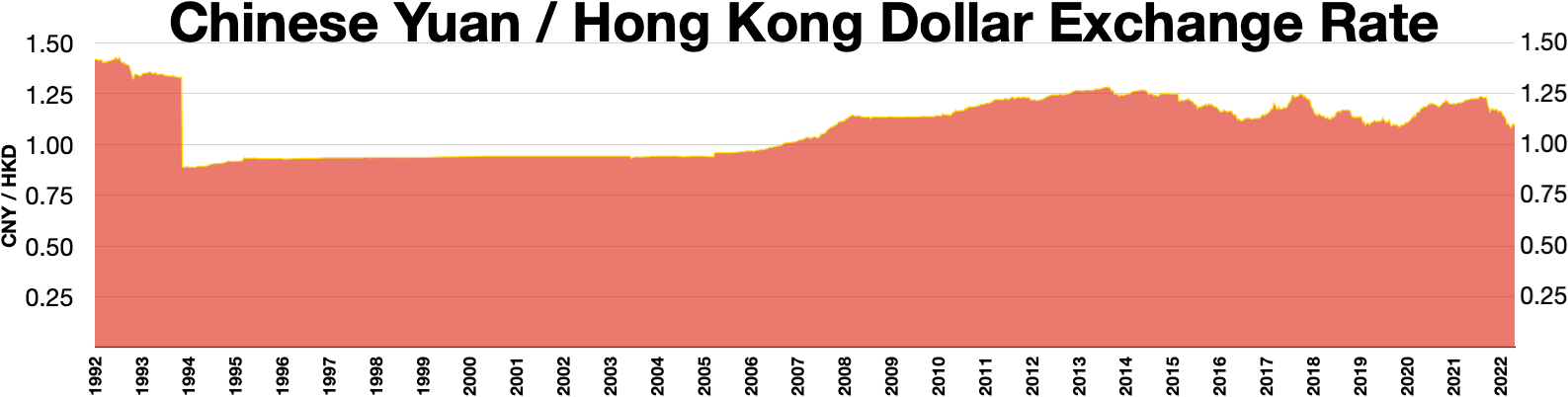
Exchange rates

]]
]]
Notes
References
Institutional reports
References
- (14 August 2025). "Mid-year population for 2025".
- (22 October 2024). "IMF DataMapper: HongKong".
- "World Bank Country and Lending Groups". [[World Bank]].
- (2025). "IMF DataMapper: Hong Kong".
- "The World Factbook". [[Central Intelligence Agency]].
- {{harvnb. Household Income Distribution. 2021
- (13 March 2024). "Human Development Report 2023/2024". [[United Nations Development Programme]].
- "Labor force, total – Hong Kong SAR, China". [[World Bank]].
- "Employment to population ratio, 15+, total (%) (national estimate)". [[World Bank]].
- "Wages and Labor Income".
- (31 March 2024). "Income tax calculator Hong Kong".
- "Sovereigns rating list". Standard & Poor's.
- (15 April 2011). "How Fitch, Moody's and S&P rate each country's credit rating". [[The Guardian]].
- (11 April 2023). "Hong Kong's Latest Foreign Currency Reserve Assets Figures Released". [[Hong Kong Monetary Authority]].
- Mizuoka, Fujio. (2018). "Contrived Laissez-Faireism: The Politico-Economic Structure of British Colonialism in Hong Kong". [[Springer Publishing]].
- "The Profitability of the Banking Sector in Hong Kong".
- [http://www.legislation.gov.hk/blis_pdf.nsf/CurAllEngDoc/8850FA52388F223C482575EE0036B8BB/$FILE/CAP_65_e_b5.pdf Legal Tender Notes Issue Ordinance] {{Webarchive. link. (3 May 2015 . Legislation.gov.hk (30 June 1997))
- "Monetary Stability".
- (September 2007). "Triennial Central Bank Survey of Foreign Exchange and Derivatives Market Activity in April 2007". [[Bank for International Settlements]].
- (19 July 2012). "Asian Financial Regulators Examine Local Lending Rates". [[The New York Times]].
- "The Hong Kong Association of Banks".
- Chiu, Peter. (2003). "Hong Kong's Banking Industry Facing Keen Competition". China Perspectives.
- WHub. (2018). "Hong Kong Start Up Ecosystem Whitepaper".
- (2024-10-16). "Economic Freedom of the World".
- "Hong Kong's latest foreign currency reserve assets figures released".
- "Hong Kong". U.S. Department of State.
- "London retains financial services crown". Financial Times.
- (March 2013). "The Global Financial Centres Index 13".
- Rikkie Yeung. (2008). "Moving Millions: The Commercial Success and Political Controversies of Hong Kong's Railways". [[Hong Kong University]] Press.
- "Nominal GDP list of countries. Data for the year 2010". [[International Monetary Fund]].
- (27 September 2010). "Gross domestic product (2009)". World Bank.
- [https://www.cia.gov/library/publications/the-world-factbook/fields/2195.html Field listing – GDP (official exchange rate)] {{Webarchive. link. (4 October 2008 , ''The World Factbook'')
- "GDP growth (annual %)".
- [http://www.wto.org/english/thewto_e/countries_e/hong_kong_china_e.htm Hong Kong, China – Member information] {{Webarchive. link. (21 September 2012 . WTO. Retrieved 1 November 2012.)
- "World's Largest Stock Exchanges December 2017.".
- Hong Kong Monetary Authority. (30 December 2009). "A Structural Investigation into the Price and Wage Dynamics in Hong Kong".
- "Hong Kong Company Formation".
- "UNCTAD World Investment Report". UNCTAD.
- "2011 Results – Financial Secrecy Index".
- After Singapore, S. Korea and Taiwan
- "Global Information Technology Report 2016". World Economic Forum.
- Richardson, Harry W. Bae, Chang-Hee C. (2005) ''Globalization and Urban Development: Advances in Spatial Science'' {{ISBN. 3-540-22362-2
- "The transformation of Hong Kong in five charts". Reuters.
- "New Interventionism in the Making: interpreting state interventions in Hong Kong after the change of sovereignty".
- Schenk, Catherine. (2017). "Negotiating Positive Non-interventionism: Regulating Hong Kong's Finance Companies". The China Quarterly (London).
- "Report for Selected Countries and Subjects".
- "List of All Statistical Products". Census and Statistics Department.
- "The 2022–23 Budget – Government Revenue and Expenditure".
- "Provisional financial results for the year ended March 31, 2022".
- [http://atlas.media.mit.edu/en/visualize/tree_map/hs92/export/hkg/show/all/2015/ Where does Hong Kong export to? (2015)]
- [http://atlas.media.mit.edu/en/visualize/tree_map/hs92/export/hkg/mac/show/2015/ What does Hong Kong export to Macao? (2015)]
- [http://atlas.media.mit.edu/en/visualize/tree_map/hs92/export/mac/show/all/2015/ Where does Macau export to? (2015)]
- [http://atlas.media.mit.edu/en/visualize/tree_map/hs92/export/mac/hkg/show/2015/ What does Macau export to Hong Kong? (2015)]
- "FAQs: Global Poverty Line Update".
- (2018-11-19). "Record 1.37 million people living below poverty line in Hong Kong".
- "Analysis of poverty situation in Hong Kong in 2017 announced (with photo/video)".
- "Labour Department – Employee Rights and Benefits".
- (2018-11-20). "In Hong Kong, one in five are living in poverty".
- (2019-03-06). "Investment Analysis of Hong Kong Real Estate Market".
- Chan, Holmes. (2019-04-18). "By 2022, average Hongkonger could wait 6 years or more for public housing, think tank warns".
- [http://www.iht.com/articles/2006/12/25/business/borse.php Hong Kong surpasses New York in IPOs] {{Webarchive. link. (9 February 2009 , International Herald Tribune, 25 December 2006. Retrieved 20 January 2007.)
- (21 December 2009). "Hong Kong IPOs May Raise Record $48 Billion in 2010, E&Y Says". Bloomberg L.P..
This article was imported from Wikipedia and is available under the Creative Commons Attribution-ShareAlike 4.0 License. Content has been adapted to SurfDoc format. Original contributors can be found on the article history page.
Ask Mako anything about Economy of Hong Kong — get instant answers, deeper analysis, and related topics.
Research with MakoFree with your Surf account
Create a free account to save articles, ask Mako questions, and organize your research.
Sign up freeThis content may have been generated or modified by AI. CloudSurf Software LLC is not responsible for the accuracy, completeness, or reliability of AI-generated content. Always verify important information from primary sources.
Report