From Surf Wiki (app.surf) — the open knowledge base
East Timor (province)
Former province of Indonesia
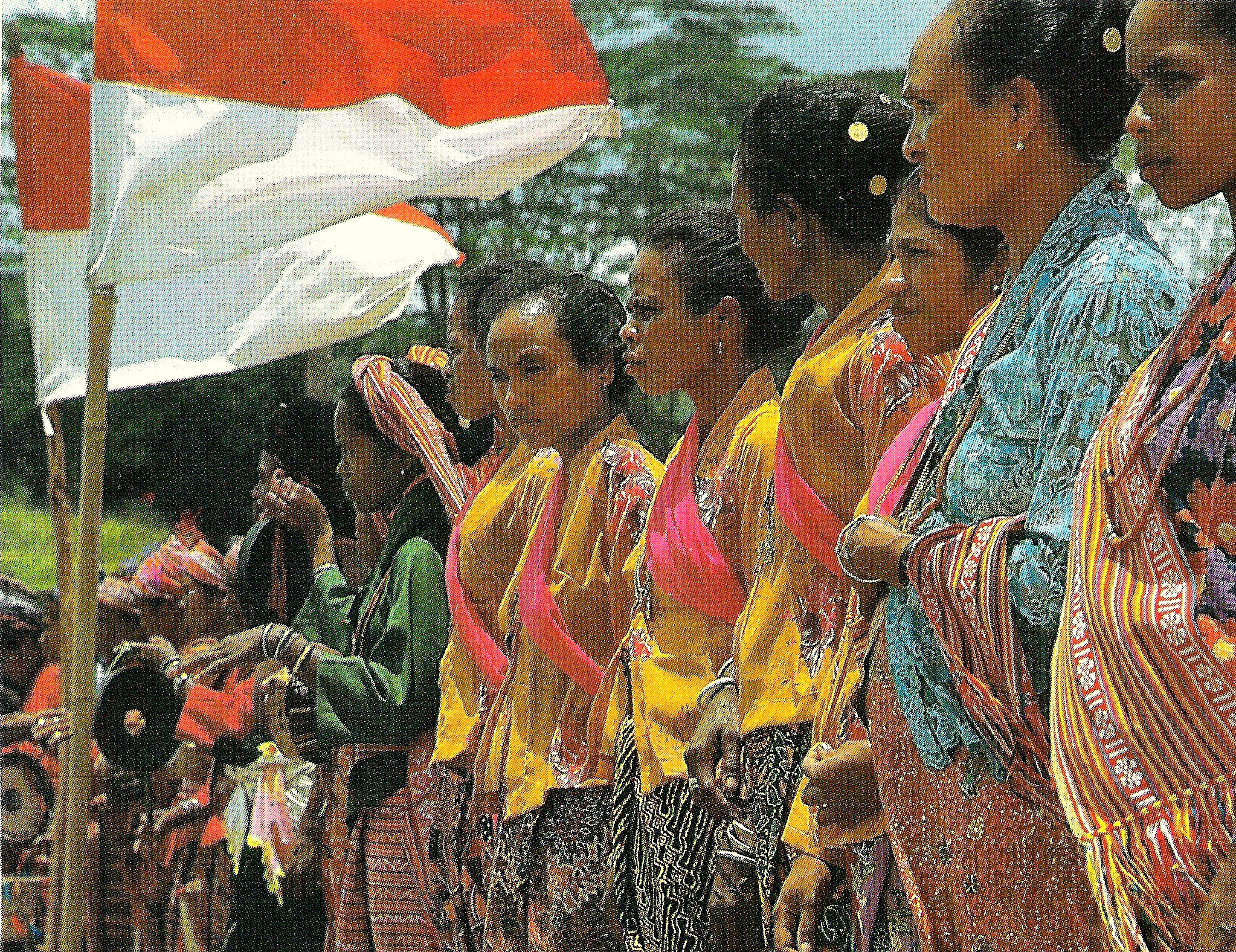
Former province of Indonesia
| Field | Value |
|---|---|
| native_name | id |
| tet | |
| conventional_long_name | East Timor |
| motto | tet |
| "From the past and from today, we are Timorese warriors" | |
| status | Province of Indonesia (de facto) |
| Overseas province of Portugal (de jure) | |
| era | New Order |
| event_start | Operation Lotus |
| year_start | 1976 |
| date_start | 17 July |
| event1 | Santa Cruz massacre |
| date_event1 | 12 November 1991 |
| event2 | Independence referendum |
| date_event2 | 30 August 1999 |
| event_end | UNTAET established |
| year_end | 1999 |
| date_end | 25 October |
| p1 | Provisional Government of East Timor |
| flag_p1 | Flag of Indonesia.svg |
| s1 | United Nations Administered East Timor |
| flag_s1 | Flag of the United Nations.svg |
| image_coat | Coat of arms of Timor Timur.svg |
| symbol_type | Coat of arms |
| image_map | File:Province of East Timor in Indonesia (1976–1999).svg |
| image_map_caption | Location of East Timor Province |
| capital | Dili |
| largest_city | capital |
| official_languages | Indonesian |
| legislature | East Timor Regional House of Representatives (DPRD Timor Timur) |
| title_representative | Governor |
| representative1 | Arnaldo dos Reis Araújo |
| year_representative1 | 1976–1978 (first) |
| representative2 | José Abílio Osório Soares |
| year_representative2 | 1992–1999 (last) |
| title_deputy | Vice Governor |
| deputy1 | Francisco Xavier Lopes da Cruz |
| year_deputy1 | 1976–1981 (first) |
| deputy2 | Musiran Darmosuwito |
| year_deputy2 | 1998–1999 (last) |
| currency | Indonesian rupiah (Rp) |
| currency_code | IDR |
| today | Timor-Leste |
| area_km2 | 15,007 |
| percent_water | negligible |
| stat_year1 | 1980 |
| stat_pop1 | 555,350 |
| stat_year2 | 1990 |
| stat_pop2 | 747,750 |
| footnotes | Notes |
tet "From the past and from today, we are Timorese warriors" Overseas province of Portugal (de jure) Tetum, Balinese, Bunak, Fataluku, Javanese, Sundanese, Uab Meto, other native languages
- East Timor was legalized by Indonesian law as the 27th province, but seen by the UN and several countries (including Portugal) as a "military occupation" (see Indonesian occupation of East Timor). Thus, it was de jure a Portuguese territory under Indonesian occupation from the standpoint of international law, but operated de facto as an Indonesian province (and considered by Indonesia's own laws as a de jure province as well).
East Timor () was a province of Indonesia between 1976 and 1999, during the Indonesian occupation of the country. Its territory corresponded to the previous Portuguese Timor and to the present-day independent country of Timor-Leste.
From 1702 to 1975, East Timor was an overseas territory of Portugal, called "Portuguese Timor". In 1974, Portugal initiated a gradual decolonisation process of its remaining overseas territories, including Portuguese Timor. During the process, a civil conflict between the different Timorese parties erupted. Indonesia invaded East Timor in 1975 and formally annexed the territory in 1976, declaring it Indonesia's 27th province and renaming it "Timor Timur". The United Nations, however, declared this occupation illegal, continuing to consider Portugal as the legitimate administering power of East Timor. East Timor voted for independence in UN-sponsored referendum in August 1999. Following the end of Indonesian occupation in October 1999, as well as a United Nations administered transition period, East Timor became formally independent in May 2002 and adopted the official name of Timor-Leste.
History
Main article: Indonesian occupation of East Timor
Indonesian invasion and occupation
From 1702 to 1975, East Timor was a colony of Portugal, officially designated in later years as the Portuguese overseas province of Timor, commonly referred to as "Portuguese Timor." Portuguese control was largely confined to coastal areas until the late 19th century, when colonial administration was consolidated in the interior through military campaigns. The colony remained under Portuguese rule with minimal economic development, relying primarily on coffee exports.
In April 1974, the Carnation Revolution in Portugal led to a shift in government policy, initiating a decolonization process for its overseas territories, including Portuguese Timor. Various Timorese political parties emerged, including the left-wing Revolutionary Front for an Independent East Timor (Fretilin), the pro-integration Timorese Democratic Union (UDT), and the APODETI (Timorese Popular Democratic Association) party, which advocated integration with Indonesia. Tensions between Fretilin and UDT escalated into a civil war in August 1975, with Fretilin emerging victorious and gaining control of the capital, Dili. As a result, the Portuguese governor and his staff relocated their seat of administration to Atauro Island.
On 28 November 1975, Fretilin unilaterally declared the independence of the Democratic Republic of East Timor (Portuguese: República Democrática de Timor-Leste) from Portugal. Portugal did not recognize the declaration and the Portuguese governor continued to formally administer the province from Atauro, albeit with limited authority over the rest of East Timor.
Nine days later, Indonesia began an invasion of East Timor proper. Following the invasion, the Portuguese governor and his staff left Atauro aboard two Portuguese warships. As a statement of Portuguese sovereignty, Portugal maintained those warships patrolling the waters around East Timor until May 1976.
Indonesia established a Provisional Government of East Timor in December 1975 and formally annexed East Timor as its 27th province on 17 July 1976, changing its official name to Timor Timur, the Indonesian translation of "East Timor". The use of the Portuguese language was then forbidden, as it was seen as a relic of colonisation.
The annexation was not recognised by the United Nations and was only recognised by one country Australia in 1979. The United Nations continued to recognise Portugal as the legitimate administering power of East Timor.
Referendum and independence
An agreement was reached by the governments of Portugal and Indonesia in May 1999 to offer the people of East Timor referendum on whether to remain in Indonesia as the Special Autonomous Region of East Timor or to become an independent country. In the referendum, held in August 1999, an overwhelming majority voted for independence. Immediately following the referendum, Pro-Indonesia militias commenced a scorched earth campaign triggering the 1999 East Timorese crisis. An International Force for East Timor was deployed to the territory to bring the violence to an end. Indonesia formally rescinded its annexation on 19 October 1999 and a United Nations transitional administration was subsequently established on 25 October 1999 by Security Council Resolution 1272 to administer the territory until independence on 22 May 2002.
After the re-establishment of the independence of East Timor in 2002, the East Timorese government requested that the name Timor-Leste be used in place of "East Timor". This is to avoid the Indonesian term and its reminder of the Indonesian occupation.
Government
As with all provinces of Indonesia, executive authority was vested in a Governor and Vice-Governor elected by the every five years. Legislative authority was vested in the DPRD, both in province and regency level.
Governors
Main article: List of colonial governors of Portuguese Timor
Below are governors of East Timor Province from 1976 to 1999:
| [[File:Flag of Timor Timur.svg | alt= | border | 25px]] Governors of Timor Timur during Indonesian occupation | No. | Portrait | Officeholders | Tenure | Notes | Head of state | |||||||||
|---|---|---|---|---|---|---|---|---|---|---|---|---|---|---|---|---|---|---|
| (Term) | From | Until | 130 | [[File:Arnaldo dos Reis Araújo, Buku Pelengkap V Pemilihan Umum 1982, p1157.jpg | 100px]] | 131 | [[File:Guilherme Maria Gonçalves, Pj. Gubernur KDH Timor Timur (1978).jpg | 100px]] | 132 | [[File:Mario_Viegas_Carrascalão_small.jpg | 100px]] | 133 | [[File:Gubernur Timor Timur Abilio Jose Osorio Soares.jpg | 100px]] | ||||
| Arnaldo dos Reis Araújo | ||||||||||||||||||
| Governor | 3 August 1976 | 19 September 1978 | [[File:President_Suharto,_1993.jpg | alt= | 90px]] | |||||||||||||
| Soeharto | ||||||||||||||||||
| President of Indonesia | ||||||||||||||||||
| (27 March 1968 – 21 May 1998) | ||||||||||||||||||
| [[File:Foto Presiden Habibie 1998.jpg | alt= | 90px]] | ||||||||||||||||
| B. J. Habibie | ||||||||||||||||||
| President of Indonesia | ||||||||||||||||||
| (21 May 1998 – 20 October 1999) | ||||||||||||||||||
| Guilherme Maria Gonçalves | ||||||||||||||||||
| Governor | 19 September 1978 | 18 September 1981 | ||||||||||||||||
| Mário Viegas Carrascalão | ||||||||||||||||||
| Governor | 18 September 1981 | 18 September 1992 | ||||||||||||||||
| José Abílio Osório Soares | ||||||||||||||||||
| Governor | 18 September 1992 | 19 October 1999 |
Regional House of Representatives
Composition of the Regional House of Representatives between 1980 and 1999:
| 1997 | 1 | 30 | 5 | 9 | 45 |
|---|
Administrative divisions

The province was divided into thirteen regencies (kabupaten) and one administrative city (kota administratif). These are listed below along with their districts (kecamatan), per December 1981:
- Dili Administrative City, served as the capital of East Timor, also the capital and part of Dili Regency, consisted of East Dili (Dili Timur) and West Dili (Dili Barat) districts, which formerly belonged to Dili Regency before the creation of the administrative city status in November 1981.
- Dili Regency, consisted of Dili Administrative City, Atauro and Metinaro districts.
- Baucau Regency, with its capital at Baucau, consisted of Baucau, Vemasse, Laga, Baguia, Venilale, and Quelicai districts.
- Manatuto Regency, with its capital at Manatuto, consisted of Manatuto, Laclubar, Barique, Laclo, and Laleia districts.
- Lautem Regency, with its capital at Lospalos, consisted of Lospalos, Luro, Iliomar, Lautem, and Tutuala districts.
- Viqueque Regency, with its capital at Viqueque, consisted of Viqueque, Ossu, Uato-Lari, Lacluta, and Uato-Carbau districts.
- Ainaro Regency, with its capital at Ainaro, consisted of Ainaro, Maubisse, Hatu-Bullico, Hato-Hudo, and Mape districts.
- Manufahi Regency, with its capital at Same, consisted of Same, Alas, Fato-Berliu, and Turiscai districts.
- Kova-Lima Regency, with its capital at Suai, consisted of Suai, Tilomar, Fohorem, Fatu-Lulic, and Fatu-Mean districts.
- Ambeno Regency, with its capital at Pante-Makassar, consisted of Pante-Makassar, Oe-Silo, Nitibe, and Passabe districts.
- Bobonaro Regency, with its capital at Maliana, consisted of Maliana, Bobonaro, Lolotoi, Atabai, Balibo, and Cailaco districts.
- Liquica Regency, with its capital at Liquica, consisted of Liquica, Bazar-Tete, and Maubara districts.
- Ermera Regency, with its capital at Gleno, consisted of Ermera, Atsabe, Hatolia, Lete-Foho, and Railaco districts.
- Aileu Regency, with its capital at Aileu, consisted of Aileu, Remexio, Laulara, and Lequidoe districts.
References
References
- (2016-01-07). "Three centuries of violence and struggle in East Timor (1726-2008) {{!}} Sciences Po Mass Violence and Resistance - Research Network".
- "Timor-Leste (East Timor) – CJA".
- Gunn, Geoffrey C. ''Historical Dictionary of East Timor''. Scarecrow Press, 2011
- Dunn, James. ''East Timor: A Rough Passage to Independence''. Longueville Books, 2003
- Taylor, John G. ''Indonesia’s Forgotten War: The Hidden History of East Timor''. Zed Books, 1991
- Anderson, Benedict. ''Imagining East Timor''. Southeast Asian Affairs, 2001
- Jolliffe, Jill. ''East Timor: Nationalism and Colonialism''. University of Queensland Press, 1978
- CAVR (Commission for Reception, Truth and Reconciliation in Timor-Leste). ''Chega! The Final Report of the Timor-Leste Truth Commission'', 2005
- Schwarz, Adam. ''A Nation in Waiting: Indonesia’s Search for Stability''. Allen & Unwin, 1994
- UN Security Council Resolution 384 (1975). United Nations, December 1975
- United Nations General Assembly Resolution 3485 (1976). United Nations, 1976
- Hainsworth, Paul, and Stephen McCloskey. ''The East Timor Question: The Struggle for Independence from Indonesia''. I.B. Tauris, 2000
- (2005). "Midwifing a New State: The United Nations in East Timor". Max Planck Yearbook of United Nations Law.
- (2005). "The International Force in East Timor - Legal Aspects of Maritime Operations". University of New South Wales Law Journal.
- Chopra, Jarat. ''The UN’s Kingdom of East Timor''. Survival, 2000
- The Editors of Encyclopaedia Britannica. "East Timor." ''Encyclopedia Britannica'', March 17, 2025. https://www.britannica.com/place/East-Timor
- (30 July 1976). "Peraturan Pemerintah Republik Indonesia Nomor 19 Tahun 1976 tentang Pemerintahan Propinsi Daerah Tingkat I Timor Timur dan Kabupaten-Kabupaten Daerah Tingkat II di Timor Timur".
- (19 November 1981). "Peraturan Pemerintah Republik Indonesia Nomor 41 Tahun 1981 tentang Pembentukan Kota Administratif Dili".
This article was imported from Wikipedia and is available under the Creative Commons Attribution-ShareAlike 4.0 License. Content has been adapted to SurfDoc format. Original contributors can be found on the article history page.
Ask Mako anything about East Timor (province) — get instant answers, deeper analysis, and related topics.
Research with MakoFree with your Surf account
Create a free account to save articles, ask Mako questions, and organize your research.
Sign up freeThis content may have been generated or modified by AI. CloudSurf Software LLC is not responsible for the accuracy, completeness, or reliability of AI-generated content. Always verify important information from primary sources.
Report