From Surf Wiki (app.surf) — the open knowledge base
East Gippsland
Region of Victoria, Australia

Region of Victoria, Australia
East Gippsland is the eastern region of Gippsland, Victoria, Australia covering 31740 km2 (14%) of Victoria. It has a population of 80,114.
Geography
The Shire of East Gippsland, also called Far East Gippsland, covers two-thirds (66%) of East Gippsland's area and holds half (50%) of its population. Australian Bureau of Statistics. 2006 Census. Community Profile Series: East Gippsland Shire (Statistical Subdivision). Released at 29/02/2008. LOCATION CODE: 25005 STATE: VIC The Shire of East Gippsland is confusingly also referred to simply as East Gippsland. It excludes the Shire of Wellington (Central Gippsland). This article (currently) refers mainly to "Far East Gippsland".
East Gippsland's major towns include, from west to east, Bairnsdale (the largest town and administrative centre), Paynesville, Lakes Entrance, Orbost and Mallacoota. Smaller, but significant, towns in the more mountainous northern areas include Ensay, Swifts Creek, Omeo, and Buchan.
Catchment area
East Gippsland extends from the western watershed of the Mitchell and Thomson River catchments east and north to the New South Wales border. Rugged terrain makes farming difficult, even with fertilisers. The major river basins of the Mitchell, Tambo and Nicholson drain into the Gippsland Lakes, which in turn empty into the sea through an artificially maintained opening at Lakes Entrance.
Parks

More than 17000 km2 of East Gippsland is public land with 2680 km2 in national parks, two of the largest being Snowy River National Park and Errinundra National Park. Both are remote and inaccessible, but they are otherwise entirely different. Snowy River National Park features dramatic gorges and powerful rapids formed by the descent of the Snowy River. Apart from gorges and southern slopes, this park is in a rain-shadow area forming the southern border of the Monaro Tableland. Consequently, many species more typical of inland New South Wales and Victoria are found here. Errinundra National Park is much wetter - inaccessible from June to October in most years - and features some of the most ancient forests in Australia, a matter of controversy as employment in the remote areas east of the Snowy is mainly dependent upon timber milling. Croajingolong National Park between Marlo and Mallacoota features extensive coastal heathlands and tea tree scrub, as well as the only major area of warm temperate rainforest in Victoria. The 4,193 km2 of privately owned land is mainly red gum plains, coastal plains, mountain plateaux and fertile river valleys.
Tourism
The area is a major tourist destination, especially for watersports, and is noted for its mild climate. The Great Alpine Road leads north from Bairnsdale into the Australian Alps via Swifts Creek and Omeo, and onto the major ski resorts of Dinner Plain and Mount Hotham. This area is also very popular for bushwalking in the summer. The Buchan district is popular with tourists for its limestone caves. Further east, the Snowy River and several smaller stream catchments, including the Thurra, Wingan, Genoa, Bemm River and Cann River, enter the Tasman Sea.
Forestry
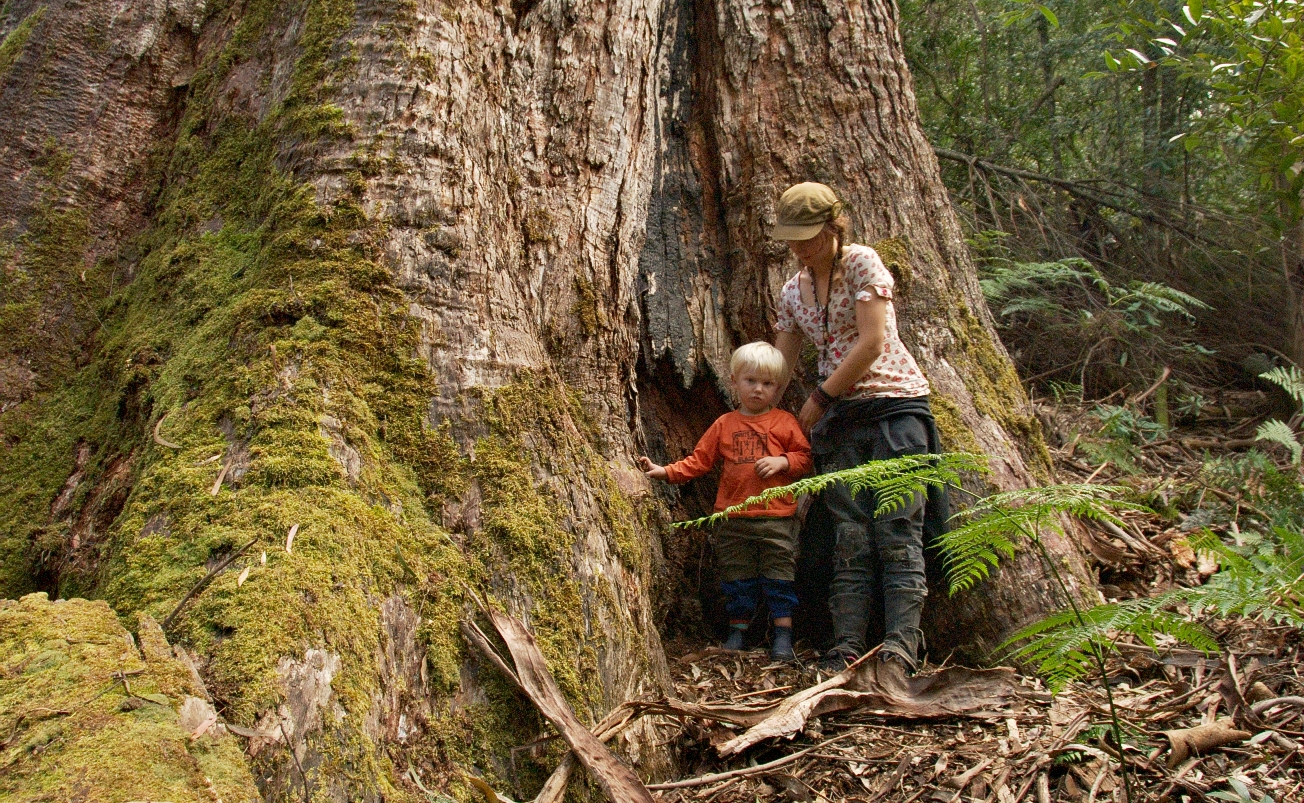
The major industry is often considered to be forestry, which provides less than 1 percent of employment for the region. The East Gippsland Regional Forest Agreement (RFA) was signed by Commonwealth and Victorian governments on 3 February 1997, and is Australia's first RFA. It covers a region similar, but not identical to the East Gippsland Shire. It sets aside 5811 km2 from logging, an increase of 1.3% over pre-RFA reserves. Central Gippsland is covered by the Gippsland RFA (signed 31 March 2000), which covers an area similar to the Shire of Wellington, and places 7805 km2 in reserves.
Logging of native forests has caused sustained controversy in East Gippsland, particularly due to the unique species found in areas east of the Snowy River, and the contentious public debate surrounding native forest, particularly old-growth, harvesting. This is despite managed forest having a mitigation effect in climate change.
Environmental issues
In April and November 2022, East Gippsland Water got fined $9,246 for discharging over 30 million litres of wastewater into Macleod Morass wetland which made the facility exceed its licence given by EPA Victoria and failing to comply with their regulatory notice obligation.
References
References
- (July 2025)
- ABS 2006 Census 250/25005 (see above): Employed persons aged 15 years and over in forestry and logging. East Gippsland: 186 of 28820 (0.6%); East Gippsland Shire: 92 of 14001 (0.7%); Note: Including those employed in "agriculture, forestry and fishing support services" (which goes beyond the scope of just forestry) raises each of these figures to 1.0%.
- Department of Agriculture, Fisheries and Forestry (RAFF). "East Gippsland region RFA".
- Australian Bureau of Statistics. [http://www.ausstats.abs.gov.au/ausstats/subscriber.nsf/0/FEE0A6A807EFD0CECA256CD30083406B/$File/46170_2003.pdf Environment by Numbers: Selected Articles on Australia's Environment]. Dennis Trewin. 21 Feb 2003. ABS Catalogue No. 4617.0. {{ISBN. 0-642-47899-6. p18.
- McKinsey & Company Australia. "An Australian Cost Curve for Greenhouse Gas Reduction".
- Bradley, Stefan. (2022-08-03). "EPA Victoria fines East Gippsland Water over wastewater".
- Victoria, Environment Protection Authority. (2023-04-18). "EPA fines East Gippsland Water Corp {{!}} Environment Protection Authority Victoria".
This article was imported from Wikipedia and is available under the Creative Commons Attribution-ShareAlike 4.0 License. Content has been adapted to SurfDoc format. Original contributors can be found on the article history page.
Ask Mako anything about East Gippsland — get instant answers, deeper analysis, and related topics.
Research with MakoFree with your Surf account
Create a free account to save articles, ask Mako questions, and organize your research.
Sign up freeThis content may have been generated or modified by AI. CloudSurf Software LLC is not responsible for the accuracy, completeness, or reliability of AI-generated content. Always verify important information from primary sources.
Report