From Surf Wiki (app.surf) — the open knowledge base
East Azerbaijan province
Province of Iran

Province of Iran
| Field | Value |
|---|---|
| name | East Azerbaijan Province |
| native_name | fa |
| settlement_type | Province |
| image_skyline | {{multiple image |
| border | infobox |
| total_width | 280 |
| image_style | border:1; |
| perrow | 1/2/2/2 |
| image1 | Minjavan 2011.jpg |
| image2 | Roshdiyeh, Tabriz, East Azerbaijan Province, Iran - panoramio.jpg |
| image3 | Miyaneh, East Azerbaijan Province, Iran - panoramio (1).jpg |
| image4 | Aqdash June 2011 2.jpg |
| image5 | Tabriz Municipality.jpg |
| image6 | Holy SURP Hovhannes Church.jpg |
| image7 | Arasbaran by Amirgtt64.jpg |
| image_map | IranEastAzerbaijan-SVG.svg |
| map_alt | Map of Iran with East Azerbaijan highlighted |
| map_caption | Location of East Azerbaijan Province within Iran |
| coordinates | |
| coordinates_footnotes | |
| subdivision_type | Country |
| subdivision_name | Iran |
| subdivision_type1 | Region |
| subdivision_name1 | Region 3 |
| parts_type | Counties |
| parts_style | para |
| p1 | 23 |
| seat_type | Capital |
| seat | Tabriz |
| leader_title | Governor-general |
| leader_name | Bahram Sarmast |
| leader_title1 | MPs of Parliament |
| leader_name1 | East Azerbaijan Province parliamentary districts |
| unit_pref | Metric |
| area_total_km2 | 45650 |
| population_footnotes | |
| population_total | 3909652 |
| population_as_of | 2016 Census |
| population_density_km2 | auto |
| timezone1 | IRST |
| utc_offset1 | +03:30 |
| iso_code | IR-03 |
| blank_name_sec1 | Main language(s) |
| blank_info_sec1 | Persian (official) |
| local languages: | |
| Azerbaijani | |
| blank1_name_sec1 | HDI (2017) |
| blank1_info_sec1 | 0.785 |
| · 17th |
| }} local languages: Azerbaijani · 17th
East Azerbaijan Province () is one of the 31 provinces of Iran. Its capital is the city of Tabriz.
The province borders Armenia, the Republic of Azerbaijan, Ardabil province, West Azerbaijan province, and Zanjan province. East Azerbaijan is in Region 3 of Iran, with its secretariat located in Tabriz.
History
Main article: Azerbaijan (Iran)#History
East Azerbaijan is one of the most archaic territories in Iran. During the reign of Alexander III of Macedon in Iran (331 BCE), a warrior known as Attorpat led a revolt in this area, then a territory of the Medes, and thereafter it was called Attorpatkan. Since then this vicinity has been known as Azarabadegan, Azarbadgan and Azarbayjan.
Islamic researchers proclaim that the birth of the prophet Zoroaster was in this area, in the vicinity of Lake Orumieh (Chichesht), Konzak City. The area was subject to numerous political and economical upheavals, attracting the interest of foreigners; the Russians in particular have tried to exert a lasting influence in the region over the past 300 years, occupying the area on numerous occasions. The constitutionalist movement of Iran began here in the late 19th century.
Ethnic tensions in Azerbaijan can legally trace their origins back to the colonialist policies of Imperial Russia and later the Soviet Union. In a cable sent on 6 July 1945 by the Central Committee of the Communist Party of the Soviet Union, the local Soviet commander in Russian (northern) held Azerbaijan was instructed as such:
Gilan]], [Mazandaran province
In 1945, the [Soviet Union helped set up the Azerbaijan People's Government in what is now East Azerbaijan.
Demographics
Language and ethnicity
Most of the inhabitants are ethnic Azerbaijanis who speak a Turkic language related to Turkish.
In Qarajadaḡ (today Arasbaran), that is, the region between the Aras river and the Sabalan mountain range, there are six Shiʿite, Turkic-speaking tribes of Kurdish origin: Chalabianlu, Mohammadkhanlu, Hosaynkhanlu, Hajialilu, Hasanbeiglu and Qarachorlu.
Population
At the time of the 2006 National Census, the province's population was 3,527,267 in 911,241 households. The following census in 2011 counted 3,724,620 people in 1,085,455 households. The 2016 census measured the population of the province as 3,909,652 in 1,223,028 households.
Administrative divisions
At the 1986 census, there were twelve counties in East Azerbaijan province. By the 1996 census, two additional counties had been formed: Jolfa (from part of Marand), and Malekan (from part of Bonab). Between 1996 and 2002, five new counties were formed: Ajabshir, Azarshahr, Charuymaq, Osku, and Varzaqan. The table below illustrates further changes since the 2006 census.
The cities of Ahar and Mianeh of East Azerbaijan Province, along with Parsabad and Meshginshahr from Ardabil province, and Piranshahr and Salmas from West Azerbaijan, are six cities in Azerbaijan region that have joined the group of large cities with populations of over 100,000 people due to population changes after the 2016 census.
The population history and structural changes of East Azerbaijan Province's administrative divisions over three consecutive censuses are shown in the following table.
| Counties | 2006 | 2011 | 2016 |
|---|---|---|---|
| Ahar | 147,781 | 150,111 | 154,530 |
| Ajab Shir | 65,741 | 66,746 | 70,852 |
| Azarshahr | 99,286 | 107,579 | 110,311 |
| Bonab | 125,209 | 129,795 | 134,892 |
| Bostanabad | 96,555 | 94,985 | 94,769 |
| Charuymaq | 33,921 | 32,745 | 31,071 |
| Hashtrud | 64,611 | 60,822 | 57,199 |
| Heris | 67,626 | 67,820 | 69,093 |
| Hurand | — | — | — |
| Jolfa | 52,176 | 55,166 | 61,358 |
| Kaleybar | 87,259 | 48,837 | 46,125 |
| Khoda Afarin | — | 34,977 | 32,995 |
| Leylan | — | — | — |
| Malekan | 100,366 | 106,118 | 111,319 |
| Maragheh | 227,635 | 247,681 | 262,604 |
| Marand | 229,215 | 239,209 | 244,971 |
| Mianeh | 187,870 | 185,806 | 182,848 |
| Osku | 84,061 | 98,988 | 158,270 |
| Sarab | 132,094 | 131,934 | 125,341 |
| Shabestar | 121,787 | 124,499 | 135,421 |
| Tabriz | 1,557,241 | 1,695,094 | 1,773,033 |
| Torkamanchay | — | — | — |
| Varzaqan | 46,833 | 45,708 | 52,650 |
| Total | 3,527,267 | 3,724,620 | 3,909,652 |
Cities
According to the 2016 census, 2,809,424 people (over 71% of the population of East Azerbaijan Province) live in the following cities:
| City | Population |
|---|---|
| Abish Ahmad | 2,715 |
| Achachi | 3,647 |
| Ahar | 100,641 |
| Ajab Shir | 33,606 |
| Aqkand | 2,902 |
| Azarshahr | 44,887 |
| Bakhshayesh | 6,102 |
| Basmenj | 12,692 |
| Benab-e Marand | 4,311 |
| Bonab | 85,274 |
| Bostanabad | 21,734 |
| Duzduzan | 3,627 |
| Gugan | 11,742 |
| Hadishahr | 34,346 |
| Hashtrud | 20,572 |
| Heris | 10,515 |
| Hurand | 4,658 |
| Ilkhchi | 16,574 |
| Javan Qaleh | 700 |
| Jolfa | 8,810 |
| Kaleybar | 9,324 |
| Khamaneh | 3,056 |
| Kharaju | 1,824 |
| Kharvana | 3,353 |
| Khomarlu | 1,902 |
| Khosrowshahr | 21,972 |
| Khvajeh | 4,011 |
| Kolvanaq | 7,465 |
| Koshksaray | 8,060 |
| Kuzeh Kanan | 4,730 |
| Leylan | 6,356 |
| Malekan | 27,431 |
| Mamqan | 11,892 |
| Maragheh | 175,255 |
| Marand | 130,825 |
| Mehraban | 5,772 |
| Mianeh | 98,973 |
| Mobarak Shahr | 4,456 |
| Nazarkahrizi | 1,215 |
| Osku | 18,459 |
| Qarah Aghaj | 6,102 |
| Sahand | 82,494 |
| Sarab | 45,031 |
| Sardrud | 29,739 |
| Shabestar | 22,181 |
| Sharabian | 4,877 |
| Sharafkhaneh | 4,244 |
| Shendabad | 8,489 |
| Siah Rud | 1,548 |
| Sis | 6,106 |
| Sufian | 9,963 |
| Tabriz | 1,558,693 |
| Tark | 2,031 |
| Tasuj | 7,522 |
| Tekmeh Dash | 2,974 |
| Teymurlu | 5,375 |
| Torkamanchay | 7,443 |
| Varzaqan | 5,348 |
| Vayqan | 4,678 |
| Yamchi | 10,392 |
| Zarnaq | 5,343 |
| Zonuz | 2,465 |
Geography


The province covers an area of approximately 47,830 km², it has a population of around four million people. The province has common borders with the Republic of Azerbaijan, Armenia and Autonomous Nakhchivan in the north, West Azerbaijan in the west, Zanjan in the south, and Ardabil in the east. A fine network of roads and railways connects East Azerbaijan to other parts of Iran and neighboring countries.
The highest point in East Azerbaijan is the volcanic peak of Sahand Mountain at 3707 m of elevation, lying south of Tabriz, whereas the lower-lying areas are around Garmadooz (Ahar). The hills and mountains of the province are divided into three ranges: the Qara Daq Mountains, the Sahand and Bozqoosh Mountains, and the Qaflan Kooh Mountains.
Climate
The climate of East Azerbaijan is affected by Mediterranean Continental as well as the cold semi-arid climate. Gentle breezes off the Caspian Sea have some influence on the climate of the low-lying areas. Temperatures run up to 8.9 °C in Tabriz, and 20 °C in Maraqeh, in the winter dropping to −10 to −15 °C at least (depending on how cold the overall year is). The ideal seasons to visit this province are the spring and summer months.
| City | Jan | Feb | Mar | Apr | May | Jun | Jul | Aug | Sep | Oct | Nov | Dec | Year | Ref. | ||
|---|---|---|---|---|---|---|---|---|---|---|---|---|---|---|---|---|
| Tabriz | color_green | 23.65}}" | 283.8 | |||||||||||||
| Maragheh | color_green | 25.825}}" | 309.9 | |||||||||||||
| Ahar | color_green | 23.77}}" | 285.2 | |||||||||||||
| Sarab | color_green | 20.125}}" | 241.5 | |||||||||||||
| Mianeh | color_green | 23.17}}" | 278.0 | |||||||||||||
| Jolfa | color_green | 17.18}}" | 206.2 | |||||||||||||
| Kaleybar | color_green | 32.23}}" | 386.8 | |||||||||||||
| Sahand | color_green | 16.89}}" | 202.7 | |||||||||||||
| Bonab | color_green | 20.91}}" | 250.9 | |||||||||||||
| Marand | color_green | 28.19}}" | 338.3 |
Culture
From a cultural point of view, the most outstanding features are the language, Azerbaijani, and folklore of this region. The language of Azerbaijan is originally "a branch of the Iranian languages known as Azari" (see Ancient Azari language). However, the modern Azeri language is a Turkic language very closely related to the language of Republic of Azerbaijan and Turkey. Apart from this, the province also boasts numerous learned scholars, gnostics, several national poets such as Mowlana Baba Mazeed, Khajeh Abdol Raheem Aj Abadi, Sheikh Hassan Bolqari, and Abdolqader Nakhjavani, to name a few, and the contemporary poet Ostad Mohammad Hossein Shahriyar. The current leader of Iran, Ali Khamenei, also originally comes from this region.
Iran's Cultural Heritage Organization has registered 936 sites of historical significance in the province. Some are contemporary, and some are from the antiquity of ancient Persia. "Zahak Citadel", for example, is the name of an ancient ruin in East Azerbaijan, which according to various experts, was inhabited from the second millennium BC until the Timurid era. First excavated in the 1800s by British archeologists, Iran's Cultural Heritage Organization has been studying the structure in 6 phases.https://web.archive.org/web/20061001142816/http://www.chn.ir/news/?section=2&id=31507
East Azerbaijan enjoys a rich compendium of Azeri traditions. Many local dances and folk songs continue to survive among the various peoples of the province. As a longstanding province of Iran, Azerbaijan is mentioned favorably on many occasions in Persian literature by Iran's greatest authors and poets.
East Azerbaijan today
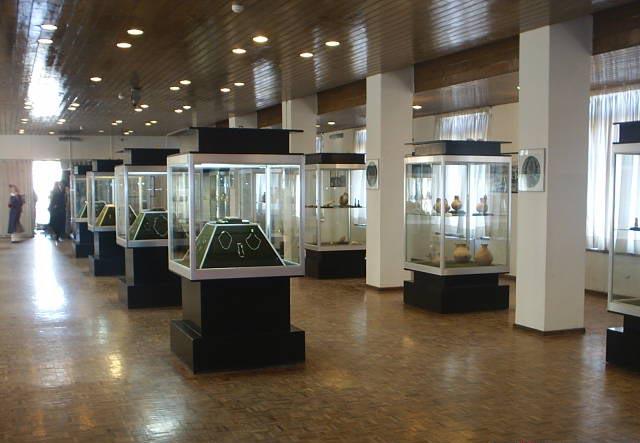
East Azerbaijan province is an industrial centre of Iran. East Azerbaijan province has over 5000 manufacturing units (6% percent of national total). The value of product from these units in 1997 was US$374 million (373 billion rials = 4.07% of the national total). Total investments were valued at US$2.7 billion (2.4513 trillion rials) in 1997.
Some of the major industries in East Azerbaijan are glass industries, paper manufacturing, steel, copper and nepheline syenite, oil refinery, petrochemical processing facilities, chemical products, pharmaceutical processing, foundries, vehicle and auto-parts industries, industrial machines, agricultural machines, food industries, leather, and shoe industries.
East Azerbaijan has an excellent position in the handicraft industry of Iran, which has a large share in the exports of the province. Tabriz carpets are widely known around the world and in international markets for their vibrant designs and colors. At present there are about 66,000 carpet production units in the province, employing some 200,000 people. The annual production of these carpets is roughly 792,000 m², which comprises more than 70% of Iran's carpet exports. 35% of all Iranian carpets are produced in East Azerbaijan. East Azerbaijan province is also one of the richest regions of Iran in natural minerals, with 180 mines in 1997, of which 121 units are currently in operation, and the rest are being planned.
UNESCO has two Biosphere reserves in East Azerbaijan province. One in Lake Urmia and the other at Arasbaran.
Colleges and universities
East Azerbaijan also has some of Iran's prestigious universities including:
- Sahand University of Technologyhttps://web.archive.org/web/20070430143905/http://www.sut.ac.ir/en/index.htm
- Tabriz University of Medical Sciences
- University of Tabrizhttp://www.tabrizu.ac.ir/
- Azerbaijan University of Tarbiat Moallem
- Tabriz Islamic Arts University
- University of Maragheh
- Engineering and Technical College of Bonabhttp://www.bonabu.ac.ir
- Islamic Azad University of Bonab
- Islamic Azad University of Tabriz
- Islamic Azad University of Shabestar
- Islamic Azad University of Maragheh
- Islamic Azad University of Miyaneh
- University College of Nabi Akram, Tabriz
Notable people
- Qatran Tabrizi, poet
- Ahmad Kasravi, historian
- Samad Behrangi
- Sattar Khan, revolutionary leader
- Bagher Khan, revolutionary leader
- Gayk Bzhishkyan
- Kazem Sadegh-Zadeh
- Parvin E'tesami, poet
- Karim Bagheri, soccer star
- Iraj Mirza, poet and politician
- Maqsud Ali Tabrizi
- Ivan Galamian
- Hassan Roshdieh
- Shams Tabrizi, mystic
- Vartan Gregorian, President of Carnegie Corporation
- Ali Salimi
- Ali Soheili, Prime Minister of Iran
- Ebrahim Hakimi, Prime Minister of Iran
- Mahmud Jam, Prime Minister of Iran
- Mohammad Hossein Shahriar
- Asadi Tusi is buried here
Notes
References
References
- ((OpenStreetMap contributors)). (1 September 2024). "بخش مرکزی [Central District], Heris County, East Azerbaijan Province, Iran".
- "3QM8+8MM Goijag (Gori Chai) Village, East Azerbaijan Province, Iran".
- "Sub-national HDI - Area Database - Global Data Lab".
- Hassan. Habibi. fa. تاریخ تصویب (Approval date) 1369/06/21 (Iranian Jalali calendar). (12 September 1990 ). link. fa. مرکز پژوهشهای مجلس شورای اسلامی ایران [Research Center of the Islamic Consultative Assembly of Iran]. {{lang. fa. وزارت کشور [Ministry of the Interior]. fa. کمیسیون سیاسی دفاعی هیأت دولت [Political Defense Commission of the Government Board]. fa. یبنامهشماره .93808ت907 [Resolution No. 93808T907].
- (22 June 2014). "همشهری آنلاین-استانهای کشور به ۵ منطقه تقسیم شدند (Provinces were divided into 5 regions) (1 Tir 1393, Jalaali)". Hamshahri Online.
- Decree of the CC CPSU Politburo to Mir Bagirov, CC Secretary of the Communist Party of Azerbaijan, on "measures to Organize a Separatist Movement in Southern Azerbaijan and Other Provinces of Northern Iran". Translation provided by The Cold War International History Project at The [[Woodrow Wilson International Center for Scholars]].
- Aghajanian, Akbar. (1983). "Ethnic Inequality in Iran: An Overview". Cambridge University Press.
- "Welcome to Encyclopaedia Iranica".
- fa. مرکز آمار ایران [Statistical Centre of Iran]. link
- link. fa. مرکز آمار ایران [Statistical Centre of Iran]
- fa. مرکز آمار ایران [Statistical Centre of Iran]. link
- "Iran Counties".
- Eshaq. Jahangiri. fa. تاریخ تصویب : 1397/08/13 (Date of Approval: 1397/08/13) (Iranian Jalali calendar). (4 November 2018 ). link. fa. مرکز پژوهشهای مجلس شورای اسلامی ایران [Research Center of the Islamic Consultative Assembly of Iran]. {{lang. fa. وزارت کشور [Ministry of the Interior]. fa. هیات وزیران [Council of Ministers]. fa. پیشنهاد شماره ۱۳۶۱۳۰ [Proposal Number 136130].
- Mohammad Reza. Rahimi. fa. تاریخ تصویب (Approval date) 1389/09/07 (Iranian Jalali calendar). (28 November 2010 ). link. fa. سامانه ملی قوانین و مقررات [National System of Laws and Regulations]. {{lang. fa. وزارت کشور [Ministry of the Interior]. fa. هیات وزیران [Council of Ministers]. fa. پيشنهاد شماره 1/4/42/111195 [Proposal Number 1/4/42/111195].
- Mohammad. Mokhber. fa. تاریخ تصویب (Approval date) 1402/02/13 (Iranian Jalali calendar). (3 May 2023 ). link. fa. سامانه ملی قوانین و مقررات [National System of Laws and Regulations]. {{lang. fa. وزارت کشور [Ministry of the Interior]. fa. هیات وزیران [Council of Ministers]. fa. پيشنهاد شماره ۱۴۱۶۷۰ [Proposal Number 141670].
- Mohammad. Mokhber. fa. شماره ۱۸۸۰۷/ت ۶۰۳۷۵ هـ ـ ۱۴۰۳/۲/۸ (18807/T 60375 AH - 1403/02/8) (Iranian Jalali calendar). (27 April 2024 ). link. fa. پژوهشکده حقوقی شهر دانش [Shahr Danesh Law Research Institute]. {{lang. fa. وزارت کشور [Ministry of the Interior]. fa. هیات وزیران [Council of Ministers]. fa. منتشره در روزنامه رسمی شماره 23046-1403/02/20 Published in the Official Gazette No. 23046-1403/02/20.
- "Station: Tabriz(40706)-Monthly total of precipitation in mm.". [[Iran Meteorological Organization]].
- "Station: Maragheh(40713)-Monthly total of precipitation in mm.". [[Iran Meteorological Organization]].
- "Station: Ahar(40704)-Monthly total of precipitation in mm.". [[Iran Meteorological Organization]].
- "Station: Sarab(40710)-Monthly total of precipitation in mm.". [[Iran Meteorological Organization]].
- "Station: Mianeh(40716)-Monthly total of precipitation in mm.". [[Iran Meteorological Organization]].
- "Station: Jolfa(40702)-Monthly total of precipitation in mm.". [[Iran Meteorological Organization]].
- "Station: Kaleibar(40711)-Monthly total of precipitation in mm.". [[Iran Meteorological Organization]].
- "Station: Sahand(40707)-Monthly total of precipitation in mm.". [[Iran Meteorological Organization]].
- "Station: Bonab(99239)-Monthly total of precipitation in mm.". [[Iran Meteorological Organization]].
- "Station: Marand(99200)-Monthly total of precipitation in mm.". [[Iran Meteorological Organization]].
- Melville. (1999). "Proceedings of the Third European Conference of Iranian Studies: Mediaeval and modern Persian studies". Reichert.
- Dalby, Andrew. (1998). "Dictionary of Languages: The Definitive Reference to More Than 400 Languages". Columbia University Press.
- Yarshater, E.. (1988). "Azerbaijan vii. The Iranian Language of Azerbaijan".
- See also [[Ahmad Kasravi]], ''Azari or The Ancient Language of Azerbaijan'' (''Āzari yā Zabān-e Bāstān-e Āzar'bāi'jān''), in Persian, third edition (Tehran, 1325 [[Persian calendar. AH]]/1946). This text can be downloaded free of charge from the bibliography section (''Ketāb Shenāsi'') of: [http://www.kasravi.info/ ''Ahmad Kasravi, 1891-1946''.]
- According to the information released by the office of the provincial governor.
This article was imported from Wikipedia and is available under the Creative Commons Attribution-ShareAlike 4.0 License. Content has been adapted to SurfDoc format. Original contributors can be found on the article history page.
Ask Mako anything about East Azerbaijan province — get instant answers, deeper analysis, and related topics.
Research with MakoFree with your Surf account
Create a free account to save articles, ask Mako questions, and organize your research.
Sign up freeThis content may have been generated or modified by AI. CloudSurf Software LLC is not responsible for the accuracy, completeness, or reliability of AI-generated content. Always verify important information from primary sources.
Report