From Surf Wiki (app.surf) — the open knowledge base
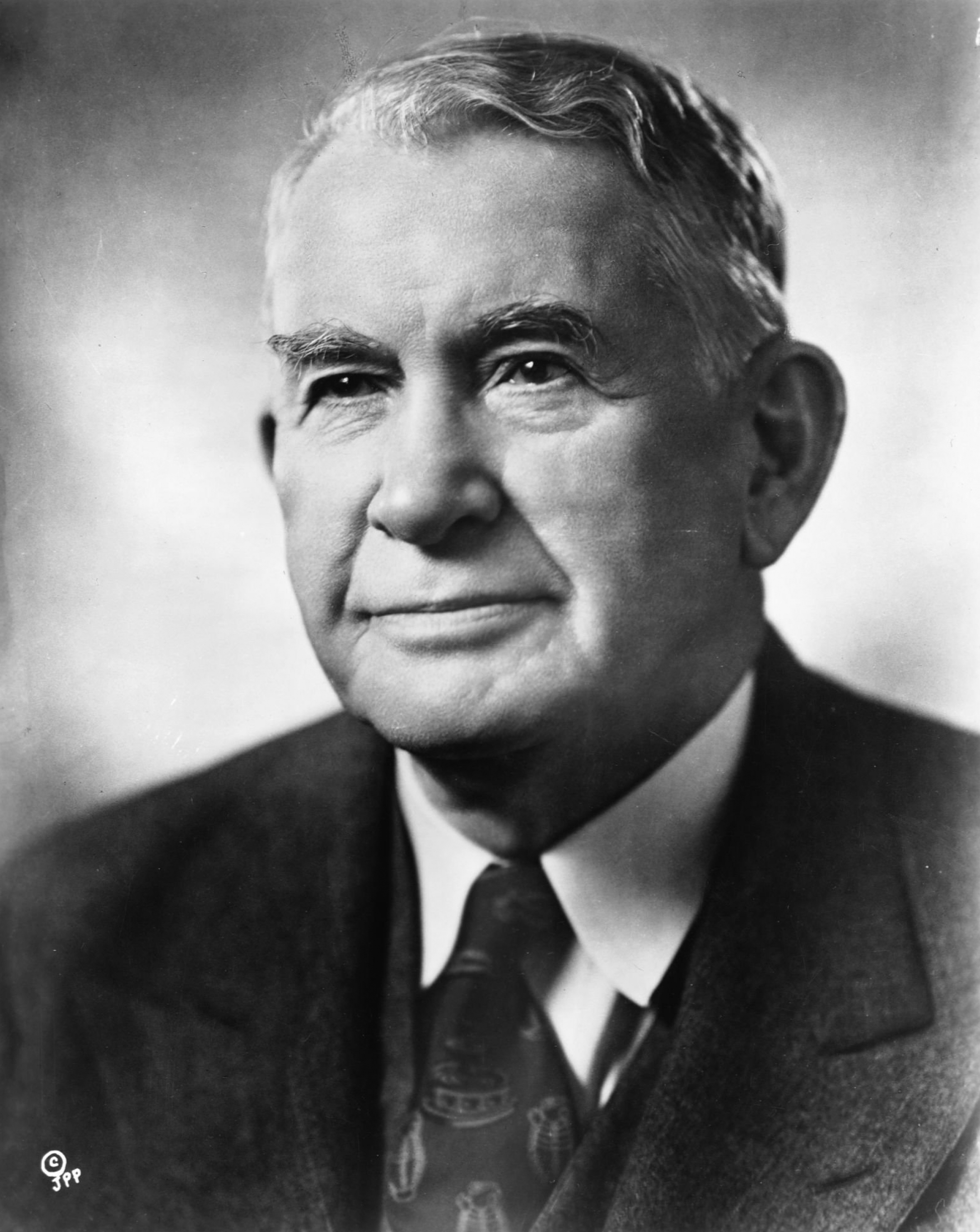
Earle Clements
American farmer and politician (1896–1985)

American farmer and politician (1896–1985)
| Field | Value |
|---|---|
| name | Earle Clements |
| image | Earle-Clements.jpg |
| office | Senate Majority Whip |
| leader | Lyndon B. Johnson |
| term_start | January 3, 1955 |
| term_end | January 3, 1957 |
| predecessor | Leverett Saltonstall |
| successor | Mike Mansfield |
| office1 | Senate Minority Whip |
| leader1 | Lyndon B. Johnson |
| term_start1 | January 3, 1953 |
| term_end1 | January 3, 1955 |
| predecessor1 | Leverett Saltonstall |
| successor1 | Leverett Saltonstall |
| jr/sr2 | United States Senator |
| state2 | Kentucky |
| term_start2 | November 27, 1950 |
| term_end2 | January 3, 1957 |
| predecessor2 | Garrett L. Withers |
| successor2 | Thruston Morton |
| order3 | 47th Governor of Kentucky |
| lieutenant3 | Lawrence Wetherby |
| term_start3 | December 9, 1947 |
| term_end3 | November 27, 1950 |
| predecessor3 | Simeon Willis |
| successor3 | Lawrence Wetherby |
| state4 | Kentucky |
| district4 | |
| term_start4 | January 3, 1945 |
| term_end4 | January 6, 1948 |
| predecessor4 | Beverly M. Vincent |
| successor4 | John A. Whitaker |
| state_senate5 | Kentucky |
| district5 | 4th |
| term_start5 | January 1, 1942 |
| term_end5 | January 3, 1945 |
| predecessor5 | John A. Sugg Jr. |
| successor5 | Stanley Hoffman |
| birth_name | Earle Chester Clements |
| birth_date | |
| birth_place | Morganfield, Kentucky, U.S. |
| death_date | |
| death_place | Morganfield, Kentucky, U.S. |
| party | Democratic |
| spouse | Sara Blue |
| education | University of Kentucky (BS) |
| allegiance | United States |
| branch | |
| serviceyears | 1917–1919 |
| rank | Captain |
| battles | World War I |
| caption | Clements in 1947 |
| resting_place | Odd Fellows Cemetery, Morganfield, Kentucky, U.S. |
| jr/sr2 = United States Senator
Earle Chester Clements (October 22, 1896 – March 12, 1985) was a Kentucky politician. He represented the Commonwealth of Kentucky in both the U.S. House of Representatives and the U.S. Senate and was its 47th governor, serving from 1947 to 1950, after serving in the state Senate. For 25 years, he was the leader of a faction of the state's Democratic Party that stood in opposition to the faction led by two-time governor and senator A. B. "Happy" Chandler.
After following his father into the local politics of his home county, Clements agreed to chair the gubernatorial campaign of Thomas Rhea in 1935. Already committed to Rhea, he turned down an offer from Happy Chandler to chair his campaign, beginning the rift between the two men. Clements was elected to the Kentucky Senate in 1941. In 1944, he was elected floor leader of its Democratic majority and successfully campaigned for a larger budget than that proposed by Republican governor Simeon Willis. His stand against Willis made him popular in the Democratic Party, and he was elected to the U.S. House of Representatives in 1944 and 1946.
In 1947, Clements succeeded the term-limited Willis, defeating Harry Lee Waterfield, Chandler's preferred candidate, in the Democratic primary. As governor, Clements raised taxes and used the revenue to increase funding for the state park system and construct and maintain more roads. He also achieved advancements in education, including some progress toward desegregation. In 1950, Clements was elected to the U.S. Senate. He resigned as governor to take the seat. While in the Senate, he served as Democratic party whip under party leader Lyndon Johnson and as executive director of the Senate Democratic Reelection Committee from 1957 to 1959. He was defeated by Thruston Morton in his re-election bid in 1956; a lack of support from Chandler (then serving his second term as governor) contributed to Clements' defeat. At Johnson's insistence, Clements resumed chairing the Senate Democratic Campaign Committee in 1957 and 1959.
Clements had supported Bert T. Combs for governor against Chandler in the 1955 primary, and did so again against Waterfield in 1959, brokering a deal for Louisville lawyer Wilson Wyatt to drop his bid for governor and run for lieutenant governor on an unofficial ticket headed by Combs. Combs defeated Waterfield and rewarded Clements by appointing him state highway commissioner. In 1960, Clements and Combs split over a deal to lease dump trucks from a Louisville car dealer. State newspapers charged that the deal was payback to the dealer, a Combs supporter. When Combs canceled the deal Clements took it as a public rebuke and soon after resigned to work on the presidential campaign of his friend, Lyndon Johnson. Following his split with Combs, Clements allied himself with the Chandler faction, opposing Wyatt in his bid to unseat Senator Thruston Morton. Clements' influence declined rapidly after the split with Combs, and by the 1963 gubernatorial race, he was unable to deliver his home county for Chandler in the primary against Edward T. Breathitt, who was nominated. When Johnson became president as the result of the assassination of John F. Kennedy in November 1963, Clements' friendship with him made Clements a logical choice to lobby for the Tobacco Institute, a coalition of cigarette manufacturers, who were increasingly having to play defense in Congress. After two years as a lobbyist for the institute, he was its president from 1966 to 1970, and remained on its payroll as a consultant until he died on March 12, 1985.
Early life
Earle C. Clements was born in Morganfield, Kentucky, on October 22, 1896. He was the youngest of two sons and four daughters born to Aaron Waller and Sallie Anna (Tuley) Clements. His father was a popular county judge and sheriff in Union County, but Clements at first shunned a political career. Later in 1915, he enrolled at the University of Kentucky's College of Agriculture.
Clements' studies were interrupted by World War I. On July 9, 1917, he enlisted as a private in Company M of the Kentucky National Guard. The company was ordered to Camp Taylor near Louisville, Kentucky, where they were mustered into the infantry of the U.S. Army. Clements first served as a guard at Camp Taylor and later entered the Officers Training School at Fort Benjamin Harrison near Indianapolis, Indiana. He graduated with the rank of first lieutenant and remained stateside as a professor of military science. He served for a total of 28 months, attaining the rank of captain, and was discharged on September 12, 1919.
After the war, Clements worked as a rigger in the oil fields of east Texas. On January 18, 1927, Clements married Sara M. Blue.
Political career
In 1925, Clements' father died, and Clements was appointed to serve out the remainder of his term as sheriff. Kentucky sheriffs at that time could not seek re-election, and he was elected county clerk in 1925. He served two four-year terms in that office.
In 1935, Thomas Rhea of Russellville, a former state treasurer and highway commissioner, asked Clements to serve as his campaign chairman for the 1935 gubernatorial race.
Clements was elected to the Kentucky Senate in 1941, representing Union, Webster, and Henderson counties. By 1944, he had risen to the post of majority leader in that body and played a central role in writing the state's budget that year. Due to Clements' efforts, educational appropriations were increased far above what had been called for by Republican Gov. Simeon Willis.
Clements' face-off with Willis made him popular and prominent, and helped him organize a campaign that forced the withdrawal of Rep. B.M. Vincent of Brownsville from the 1944 Democratic primary for the U.S. House of Representatives representing Kentucky's Second District, making him the party nominee without opposition. He opposed the 1947 Taft-Hartley Act and voted to disband the House Un-American Activities Committee. His service on the Select House Committee on Food Shortages gave him the chance to interact closely with President Harry S. Truman.
Governor
Although encouraged to run for a seat in the Senate in 1946, Clements instead made the race for governor in 1947. In the Democratic primary, he faced Harry Lee Waterfield, a former Speaker of the Kentucky House of Representatives. Not known for his oratory or personality, Clements was a masterful campaign organizer. He secured the support of many Western Kentucky Democrats by allying himself with Logan County political boss Emerson "Doc" Beauchamp, an ally of the recently deceased Rhea. He chose Lexington Herald-Leader editor Tom Underwood as his campaign manager, strengthening his influence in Central Kentucky. He befriended Judge Lawrence Wetherby of Jefferson County, which helped him with the urban vote and Carl D. Perkins of Knott County which helped him in rural eastern Kentucky.
During the primary campaign, two major issues surfaced. Waterfield favored a tax on parimutuel betting, while Clements opposed it. The Clements campaign also attacked Waterfield for being deemed physically unfit for military service. Clements received a late boost when he gained the endorsement of John Y. Brown, Sr., garnering added support from organized labor. Ultimately, Clements defeated Waterfield by over 30,000 votes.
In the general election, Clements faced Republican state attorney general Eldon S. Dummit. While Clements managed to keep the Democrats united following the primary, Dummit had fractured the Republicans by attacking the administration of Republican Gov. Simeon S. Willis and his preferred successor during the Republican primary. Dummit mounted a meager challenge by citing Clements' opposition to the Taft-Hartley Act that organized labor opposed, but this was not very effective. Dummit had replaced his campaign manager from the primary election, and when the ousted manager turned against him in the general election, it sounded the death knell for his campaign. Clements won the election by a vote of 387,795 (57%) to 287,756 (42%). He resigned his seat in the U.S. House to accept the governorship.
As governor, Clements enjoyed a three-to-one Democratic majority in both houses of the state legislature. As a result of that, much of his proposed legislative agenda was passed. With this new revenue, Clements authorized $6 million to improve and expand the state park system. The improvement program included twelve large parks and several smaller ones, with Kentucky Dam Park being the centerpiece. Although the park system was started in 1926 by Willard Rouse Jillson, Clements did much to develop them during his administration.
Clements authorized significant road building projects. During his administration, the state funded or built 3,800 miles of rural roads and 4,000 miles of primary roads. Clements' lieutenant governor and successor, Lawrence Wetherby, was able to meet this demand in 1951 by using increased tax revenue resulting from the Korean War.
Leading national accreditation groups attempted to disaccredit many of Kentucky's public colleges during Clements' administration in order to end longstanding political interference in the higher education system. Clements worked to help these colleges maintain their accreditation and to secure re-accreditation for Morehead State Teachers College. He also supported a 1948 bill that allowed blacks to pursue medical training at the University of Louisville. His efforts to secure a similar arrangement at the University of Kentucky were not successful, despite the governor's status as ex-officio chairman of the UK Board of Trustees. In 1949, the federal district court in Lexington granted blacks admission to programs at UK if an equivalent program was not available at Kentucky State College, the state's historically black college.
Clements also created or reorganized several government agencies. In cooperation with Pennsylvania governor James H. Duff, he created the Ohio River Sanitation Commission (ORANSCO) to combat pollution in the Ohio River and its tributaries. He curbed fraud in the insurance industry by reorganizing the state Insurance Commission and hiring a national prominent expert to rewrite the state's entire insurance code. To assist the General Assembly in writing more effective and efficient legislation, Clements created the non-partisan Legislative Research Commission, stocked with professionals from various disciplines, to conduct research and serve as legislative staff. He created the Kentucky Agriculture and Industrial Board (the predecessor of the current Kentucky Department of Commerce), which attracted 250 new industries to the state and created 40,000 new jobs during its first three years. He also created the Kentucky Building Commission to manage and plan all new state buildings. Among the commission's first projects were a new $6 million Capitol Annex and the construction of a new state fairgrounds in Louisville. To retain the most qualified government employees, he supported a constitutional amendment that quadrupled the minimum annual salary for state employees from $5,000 to $20,000.
Although a strong governor with many successes, Clements was not able to enact his full legislative agenda. In 1948, his proposal to create a centralized board that governed all Kentucky colleges failed in the General Assembly. Attempts to fund a veterans' bonus passed the two houses of the General Assembly in different forms and were unable to be reconciled.
Senator
When Alben Barkley resigned his Senate seat to assume the office of vice president in 1949, Clements appointed Highway Commissioner Garrett L. Withers to fill the seat until Clements could run for the next six-year term in 1950. He won the election over Republican Charles I. Dawson by a vote of 300,276 (54%) to 256,876 (45%). On November 27, 1950, Withers resigned as senator, Clements resigned as governor, and Lt. Gov. Lawrence Wetherby appointed Clements to fill the vacancy to allow him to gain seniority over other senators elected that month.
The Democrats lost seats in the Senate in the 1950 election cycle, and party leader Ernest McFarland removed Clinton Anderson as chairman of the Senate Democratic Reelection Committee, replacing him with Clements for the 1952 election cycle. Clements advocated better cooperation between his committee and the Democratic National Committee in 1952. However, Republicans won the presidency and both houses of Congress in 1952, and the Democratic National Committee talked openly of disbanding the Reelection Committee. Clements instead advised that his committee's responsibilities be expanded and that its activities become year-round rather than seasonal.
In 1953, Clements was appointed Democratic party whip, serving under party leader Lyndon B. Johnson. Democrats regained control of the Senate in 1954, and Clements instituted the practice of having his committee provide transition services for freshman senators. That practice continues today.
Clements remained active in state politics, leading a faction of the Democratic Party that opposed Happy Chandler, who had been less involved in politics when he was baseball commissioner from 1946 to 1951. When Chandler announced in 1955 that he would seek a second term, the Clements faction scrambled to find a candidate. The most likely choice was Wetherby's lieutenant governor, Emerson "Doc" Beauchamp, but his uninspiring persona and ties to boss-dominated Logan County made him unacceptable to Clements. Instead, Clements threw his support to Bert T. Combs, a Court of Appeals judge nominated by Wetherby. Since Combs had little in the way of a political record to run against, Chandler focused his campaign attacks on factional leaders Clements and Wetherby, who he nicknamed "Clementine and Wetherbine". These attacks, combined with a poorly run campaign by Combs, allowed Chandler to win the Democratic primary by a margin of 18,000 votes. He went on to win the general election and a second gubernatorial term.
1956 re-election bid
Clements began his campaign for re-election in 1956 by defeating Joe Bates, the candidate favored by Chandler, in the Democratic primary. On April 30, 1956, Barkley died of a heart attack, opening up the other seat. Clements thought Leary, one of the few political figures who remained on good terms with Clements and Chandler, didn't have a very good chance of winning, but his selection would keep Chandler from throwing his support to the Republican candidates.
Republican president Dwight D. Eisenhower convinced Ambassador to India John Sherman Cooper, who had served two short Senate terms and was immensely popular in Kentucky, to be the Republican candidate for the seat of Barkley, who had defeated Cooper in 1954. In the Republican primary, voters chose Thruston B. Morton to challenge Clements. With two of his factional enemies as candidates for the Senate, Chandler bolted the party and supported the Republican candidates.
Later life
Clements never again sought an elected office after his defeat, though he remained active in state politics and continued to lead the anti-Chandler faction of his party. Without Clements in the race, the anti-Chandler faction was unable to unite behind either former candidate Bert T. Combs or former Louisville mayor Wilson Wyatt. Clements united the faction behind Combs, making Wilson Wyatt their candidate for lieutenant governor and promising him support for later races. Combs defeated the Chandler candidate, Harry Lee Waterfield, in the Democratic primary and went on to win the general election.
In 1960, Combs appointed Clements as state highway commissioner. Others wondered if Clements took the post in order to organize the state political machinery for his friend Johnson, who was planning to run for president. Some charged that this amounted to a political payoff by Clements. Combs, already under fire for appointing Clements, canceled the lease bid on April 19. Clements was offended by this action and considered it a public rebuke. The incident caused a rift between Combs and Clements that never fully healed, although Clements did not resign immediately.
In August 1960, Clements met with Combs and told him he wanted to resign to work for Johnson's vice-presidential campaign. Combs called a press conference and announced that Clements' resignation would be effective September 1 and that he would be replaced by Henry Ward. His split with Combs was so severe that he allied with his longtime foe, Happy Chandler, against what became the Combs faction. In the 1962 senatorial race, Clements opposed Wyatt's challenge to Morton. Chandler hoped to damage Combs' reputation and, by extension, that of his hand-picked successor Edward T. Breathitt.
From 1961 to 1963, Clements was a consultant for the American Merchant Marine Institute, a coalition of U.S. shipping companies. After helping the companies head off more regulation by agreeing to a warning on cigarette packages, he became president of the Institute in 1966 and was instrumental in forging a 1969 agreement in which the companies agreed to stop television advertising in return for a stronger warning label instead of the additional regulation being demanded by health advocates. He stepped down as president in 1970 but remained a consultant to the institute until his death. In a 1978 interview, he maintained that a connection with smoking and cancer had not been proven. In 1981, he retired to his hometown of Morganfield.
References
Bibliography
References
- "Earle C. Clements" in ''Biographical Directory''
- Syvertsen in ''Kentucky's Governors'', p. 185
- He obtained his early education in the public schools, and graduated from Morganfield High School in 1915.Powell, p. 100
- In 1915 and 1916, he played [[Center (American football). center]] on the [[Kentucky Wildcats football. football team]], and was named to the "[[College Football All-Southern Team
- Harrison in ''The Kentucky Encyclopedia'', p. 206
- Jillson, p. 377
- Union County Advocate, Feb. 26, 1925
- Clements accepted, and consequently had to refuse a later request from his boyhood friend, [[Happy Chandler. Democratic]] [[Partisan primary
- Syvertsen in ''Kentucky's Governors'', pp. 186–187
- Waterfield supported development of electric power through public utilities, while Clements favored private development (which won him the support of the [[Kentucky Utilities]] company).Klotter, p. 331
- Harrison in ''A New History of Kentucky'', p. 401
- In the 1948 legislative session, the General Assembly attracted new businesses by lowering taxes on stocks and bonds and the [[inheritance tax]], but offset these cuts by approving Clements' proposals to increase taxes on gasoline and distilled spirits. Clements also reversed his campaign stance against a tax on [[parimutuel betting]], reportedly proposing a 3% tax because he feared a higher rate would be proposed if he did not take the initiative.Klotter, p. 332
- Syvertsen in ''Kentucky's Governors'', p. 187
- To oversee the developments, he appointed Paducah Sun Editor [[Henry Ward (Kentucky politician)
- Syvertsen in ''Kentucky's Governors'', p. 188
- In 1948, he weakened Kentucky's Day Law—which enforced segregation of the state's education system—by providing an exception for [[African-American. black]] medical personnel to take post-graduate courses in [[White people
- In both the 1948 and 1950 legislative sessions, Clements failed to convince the General Assembly to regulate strip mining. He also failed in his attempts to establish statewide pension and civil service programs, and was unable to enact a [[merit system]] to give civil-service protection to state employees.Klotter, p. 335
- Kolodny, p. 83
- In addition, he retained his chairmanship of the Senate Democratic Reelection Committee for the 1954 election cycle. He and Democratic National Committee chair [[Stephen A. Mitchell (Democratic activist)|Stephen Mitchell]] agreed that the two committees should conduct separate fund-raising operations in order to maximize donations for Democratic candidates.Kolodny, p. 84
- Kolodny, p. 85
- Harrison in ''A New History of Kentucky'', p. 403
- Pearce, p. 72
- With filing for the Democratic primary already over, the Democratic State Central Committee was charged with selecting a candidate. They chose Wetherby. Journalist John Ed Pearce later recorded that Clements had favored Chandler's choice, Frankfort lawyer Joseph Leary, over Wetherby.Pearce, p. 73
- Harrison in ''A New History of Kentucky'', p. 404
- Harrison in ''A New History of Kentucky'', p. 405
- Further complicating Clements' campaign was the fact that [[Party leaders of the United States Senate
- From 1957 to 1959, at the insistence of Lyndon Johnson, he served as executive director of the [[Democratic Senatorial Campaign Committee
- Harrison in ''A New History of Kentucky'', p. 407
- Some state newspapers charged that Clements had demanded this post at the head of the state's largest executive department in exchange for supporting Combs, a charge Combs denied.Pearce, p. 107
- Still others believed that, from his powerful post, Clements would be the real governor and Combs only a puppet. In March 1960, news broke that the highway department was about to lease 34 used [[dump truck]]s at a very favorable price from Louisville [[Ford Motor Company|Ford]] dealer Thurston Cooke, who had served as finance chairman for Combs' gubernatorial campaign.Harrison in ''A New History of Kentucky'', p. 408
- Pearce, pp. 133, 135
- Harrison in ''A New History of Kentucky'', pp. 408–409
- Pearce, p. 137
- Harrison in ''A New History of Kentucky'', p. 409
- Pearce, p. 150
- The resignation was the end of the Clements faction of the state Democratic Party.Pearce, p. 151
- Pearce, p. 152
- Morton won, ending Wyatt's political career. Chandler again sought the Democratic gubernatorial nomination in 1963. Clements appeared on stage with Chandler at a rally where Chandler claimed that Combs had arranged the truck deal to discredit Clements.Pearce, p. 214
- His strategy was unsuccessful; Breathitt won the primary and went on to win the general election. Clements' waning influence was evidenced by the fact that Breathitt carried Clements' home county of Union 2,528 to 1,913.Pearce, p. 215
- Michael Pertschuk, "The Giant Killers," W.W. Norton & Co., 1986
- The Courier-Journal, March 11, 1978
This article was imported from Wikipedia and is available under the Creative Commons Attribution-ShareAlike 4.0 License. Content has been adapted to SurfDoc format. Original contributors can be found on the article history page.
Ask Mako anything about Earle Clements — get instant answers, deeper analysis, and related topics.
Research with MakoFree with your Surf account
Create a free account to save articles, ask Mako questions, and organize your research.
Sign up freeThis content may have been generated or modified by AI. CloudSurf Software LLC is not responsible for the accuracy, completeness, or reliability of AI-generated content. Always verify important information from primary sources.
Report