From Surf Wiki (app.surf) — the open knowledge base
Earl Marshal
Hereditary royal officeholder and chivalric title under the sovereign of the United Kingdom

Hereditary royal officeholder and chivalric title under the sovereign of the United Kingdom
| Field | Value |
|---|---|
| post | Earl Marshal |
| body | England |
| insignia | File:Arms of the Duke of Norfolk, the Earl Marshal.svg |
| insigniacaption | Arms of the Dukes of Norfolk as Earl Marshal. |
| image | Duke of Norfolk (Norman Porch) 2022.jpg |
| incumbent | The 18th Duke of Norfolk |
| incumbentsince | 24 June 2002 |
| style | His Grace The Most Noble |
| type | Great Officer of State |
| precursor | |
| first | The 6th Duke of Norfolk (1672 creation) |
| formation | 1672 (current office granted by Letters Patent) |
| succession | Hereditary |
| deputy | Deputy Earl Marshal |
| Knight Marshal (until 1846) |
Knight Marshal (until 1846)
Earl Marshal (alternatively marschal or marischal) is a hereditary royal officeholder and chivalric title under the sovereign of the United Kingdom used in England (then, following the Act of Union 1800, in the United Kingdom). He is the eighth of the great officers of State in the United Kingdom, ranking beneath the Lord High Constable of England and above the Lord High Admiral. The dukes of Norfolk have held the office since 1672.
The current earl marshal is Edward Fitzalan-Howard, 18th Duke of Norfolk, who inherited the position in June 2002. There were formerly an Earl Marshal of Ireland and an Earl Marischal of Scotland.
Duties
The earl marshal was originally responsible, along with the constable, for the monarch's horses and stables including connected military operations. As a result of the decline of chivalry and sociocultural change, the position of earl marshal has evolved and among his responsibilities today is the organisation of major ceremonial state occasions such as coronations in Westminster Abbey, state funerals, and prescribing the order of ceremonial for state openings of Parliament. By virtue of office, the earl marshal is the leading officer of arms in England, Wales, Northern Ireland, and certain Commonwealth realms and thus oversees the College of Arms. Likewise, he is the sole judge of the High Court of Chivalry.
History
The office of the royal marshal existed in much of Europe, involving managing horses and protecting the monarch. In England, the office became hereditary under John FitzGilbert the Marshal (served c.1130–1165) after The Anarchy, and rose in prominence under his second son, William Marshal, later Earl of Pembroke. He served under several kings, acted as regent, and organised funerals and the regency during Henry III's childhood. After passing through his daughter's husband to the Earls of Norfolk, the post evolved into "Earl Marshal" and the title remained unchanged, even after the earldom of Norfolk became a dukedom.
In the Middle Ages, the Earl Marshal and the Lord High Constable were the officers of the king's horses and stables. When chivalry declined in importance, the constable's post declined and the Earl Marshal became the head of the College of Arms, the body concerned with all matters of genealogy and heraldry. In conjunction with the Lord High Constable, he had held a court, known as the Court of Chivalry, for the administration of justice in accordance with the law of arms, which was concerned with many subjects relating to military matters, such as ransom, booty and soldiers' wages, and including the misuse of armorial bearings.
In 1672, the office of Marshal of England and the title of Earl Marshal of England were made hereditary in the Howard family. In a declaration made on 16 June 1673 by Arthur Annesley, 1st Earl of Anglesey, the Lord Privy Seal, in reference to a dispute over the exercise of authority over the Officers of Arms the powers of the Earl Marshal were stated as being "to have power to order, judge, and determine all matters touching arms, ensigns of nobility, honour, and chivalry; to make laws, ordinances and statutes for the good government of the Officers of Arms; to nominate Officers to fill vacancies in the College of Arms; [and] to punish and correct Officers of Arms for misbehaviour in the execution of their places". Additionally it was declared that no patents of arms or any ensigns of nobility should be granted, and no augmentation, alteration, or addition should be made to arms, without the consent of the Earl Marshal.
The Earl Marshal is considered the eighth of the Great Officers of State, with the Lord High Constable above him and only the Lord High Admiral beneath him. Nowadays, the Earl Marshal's role has mainly to do with the organisation of major state ceremonies such as coronations and state funerals. Annually, the Earl Marshal helps organise the State Opening of Parliament. The Earl Marshal also remains to have charge over the College of Arms and no coat of arms may be granted without his warrant. As a symbol of his office, he carries a baton of gold with black finish at either end.
In the general order of precedence, the Earl Marshal is currently the highest hereditary position in the United Kingdom outside the Royal Family. Although other state and ecclesiastical officers rank above in precedence, they are not hereditary. The exception is the office of Lord Great Chamberlain, which is notionally higher than Earl Marshal and also hereditary. The holding of the Earl Marshalship secures the Duke of Norfolk's traditional position as the "first peer" of the land, above all other dukes.
The House of Lords Act 1999 removed the automatic right of hereditary peers to sit in the House of Lords, but the Act provided that the persons holding the office of Earl Marshal and, if a peer, the Lord Great Chamberlain continue for the time being to have seats so as to carry out their ceremonial functions in the House of Lords.
Lords Marshal of England, 1135–1386
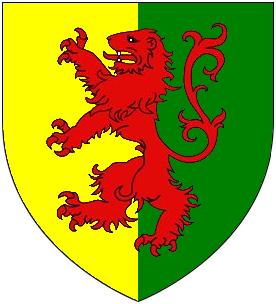
- Gilbert Giffard ?–1129 (?)
- John Fitz-Gilbert “the Marshal” 1130–1165 (?)
- John Marshal 1165–1194
- William Marshal, 1st Earl of Pembroke 1194–1219
- William Marshal, 2nd Earl of Pembroke 1219–1231
- Richard Marshal, 3rd Earl of Pembroke 1231–1234
- Gilbert Marshal, 4th Earl of Pembroke 1234–1241
- Walter Marshal, 5th Earl of Pembroke 1242–1245
- Anselm Marshal, 6th Earl of Pembroke 1245
- Roger Bigod, 4th Earl of Norfolk 1245–1269
- Roger Bigod, 5th Earl of Norfolk 1269–1306
- Robert de Clifford 1307–1308
- Nicholas Seagrave 1308–1316
- Thomas of Brotherton, 1st Earl of Norfolk 1316–1338
- William Montagu, 1st Earl of Salisbury 1338–1344
- Margaret, Duchess of Norfolk 1338–1377
- Henry Percy, Lord Percy 1377
- John FitzAlan, 1st Baron Arundel, Lord Maltravers 1377–1383 (died 1379)
- Thomas Mowbray, 1st Earl of Nottingham 1385–1386
Earls Marshal of England, 1386–present
| Earl Marshal | Term of office | Monarch | |
|---|---|---|---|
| [[File:Complete Guide to Heraldry Fig618.png | 75px]] | Thomas de Mowbray | |
| 1st Duke of Norfolk | 1386 | ||
| [[File:Harley1319surrey.jpg | 75px]] | Thomas Holland | |
| 1st Duke of Surrey | 1398 | ||
| [[File:Ralph Neville.jpg | 75px]] | Ralph de Neville | |
| 1st Earl of Westmorland | 1400 | ||
| [[File:No image.svg | 75px]] | John de Mowbray | |
| 2nd Duke of Norfolk | 1412 | ||
| Henry V | |||
| Henry VI | |||
| [[File:Coat of Arms of Henry VI of England (1422-1471).svg | 65px]] | ||
| [[File:No image.svg | 75px]] | John de Mowbray | |
| 3rd Duke of Norfolk | 1432 | ||
| [[File:No image.svg | 75px]] | John de Mowbray | |
| 4th Duke of Norfolk | 1461 | ||
| Henry VI | |||
| Edward IV | |||
| [[File:Coat of Arms of Edward IV of England (1461-1483).svg | 65px]] | ||
| [[File:No image.svg | 75px]] | Jointly: | 1476 |
| Edward V | |||
| [[File:Coat of Arms of Edward V of England (1483).svg | 65px]] | ||
| [[File:John Howard, 1st Duke of Norfolk.jpg | 75px]] | John Howard | |
| 1st Duke of Norfolk | 1483 | ||
| [[File:No image.svg | 75px]] | William de Berkeley | |
| 1st Marquess of Berkeley | 1486 | ||
| [[File:HenryVIII 1509.jpg | 75px]] | Lord Henry | |
| Duke of York | 1494 | ||
| [[File:1 Thomas Howard, 2nd Duke of Norfolk.jpg | 75px]] | Thomas Howard | |
| 2nd Duke of Norfolk | 1509 | ||
| [[File:Charles Brandon Duke of Suffolk.jpg | 75px]] | Charles Brandon | |
| 1st Duke of Suffolk | 1524 | ||
| [[File:Hans Holbein the Younger - Thomas Howard, 3rd Duke of Norfolk (Royal Collection).JPG | 75px]] | Thomas Howard | |
| 3rd Duke of Norfolk | 1533 | ||
| [[File:Edward Seymour.jpg | 75px]] | Edward Seymour | |
| 1st Duke of Somerset | 1547 | ||
| [[File:John Dudley (Knole, Kent).jpg | 75px]] | John Dudley | |
| 1st Duke of Northumberland | 1551 | ||
| [[File:Hans Holbein the Younger - Thomas Howard, 3rd Duke of Norfolk (Royal Collection).JPG | 75px]] | Thomas Howard | |
| 3rd Duke of Norfolk | 1553 | ||
| [[File:Hans Eworth Thomas Howard, 4th Duke of Norfolk.jpg | 75px]] | Thomas Howard | |
| 4th Duke of Norfolk | 1554 | ||
| Elizabeth I | |||
| [[File:Coat of Arms of England (1558-1603).svg | 65px]] | ||
| [[File:George Talbot 6th Earl of Shrewsbury 1580.jpg | 75px]] | George Talbot | |
| 6th Earl of Shrewsbury | 1572 | ||
| [[File:No image.svg | 75px]] | In commission: | |
| 1590 | |||
| [[File:Robert Devereux, 2nd Earl of Essex by Marcus Gheeraerts the Younger.jpg | 75px]] | Robert Devereux | |
| 2nd Earl of Essex | 1597 | ||
| [[File:No image.svg | 75px]] | In commission | 1602 |
| [[File:Gilbert Jackson Edward Somerset 4th Earl of Worcester.jpg | 75px]] | Edward Somerset | |
| 4th Earl of Worcester | 1603 | ||
| [[File:No image.svg | 75px]] | In commission: | 1604 |
| [[File:No image.svg | 75px]] | In commission: | 1616 |
| [[File:Thomas-howard-rubensportrait.jpg | 75px]] | Thomas Howard | |
| Earl of Arundel and Surrey | 1622 | ||
| Charles I | |||
| [[File:Coat of Arms of England (1603-1649).svg | 65px]] | ||
| [[File:22ndEarlOfArundel.jpg | 75px]] | Henry Howard | |
| Earl of Arundel and Surrey | 1646 | ||
| [[File:No image.svg | 75px]] | Vacant | 1652 |
| [[File:No image.svg | 75px]] | James Howard | |
| 3rd Earl of Suffolk | 1661 | ||
| [[File:No image.svg | 75px]] | In commission: | |
| 1662 | |||
| [[File:Henry Howard, 6th Duke of Norfolk.jpg | 75px]] | Henry Howard | |
| 6th Duke of Norfolk | 1672 | ||
| [[File:7thDukeOfNorfolk.jpg | 75px]] | Henry Howard | |
| 7th Duke of Norfolk | 1684 | ||
| James II | |||
| [[File:Coat of Arms of England (1660-1689).svg | 65px]] | ||
| Mary II | |||
| [[File:Coat of Arms of England (1689-1694).svg | 65px]] | ||
| William III | |||
| [[File:Coat of arms of England (1694–1702).svg | 65px]] | ||
| [[File:Thomas Howard, 8th Duke of Norfolk.jpg | 75px]] | Thomas Howard | |
| 8th Duke of Norfolk | 1701 | ||
| Anne | |||
| [[File:Coat of Arms of England (1702-1707).svg | 65px]] | ||
| [[File:Coat of Arms of Great Britain (1707-1714).svg | 65px]] | ||
| George I | |||
| [[File:Coat of Arms of Great Britain (1714-1801).svg | 65px]] | ||
| George II | |||
| [[File:Coat of Arms of Great Britain (1714-1801).svg | 65px]] | ||
| [[File:9th Duke of Norfolk.jpg | 75px]] | Edward Howard | |
| 9th Duke of Norfolk | 1732 | ||
| George III | |||
| [[File:Coat of Arms of Great Britain (1714-1801).svg | 65px]] | ||
| [[File:Coat of Arms of the United Kingdom (1801-1816).svg | 65px]] | ||
| [[File:Coat of Arms of the United Kingdom (1816-1837).svg | 65px]] | ||
| [[File:10th Duke of Norfolk.jpg | 75px]] | Charles Howard | |
| 10th Duke of Norfolk | 1777 | ||
| [[File:Charles Howard (1746–1815), 11th Duke of Norfolk by James Lonsdale.jpg | 75px]] | Charles Howard | |
| 11th Duke of Norfolk | 1786 | ||
| [[File:Bernard-Fitzalan-Howard-12th-Duke-of-Norfolk.jpg | 75px]] | Bernard Edward Howard | |
| 12th Duke of Norfolk | 1815 | ||
| George IV | |||
| [[File:Coat of Arms of the United Kingdom (1816-1837).svg | 65px]] | ||
| William IV | |||
| [[File:Coat of Arms of the United Kingdom (1816-1837).svg | 65px]] | ||
| Victoria | |||
| [[File:Coat of Arms of the United Kingdom (1837-1952).svg | 65px]] | ||
| [[File:Henry Charles Howard, 13th Duke of Norfolk.jpg | 75px]] | Henry Charles Howard | |
| 13th Duke of Norfolk | 1842 | ||
| [[File:14th Duke of Norfolk.png | 75px]] | Henry Granville Fitzalan-Howard | |
| 14th Duke of Norfolk | 1856 | ||
| [[File:Henry Fitzalan-Howard (1890).jpg | 75px]] | Henry Fitzalan-Howard | |
| 15th Duke of Norfolk | 1860 | ||
| Edward VII | |||
| [[File:Coat of Arms of the United Kingdom (1837-1952).svg | 65px]] | ||
| George V | |||
| [[File:Coat of Arms of the United Kingdom (1837-1952).svg | 65px]] | ||
| [[File:Player's cigarettes Earl Marshal.jpeg | 75px]] | Bernard Marmaduke Fitzalan-Howard | |
| 16th Duke of Norfolk | 1917 | ||
| Edward VIII | |||
| [[File:Coat of Arms of the United Kingdom (1837-1952).svg | 65px]] | ||
| George VI | |||
| [[File:Coat of Arms of the United Kingdom (1837-1952).svg | 65px]] | ||
| Elizabeth II | |||
| [[File:Royal Coat of Arms of the United Kingdom (1952-2022).svg | 65px]] | ||
| [[File:17th Duke of Norfolk Allan Warren.jpg | 75px]] | Miles Fitzalan-Howard | |
| 17th Duke of Norfolk | 1975 | ||
| [[File:18th Duke of Norfolk 1 Allan Warren.JPG | 75px]] | Edward William Fitzalan-Howard | |
| 18th Duke of Norfolk | 2002 | ||
| Charles III | |||
| [[File:Royal Coat of Arms of the United Kingdom (2022).svg | 65px]] |
Deputy Earls Marshal of England
The position of Earl Marshal had a Deputy called the Knight Marshal from the reign of Henry VIII until the office was abolished in 1846.
Deputy Earls Marshal have been named at various times, discharging the responsibilities of the office during the minority or infirmity of the Earl Marshal. Prior to an Act of Parliament in 1824, Protestant deputies were required when the Earl Marshal was a Roman Catholic, which occurred frequently due to the Catholicism of the Norfolks.
| Name | Tenure | Deputy to | Ref(s) |
|---|---|---|---|
| Charles Howard, 1st Earl of Carlisle | 1673–? | ||
| Charles Howard, 3rd Earl of Carlisle | 1701–1706 | ||
| Henry Howard, 6th Earl of Suffolk and 1st Earl of Bindon | 1706–1718 | ||
| Henry Bowes-Howard, 4th Earl of Berkshire | 1718–1725 | ||
| Talbot Yelverton, 1st Earl of Sussex | 1725–1731 | ||
| Francis Howard, 1st Earl of Effingham | 1731–1743 | ||
| Thomas Howard, 2nd Earl of Effingham | 1743–1763 | ||
| Henry Howard, 12th Earl of Suffolk and 5th Earl of Berkshire | 1763–1765 | ||
| Richard Lumley-Saunderson, 4th Earl of Scarbrough | 1765–1777 | ||
| Thomas Howard, 3rd Earl of Effingham | 1777–1782 | ||
| Charles Howard, Earl of Surrey | 1782–1786 | ||
| Lord Henry Howard-Molyneux-Howard | 1816–1824 | 12th Duke of Norfolk | |
| Lord Edward Fitzalan-Howard | 1861–1868 | 15th Duke of Norfolk | |
| Edmund FitzAlan-Howard, 1st Viscount FitzAlan of Derwent | 1917–1929 | 16th Duke of Norfolk | |
| Edward Howard, Earl of Arundel and Surrey | 2000–2002 | 17th Duke of Norfolk |
Notes
References
- Sliford, William (1782). The Court Register and Statesman's Remembrancer
- Round, J.H. (1899) The Commune of London, and other Studies. Westminster: Constable.
- Debretts.com
- Tudorplace.com
- The dormant and extinct baronage of England - Banks - PP356ff
References
- "The history of the Royal heralds and the College of Arms". The College of Arms website.
- "Role of the Earl Marshal". Arundel Castle.
- The Coronation Roll Project. "Earl Marshal". HM Government.
- Sliford 1782, p. 36
- "The Monarchy Today > the Royal Household > Official Royal posts > Earl Marshal".
- Companion to British History
- Squibb, G.D.. (1959). "The High Court of Chivalry: A Study of the Civil Law in England". Oxford University Press.
- Anne Mowbray Countess Marshal: Although Anne, Countess of Norfolk, Baroness Mowbray and Segrave is presumed to be the Countess Marshal, at the age of 7 on her marriage to the Duke of York, between 1476 and 1483 Sir Thomas Grey KT is said by Camden to have held the office of Earl Marshal. This hereditary claim to this office, probably descended from [[Thomas Gray (MP). Sir Thomas Grey]] Kt (1359–1400), husband of [[Joan de Mowbray]] (1361–1410), daughter of [[John de Mowbray, 4th Baron Mowbray]] and [[Elizabeth de Segrave, 5th Baroness Segrave]]. Joan de Mowbray's son was also called Sir Thomas GREY (1384–1415) was the Sheriff of Northumberland and born at Alnwick Castle, seat of Henry Percy, 1st Earl of Northumberland. Thomas married Alice daughter of Ralph Neville, 1st Earl of Westmoreland. Another Sir John Grey KG (1386–1439) married Lady Margaret MOWBRAY (b.1388 or 1402–1459) eldest daughter of Thomas de Mowbray, 1st Duke of Norfolk (1366–1399) [Earl Marshal] and Lady Elizabeth FitzAlan (1366–1425). REF Complete Peerage. Volume V, L-M (1893) page 262
- Venning, Timothy. (2005). "Compendium of British Office Holders". Palgrave Macmillan.
- Sliford 1782, p. 37
- Money Barnes, Major R. ''The Soldiers of London'' Seeley, Service & Co 1963, p.288
This article was imported from Wikipedia and is available under the Creative Commons Attribution-ShareAlike 4.0 License. Content has been adapted to SurfDoc format. Original contributors can be found on the article history page.
Ask Mako anything about Earl Marshal — get instant answers, deeper analysis, and related topics.
Research with MakoFree with your Surf account
Create a free account to save articles, ask Mako questions, and organize your research.
Sign up freeThis content may have been generated or modified by AI. CloudSurf Software LLC is not responsible for the accuracy, completeness, or reliability of AI-generated content. Always verify important information from primary sources.
Report