From Surf Wiki (app.surf) — the open knowledge base
Dzerzhinsk, Russia
Town in Nizhny Novgorod Oblast, Russia

Town in Nizhny Novgorod Oblast, Russia
| Field | Value |
|---|---|
| en_name | Dzerzhinsk |
| ru_name | Дзержинск |
| image_skyline | DK Khimik shoot from a dron.jpg |
| image_caption | Palace of Culture of Chemists |
| coordinates | |
| image_flag | Flag of Dzerzhinsk (Nizhny Novgorod region).jpg |
| image_coa | Coat of Arms of Dzerzhinsk.svg |
| holiday | Last Sunday of May |
| federal_subject | Nizhny Novgorod Oblast |
| federal_subject_ref | |
| adm_inhabloc_jur | city of oblast significance of Dzerzhinsk |
| adm_inhabloc_jur_ref | |
| adm_ctr_of1 | city of oblast significance of Dzerzhinsk |
| adm_ctr_of1_ref | |
| inhabloc_cat | City |
| urban_okrug_jur | Dzerzhinsk Urban Okrug |
| urban_okrug_jur_ref | |
| mun_admctr_of1 | Dzerzhinsk Urban Okrug |
| mun_admctr_of1_ref | |
| leader_title | Mayor |
| leader_name | Mikhail Klinkov |
| leader_name_ref | |
| pop_2010census | 240742 |
| pop_2010census_ref | |
| established_date | 1606 |
| established_title | First mentioned |
| postal_codes | 606000—606039 |
| dialing_codes | 8313 |
| website | https://admdzr.nobl.ru/ |
Dzerzhinsk (Дзержи́нск) is a city in Nizhny Novgorod Oblast, Russia, located along the Oka River, about 370 km east of Moscow and 35 km west of Nizhny Novgorod. Population:
It was previously known as Rastyapino (until 1929).
History
First mentioned in 1606 as Rastyapino (Растя́пино), since 1929 it has been named after Felix Dzerzhinsky, a Bolshevik leader who was the first head of the Soviet Cheka (secret police).
Administrative and municipal status
Within the framework of administrative divisions, it is, together with three work settlements and eleven rural localities, incorporated as the city of oblast significance of Dzerzhinsk—an administrative unit with a status equal to that of the districts. As a municipal division, the city of oblast significance of Dzerzhinsk is incorporated as Dzerzhinsk Urban Okrug.
Chemical weapons and other production
Modern-day Dzerzhinsk is a large center of the Russian chemicals production industry. In the past, the city was also among Russia's principal production sites for chemical weapons. Owing to its strategic significance, this city was, until recently, officially closed to foreign visitors.
Manufacture of various chemical weapons started under Soviet government control in 1941, particularly concentrating on the production of lewisite—the poisonous effects of which are owed to its arsenic trioxide content—and yperite (mustard gas). The factory producing these substances was called the Kaprolactam (or Caprolaktam) Organic Glass Factory, and in addition to its arsenic-based weapons, also produced prussic acid and phosgene.
Chemical weapons production at Dzerzhinsk ceased in 1965. Some materials were transferred to storage units, while large amounts of waste material—frequently containing high concentrations of arsenic—were buried in dumps on the site of the factory. Full dismantling of the yperite facility was commenced in 1994. As of 1998, the lewisite production unit was still not completely disassembled.
, Dzerzhinsk had 38 large industrial enterprises, which exported goods worldwide. About one thousand varieties of chemical products are produced in Dzerzhinsk. The largest factories, which exist or existed in the past, include:
- Sverdlov Plant, FSE (Federal State Enterprise) manufactures munitions, battle and industrial explosives, and chemicals for industrial purposes (phenol-formaldehyde resin, epoxy resin, carbamide-furane resin, plasticizers, hardeners of various modifications, nitrobenzene, sulphanole, acetic anhydride, various cleaners and detergents, as well as other products). The plant is included in the presidential list of the country's strategic enterprises. This is Dzerzhinsk's largest factory. On 20 October 2024 it was reported that the plant had been struck by Ukrainian drones. The extent of the damage to the plant was unclear.
- JSC Kristall Research Institute, a military explosives factory, part of the Sverdlow Plant, which suffered a serious explosion in June 2019.{{Cite news
- Korund, JSC (opened in 1915, the first factory in Russia to produce cyanide, still operational). This plant produces corundum for lasers and other applications. It is the oldest enterprise in Dzerzhinsk. In 2004, the plant was temporarily closed due to bankruptcy.
- Dzerzhinskhimmash, JSC (opened in 1941, currently (2013) makes distillation and column equipment, evaporators, heat exchangers).
- Sintez, JSC. Produces acetone, carbonyl iron, diethanolamine, isopropanol, methylamine, phenol, etc.
- Orgsteklo, JSC (previously manufactured specialist glass for the aeronautics market, currently specializes in production of acrylic co-polymers and organic glasses).
- Avangard-KNAUF, JSC
- Liebherr, JSC
- Plastik, JSC
- Aviabor, JSC
- SIBUR-Neftekhim, JSC
- Oka, Yava, Orgsitilen, Zarya (no longer functioning).
Pollution
According to the September 12, 2007, study by the Blacksmith Institute, Dzerzhinsk is one of the worst-polluted cities of the world and has a life expectancy of 42 years for men and 47 for women, with the 2003 death rate exceeding its birth rate by 260%. Environmental action groups such as Greenpeace attribute such low life expectancy to high levels of persistent organic chemicals, particularly dioxins. The Blacksmith Institute also names sarin, lewisite, sulfur mustard, hydrogen cyanide, phosgene, lead, and organic chemicals among the worst pollutants. Parts of Dzerzhinsk's water are contaminated with dioxins and phenol at levels that are reportedly seventeen million times the safe limit.
Dzerzhinsk's environmental agency estimates that almost 300,000 tons of chemical waste were dumped in the city between 1930 and 1998. The Ecology Committee of the Russian State Duma also considers Dzerzhinsk among the top ten cities with disastrous ecological conditions.
Dzerzhinsk's City Administration, however, asserts that the Blacksmith Institute report is false, stating, for example, that since sarin had never been produced in the city (seems to be credible according to Fedorov, p262, Table 7.1), it cannot be one of the major pollutants. Also, according to the city's health department, the average life expectancy in the city was 64 years in 2006. Askhat Kayumkov, the head of the Dront public ecological organization, which was quoted as a source by the Blacksmith Institute, states that his organization never provided the Blacksmith Institute with data of any kind. Furthermore, he does not believe that Dzerzhinsk is one of the most polluted cities in Russia, much less in the whole world.
In the end, however, despite the ecological situation in the city being at its best in the previous 80 years (mostly due to bankruptcies and closures of the polluting factories), several locations in the city pose a tangible ecological risk. These sites include the 110ha Igumnovo landfill, toxic waste burial grounds, and a so-called "White Sea" composed of discarded chemical wastes. These sites are kept under constant ecological monitoring.
In June 2019 a powerful explosion at State Research Institute Kristall injured 79 people and destroyed 180 homes in the neighbourhood.
After unsuccessful tenders in 2012–13, GazEnergoStroy was selected for cleanup in 2016. The liquidation of "Black Hole" started and waste burning infrastructure was completed by 2019. According to sources the amount of waste is 57% more than expected, and the cleanup might only finish in autumn of 2021 with an extra 238 million rubles from the central government, but the request was denied. According to local newspaper the equipment downtime is 49% and further delay is expected. Reclamation works on "White Sea" and Igumnovo were ongoing in 2019 by GazEnergoStroy.
Sights

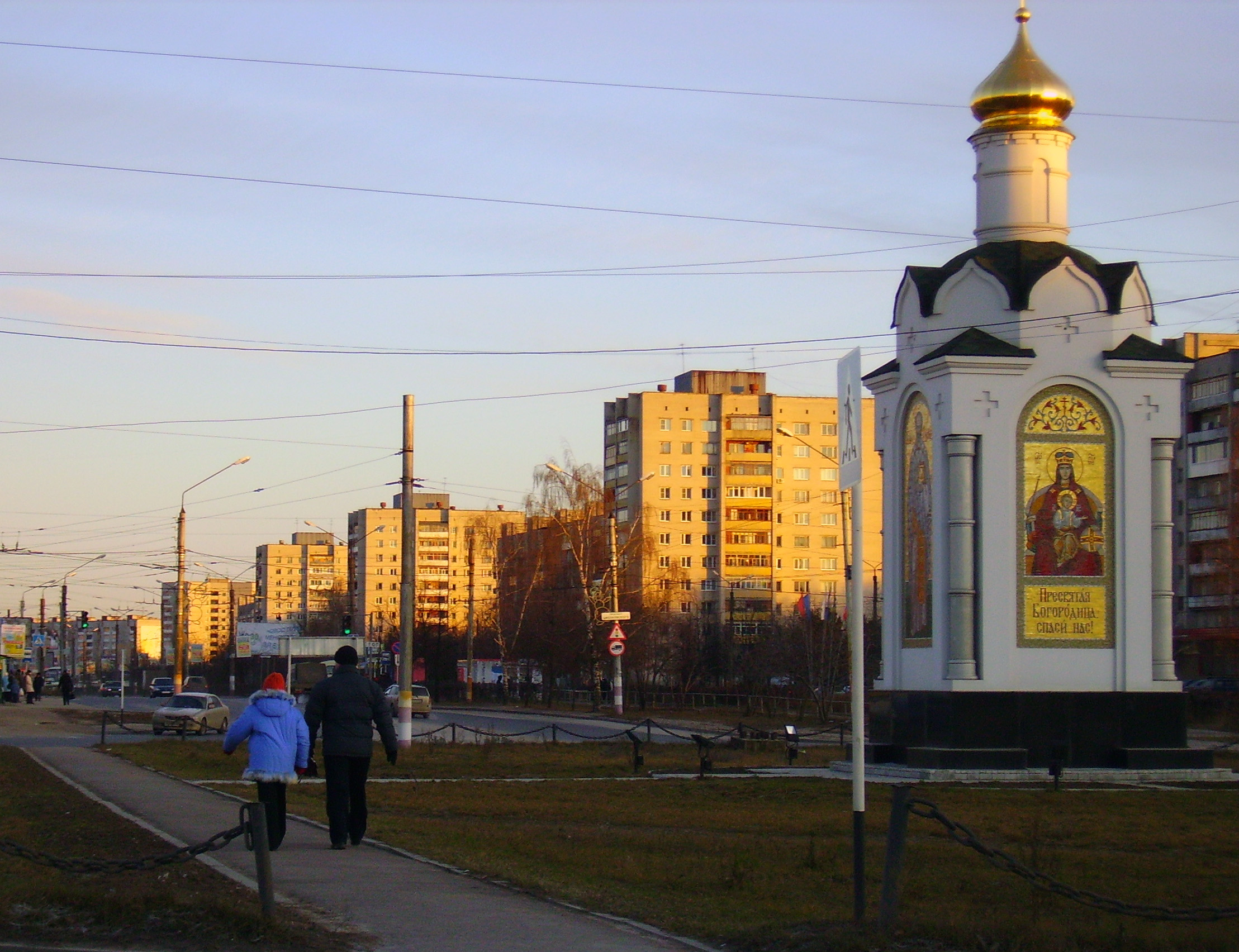

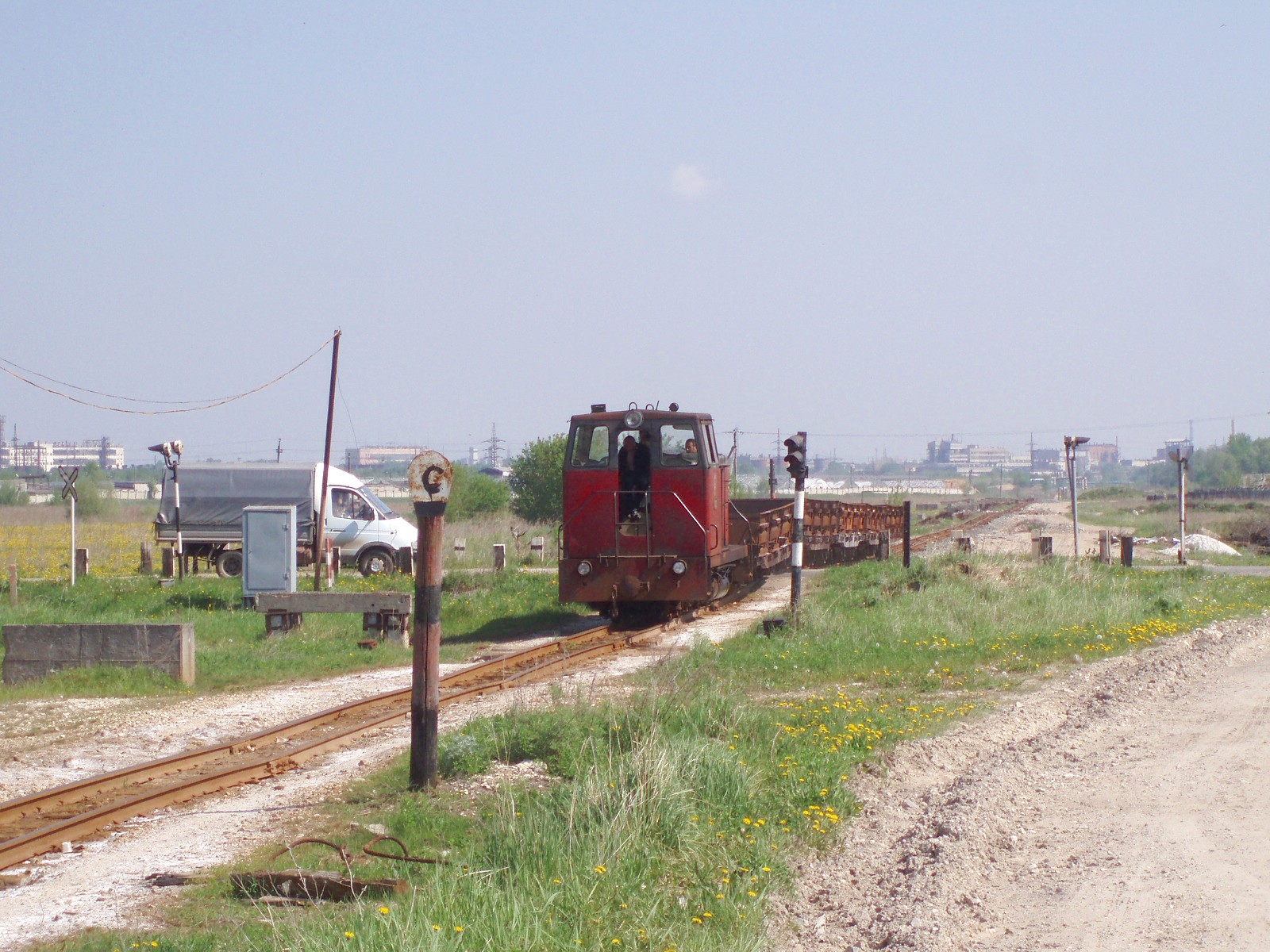
Shukhov Tower on the Oka River, the unique architectural construction—the 128 m steel lattice hyperboloid tower built by Soviet engineer and scientist Vladimir Shukhov in 1929—is located near Dzerzhinsk on the left bank of the Oka River. There used to be two towers, but one was stolen for scrap metal in 2005.
Notable people
- Sergey Chigrakov (born 1961), rock performer and songwriter
- Aleksandr Demenshin (born 1986), former Russian professional football player
- Eduard Limonov (1943–2020), writer and politician
- Natali (born 1974), pop singer and songwriter
- Irina Voronina (born 1977), Playboy playmate
International relations
Twin towns and sister cities
Dzerzhinsk is twinned with:
- GER Bitterfeld-Wolfen, Germany since 1996
- BLR Grodno, Belarus since 2005
- LIT Druskininkai, Lithuania since 2009
- RUS Zelenodolsk, Russia since 2011
References
Notes
Sources
References
- link
- {{ru-pop-ref. 2010Census
- Emmanuel Carrère. (21 October 2014). "Limonov: The Outrageous Adventures of the Radical Soviet Poet Who Became a Bum in New York, a Sensation in France, and a Political Antihero in Russia". Farrar, Straus and Giroux.
- Law #184-Z
- Law #151-Z
- "Ukraine strikes key Russian explosives manufacturer, general staff says".
- "О компании — Оргстекло".
- "The top most polluted places". [[Blacksmith Institute]].
- ru
- "Химическое вооружение - война с собственным народом".
- [http://www.reporter-dz.ru/2006/10/27/kto-zakazal-dzerzhinsk.phtml «Дзержинский репортёр». «Кто "заказал" Дзержинск»?] {{webarchive. link. (October 3, 2011 Официальная критика присутствия Дзержинска списке Института Блэксмита (''Dzerzhinsky Reportyor'' newspaper. Official criticism of the inclusion of Dzerzhinsk into the Blacksmith Institute list) {{in lang). ru
- [http://www.reakcia.ru/article/?1391 «Живые здесь не ходят». Газета "RE:акция", №43ц 11-21 декабря 2006 г.] (''The Living Do Not Walk Here''. "RE:aktsiya" newspaper, #43, December 11, 2006 – December 21, 2006) {{in lang. ru
- (2019-06-01). "NII Kristall news".
- (2019-06-01). "Blast at Russian explosives plant injures 79".
- (2017-11-23). "White Sea (Dzerzhinsk, Nizhny Novgorod region): history, description".
- (2020-01-12). "Video of the day: how the "Black Hole" in Dzerzhinsk has changed over the past year".
- (2020-10-09). "Central funding of liquidation of "Black Hole" denied".
- (2020-01-15). "The liquidator of the Black Hole landfill in Dzerzhinsk was ordered to work on the project".
- (2019-07-08). "Dzerzhinsk "White Sea" was half closed with geomembrane".
- [https://www.imdb.com/name/nm1143016/ Irina Voronina page on IMDB]
- "Dzershinsk". bitterfeld-wolfen.de.
- "Города побратимы". grodno.gov.by.
- "Bendra informacija". info.druskininkai.lt.
- "Города побратимы". admdzr.ru.
This article was imported from Wikipedia and is available under the Creative Commons Attribution-ShareAlike 4.0 License. Content has been adapted to SurfDoc format. Original contributors can be found on the article history page.
Ask Mako anything about Dzerzhinsk, Russia — get instant answers, deeper analysis, and related topics.
Research with MakoFree with your Surf account
Create a free account to save articles, ask Mako questions, and organize your research.
Sign up freeThis content may have been generated or modified by AI. CloudSurf Software LLC is not responsible for the accuracy, completeness, or reliability of AI-generated content. Always verify important information from primary sources.
Report