From Surf Wiki (app.surf) — the open knowledge base
Dynamic frequency selection
Wifi channel allocation scheme
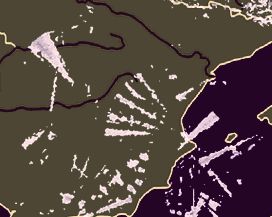
Wifi channel allocation scheme
Dynamic Frequency Selection (DFS) is a channel allocation scheme specified for wireless LANs, commonly known as Wi-Fi. It is designed to prevent electromagnetic interference by avoiding co-channel operation with systems that predated Wi-Fi, such as military radar, satellite communication, and weather radar, and also to provide on aggregate a near-uniform loading of the spectrum (uniform spreading).{{Cite AV media | access-date = 4 December 2019 | article-url= https://mum.mikrotik.com//presentations/UK16/presentation_3845_1479299009.pdf
Radar detection mechanism
When starting operation, an access point automatically selects channels with low interference levels in a phase known as Channel Availability Check (CAC). During this phase, the access point is in a passive state scanning for radar signals. This commonly takes one to two minutes, but could take up to ten minutes. Thereafter, the access point performs In-Service Monitoring (ISM) to detect active radar signals; if radar is detected, and the access point is configured to automatically select a channel, it broadcasts a switch-channel event to its clients and follows by switching the channel.
The actual mechanism, durations, radar pulse pattern, power levels, and frequency bands on which DFS is enforced vary by jurisdiction. DFS is mandated for the 5470–5725 MHz U-NII band in United States by the FCC. DFS is mandatory for the 5250–5350 and 5470–5725 MHz bands in India.
Weather radar interference
Prior to the introduction of Wi-Fi, one of the biggest applications of the 5 GHz band was Terminal Doppler Weather Radar. The decision to use 5 GHz spectrum for Wi-Fi was finalized in the World Radiocommunication Conference in 2003; however, the meteorological community was not involved in the process. Implementation and configuration problems caused significant disruption in weather radar operations in countries around the world. In Hungary, the weather radar system was declared non-operational for more than a month. Due to the severity of interference, South African weather services ended up abandoning C band operation, switching their radar network to S band.
Uniform spreading
Uniform spreading is a mechanism used to provide an aggregated uniform load across all allocated channels within the declared spectrum mask. There are several ways in which this can be achieved, either on-device or in a WLAN controller.
References
References
- (2003-01-31). "5GHz Agreement".
- (2018-10-18). "G.S.R. 1048(E) dated 18th October 2018".
- Spain, Chris. (July 10, 2014). "Winning Back the Weather Radio Channels Adds Capacity to 5GHz Wi-Fi Spectrum". Cisco.
- Saltikoff, Elena. (2016). "The Threat to Weather Radars by Wireless Technology". Bulletin of the American Meteorological Society.
- Tristant, Philippe. (23–24 October 2017). "C-band meteorological radars - Threats related to RLAN 5 GHz". EUMETNET.
- Tristant. (16–18 September 2009). "RLAN 5 GHz interference to weather radars in Europe". International Telecommunication Union.
This article was imported from Wikipedia and is available under the Creative Commons Attribution-ShareAlike 4.0 License. Content has been adapted to SurfDoc format. Original contributors can be found on the article history page.
Ask Mako anything about Dynamic frequency selection — get instant answers, deeper analysis, and related topics.
Research with MakoFree with your Surf account
Create a free account to save articles, ask Mako questions, and organize your research.
Sign up freeThis content may have been generated or modified by AI. CloudSurf Software LLC is not responsible for the accuracy, completeness, or reliability of AI-generated content. Always verify important information from primary sources.
Report