From Surf Wiki (app.surf) — the open knowledge base
Driver's licenses in the United States
none

none
In the United States, driver's licenses are issued by each individual state, territory, and the District of Columbia (a practical aspect of federalism). Drivers are normally required to obtain a license from their state of residence. All states within the United States mutually recognizes licenses from other states for various purposes pertaining to identification and driving status, they are also recognized in Canada for similar purposes. There are also licenses for motorcycle use.
Generally, a minimum age of 15 is required to apply for a non-commercial driver license, and 18 for commercial licenses which drivers must have to operate vehicles that are too heavy for a non-commercial licensed driver (such as buses, trucks, and tractor-trailers) or vehicles with at least 16 passengers (including the driver) or containing hazardous materials that require placards. A state may also suspend an individual's driving privilege within its borders for traffic violations. Many states share a common system of license classes, with some exceptions, e.g. commercial license classes are standardized by federal regulation at . Many driving permits and ID cards display small digits next to each data field. This is required by the American Association of Motor Vehicle Administrators' design standard and has been adopted by many US states. The AAMVA provides a standard for the design of driving permits and identification cards issued by its member jurisdictions, which include all 50 US states, the District of Columbia, and Canadian territories and provinces. The newest card design standard released is the 2025 AAMVA DL/ID Card Design Standard (CDS). The AAMVA standard generally follows part 1 and part 2 of ISO/IEC 18013-1 (ISO compliant driving license). The ISO standard in turn specifies requirements for a card that is aligned with the UN Conventions on Road Traffic, namely the Geneva Convention on Road Traffic and the Vienna Convention on Road Traffic.
According to the United States Department of Transportation, as of 2023, there are approximately 233 million licensed drivers in the United States (out of the total United States population of 332 million people). Driver's licenses are the primary method of identification in the United States as there is no official national identification card in the United States; no federal agency with nationwide jurisdiction is authorized to directly issue a national identity document to all U.S. citizens for mandatory regular use.
History
As the number of motor vehicles in the United States reached tens of thousands, states and their local governments began to exercise their power to authorize and regulate vehicles and drivers. In 1901, New York became the first state to register automobiles. By 1918 all states required license plates;
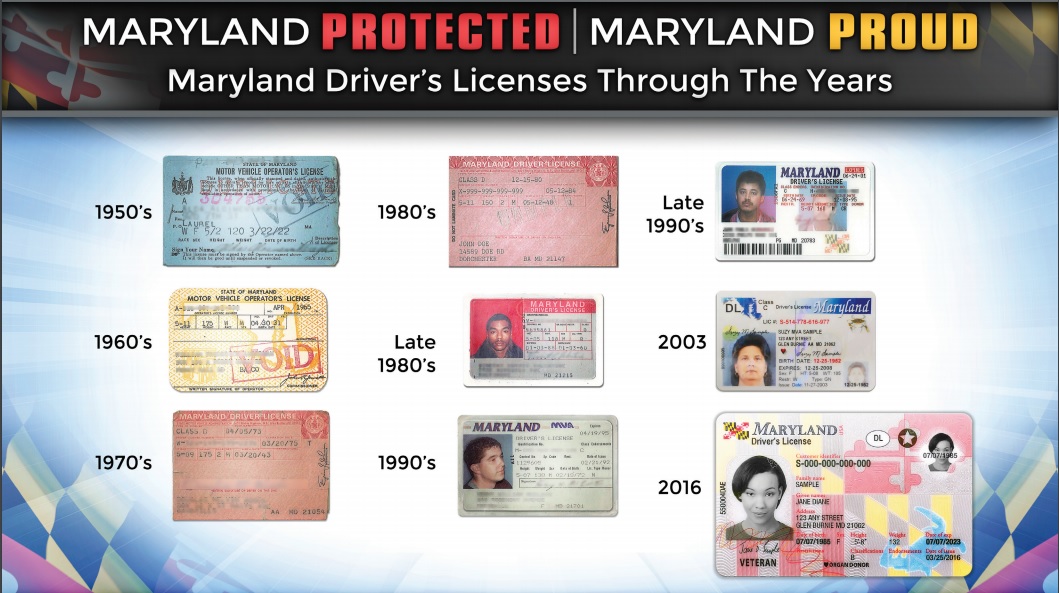
Massachusetts and Missouri were the first states to require a driver license in 1903, but there was no test associated with the license. In 1908, Henry Ford launched the Model T, the first affordable automobile for many middle-class Americans (in 1919, when Michigan started issuing driver licenses, Ford got his first one at age 56). The same year the Model T debuted, Rhode Island became the first state to require both a license and a driver's exam (Massachusetts instituted a chauffeur exam in 1907 and started requiring tests for all other drivers in 1920). Maryland's driver's licenses did not feature photographs until the 1980s.
Decline in licensing among juveniles
Since the 1990s, young people have generally been less likely to start driving as teenagers than in previous decades. In 2018, 61% of 18-year-olds and 25% of 16-year-olds in the US had drivers licenses, a decline from 80% and 46%, respectively, in 1983.
Potential explanations for this decline include lower enthusiasm for driving, caused by environmental and road safety concerns; financial issues, such as the costs of driver's education and insurance premiums; stricter standards for granting licenses; and the rising popularity of ridesharing services such as Uber and Lyft.
Standard and special licenses
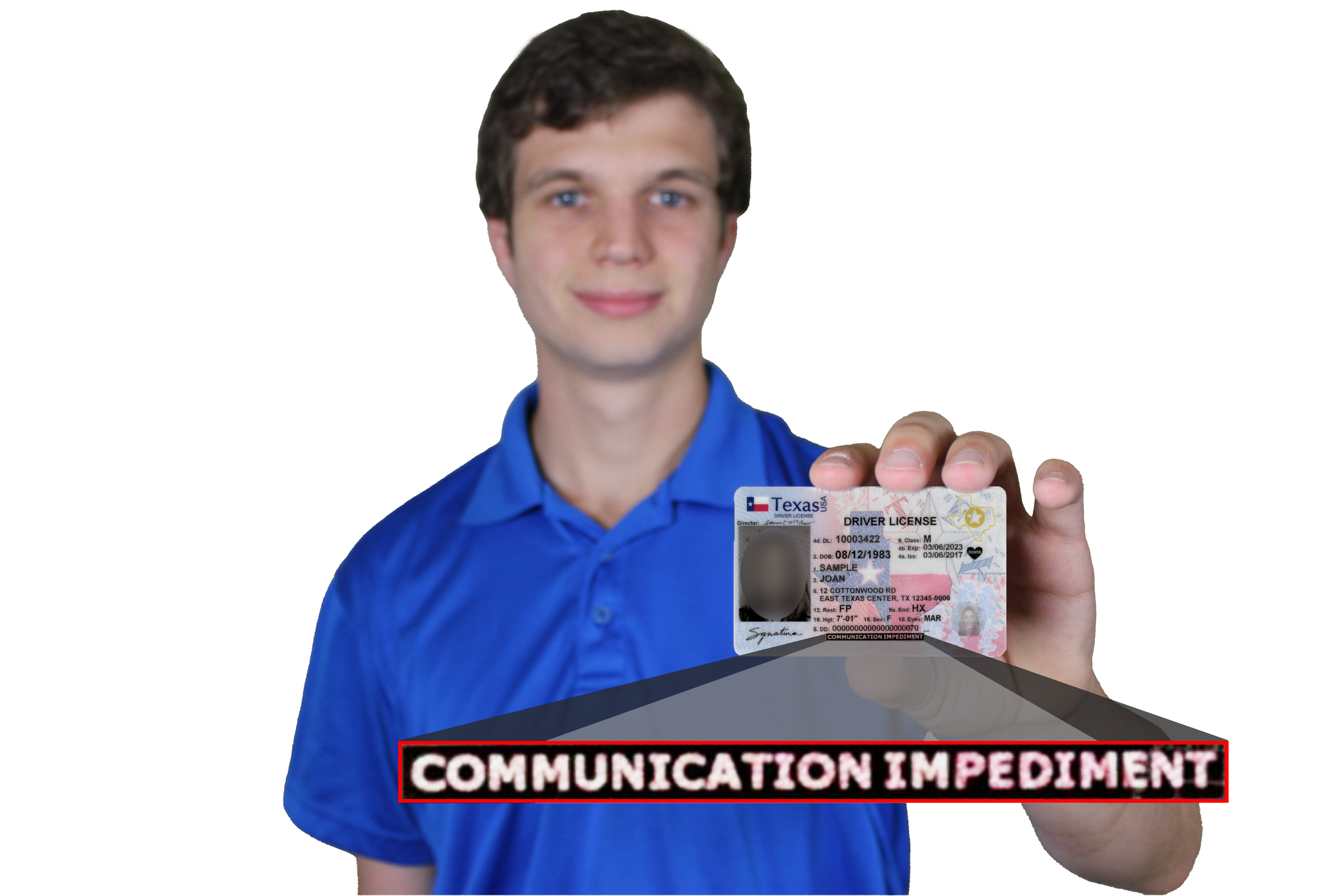
- Unrestricted licenses are driver licenses that most US drivers have to drive. Various states differ on what class they utilize to distinguish between a typical driver license and special licenses, such as restricted, chauffeur, or motorcycle licenses. For instance, Tennessee designates Class D as a regular driver license, while Class M is a motorcycle license and Class H is a hardship license (see below).
- Hardship licenses for minors are driver licenses that are restricted to drivers between 14 and 15 (sometimes up to 18) years old who need to drive to and from home and school due to serious hardships, e.g. the driver's family has financial or medical problems, or the driver needs to get to work or school and has no other practical way of getting to work or school. A hardship license for minors is distinct from hardship licenses granted for drivers with revoked or suspended licenses. The table below includes states that provide hardship licenses for minors.
- Provisional licenses are functionally the same as a driver license, but are typically issued to new drivers under the age of 18, i.e. 14 to 17 years old. Almost all states have some form of a graduated licensing provision. The actual restrictions and the length of time a new driver must adhere to them vary widely by state. Restrictions frequently include:
- A curfew, after which night driving is not permitted (unless 18 years of age, or if the individual has completed an online course) without an adult present (typically 11pm, like Pennsylvania, Michigan, or 12am, like Wisconsin). Some states (e.g. North Carolina) have curfews as early as 9pm. Some states such as New York provide exceptions for special situations, such as driving home from work or school functions, picking up family members, or for medical appointments, while others such as Massachusetts do not.
- Restrictions on the number of passengers under a specific age present in the vehicle. For example, in California, minors may not transport people under age 20 for the first 12 months of licensure unless said passengers are family members (brother, sister, cousin, niece, nephew, or anyone who is 21 or had their license for 1 year or longer, etc.).
- Chauffeur licenses are practically the same as a passenger car license, but also allow the holder to drive a taxi, limousine, or other livery vehicle for hire. In the US, chauffeur licenses are not considered a special driver's license (such as a commercial driver's license), and many states do not require an additional road test for a passenger car license to convert to a chauffeur license. Some states may require a short written exam on taxi-specific driving laws or a background check and require the driver to be at least 18 years of age. This type of license is typically, though not universally, called "Class E". Some states add an endorsement to a regular license, while others require no special permission at the state level to drive a taxi or limousine. Florida once issued chauffeur licenses through its Class D licenses, a designation that was discontinued in 2006. Regardless of whether and how the state handles chauffeur licensing, a permit or license must always be obtained from the city, town, or county where the driver will be operating.
- Motorcycle licenses covers motorcycles only, frequently combined with a regular driver license. In some states this does not include some types of mopeds, scooters, or motorized bicycles, but with a wide variety of different state-by-state definitions for these vehicles. A common but not universal criterion is an engine displacement of 250 cc or less, but also wheel size, type of transmission, and more are sometimes used in the legal codes to distinguish mopeds and scooters from motorcycles. These vehicles sometimes do not require a motorcycle license, or in some states any license at all, as well as in some states avoiding insurance and registration requirements, such as US states Arkansas, Texas, Washington, and Utah, which do not require any motorcycle endorsement for off-highway use under 60 mph. Some US states differentiate between low and full powered motorcycles for the purposes of licensing. Some states require an additional motorcycle license to operate a sidecar rig.
- Enhanced licenses are issued to US citizens in Washington, Vermont, Michigan, Minnesota, and New York, and establish nationality in addition to driving privileges. An EDL is a WHTI compliant document, acceptable for re-entering the US via land and sea crossings from Canada, Mexico, or the Caribbean. A US passport, birth certificate, or another document proving citizenship is required to apply for this type of license. Motorcycle and commercial driver licenses (see above and below) usually can also be issued as enhanced.
- Handicap permits are issued to persons who meet the proper guidelines for requiring handicap driving and parking access. They are granted special access to improve their quality of life as a driver. In certain states, namely Texas, a handicapped person's driver license can be revoked based on their disability.
Some states also have additional classifications. Nevada, for example, has a separate license category for drivers who only operate mopeds, while some more northerly states have separate categories for snowmobiles and ATVs. South Carolina and Georgia have non-commercial versions of every commercial class license for agricultural purposes.
Commercial driver's licenses (CDL)
Main article: Commercial driver's license
Drivers of large and heavy vehicles (i.e. trucks, buses, and tractor-trailers) or a vehicle of any size with at least 16 passengers (including the driver) or hazardous materials must have a commercial driver's license, commonly abbreviated as CDL. The minimum age for a commercial driver's license is generally 18 years old, but federal law requires commercial drivers to be at least 21 years of age to operate a commercial motor vehicle in interstate commerce. An unrestricted driver's license is a prerequisite in all states before a commercial driver's license can be issued.
Most recreational and agricultural vehicles such as converted buses, tractor, lawn mowers, or full size (greater than 40 ft campers, including fire trucks are exempt from CDL regulations. However, federal law allows states to require a CDL for these vehicles. Some states require drivers who operate large and heavy vehicles strictly used for recreational and/or agricultural purposes to upgrade to a special driver's license or add an endorsement to their license usually by passing a written test, road test, or both. For example, in California, recreational vehicles require the driver to possess a "non-commercial" license (to distinguish from commercial driver licenses) to drive (Non-Commercial Class B) or tow (Non-Commercial Class A) a motorhome between 40 and 45 feet. In New York, recreational vehicles that exceed 26,000 lbs (11,794 kg) GVWR requires an R endorsement on a driver's license.
On 14 May 2022, New York lowered the minimum age for a CDL Class A from 21 to 18 years, making Hawaii the last and only state to have 21 as the minimum age. Previously, New York Law allowed 18 to 20-year-olds to be issued a CDL Class B or C, but not a CDL Class A until they turn 21. The Infrastructure Investment and Jobs Act signed by President Joe Biden authorized a pilot experiment to allow 18 to 20-year-olds with a CDL to operate in interstate commerce in an effort to alleviate the national truck driver shortage provided they meet all other requirements for operating in interstate commerce.
CDL classifications
- Class A: Any combination of vehicles providing the trailer being towed has a gross vehicle weight rating of more than 10,000 lbs (4,536 kg) resulting in the gross combination weight rating of the combined vehicles to be 26,001 lbs (11,794 kg) or more.
- Class B: Any single vehicle which has a gross vehicle weight rating of 26,001 lbs (11,794 kg) or more.
- Class C: Any single vehicle which has a gross vehicle weight rating of 26,000 lbs (11,793 kg) or less that is designed to either transport 16 or more passengers (including the driver) or hazardous materials under 49 U.S.C. 5103 and is required to be placarded under subpart F of 49 CFR Part 172 or is transporting any quantity of a material listed as a select agent or toxin in 42 CFR Part 73.
Some states (such as New York and Nevada with endorsement) allow drivers with a CDL Class B or C to tow vehicles of more than 10,000 lbs (4,536 kg) as long as the gross combination weight rating of the combined vehicles does not go over 26,000lbs (11,794kg). In other states, drivers with a CDL Class B or C may only tow vehicles with a gross vehicle weight rating of 10,000 lbs (4,536 kg) or less.
Commercial drivers are usually required to add endorsements to their CDL to drive certain types of vehicles that require additional training. CDL endorsements requirements are mostly similar, but some vary between states. The training and testing requirements are regulated by the US Department of Transportation. Endorsements are as follows:
- P: Passenger Transport (required to transport 16 or more passengers and to drive a bus)
- H: Hazardous Materials (requires a TSA background check as well as an extensive written exam. Required to haul dangerous goods. The driver must be at least 21 years old.)
- N: Tank Vehicles (Required for carrying liquids in bulk.)
- T: Double/Triple Trailers (Class A licenses only - required to operate double or triple trailers. In most states, only two trailers can be towed; only 13 states allow triple trailers.)
- X: Hazardous Materials and Tank Combination
- S: School Bus (In addition to a standard bus endorsement, more stringent TSA and CORI background checks are required. Required to operate a school bus and transport students to/from school.)
There are two endorsements that do not come with a code:
- Air Brakes: Required to drive vehicles equipped with air brakes. If the CDL holder decides not to pass the written test, or be tested on a vehicle without air brakes, they'll be assigned an L restriction that will bar them from operating vehicles with air brakes.
- Combination Vehicles: Required for the Class A CDL to drive combination vehicles. Without passing this test, the applicant cannot apply for a Class A CDL, though they may instead opt for the Class B or Class C CDL.
CDL restrictions
Licenses can be restricted through any of the following ways:
- B: Corrective Lenses are required while operating a motor vehicle.
- C: A mechanical aid is required to operate a commercial vehicle.
- D: A prosthetic aid is required to operate a commercial vehicle.
- E: The driver may only operate a commercial vehicle with an automatic transmission.
- F: An outside mirror is required on the commercial vehicle.
- G: The driver of a commercial vehicle is only allowed to operate during daylight hours.
- K: Drivers are authorized to drive a commercial vehicle within the state of issue (intrastate) only. This restriction applies to any holder of a CDL license who is under 21 years old or is not healthy enough to cross state lines.
- L: Drivers are restricted from operating a commercial vehicle with air brakes. This restriction is issued when a driver either fails the air brake component of the general knowledge test or performs the CDL road skills test in a vehicle not equipped with air brakes.
- M: CDL-A holders may operate CDL-B school buses only.
- N: CDL-A and CDL-B holders may operate CDL-C school buses only.
- O: Driver limited to pintle hook trailers only.
- Z: Alcohol Interlock Device required in the commercial vehicle.
- T: 60-day temporary license.
Foreign officials and diplomats
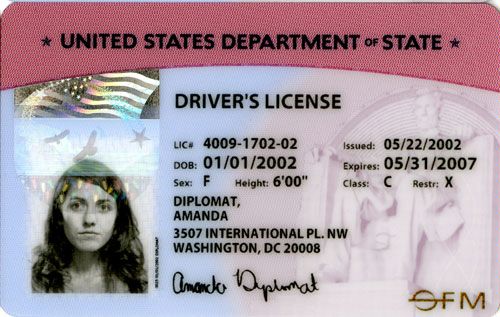
In a rare exception to states and territories issuing driver licenses, the Office of Foreign Missions (OFM) of the United States Department of State issues driver licenses to foreign officials, diplomats and their dependents who are not U.S. citizens or permanent residents. These driver licenses are also accepted as identification for boarding airline flights in the United States even though they do not bear a star symbol indicating compliance with the Real ID Act. However, neither driver licenses nor non-driver ID cards issued by the U.S. Department of State establish consular or diplomatic immunity. The separately issued diplomatic or consular identity cards are the sole form of identification verifying the status a person has.
Driver's licensing laws

The minimum age to obtain a restricted driver license in the US varies from 14 years, three months in South Dakota to as high as 17 in New Jersey. In most states, a graduated licensing law applies to newly-licensed teenage drivers, going by names such as Provisional Driver, Junior Operator, Probationary Driver, or Intermediate License. These licenses restrict certain driving privileges, such as whether the new driver may carry passengers and if so how many, as well as setting a curfew for young drivers. For example, Utah drivers who are under 18 may not drive other people outside their immediate family in their first six months with a license. Unlike in some states of Australia and some provinces of Canada, graduated licensing laws do not require lowered speed limits, displaying of L and P plates, restrictions on towing a trailer or boat, or prohibitions on highway driving or operating high performance cars.
Drivers under 18 are usually required to attend a comprehensive driver's education program either at their high school or a professional driving school and take a certain number of behind-the-wheel lessons with a certified driving instructor before applying for a license. Some states like New York also require new adult drivers to attend some form of driver education before applying for a license.
In some states all newly licensed adult drivers may be on probation for a set amount of time (usually between six months and two years), during which traffic violations carry harsher penalties or mandatory suspensions that would not apply to experienced drivers.
The United States Department of Transportation requires all drivers with a commercial driver's license to pass a periodic physical examination every two years before renewal and to be at least 21 years old to operate in interstate commerce or to transport hazardous materials requiring the driver to place placards on the vehicle, but allow states to issue a commercial driver's license to drivers under 21 providing they only operate within state lines (intrastate commerce). All drivers who will drive commercial motor vehicles that do not require a commercial driver's license in interstate commerce must also be at least 21 years old and are subject to the same health requirements as drivers with a CDL.
In 2017, Oregon became the first state in the U.S. to offer residents who identify as transgender, gender nonconforming, or non-binary to designate their gender as "X" on their licenses or identification cards. Other states (including the District of Columbia) that allow transgender, gender nonconforming, and non-binary residents to select "X" as their gender include Hawaii, California, Washington, Idaho, Nevada, New Mexico, Colorado, Arkansas, Illinois, Indiana, Minnesota, Wisconsin, Virginia, Maryland, Pennsylvania, New York, New Jersey, Connecticut, Massachusetts, Vermont, Maine, New Hampshire, and Rhode Island. Utah and Ohio require governmental approval for an "X" gender marker. All other states do not offer a third-gender option. The American Civil Liberties Union, transgender activists and members of the LGBT community praise the new changes as helping individuals have a driver's license that corresponds to their gender identity which may not align with their sex (male or female).
As of 2023, 19 states including the District of Columbia do not require a social security number to apply for a non-commercial driver's license allowing residents regardless of their immigration status to operate passenger cars, motorcycles, and mopeds. These states include California, Colorado, Connecticut, Delaware, Hawaii, Illinois, Maryland, Massachusetts, Minnesota, Nevada, New Jersey, New Mexico, New York, Oregon, Rhode Island, Utah, Vermont, Virginia, and Washington. However, Wyoming politicians are seeking to pass a bill in the 2025 sessions to make the drivers licenses obtained by "unauthorized aliens" in other states invalid.
Licenses for adults and minors; GDL laws
Below is a list of Graduated Driver's Licenses (GDL) and hardship licenses for minors laws for each of the 50 states and the District of Columbia. The list includes the state agency responsible for issuing driver's licenses and the length of time that a full (unrestricted) driver's license is valid for.
| State License-Issuing Agency | Hardship License for Minors | Minimum Age for Learner Permit | Minimum Age for Restricted License | Minimum Age for Full (Unrestricted) License | Validity of Full (Unrestricted) License | X Gender Marker allowed | Notes | |
|---|---|---|---|---|---|---|---|---|
| Alabama Department of Public Safety, Driver License Division | No | 15 years | 16 years | 17 years | 4 years | No | Restricted license achievable after reaching age 16 and holding permit for six months. No driving from midnight to 6:00 a.m. and no more than three passengers for six months or reaching age 17, whichever is sooner. The learner must also log 30 practice hours or take driver training with permit. | |
| Alaska Department of Administration, Division of Motor Vehicles | No | 14 years | 16 years | 16 years, 6 months | 5 years | No | The license holder must log 40 practice hours, become 16, and have had a permit for six months to get a restricted license. No passengers under 21 and no driving between 1a.m. and 5a.m. until holding license for six months or reaching age 18, whichever is sooner. | |
| Arizona Department of Transportation, Motor Vehicle Division | No | 15 years, 6 months | 16 years | 16 years, 6 months | 8 years; expires when driver turns 65 years of age, then 5 years after that. | No | The license holder must log 30 practice hours or take driver education. No more than one passenger allowed in the vehicle or driving between 10p.m. to 5a.m. until reaching age 18 or holding license for six months, whichever is sooner. | |
| Arkansas Department of Finance and Administration, Office of Driver Services | No | 14 years | 16 years | 18 years | 8 years | Yes | Learner's permit must be held for six months and the driver must reach the age of 16. | |
| California Department of Motor Vehicles | Yes, see notes. | 15 years, 6 months | 16 years | 17 years | Expires at age 21; 5 years (ages 21 and older) | Yes | Permit upon completion of driver education registration; cannot drive with a permit without a parent, guardian, or licensed adult aged 25 or older. Restrictions include not being able to drive anyone under the age of 20 and not being able to drive between the hours of 11p.m. and 5a.m. for one year after receiving the license or upon reaching age 18, whichever is sooner. Learner's permit must be held for six months and learner must log 50 practice hours. | |
| Colorado Department of Revenue, Division of Motor Vehicles | No | 15 years | 16 years | 17 years | 5 years | Yes | Learner's permit must be held for one year. 50 practice hours must be logged, 10 of which must be at night. Drivers under 18 cannot have any passengers under 21 for the first 6 months of being licensed, unless it is an immediate family member. At 6 months 1 passenger under 21 is allowed and unrestricted after 1 year. Driving between midnight and 5a.m. is prohibited until the driver has been licensed for one year or turns 18. | |
| Connecticut Department of Motor Vehicles | No | 16 years | 16 years, 4 months | 18 years | Either 4 or 6 years, at the discretion of the driver | Yes | Learner's permit must be held for four months and driver must log 40 practice hours. No passengers under 20 for six months, no driving between 11p.m. and 5a.m. until the driver turns 18. | |
| Delaware Department of Transportation, Division of Motor Vehicles | No | 16 years | 16 years, 6 months | 17 years | 8 years | No | Permit must be held for six months. Learner must have 50 practice hours. No driving from 10:00 p.m. to 6:00 a.m. or any more than one passenger for six months. | |
| District of Columbia Department of Motor Vehicles | No | 16 years | 16 years, 6 months | 18 years | 8 years | Yes | Learner permit must be held for six months and have 40 practice hours before obtaining provisional license. Provisional license must be held for six months and have 10 practice hours of night driving before obtaining a regular driver license. Restrictions remain in effect upon issuance of regular driver license until reaching age 18. | |
| Florida Department of Highway Safety and Motor Vehicles | No | 15 years | 16 years | 18 years | 8 years | No | Permit required for one year if under 18 years of age. 16 years - No 11p.m. to 6a.m. driving for one year unless with 21 year or older licensed driver or driving to and from work. 17 years - No 1a.m. to 5a.m. driving for one year unless with 21 year or older licensed driver or driving to and from work.{{efn | The State of Florida allows persons with permits to operate a motor vehicle, as follows: |
| Georgia Department of Driver Services | Yes, see notes. | 15 years | 16 years | 18 years | 8 years | No | Permit must be held for one year and learner must have 40 practice hours. One passenger under the age of 18 for first six months or 1000 miles. Up to three passengers permitted for the following six months or 1000 miles. After that no more than four passengers until reaching age 18. Also, driver may not drive from 1a.m. to 6a.m. until reaching age 18. For more information visit. | |
| Hawaii (Each island has its own requirements regarding driver's licenses. For Hawai‘i, Maui, and Kaua‘i, as well as the City and County of Honolulu, see) | No | 15 years, 6 months | 16 years | 17 years | 8 years | Yes | Permit must be held for six months. Only one passenger under 18 or driving from 11p.m. to 5a.m. for one year or upon age 18, whichever is sooner. | |
| Idaho Transportation Department, Division of Motor Vehicles | No | 14 years, 6 months | 15 years | 16 years | 4 years (if driver is aged 21 to 62, driver may opt for the license to be valid for either 4 or 8 years) | No | Permit must be held for six months. Learner must log 50 practice hours. Those under 17 must complete an accredited driver training program to receive an instruction permit. Those under 16 may only drive during daylight hours, unless supervised by a licensed driver 21 or over. For the first six months of license possession, the driver is only able to carry one non-family member under age 17 in their car. | |
| Illinois Secretary of State, Driver Services Department | No | 15 years | 16 years | 18 years | 4 years | Yes | If under 18, applicants must complete 50 hours of driving, complete driver education, show proof of enrollment in school and hold permit for nine months before one can apply for license. If convicted of a moving violation during permit phase, the 9-month waiting period restarts. Anyone under 18 cannot drive between the hours of 10:00 p.m. and 6:00 a.m. Monday - Thursday or 11:00 p.m. and 6:00 a.m. Friday - Saturday. If the teenage driver is coming from a job, school activity, or a family-oriented place, this curfew is extended with proof of being there until the time of the event being over. Drivers under 18 for the first 12 months or until the driver turns 18, whichever occurs first, are allowed one passenger under the age of 18 unless those being transported are immediate family members or over 18. | |
| Indiana Bureau of Motor Vehicles | No | 15 years | 16 years, 3 months | 18 years | 6 years | Yes | Learner's Permit must be held for 180 days and learner must be 16 and 90 days before getting a restricted license. If the learner is younger than 18 years of age on receiving the driver's license, it is considered probationary. Holders of a probationary driver's license must observe the following regulations: | |
| Iowa Department of Transportation, Motor Vehicle Division, Office of Driver Services | Yes, see notes | 14 years | 16 years | 17 years | 2 years (16-18); 5 years (18-70); 2 years (70 and older) (8 years effective 01/01/19) | No | Permit must be held for six months and learner must be 16. Learner must also log at least 20 practice hours. Restricted drivers can not drive between 12:30 a.m. and 4:00 a.m. unless there is a parent/guardian, immediate family member over 21, or a designated adult over 25. The driver may drive between these times if they are granted a waiver for travel to and from work or school related activities. The number of passengers is limited to the number of seat belts. Full license at 17 years old if the driver has no violation and accident-free for 12 consecutive months, otherwise they must be 18 years old. Iowa driver licenses can vary from two years to a maximum of five years. The license drops to a maximum term of two years after the license holder reaches the age of 70. | |
| Kansas Department of Revenue, Division of Motor Vehicles | Yes, Farm Permit, see notes | 14 years | 16 years | 16 years, 6 months | 6 years | No | A farm permit shall entitle the licensee, who is at least 14 years of age, but less than 16 years of age, to operate the appropriate motor vehicles at any time: while going to or from or in connection with any farm job, employment or other farm-related work; on days while school is in session, over the most direct and accessible route between the licensee's residence and school of enrollment for the purpose of school attendance; when the licensee is operating a passenger car at any time when accompanied by an adult who is the holder of a valid commercial driver's license, class A, B or C driver's license and who is actually occupying a seat beside the driver. | |
| Kentucky Transportation Cabinet, Division of Driver Licensing | No | 15 years | 16 years | 17 years | 8 years (effective 01/01/19) | No | Learner's permit must be held either 180 days or until the learner turns 16, whichever is later. The learner must also log 60 practice hours, 10 of which must be nighttime hours. No driving from midnight to 6a.m. and no more than one unrelated passenger under 20 for six months or reaching age 18, whichever is sooner. | |
| Louisiana Department of Public Safety and Corrections, Office of Motor Vehicles | No | 15 years | 16 years | 17 years | 6 years | No | Learners' Permit (Age 15): Must complete 30 hours of classroom instruction and eight hours behind the wheel driving instruction. May not drive without a licensed driver over 21 or a licensed sibling over 18. | |
| Maine Secretary of State, Bureau of Motor Vehicles | No | 15 years | 16 years | 16 years, 9 months | 6 years | Yes | Learner must have permit for six months, be 16, and have 35 practice hours. Only immediate family and no driving from midnight to 5a.m. for nine months or reaching age 18, whichever is sooner. Under 18 may not use cell phone while driving. | |
| Maryland Department of Transportation, Motor Vehicle Administration | No | 15 years, 9 months | 16 years, 6 months | 18 years | 8 years | Yes | Learner must hold permit for nine months and log 60 practice hours. Anyone under 18 years of age with a provisional license may not carry passengers under 18 for the first five months of having the license or drive between midnight and 5a.m. In Maryland, all new drivers regardless of age hold a provisional license for 18 months, but for adult drivers, the passenger and time restrictions do not apply (however the enhanced penalties do.) | |
| Massachusetts Department of Transportation, Registry of Motor Vehicles | No | 16 years | 16 years, 6 months | 18 years | 5 years | Yes | Learner must complete driver's education, hold their permit for six months incident free (no accidents, no citations, no warnings), and log 40 practice hours with a licensed driver over 21. Junior operators cannot drive between 12:30 a.m. and 5a.m. unless accompanied by their parent or legal guardian, or 1a.m. if on their way home. Massachusetts law provides no exceptions for employment, education, or medical reasons. Additionally, junior operators cannot drive with passengers under the age of 18 (except immediate family members) unless accompanied by a licensed driver of 21 within the first six months of obtaining a License. The Massachusetts JOL law also takes a zero-tolerance stance towards speeding, drivers under 18 caught speeding are subject to a mandatory 90-day suspension for the first offense accompanied by a mandatory road rage education class and a mandatory retake of the both permit and road tests. A one-year revocation is mandatory for the second and each subsequent offense. Drivers under the age of 18 may not use a mobile phone or any other mobile electronic device while driving, except in emergencies. | |
| Michigan Secretary of State | Yes, see notes. | 14 years, 8 months | 16 years | 17 years | 4 years | No | Learner must reach age 16, have permit for six months, and log 50 practice hours. To obtain a Level 1 License (Learner's Permit) the learner is required to complete Segment 1 of a Driver's Education Course. A Level 2 License (Junior License) permits the holder to drive unaccompanied with up to one person not in immediate family except between the hours of 10p.m. and 5a.m. unless accompanied by a licensed driver over 21 or driving to or from work, school sanctioned event, organized activity, or religious event. | |
| Minnesota Department of Public Safety, Division of Driver and Vehicle Services | Yes, see notes. | 15 years | 16 years | 17 years | 4 years | Yes | Permit must be held for six months and learner must reach age 16 and log 40 practice hours. (50 if a supplemental parent course is not completed.) No cell phone usage before age 18, all passengers must wear seat belts. Effective August 1, 2008: junior operators can drive with minor passengers now. Driving curfew from midnight to 5a.m. for first six months. Exceptions to these rules are traveling from home to place of employment, school, school events that offer no transportation, or other employment reasons. | |
| Mississippi Department of Public Safety | No | 15 years | 16 years | 16 years, 6 months | Either 4 or 8 years, at the discretion of the driver | No | Must hold a learner's permit for one year before applying for an intermediate license, and is restricted for use between hours of 10p.m. to 6a.m. | |
| Missouri Department of Revenue | No | 15 years | 16 years | 17 years, 11 months | 6 years | No | Must hold a learner's permit for six months before applying for an intermediate license. 40 hours of driving instruction are required including ten hours at night and reaching of age 16 and holding the permit for six months to be eligible for the restricted license. Restrictions include no driving between 1a.m. and 5a.m. unless required for school and work. Exceptions include school events and driving to and from place to place. limitations of one passenger under 19 for the first six months after the license is issued and three passengers thereafter, and there must be no traffic or alcohol offenses for one year to advance to the full license. The State recently passed a measure mandating all Missouri drivers tests be given in only English or American Sign Language (ASL); the law has yet to be passed. | |
| Montana Department of Justice, Motor Vehicle Division | No | 14 years, 6 months | 15 years | 16 years | Expires at age 21; 8 years (ages 21–67); expires at age 75 (ages 68–74); 4 years (75 and older) | No | Permit must be held for six months. Learner must log 50 practice hours. No driving from 11p.m. to 5a.m. for one year. No more than one unrelated passenger under 18 for first six months. No more than three unrelated passengers under 18 for second six months. | |
| Nebraska Department of Motor Vehicles | Yes, see notes. | 15 years | 16 years | 17 years | 5 years | No | Learner must log 50 hours of practice, hold permit for six months, and reach age 16. Must have restricted license for at least one year before applying for your first unrestricted permit. Only one passenger under 19 allowed for first month. No driving from midnight to 6a.m. for one year. | |
| Nevada Department of Motor Vehicles | Yes, see notes. | 15 years, 6 months | 16 years | 18 years | 8 years | Yes | Learner must have 50 practice hours and hold permit for six months. Underage drivers may not transport passengers under 18 for the first six months of being licensed, and may not drive between 10p.m. and 5a.m. until they turn 18 (except with a letter from a school official or employer.) Additional restrictions apply in Las Vegas and Reno. | |
| New Hampshire Department of Safety, Division of Motor Vehicles, Driver Licensing Office | No | 15 years, 6 months | 16 years | 18 years | 5 years | Yes | Learner's Permit - No formal learner's permit is required in NH, -year-olds may drive so long as they are accompanied by a licensed driver aged 25 or older. | |
| Restricted License - "Youth Operator Licenses" are issued to those between 16 and 21 years of age and expire when the person turns 21 years old (although drivers may operate unrestricted after they reach their 18th birthday). 16 and 17 years old applicants must obtain written consent from a parent or legal guardian, and a certificate of successful completion of a driver education course as provided in RSA 263:19. Youth Operators under 18 years are restricted from operating a motor vehicle in the following manner: between the hours of 1:00 a.m. and 5:00 a.m.; the number of occupants exceeds the number of safety restraints in the vehicle; during the first six months after issuance of the license with more than one passenger less than 25 years of age who is not a member of the holder's family unless accompanied by a licensed responsible adult who is at least 25 years of age. | ||||||||
| The director of motor vehicles can issue a hardship license for a person between 16 and 18 who has not completed a driver's education course, if there is no readily available means of transportation exist to and from a school and the license requirements of RSA 263:14 would cause an undue hardship. | ||||||||
| New Jersey Motor Vehicle Commission | No | 16 years | 17 years | 18 years | 4 years | Yes | Learner must reach age 17 and have had a permit for six months. No driving between 11:01 p.m. and 5:00 a.m. Driver may not drive with more than one additional passenger in the car unless the accompanying driver is the guardian to the permit holder, other than parents, guardians, or dependents, until a Basic License is obtained, which the minimum age to receive is 18. Since May 1, 2010, Kyleigh's Law took place, it requires any driver under age 21, who holds a permit or probationary (formerly provisional) driver license, buy a $4.00 pair of decals and display them on the top left corner of the front and rear license plates of their vehicles. Despite having over 250,000 drivers that are required to display the decals, less than 80,000 have been sold. As some of the 80,000 decals sold are for drivers with multiple cars, it is estimated that 75% of provisional drivers ignore this law. All passengers must wear seatbelt. | |
| New Mexico Motor Vehicle Division | No | 15 years | 15 years, 6 months | 16 years, 6 months | Either 4 or 8 years, at the discretion of the driver up to age 75. | |||
| Licenses are 1-year, with passage of an eye exam required for renewal, for drivers age 75 and older. | Yes | Learner must log 50 hours of practice driving including ten hours of night driving, and hold permit for six months. Provisional licensees are only permitted to drive between 5:00 a.m. and midnight, with exceptions for work, family, school and medical purposes, or when accompanied by a licensed driver 21 years of age or older. Additionally, provisional licensees may only transport one passenger under the age of 21 who is not a member of their immediate family. | ||||||
| New York State Department of Motor Vehicles | No | 16 years | 16 years, 6 months | 17 years | 8 years | Yes | The New York State DMV divides the state into three regions: New York City, Long Island (Nassau/Suffolk), and "All Other Counties (includes Westchester and Rockland counties)". | |
| North Carolina Department of Transportation, Division of Motor Vehicles | No | 15 years | 16 years | 16 years, 6 months | 8 years (ages 18–65); 5 years (age 66 or older) | No | Driver's education required for a Learner Permit to be issued. Permit must be held for twelve months with the last six months accident and point-free before obtaining a Limited Provisional License. Limited Provisional license holders cannot drive between 9p.m. and 5a.m., unless it is for work or an event for a volunteer fire department or emergency/ rescue squad if the driver is a member. School and church events are not included in this exception. A limit of one non-family member passenger under 21 applies. Driver may still drive with a supervising driver outside of the restricted hours. A Full Provisional License can be obtained after holding a Limited Provisional license for six months without an accident or points added to the license, and this license removes the time of day and passenger restrictions, but some restrictions remain until the license holder turns eighteen. | |
| North Dakota Department of Transportation, Driver License Division | No | 14 years | 15 years | 16 years | 6 years | No | Those under 16 who have a license may only drive a car that is their parents'. Licensed drivers under the age of 16 may not drive with more passengers than the vehicle manufacturer's suggested capacity, no unsupervised driving between sunset or 9:00pm whichever is later and 5:00am unless the driver is driving directly to or from work, official school activity, or religious activity. | |
| Ohio Department of Public Safety, Bureau of Motor Vehicles | Yes, see notes. | 15 years, 6 months | 16 years | 18 years | 4 years (age 21 and up); until the 21st birthday (ages 16–20) | Yes | Learner must log 50 practice hours and hold permit for six months, if under 18. Those who are with a valid learners permit may only drive with a parent or a drivers education instructor with a valid driver license. Those who are 16 and over with a learners permit may drive with anyone who is over 21 with a valid driver license. Drivers under 18 must complete driver's education. 18 and over have no permit hold time, driver education or practice time requirements. | |
| Oklahoma Department of Public Safety | No | 15 years, 6 months | 16 years | 16 years, 6 months | 4 years | No | Learner must have 40 practice hours and hold permit for six months. Intermediate drivers cannot drive more than a single passenger of any age (family excluded) or drive between 11p.m. and 5a.m. unless there is a licensed driver present or until the driver is 18 years of age and has a GDL (Graduated Driver's License). | |
| Oregon Department of Transportation, Driver and Motor Vehicle Services Division | No | 15 years | 16 years | 18 years | 8 years | Yes | Learner must be 16, have had permit for six months and have either completed an ODOT approved driving course and 50 hours behind the wheel outside of class or 100 practice hours. Driving between midnight and 5a.m. is prohibited during the first year of holding the license unless going between home, school, or work. No passengers under 20 for the first six months of being licensed (except family members.) For another six months, no more than three passengers under 20. All Passengers must wear seat belts. Small children must be in Approved car seats According to their size and age. | |
| Pennsylvania Department of Transportation, Driver and Vehicle Services | No | 16 years | 16 years, 6 months | 17 years, 6 months | 4 years | Yes | Those with a learner's permit must drive with an adult 21 years of age or older. The adult the learner's permit holder is driving with must have a valid driver's license in any U.S. state or the District of Columbia. It is required that a permit holder does not only get practice driving in perfect conditions, but also with driving at night and driving in inclement weather. Permit holders are also required to get practice driving on limited-access highways. A classroom driver's education course may be taken by 10th grade students in Pennsylvania, since that is the year when most students will turn 16 years old and will be getting their permit. Permit must be held for six months and the holder must log 65 practice hours before issuance of restricted license. Those with a restricted license may not drive between 11p.m. and 5a.m. unless a family member 18 years or older is present. Exceptions to this curfew include school-sponsored events, religious events, work, and volunteer firefighters. Only one non-family passenger under the age of 18 is permitted for the first six months of holding a junior license. Only three non-family passengers permitted until the driver turns 18. A restricted license automatically becomes an unrestricted license on the learner's 18th birthday. | |
| Rhode Island Department of Revenue, Division of Motor Vehicles | No | 16 years | 16 years, 6 months | 17 years, 6 months | 5 years | Yes | Learner must hold permit for six months and have 50 practice hours. Junior operator under the age of 18 may not drive between the hours of 1a.m. and 3a.m. or carry more than one passenger under age 21 for one year or until they turn 18, whichever is sooner. | |
| South Carolina Department of Motor Vehicles | No | 15 years | 15 years, 6 months | 16 years, 6 months | 8 years | No | A 16-year-old may apply on a restricted license for permission to drive between the hours of 6p.m. and midnight. 16-year-old drivers who have held the Beginner Permit for a minimum of 180 days or hold a conditional license are eligible for the Special Restricted License. | |
| South Dakota Department of Public Safety | No | 14 years | 14 years, 3 months | 16 years | 5 years | No | Learner can either take driver training and hold permit for three months or not take the course and hold permit for six months. Under 16 may not drive from 10p.m. to 6a.m. | |
| Tennessee Department of Safety and Homeland Security, Driver License Services | Yes, see notes. | 15 years | 16 years | 17 years | 8 years | No | Learner must have permit for six months and log 50 hours of practice driving. No driving from 11p.m. to 4a.m. or more than one passenger for one year or until reaching age 18, whichever is sooner. | |
| Texas Department of Public Safety | Yes, see notes. | 15 years | 16 years | 18 years | 8 years (18-84); 2 years (85 and older); until the 18th birthday (under 18) | No | Learners must complete the classroom portion of driver training to receive a permit. Permit holders must be with someone age 21 while driving, also must be held for six months and learner must reach age 16 to get restricted license. Drivers with a restricted license (under 18 years old) may drive with no more than one other person under 21 who is not a family member as per TRC 545.424, may not drive from 12a.m. to 5a.m., and cannot use a cell phone while driving for the first six months. As of March 1, 2010, anyone age 18 through 24 must complete an approved driver education course and driving skills test to become licensed in the state of Texas in accordance with Texas Senate Bill 1317. Provisions of this law only apply to first-time Texas driver's license applicants. | |
| Utah Department of Public Safety, Driver License Division | No | 15 years | 16 years | 17 years | 5 years | Yes (requires court order) | Drivers under 17 may not drive between midnight and 4a.m. If under 18, must hold learner permit for six months and log 40 practice hours. Under 18, for the first six months no passengers that are not immediate family members; unless there is a licensed driver 21 years or older, or driver reaches age 18. | |
| Vermont Agency of Transportation, Department of Motor Vehicles | No | 15 years | 16 years | 16 years, 6 months | Either 2 or 4 years, at the discretion of the driver | Yes | Learner must hold permit for one year and log 40 practice hours. Junior operators may not carry any passengers (including siblings) for the first 90 days after receiving their license, and immediate family members only for the second three months (passenger restrictions are waived if accompanied by a parent or another licensed adult aged 25 or older.) | |
| Virginia Department of Motor Vehicles | No | 15 years, 6 months | 16 years, 3 months | 18 years | 8 years | No | Learner must hold permit for nine months and log 45 supervised driving hours, 15 of which must be at night. Under 18 may not carry more than one minor passenger for the first six months of being licensed and no more than three passengers until reaching age 18. All minors subject to a curfew between midnight to 4:00 a.m. until reaching age 18. | |
| Washington State Department of Licensing | No | 15 years | 16 years | 17 years | 6 years | Yes | Learner must reach age 16, hold permit for six months, and log 50 hours of practice driving. For the first six months, no driving with any passengers who are under 20 years old who are not members of the learner's immediate family. For the first year, no driving between 1a.m. and 5a.m. unless with a licensed driver age 25 or older. After two violations of the restrictions, the driver's license is suspended for six months or until their 18th birthday (whichever is sooner). Also, a single traffic violation will extend the second phase (no more than three passengers under 20 and still no driving from 1a.m. to 5a.m.) until age 18 if license had not been held for one year before the traffic violation. | |
| West Virginia Department of Transportation, Division of Motor Vehicles | No | 15 years | 16 years | 17 years | 5 years | No | Learner must reach age 16, hold permit for six months, and log 50 hours of practice or take driver education. No passengers under age 19 or driving from 10p.m. to 5a.m. for one year. | |
| Wisconsin Department of Transportation, Division of Motor Vehicles | Yes, see notes. | 15 years, 6 months | 16 years | 16 years, 9 months | 8 years | No | Learner must hold permit for six months and log 30 hours of practice. Passenger and nighttime driving restrictions removed after nine months, or upon reaching the age of 18 whichever is sooner. All first license holders, regardless of age, and out-of-state transfers under 21 or with less than three years' experience are initially issued probationary licenses valid for a three-year period and are subject to enhanced penalties after the first moving violation. | |
| Wyoming Department of Transportation, Driver Services Program | Yes, see notes. | 15 years | 16 years | 16 years, 6 months | 5 years | No | Learner must reach age 16 and log 50 practice hours. No more than one passenger under 18 or driving from 11p.m. to 5a.m. for the first six months or until reaching age 17, whichever is sooner. |
Use as identification and proof of age
Driver's licenses issued in the United States have a number or alphanumeric code issued by the issuing state's department of motor vehicles (or equivalent), usually show a photograph of the bearer, as well as a copy of the bearer's signature, the address of the bearer's primary residence, the type or class of license, restrictions, endorsements (if any), the physical characteristics of the bearer (such as height, weight, hair color and eye color) and birth date. Driver's license numbers issued by a state are unique. Social Security numbers are now prohibited by federal law from appearing on new driver's licenses due to identity theft or other forms of unlawful use concerns. In most states, to be compliant with AAMVA standards, the orientation of a driver's license for persons under the age of 21 is vertical while a driver's license for those over the age of 21 is horizontal. Since the driver's license is often used as proof of a person's age, the difference in orientation makes it easy to determine that a person is legally allowed to purchase alcohol or tobacco (the drinking and tobacco age in all U.S. states is 21). Some states, such as Arizona, do not require that a driver's license be changed to horizontal at age 21. The vertical license does not expire until age 65 in the state of Arizona. Most states require that when a driver establishes residence in a state, he or she must obtain a license issued by that state within a limited time.
Because there is no national identity card in the United States, the driver's license is often used as the de facto equivalent for completion of many common business and governmental transactions. As a result, driver's licenses are sometimes stolen and used for identity theft. Driver's licenses were not always identification cards. In many states, driver's licenses did not even have a photograph until the 1980s. Advocacy by Mothers Against Drunk Driving for photo ID age verification in conjunction with increasing the drinking age to 21 to reduce underage drinking led to photographs being added to all state licenses. New York and Tennessee were the last states to add photos in 1986. New Jersey later allowed drivers to get non-photo licenses, but that option was subsequently revoked. Vermont license holders have the option of receiving a non-photo license. Tennessee drivers 60 years of age or older had the option of a non-photo driver's license prior to January 2013, when photo licenses were required for voting identification. Those with valid non-photo licenses were allowed to get a photo license when their current license expired. Thirteen states allow a non-photo driver's license for reasons of religious belief: Arkansas, Indiana, Kansas, Minnesota, Missouri, Nebraska, New Jersey, North Dakota, Oregon, Pennsylvania, Tennessee, Washington, and Wisconsin.
Later additions to licenses have included fingerprints, bar codes, magnetic strips, social security numbers, and tamper-proof features, most of which were added to prevent identity theft and to curb the use of fake IDs. States have slowly added digitized features to driver's licenses, which incorporate holograms and bar codes to reduce forgery.
Non-driver identification cards
Many states provide identification cards for people who do not drive, usually through the same agency that issues driver's licenses.
Real ID
Main article: Real ID Act
The Department of Homeland Security enforces standards of the Real ID Act of 2005 for identification of applicants and license design for state-issued driver licenses and identification cards. States are not required to comply with Real ID, but any driver licenses or ID cards issued by that state will not be valid for any official purpose with the federal government, including entering federal buildings or boarding airplanes.
For a state to comply with Real ID, licenses and ID cards issued from that state must be approved by DHS to meet Real ID requirements.
States can choose to issue both regular licenses and ID cards as well as Real IDs, but any non-Real ID must be marked "Not for Federal Identification". Real IDs are normally valid for eight years.
Real IDs are allowed to be issued only to legal immigrants and citizens of the United States.
An applicant for a Real ID, either as a new driver license or ID card applicant, or renewing a current license or ID card, must present a citizenship document (US passport, certified birth certificate or citizenship certificate) or proof of legal immigrant status, proof of a Social Security number if they have been issued one, proof of any name changes if using birth certificate, and two proofs of residency in the state. The state then must verify the documents and store them either electronically or on paper. No one may have more than one Real ID at one time.
A Real ID can be identified with a gold or black star located on the top right third of the ID, depending on the state. All U.S. states and territories have been certified as compliant since February 2024, with American Samoa the final territory to pass review.
Enhanced driver's licenses
Some states on the Canada–United States border issue enhanced driver's licenses and enhanced ID cards. Enhanced licenses combine a regular driver's license with the specifications of the federal passport card. Thus, in addition to providing driving privileges, the enhanced license also is proof of US citizenship, and can therefore be used to cross the Canadian and Mexican borders by road, rail, or sea, although air travel still requires a traditional passport book. The enhanced licenses are also fully Real ID compliant.
Enhanced ID identity verification is achieved via Ultra-High-Frequency Electronic Product Tags using RFID (UHF EPC RFID) technology. In 2008, researchers from University of Washington and RSA Labs discovered security vulnerabilities in the RFID implementation including Illegal border-crossing via counterfeiting, Remote cloning, and Denial-of-Service attacks. These attacks can be carried out at a distance of 50 meters in optimal conditions (when the ID is away from the wearer) and 2 meters in typical conditions (when the ID is worn).
As of 2023, enhanced driver's licenses were in Michigan, New York, Minnesota, Vermont and Washington State, and were expected to become available in Ohio. Texas was expected to implement an enhanced driver's license program, but the program was blocked by former Texas Governor Rick Perry.
Digital driver's licenses
As of December 2021, approximately 20 US states have launched, tested, or considered digital driver's licenses, with Arizona, Connecticut, Georgia, Iowa, Kentucky, Maryland, Oklahoma and Utah partnering with Apple to the identification through the Apple Wallet on the iPhone and Apple Watch.
California, Iowa, and Delaware have proposed digital drivers licenses as a means of identification. The license would be available as an app by MorphoTrust USA and installed on a user's personal cellphone. Questions have been raised about user privacy, since a police officer may ask for one's license and gain access to one's cellphone.
Louisiana passed House Bill 481 in 2014 which became Act 625, making Louisiana the first state with a legally accepted digital driver's license via LA Wallet, an app created by Envoc that launched in July 2018. The law allows Louisiana residents to present driver identification using LA Wallet "...upon demand of any officer or agent of the department or any police officer of the state, parish, or municipality...". The Louisiana digital driver's license requires no additional hardware to accept and includes a “no-touch” policy whereby the citizen remains in possession of the mobile device at all times. In October 2018, the Louisiana Secretary of State Kyle Ardoin approved the usage of LA Wallet for voter identification at the polling stations. In January 2019, the Louisiana Office of Alcohol and Tobacco Control issued a notice legally approving LA Wallet, Louisiana's Digital Driver's License app for purchase age verification for tobacco and alcohol sales. In May 2021, LA Wallet expanded to include an individual's COVID-19 vaccination status and as of mid-June 2021, more than 100,000 people, or 14 percent of all LA Wallet users had added their COVID-19 vaccination status to the app. As of August 2021, LA Wallet had a userbase of 804,000 unique licenses across 1.5 million devices.
Starting in 2025, Montana will allow digital drivers licenses after the passage of House Bill 519.
Notes
References
References
- "Part 383: Commercial driver license standards; requirements and penalties - Federal Motor Carrier Safety Administration". DOT.gov.
- "AAMVA DL/ID Card Design Standard (2025) - American Association of Motor Vehicle Administrators - AAMVA".
- (2020). "AAMVA DL/ID Card Design Standard".
- (September 2023). "Vehicles, Drivers, and Population: U.S. Department of Transportation, Federal Highway Administration, Highway Statistics 2021. Tables DV-1C.".
- (March 23, 2017). "America on the Move {{!}} Licensing Cars and Drivers". National Museum of American History.
- Nix, Elizabeth. (June 24, 2016). "When was the first U.S. driver's license issued?". History Stories.
- "licenses through the years".
- (August 4, 2021). "Kids and cars: Today's teens in no rush to start driving". [[USA Today]].
- Hubler, Shawn. (December 2, 2004). "Licenses Take a Back Seat". [[Los Angeles Times]].
- (2010-01-13). "What is a hardship license and who is eligible?". DMV Answers.
- "Probationary driver license requirements". Wisconsin DMV.
- [[American Motorcyclist Association]]. "State-by-state motorcycle laws".
- Team, DPS Web. "TxDPS - Driver License Medical Revocation".
- "Drivers | FMCSA".
- "What is the age requirement for operating a CMV in interstate commerce? | FMCSA".
- "Regulations Section | Federal Motor Carrier Safety Administration". Fmcsa.dot.gov.
- "California Driver License Classes".
- (October 7, 2016). "Driver License Endorsement and Restriction Codes".
- (May 21, 2021). "NY State Senate Bill S5486A".
- (November 30, 2021). "NYS legislation creates Young Adult CDL program to address truck driver shortage".
- "Safe Driver Apprenticeship Pilot Program | FMCSA".
- (January 21, 2022). "U.S. Gives green light to teen big rig drivers in test apprenticeship program".
- (January 6, 2014). "Elimination of the Non-CDL Class C License".
- "Driver License & ID Cards".
- "Classifications and Endorsements". Division of Motor Vehicles.
- Vehicles, Department of Motor. "DMV: CDL - Types of License Classifications and Endorsements".
- "Driver services". United States Department of State.
- "Driver license and tax exemption application". Office of Management and Budget.
- (30 May 2017). "Diplomatic Note 17-823". United States Department of State.
- "Utah Code 41-8-3".
- "New York State Department of Motor Vehicles: Road Test Requirements". Dmv.ny.gov.
- "What is the age requirement for operating a CMV in interstate commerce? | FMCSA".
- "Medical | FMCSA".
- "How to Apply for a Commercial Driver's License".
- (2021-10-25). "M, F or X: Oregon becomes first state to offer 'not specified' gender option on ID cards". [[The Washington Post]].
- (May 31, 2022). "Here are the states where you can (And cannot) change your gender designation on official documents".
- (July 8, 2021). "New York Will Offer X Gender Markers on IDs | New York Civil Liberties Union | ACLU of New York".
- "States (and DC) That Allow Undocumented Immigrants to Obtain Driver's Licenses - Immigration - ProCon.org".
- Wolfson, Leo. (2025-01-17). "Bill Would Ban Illegals Driving In Wyoming, Even With A License From Another State".
- (2003-09-01). "Licensing System for Young Drivers". Iihs.org.
- "U.S. older driver licensing procedures". Iihs.org.
- (June 2018). "License Renewal Procedures". Iihs.org.
- (September 2015). "License Renewal". aaa.com.
- (July 10, 2021). "X Gender Markers by State".
- "Alabama Department of Public Safety". Dps.alabama.gov.
- (2011-11-21). "Driver License / State ID". Doa.alaska.gov.
- "Motor Vehicle Division". Azdot.gov.
- (2011-04-29). "DFA - Driver Services". Arkansas.gov.
- (2008-05-22). "Driver License Information". Dmv.ca.gov.
- "California Driver Handbook - The California Driver License - Minor's Provisional Permit and License Information".
- "V.C. Section 12814.6 - Provisional License for Minors: Distinctive Driver's License". Dmv.ca.gov.
- "Application for Junior Permit". Apps.dmv.ca.gov.
- (2011-04-04). "Department of Revenue - Division of Motor Vehicles:Driver's License and ID Card Information". Colorado.gov.
- Department of Motor Vehicles. "Department of Motor Vehicles". Ct.gov.
- "State of Delaware Division of Motor Vehicles - Driver Services". Dmv.de.gov.
- "Department of Motor Vehicles- GRAD License Program". dmv.dc.gov.
- "Driver License Fees".
- (1992-04-01). "Official Website Florida Department of Highway Safety and Motor Vehicles". Flhsmv.gov.
- "Department of Driver Services". Dds.ga.gov.
- "Obtaining Learners Permit". Dds.ga.gov.
- "Petition for Hardship Exemption to School Conduct and Attendance Requirement". Dds.ga.gov.
- "Residents - Transportation & Vehicles". Portal.ehawaii.gov.
- Rik Hinton, Idaho Transportation Department. (2011-07-28). "Idaho Driver's License Program". Itd.idaho.gov.
- "Driver Services". Cyberdriveillinois.com.
- (2009-06-16). "BMV: Driver's Licenses". In.gov.
- "Indiana Driver's Manual".
- "Driver's license/ID > dldefault".
- "Renewing your Iowa driver's license". Iowa DOT.
- Staff. (2013). "Iowa Drivers License". Iowa Department of Transportation.
- (April 2019)
- (2012-07-01). "Kansas Department of Revenue - Your Vehicle". Ksrevenue.org.
- Kansas Department of Revenue. (January 1, 2010). "Teen Driving Information". Kansas Department of Revenue.
- "KS Statute 8-236(a)(1)". Kslegislature.org.
- "Driver License, ID Card, & General Information". ky.gov.
- (March 26, 2025). "It's official: 15-year-olds can now drive in Kentucky, as Gov. Beshear signs emergency bill". Lexington Herald-Leader.
- (April 15, 2016). "$48 'Real ID' driver's licenses passed in Ky.". Courier Journal.
- "Louisiana Office of Motor Vehicles". Omv.dps.state.la.us.
- "Driver License Services: Maine Bureau of Motor Vehicles". Maine.gov.
- "Maryland Driver's License". Mva.maryland.gov.
- "Massachusetts RMV - Who Needs a Massachusetts License?". Mass.gov.
- (July 2012). "Massachusetts FAQs About Learner's Permits & Junior Operator Licenses".
- "Summary of the Safe Driving Law - MassDOT RMV".
- (2012-10-01). "SOS - Driver License and State ID". Michigan.gov.
- "GDL Restrictions and Violation Consequences".
- "Application for Minor Restricted License Special Farming Need Only". Michigan.gov.
- "Driver and Vehicle Services - Pages - Home". Dps.mn.gov.
- "Minnesota Department of Public Safety: Driver and Vehicle Services". Dps.mn.gov.
- (2012-12-01). "New Driver's License | Mississippi Department of Public Safety". Dps.state.ms.us.
- "Driver Licensing". Dor.mo.gov.
- "Missouri Department of Revenue".
- "Driver Licensing – Montana Department of Justice". Doj.mt.gov.
- "Driver Licensing – Montana Department of Justice". Doj.mt.gov.
- "Nebraska Official Department of Motor Vehicles | DMV". Dmv.ne.gov.
- "Nebraska Official Department of Motor Vehicles | DMV". Dmv.ne.gov.
- "Nebraska Department of Motor Vehicles: School Permit/Provisional Operator's 50 Hour Certification". Dmv.ne.gov.
- "Nevada Driver Licenses and ID Cards". Dmvnv.com.
- "Driver License Renewal Options".
- "Restricted License Information". Dmvnv.vom.
- (1990-06-27). "Section 263:25 Exception for Persons Learning to Drive". Gencourt.state.nh.us.
- (1982-01-01). "Section 263:21 Exception". Gencourt.state.nh.us.
- (2012-11-08). "State of New Jersey - Motor Vehicle Commission". Nj.gov.
- (May 5, 2010). "N.J. teens refuse to use red decal stickers required by Kyleigh's Law". NJ.com.
- (May 4, 2010). "Fewer than one in four N.J. teen drivers purchased required license-plate decals". NJ.com.
- "Licensing". Mvd.newmexico.gov.
- "Chapter 66 - Motor Vehicles - NMOneSource.com".
- "NYS DMV - Driver License, Learner Permit and Non-Driver Photo ID Card". Dmv.ny.gov.
- "GDL Restrictions and Violation Consequences".
- "NCDOT: Driver License". Ncdot.gov.
- "NCDOT: License Renewal & Duplicate". Ncdot.gov.
- "NDDOT - Licensing and Registration". Dot.nd.gov.
- (1997-07-01). "ODPS | BMV | Ohio Driver License Information". Bmv.ohio.gov.
- "Driver Licenses and ID Cards". state.ok.us.
- "Oregon DMV Driver & ID Information". Oregon.gov.
- "Driver's License and Photo ID Center". Dmv.state.pa.us.
- "DVS Home".
- "State of Rhode Island: Division of Motor Vehicles: Licenses and IDs". DMV.RI.gov.
- "Driver's Manual". Rhode Island Division of Motor Vehicles.
- "SC Department of Motor Vehicles". Scdmvonline.com.
- (May 1, 2017). "South Carolina rolling out new driver's licenses to meet government REAL ID rules". Post and Courier.
- "South Dakota Department of Public Safety: Licensing: Driver Licensing". Dps.sd.gov.
- (2011-01-01). "Driver Services". Tn.gov.
- "Hardship License (Class H)". Tn.gov.
- "Hardship Driver License/Certificate Policy". Tn.gov.
- "TxDPS - Your Texas Drivers License / ID". Txdps.state.tx.us.
- "TxDPS - Drivers Age 79 or Older". Txdps.state.tx.us.
- "Adult Driver Education and Safety Course". Texas Department of Public Safety.
- "Texas Department of Public Safety: Minor's Restricted Driver License Application". Txdps.state.tx.us.
- "Utah Driver License Division | Utah Department of Public Safety". Publicsafety.utah.gov.
- "Licenses, Permits & ID's - Drivers | Vermont Department of Motor Vehicles". Dmv.vermont.gov.
- "A Parent Guide To The Graduated Drivers License (GDL)".
- (2007-05-14). "Commonwealth of Virginia Department of Motor Vehicles". DMV.State.Va.US.
- "WA State Licensing: Driver License". Dol.wa.gov.
- (2012-01-03). "Division of Motor Vehicles". Transportation.wv.gov.
- (2012-10-11). "Getting a driver license - Wisconsin Department of Transportation". Dot.wisconsin.gov.
- "Restricted licenses for persons under 18 years of age.". Wisconsin Legislature.
- "Driver License and Records". Dot.state.wy.us.
- "Summary of Traffic Law Changes".
- "Wyoming Statutes 31-7-119(a)".
- (2011-06-01). "Learner Permits". Dot.state.wy.us.
- "Restricted Class "RC" or "RM" Driver's License". Dot.state.wy.us.
- "Affidavit for Restricted Driver's License". Dot.state.wy.us.
- "Wyoming Highway Patrol Restricted Driver's License Investigation School Attendance Verificatio". Dot.state.wy.gov.
- "Wyoming Highway Patrol Restricted Driver's License Investigation Work Verification". Dot.state.wy.us.
- "Wyoming Highway Patrol Restricted Driver's License Investigation Verification of Parental Ownership of Business". Dot.state.wy.us.
- "Wyoming Highway Patrol Restricted Driver's License Investigation Insurance Verification". Dot.state.wy.us.
- "Restrictions for Class "RC" or "RM" Driver's License". Dot.state.wy.us.
- (2005-03-05). "NJLicense.org".
- "Can I still be issued a non-photo license?".
- "Renewing Your License". Tn.gov.
- "Religious Accommodation in Driver's License Photographs". Moritzlaw.osu.edu.
- (January 28, 2012). "Why New Photo ID Laws Mean Some Won't Vote". NPR.org.
- "American Association of Motor Vehicle Administrators". aamva.org.
- "Real ID". U.S. Department of Homeland Security.
- "Enhanced Drivers Licenses: What Are They?".
- (27 April 2023). "Enhanced Drivers Licenses: What Are They? {{!}} Homeland Security". U.S. Department of Homeland Security.
- (23 May 2023). "Ohio's new enhanced driver's licenses: how do they work?". Fox 8 Cleveland WJW.
- (1 February 2008). "Governor Perry Says 'No' To Enhanced Driver's Licenses". KVIA.
- Lazo, Luz. (2021-12-03). "D.C. is on track to issue electronic versions of driver's licenses". [[The Washington Post]].
- "What's In Your Wallet? California Driver's Licenses Closer To Going Digital". [[CBS News]].
- "Delaware aims to be 1st with digital driver's licenses". [[USA Today]]/[[The News Journal]].
- "Digital driver's licenses come with one small (big) problem". [[CNET]].
- "The Problem With Digital Drivers Licenses: Iowa Tests High Tech IDs". [[ABC News (United States).
- "New app launches so you can keep your driver's license on your phone". [[WAFB]].
- "Need your driver's license? There's an app for that". Greater Baton Rouge Business Report.
- "Louisiana House Bill 481". LegiScan.
- "Early Voting Begins Tomorrow For Fall Election Cycle". [[Louisiana Secretary of State]].
- "Louisiana Expands LA Wallet to Include an Individual's COVID-19 Vaccine Verification Information for Those Who Opt-In". Louisiana Governor's Office.
- "Fragmentation in details and niches as digital health passes roll out around the world". Biometric Update.
This article was imported from Wikipedia and is available under the Creative Commons Attribution-ShareAlike 4.0 License. Content has been adapted to SurfDoc format. Original contributors can be found on the article history page.
Ask Mako anything about Driver's licenses in the United States — get instant answers, deeper analysis, and related topics.
Research with MakoFree with your Surf account
Create a free account to save articles, ask Mako questions, and organize your research.
Sign up freeThis content may have been generated or modified by AI. CloudSurf Software LLC is not responsible for the accuracy, completeness, or reliability of AI-generated content. Always verify important information from primary sources.
Report