From Surf Wiki (app.surf) — the open knowledge base
Drishti (yoga)
Focused gaze in yoga
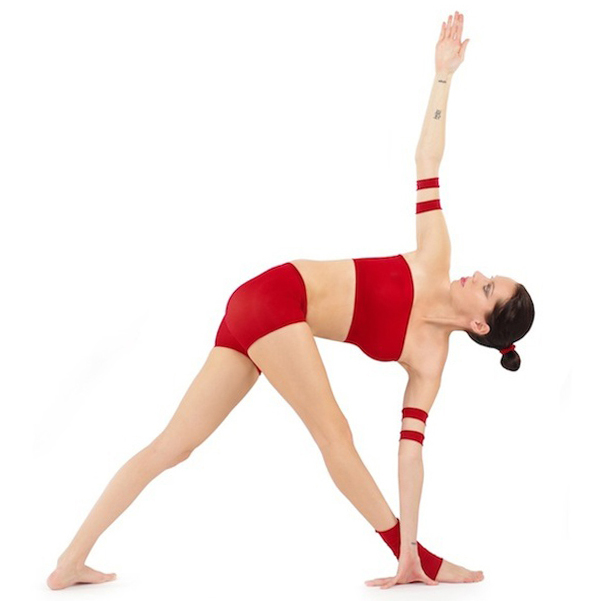
Focused gaze in yoga
Drishti (, , "focused gaze") is a means for developing concentrated intention. It relates to the fifth limb of yoga, pratyahara, concerning sense withdrawal, as well as the sixth limb, dharana, relating to concentration.
In Ashtanga Vinyasa Yoga, each asana is associated with one of the 8 focused gazes, namely Angusthamadhye (thumb), Bhrumadhye (eyebrow), Nasagre (tip of nose), Hastagrahe (tips of hands), Parshva (side), Urdhva (up), Nabhicakre (navel), and Padayoragre (tips of feet) Drishtis. In some other styles such as Sivananda Yoga, less use is made of the gaze, and fewer types are employed.
History
The Yoga Sutras of Patanjali define eight limbs of yoga but do not mention the gaze. The sixth limb, dharana (concentration), however requires holding one's mind onto an inner state, subject or topic. The mind can for example be fixed on a mantra, one's breath, or a part of the body such as the navel or the tip of the tongue. This is an internal concentration of attention, not a gaze.
In the Bhagavad Gita VI.13, Krishna instructs the hero Arjuna to "hold one's body and head erect in a straight line and stare steadily at the tip of the nose".
The 1737 Joga Pradīpikā uses the same two Drishtis, Nasagre and Bhrumadhye, requiring their use with each of the 84 asanas described in the text.
Modern
Styles of modern yoga as exercise such as Ashtanga (vinyasa) yoga, Iyengar Yoga and Sivananda Yoga make differing uses of Drishtis.
In Ashtanga yoga
Each asana is associated in Ashtanga yoga with a particular Drishti. There are eight Drishtis (counting the paired Parshva Drishtis on the left and right sides as one).
| Drishti | Sanskrit | Gaze at | Used in |
|---|---|---|---|
| Angushthamadhye | अङ्गूष्ठमध्ये | Thumb | Surya Namaskar vinyasas; Urdhva Vrikshasana, Utkatasana, Virabhadrasana A |
| Bhrumadhye | भ्रूमध्ये | 'Third eye', between eyebrows | Surya Namaskar uses it on the inhale following Uttanasana, during Urdhva Mukha Svanasana, and again on the inhale after Adho Mukha Svanasana. |
| Nasagre | नासाग्रे | Tip of nose | Many asanas, e.g. Surya Namaskara, Samasthitiḥ, Uttanasana and Chaturanga Dandasana; transition from Virabhadrasana A to Urdhva Mukha Svanasana |
| Hastagrahe | हसतग्रहे | Tips of fingers, or palm of hand | Utthita Trikonasana, Parivritta Trikonasana |
| Parshva | पार्श्व | Side (left or right) | Utthita Parshvasahita, Marichyasana C, and Marichyasana D |
| Urdhva | ऊर्घ्व | Upwards | Upavishta Konasana B and Ubhaya Padangushtasana. |
| Nabhicakre | नाभिचक्रे | Navel | Adho Mukha Shvanasana |
| Pādayoragre | पाडयोरग्रे | Toes | Paścimottānāsana sequence and Janu Sirsasana |
In Iyengar Yoga
Iyengar Yoga rarely speaks of Drishtis, but in its instructions for some asanas it tells the practitioner to look in a certain direction, for example to gaze at the thumb[page 65, Light on Yoga] for Trikonasana
In Sivananda Yoga
Sivananda Yoga makes use of two Drishtis, namely Nāsāgre and Bhrūmadhye, for tratak exercise (a purification) rather than in asana practice. Vishnudevananda cautions that prolonged or incorrect practice may cause problems for the eye muscles or nervous system. Initial practice is often done for only minutes at a time, but is gradually increased to up to ten minute intervals.
References
Sources
This article was imported from Wikipedia and is available under the Creative Commons Attribution-ShareAlike 4.0 License. Content has been adapted to SurfDoc format. Original contributors can be found on the article history page.
Ask Mako anything about Drishti (yoga) — get instant answers, deeper analysis, and related topics.
Research with MakoFree with your Surf account
Create a free account to save articles, ask Mako questions, and organize your research.
Sign up freeThis content may have been generated or modified by AI. CloudSurf Software LLC is not responsible for the accuracy, completeness, or reliability of AI-generated content. Always verify important information from primary sources.
Report