From Surf Wiki (app.surf) — the open knowledge base
Drag king
Entertainer dressed and acting with exaggerated masculinity
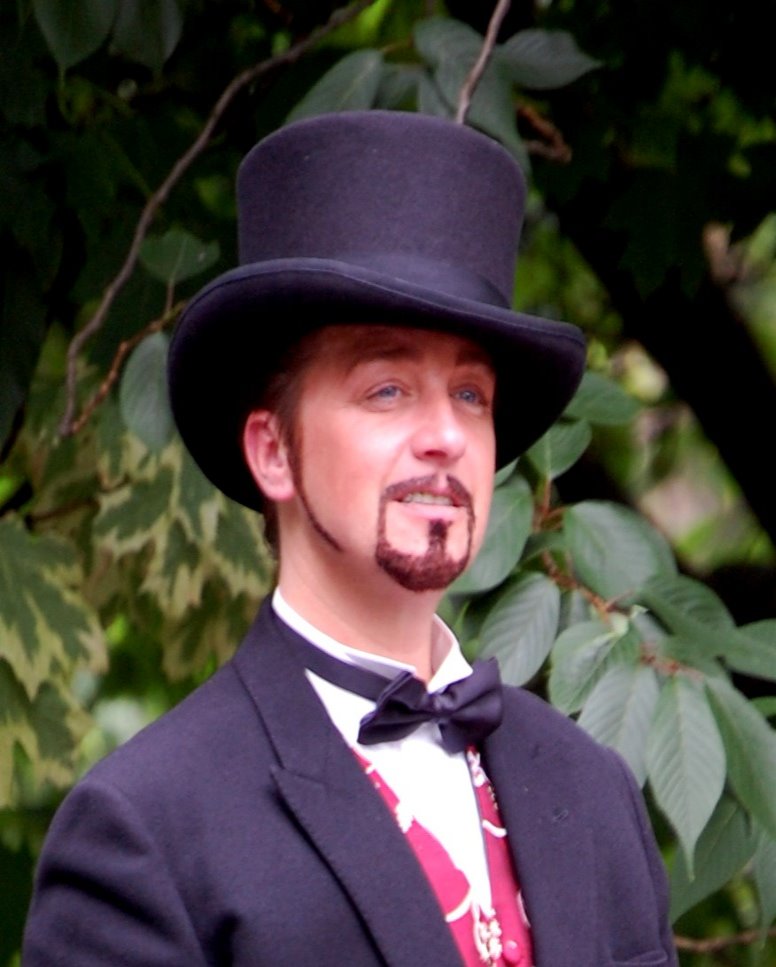
Entertainer dressed and acting with exaggerated masculinity
Drag kings have historically been mostly female performance artists who dress in masculine drag and personify male gender stereotypes as part of an individual or group routine. As documented in the 2003 Journal of Homosexuality, in more recent years, the world of drag kings has broadened to include performers of all gender expressions**.** A typical drag show may incorporate dancing, acting, stand-up comedy and singing, either live or lip-syncing to pre-recorded tracks. Drag kings often perform as exaggeratedly macho male characters, portray characters such as construction workers and rappers, or impersonate male celebrities like Elvis Presley, Michael Jackson and Tim McGraw. Drag kings may also perform as personas that do not clearly align with the gender binary. Drag personas that combine both stereotypically masculine and feminine traits are common in modern drag king shows.
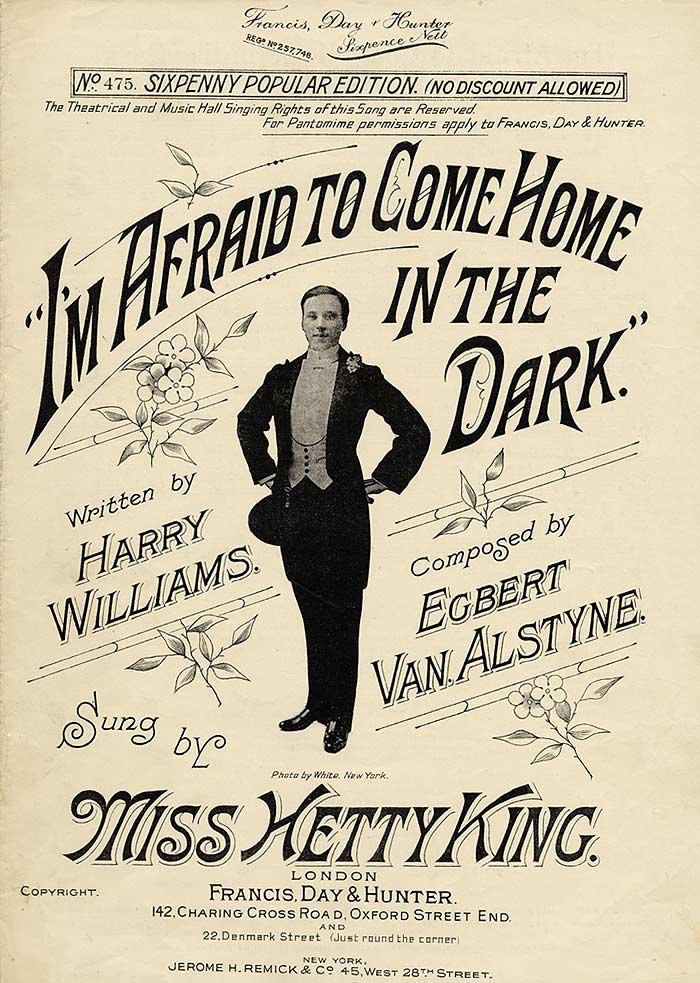
In the late 1800s and early 1900s, several drag kings became British music hall stars. British pantomime has preserved the tradition of women performing in male roles. Starting in the mid-1990s, drag kings began to gain some of the fame and attention that drag queens have known.
History and terminology
While the term drag king was first cited in print in 1972, there is a longer history of female performers dressing in male attire. In China, the practice of "female men [characters]" (kunsheng; see also sheng roles), in which women portrayed men in stage performances, was first documented during the middle Tang dynasty (617–908 CE). This continued through to the early Qing dynasty, when the Qianlong Emperor banned actresses from performing in 1722. It was revived in the late 19th and 20th centuries as the ban on actresses was loosened.
In theatre and opera, there was a tradition of breeches roles and en travesti. In France and Italy in the 17th century, women would play male roles in a form of theater called commedia dell'arte. Actress and playwright Susanna Centlivre appeared in breeches roles around 1700. The first popular male impersonator in U.S. theatre was Annie Hindle, who started performing in New York in 1867. In 1886, she married her dresser, Annie Ryan.
British music hall performer Vesta Tilley, who cites American male impersonator Ella Wesner as an inspiration, was active in the late 19th and early 20th centuries as a male impersonator. Tilley gave her last performance in 1920, and retired until her death in 1952. Other male impersonators on the British stage were Ella Shields and Hetty King. Vaudeville entertainer Florence Hines was popular for her act in the 1890s. Blues singer Gladys Bentley performed in male attire in New York, Los Angeles and San Francisco from the 1920s through 1940s. In the early 1900s, Gowongo Mohawk was "likely the first Indigenous male impersonator". Stormé DeLarverie performed in male drag as the master of ceremonies, and sole female performer, of the drag troupe the Jewel Box Revue in the 1950s and 1960s. She is featured in the documentary Storme: The Lady of the Jewel Box. While the Stonewall riots of June 1969 were a series of spontaneous uprisings by many people, DeLarverie—who was the first to fight back against the police brutality—is believed to have provided the spark that ignited the riot. Elsie Saldana, otherwise known as El Dana, started performing in 1965, and as of 2024 was still performing.
Drag king culture in Australia flourished in lesbian bars from the 1990s and 2000s, but began to fade in the 2010s. In the UK, Drag Couple Adam All and Apple Derrieres set up Drag King Cabaret night "BOiBOX" in 2013 in Soho's Candy Bar, a queer women's venue that closed in 2014. They were worried about finding enough performers to make their talent night work "[b]ecause there were barely any stages for us to perform [on], very few drag kings were actively pursuing gigs". BOIBOX inspired a new wave of budding kings and celebrated ten years in 2023 with a show at The Phoenix Arts Club in London's Westend, with a surprise appearance from Landon Cider.
The term drag king is sometimes used in a broader sense, to include female-bodied people who dress in traditionally masculine clothing for other reasons. This usage includes women temporarily attempting to pass as men, and women who wish to present themselves in a masculine gender role without identifying as a man. Diane Torr began leading Drag King Workshops in 1989 that offer women a lesson in passing as men. Torr was featured in the 2002 film on drag kings Venus Boyz.
Drag kings have historically been more marginalized by pop culture than drag queens, who began playing a larger role in mainstream pop culture from the late 20th century onwards. Drag kings have also historically been marginalized in academic LGBTQ studies. Recently, drag kings have started to play a slightly more visible role in the LGBTQ community. Sleek Magazine described this renaissance of drag king culture in a 2019 article titled "What's behind the drag king revolution?"
The British drag king collective "Pecs", a troupe made up entirely of women and non-binary people, was founded in 2013 and went on to perform at Soho Theatre and The Glory. In 2016, director Nicole Miyahara produced The Making of a King, a documentary film chronicling the lives of contemporary drag kings in Los Angeles. The first drag king to appear in a television show was New Zealand artist and comedian Hugo Grrrl who won the inaugural season of the New Zealand reality competition House of Drag in 2018. In 2019, American artist Landon Cider was the first drag king and cisgender woman to appear on a televised US drag competition when he won the third season of The Boulet Brothers' Dragula. In June 2022, three drag kings made a guest appearance in series one of Drag Race France, the first time the Drag Race franchise included drag kings.
Drag community
A British lesbian cabaret organization called Lesburlesque made it part of their mission to promote drag kings on the wider British cabaret circuit. Their founder, Pixie Truffle, gave an interview to the Guardian newspaper in the United Kingdom on her desire for drag kings to close the gap with queens and with male stand-up comedians.
Similar to some drag queens who prefer to be seen as actors—like Justin Vivian Bond and Lypsinka—some drag kings prefer not to be categorized by the drag king label. "I think when people assume that somebody is queer, or different, or trans, they always want to put something before their name", said Murray Hill in an interview. "And that is what drag king has been. Why can not you just call me a comedian like Jerry Seinfeld is called a comedian?"
In recent years, some drag king performers have adopted other terms to describe their own performance styles, particularly if they deviate from the more traditional forms of "kinging". Common names including "gender blurring", acknowledging the merging of both male and female traits in the performances. Vancouver performer Rose Butch adopted the ambiguous label "drag thing". Long-time performer Flare called the stage of drag king styles that emerged in Toronto's scene in the mid-2010s as "unicorn drag".
Tools of gender illusion
Main article: Methods of passing as male
One method drag kings use to modify their facial features is burning a wine cork and smudging it along the jaw to create the illusion of a beard or stubble. Kings may aim to deepen the colour of their eyebrows or create a fuller look with dark eyeliner or other makeup. Similarly, some methods call for layering liquid eyeliner over the cork ash, or dark makeup base. When trying to achieve a realistic look, drag kings may add crepe hair over the makeup using glue, thus completing the illusion of a full beard.
Drag kings also make use of items such as socks and silicone prosthetics when packing, or creating the illusion of a phallus.
An important part of gender illusion is the way a drag performer utilizes body language and takes up space on stage. Some kings will incorporate more aggressive choreography into their routines to emulate or expand on stereotypical masculine characteristics. Accessories, rhinestones and elaborate costumes contribute to a drag king's performance.
Body shaping apparel, most commonly binders, kinesiology tape, and sports bras, are used to create the look of a flat chest. For hiding one's breasts, some use a method involving cutting a hole in the crotch of pantyhose for the head and making sleeves out the legs. Some drag kings use silicone chest plates that are pulled over the head to create a muscular, masculine chest shape and cover the breasts.
In entertainment
In film
- The 1941 musical movie Babes on Broadway included Judy Garland in black male drag singing a song "Franklin Delano Jones", about a fictional first black president of the United States.
- Victor/Victoria (1982)
- Connie and Carla (2004)
- Rebel Dykes (2021)
In TV
- The Boulet Brothers' Dragula
- King of Drag (2025–)
In literature
- In the manga Moriarty the Patriot, Irene Adler, an associate of Sherlock Holmes and the titular Moriarty brothers, has a drag king persona of a spy named James Bonde.
In music
- Little Mix presented as drag kings in the music video for their 2021 song "Confetti".
References
References
- Aronoff, Jen. (2005-10-19). "Competitive Drag Kings Strut Stuff: With some spit and polish, women perform in growing world of cross-dressing pageantry". [[The Daily Gamecock.
- Surkan, Kim. (2003-04-01). "Drag Kings in the New Wave: Gender Performance and Participation". Journal of Homosexuality.
- Dujour, Dick. (2006-08-24). "Drag King Contest". [[San Francisco Bay Times]].
- Beckner, Chrisanne. (2005-09-29). "Best of Sacramento – Drag King: Buck Naked". [[Sacramento News & Review]].
- Long, Cris. (2007-07-22). "Bring Out the Kings!: Gage Gatlyn". Out Impact.
- (2005-09-22). "Gage For Yourself". Watermark Online.
- Rogers, Bruce. (1972). "The Queen's Vernacular: A Gay Lexicon". Straight Arrow Books.
- Chakraborty, Ranjani. (June 30, 2022). "Drag kings, explained by drag kings".
- (February 23, 2022). "Drag kings: a brief history of male impersonators".
- Hui-ling, Chou. (1997). "Striking Their Own Poses: The History of Cross-Dressing on the Chinese Stage". [[TDR (journal).
- Senelick, Laurence. (2000). "The changing room: sex, drag and theatre". Routledge.
- (2001). "Eighteenth-century women dramatists". Oxford University Press.
- Ferris, Lesley. (1993). "Crossing the stage: controversies on cross-dressing". Routledge.
- Duggan, Lisa. (2000). "Sapphic slashers: sex, violence, and American modernity". Duke University Press.
- (2002). "Queer episodes in music and modern identity". University of Illinois Press.
- Maitland, Sarah. (1986). "Vesta Tilley". Virago.
- Slide, Anthony. (1986). "Great pretenders: a history of female and male impersonation in the performing arts". Wallace-Homestead Book Co..
- (2009). "Out of Sight: The Rise of African American Popular Music 1889–1895". University Press of Mississippi.
- (2019). "When Brooklyn Was Queer". St. Martin's Publishing Group.
- (June 2004). "Gladys Bentley articles". Queer Music Heritage.
- (1999). "Struggles for representation: African American documentary film and video". Indiana University Press.
- (May 27, 2014). "Stonewall Veteran, Drag King Icon Stormé DeLarverie Dies at 93".
- link. (2021-06-29 " in ''[[The New York Times]]''.)
- Rick, Bragg. (1994-06-23). "From a Night of Rage, the Seeds of Liberation". New York Times.
- Drysdale, Kerryn. (17 July 2017). "Strapped, packed and taking the stage: Australia's new drag kings".
- Levine, Nick. (18 September 2018). "Meet the founders of Boi Box, London's vital drag king talent showcase".
- "BOiBOX Drag King Cabaret – 10th Anniversary Show".
- Halberstam, Judith. (2005). "The Subcultures Reader". Routledge.
- (1998). "Acts of passion: sexuality, gender, and performance". Routledge.
- Kramer, Gary. (2006). "Independent queer cinema: reviews and interviews". Routledge.
- Peterson Benny B. (June 3, 2024). "Meet the Drag Kings of DC".
- Koonce, Melissa Suzanne. (May 2006). "Identity construction and community building in Austin's drag king culture".
- "What's behind the drag king revolution?".
- (14 March 2019). "These Drag Kings Are the Only Royalty We Acknowledge".
- Nichols, James Michael. (2016-09-28). "You May Know About Drag Queens.. But Do You Know Your Drag King History?".
- george.fenwick@nzherald.co.nz, George Fenwick George Fenwick is an entertainment writer for The New Zealand Herald. (2018-12-20). "House of Drag winner Hugo Grrrl on his 'life-changing' win". [[The New Zealand Herald]].
- (2019-10-29). "'Dragula' Season 3 Winner: Landon Cider Takes The Crown".
- "Queen Pour Cent". IMDb.com Inc.
- (26 August 2012). "The Guardian Interview with Pixie Truffle about the rise of Drag Kinging". [[The Guardian]].
- Brune, A. M.. (2016-03-28). "Murray Hill: 'I'm more than a drag king. Why can't you just call me a comedian?'". [[The Guardian]].
- Friend, David. (June 20, 2017). "Kings of the night: New era of gender dynamics offers drag kings a brighter spotlight".
- Stortz, Sarah. "Kings of Drag: The secrets behind the fake beards".
- "Watch: BuzzFeed Video – Women Transform Into Drag Kings".
- Stevens, Phillips. (2014-11-17). "Culture and sexuality". John Wiley & Sons, Ltd.
- (2015). "The international encyclopedia of human sexuality". Wiley-Blackwell.
- Shapiro, Eve. (2007). "Drag Kinging and the Transformation of Gender Identities". Gender and Society.
- (2018-03-08). "Gender Renegades: Drag Kings Are Too Radical for Prime Time".
- (April 25, 2008). "How to: be a drag King".
- (28 October 2022). "Silicone Chest Plate FAQ for Cosplayers and Drag Kings". YouTube.
- Dennis, J. P.. (2007). "We Boys Together: Teenagers in Love Before Girl-craziness". [[Vanderbilt University Press]].
- Wratten, Marcus. (May 28, 2025). "Is King of Drag the new Drag Race? Everything we know about the groundbreaking new drag king reality show".
- Collins, Hannah. (April 27, 2021). "Moriarty the Patrot Takes a Positive Stance on Trans Rights".
- Kaufman, Gil. (April 30, 2021). "Little Mix and Saweetie Flip the Gender Script in 'Confetti' emix Video".
This article was imported from Wikipedia and is available under the Creative Commons Attribution-ShareAlike 4.0 License. Content has been adapted to SurfDoc format. Original contributors can be found on the article history page.
Ask Mako anything about Drag king — get instant answers, deeper analysis, and related topics.
Research with MakoFree with your Surf account
Create a free account to save articles, ask Mako questions, and organize your research.
Sign up freeThis content may have been generated or modified by AI. CloudSurf Software LLC is not responsible for the accuracy, completeness, or reliability of AI-generated content. Always verify important information from primary sources.
Report