From Surf Wiki (app.surf) — the open knowledge base
Downtown Los Angeles
Neighborhood in Los Angeles, California
_to_Third_Street_(l).jpg)
Neighborhood in Los Angeles, California
| Field | Value | |
|---|---|---|
| <!-- Basic info ----------------> | name | Downtown Los Angeles |
| settlement_type | Neighborhood | |
| nicknames | "Downtown L.A.", "DTLA", "Downtown" | |
| total_type | ||
| <!-- images and maps -----------> | image_skyline | {{Photomontage |
| photo1a | Los Angeles with Mount Baldy.jpg | |
| photo2a | Skyline_of_Los_Angeles,_Downtown_Los_Angeles,_California_13.jpg | |
| photo2b | Artist District, Los Angeles, California, 05-29-2001.jpg | |
| photo3a | JewelryDistLA-042801.JPG | |
| photo3b | Los Angeles City Hall 2013.jpg | |
| position | center | |
| color_border | transparent | |
| color | white | |
| spacing | 1 | |
| size | 310 | |
| foot_montage | Clockwise, from top: Skyline from the southwest, the Arts District, City Hall, the Jewelry District and the Financial District in 2001 | |
| image_map | Los Angeles Freeway Map.png | |
| mapsize | 300px | |
| map_caption | Freeway map of the Los Angeles area showing Downtown LA | |
| image_map1 | Map of Downtown Los Angeles, California.png | |
| mapsize1 | 300px | |
| map_caption1 | Downtown map as delineated by the Los Angeles Times | |
| pushpin_map | ||
| pushpin_label_position | ||
| coordinates | ||
| unit_pref | US | |
| parts_type | Downtown neighborhoods | |
| parts_style | list | |
| p1 | Arts District | |
| p2 | Broadway Theater and Commercial District | |
| p3 | Bunker Hill | |
| p5 | Civic Center | |
| p6 | Fashion District | |
| p7 | Financial District | |
| p8 | Flower District | |
| p9 | Gallery Row | |
| p10 | Historic Core | |
| p11 | Jewelry District | |
| p12 | Little Tokyo | |
| p13 | Old Bank District | |
| p14 | Skid Row | |
| p15 | South Park | |
| p16 | Toy District | |
| subdivision_type | Country | |
| subdivision_name | ||
| subdivision_type1 | State | |
| subdivision_name1 | California | |
| subdivision_type2 | County | |
| subdivision_name2 | Los Angeles | |
| subdivision_type3 | City | |
| subdivision_name3 | Los Angeles | |
| elevation_ft | 305 | |
| elevation_footnotes | ||
| area_total_sq_mi | 5.84 | |
| population_est | 85000 | |
| pop_est_as_of | 2020 |
Downtown Los Angeles (DTLA) is the central business district of the city of Los Angeles. It is part of the Central Los Angeles region and covers a 5.84 mi2 area. As of 2020, it contains over 500,000 jobs and has a population of roughly 85,000 residents, with an estimated daytime population of over 200,000 people prior to the COVID-19 pandemic.
Downtown Los Angeles is divided into neighborhoods and districts, some overlapping. Most districts are named for the activities concentrated there now or historically, such as the Arts, Fashion, Banking, Theater, Toy, and Jewelry Districts. It is the hub for the city's urban rail transit system, as well as the Pacific Surfliner and Metrolink commuter rail system covering greater Southern California. Also located in downtown is the Civic Center, the administrative core of the city government.
Historically, downtown held a dense concentration of banks, department stores, and movie palaces that drew residents and visitors of all socioeconomic classes, but after the 1950s the area began to experience an economic decline. Still, it remained an important center for various activities—government business in the Civic Center, banking on Bunker Hill, and retail and entertainment, especially for Hispanic Angelenos and immigrants, on Broadway. Since the early 2000s, downtown has experienced a renaissance of economic revitalization, including the Crypto.com Arena in downtown's south end, and the restoration and repurposing of historic buildings in the area.
History
The Tongva village of Yaanga was located in what is now downtown Los Angeles, possibly near or underneath where the Bella Union Hotel was located (now Fletcher Bowron Square).
Spanish and Mexican era
Main article: , Pueblo de Los Ángeles
Father Juan Crespí, a Spanish Franciscan missionary charged with exploring sites for Catholic missions in California, noted in 1769 that the region had "all the requisites for a large settlement". On September 4, 1781, Los Angeles was founded by a group of settlers who trekked north from present-day Mexico. Like most urban centers in the Spanish Empire, the town grew, in accordance with the Laws of the Indies, in a grid-like street pattern around a central plaza which faced the first church. The area passed to American control in 1847, and the small town grew to 11,000 by 1880, The business district was centered along Main Street between the Plaza and First Street.
Victorian-era Downtown

Main article: Victorian Downtown Los Angeles
Land speculation increased in the 1880s, which saw the population of the city explode from 11,000 in 1880 to nearly 100,000 by 1896. Infrastructure enhancements and the laying of a street grid eventually brought development south of the Plaza: Victorian Downtown Los Angeles in the 1800s and 1890s along Main, Spring and Broadway south to Third Street – all of which were razed to make way for today's Civic Center. After 1900, larger buildings were constructed along Broadway and Spring from Third to Ninth streets in what is now called the Historic Core.
Downtown's golden age
By 1920, the city's private and municipal rail lines were the most far-flung and most comprehensive in the world in mileage, even besting that of New York City. By this time, a steady influx of residents and aggressive land developers had transformed the city into a large metropolitan area, with DTLA at its center. Rail lines connected four counties with over 1100 mi of track.
During the early part of the 20th century, banking institutions clustered around South Spring Street, forming the Spring Street Financial District. Sometimes referred to as the "Wall Street of the West", the district held corporate headquarters for financial institutions including Bank of America, Farmers and Merchants Bank, the Crocker National Bank, California Bank & Trust, and International Savings & Exchange Bank. The Los Angeles Stock Exchange was also located on the corridor from 1929 until 1986 before moving into a new building across the Harbor (110) Freeway.
Commercial growth brought with it hotel construction—during this time period several grand hotels, the Alexandria (1906), the Rosslyn (1911), and the Biltmore (1923), were erected—and also the need for venues to entertain the growing population of Los Angeles. Broadway became the nightlife, shopping and entertainment district of the city, with over a dozen theater and movie palaces built before 1932.
Department stores, most that had grown from local dry goods businesses, moved from Spring and Main streets around Temple and 1st, to much larger stores along Broadway, including The Broadway, Hamburger's, which became May Co., Robinson's, Bullock's, Coulter's, Desmond's, Silverwoods, Harris & Frank, and the Fifth Street Store/Walker's, serving a variety of socioeconomic groups from across the city and suburbs. All but Coulter's would, in the 1920s–1950s, launch branches dotting shopping centers across a growing Southern California. Numerous specialty stores also flourished including those in the jewelry business which gave rise to the Downtown Jewelry District. Among these early jewelers included the Laykin Diamond Company (later becoming Laykin et Cie) and Harry Winston & Co., both of which found their beginnings in the Hotel Alexandria at Fifth and Spring streets.
Decline and redevelopment

Following World War II, suburbanization, the development of the Los Angeles freeway network, and increased automobile ownership led to decreased investment downtown. Many corporate headquarters slowly dispersed to new suburbs or fell to mergers and acquisitions. As early as the 1920s once-stately Victorian mansions on Bunker Hill were dilapidated, serving as rooming houses for 20,000 working-class Angelenos.
The Broadway theaters saw much use as Spanish-language movie houses during this time, beginning with the conversion of the Million Dollar Theater in the 1950s to a Spanish-language theater.
Recent years


.jpg)
In the early 2000s, the neighborhood became popular with Artists and Creatives due to low rent, open loft space, and many vacancies. In mid-2013, downtown was noted as "a neighborhood with an increasingly hip and well-heeled residential population".
Because of the downtown area's office market's migration west to Bunker Hill and the Financial District, many historic office buildings have been left intact, which is simply used for storage or remaining empty during recent decades. In 1999, the Los Angeles City Council passed an adaptive reuse ordinance, making it easier for developers to convert outmoded, vacant office and commercial buildings into renovated lofts and luxury apartment and condo complexes.
As of early 2009, 14,561 residential units have been created under the adaptive reuse ordinance, leading to an increase in the residential population. With 28,878 residents in 2006, 39,537 in 2008, and over 60,000 in 2017, downtown Los Angeles is seeing new life and investment.
- Crypto.com Arena, which opened in 1999, has contributed immensely to the revitalization plans, adding 250 events and nearly 4 million visitors per year to the neighborhood. Since the opening of the Staples Center, the adjacent L.A. Live complex was completed, which includes the Microsoft Theatre and the Grammy Museum.
- Los Angeles Metro Rail, a rail transit network centered on the downtown area, facilitates access to the city center, especially from the congested West Side.
- Real estate developers and investors planned a $1.8 billion revitalization project along Grand Avenue, which included the development of Grand Park, a large city park, and the construction of major city landmarks, including the Frank Gehry-designed Walt Disney Concert Hall and contemporary art museum The Broad, which opened in 2015.
- On August 7, 2007, the Los Angeles City Council approved sweeping changes in zoning and development rules for the downtown area. Strongly advocated by Mayor Antonio Villaraigosa, the changes allow larger and denser developments downtown; developers who reserve 15% of their units for low-income residents are now exempt from some open-space requirements and can make their buildings 35% larger than current zoning codes allow.
- In 2009, Bottega Louie opened on the first floor of the historic Brockman Building on Grand Avenue and Seventh Street. It contributed to the revitalization of DTLA by creating Restaurant Row, which has since brought numerous new restaurants and retail shops to the area. In 2012, the upper 11 floors of the Brockman Building were bought with the intention of being sold as luxury lofts.
- Several labels of Warner Music Group moved into the Los Angeles Arts District in 2019 where the company had purchased a former Ford Motor Company assembly plant.
- Broadway retail is transitioning from a broad mix of stores catering mostly to Hispanic immigrants and a burgeoning sneaker and streetwear retail cluster has emerged from 4th to 9th streets: Sneaker Row.
- Oceanwide Plaza has planned to open in 2020, but was later changed to unknown date due to financial problems and costs.
Multiple Olympic and Paralympic events will be held in DTLA during the 2028 Summer Olympics and Paralympics.
After six years of construction, the new Sixth Street Viaduct opened on July 9, 2022 at a cost of $588-million. This new bridge replaced a 1932 viaduct of the same name which was demolished in 2016 due to a fact that it would collapse if there were a major earthquake, and alkali-silica reaction – colloquially known as "concrete cancer". Pedestrian and bicycle access points link to other projects such as 12 acres of new park space below the viaduct.
Shopping malls
Shopping centers include FIGat7th, and The Bloc Los Angeles, an open-air shopping area. Others include Japanese Village Plaza in Little Tokyo, City National Plaza, the Homer Laughlin Building, and the Los Angeles Mall.
Geography
Downtown Los Angeles is flanked by Echo Park to the north and northwest, Chinatown to the northeast, Boyle Heights to the east, Vernon to the south, Historic South Central and University Park to the southwest, and Pico-Union and Westlake to the west.
Downtown is bounded on the northeast by Cesar Chavez Avenue, on the east by the Los Angeles River, on the south by the Los Angeles city line with Vernon, on the southwest by East Washington Boulevard and on the west by the 110 Freeway or Beaudry Avenue, including the entire Four Level Interchange with the 101 Freeway.
Districts
The neighborhood includes these districts:
- Arts District
- Bunker Hill
- Civic Center (built on the razed site of the Central Business District during the 1880s–1890s)
- Fashion District
- Financial District
- Flower District
- Gallery Row
- Historic Core (contains the Broadway Theater District, Spring Street Financial District and Old Bank District)
- The Run
- Industrial District
- Jewelry District
- Little Tokyo
- Skid Row
- South Park
- Toy District
- Wholesale District or Warehouse District
Climate
| Jan avg record high F = 83.0 | Feb avg record high F = 82.8 | Mar avg record high F = 85.8 | Apr avg record high F = 90.1 | May avg record high F = 88.9 | Jun avg record high F = 89.1 | Jul avg record high F = 93.5 | Aug avg record high F = 95.2 | Sep avg record high F = 99.4 | Oct avg record high F = 95.7 | Nov avg record high F = 88.9 | Dec avg record high F = 81.0 | year avg record high F=101.5 | Jan avg record low F = 41.4 | Feb avg record low F = 42.9 | Mar avg record low F = 45.4 | Apr avg record low F = 48.9 | May avg record low F = 53.5 | Jun avg record low F = 57.4 | Jul avg record low F = 61.1 | Aug avg record low F = 61.7 | Sep avg record low F = 59.1 | Oct avg record low F = 53.7 | Nov avg record low F = 45.4 | Dec avg record low F = 40.5 | year avg record low F= 39.2 | Jan record high F = 95 | Feb record high F = 95 | Mar record high F = 99 | Apr record high F = 106 | May record high F = 103 | Jun record high F = 112 | Jul record high F = 109 | Aug record high F = 106 | Sep record high F = 113 | Oct record high F = 108 | Nov record high F = 100 | Dec record high F = 92 | Jan record low F = 28 | Feb record low F = 28 | Mar record low F = 31 | Apr record low F = 36 | May record low F = 40 | Jun record low F = 46 | Jul record low F = 49 | Aug record low F = 49 | Sep record low F = 44 | Oct record low F = 40 | Nov record low F = 34 | Dec record low F = 30
Population

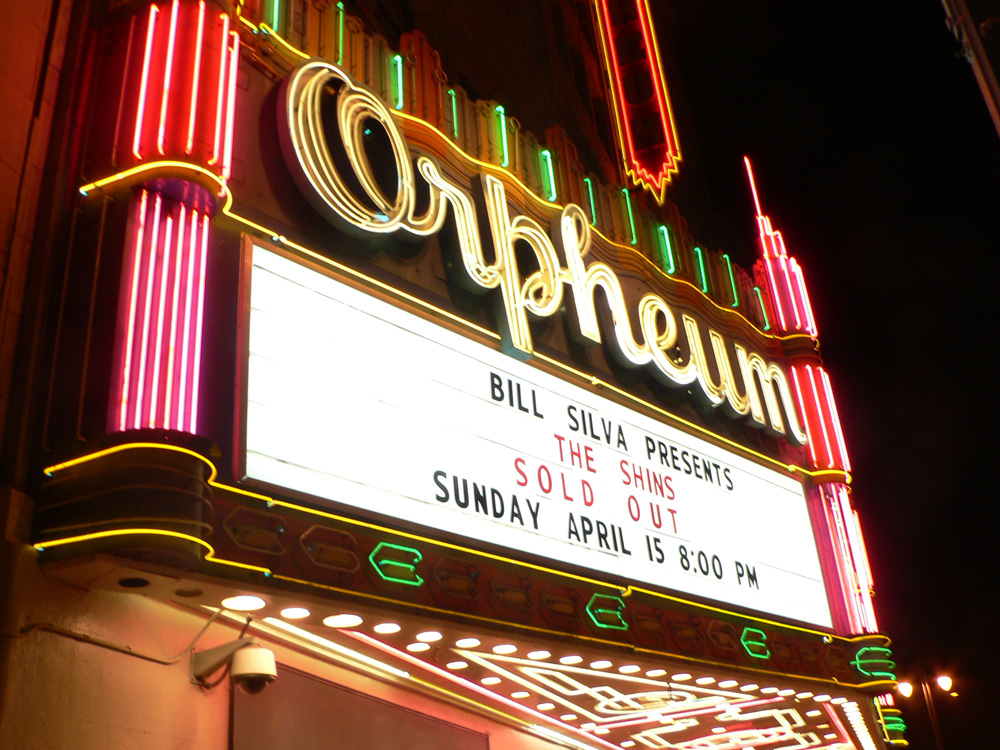

The 2000 U.S. census found that just 27,849 residents lived in the 5.84 square miles of downtown—or 4,770 people per square mile, among the lowest densities for the city of Los Angeles but about average for the county. The Southern California Association of Governments estimates that downtown's daytime population is 207,440. The population increased to 34,811 by 2008, according to city estimates. By the end of 2019, the population of the district had grown to 85,000 residents, and 7,956 residential units were under construction. The median age for residents was 39, considered old for the city and the county.
Downtown Los Angeles is almost evenly balanced among the four major racial and ethnic groups—Asian Americans (23%), African Americans (22%), Latinos (25%) and non-Hispanic whites (26%)—according to an analysis of 2010 census data made by Loyola Marymount University researchers.
A study of the 2000 census showed that downtown was the second–most diverse neighborhood in Los Angeles, its diversity index being 0.743, outrated only by Mid-Wilshire. The ethnic breakdown in 2000 was Latinos, 36.7%; blacks, 22.3%; Asians, 21.3%; whites, 16.2%, and others, 3.5%. Mexico (44.7%) and Korea (17%) were the most common places of birth for the 41.9% of the residents who were born abroad, about the same ratio as in the city as a whole.
The median household income in 2008 dollars was $15,003, considered low for both the city and the county. The percentage of households earning $20,000 or less (57.4%) was the highest in Los Angeles County, followed by University Park (56.6%) and Chinatown (53.6%). The average household size of 1.6 people was relatively low. Renters occupied 93.4% of the housing units, and home or apartment owners the rest.
In 2000, there were 2,400 military veterans living downtown, or 9.7% of the population, considered a high rate for the city but average for the county overall.
In 2010, census data concluded that 40,227 people lived in downtown Los Angeles.
In 2013, a study by Downtown Center Business Improvement District showed that of the 52,400 people resided in downtown Los Angeles, the demographic breakdown was 52.7% Caucasian, 20.1% Asian, 17.0% Latino, and 6.2% African-American; 52.9% female, 47.1% male; and 74.8% of residents were between the ages of 23–44. The median age for residents was 34. The median household income was $98,700. The median household size was 1.8. In terms of educational attainment, 80.1% of residents had completed at least 4 years of college. The study was a self-selecting sample of 8,841 respondents across the DTLA area. It was not a "census" but rather a comprehensive survey of Downtown LA consumers.
An additional study by the Downtown Center Business Improvement District showed that by 2017 the population reached 67,324. In early 2020 the population was estimated to have exceeded 80,000 at the end of 2019.
Public transportation
Local and regional service

Downtown Los Angeles is the center of the region's growing rail transit system, with six commuter lines operated by Metrolink, as well as six urban rail transit lines and local and regional bus service operated by Los Angeles County Metropolitan Transportation Authority (Metro).
Major Metro stations in the district include Union Station, Civic Center/Grand Park station, Pershing Square station, 7th Street/Metro Center station, Pico station, Little Tokyo/Arts District station, Historic Broadway station, and Grand Avenue Arts/Bunker Hill station.
- The Los Angeles Metro Rail system has four rail lines that serve downtown Los Angeles: the A Line, B Line, D Line, and E Line.
- In late 2009, the Metro J Line bus rapid transit project opened, replacing two unconnected bus rapid transit lines with through service at street level through the downtown area.
- In 2006, a portion of the Metro Red Line (now the B Line) was rebranded by Metro as the Metro Purple Line (now the D Line), a heavy-rail subway line which runs from Union Station to Wilshire/Western station in Koreatown. A westward extension of the line to Westwood is currently under construction.
- Metro operates an extensive bus network, including Metro Local, Metro Express commuter lines, and Metro Rapid buses with signal priority and limited stops.
- Los Angeles Department of Transportation operates seven local DASH shuttle lines downtown on weekdays: Lines A, B, C, D, E and F. Weekend service is operated on lines DD (Downtown Discovery), E and F.
- The Regional Connector Transit Corridor connected the A, E, and L Lines between the Little Tokyo/Arts District and 7th Street/Metro Center stations which opened on June 16, 2023. This had the A and E Lines take over different parts of the L Line, which was promptly discontinued. In addition to Metro and LADOT, other transit agencies in Los Angeles County, such as AVTA, Big Blue Bus, Foothill Transit, Montebello Bus Lines, Santa Clarita Transit, and Torrance Transit serve Downtown Los Angeles, with Foothill Transit's Silver Streak bus rapid transit connecting Montclair in San Bernardino County to Downtown.[[File:Union-Station-LA-Waiting-Ro.jpg|thumb|220px|[[Union Station (Los Angeles)|Union Station]] main passenger concourse.]]
Amtrak
Amtrak operates intercity passenger train service on five routes through Los Angeles Union Station: the Coast Starlight, Pacific Surfliner, Southwest Chief, Sunset Limited, and Texas Eagle. Additionally, dedicated Amtrak buses connect Union Station to all Gold Runner trains in Bakersfield.
Greyhound/Flixbus
Greyhound Lines operates from Union Station, and FlixBus operates from a parking lot across the street from Union Station.
Service to Los Angeles International Airport
Los Angeles World Airports operates a direct shuttle, LAX FlyAway Bus, every 30–60 minutes between Union Station and Los Angeles International Airport.
Transit expansion
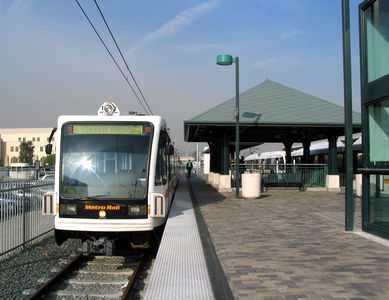
- The Metro E Line was built in two phases and completed in 2016. The first phase of the project connected 7th Street/Metro Center Station downtown with Culver City via the former Pacific Electric Railway Santa Monica Air Line right-of-way. The second phase extended the line to Santa Monica. The E Line shares tracks with the Metro A Line north of Washington Boulevard, and shares the Pico Station, 7th Street/Metro Center Station, Grand Avenue Arts/Bunker Hill station, Historic Broadway station, and Little Tokyo/Arts District station with the A Line.
- Union Station is set to be a major stop on the under-construction California High-Speed Rail system, though it will not be a part of the project's Initial Operating Segment. The project would connect Northern and Southern California via the San Joaquin Valley, with service averaging 220 mph.
- Work is planned to bring streetcar-style trolley service to downtown Los Angeles via Broadway, connecting the L.A. Live development with the Grand Avenue cultural corridor and Bunker Hill.
Parks and open space
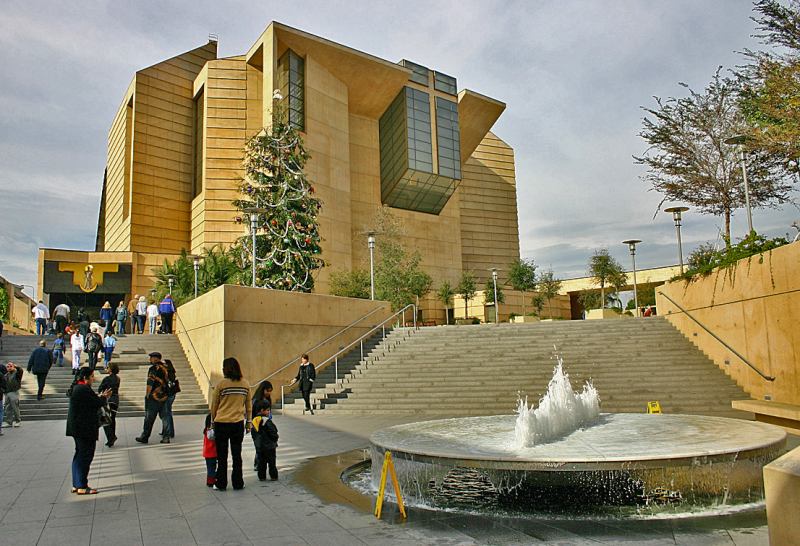

Downtown Los Angeles is home to several public parks, plazas, gardens and other open space:
- Los Angeles Plaza
- Olvera Street
- El Pueblo de Los Ángeles Historical Monument
- Cathedral of Our Lady of the Angels meditation garden and olive garden (park)
- Biddy Mason Park
- Grand Park
- Maguire Gardens
- Pershing Square
- Los Angeles City Hall South Lawn
- Los Angeles Police Department's Police Administration Building South Lawn
- Los Angeles State Historic Park
- Union Station gardens
- Walt Disney Concert Hall Community Park
- The Water Court at California Plaza, an outdoor performance and dining space with water features, fountains, shaded seating areas and an amphitheater.
- Japanese Garden and plaza at the Little Tokyo Cultural and Community Center Plaza
- Japanese Garden at the Kyoto Grand Hotel and Gardens
- Garden at Bank of America Plaza
Several future park proposals for the district make use of public-private partnerships between developers and the city of Los Angeles, including a public park at the proposed Nikkei Center development in Little Tokyo; a 1 acre park at the Medallion development in the Historic Core; and a pocket park at the Wilshire Grand Hotel replacement project, currently under construction.
Additionally, the city recently completed a new park located on the 400 block of South Spring Street in the Historic Core neighborhood.
Skyline
Main article: List of tallest buildings in Los Angeles


Despite its relative decentralization and comparatively new high-rises (until 1958, the city did not permit any structures taller than the 27-story City Hall building), Los Angeles has one of the largest skylines in the United States, and its development has continued in recent years.
The skyline has seen rapid growth due to improvements in seismic design standards, which has made certain building types highly earthquake-resistant. Many of the new skyscrapers contain a housing or hotel component.
Some current and upcoming examples of skyscraper construction include:
- 705 Ninth Street, a 35-story residential tower, was completed in 2009.
- 717 Olympic, a 26-story residential tower, was completed in mid-2008.
- 888 Olive, a 32-story apartment tower by Vancouver-based Omni Group, opened in 2015.
- Concerto, a 28-story residential tower, was completed in early 2009. A second phase (Tower II) is currently under construction.
- The Grand Avenue Project, designed by architect Frank Gehry, is a multi-phase project on four parcels. It includes a 39-story hotel tower at the corner of First Street and Grand Avenue and a civic park.
- L.A. Live, a multi-phased dining, entertainment and hotel development that includes a Ritz-Carlton and JW Marriott Hotel hybrid as well as Ritz-Carlton-branded condominiums, was completed in February 2010.
- Marriott International completed a 24-story Courtyard and Residence Inn tower near L.A. Live, which opened in July 2014, and plans to build a 20+ story Renaissance Hotel to open in 2016.
- Metropolis, a mixed-use four-tower project (60, 50, 38, and 19 stories) at Francisco and Ninth streets, is currently under construction.
- South, a three-tower complex called Elleven, Luma, and Evo, spans the block from 11th Street and Grand Avenue to 12th Street and Grand Avenue, and was completed in phases ending in early 2009.
- The Wilshire Grand Tower redevelopment, a 900-room hotel and office project built in 2017, is the tallest tower west of the Mississippi River, at 1,100 ft.
- Figueroa Centre, a 975-foot residential and hotel tower proposed across from The Original Pantry restaurant on the Figueroa Corridor. The tower proposed will become the third tallest building in Los Angeles when completed.
- Angels Landing, a proposed super tall tower at 1020 ft. Currently in the funding stage. Approved by the city council in 2017.
Building height limits: 1904–1957

The first height limit ordinance in Los Angeles was enacted following the completion of the 13-story Continental Building, located at the southeast corner of Fourth and Spring streets. The purpose of the height limit was to limit the density of the city. There was great hostility to skyscrapers in many cities in these years, mainly due to the congestion they could bring to the streets, and height limit ordinances were a common way of dealing with the problem. In 1911, the city passed an updated height limit ordinance, establishing a specific limit of 150 ft. Exceptions were granted for decorative towers such as those later built on the Eastern Columbia Building and United Artists Theatre, as well as the now-demolished Richfield Tower.
Flat Roof Ordinance
The pattern of buildings in Los Angeles to feature flat rooftops was the result of a 1974 fire ordinance which required all tall buildings in the city to include rooftop helipads in response to the devastating 1974 Joelma Fire in Sao Paulo, Brazil, in which helicopters were used to effect rescues from the flat rooftop of the building. The Wilshire Grand Center was the first building granted an exception by the Los Angeles City Fire Department in 2014. However, as the building was under construction, L.A. City Council removed the flat roof ordinance as of 2015.
Government and infrastructure

The Los Angeles County Department of Health Services operates the Central Health Center in downtown Los Angeles.
The Southern California Liaison of the California Department of Education has its office in the Ronald Reagan State Building in downtown Los Angeles.
The Federal Reserve Bank of San Francisco, Los Angeles Branch is located in downtown Los Angeles.
Economy
DTLA is a node in the tech economy that extends beyond Silicon Beach. A venture capital firm counted 78 tech-oriented firms in DTLA in 2015. This included mobile apps, hardware, digital media and clean-tech companies plus co-working spaces, start-up incubators, and other related businesses.
The Arts District has become a popular spot for companies seeking out something different from typical modern offices. The central location is accessible from various parts of the Los Angeles Basin. The cultural life has also made the area attractive to young tech employees. Two Bit Circus is the only amusement park located in the area.
Anschutz Entertainment Group has its corporate headquarters in downtown Los Angeles. BYD Company, a Chinese technology firm, has its North American headquarters in downtown Los Angeles.
The Last Bookstore is an independent bookstore founded in 2005 by Josh Spencer, that was called California's largest new and used bookstore by Conde Nast Traveler in 2019. Cathay Bank has its headquarters in the Los Angeles Chinatown.
Education
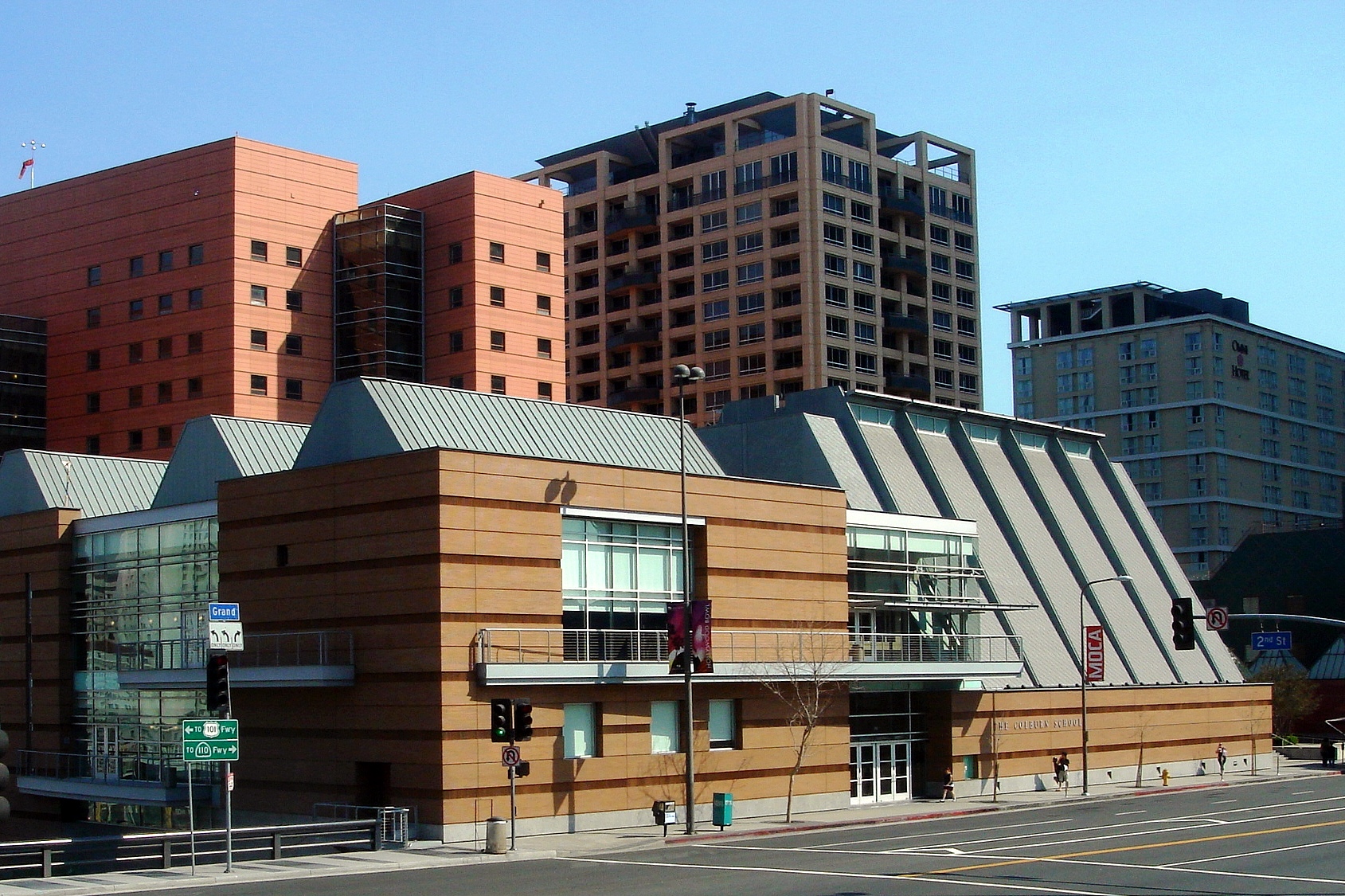

Downtown residents aged 25 and older holding a four-year degree amounted to 17.9% of the population in 2000, about average in the city and the county, but there was a high percentage of residents with less than a high school diploma.
These are the elementary or secondary schools within the neighborhood's boundaries:
- Ramon C. Cortines School of Visual and Performing Arts, LAUSD high school, 450 N. Grand Ave.
- Downtown Business High School, LAUSD alternative, 1081 W. Temple St.
- California Academy for Liberal Studies Early College High School, LAUSD charter, 700 Wilshire Blvd.
- Alliance Dr. Olga Mohan High School, LAUSD charter, 644 W. 17th St.
- Abram Friedman Occupational School, LAUSD adult education, 1646 S. Olive St.
- Metropolitan Continuation School, LAUSD, 727 S. Wilson St.
- Para Los Ninos Middle School, LAUSD charter, 1617 E. Seventh St.
- Jardin de la Infancia, LAUSD charter elementary, 307 E. Seventh St.
- Saint Malachy Catholic Elementary School, private, 1200 E. 81st St.
- Tri-C Community Day School, LAUSD, 716 E. 14th St.
- City of Angels School, LAUSD alternative school, 1449 S. San Pedro St. (formerly Central High School)
- San Pedro Street Elementary School, LAUSD, 1635 S. San Pedro St.
- Saint Turibius Elementary School, private, 1524 Essex St.
- American University Preparatory School, private, 345 S. Figueroa St.
The Fashion Institute of Design & Merchandising is at 800 S. Hope St., and the Colburn School for music and the performing arts is at 200 S. Grand Ave.
Emergency services
Fire services
The Los Angeles Fire Department operates the following fire stations in downtown Los Angeles:
- Station 3 (Civic Center/Bunker Hill)
- Station 4 (Little Tokyo/Chinatown/Union Station/Olvera Street)
- Station 9 (Central City/Skid Row)
- Station 10 (Convention Center area)
Police services
The Los Angeles Police Department operates the Central area Community Police Station in downtown Los Angeles.[[File:Civic Center Los Angeles Superior Court.jpg|thumb|850x850px|center|[[Los Angeles City Hall]]]]
References
References
- Karlamangla, Soumya (January 19, 2015). [https://web.archive.org/web/20150119141018/http://www.latimes.com/local/great-reads/la-me-c1-dtla-20150119-story.html "IN AN EMERGING DOWNTOWN, 'DTLA' MAKES STRONG INITIAL IMPRESSION"] . ''[[Los Angeles Times]]''.
- (April 29, 2005). "Elevations and Distances". US Geological Survey.
- "Downtown".
- Roger Vincent. (April 12, 2024). "Downtown L.A. is hurting. Frank Gehry thinks arts can lead a revival". Los Angeles Times.
- "Mapping the Tongva villages of L.A.'s past". LA Times.
- (2004). "Los Angeles Union Station Run-through Tracks Project: Environmental Impact Statement". United States. Federal Railroad Administration.
- [http://www.usc.edu/libraries/archives/la/historic/crespi.html FATHER CRESPI IN LOS ANGELES, USC] {{webarchive. link. (July 7, 2009)
- Guinn, James Miller. (1902). "Historical and biographical record of southern California: containing a history of southern California from its earliest settlement to the opening year of the twentieth century". Chapman pub. co..
- "Census of Population and Housing". Census.gov.
- (November 15, 1931). "Los Angeles Fifty Years Ago". Los Angeles Times.
- (January 1926). "Sixty Years in Southern California". The Knickerbocker press.
- [http://www.downtownla.com/5_05_downtownHistory.asp Downtown History, Downtown Center Business Improvement District] {{webarchive. link. (August 4, 2009)
- (2000). "Pacific Electric Subway".
- Rasmussen, Cecilia. (June 11, 2000). "Wall Street of the West Had Its Peaks, Crashes". Los Angeles Times.
- (October 29, 1929). "Salvatore Cartaino Scarpitta, Los Angeles Stock Exchange, bas reliefs". Publicartinla.com.
- "Laykin et Cie".
- "The Bunker Hill Story: Welfare, Redevelopment, and Housing Crisis in Postwar Los Angeles".
- "Last Remaining Seats". Laconservancy.org.
- Pierson, David. (July 31, 2013). "Whole Foods to Open Downtown L.A. Store in 2015".
- "Downtown Los Angeles Housing Information, First Quarter 2009". Downtown Center Business Improvement District.
- Cara Mia DiMassa, "[https://www.latimes.com/news/local/la-me-downtown21feb21,0,4218500.story Downtown L.A. has gained people but lost jobs, report says] {{Webarchive. link. (2007-05-08 ", ''Los Angeles Times,'' February 21, 2007.)
- [http://www.downtownla.com/survey/2011/Downtown-LA-Demographic-Study-2011.pdf] {{Webarchive. link. (February 27, 2012 DowntownLA.com demographic study)
- Scott Beyer, "[https://www.forbes.com/sites/scottbeyer/2017/04/28/downtown-los-angeles-is-americas-most-colorful-neighborhood Downtown L.A. Is America's Most Colorful Neighborhood] {{Webarchive. link. (2019-09-04 ", ''Forbes,'' April 28, 2017.)
- (June 11, 2009). "Ordinance brings new life into downtown L.A.'s Main Street". Los Angeles Times.
- "Facilities, STAPLES Center". AEG Worldwide.
- Glaister, Dan. (May 27, 2005). "Downtown looks up: Dan Glaister reports on ambitious plans to create a brighter, better and shinier heart of LA". Guardian News and Media.
- Sharon Bernstein and David Pierson, "[https://www.latimes.com/news/local/la-me-downtown8aug08,0,5462749,full.story L.A. moves toward more N.Y-style downtown] {{Webarchive. link. (2008-10-07 ", ''Los Angeles Times,'' August 8, 2007.)
- Regardie, Jon. (February 18, 2011). "The Downtowners of Distinction". [[Los Angeles Downtown News]].
- Vincent, Roger. (April 16, 2012). "New owners turning Brockman Building into apartments". Los Angeles Times.
- Vincent, Roger. (April 7, 2019). "Warner Music turns former Ford assembly plant into Arts District music factory". [[Los Angeles Times]].
- (December 8, 2018). "Must Reads: Downtown L.A.'s latest retail renaissance? Broadway's burgeoning 'Sneaker Row'".
- (2019-03-21). "Construction restarting at Oceanwide Plaza as debt soars to $98.6M - Curbed LA". La.curbed.com.
- "Assets".
- Marino, Vivian. (March 5, 2019). "Revitalization Projects Reawaken Downtown Los Angeles". The New York Times.
- (June 16, 2022). "New Sixth Street Viaduct to open on July 9".
- (4 November 2010). "Move to downtown L.A. site right on Target". Los Angeles Times.
- "The Bloc {{!}} Discover Los Angeles".
- "Downtown LA Malls and Shopping Centers".
- "Discover the Best Shopping Centers in Los Angeles {{!}} Discover Los Angeles".
- [http://projects.latimes.com/mapping-la/neighborhoods/region/central-la/] {{Webarchive. link. (January 14, 2011 "Central L.A.," Mapping L.A., ''Los Angeles Times'')
- [http://projects.latimes.com/mapping-la/neighborhoods/neighborhood/downtown] {{Webarchive. link. (May 16, 2013 "Downtown," Mapping L.A., ''Los Angeles Times'')
- ''The Thomas Guide,'' 2006, pages 634 and 674
- [http://discoverlosangeles.com 2012–2013 Official Visitors Map] {{Webarchive. link. (May 27, 2013 , Los Angeles Tourism & Convention Board, 2012)
- Shawn Smith. (January 10, 2024). "Have the Curtains Closed on Broadway?". Downtown Los Angeles Weekly.
- Jackson Roberts. (August 22, 2023). "Rebirth of The Run! LGBTQ+ Banners & Tremendous Block Party Spotlight DTLA's Queer Past, Present and Future". Downtown Los Angeles Weekly.
- "NowData – NOAA Online Weather Data". [[National Oceanic and Atmospheric Administration]].
- "Summary of Monthly Normals 1991–2020". National Oceanic and Atmospheric Administration.
- "Station Name: CA LOS ANGELES DWTN USC CAMPUS". National Oceanic and Atmospheric Administration.
- "LOS ANGELES/WBO CA Climate Normals". [[National Oceanic and Atmospheric Administration]].
- "Downtown".
- (November 26, 2013). "In Downtown LA, a Housing Revival". The Wall Street Journal.
- Trounson, Rebecca. (April 12, 2012). "A multicultural moment: Downtown L.A.'s population evenly split". [[Los Angeles Times]].
- [http://projects.latimes.com/mapping-la/neighborhoods/diversity/neighborhood/list/#downtown] {{Webarchive. link. (June 23, 2013 "Diversity," Mapping L.A., ''Los Angeles Times'')
- [http://projects.latimes.com/mapping-la/neighborhoods/income/20-or-less/neighborhood/list] {{Webarchive. link. (July 10, 2013 "$20,000 or less," Mapping L.A., ''Los Angeles Times'')
- "Census Data by Neighborhood Council". City of Los Angeles.
- "Downtown LA Demographic Study 2013". Downtown Center Business Improvement District.
- "Downtown LA Market Report, Second Quarter 2017". Downtown Center Business Improvement District.
- (2019). "Downtown LA Market Report, Fourth Quarter 2019, Year End Report". Downtown Center Business Improvement District.
- "Metro Maps". Metro.net.
- "Metro Rapid". Los Angeles County Metropolitan Transportation Authority.
- [http://ladottransit.com/dash/routes/downtown/downtown.html DASH Schedule] {{Webarchive. link. (June 1, 2009 , LADOT.)
- [http://ladottransit.com/dash/routes/downtown_wkend/downtown_we.html DASH Weekend Schedule] {{webarchive. link. (June 15, 2009 , LADOT.)
- Nolan, Conan. (June 16, 2023). "Need a ride? Metro to open its Regional Connector system".
- "LAX Official Site | Traffic and Ground Transportation - FlyAway Bus". Los Angeles World Airports.
- "LAX FlyAway". Los Angeles World Airports.
- {{usurped
- "[http://latimesblogs.latimes.com/lanow/2009/06/though-california-is-in-the-throes-of-a-budget-crisis-vice-president-joe-biden-said-today-that-the-states-high-speed-rail.html Joe Biden says California high-speed rail looking good for federal money] {{Webarchive. link. (2011-02-20 ", ''Los Angeles Times''.)
- "Why High-Speed Trains?". Cahighspeedrail.ca.gov.
- (April 1, 2014). "California high speed rail: Wobbling on its tracks". [[The Economist]].
- "Streetcar". Bringing Back Broadway.
- "Progress". Bringing Back Broadway.
- Green, Emily. (May 23, 2009). "LAPD green: landscaping at the new police headquarters". Los Angeles Times.
- (October 10, 2008). "Little Tokyo looks to get back its vibes with new development". The Japan Times Online.
- carllehmanpi.com. (April 3, 2009). "Los Angeles Downtown News and Information – LA Downtown News Online > Archives > News > Korean Air Plans $1 Billion Downtown Project". Downtownnews.com.
- (January 14, 2009). "Curbed LA: Shiny Downtown Tower Is Out, New Park Is In". La.curbed.com.
- (October 24, 2012). "LA City Hall – Student Reader". StudentReader.com.
- "MerueloMaddux". MerueloMaddux.
- "UDR Apartments 717 Olympic".
- Vaillancourt, Richard Guzmán, Jon Regardie and Ryan. (May 23, 2013). "The Development Scene: The Latest Info on 88 Downtown Projects".
- [http://thegrandla.com The Grand] {{webarchive. link. (April 15, 2009 . Thegrandla.com. Retrieved on July 29, 2013.)
- (February 10, 2009). "L.A. Now". The Los Angeles Times.
- (August 11, 2017). "Surprise: Grand Avenue Project Files for Construction Permits".
- "L.A. Live". L.A. Live.
- Rosenfeld, Kelly. (April 30, 2013). "L.A. Live to Get New Renaissance Hotel". TravelAge West.
- Vincent, Roger. (March 7, 2013). "Marriott doubles down on high-rise hotels in L.A". Los Angeles Times.
- "China's Greenland Buys Stake in Los Angeles Project". Bloomberg.
- (April 7, 2009). "Amid slump, one part of downtown remains hot". Los Angeles Times.
- "The Latest On AXS".
- Rosenberg, Jeremy (January 16, 2012) [http://www.kcet.org/socal/departures/columns/laws-that-shaped-la/laws-that-shaped-la-why-is-the-la-skyline-so-bland.html "Laws That Shaped L.A.: Why is the Los Angeles Skyline So Bland?"] {{Webarchive. link. (February 23, 2016 [[KCET]])
- Glick Kudler, Adrian (February 7, 2013) [http://la.curbed.com/archives/2013/02/new_wilshire_grand_will_be_the_west_coasts_tallest_tower.php "New Wilshire Grand Will Be the West Coast's Tallest Tower"] [[Curbed. CURBED Los Angeles]]
- "[http://publichealth.lacounty.gov/phn/docs/HealthCenter/central.pdf Central Health Center] {{Webarchive. link. (2010-05-27 ", [[Los Angeles County Department of Health Services]]. Retrieved on March 18, 2010.)
- "[http://www.cde.ca.gov/re/di/cd/liaison.asp Southern California Liaison] {{Webarchive. link. (2009-12-25 ", [[California Department of Education]]. Retrieved on December 23, 2009.)
- "[http://www.frbsf.org/federalreserve/branches/index.html FRBSF Branches] {{Webarchive. link. (2011-09-25 ", [[Federal Reserve Bank of San Francisco]]. Retrieved on March 30, 2010.)
- Chang, Andrea. (March 7, 2015). "Tech scene takes hold in revitalized downtown L.A.". [[Los Angeles Times]].
- Martens, Todd. (July 23, 2018). "Two Bit Circus will bring an indoor game-focused theme park to downtown Los Angeles". [[Los Angeles Times]].
- Axon, Samuel. (August 22, 2018). "Inside Two Bit Circus, LA's new VR and arcade amusement park". [[Ars Technica]].
- [http://www.aegworldwide.com/home.html Anschutz Entertainment Group] {{webarchive. link. (July 7, 2006 . Retrieved on November 9, 2009.)
- "[http://bydit.com/doce/contact/ContactUs/index.html Contact Us] {{webarchive. link. (February 22, 2015 ." BYD Company. Retrieved on June 17, 2015. "BYD North America Headquarters Add.:1800 S. Figueroa Street, Los Angeles, CA90015, USA")
- "The Last Bookstore: Our Review". Conde Nast.
- "[https://www.cathaybank.com/CathayBank/media/Cathay-General/PDF/2014-Annual-Report_w-10K_Revised.pdf 2014 Annual Report 2014]" ([https://web.archive.org/web/20150916073301/https://www.cathaybank.com/CathayBank/media/Cathay-General/PDF/2014-Annual-Report_w-10K_Revised.pdf Archive]). Cathay Bank. Retrieved on March 27, 2016. p. 18. "Corporate Headquarter 777 N. Broadway Los Angeles, CA 90012"
- [http://projects.latimes.com/mapping-la/neighborhoods/neighborhood/downtown/schools] {{Webarchive. link. (May 1, 2013 "Downtown Schools," Mapping L.A., ''Los Angeles Times'')
- Mapping L.A.,''Los Angeles Times''
- "Contact Us".
- [https://web.archive.org/web/20070630061811/http://lafd.org/fs3.htm Station 3]
- [https://web.archive.org/web/20090416084854/http://www.lafd.org/fs4.htm Station 4]
- [https://web.archive.org/web/20070630061805/http://lafd.org/fs9.htm Station 9]
- [https://web.archive.org/web/20081121032328/http://www.lafd.org/fs10.htm Station 10]
- "Central Community Police Station – official website of THE LOS ANGELES POLICE DEPARTMENT". Lapdonline.org.
This article was imported from Wikipedia and is available under the Creative Commons Attribution-ShareAlike 4.0 License. Content has been adapted to SurfDoc format. Original contributors can be found on the article history page.
Ask Mako anything about Downtown Los Angeles — get instant answers, deeper analysis, and related topics.
Research with MakoFree with your Surf account
Create a free account to save articles, ask Mako questions, and organize your research.
Sign up freeThis content may have been generated or modified by AI. CloudSurf Software LLC is not responsible for the accuracy, completeness, or reliability of AI-generated content. Always verify important information from primary sources.
Report